
# Recycling and E-Waste Lab Consumables: The Complete Guide
Recycling and e-waste labs burn through consumables faster than almost any other analytical environment. Shredded circuit boards and hot acid digests chew through vials, filters, and bottles at a pace that surprises new procurement managers. This guide maps which consumables each method needs and how to buy them.
E-waste labs test shredded electronics for heavy metals like lead and cadmium under RCRA and WEEE rules, and screen brominated flame retardants against RoHS limits. The work runs on acid-digestion consumables and PTFE filtration, with low-background vials bought in bulk, checked for contamination.
Below I break the workflow down method by method, from the shredder to the ICP-MS, with the failure modes I’ve run into and the buying logic that keeps costs predictable.
What E-Waste and Recycling Labs Actually Test (and Why Consumables Decide Everything)
The scale of the waste stream explains the workload. The Global E-waste Monitor 2024, published by UNITAR and the ITU, estimated 62 million tonnes of e-waste generated worldwide in 2022, with only 22.3 percent documented as formally collected and recycled. The same report projects 82 million tonnes by 2030. Every tonne of that material has to be characterized somewhere, and characterization means instruments, and instruments mean consumables.
That characterization splits into a few distinct work streams, and each one punishes labware differently.
The regulatory backbone: RCRA toxicity and the WEEE Directive
In the United States, a shredder output that looks like gravel is legally a solid waste. If it fails the Toxicity Characteristic Leaching Procedure, it becomes hazardous waste under RCRA. Lead at 5 mg/L in the leachate, cadmium at 1 mg/L, mercury at 0.2 mg/L: those are the thresholds that decide whether a bale of boards is a commodity or a liability. Labs running these determinations follow EPA’s SW-846 methods, with Method 3050B digestion ahead of the instrumental step.
In the EU, Directive 2012/19/EU, the WEEE Directive, requires member states to collect 65 percent of the average weight of electrical equipment put on the market. Annex VIII lists components needing selective treatment, including batteries and plastics containing brominated flame retardants. Circuit boards above 10 cm² are on that list too. Verification testing backs all of it, and verification testing consumes vials by the thousand.
RoHS screening and restricted substances
The EU RoHS Directive restricts ten substances in electrical equipment: lead, mercury, cadmium, hexavalent chromium, the polybrominated biphenyls and diphenyl ethers used as flame retardants, and four phthalates. Homogeneous-material limits sit at 0.1 percent by weight, which sounds generous until you are screening a single solder pad on a cut piece of PCB.
Compliance work against those limits usually means acid digestion and ICP-MS for the metals, plus solvent extraction with GC-MS for the brominated organics. Screening labs often start with handheld XRF on intact components, then confirm by wet chemistry. Each technique carries its own consumable chain, which I map below.
Precious metal assay: the urban mining economics
Here’s the number that keeps hydrometallurgical labs funded. The USGS calculated that one metric ton of computer circuit boards contains 40 to 800 times the gold concentration of gold ore, alongside 30 to 40 times the copper. A recycler deciding whether a batch of boards goes to a pyrometallurgical smelter or a thiourea or cyanide leach needs accurate metal assays first. Those assays come from digests run in labware that can survive aqua regia, and the assay quality is only as good as the tube it was born in.
Who actually runs these tests
Three groups share the workload, and they buy consumables differently. Third-party compliance labs test against RoHS and national hazardous waste rules, usually under accreditation, so they document everything. Recyclers run in-house assay benches for trading and process control, where speed beats formality. Research groups, often at universities, study recovery chemistry itself: new leaching agents, bioleaching, selective precipitation. The compliance lab pays for certificates. The recycler pays for throughput. The researcher pays for low backgrounds. Same instruments, different consumable priorities, and it helps to know which one you are.
The buying process differs too, in my experience. Compliance labs centralize purchases through a QA-approved catalog, recyclers buy at the bench whenever a drawer runs empty, and researchers buy whatever gets the project finished before the funding does. If you supply these labs, or run one, recognizing which purchasing culture you’re in saves a lot of friction.
The environmental monitoring side
Recycling itself creates samples. Facility effluent, scrubber water, fugitive dust, and soil around storage yards all get monitored, and often by the same lab that assays the boards. These are classic environmental matrices, which means classic environmental consumables: water samples collected in HDPE, field filtration kits, preservation bottles with the correct preservative preloaded, and soil sampling tools that get decontaminated between sites. The matrices are gentler than a digest of shredded boards, but the reporting limits are often lower, so the cleanliness requirements can actually be stricter. If your lab straddles both worlds, keep two consumable specifications and never let one borrow from the other’s shelves.
Why consumables matter more here than in pharma QC
I’ve worked around both environments, and the difference is matrix brutality. A pharma sample is a clean solution of known actives. An e-waste digest is a soup of dissolved solder, glass fiber, aluminum, iron, and whatever flame retardant chemistry the board designer chose in 2009. Particles clog filters in minutes. Acid strengths run higher. Background contamination that would be invisible in a 100 ppm assay destroys a sub-ppb ICP-MS run.
The vial that pharma QC treats as a commodity, the e-waste lab treats as a validated component of the method. Buy accordingly.
Sample Collection and Preparation: Where Most Consumables Go to Die
Preparation is where budgets bleed. An assay might consume one autosampler vial; the prep behind it can take filters, digestion vessels, sieves, and half a liter of acid.
Getting a representative sample into the lab
Before any chemistry, someone has to turn a pallet of shredded boards into a laboratory sample. Subsampling from bulk bags uses riffle splitters or coning and quartering, and the containers you collect into matter more than people assume. Shredder dust is abrasive and mildly conductive, so thin plastic bags split along folds; heavier antistatic liners or rigid HDPE pails hold up better. If the sample is headed for trace metals work, skip any container with a metal-reinforced rim, because that rim sheds exactly what you’re measuring. Chain of custody paperwork rides along, but the container is the consumable that shows up first.
Sample mass matters as well. Most metals methods want a few grams of finely ground material per replicate, which sounds trivial until you realize the confidence of the whole assay rests on whether those few grams represent two tonnes of incoming boards. That’s why labs grind and split more than once, and why consumable spend on the homogenization side is never wasted.
Cutting, grinding, and sieving the sample
Labs homogenize shredded boards before digestion, because a 2 kg sample of PCB fragments is wildly heterogeneous: one fragment might be a gold-plated connector, the next bare FR-4 glass epoxy. Cutting mills or cryogenic milling bring particle size down, then sieves fractionate. Stainless sieves are the standard, but if you’re chasing chromium or nickel at low levels, stainless sheds trace amounts of exactly those metals. Agate or PTFE sieves for those elements, or at minimum document the sieve material in your method.
Grinding vessel material matters the same way. Tungsten carbide bowls contaminate for tungsten and cobalt. Agate is cleaner but slow and fragile. Zirconia is the usual compromise, and if your ICP-MS method monitors zirconium as an interferent, plan around it. Whatever you choose, the vessel is not consumed in one run, but it does age, and its background signature ages with it. Re-verify annually.
Acid digestion: the consumable-destroying step
Method 3050B hot-plate digestion uses nitric acid and hydrogen peroxide, with hydrochloric acid added for the ICP-AES variant. Microwave methods compress the same chemistry into sealed vessels. Either way, you are buying digestion ware continuously.
The vessels themselves: microwave digestion liners in PTFE or PTFE-TFM handle aqua regia and HF-bearing recipes, and a good liner lasts hundreds of runs if you never let a digest dry out inside it. Hot-plate labs usually run borosilicate digestion tubes, which are cheap but contribute boron background and eventually die under thermal shock.
Some recipes start even earlier, with ashing. A muffle furnace step at 450 to 600 °C burns off the epoxy and leaves a metal-rich ash that digests faster, but it adds its own consumables: porcelain or quartz crucibles and ashing dishes, plus a dedicated pair of tongs that never touches anything else. Porcelain sheds aluminum and silicon background. Quartz is cleaner and shrugs off thermal shock, and for gold work it’s worth the premium, because losing flakes of ash to a chipped crucible rim is losing money you’re supposed to be measuring.
One EPA memo is worth reading before you simplify your acid recipe. The agency’s guidance on hydrochloric acid in digests for ICP-MS analysis explains that dropping HCl from the 3050B recipe frequently causes poor recovery of antimony and silver, because those elements precipitate without chloride to hold them in solution. Chloride also creates the argon-chloride interference on arsenic that collision cells now control. In other words, the acid mix you pick changes what you need downstream: which cells on the ICP-MS, which liners on the bench.
I run 100 mL of aqua regia over a 2 g charge of finely ground board material as my workhorse digest for precious metal screening. It is not a validated total digestion and I would never report it as one. As a first-pass assay, it has saved clients from pricing batches on fantasy numbers, which is exactly what a cheap, fast, rough method is for.
Leaching tests for toxicity characterization
TCLP extraction runs in zero-headspace extraction vessels on a rotary agitator, with filters specified to remove coarse particles without adsorbing your analytes. The extraction fluid choice, acetic-acid based fluid #1 or #2 depending on sample alkalinity, is methodological. The vessel seals and filter lots are consumable reality. Buy filters in single lots per study, record lot numbers, and never switch lots midway through a comparability-sensitive project.
Filtration before instrumental analysis
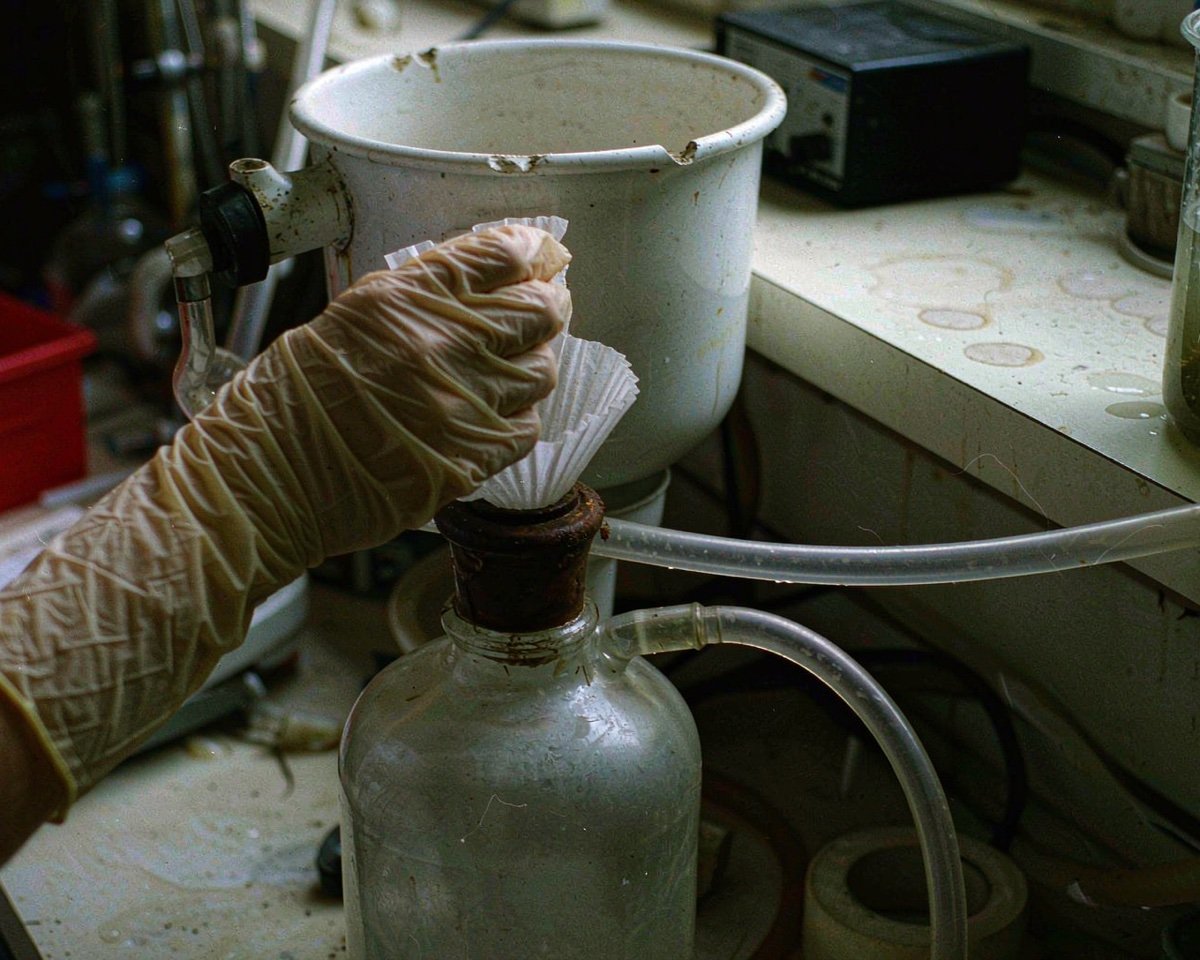
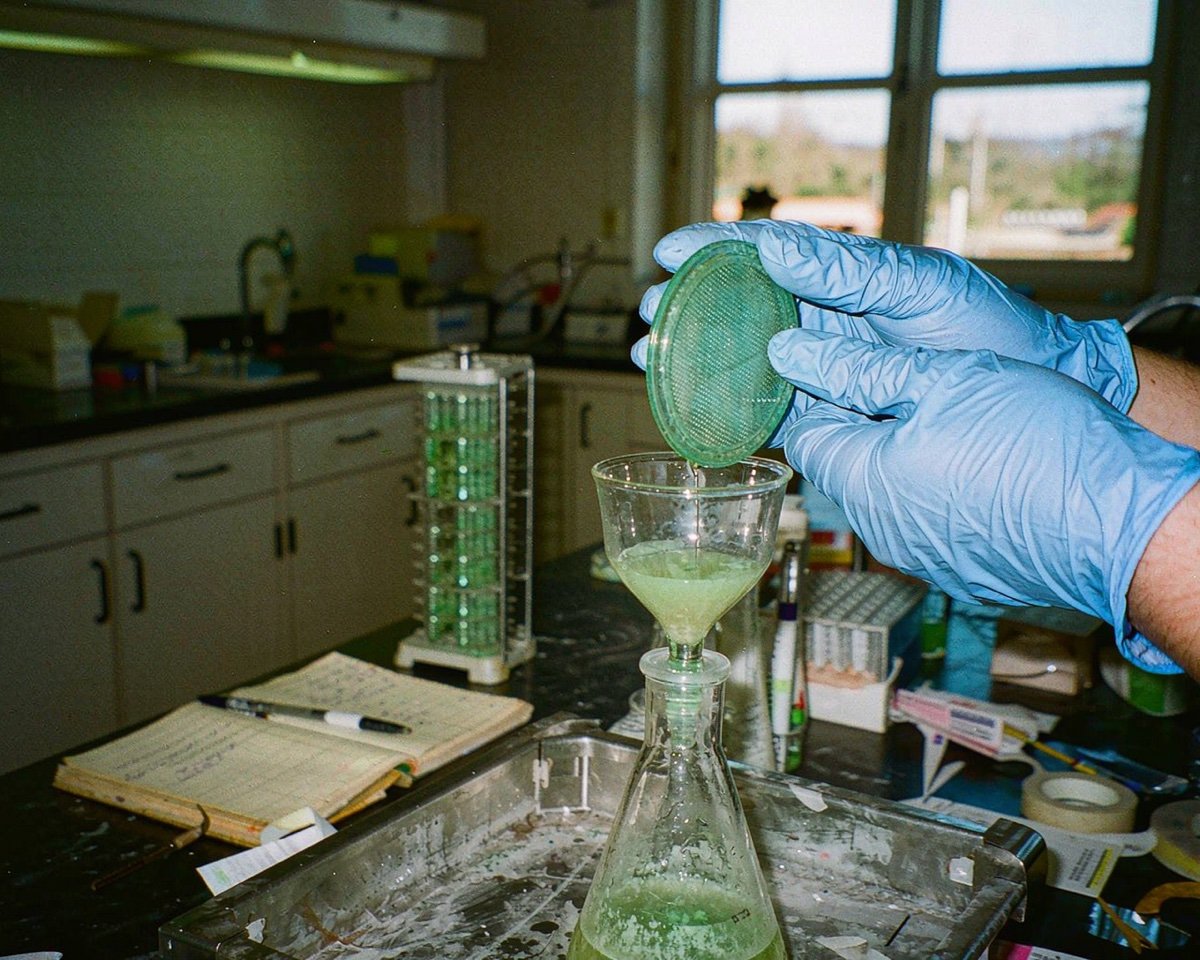
Every digest and every leachate gets filtered before it touches an instrument. The default choice is a 0.45 µm PTFE membrane for acid digests, because PTFE shrugs off the nitric and hydrochloric acid that dissolves nylon and attacks some PVDF chemistries. For aqueous TCLP leachates, a cellulose-based filter can be fine and far cheaper.
We lost a week of instrument time once to a nylon filter that nobody questioned. The digest was strongly acidic, the nylon hydrolyzed quietly into the filtrate, and the resulting background wrecked our low-level arsenic results. The instruments were fine. The method was fine. The filter was the problem, and it cost a week of reruns and one very awkward client call.
If you take one thing from this section: match the membrane to the matrix, every time, in writing.
Which Consumables Each Analytical Technique Needs
Different instruments, different shopping lists. Here’s the mapping.
ICP-MS and ICP-OES for metals
After digestion, the metals workflow consumes a predictable stack:
• 15 mL polypropylene centrifuge tubes for digest storage and dilution. Acid leaching from cheap tubes is real, so buy trace-metal certified, not generic.
• Autosampler vessels matched to your instrument. Agilent and Thermo ICP-MS autosamplers usually take 15 mL PP tubes directly; Shimadzu and some other setups want 10 mL tubes. Confirm before you bulk-order.
• PFA vials for HF-bearing digests or ultra-low-level work. Glass is out once hydrofluoric acid enters the recipe, which some board-digestion methods use to attack glass fiber.
• Cleanliness supplies: acid baths, dedicated rinse stations, and powdered-free gloves that don’t shed.
EPA Method 6020B describes the ICP-MS procedure, including filtration and acid preservation requirements for digests, and it is the reference most labs anchor their SOPs to.
Don’t forget the gases and standards. Argon at ICP-MS purity, collision cell gases, and multi-element calibration standards all count as consumables, and standards have shelf lives that expire mid-campaign if nobody is watching. A calibrant that drifted past its expiry will fail your continuing calibration verification at the worst possible moment, usually an hour before a client deadline. Set expiry alerts in the LIMS the way you would for any other reagent.
For a full walkthrough of the prep hardware, I’ve written a separate guide on what consumables ICP-MS sample preparation needs.
XRF screening for rapid triage
XRF is the front door of most recycling operations: non-destructive and fast, with a low cost per shot. The consumables are simpler but still shape results. Sample cups with 4 µm polypropylene or Mylar film for powders, binding wax or boric acid for pressed pellets, and clean storage cups for archived samples.
Film choice changes results more than people expect. Thin films transmit low-energy X-ray lines differently, and lead’s L-lines respond differently to film thickness than its K-lines. Pick one film and validate against your reference standards, then stay with it. My full notes on cups, films, and pellet preparation live in the guide on what consumables XRF sample preparation needs.
Liquids need extra care. Leachates and process solutions run fine in XRF cups, but fill volume affects precision, and some films soften or fail against acidic solutions. Check film compatibility with your matrix before pouring anything aggressive into a cup, because a leak inside the instrument is a repair bill rather than a wasted sample.
GC-MS for brominated flame retardants
PBDEs and related brominated flame retardants come out of plastics through solvent extraction, typically toluene or a hexane-acetone mix, sometimes ultrasonic, sometimes accelerated. Then they run on GC-MS, often with a negative chemical ionization source for sensitivity on the heavier congeners.
Consumables that matter here:
• Amber 2 mL autosampler vials with PTFE/silicone septa. Light protection matters for some extractives, and amber is the safe default.
• Low-bleed septa. Septa bleed contributes siloxane peaks that clutter exactly the region where TBBPA derivatives appear.
• Deactivated liners and silanized glass wool. These compounds are sticky, and active surfaces hold them long enough to kill your recovery.
• Solvent-rinsed glassware, not plastic, across the whole extraction chain. PBDEs partition into plastic surfaces, and one polypropylene funnel in the train can cost you the whole extract.
If extraction runs through accelerated solvent extraction or Soxhlet, add cellulose thimbles, ASE cell filters, and dispersing diatomaceous earth to the list. They’re cheap, but a thimble that sheds fibers into the extract hands you a filtration problem downstream, so treat them as part of the cleanliness chain rather than an afterthought.
HPLC and ion chromatography for leachates and process streams
Not everything in a recycling lab lands on an ICP. Ion chromatography handles anions in leachates and scrubber liquors. HPLC appears for extractable organics and for monitoring solvent recovery streams in larger facilities. Standard amber HPLC vials with PTFE-lined caps handle most of this. If you run volatile analytes, pre-slit septa reduce coring from the autosampler needle and keep the seal honest over long sequences.
Compatibility is the usual trap. A 9 mm screw-thread vial that seats perfectly in an Agilent 1260 can sit proud in a Waters sample manager, and the mismatch shows up as a missed injection at 3 a.m., not at purchase. Check the vial-to-instrument fit against your specific autosampler model before ordering a pallet.
Summary table: consumables by technique
| Technique | Core consumables | Main watch-outs |
|---|---|---|
| ICP-MS / ICP-OES | 15 mL PP centrifuge tubes, PFA vials for HF work, autosampler tubes | Trace-metal certification, acid compatibility |
| XRF | Sample cups, 4 µm PP or Mylar film, pellet binder | Film thickness shifts low-Z and Pb L-line response |
| GC-MS (BFRs) | Amber 2 mL vials, PTFE/silicone septa, deactivated liners | Septa bleed, adsorption to active surfaces, no plastic anywhere |
| HPLC / IC | Amber HPLC vials, PTFE-lined caps, guard columns | Autosampler fit, septa coring |
| Digestion (3050B, microwave) | PTFE-TFM liners, borosilicate tubes, acid-safe filters | HCl recipe effects on Ag and Sb recovery |
| TCLP | ZHE vessels, rotary agitator filters | Filter lot consistency across a study |
Contamination and Cleanliness: The Silent Report-Killer
In e-waste analytics, contamination is not an inconvenience. It is the difference between “this batch passes” and “this batch is hazardous waste.”
Your blanks are telling you something
Method blanks catch most problems, if you let them. The failure pattern I see most often: a lab runs blanks through certified-clean consumables but preps in a hood where someone ground PCB powder an hour earlier. The blank comes back at 40 µg/L of copper, the batch repeats, and the same thing happens again. The consumable was never the problem; the workflow was. Blanks are cheap. Repeat batches are not.
Cross-contamination from previous digests
I once watched an entire batch of low-level digests fail because the third digestion tube in the rack had been used the previous day for a concentrated solder sample. One tube, not fully decontaminated, holding enough lead to poison everything around it during a shared acid bath. The fix cost almost nothing: single-use tubes for concentrated samples and an acid bath protocol with a rinse verification step. Since then I treat concentrated digests as radioactive. Dedicated vessels or disposal, never reuse.
Carryover down the autosampler sequence
Contamination isn’t only a prep-bench problem. Run a concentrated solder digest early in an ICP-MS sequence and the next twenty tubes can read high for lead, because the needle and the sample loop remember. Needle washes help, and so does reordering the sequence to run low-level samples before hot ones. Autosampler rinse stations and wash solutions are consumables like anything else: they get used up, they go stale, and a wash solution that’s been evaporating for two weeks is rinsing with yesterday’s residue. In my experience, sequence design buys more data quality per dollar than any premium vial ever will.
Plastic backgrounds and phthalates
Cheap polypropylene bleeds plasticizers, and for GC-MS work those phthalate peaks land exactly where you don’t want them. For metals, the bigger issue is adsorption and leaching running in both directions: mercury sticks to surfaces, tin and silver precipitate. The practical answer is boring. Certified containers, matched caps and liners, and a standing rule that ultra-trace work never touches unverified plastic.
Buying cleanliness as a specification
Most labs get away with generic consumables until they don’t. The moment your method dips below roughly 10 µg/L for any regulated metal, “clean” becomes a specification you pay for: certified trace-metal grades with documented lot testing, produced in environments that don’t share lines with industrial plastics. That’s a real price difference. So is a failed audit. Choose which bill you’d rather pay.
Managing Used Consumables: Your Lab Becomes Its Own Waste Stream
There’s an irony in a recycling lab generating its own hazardous waste, but here we are. Used digestion tubes and spent filters, rinsed or otherwise, all carry a regulatory trail.
Rinse policy is the first decision. Vials that held TCLP-failing leachates are hazardous waste, full stop. Autosampler vials from diluted digests may be rinsable depending on your waste profile and local rules. Whatever you decide, write it down, because the question your auditor asks is never “did you rinse it” but “what does your procedure say.”
Segregation follows: acids, organics, mercury-bearing waste, and metals-bearing slurries each get their own containers and their own disposal chain. For the complete disposal workflow, including rinsing sequences and container selection, see how to dispose of used HPLC vials and consumables safely.
One habit worth building: weigh your waste stream. If your lab goes through 40,000 autosampler vials a year, the disposal cost per vial can approach the purchase cost per vial. That arithmetic changes which vial you should buy in the first place, and it’s an argument for lighter glass and smaller volumes that most procurement teams never run.
Buying Strategy: Bulk, Quality, and Cost per Test
Unit price lies; cost per test tells the truth
A vial at half the price that cracks at the crimping stage or varies lot to lot costs more per usable result. I price consumables per completed test: digest tube, filter, autosampler vial, and the rerun rate they cause. A supplier with a 1 percent rerun rate beats a 30 percent cheaper supplier with a 5 percent rerun rate, easily, once you count analyst time.
Compatibility with your instruments
The big four autosampler families, Agilent, Waters, Shimadzu, and Thermo, each carry their own vial geometries and cap systems. Quality aftermarket suppliers validate against these platforms and publish the fit. Ask for the compatibility matrix, and if a supplier cannot tell you which Shimadzu models their 2 mL vial seats in, that tells you everything about the supplier.
The same logic applies to filters and digestion ware. “Fits most microwave systems” is a warning, not a feature.
Qualifying a new supplier without betting the lab
Before a pillar purchase, ask for sample lots and run them head to head against your current consumables on a real batch, not a blank. Rerun rates and blank levels show up within a day of side-by-side testing, and that single day of bench time protects weeks of downstream work. Write the acceptance criteria down before the test so nobody talks themselves into a marginal lot because the discount was attractive. Most serious suppliers will send samples without being chased. The ones that won’t have told you something already.
Stocking depth and lot strategy
E-waste labs run campaigns. A client’s batch of boards arrives, the lab digests for two solid weeks, then goes quiet. Buy consumables by campaign, in single lots wherever it matters, because a filter lot change mid-campaign is a comparability question your QA person will have to answer on paper. My default: two campaigns’ worth of critical consumables on the shelf, filters and digestion liners especially, with lot numbers logged against each campaign in the LIMS.
Watch lead times too. Generic consumables ship in days, but specialty items like PFA vials and PTFE-TFM liners often carry minimum order quantities and multi-week production runs. Order those against the campaign calendar, not the stockroom shelf.
Documentation and lot traceability
Certificates of analysis, lot-specific test data behind any certification claim, and manufacturing documentation you can hand an auditor without flinching. If a data point ever gets challenged in a regulatory dispute, the consumable’s paper trail is part of your defense. This is where quality suppliers earn their margin, and where the cheapest supplier eventually introduces you to an attorney.
Where quality consumables earn their keep
Cost-effective does not mean cheapest. It means the right specification at a sane price, with documentation that survives scrutiny. Compatible, validated consumables bought in campaign quantities typically land well under OEM pricing while keeping the validation intact. Keep the spec, lose the brand premium. That’s the whole buying game in one sentence.
If your lab also touches printed electronics, the neighboring guide on semiconductor and electronics testing lab consumables covers the adjacent workflow.
Conclusion
E-waste testing is one of the few fields where the sample genuinely fights back. Shredded boards grind down your homogenization hardware, and aqua regia eats through anything that isn’t PTFE or TFM. The labs that run this work profitably share one habit: they match every consumable to the matrix and track cost per test instead of unit price, buying in campaign-sized lots from suppliers who document cleanliness. If you’re setting up a new bench or trimming an existing budget, start with the two highest-leverage upgrades: the digestion and filtration chain, and the autosampler vial line. Those two decisions drive most of your reruns and most of your cost per test. For the metals workflow in depth, read our guide to ICP-MS sample preparation consumables, and for the end-of-life side, our guide to disposing of used vials and consumables safely.
Frequently Asked Questions
What consumables do I need to start an e-waste metals testing workflow?
At minimum: PTFE-TFM microwave liners or borosilicate digestion tubes, 0.45 µm PTFE filters, trace-metal certified 15 mL PP tubes, and autosampler vials matched to your ICP-MS or ICP-OES. Add agate or PTFE sieves if you’re chasing chromium or nickel at low levels. Budget for certification documentation, because that paperwork is part of what you’re buying.
Are generic HPLC and autosampler vials safe to use with Agilent, Waters, Shimadzu, and Thermo systems?
Yes, if the supplier validates against your specific model. Geometry differences between the major platforms cause seating problems that appear as failed or missed injections rather than obvious errors. In my experience, quality compatible vials perform on par with OEM; the risk sits with no-name suppliers who won’t publish a compatibility matrix.
What filter should I use for acid digests from circuit boards?
A 0.45 µm PTFE membrane is the default for strongly acidic digests, since PTFE stands up to hot acid, aqua regia included, where nylon and cellulose fail. For neutral aqueous leachates such as TCLP extracts, cheaper cellulose-based filters work fine. Always record the filter lot with the batch, and never switch lots mid-study.
How should I dispose of used vials that contained e-waste digests?
If the digest failed TCLP thresholds or matches your hazardous waste profile, the vial and its contents are hazardous waste and go into the corresponding segregated container with a hazard label. Rinsing rules depend on your waste profile and local regulations, so put the decision in your SOP. Our disposal guide walks through rinsing sequences and container selection step by step.
Do I need certified-clean consumables for RoHS screening?
Not always. RoHS limits sit at 0.1 percent by weight, high enough that ordinary trace-metal certified consumables usually suffice. But if you confirm low-level results by ICP-MS, or your client spec demands sub-ppm reporting, certified-clean vials and filters stop being optional. Match the consumable grade to the lowest reporting limit in your method, not the headline limit.