
The lab I inherited in my first management job had a stockroom rule I will never forget: if you cannot find it, order it. Naturally, we had seven unopened cases of 15 mL tubes and zero sterile tips, all at the same time. Fixing that stockroom took a month and saved us more money than any negotiation I have done since. Here is the setup I would install from day one.
The Short Answer
A functional lab stockroom needs five things: a complete baseline inventory with standardized item records, fixed storage locations with labels that match the records, storage grouped by condition and hazard class first (then by use), stock rotation on a first-expired-first-out rule for anything with a date, and a simple reorder trigger per item (minimum stock plus a defined reorder point). Add a quarterly audit and clear ownership, and the stockroom runs as infrastructure instead of archaeology.
Step 1: Baseline Count and a Real Item Catalog
Everything starts with knowing what exists. A full physical count is tedious and non-negotiable: any inventory system built on made-up starting numbers will generate false reorders and false comfort forever.
Each item in the catalog needs a standard record: supplier, part number, storage location, unit of measure, and hazard class if applicable. The Lab Manager guide to lab inventory management recommends exactly this record set, plus consumption logs and supplier contacts, as the backbone whether you track in software or a spreadsheet.
One habit worth more than software: build the catalog before choosing a tool. A clean, standardized catalog migrates into any system; a messy one sabotages every system. The Herbi Labs inventory guide makes the same argument with the warning that a messy catalog creates months of remediation after go-live.
Step 2: Fixed Locations and Labels That Match
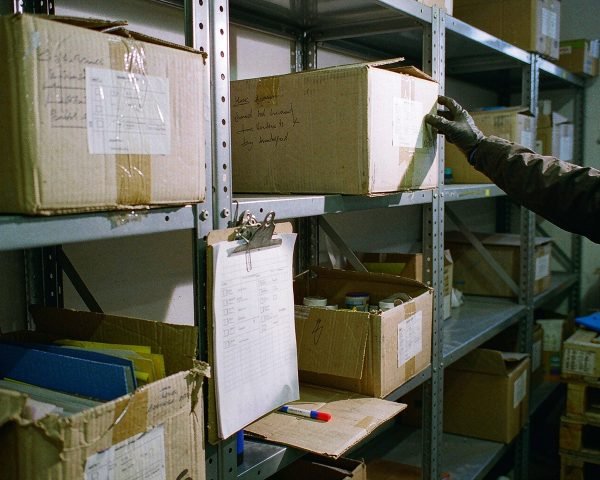
Every item gets one home, and the shelf label matches the catalog entry word for word. Floating storage (“the tips are usually in the second cabinet, unless someone moved them”) is where stockrooms die, because it turns every retrieval into a search and every audit into a guess.
Labeling rules that hold up in practice:
- Label the shelf position itself, since positions survive when contents rotate.
- Include the item name, size or volume, and sterile/non-sterile status on consumable labels.
- Mark opened dates on anything resealable, and expiry dates anywhere a date can exist.
- Use barcodes or QR codes once the catalog is stable; the Watson Bio Lab labware management guide describes how machine-readable labels plus fixed positions eliminate most “where is it” interruptions.
Group by storage condition first (temperature, light sensitivity, hazard class), then by use case. That ordering prevents the classic stockroom sin: reagents stored wherever there was space that day.
Step 3: Rotation Rules That Prevent Expired Waste
For anything with an expiry date, first-in-first-out is not quite right; first-expired-first-out (FEFO) is. When two boxes of the same consumable arrive weeks apart with different expiry dates, FEFO issues the one that dies first, regardless of arrival order.
Physical layout enforces the rule better than any memo: newer stock goes behind older stock on the shelf, the way grocery stores rotate milk. When the front of the shelf is always the right thing to take, compliance stops depending on people remembering a policy.
Step 4: Reorder Triggers Instead of Vibes
“Reorder when it looks low” means different things to every person in the lab, which is how you end up with both stockouts and seven cases of the same tube.
The workable version:
- Set a minimum stock level per item: the point at which a normal lead time cannot save you.
- Set a reorder point above it: one full lead time of demand plus a safety buffer (one to two weeks of usage works for most consumables).
- Assign ownership: one person (or role) owns intake, one owns the reorder decision, even if the same human wears both hats.
For high-turnover items, track average weekly usage over a term or quarter; consumption data makes order quantities obvious instead of debated. Our article on the 7 signs you need to reorder your consumables covers the early-warning version of this, and the vial trays and racks guide handles the bench-side organization that pairs with the stockroom.
Step 5: Storage Conditions That Protect Inventory
A stockroom is also a storage environment, and consumables have opinions about theirs:
- Keep the room cool, dry, and out of direct sun; UV and heat cycles age plastics, septa, and adhesives even inside boxes.
- Store boxed consumables off concrete floors (moisture and flooding), on shelving with lips so nothing walks off during an earthquake test you did not plan.
- Segregate anything hazardous by class, per your chemical hygiene plan, and keep incompatible items physically apart, not just on different shelves.
- Photograph each storage zone after organizing; the Herbi Labs storage guide suggests photos as an audit baseline, and they also make restoration after a busy week painless.
Audits: Quarterly, With a Checklist
An audit is where the system proves itself. Ours takes under two hours per quarter:
- Verify actual stock against records for a random sample plus all high-value items.
- Sweep for expired or opened-and-forgotten stock.
- Check that locations still match labels (the drift detector).
- Update reorder points against actual consumption.
The Lab Manager guide frames audits as the compliance step, which they are, but the quieter benefit is drift detection: every stockroom decays, and the quarterly audit is the reset button.
Common Setup Mistakes
Building the system around the software, not the shelving
The physical layout is the system; software is the record. Fix locations first.
One giant shared stockroom with no ownership
Shared means unowned. Assign a name, even part-time.
No intake ritual
New deliveries get logged, labeled with received dates, and shelved behind old stock at arrival, or the rotation rule exists only on paper.
Tracking only expensive items
Cheap items are cheap per unit and expensive in aggregate; a stockout of nitrile gloves cancels work just as thoroughly as a stockout of columns.
Conclusion
A good stockroom is invisible: items are where the label says, nothing expires on the shelf, and reorders happen before anyone feels scarcity. Getting there is mostly setup discipline, a real baseline count, fixed labeled locations, FEFO rotation, reorder points from actual consumption data, and a quarterly audit to catch drift. The payoffs compound quietly: less duplicate ordering, fewer session-killing stockouts, and an audit trail you can hand to an inspector without a scramble. Start with the ten highest-turnover items and give them proper locations and triggers this week; the rest of the room can follow at a shelf per week. When you are ready to extend the discipline, our guide on how to store lab consumables for maximum shelf life covers the environmental side, and the lab consumables procurement manager’s guide connects the stockroom to the purchasing decisions that feed it.
Frequently Asked Questions
What is the best way to organize a lab stockroom?
Assign a fixed, labeled storage location to every catalog item, group items by storage condition and hazard class first and by use case second, and rotate stock so older or sooner-expiring items sit in front. Label shelf positions rather than just items, keep the labels synchronized with your inventory records, and photograph each zone as an audit baseline.
How often should a lab stockroom be audited?
Quarterly is the standard cadence for most labs, with monthly checks on high-turnover or expiry-critical items. An audit should verify stock against records, sweep for expired stock, confirm locations still match labels, and update reorder points based on actual consumption. Smaller labs can run the full cycle in under two hours once the baseline is clean.
What is the difference between FIFO and FEFO in a lab?
FIFO (first in, first out) issues the oldest-arrived stock first. FEFO (first expired, first out) issues whatever expires first, regardless of arrival order. For anything with an expiry date, FEFO is correct, because two boxes of the same consumable can arrive weeks apart and carry different expiry dates; FIFO would sometimes issue the box that dies sooner.
What should be on a stockroom inventory record?
At minimum: item name, supplier, part number, storage location, unit of measure, hazard class if applicable, quantity on hand, and expiry or shelf-life date. Add opened dates for resealable items and a reorder point once consumption is known. This record set is the backbone whether you run it in a spreadsheet or dedicated inventory software.
How do I set a reorder point for lab consumables?
Track average weekly usage, multiply by supplier lead time in weeks, and add a safety buffer of one to two weeks of demand. That total is your reorder point: when stock touches it, order. Items with long or unreliable lead times need bigger buffers, and consumption data from a term or quarter beats anyone’s estimate.