
# Leather and Footwear Testing Lab Consumables: The Complete Guide
If you run a leather or footwear lab, you already know your consumables list looks nothing like the one your HPLC colleagues use. Between cutting dies, abrasive cloth, phosphate buffer, and a small mountain of 2 mL vials, this niche burns through supplies in ways that surprise even experienced procurement managers. This guide maps every major test to the consumables it actually consumes.
Leather and footwear testing lab consumables fall into two groups: physical testing supplies (cutting dies, Martindale abrasive fabric, felt, flexing chisels, rubbing cloth) and chemical testing supplies (extraction flasks, phosphate buffer, 0.45 µm filters, derivatization reagents, and autosampler vials for HPLC, GC-MS, UV-Vis, and ICP work). Stock the first group by schedule, the second by standard.
Keep reading, because the difference between those two stocking strategies is exactly where labs overspend or, worse, run out of something mid-audit.
Why Leather and Footwear Labs Burn Consumables Differently
A leather lab is really two labs sharing one room.
On one bench you have the physical side: flexing machines, abrasion testers, tensile frames, crockmeters. The consumables here are mechanical and sacrificial. Cutting press knives dull. Abrasive paper wears out on schedule. Felt backing compresses and has to be swapped whether or not anyone remembers the last time it was changed.
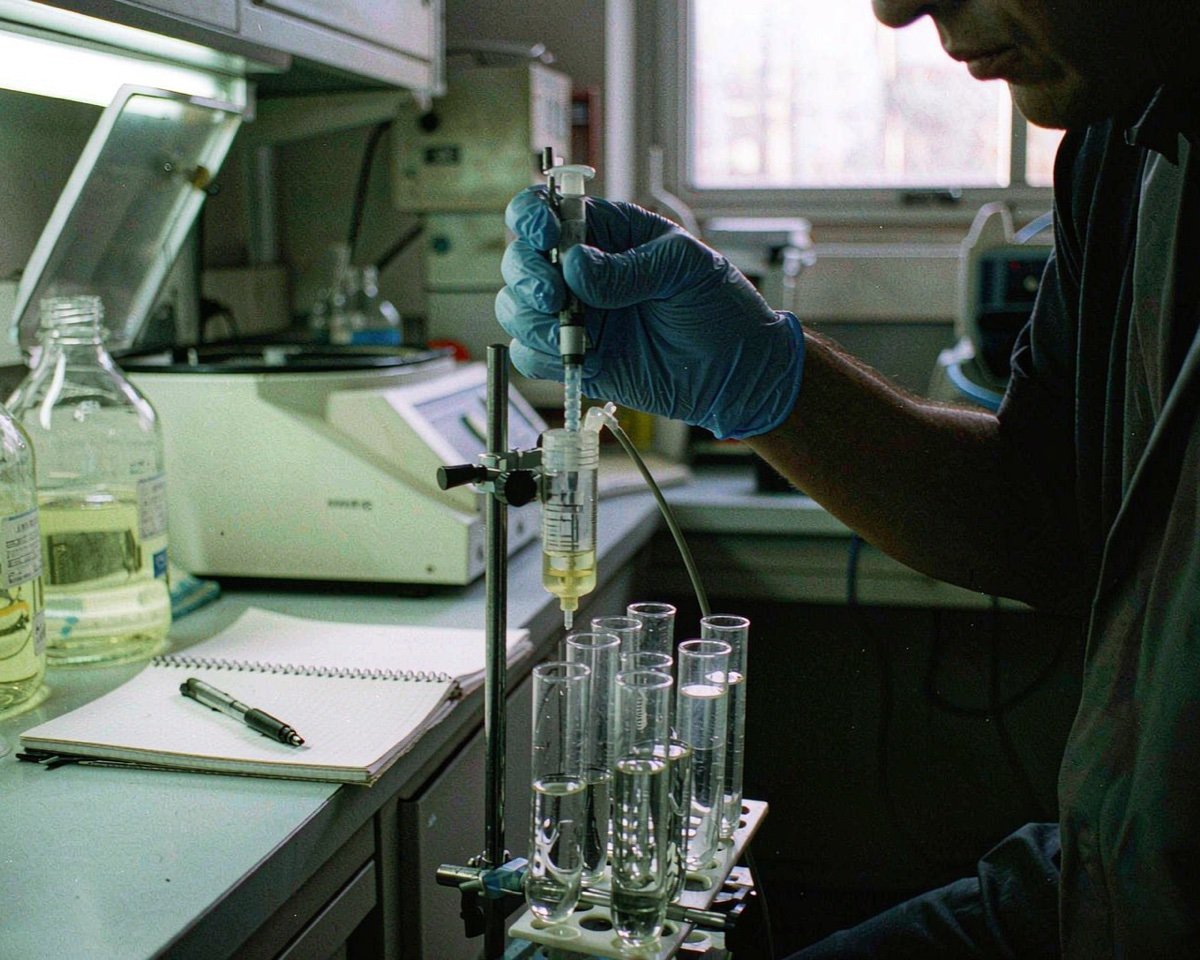
On the other bench sits the chemistry: chromium VI, formaldehyde, azo dyes, heavy metals, and a growing list of PFAS-related requests. This side looks more like a conventional analytical lab, and it consumes the familiar stuff: extraction vessels, membrane filters, buffer salts, reagents, and vials by the box.
The tricky part is that neither bench can pause. A factory client shipping a seasonal footwear order needs physical test results before the container leaves. A European brand-facing client needs the chemical panel before CE marking under EN ISO 20345. If a €2 filter or a worn cutting knife stops the workflow, the whole lab stops with it.
I learned this the hard way early in my career. A batch of chromium VI extracts sat on the bench over a long weekend because the lab had run out of the correct 0.45 µm filters and someone thought “Monday will be fine.” By Monday, the extracts had degraded and the results were unusable. The client’s shipment was delayed by five days over a filter that cost less than a coffee. That mistake shaped how I stock consumables to this day: nothing on the critical path of a time-sensitive test gets ordered “when we run low.”
So let’s walk through both benches properly: what each test demands, how fast each consumable gets used up, and where labs quietly waste money.
The Physical Testing Bench: Consumables That Wear Out on Schedule
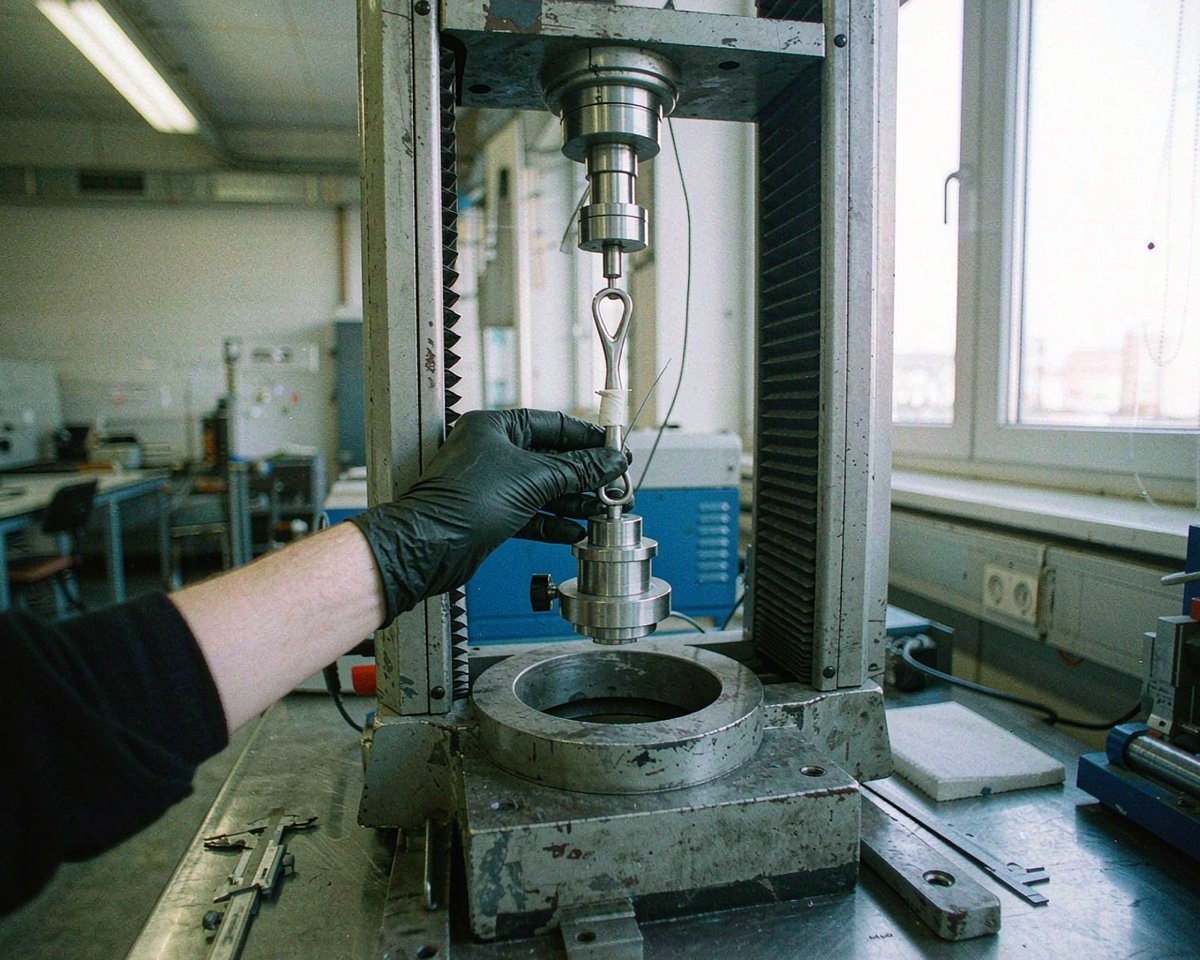
Physical testing is where leather and footwear work diverges most from pharmaceutical or water labs. The instruments are big, the consumables are chunky, and nearly everything is a wear part with a predictable lifespan.
Specimen Preparation: Cutting Press Knives and Dies
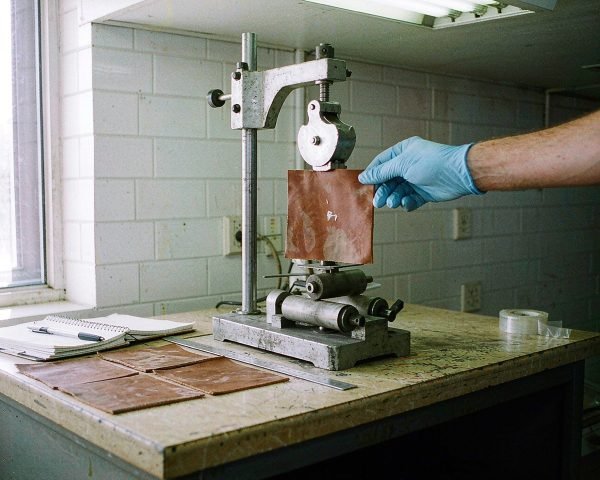
Every physical test starts the same way: cut a specimen to a precise geometry from conditioned material. Leather labs use cutting presses with steel dies (sometimes called press knives or clicker dies), and SATRA is blunt about it: “a specimen cutting knife is again essential” for nearly every test in the safety footwear suite, from uppers to linings (see SATRA’s guide to EU safety footwear test equipment).
What wears out:
• The die edges themselves. Leather is abrasive, especially finished and coated grades. A die used daily on heavy upper leather may need re-grinding within a year; one used weekly on linings lasts much longer.
• Cutting boards. Most labs use polypropylene or nylon boards under the die. These groove over time and eventually compromise cut accuracy.
• Slide calipers and thickness gauges get their consumable moment too: the anvil faces wear.
A practical tip from experience: keep two boards per press in rotation and date the replacement. When a specimen’s measured thickness starts drifting even though the die hasn’t changed, the board is usually the culprit.
Conditioning Is a Consumable Test Too
Here’s something that catches newcomers: ISO physical tests require conditioning at 23 ± 2 °C and 50 ± 5 % relative humidity before cutting and testing, as SATRA notes for Martindale abrasion work. That’s not a consumable in the box-and-bottle sense, but the conditioning room consumes calibration consumables: salt solutions for hygrometer verification, replacement sensors, and logging consumables. If your conditioning room drifts, every abrasion and flexing result downstream becomes arguable. Auditors love to ask about it.
Flexing Tests: Chisels, Mandrels, and Jigs
Flexing is the signature durability test for footwear. The whole-sole flexing test (ISO 20344 clause 8.4, referenced by EN ISO 20345) requires a defined cut in the sole before flexing starts. SATRA specifies a cutting tool per figure C2 of ISO 5423:1992 for this, and supplies a dedicated chisel and jig for the purpose (SATRA, Machines for EU safety footwear testing, part 5).
The consumables and wear items here:
• Pre-test cutting chisels and jigs. These are semi-consumables: they dull and drift out of tolerance.
• Ross flexer parts for the hydrolysis follow-up test, which runs 150,000 flexing cycles at -5 °C for PU outsoles. Rods, clamps, and low-temperature chamber consumables all take a beating at that cycle count.
• Vamp flexer clamps for upper materials (the Bally-type test, SATRA TM55), where grip pads and clamp faces wear against leather repeatedly.
A whole-sole flex test runs 30,000 flexes per specimen, three specimens at a time on a typical machine. Do the math for a busy lab: the machine hours pile up fast, and so does the wear on everything that touches the specimen.
Abrasion: Martindale Fabric, Felt, and DIN Abrasive Strips
Abrasion testing consumes the most recurring consumables on the physical bench, in my experience.
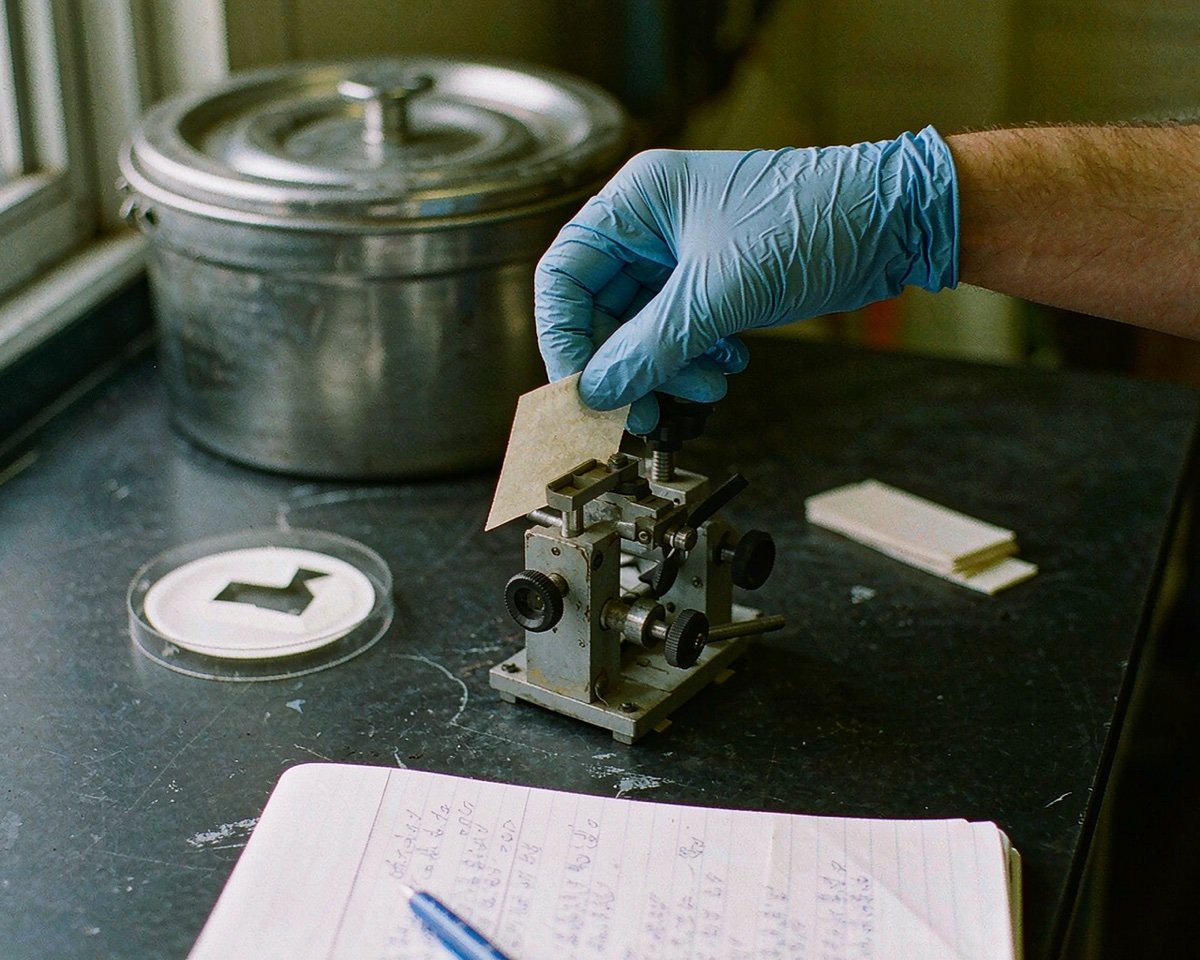
For linings, EN ISO 20345 points to a Martindale test (EN ISO 20344 clause 6.12), typically run on a machine like the SATRA STM 633. The specimens abrade against a specified woven fabric with a standard felt underlayer, in dry and wet conditions. That means you’re buying:
• Standard abrasive woven fabric (the Martindale rubbing cloth)
• Standard felt underlayers, replaced as they compress
• Specimen mounting foam or backing where the method calls for it
• Cutting knives for the round specimens
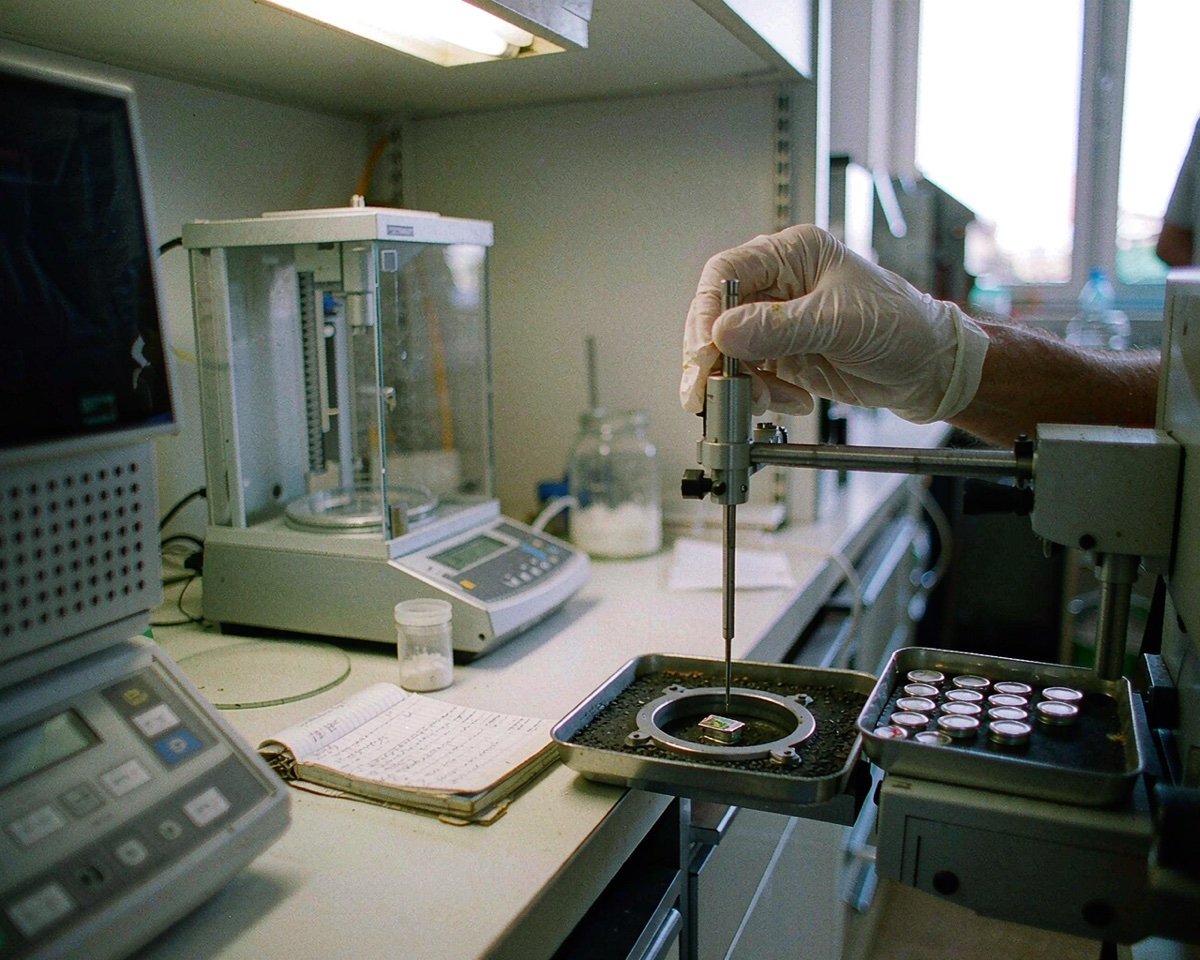
For outsoles, the abrasion test compares against a control rubber under ISO 4649, run on a rotary drum tester with abrasive sheets. SATRA supplies certified control rubber (STM 469CR) for calibration runs, and the abrasive sheets themselves are pure consumables: each run grinds them down.
Rule of thumb I’d offer: budget Martindale cloth and felt by quarter, not by “when someone notices the felt looks flat.” By the time it visibly looks flat, three months of results have quietly degraded.
Color Fastness and Rubbing Tests
Color fastness to rubbing (crockmeter tests, in the ISO 105 family and SATRA TM8) is deceptively cheap in equipment and surprisingly hungry in consumables. Each test consumes:
• Standard undyed cotton rubbing cloth, one piece per dry rub and per wet rub
• Distilled or deionized water for wet rubs
• Grey scales for assessment (consumed slowly, but they fade and get replaced on a schedule)
• Felt pads on some machines
A single footwear lining panel might go through six rubbing tests in a report (dry and wet, different faces). Multiply by a factory QA season and cotton rubbing cloth becomes a standing line item.
Quick Reference: Physical Test Consumables
| Test | Key consumable / wear item | Typical replacement pattern |
|---|---|---|
| Specimen prep | Cutting dies, boards | Re-grind dies yearly under daily use; boards every 6–12 months |
| Whole-sole flexing (ISO 20344 cl. 8.4) | Cutting chisel + jig per ISO 5423 | Replace when cut geometry drifts; verify against jig |
| PU hydrolysis + Ross flex (ISO 5423 Annex C) | Low-temp flexer rods, clamps | Inspect per campaign; replace on wear |
| Lining abrasion (Martindale) | Woven abrasive fabric, standard felt | New felt per session or per method; cloth by wear count |
| Outsole abrasion (ISO 4649) | Abrasive sheets, certified control rubber | Sheets per batch; control rubber per calibration cycle |
| Rubbing fastness (ISO 105 / TM8) | Standard cotton rubbing cloth | One cloth per rub, every rub |
| Tensile / tear | Grip faces, dies | Replace on tooth wear |
The Chemical Testing Bench: Vials, Filters, and Reagents
Now we cross the room to the analytical side. This is where Mastelf’s core product range lives, and where the standards get very specific about what touches your sample.
Chromium VI: The Test That Sets the Pace
If there’s one chemical test that defines leather labs, it’s chromium VI. REACH Annex XVII entry 47 restricts chromium VI to below 3 mg/kg of the total dry weight for leather articles and leather parts contacting the skin, and ECHA lists it among the substances restricted under REACH. The limit has applied since May 2015, and it’s the single most common cause of EU market rejections for chrome-tanned leather goods.
The workhorse method is ISO 17075-1:2017, the colorimetric method. The workflow looks like this:
1. Mince about 2 g of leather, weigh it into an extraction vessel
2. Add phosphate buffer at pH around 8.0, purged with inert gas to keep the oxidation state stable
3. Shake at ambient temperature for roughly 3 hours
4. Filter (0.45 µm membrane), then react the extract with 1,5-diphenylcarbazide (DPC)
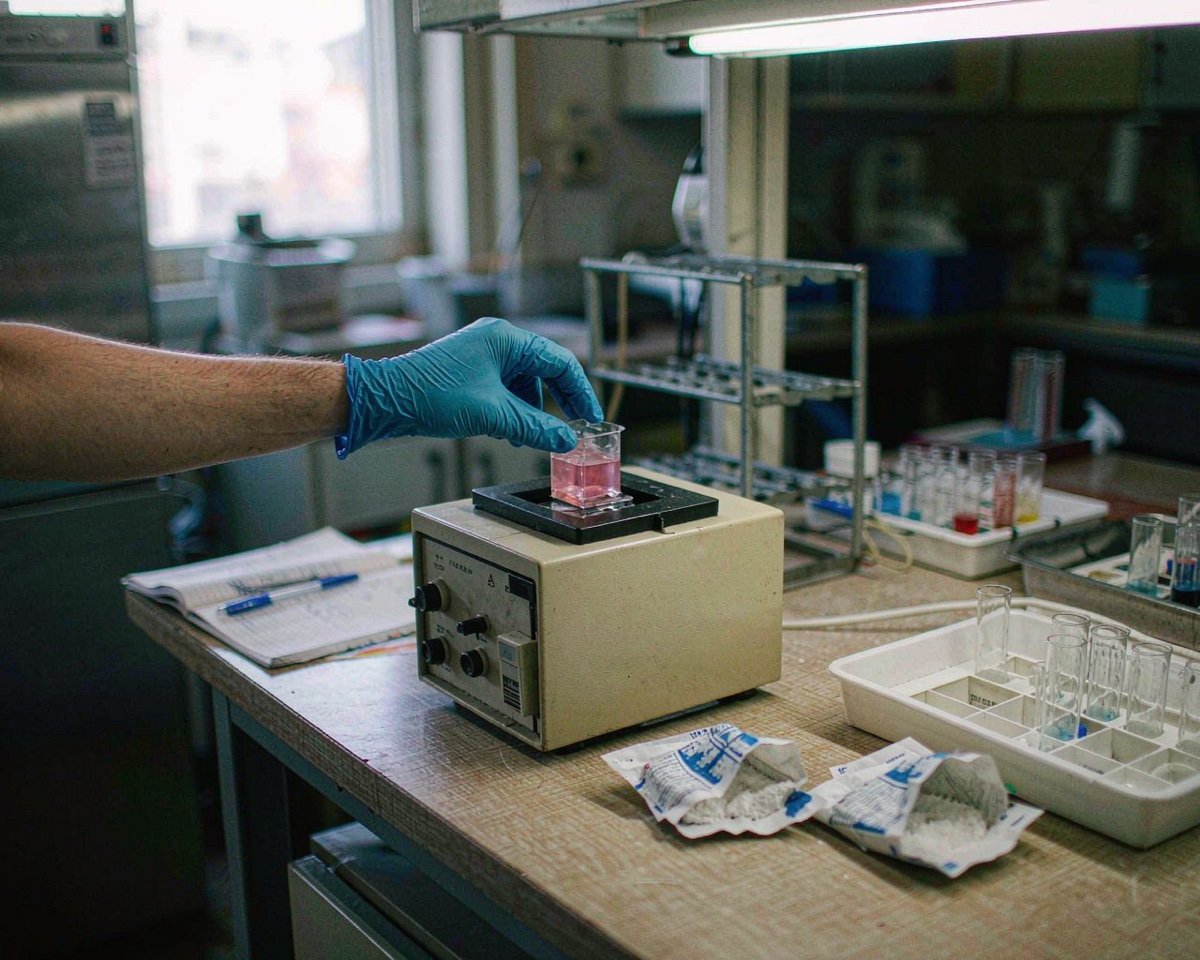
5. Read the purple complex at 540 nm on a UV-Vis spectrophotometer
The consumables per sample: extraction flasks with ground stoppers, phosphate buffer salts (or pre-mixed buffer), inert gas, 0.45 µm syringe or membrane filters, DPC reagent, and clean glassware. One warning worth its own paragraph: never clean this glassware with chromium-based cleaning solutions. Residual chromium contamination will show up as background and quietly wreck your low-level results.
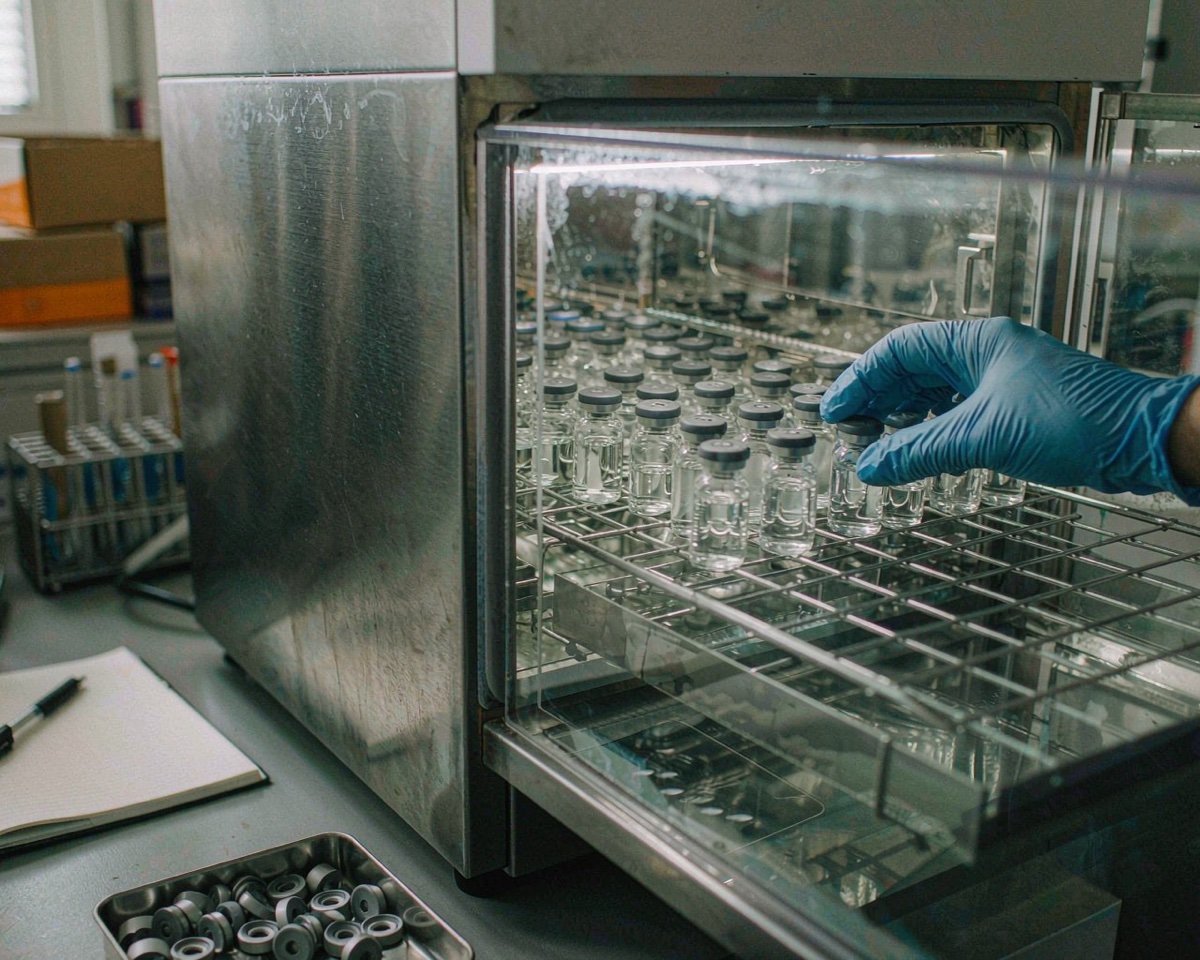
For dyed leather, color interference is a real problem with the colorimetric readout. That’s why ISO 17075-2 exists, using HPLC with diode array detection, and SATRA actually recommends part 2 as its default precisely because dyed extracts don’t fool a chromatographic separation (SATRA on chromium VI in leathergoods). Running part 2 pulls your lab deeper into chromatography consumables: 2 mL autosampler vials, septa, and mobile phase. Amber vials are the sensible default here since the derivatized complex is light-sensitive.
Formaldehyde: HPLC and the DNPH Route
Formaldehyde in leather is tested under the EN ISO 17226 family. The HPLC method (ISO 17226-1) derivatizes the extract with 2,4-dinitrophenylhydrazine (DNPH) and gives clean, selective quantitation even in colored extracts. EU reference documents such as the EU Ecolabel chemical criteria for furniture leather set free formaldehyde limits for leather at 75 mg/kg (tighter, at 20 mg/kg, for children’s furniture), citing EN ISO 17226-1 as the method.
The consumable shopping list for this one is chromatography-heavy: extraction vessels, water bath or shaker consumables, 0.45 µm filters, DNPH reagent (kept cold and away from light, it degrades), and HPLC vials. If you’re running formaldehyde regularly, I’d standardize on amber 2 mL screw-neck vials with compatible septa and stop improvising with whatever is nearest the instrument. Consistent vial geometry keeps the autosampler happy and the peak areas comparable.
Azo Dyes: Reduction, Extraction, and GC-MS
Azo colorants that can release listed aromatic amines are restricted under REACH Annex XVII entry 43, at no more than 30 mg/kg per amine for leather in prolonged skin contact. The standard method for leather is EN ISO 17234-1, which involves reducing the dye with sodium dithionite in a citrate buffer, extracting the amines, and quantifying by GC-MS or HPLC.
Consumables per run:
• Citrate buffer salts and sodium dithionite (fresh; it oxidizes in storage)
• Reduction vessels and water bath consumables
• SPE cartridges for cleanup, where the lab’s protocol calls for them
• GC-MS vials with low-volume inserts (the final extract volumes are small)
• GC inlet liners and septa, which are the silent recurring cost of any GC-MS operation
One lab detail that separates good results from garbage: sample the dark and red shades separately. Azo failures concentrate in reds, and pooling shades dilutes a failure into a false pass.
Heavy Metals: Digestion and ICP/AAS Consumables
Extractable heavy metals in leather (arsenic, cadmium, cobalt, copper, lead, mercury, nickel, chromium, antimony) follow the EN ISO 17072-1 approach: artificial perspiration extraction, then quantitation by ICP-OES, ICP-MS, or atomic absorption. The EU Ecolabel criteria table cited earlier gives a sense of the limits, with lead at 1 mg/kg and cadmium at 0.1 mg/kg for leather.
The consumables here are the ones your trace-metals colleagues already know:
• Acid-washed digestion vessels (microwave digestion vessels or crucibles for dry ashing routes)
• High-purity acids in PFA or FEP bottles
• Certified calibration standards and internal standards
• Argon for the ICP, and replacement cones/nebulizer parts (consumable-adjacent)
• Sample tubes and caps rated for acid matrix
Cleanliness discipline matters more than any single purchase. A dirty digestion blank costs you a rerun; a dirty microwave vessel costs you the whole batch.
The Supporting Cast: PCP, DMFu, and What’s Coming Next
Preservatives round out the chemical panel. Pentachlorophenol runs by EN ISO 17070 (GC-MS after extraction), and dimethylfumarate (DMFu) is restricted to 0.1 mg/kg under REACH entry 61, a limit born from the infamous mould-sachet incidents on humid sea freight routes. Both are GC-MS-driven tests, so the consumable load is vials, liners, filters, and extraction glassware you already stock for azo work.
What’s coming: PFAS testing requests are growing fast as EU restrictions phase in, and buyers increasingly ask for chromatography-coupled workflows. If your lab expects to add PFAS in the next two years, stock LC-MS-grade vials and filters accordingly. Leather uppers, textile linings, and foam components each get sampled separately under most buyer RSLs, so the sample count per shoe climbs fast once PFAS enters your panel.
Standards and Compliance: What You’re Actually Buying Toward
The regulatory frame deserves a quick, explicit look, because it dictates consumable choices more than instrument specs do.
EN ISO 20345 governs safety footwear in the EU: 200 J toe impact resistance, 15 kN compression, puncture resistance, slip testing, and the physical durability tests we covered. Safety footwear is Category II PPE under Regulation (EU) 2016/425, so an EU type-examination by a notified body is required, and that body will expect test evidence from properly equipped labs.
REACH Annex XVII carries the chemical restrictions: entry 47 for chromium VI in skin-contact leather, entry 43 for azo dye amines, entry 61 for DMFu, and newer entries covering formaldehyde and CMR substances in textiles and footwear. ECHA maintains the official restriction list, and it changes often enough that a yearly review is worthwhile.
The practical consequence for procurement: your consumables need to be method-compatible, not just cheap. If ISO 17075-1 says phosphate buffer at a defined pH, buying “buffer approximately pH 8” is how labs end up in inter-lab comparison trouble. The results obtained under different extraction conditions are explicitly not comparable, which the standard’s own scope statement makes clear in plain language.
What to Stock vs. What to Buy Ad Hoc
I’ve watched labs get this wrong in both directions: warehouses full of felt nobody uses, and a lab that can’t start Monday’s chromium VI batch because buffer ran out Friday.
Stock on a schedule (standing inventory):
• Vials, septa, caps for HPLC and GC-MS, in amber and clear
• 0.45 µm (and 0.22 µm where your methods need them) syringe filters
• Phosphate and citrate buffer salts, DPC, DNPH, sodium dithionite (the last two with expiry discipline)
• Martindale abrasive cloth and standard felt
• Cotton rubbing cloth for crockmeter work
• ISO 4649 abrasive sheets
Buy ad hoc or per campaign:
• Certified control rubber and reference materials (costly, dated, used deliberately)
• Special cutting dies for unusual client specs
• Low-volume inserts and specialty SPE cartridges for occasional panels
• Reference leather samples for proficiency checks
If you only change one thing this week: put minimum-stock alerts on the 0.45 µm filters and the vials. They’re cheap, they sit on the critical path of nearly every chemical test, and they’re the two items whose absence halts a bench completely. This is the same advice I give in our guide to the consumables labs forget to budget for, and it holds doubly in footwear labs where the chemical bench is smaller and everyone assumes “someone else ordered it.”
Buying and Spec Tips from the Bench
A few opinions, owned and specific.
Standardize vial threads, not vial brands. Most leather lab HPLC work (chromium VI part 2, formaldehyde) runs on standard 2 mL vials in 9 mm screw-neck or 8-425 format. Pick one thread family for the whole lab, buy deeply, and make compatibility with your autosampler brand non-negotiable. Fully compatible third-party vials that fit Agilent, Waters, Shimadzu, and Thermo instruments cost meaningfully less than OEM packaging and perform identically on the bench. I’d rather see a lab spend the savings on a second filter stock.
Amber for anything light-sensitive. The DPC chromium complex and DNPH derivatives both prefer the dark. Clear vials are fine for heavy metals and azo extracts, but if you buy only one color, buy amber.
Filters: match membrane to matrix. Leather extracts are greasy and colored. PTFE and regenerated cellulose handle them better than pure nylon in many cases, and the 0.45 µm spec exists because the standards say so, not because 0.22 µm is “better.” Don’t upgrade spec on your own initiative; auditors read methods literally.
Ask for certificates of conformity on anything that touches an extract destined for a compliance report. The lot number and certificate belong in the test file. When a notified body or a brand’s compliance team asks how you know your vials didn’t contribute contamination, the certificate is the answer. This same logic extends across lab disciplines; our textile testing consumables guide covers the shared chemistry panel (azo, formaldehyde, metals) that textile and leather labs both run.
For polymer uppers and PU soles, think across disciplines. Synthetic footwear components bring melt-flow and plastics-style tests into scope, and the consumables overlap more than you’d expect. Our melt flow index consumables guide is worth ten minutes if your lab handles PU, PVC, or TPR components.
Replacement Cycles: A Consolidated Table
Here’s the full picture in one place, chemical and physical together. Treat the intervals as starting points for a mid-size lab and adjust to your throughput.
| Consumable | Used by | Typical replacement interval |
|---|---|---|
| 2 mL autosampler vials + septa | HPLC (Cr VI, formaldehyde), GC-MS (azo, PCP, DMFu) | One vial per injection; septa single-use |
| 0.45 µm syringe filters | All chemical extractions | One per sample, no reuse |
| Phosphate buffer (pH 8.0) | ISO 17075 Cr VI | Fresh batch per extraction day |
| DPC reagent | Cr VI colorimetry | Fresh per working day; discard if discolored |
| DNPH reagent | Formaldehyde HPLC | Per expiry; store cold, dark |
| Sodium dithionite | Azo reduction | Fresh pack per run; oxidizes in storage |
| Martindale abrasive cloth + felt | Lining abrasion | Felt per session; cloth per wear count |
| ISO 4649 abrasive sheets | Outsole abrasion | Per batch of specimens |
| Cotton rubbing cloth | Color fastness ISO 105 | One per rub |
| Cutting dies / press knives | All specimen prep | Re-grind yearly under daily use |
| Flexing chisels + jigs | Sole flexing per ISO 5423 | Replace when cut geometry drifts |
| Certified control rubber (STM 469CR) | Outsole abrasion checks | Per calibration cycle, dated |
Conclusion
A leather and footwear lab is a hybrid organism, and its consumables budget should reflect that. The physical bench lives on scheduled wear parts: cutting dies, Martindale cloth, felt, abrasive sheets, rubbing cotton, and flexing chisels that degrade on a timeline you can predict once you know your throughput. The chemical bench lives on the analytical fundamentals: buffer salts, derivatization reagents, 0.45 µm filters, and a deep, standardized stock of 2 mL vials for the HPLC and GC-MS work behind chromium VI, formaldehyde, and azo dye compliance.
My closing advice is simple. Map every test your lab is accredited for to the consumables it burns, then set reorder points on the two or three items that sit on the most critical paths. In my experience those are filters and vials, and the weekend my extract sat waiting for a filter taught me that lesson permanently. Start with the chemical bench if you’re unsure; it’s where a stockout costs you a client shipment rather than an afternoon. And when you’re ready to standardize the chromatography side, our textile testing consumables guide is the natural next read, since the two labs share most of the same chemical panel.
Frequently Asked Questions
What equipment do I need to test chromium VI in leather?
At minimum: a UV-Vis spectrophotometer for the ISO 17075-1 colorimetric method, plus extraction vessels, phosphate buffer, 0.45 µm filters, and DPC reagent. If your lab handles dyed leather regularly, add an HPLC with diode array detection for ISO 17075-2, which brings 2 mL autosampler vials and mobile phase into your consumables list.
How often are abrasion heads and abrasive sheets replaced?
Martindale abrasive cloth is replaced by wear count and standard felt by session or per the method’s tolerance. ISO 4649 drum abrasive sheets are effectively single-batch consumables, and the certified control rubber used for verification is replaced on a dated calibration cycle rather than on visual wear.
Do I need certified consumables for REACH compliance testing?
You need method-compatible consumables with traceable documentation, not “certified” vials or filters in the CRM sense. Certified reference materials are required for calibration and QC, but for vessels, filters, and vials, what matters is a certificate of conformity with a lot number filed alongside the test data.
Which vials should I use for formaldehyde analysis?
Use 2 mL amber screw-neck vials with compatible septa for the ISO 17226-1 HPLC method, since the DNPH derivative is light-sensitive. Keep one thread standard (9 mm or 8-425) across the lab so autosampler compatibility never becomes a variable, and treat septa as single-use to avoid carryover in your low-level calibrations.