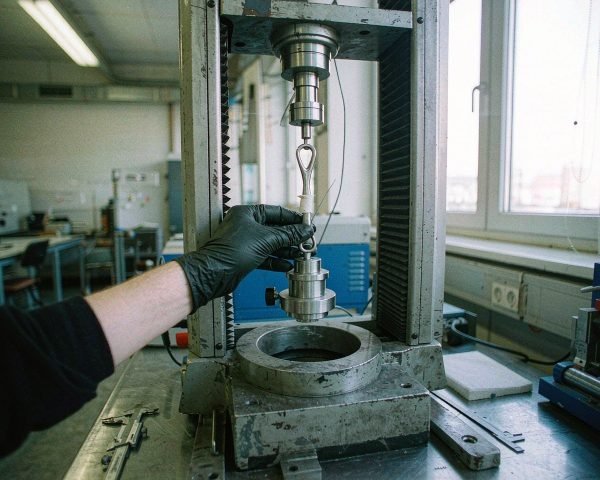

# What Consumables Does Creep and Fatigue Testing Need?
Creep and fatigue testing is hard on consumables because the tests themselves are long, hot, and repetitive. A creep frame might hold a specimen under load for 2,000 hours while a fatigue rig can chew through thousands of cycles per second, and both eat through small supplies that labs often forget to budget for.
Short answer: creep and fatigue testing consumes dog-bone specimen stock and machining supplies, abrasive cutting and grinding media, polishing compounds, extensometer knife edges and springs, thermocouple wire, furnace elements, and high-temperature adhesives and cements.
The breakdown below covers each category, where the standards draw the line on quality, and what I’d keep on the shelf if you’re running these tests regularly.
The Consumables List at a Glance
| Consumable | Used for | Typical turnover |
|---|---|---|
| Specimen bar stock + tooling inserts | Dog-bone and hourglass specimens | Every test |
| Abrasive cutoff wheels and grinding belts | Slitting bar stock, rough shaping | Weekly to monthly |
| Polishing paper and compounds (down to 1 µm) | Final gage-section finish | Every specimen |
| Extensometer knife edges, springs, clips | Strain measurement on the specimen | Worn or lost per campaign |
| Type K/N/R/S thermocouple wire | Furnace and specimen temperature | Drifts over months |
| High-temp adhesives and ceramic cements | Mounting gauges and thermocouples | Every elevated-temp test |
| Grip inserts, grease, anti-seize | Securing specimens, thread protection | Every installation |
Specimens and the Machining That Makes Them
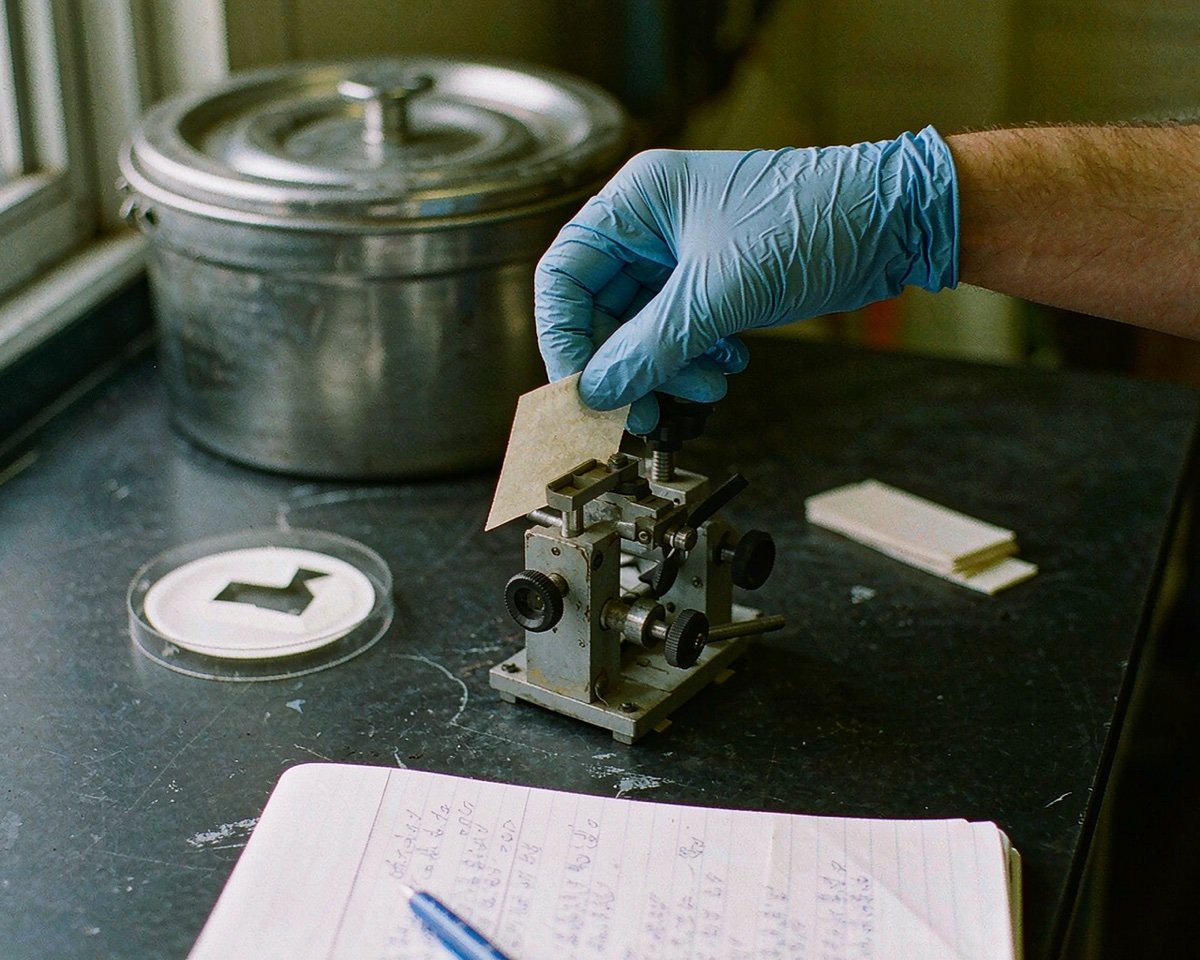
Everything starts with the specimen. Creep testing to ASTM E139 and fatigue testing to ASTM E466 both call for machined specimens with tight concentricity and surface-finish control, and most labs buy bar stock and cut dog-bone or hourglass profiles in-house.
That machining is a consumable story of its own. Cutoff wheels, lathe inserts, end mills, and coolant all get used up, and the final gage section gets finished by hand with abrasive paper. I’ve sat with a bench covered in 240, 400, 600, 800, and 1200 grit paper, working down to a finish better than 0.2 µm Ra before a low-cycle fatigue run.
Why the fuss? Because surface defects are where fatigue cracks start. Research on additively manufactured steels shows rough, as-built surfaces can cut fatigue life by an order of magnitude compared with polished ones (NCBI/PMC), and the same logic applies to any machined coupon. In my experience, most labs get away with a mediocre finish until one specimen fails early and the whole dataset gets questioned. Then everyone buys better polishing supplies.
One practical tip: cut specimens in the same orientation relative to the bar stock every time. Rolling direction matters for fatigue, and a mixed batch is a quiet source of scatter.
Extensometer Knife Edges, Springs, and Clips
Contact extensometers grip the specimen with knife edges or spacer wedges, held on by springs or clips. Those edges wear, chip, or vanish (they’re small and they bounce when a specimen breaks at 10,000 Hz). Strain-controlled work per ASTM E606 demands accurate strain measurement for the whole test, so worn knife edges don’t just reduce accuracy, they can quietly shift your modulus reading.
Keep spares for every extensometer in the lab. Springs lose tension, ceramic edges on high-temp rigs crack, and adhesively attached gauge bases get scraped off with each removal. This is also where high-temperature adhesives earn their keep: at furnace temperatures above roughly 400 °C, you’re bonding ceramic knife-edge bases or gauge mounts with specialized cements rather than clamping springs. Cure those cements properly; a rushed cure near 150 °C shows up as drift mid-test.
Thermocouples and Furnace Consumables
Creep frames hold temperature for months, sometimes unattended, and ASTM’s own guidance notes that creep properties are highly sensitive to temperature, which is why its thermocouple guide for elevated-temperature mechanical testing exists (ASTM E633-21a). That guide covers Type K, N, R, and S wire, all of which drift with time and heat exposure.
My rule: replace thermocouple wire on a schedule, not on failure. Base-metal types (K and N) are cheap but drift faster; noble-metal types (R and S) hold calibration longer and cost accordingly. I once watched a creep campaign lose a 3,000-hour specimen at 2,940 hours because a Type K leg had drifted enough to push the control point off spec. Recertification would have caught it. Since then, my default is new wire for anything expected to run past 1,000 hours.
Also in this bucket: furnace heating elements, ceramic insulation, sheaths, and the quartz or alumina sleeves that protect wiring inside hot zones. On the international side, the current edition of uniaxial creep testing practice, ISO 204:2023, expects you to document temperature control across the whole test, and that documentation is only as good as your wire.
Strain Gauges, Adhesives, and Small Chemistries
Room-temperature fatigue work still uses bonded strain gauges for alignment checks and special measurements, which means gauge adhesive, solder, and cleaning solvents join the list. Alignment verification to ASTM E1012 is standard practice on servo-hydraulic frames, and labs doing it regularly go through gauging supplies quickly.
High-temperature work leans on ceramic-based cements and related chemistries instead. Keep the inventory small but fresh; these adhesives have shelf lives, and expired cement fails in exactly the way that wastes a six-week test.
Buying Notes and What to Stock
A few things I tell people setting up a mechanical lab:
1. Buy polishing consumables in bulk. Paper, compounds, and belts never expire and you will always need them.
2. Standardize on one thermocouple type per furnace zone where possible so spares cover multiple frames.
3. Track knife edges and springs like tools, not consumables, or they’ll disappear.
If you’re building out the wider lab alongside your creep and fatigue testing rigs, the same logic applies to other benches. Our guide to metals and materials testing lab consumables covers the broader metal-testing picture, and if you also run hardness testers, the consumables for hardness testing are simpler but just as easy to under-order.
High-temperature creep work often touches ceramics and refractories too, so our ceramics testing lab consumables guide is worth a read before you spec furnace furniture. And if your lab handles polymers as well, melt flow testing has its own small consumables list, which we cover in the melt flow index testing guide.
Conclusion
Creep and fatigue testing rewards labs that treat consumables as a budget line, not an afterthought. Specimen stock, machining and polishing supplies, extensometer knife edges and springs, thermocouple wire, and high-temperature adhesives are the categories that will run dry mid-campaign if you don’t plan for them, and each one is cheap insurance against a failed or disputed test. My advice: set par levels for polishing media and thermocouple wire, keep extensometer spares in a labeled drawer, and never start a multi-thousand-hour creep run on wire you haven’t verified. Getting the supply side right means your data, and your reputation with customers, rests on the material and the method, not on a worn knife edge or drifted thermocouple. If you’re mapping out the rest of the lab, start with our metals and materials testing consumables guide, then check the hardness testing guide for the bench most shops run first.
Frequently Asked Questions
What is the difference between creep and fatigue testing?
Creep testing applies a constant load at constant temperature and measures deformation over time, often thousands of hours. Fatigue testing applies cyclic loading and measures how many cycles the specimen survives.
Why does surface finish matter so much for fatigue specimens?
Fatigue cracks almost always start at surface defects, so a rough finish acts like a pre-existing crack. Polishing to a sub-micron finish removes those initiation sites and reduces scatter between specimens.
Which thermocouple type should I use on a creep frame?
Type K or N works for most base-metal work below about 1,000 °C, while Types R and S hold calibration better at higher temperatures or over long runs. Replace or recertify wire based on cumulative hot hours, not just age.
How many spare extensometer knife edges should a lab keep?
At least one full set per extensometer, plus springs or clips, is a sensible floor. High-cycle fatigue labs tend to keep two sets because broken specimens scatter hardware across the room.
Are specimen machining supplies really “consumables”?
Yes. Cutoff wheels, lathe inserts, abrasive paper, and coolant are all used up per batch, and their quality directly affects specimen geometry and finish. Budget them alongside the test specimens themselves.