
# What Consumables Does Food Contact Migration Testing Need?
If you run food contact migration testing, the instrument is rarely the weak link. The consumables are. A failed overall migration result or a noisy chromatogram usually traces back to the wrong simulant, a leaking cell, or a vial that was never rated for isooctane.
Food contact migration testing needs certified food simulants (ethanol, acetic acid, isooctane), migration cells and cups for the exposure step, Tenax for dry foods, and LC-MS or GC-MS consumables such as compatible vials and PTFE filters.
Here is the full list, grouped by workflow stage, with the small details that decide whether your result survives an audit.
Start With the Food Simulant, Not the Instrument
Under EU Regulation 10/2011, you rarely test with real food. You use standardized simulants that mimic each food type. Pick the wrong one and the whole exposure has to be repeated, which is a week of oven time gone.
| Simulant | Composition | Stands in for |
|---|---|---|
| A | 10% ethanol | Aqueous foods (juice, milk) |
| B | 3% acetic acid | Acidic foods (pickles, sauces) |
| C | 20% ethanol | Foods with some alcohol or fat |
| D1 | 50% ethanol | Dairy, oil-in-water emulsions |
| D2 | Vegetable oil (or isooctane / 95% ethanol as alternatives) | Fatty foods |
The summary of Regulation (EU) No 10/2011 also defines the contact conditions. Ten days at 40 °C covers long-term room-temperature storage. Two hours at 70 °C covers hot filling. Repeat-use articles get exposed three times in a row.
What you actually order for this stage:
• Certified simulants: LC-MS grade ethanol, glacial acetic acid, pesticide-grade isooctane
• Volumetric flasks and graduated cylinders for mixing
• Aluminum foil to cap the exposure vessels and cut evaporation losses
One note on D2. Olive oil gives messy gravimetric work, so most labs use the isooctane or 95% ethanol alternatives where the regulation allows them. My default is 95% ethanol for fatty work unless the client’s specification insists on oil. And prepare simulants with purified water. I once watched a whole exposure batch get scrapped because the 50% ethanol was mixed with tap water; the mineral background kept the LC baseline from settling for the entire run.
Overall Migration: Cups, Cells and a Patient Oven
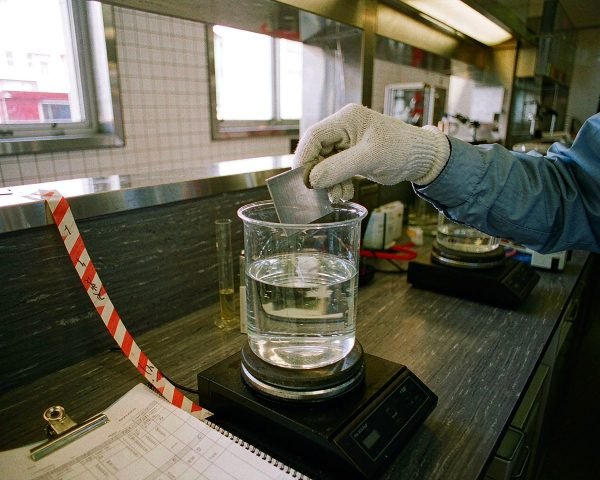
Overall migration (OM) measures everything that transfers from the material, with a limit of 60 mg per kg of food, or 10 mg per dm² of contact surface. The method is simple in theory: weigh a sample, expose it, weigh what migrated. In practice, the consumables carry the result.
You need:
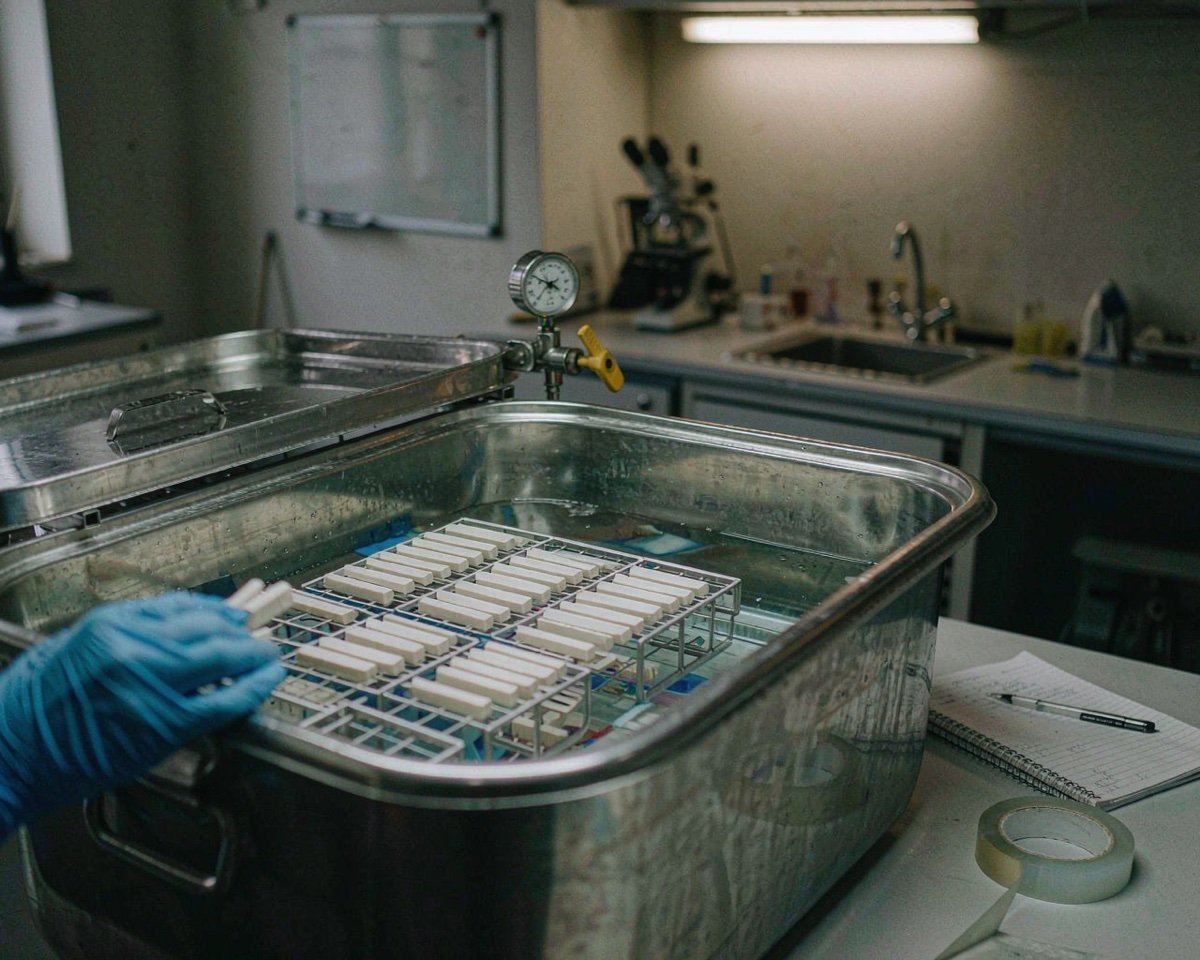
• Glass cups, dishes or total-immersion beakers for the simulant
• Single-sided and two-sided migration cells for films and sheets
• An analytical balance reading to 0.1 mg
• An incubator or oven that holds 40 °C (or 60/70 °C for accelerated conditions) within a degree
Cut your coupons cleanly and record the exact exposed area. If a 1 dm² coupon is actually 0.97 dm², your normalization is off by 3% before the analysis even starts. Keep a dedicated set of OM glassware too, washed with water only. Detergent residue silently inflates OM results, and it will not show up in any certificate you receive.
For an example of how these conditions get applied to real materials, this can-coating migration study on food simulants runs the classic 10 days at 40 °C across water, 3% acetic acid, 50% ethanol and isooctane.
Specific Migration: Where Vials and Filters Earn Their Keep
Specific migration (SM) targets individual substances against their SMLs, which are often set in the low µg per kg range. This is LC-MS or GC-MS territory, and it is where cheap consumables cost you the most. The Agilent food contact materials testing hub shows the typical target lists: primary aromatic amines, PFAS, melamine, photoinitiators.
For this stage, my bench list:
• Amber 2 mL vials with PTFE/silicone septa. Isooctane and 95% ethanol attack non-PTFE liners, and the extract comes back with plasticizer peaks you cannot explain.
• 0.2 µm PTFE syringe filters for organic simulant extracts before LC-MS. Glass fiber works for pre-filtering oily matrices.
• Vial inserts for low-volume extracts, plus crimp caps for anything volatile going to GC-MS
• LC-MS grade water, methanol and acetonitrile for mobile phases
• A guard column, because simulant residues are unkind to analytical columns
A word on blanks. Run a reagent blank through the full path, filter included, before you trust a low-level result. In PFAS work this is not optional; instruments, solvents and consumables themselves are documented contamination sources. If your lab also runs vitamin analysis by LC, the same amber vials and filters usually serve both workflows, so consolidate the order.
Dry Foods: Tenax, and Why the Powder Is Fiddly
You cannot pour a simulant over a cereal box. For dry foods, the accepted simulant is Tenax (modified polyphenylene oxide, often sold as Tenax TA, 60/80 mesh). You spread it over the material at a defined mass-to-area ratio, hold it at 60 °C for 10 days, then extract and analyze.
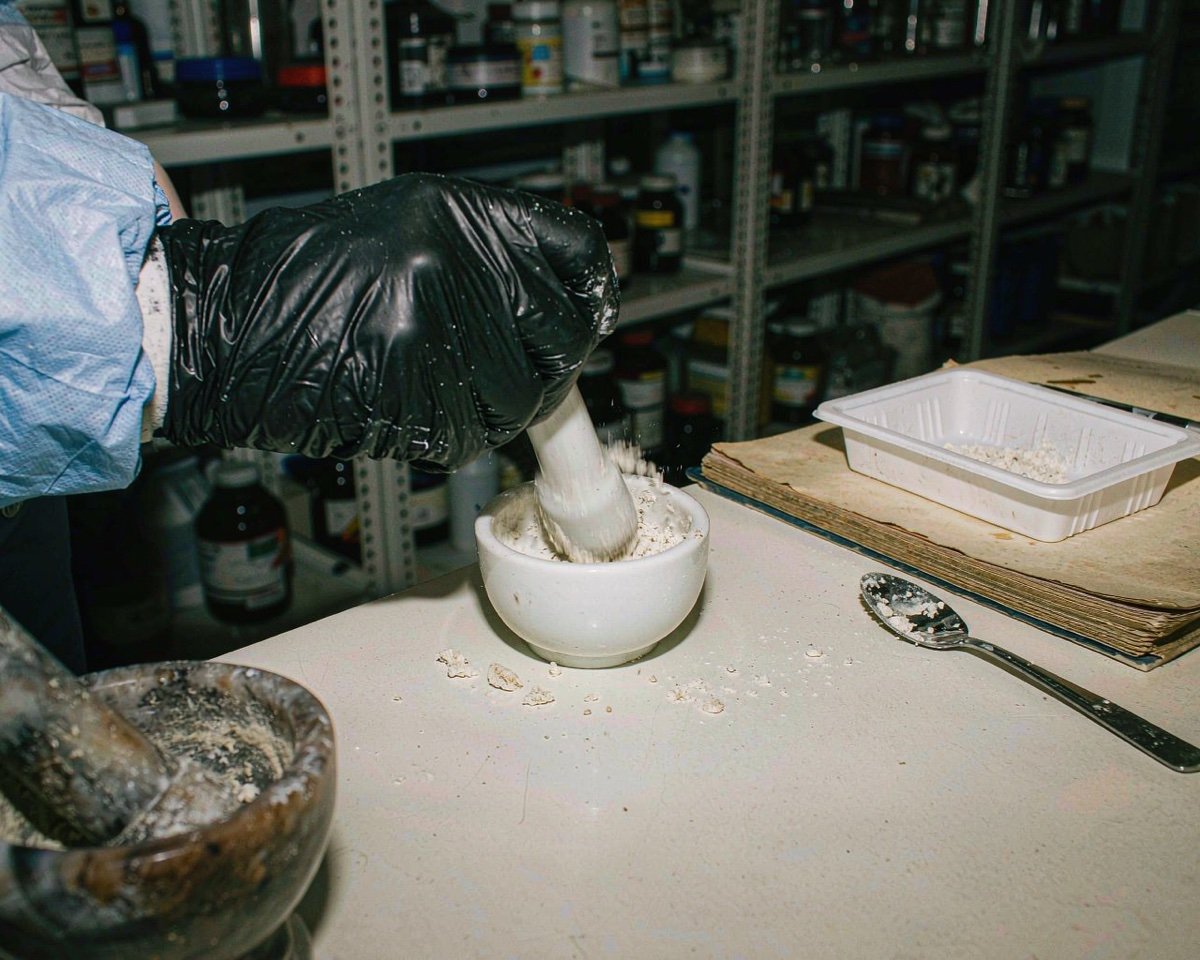
Handling it well is a skill. The powder clumps, carries static, and escapes every scoop you own. In my experience, most labs get away with dosing it by volume until a proficiency test embarrasses them. Weigh it, every time, and keep the exposure dishes covered with foil. Researchers have even developed Tenax films to make contact testing of cardboard reproducible, which tells you how common the handling problem is.
Consumables here: the Tenax itself, glass petri dishes or shallow trays, foil, extraction solvent (usually a mix of methanol and dichloromethane depending on your targets), and cleanup cartridges if your extract looks dirty.
Buying Notes Before You Order
A few rules that have saved me re-orders:
1. Check chemical compatibility before price. A polystyrene vial meets isooctane and dissolves. A polypropylene cup that survives 10 days may not survive a 10-hour soak at 70 °C.
2. Buy simulants in small bottles. Opened ethanol slowly absorbs water, and your “95%” drifts.
3. Keep spare PTFE-faced seals and gaskets for every migration cell. A slow leak loses solvent volume, which inflates your OM result.
4. Dedicate glassware. OM dishes, simulant mixing glass and LC vials each get one job. It is the same discipline behind clean work in allergen testing: nothing shared, nothing carried over.
If you want the broader picture of what a food lab stocks end to end, our food testing lab consumables guide covers the whole bench, not just migration.
Conclusion
Food contact migration testing succeeds or fails on the consumables long before the sample reaches the detector. Match the simulant to the food, keep dedicated OM glassware and cells in good condition, filter every extract through compatible PTFE, and treat Tenax as a weighed reagent rather than a scoop of powder. None of these items is expensive on its own, but the wrong one costs you a week of exposure time or a result you cannot defend. If you are building out the rest of the workflow, our packaging and transit lab consumables guide picks up where migration ends, and the general food lab guide above is a good bookmark for procurement season.
Frequently Asked Questions
What are the official food simulants?
EU Regulation 10/2011 defines five: A (10% ethanol), B (3% acetic acid), C (20% ethanol), D1 (50% ethanol) and D2 (vegetable oil, with isooctane or 95% ethanol as alternative fatty simulants). Each maps to a defined food type.
What temperature and duration do migration tests use?
The default is 10 days at 40 °C for room-temperature storage. Hot-fill applications use 2 hours at 70 °C, and materials intended for repeated use are exposed three consecutive times.
Why use isooctane instead of olive oil?
Olive oil analysis is slow and gravimetric. Isooctane and 95% ethanol are simpler to handle and analyze, and the regulation permits them as alternative fatty simulants for most cases, with corrections applied.
What is Tenax used for in migration testing?
Tenax TA is the standard dry-food simulant, a porous polyphenylene oxide powder. It is spread over the material at a set mass-to-area ratio and held at 60 °C for 10 days, then solvent-extracted for analysis.
Which syringe filter should I use for simulant extracts?
Use PTFE membranes for organic simulants like ethanol and isooctane, typically 0.2 µm before LC-MS. PTFE tolerates organic solvents; nylon and mixed-cellulose filters do not always hold up.