
# 10 Consumables Questions to Answer Before Buying a New Instrument
A quote for a new instrument covers the box. It rarely covers what the box eats. A busy QC HPLC can burn through 400 vials, 300 syringe filters, and a set of pump seals every quarter, and none of that appears on the sales sheet.
Short answer: Before buying a new instrument, ask ten things: what it consumes daily, whether your current vials and filters fit, which supplies are proprietary, what the start-up kit includes, which wear parts fail first, what installation needs, how your methods transfer, how consumables age in storage, the true cost per sample, and the supplier’s lead times.
I’ve sat on both sides of this deal, as the buyer signing the PO and the supplier packing the boxes. These are the questions I wish more buyers asked before the money moved.
1. Which consumables does this instrument burn through daily?
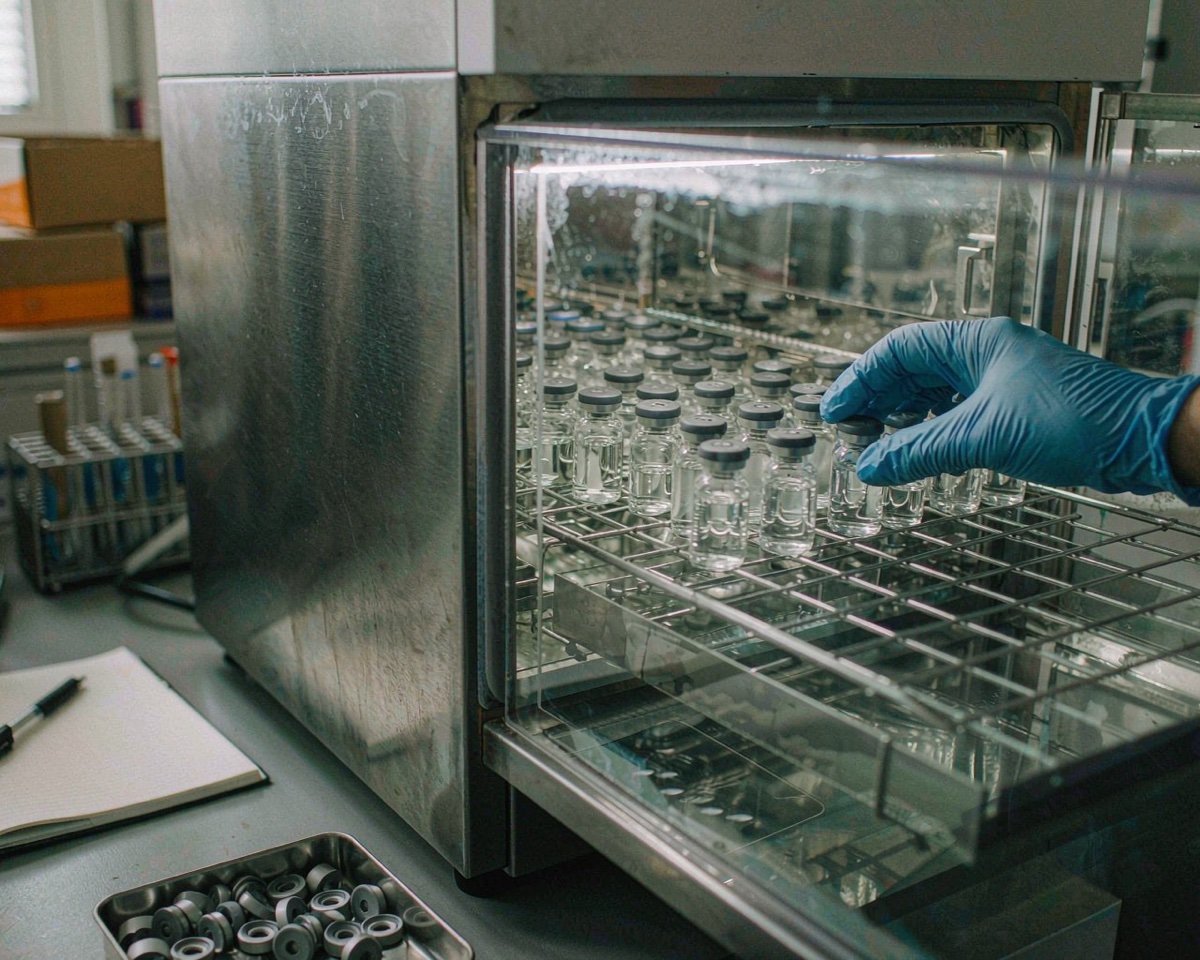
Picture the busiest HPLC in your lab. Every injection costs a vial, a cap, and usually a filtered sample. Run 80 injections a day and you can pass 400 vials a week without noticing, because the empty boxes just vanish from the bench.
Burn rate starts with injection count. Multiply daily injections by every single-use item in the sample path. Vials and caps are the obvious ones. Syringe filters, guard cartridges, and pre-filters run close behind. Needle wash solvent and mobile phase belong in the math too, even though nobody counts them as consumables until the reorder email arrives. Accessories multiply quietly as well. A second detector adds a lamp to the roster, and a fraction collector adds collection vials that nobody budgeted. If the instrument comes with a prep station or a solvent selection valve, each module brings its own little shopping list.
Then add the hidden drain: failed sequences. A system that throws 2% reruns quietly turns 400 vials a week into 408, plus the analyst time to prep them twice, plus the instrument hours you didn’t budget for.
My advice is unglamorous but it works. Track two normal weeks before you sign anything. Log injections, filters, and reruns by hand if you have to. Multiply by 50 working weeks. That number, not the brochure, is what you’re really buying.
2. Will it run the vials and filters you already have on the shelf?
Most labs don’t start from zero. There’s a cupboard with 2 mL clear glass vials, a box of 0.22 µm PTFE filters, and half a case of 9 mm caps already paid for. A new instrument should fit that stock, not force a restock.
The good news: the 12 × 32 mm vial with a 9 mm screw thread (the 9-425 standard) fits autosamplers from Agilent, Waters, Shimadzu, and Thermo in most configurations. That’s why I default to it whenever a fleet mixes brands. But “most” is doing real work in that sentence. Some setups specify different needle depths, magnetic or flat caps, or particular septa thicknesses for a set puncture count. Ask specifically how the autosampler detects vial presence and height, because a sensor set up for a different vial format can bend needles or skip injections during your first month.
Filters are simpler. A 13 mm or 25 mm housing is near-universal, and the membrane choice depends on your solvent, not your instrument brand.
Do this before you buy: pull the instrument’s consumables and accessories list, then compare it line by line against your shelf. If the new system strands 30,000 perfectly good vials in your cupboard, that’s a real cost hiding inside a “compatible” purchase.
3. Proprietary or generic: who controls your supply line?
Some vendors sell instruments. Others, intentionally or not, sell a subscription to their consumables catalog.
Lock-in has a physical side: fittings, capillaries, and lamp formats designed so only the vendor’s parts fit. It has an electronic side too: smart supplies with RFID tags that the instrument recognizes, plus warranty language that gets vague the moment a third-party vial shows up in the logbook.
I’ll give you my opinion outright. For routine sample-contact items such as vials, caps, and filters, a good compatible brand performs the same and costs far less, and I’ve watched lot after lot prove it. For electronically tagged wear parts, read the warranty terms in writing before you decide. Neither choice is wrong. What matters is that the decision stays yours, made on price and performance, rather than something that happened by default when the instrument arrived.
The deeper question is contractual. Does using non-OEM consumables void anything, on paper? Get that answer before the PO, not after the first service visit. We compared OEM and compatible vials in detail in OEM vs branded vials: what’s the real difference, if you want the full breakdown.
4. What actually ships in the start-up kit?
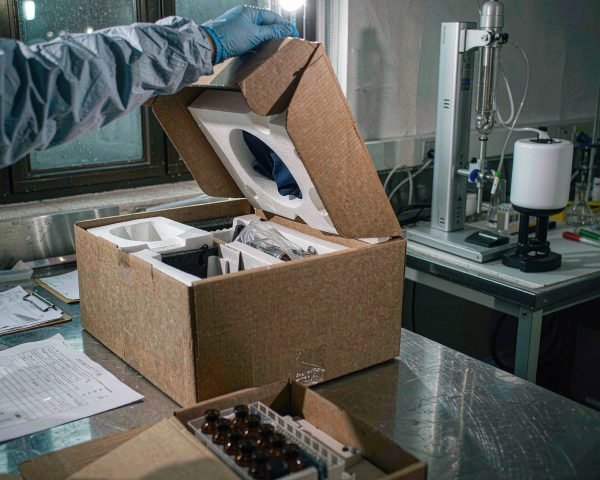
Vendors bundle consumables with new instruments, and the contents vary more than buyers expect. Agilent’s InfinityLab convenience kit for the 1290 Infinity II, for example, lists 500 certified 2 mL vials, five packs of bonded preslit caps, four 1 L solvent bottles, stainless steel solvent inlet filters, an inline filter assembly, and a complete set of system capillaries with fittings.
That’s a genuinely useful box. It covers your first weeks without a single extra order.
But look at what it doesn’t include. No syringe filters. No guard cartridges. No mobile phase. And the kit is sized for one system doing routine work, not for method development, where vial consumption can triple overnight. One buyer told me his kit lasted exactly as long as the acceptance testing, which is the most honest review a start-up kit ever gets.
So ask the sales engineer for the exact packing list rather than the marketing summary. Inventory it against the burn-rate math from question 1. Then order the gap yourself, ideally before the install date, because a system that arrives without filters or bottles will sit idle while you wait on a shipment you could have placed a month earlier.
5. Which wear parts fail first, and can you get them quickly?
Every LC has a predictable hit list. The deuterium lamp tops it: Agilent rates its long-life lamps for 2000+ hours of use, and standard lamps fade well before that. Pump piston seals come next, especially on systems running buffered mobile phases daily. Add injector rotor seals, autosampler syringes, and the check valves that start misbehaving when pressure wanders. These few parts cause most unplanned downtime on a chromatograph.
Replacement intervals depend on your solvents, your run volume, and honestly, your luck. A seal that lasts a year on clean reagent water might give you three months on a high-salt assay. Vendor stores are refreshingly blunt about this: Shimadzu’s HPLC maintenance parts catalog lists seals, syringes, and rotor kits with real prices, which makes the spares conversation concrete instead of hand-wavy.
Buyers skip the follow-up question, and it’s the one that hurts: how fast does each wear part ship to your region? I once watched a lab idle a brand-new system for nine days because one inlet solvent filter was backordered. Nine days of an expensive instrument doing nothing, over a part that costs less than lunch. We put numbers on that pain in what autosampler downtime really costs.
6. What does installation consume before day one?
A new system doesn’t run on the crate it ships in. Installation day eats capillaries, fittings, solvent inlet filters, waste tubing, and column hardware, and some of those are sold separately from the instrument.
Fittings deserve special attention. Agilent’s current systems use their own Quick Connect and Quick Turn fittings, while Shimadzu and Thermo platforms mostly use conventional 10-32 coned connections. They don’t interchange. If your engineers already standardize on finger-tight PEEK fittings from one supplier, confirm the new platform accepts them, or budget for the vendor’s capillary kit instead of fighting it.
Solvent inlet filters are the classic day-one failure. Everyone assumes they’re in the box. Half the time they’re a separate line item, and mobile phase won’t draw properly without one. Waste tubing and bottle caps round out the list, and they’re cheap enough that ordering doubles of everything costs less than a single delayed startup.
Ask the installation engineer for the site-preparation document and the list of consumables the install itself requires. Shimadzu publishes spare parts and consumables guides per instrument, which turns this check into a ten-minute exercise. Then keep that list somewhere useful. You’ll reuse it at every service visit and every future purchase.
7. Will your methods transfer cleanly, or start over?
Consumables and method transfer sound unrelated. They’re not.
Gradient methods depend on dwell volume, the volume between the mixing point and the column head. Change instruments and that volume changes, which shifts retention times and occasionally resolution. Capillary diameters and fittings shift extra-column volume too, and narrow-bore columns feel every microliter of it. Pharmacopeial rules allow limited adjustments when a method moves between systems, but the limits are tight and revalidation eats weeks.
The consumables angle is easy to miss. Your new system might specify different capillary internal diameters, a different guard column format, or a different vial format for its autosampler. Each one nudges the method a little, and small nudges add up. Peak shapes can drift too, since a new capillary route puts extra volume in different places than the old system had it.
My practical answer: before final acceptance, run your two most critical methods on the exact configuration you’re buying, with the exact consumables you’ll use in production. If retention times drift past your system suitability limits, far better to learn it during the demo than during an audit. Then write the consumable part numbers into the method transfer report, so nobody “improves” them six months later without telling anyone.
8. How long do dedicated consumables last in storage?
Buying in bulk feels smart until the stock ages out. Septa are the sensitive ones. The silicone layer hardens over the years, and old septa core, crack, and leak in ways that show up as evaporation losses and mystery peaks. Pre-slit caps are fussier still. Most vendors don’t print an expiry date on a vial box, but the certificate inside carries a lot number, and aging announces itself in your blank chromatograms long before anyone connects the two.
Columns and membranes age as well. Silica-based columns have shelf lives, and syringe filters can dry out or take up moisture depending on the membrane chemistry.
The trap is overstocking certified consumables. A pallet of vials with dated certificates of analysis can raise questions at your next audit if the lots are three years old when first opened.
Size your orders against the burn rate from question 1, not against a bulk-discount email. Rotate stock oldest-first, keep septa cool and sealed, and if you run a regulated lab, write the storage rules into your SOP before the pallet arrives rather than after.
9. What does one sample actually cost?
The vial price is the smallest number in the real calculation. Cost per sample stacks the vial and cap, then the filter, then mobile phase, then column wear per injection, and finally the loaded cost of instrument time, analyst included. Leave any of those out and every comparison between vendors becomes fiction.
Thermo Fisher publishes an HPLC total cost of ownership calculator that takes gradients, column prices, solvent costs, and running days, then estimates samples per year and cost per sample for a given system. Even if you never buy their instruments, the input list alone tells you what your own spreadsheet should contain. Instrument time is the number people forget to load properly. Include the analyst, the depreciation, and the QC review, or the cheaper system always looks cheaper than it is.
Run the exercise twice: once with OEM list prices, once with compatible prices. In my experience the consumables gap is the single biggest lever in the whole calculation, often bigger than any discount the salesperson offers on the instrument itself.
We ran exactly this arithmetic for a full year of operation in a year of consumables for a 3-instrument lab: the math, and the annual total surprised even me.
10. What are the supplier’s lead times and minimum orders?
Consumables don’t arrive the way instruments do. An instrument ships against a quoted project date. Consumables ship from stock, or they don’t ship at all. Vendor stores admit this openly: Shimadzu’s own parts catalog marks certain items “not in stock, replenishment times may vary,” and that’s a warning worth taking seriously before you build a purchase plan around any part number.
Minimum orders shape small labs the most. Vials sell in cases of 100 or more. Filters come in 100-packs. Some specialty items come in pack sizes built for a lab three times yours, and you eat the surplus.
Get two answers in writing before you sign: current stock levels for your top ten part numbers, and the real lead time to your country, MOQs included. Ask for stock, not catalog availability. A part number that exists in a catalog on three continents can still sit on a backorder list for a month.
One last habit worth copying from well-run labs: hold a safety stock of wear parts. A spare lamp and a seal set on the shelf cost less than a single week of an idle instrument, and they turn your worst Thursday into a twenty-minute fix.
Conclusion
A new instrument is a decade-long relationship, and consumables are the daily conversation within it. The purchase price is negotiable; the burn rate is not. If you get the ten answers above in writing (burn rate, shelf compatibility, lock-in terms, kit contents, wear parts, installation list, method transfer, storage, cost per sample, lead times), you’ll walk into the purchase knowing what the system costs per sample and where that money actually goes, instead of discovering it one backorder at a time.
If I had to shrink all of this to a single action, it would be this: before signing, spend one afternoon comparing the vendor’s consumables list against your shelf and your budget, using real prices. Everything else follows from that. Buyers who do it rarely regret the instrument they chose, and buyers who skip it usually meet the same three or four surprises the rest of us did.
Where to go next: if you’re preparing a tender or just sizing your first big order, our guide to minimum order quantities and lead times for lab consumables covers what suppliers actually commit to before you sign.
Frequently Asked Questions
Should I buy the vendor’s consumables or generic?
For vials, caps, and syringe filters, a quality compatible brand usually performs identically and costs significantly less, especially at high volumes. For electronically tagged parts such as RFID-enabled lamps, check the warranty terms first, and buy OEM if the language is unclear.
What is a typical start-up consumables budget?
It varies by throughput, but a single HPLC with UV detection usually needs a start-up kit plus a few months of vials, caps, filters, mobile phase, and a spare seal set. Ask the vendor for a priced annual consumables pack quote, then compare it against your own burn-rate math from question 1.
Do new instruments need validation consumables?
Yes. Installation, operational, and performance qualification consume reference standards, test mixtures, and qualification solvents on top of routine supplies. USP’s framework for analytical instrument qualification describes the qualification phases these materials support, so add them to the purchase order rather than scrambling after installation.
How many spares should I keep on hand?
One full set of the fast-moving wear parts (lamp, piston seals, injector rotor seal, autosampler syringe) per instrument is a sensible floor. If your supplier’s lead time to your region exceeds two weeks, double it for the parts whose failure stops all work.