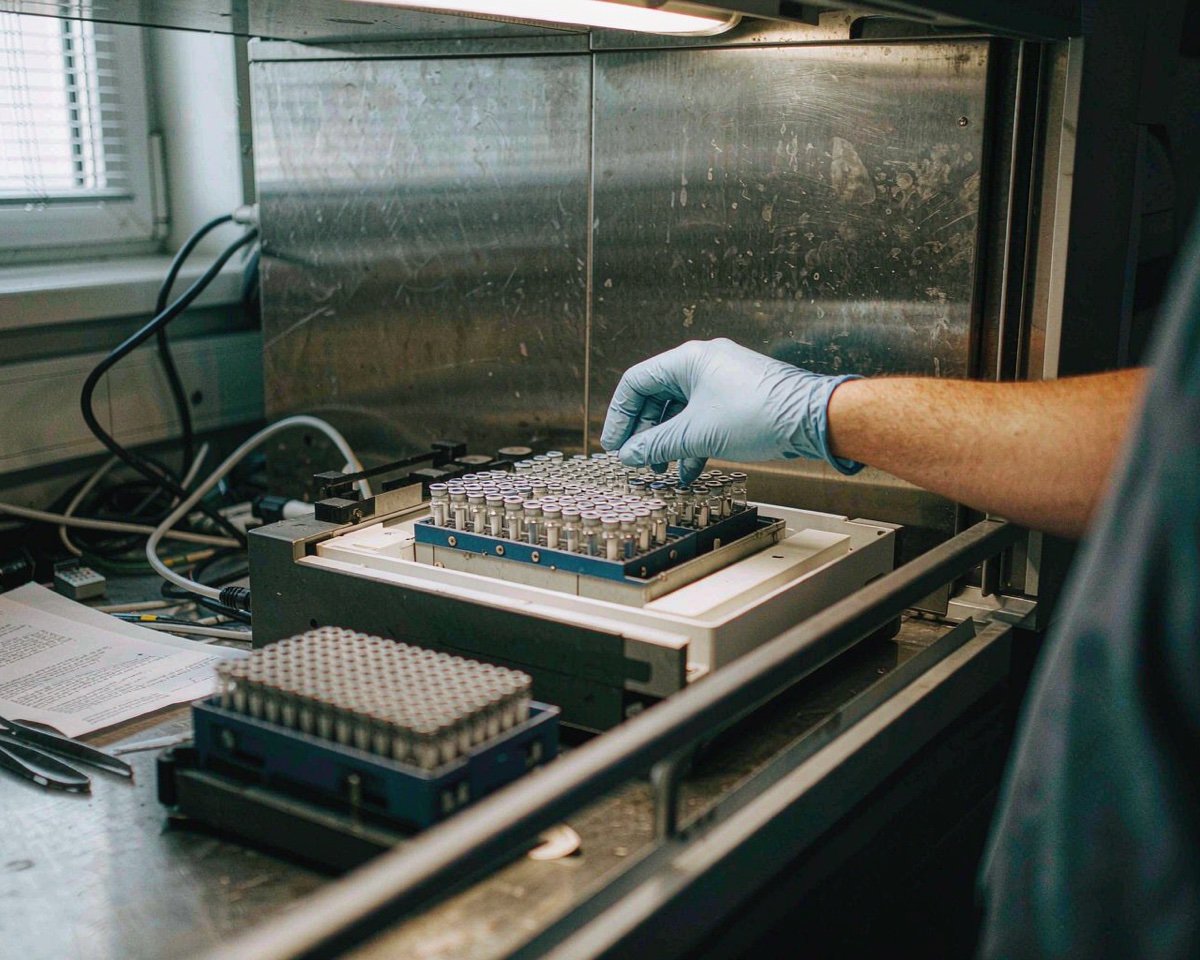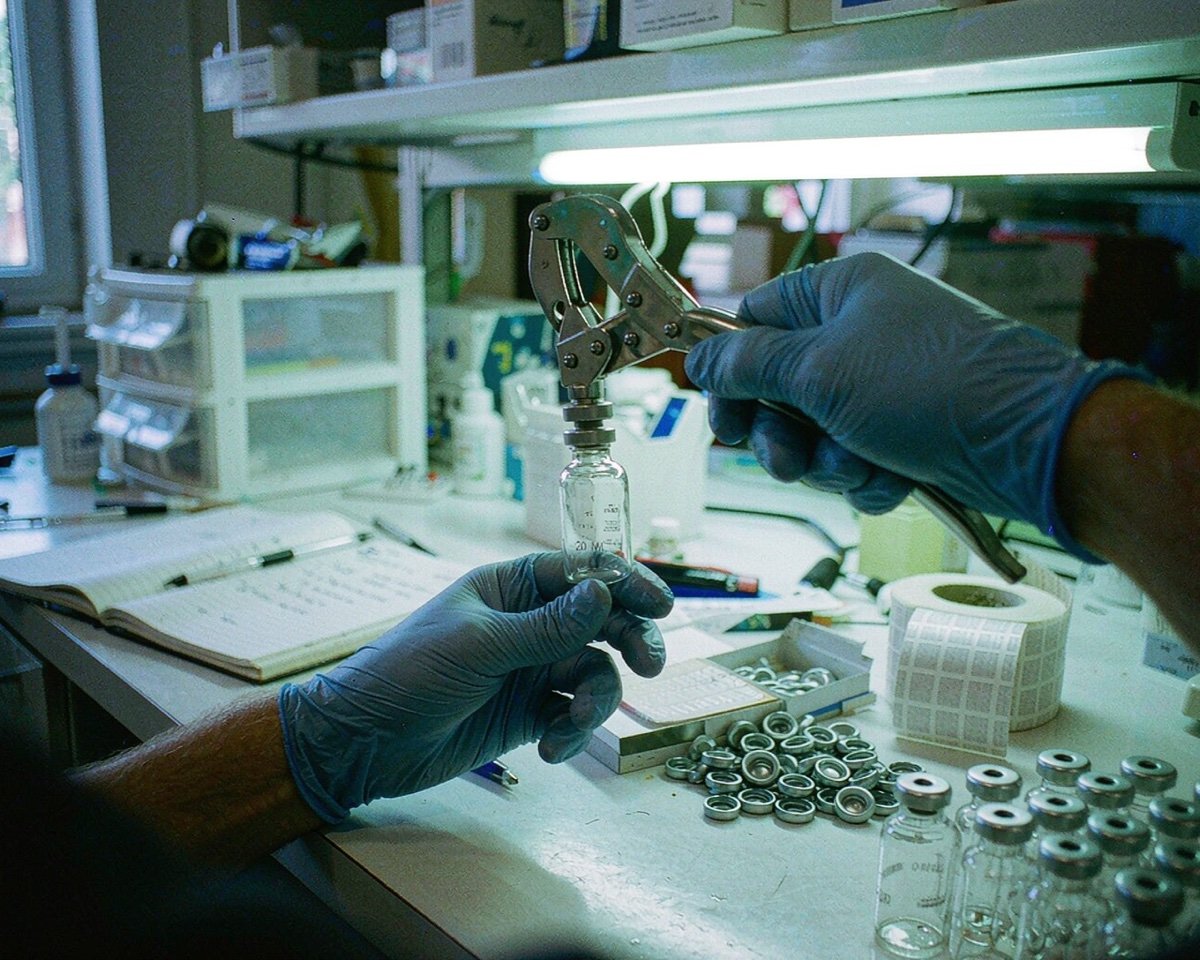
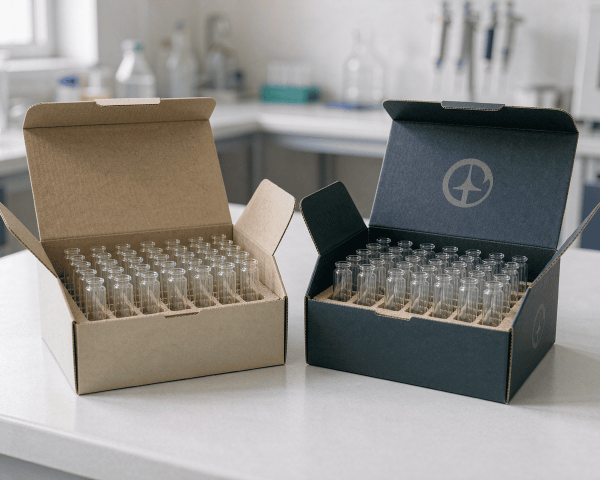

If you’ve ever stared at a box of instrument-branded HPLC vials and wondered why they cost triple the price of an identical-looking vial from an OEM supplier, you’re not alone. Procurement managers ask me this constantly, and the answer is rarely a simple “branded is better” or “generic is cheaper.”
Here’s the honest breakdown: OEM vials and branded vials are often made from the same glass, to the same specifications, on the same kind of production line — the difference is certification, quality control documentation, and brand overhead. A branded vial buys you a guarantee and traceability; a quality OEM vial buys you the same Type 1 borosilicate glass and GPI thread dimensions without the brand markup.
The real question isn’t “OEM or branded?” It’s “how do I verify that the OEM vial actually meets the spec?” Let me walk you through what these terms mean, where the premium comes from, and how to evaluate an OEM supplier with confidence.
What “OEM” Actually Means
OEM stands for original equipment manufacturer. In the lab consumables world, it describes a factory that produces vials, caps, septa, and other consumables that get sold under another company’s brand — or directly to labs under the factory’s own brand.
Here’s the part most buyers don’t realize: instrument companies rarely manufacture their own vials. Agilent, Waters, Shimadzu, and Thermo Fisher all source glassware from specialized glass manufacturers who run the same lines for many customers. Thermo Fisher even markets this openly — their OEM chromatography sample handling program offers custom-labeled vials, closures, and kits to distributors and brands, with options like barcode printing and LC-MS certification.
That doesn’t mean branding is meaningless. It means the difference is in the specification, the testing, and the paperwork — not in some secret glass recipe.
Where the Brand Premium Comes From
When you buy a branded vial, you’re paying for several concrete things:
- Certification and testing. Branded vials typically come with documented cleanliness testing, dimensional checks, and sometimes LC-MS-grade certification for low extractables.
- Traceability. Batch numbers, certificates of analysis, and auditable quality systems give you a paper trail if something goes wrong.
- Guaranteed compatibility. The vendor has tested the vial against its own instruments, so you know the dimensions and thread finish will work.
- Convenience and support. One supplier for the instrument and its consumables, with application support if a problem arises.
That’s a real value proposition for regulated labs. As a specialist supplier put it in their analysis of OEM-branded vial buying, what you’re paying for with an OEM label is “brand positioning and bundled convenience” — and if a quality supplier matches the specification, “the OEM premium is just a procurement habit, not a technical decision.”
What OEM Vials Actually Deliver
A good OEM vial is not a compromise. The key specifications are standardized across the industry:
- Glass type. Type 1 borosilicate glass is the standard for HPLC vials — chemically inert, low extractables, thermally stable. This isn’t proprietary to any brand; it’s defined by glass standards and used by every serious manufacturer.
- Thread finish. The 9-425 thread on a 12×32mm vial is an industry standard, not a brand invention. The “9-425” designation describes a 9mm major diameter with 425 threads per inch, and MicroSolv’s thread specification primer confirms that matching this thread profile between vial and cap is what creates a leak-resistant seal.
- Dimensions. A 2mL vial is 12×32mm regardless of whose name is on the box — those dimensions are set by autosampler tray geometry, not by marketing.
When an OEM vial meets these standards, it performs identically to the branded equivalent in the autosampler. Agilent’s own vials and closures catalog is useful reading here because it documents the dimensional and cleanliness specs that OEM suppliers are actually matching.
The Real Risk Isn’t “OEM” — It’s “Cheap”
Let me be direct about where the danger actually lies. The risk isn’t in buying OEM vials. It’s in buying unverifiable, low-quality vials from suppliers who can’t show you the spec.
I’ve written before about what happens with high imitation HPLC vials — vials that look like the real thing but use soda-lime glass instead of borosilicate, skip dimensional QC, and cut corners on cleanliness. Those can produce ghost peaks, leaky seals, and inconsistent injection volumes that cost far more in reruns than the vials saved.
The distinction you should care about:
| Quality OEM | Unverified “cheap” | |
|---|---|---|
| Glass | Type 1 borosilicate | Soda-lime or unknown |
| Thread spec | GPI standard (9-425, 8-425…) | Unverified |
| Dimensional QC | Documented, tolerances stated | None or undisclosed |
| Cleanliness | Tested, documented | Unknown |
| Certificates | CoA, compatibility matrix available | Not available |
| Price | ~$0.08–0.30/vial | Lower, but undefined |
How to Vet an OEM Supplier Like a Pro
If you’re considering OEM vials — and I think most labs should be — here’s the verification checklist I’d run:
- Ask for the glass spec. If a supplier won’t tell you the glass type and hydrolytic class, walk away. Type 1 borosilicate is non-negotiable for HPLC.
- Ask for the thread finish. A stated 9-425, 8-425, 13-425, or similar GPI designation shows they’re manufacturing to a standard, not a guess.
- Request the compatibility matrix. A reputable OEM supplier publishes which autosamplers their vials fit and cites the dimensional tolerances.
- Ask for a certificate of analysis and cleanliness data. Real OEM factories test extractables and particulates; the documentation should exist.
- Run a pilot batch. Test 100–200 vials through your actual autosampler before committing to a large order. Vial position, seal integrity, and carryover will tell you more than any brochure.
If you’re sourcing from China — where much of the world’s vial manufacturing happens — my 10 tips for buying HPLC consumables from China without the stress covers the factory-audit and documentation questions that separate good suppliers from bad.
When Branded Still Makes Sense
Let me be fair to the branded camp. There are situations where the brand premium is worth it:
- Regulated methods with audit requirements. If an auditor expects certificate-backed, brand-traceable consumables, branded vials simplify the evidence trail.
- LC-MS trace analysis. Certified low-extractables vials give you documented assurance that the container isn’t contributing background — worth it when you’re chasing ng/mL levels.
- Low-volume labs. If you use a few hundred vials a year, the price gap between OEM and branded is small, and the convenience of one-stop buying wins.
- Method transfer or reproducibility disputes. When a client or regulator asks “what exactly did you use?”, a branded part number is an unambiguous answer.
My pricing guide for HPLC vials digs into when certified vials justify their premium and when they’re pure waste — it’s the same “match certification to method sensitivity” logic applied to your budget.
Conclusion
The real difference between OEM and branded vials is not the glass — it’s the guarantee. Branded vials bundle certification, traceability, tested compatibility, and convenience into the price. Quality OEM vials deliver the same Type 1 borosilicate glass, the same GPI thread finishes, and the same 12×32mm dimensions at a fraction of the cost, because you’re buying the spec instead of the brand story. The decision rule is simple: buy branded when your method, regulator, or auditor demands documented certification; buy OEM when you can verify the spec yourself — and always verify. Ask for the glass type, the thread designation, the compatibility matrix, and a certificate of analysis, then test a pilot batch through your autosampler. Do that, and OEM vials aren’t a gamble — they’re one of the smartest procurement decisions in the lab. When you’re ready to compare suppliers, the 10 questions to ask your vial supplier list gives you the exact script.
Frequently Asked Questions
Are OEM HPLC vials as good as branded ones?
Yes, when they meet the same specifications. OEM vials made from Type 1 borosilicate glass with standard GPI thread finishes and documented dimensional QC perform identically to branded vials in the autosampler. The difference is certification and traceability, not material quality.
Do Agilent, Waters, or Shimadzu manufacture their own vials?
Generally no. Instrument companies source glass vials from specialized glass manufacturers, often running the same production lines that supply multiple brands and OEM suppliers. What the instrument company adds is specification control, testing, and certification.
Why are branded HPLC vials so much more expensive?
You’re paying for certification, cleanliness testing, batch traceability, guaranteed compatibility, and brand overhead. The glass and dimensions are standard industry specifications; the premium is for the documentation and the guarantee.
What should I ask an OEM vial supplier before ordering?
Ask for the glass type and hydrolytic class, the thread finish designation (like 9-425), the dimensional tolerances, the compatibility matrix for your autosampler, and a certificate of analysis. Then run a pilot batch through your instrument before committing to a large order.
Can OEM vials be used for LC-MS?
Yes, if they’re manufactured to the right cleanliness standards. Some OEM suppliers offer LC-MS-certified vials with documented low extractables. For trace analysis, verify the cleanliness documentation matches your sensitivity requirements rather than assuming all OEM vials are equal.