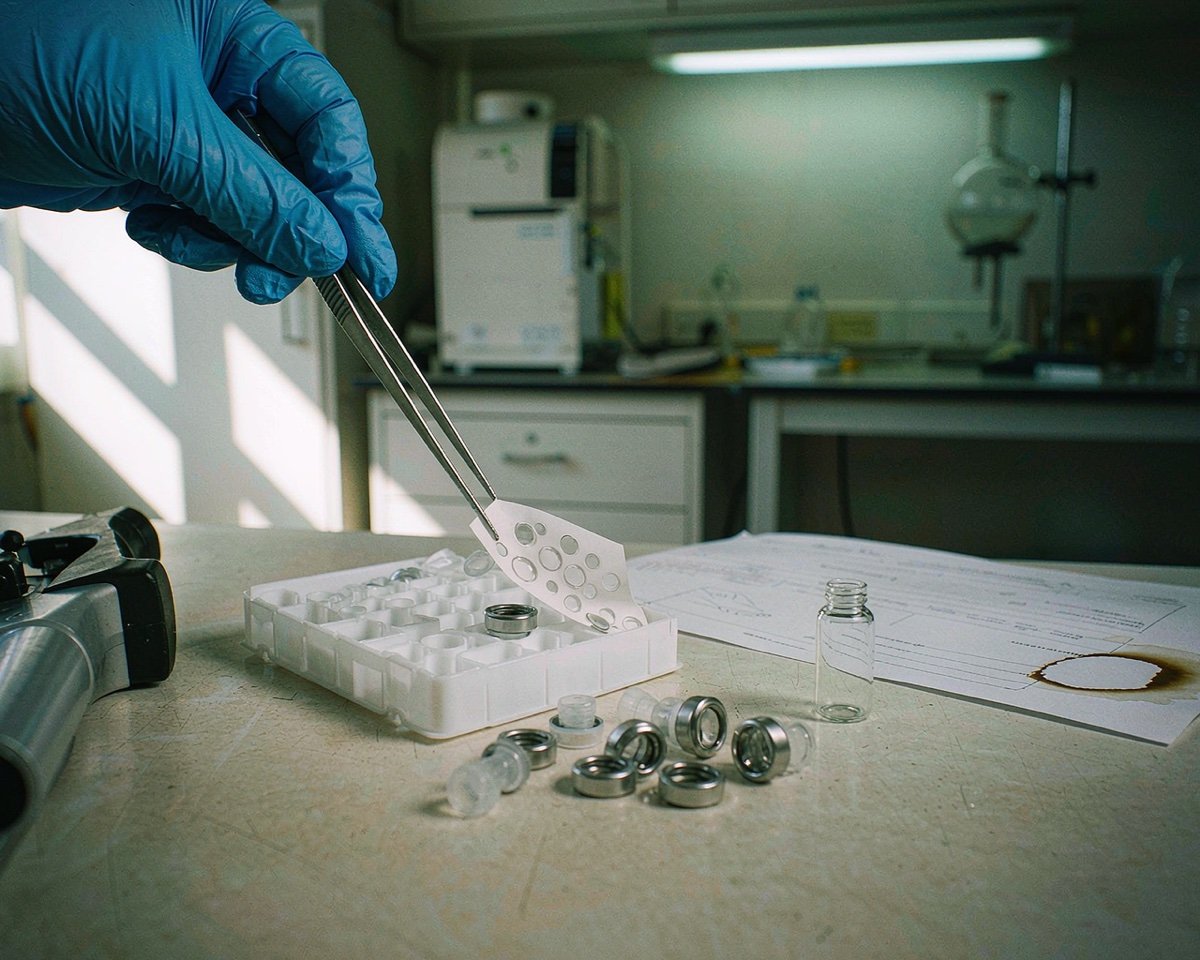
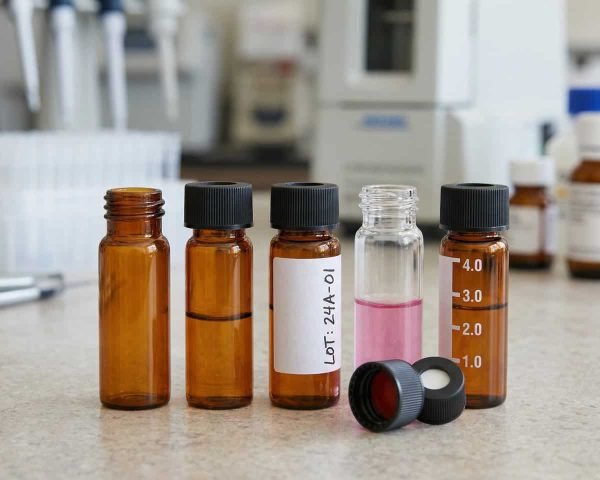

If you’re budgeting a lab or placing your first consumables order, the first question is usually the bluntest one: how much do these vials actually cost? The honest answer is “it depends a lot more than you’d think,” and the spread between the cheapest and the most expensive option can be tenfold.
Here’s the short version: a standard 2 mL HPLC vial costs roughly $0.08 to $0.25 each in bulk, while premium certified borosilicate or low-adsorption vials run $0.30 to $0.80 each, and specialized LC-MS or high-recovery vials can top $1.50 per vial. Most labs buying standard 9 mm screw-thread vials pay around $0.12 to $0.14 each in case quantities.
Let me unpack exactly what drives that range, so you can pay for what you actually need — and not a cent more.
The Bulk Price Reality
The headline number people quote is the bulk, per-vial price, and it’s genuinely low. A study of the autosampler vial market puts standard-grade polypropylene and soda-lime vials at $0.08 to $0.25 per unit in high-volume orders of 100,000 or more. That’s the floor of the market — fine for routine, high-throughput work where you’re running thousands of samples a week.
For most working labs, though, the realistic number is a bit higher. One breakdown of HPLC system costs pegs autosampler vials at about $0.12 to $0.14 each when purchased in bulk. The BiologyInsights HPLC cost guide lists that figure as the standard bulk price for vials, and it’s a good planning number for an annual consumables budget.
To put it in pack terms: a 100-pack of decent clear 2 mL vials lands somewhere around $12 to $21 retail, depending on the source and whether caps are included. The Fisherbrand robotic screw-top vials run about $20.55 for a 100-pack of clear 2 mL vials — roughly $0.21 each — which is a realistic list price for a mainstream brand.
What Drives the Price Up
The gap between a $0.10 vial and a $1.00 vial isn’t marketing — it’s material, certification, and surface chemistry.
Glass quality. The biggest cost driver is the glass itself. Premium vials use Type 1, 33-expansion borosilicate, which is chemically inert and dimensionally stable. Cheaper vials use soda-lime glass, which can leach and interact with samples. Borosilicate simply costs more to produce.
Certification. A “certified” vial has been tested for cleanliness — by LC-UV, by MS, or both — and comes with tighter dimensional tolerances. The IndexBox autosampler vial market report separates the market this way: premium certified vials command $0.30 to $0.80 per unit, with high-spec LC-MS vials exceeding $1.50 per unit. That certification isn’t free — it’s a real test your sample depends on.
Surface treatment. Silanized or “deactivated” glass, which reduces adsorption of polar analytes, adds a processing step and cost. Low-adsorption and high-recovery vials sit at the top of the price curve because they solve a specific, expensive problem: sample loss.
The Accio HPLC vials market analysis puts the high-recovery segment at $0.50 to $2.00+ per vial, driven by specialized manufacturing and surface treatments. That’s a big premium, but if you’re running a precious 20 µL sample through LC-MS, losing half of it to the vial wall costs far more than the vial.
Branded vs. Generic: The Price Gap
This is where the biggest single decision lives, and it’s the one Mastelf’s whole model is built around: branded versus OEM-compatible.
A branded certified vial from Sigma-Aldrich, for example, runs about ¥213 to ¥250 per 100-pack (roughly $29 to $35) for a certified 9 mm amber screw-thread vial — the Sigma-Aldrich certified 29373-U lists at ¥213.78 for 100. That’s the “pay for the brand certification” price point, and for regulated or low-concentration work it can absolutely be worth it.
But for routine HPLC where you’re running hundreds of samples a day at standard concentrations, a quality OEM-compatible borosilicate vial delivers the same Type 1 glass and dimensional tolerance at a fraction of the branded price. That’s the core value of a supplier who manufactures to the same GPI thread and borosilicate spec without the brand markup.
The honest guidance: match the vial to the method’s sensitivity. If your detector is forgiving and your samples are standard, don’t pay for LC-MS certification you don’t need. If you’re at ng/mL levels, don’t cheap out and chase ghost peaks from a dirty vial.
The Hidden Costs That Make “Cheap” Expensive
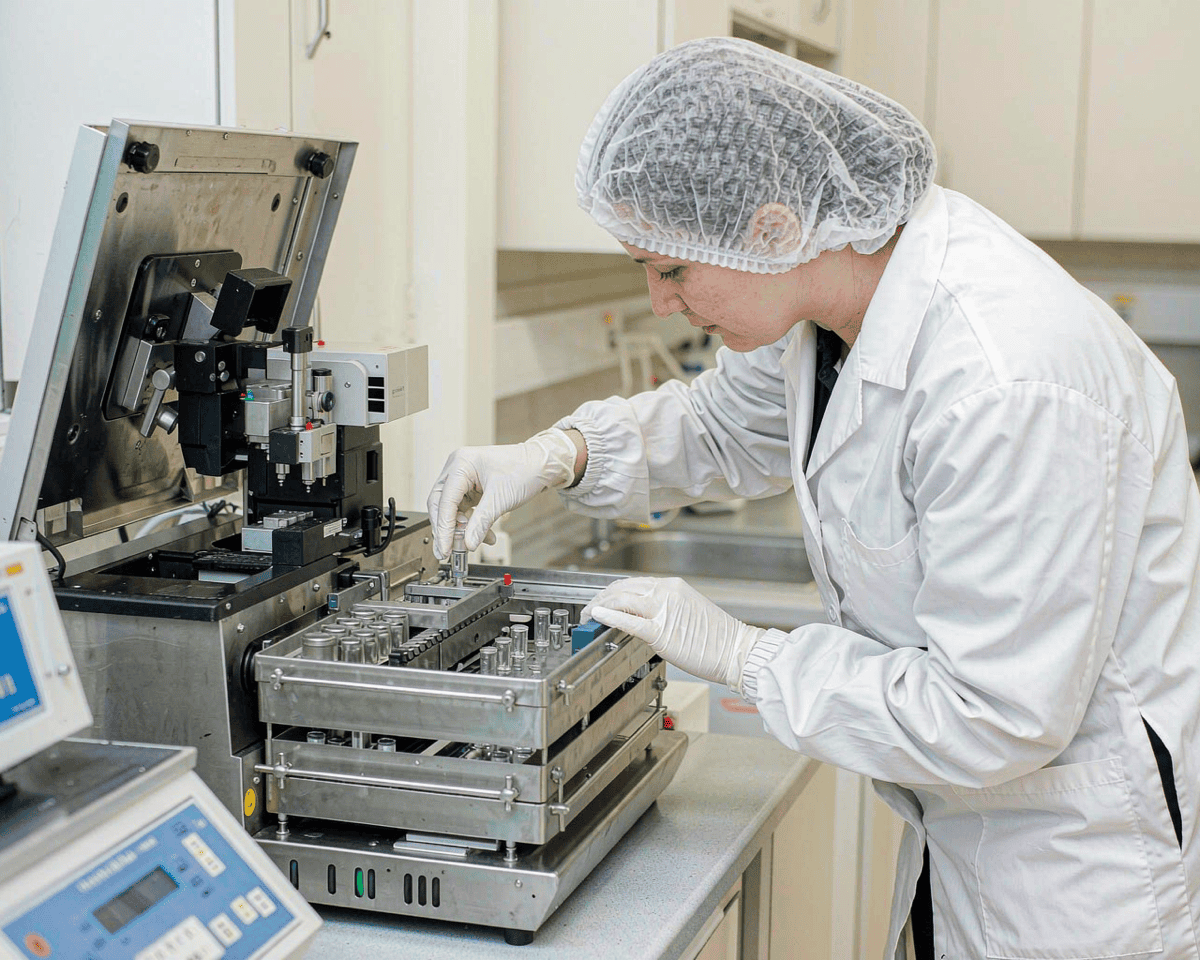
The per-vial price is only the visible cost. The real cost shows up downstream.
Rework. A vial that leaks, breaks, or leaves residue forces re-injections. One failed run wastes more in solvent, column life, and analyst time than the savings on a $0.05 cheaper vial.
Downtime. A bent needle from a mis-sized vial or a jammed cap in the autosampler can stop a whole instrument. Autosampler downtime is measured in hundreds of dollars an hour.
Contamination. An uncertified vial that sheds extractables produces ghost peaks. You’ll chase them for hours before you realize the vial — not the method — is the problem.
This is why the “cheapest per vial” decision is often the most expensive one you can make. The total cost of ownership is what matters, and our guide on how many vials your lab actually consumes will help you size the real annual spend.
How to Buy Smarter
Here’s the playbook I’d give a procurement manager.
Buy in case quantities. The per-vial price drops sharply at 1000+ and again at 10,000+. If your consumption is steady, committing to a larger order pays for itself immediately.
Match certification to method sensitivity. LC-UV routine work doesn’t need MS-certified vials. Save the certified stuff for LC-MS and low-concentration methods where it actually matters.
Demand the glass spec. Insist on Type 1 borosilicate and a stated thread finish (9-425, etc.). If a supplier won’t tell you the glass type, walk away.
Compare total cost, not unit price. Factor in failure rate, downtime risk, and rework. A $0.15 vial that never fails beats a $0.08 vial that fails 2% of the time.
Audit your supplier. Ask for the compatibility matrix and cleanliness documentation. A supplier who can’t produce them is selling you an unknown. Our guide on buying HPLC consumables without the stress covers the sourcing checklist in detail.
Conclusion
HPLC vials cost anywhere from about $0.08 to over $1.50 each, and where you land on that spectrum should be a deliberate choice, not an accident. Standard bulk vials run $0.12 to $0.25 each, premium certified borosilicate runs $0.30 to $0.80, and specialized low-adsorption or high-recovery vials top $1.50. The price is driven by glass quality, cleanliness certification, and surface treatment — and each of those only matters if your method demands it. The smartest move isn’t buying the cheapest vial; it’s matching the vial to your method’s sensitivity, buying in case quantities, and insisting on a stated borosilicate and thread spec. That way you pay for performance you actually use, and you avoid the hidden costs of rework, downtime, and contamination that make a “cheap” vial the most expensive one in your lab. To size your real budget, start with how many vials your lab consumes each month, then read the questions to ask any vial supplier before you commit.
Frequently Asked Questions
How much does a single HPLC vial cost?
A standard 2 mL HPLC vial costs about $0.08 to $0.25 each in bulk, with most labs paying around $0.12 to $0.14 each. Premium certified and low-adsorption vials run higher, from $0.30 to over $1.50 per vial.
Why are some HPLC vials so much more expensive than others?
The price gap comes from glass quality, certification, and surface treatment. Type 1 borosilicate costs more than soda-lime, LC/MS cleanliness testing adds cost, and silanized or low-adsorption surfaces add a processing step that raises the price.
Are generic vials as good as branded ones?
A quality OEM-compatible vial made from Type 1 borosilicate to the correct GPI thread spec can match branded performance for routine HPLC. The difference shows up in certified cleanliness and surface treatments, which matter more at low detection limits.
What is a realistic cost for a 100-pack of HPLC vials?
For clear 2 mL screw-thread vials, a 100-pack typically costs around $12 to $21 from mainstream suppliers. Certified amber vials from a premium brand can run closer to $29 to $35 per 100.
Does buying in bulk really save money?
Yes, significantly. Per-vial pricing drops sharply at 1,000 and 10,000 units, so labs with steady consumption should commit to case quantities. The savings on unit price usually outweigh the cost of holding extra inventory.