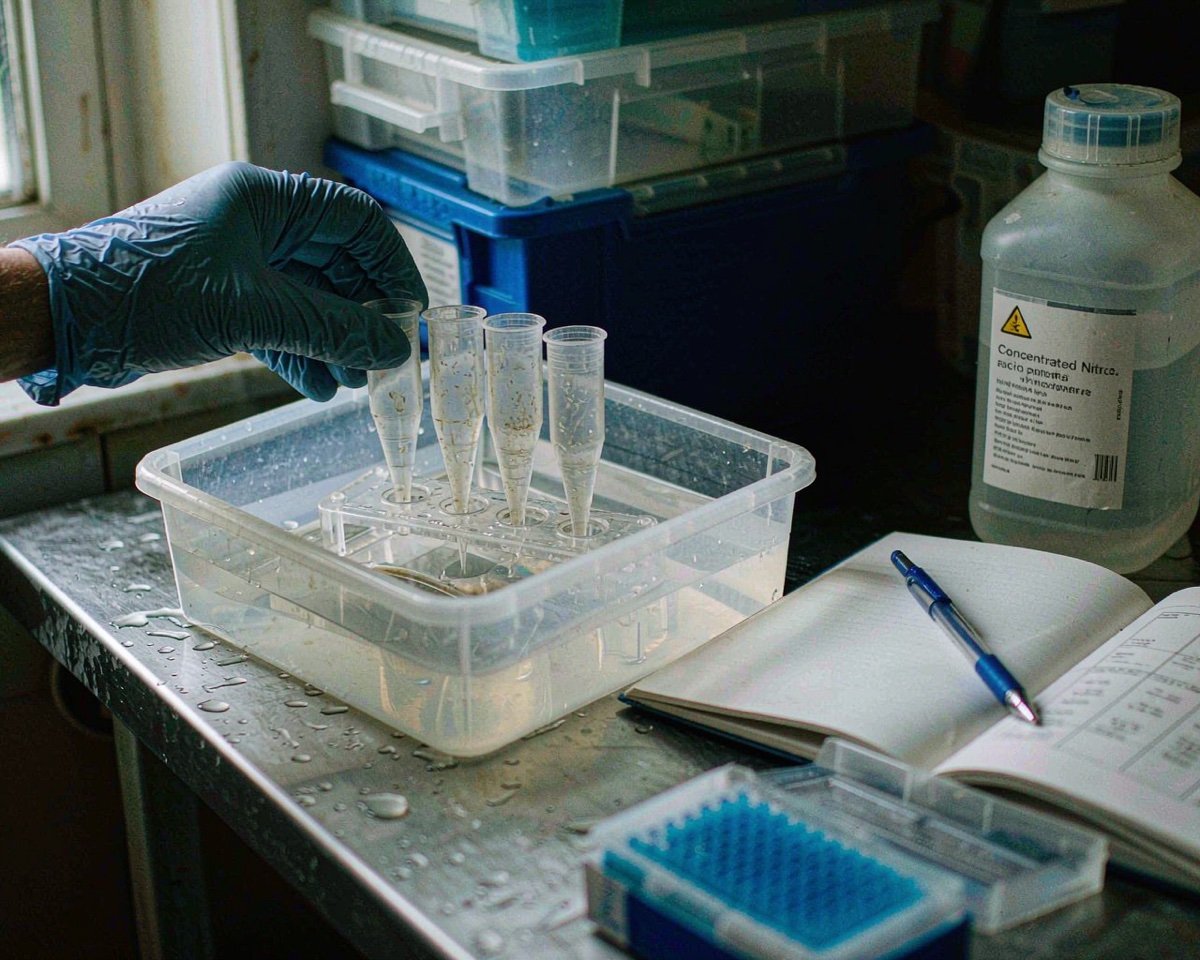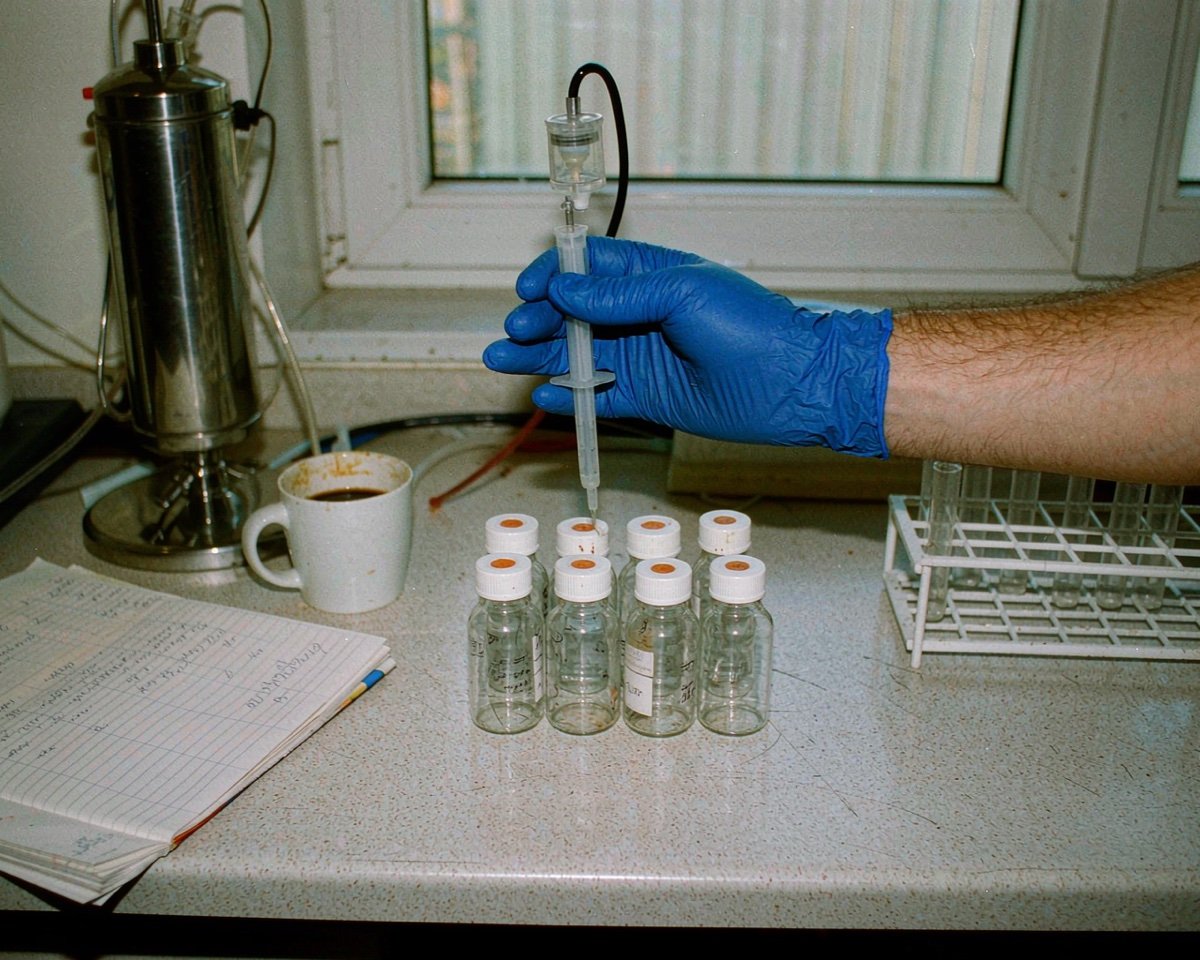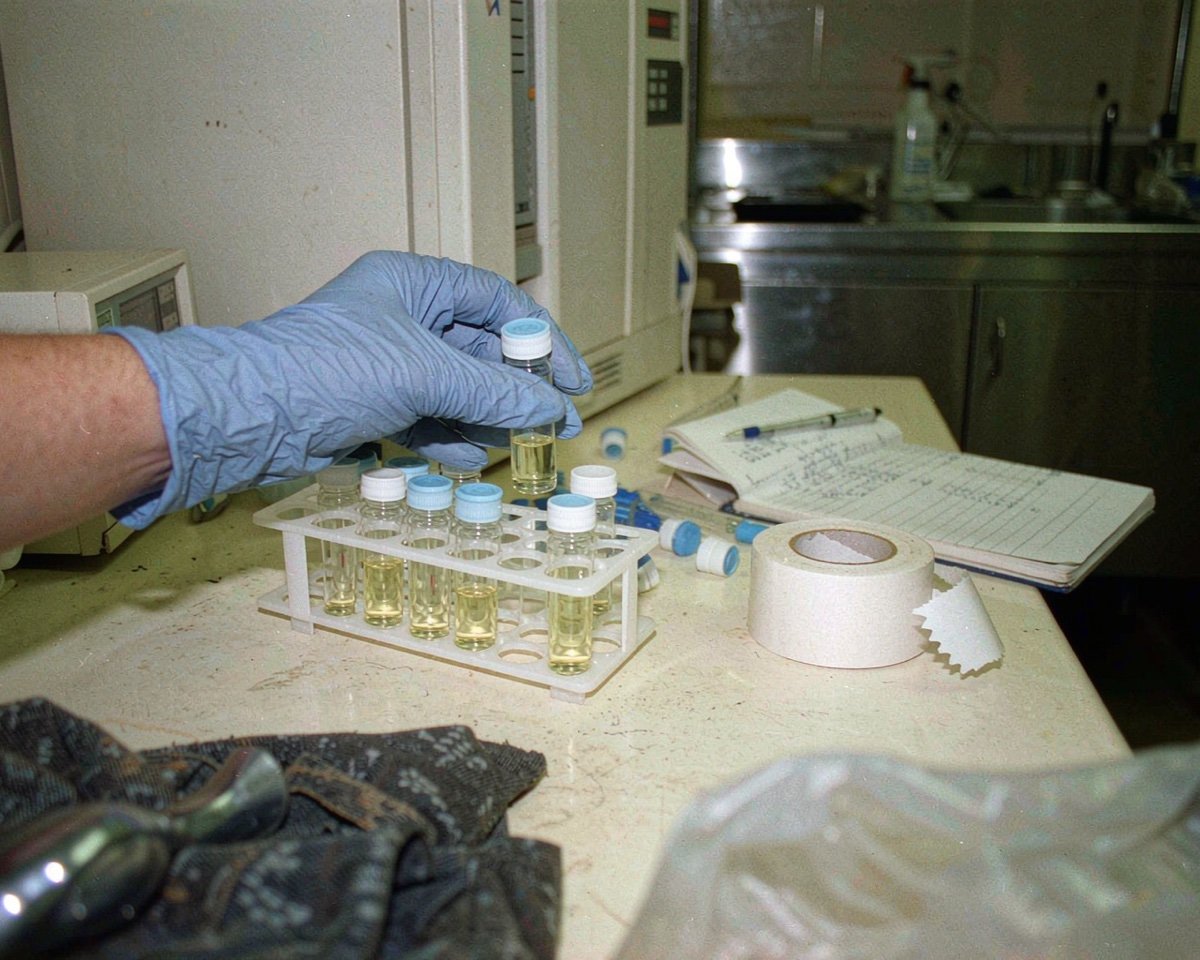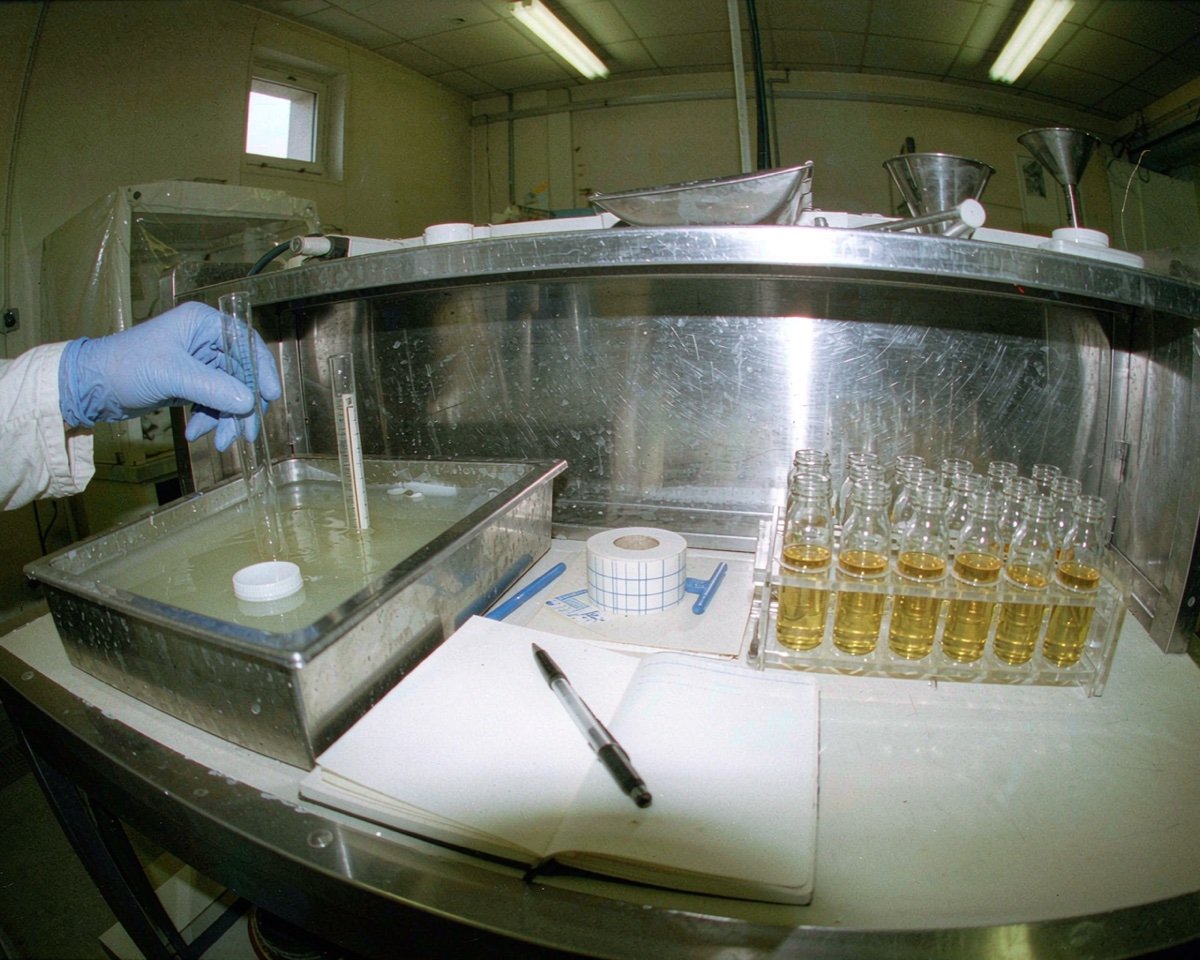


The cheapest HPLC vials can end up costing you the most — a single ghost peak or one bent autosampler needle wipes out any upfront savings. I’ve seen labs chase a three-cent-per-vial discount only to spend weeks troubleshooting contamination that traced straight back to a substandard closure. Before you sign a purchase order, ask these ten questions.
The short answer: A reliable vial supplier can prove their quality. Ask about certifications (ISO 9001, ISO 13485), glass type (USP Type I borosilicate), cleanroom manufacturing, batch certificates of analysis, dimensional consistency, automation, raw materials, lead time, OEM options, and quality-control testing.
Here’s the exact list, with the reason behind each question — so you can tell a real partner from a price-only vendor.
1. What certifications do you hold?
Start with the paperwork, because it’s the fastest way to filter out vendors who only compete on price. A supplier with a valid ISO 9001 quality management system has documented, audited processes for everything from raw materials to final inspection.
What that actually buys you is consistency. ISO 9001 means the manufacturer runs standard operating procedures for every step, keeps calibrated measurement equipment for dimensional checks, and operates a corrective-and-preventive-action (CAPA) system so defects get fixed before they reach you. It also means a third-party body — TÜV, SGS, BSI, or equivalent — audits them every year. Any serious supplier should hand over their certificate and name the accrediting body on request.
For consumables used in regulated pharmaceutical or diagnostic work, go one step further and ask about ISO 13485 (medical device quality management) and GMP compliance. If a vendor claims they “follow ISO standards” but can’t produce a certificate, treat that as a red flag — “following” a standard and being certified to it are very different things.
2. What type of glass do you use?
The glass is the whole game. HPLC vials should be made from Type I borosilicate glass, which has high hydrolytic and thermal resistance thanks to its composition of boric oxide, aluminum oxide, and alkali oxides. Per USP General Chapter 660, Type I borosilicate is the standard for containers that hold sensitive and parenteral preparations.
Here’s why this matters more than most buyers realize. Soda-lime glass (Type III) has only moderate hydrolytic resistance, which means it can slowly release alkali ions into your sample — the last thing you want sitting under a sensitive detector. It’s also weaker under thermal stress, so a headspace vial or a freeze-thaw cycle can crack it. Poor-quality glass is the classic root cause of those mysterious “extra peaks” nobody can explain.
If a supplier can’t name their glass type and back it with a certificate, walk away. For a plain-English primer on what separates good glass from the rest, see our guide to understanding glass standards.
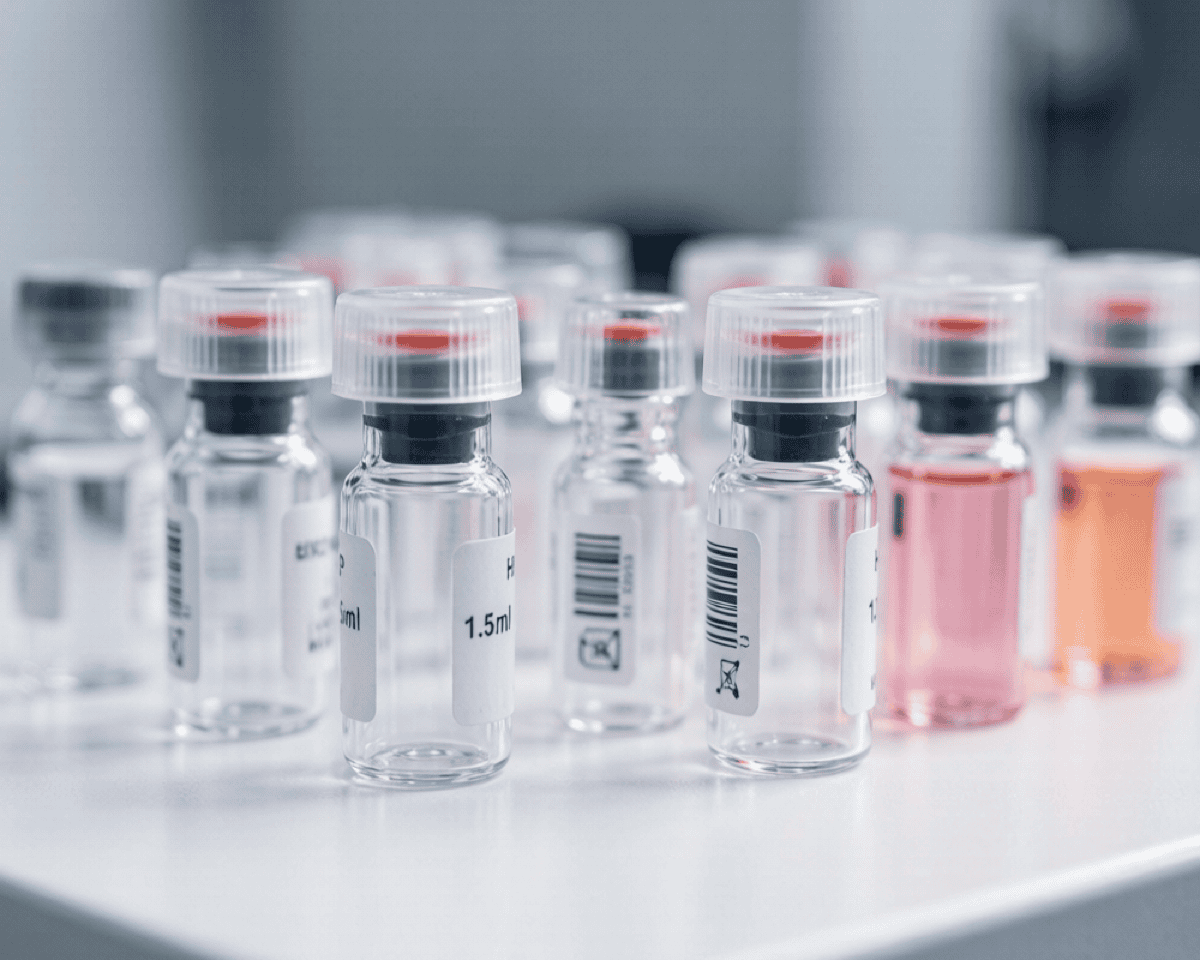
3. Do you manufacture in a cleanroom, and what class?
Cleanliness in this business is chemical, not just visual. The gold standard is production in a Class 100,000 (ISO Class 8) cleanroom or better, with HEPA filtration and controlled temperature and humidity.
Why does that matter for a glass vial? Because airborne particulates settle on septum surfaces during assembly, electrostatic charges on plastic caps attract dust in an uncontrolled room, and volatile organic compounds from ambient air can adsorb onto silicone septa. Any of those can show up in your chromatogram as contamination you didn’t put there. In a cleanroom, those risks are actively managed.
Ask for the cleanroom classification, whether it’s independently certified, and how often they monitor airborne particulates. Then ask the sharper follow-up: is final packaging done inside the cleanroom, or do finished vials exit the controlled zone before sealing? If vials are assembled and bagged in an ordinary warehouse, your contamination risk climbs with every box.
4. Can you provide a certificate of analysis (COA) for each batch?
A certificate of analysis shows the manufacturer actually tested the batch — dimensional checks, cleanliness, leak tests — rather than hoping for the best. A supplier who can’t or won’t provide batch-level COAs can’t stand behind their own consistency.
A real COA should tell you the lot number, the tests performed, the acceptance limits, and the actual results. That traceability is what lets you connect a problem back to a specific batch — and, just as important, prove to an auditor that your consumables were controlled.
This matters most in regulated environments, where data integrity depends on reproducible results. For GMP labs, documentation like COAs is part of the compliance package tied to FDA 21 CFR Part 211 current good manufacturing practice requirements. A vendor who shrugs at the COA request is telling you they don’t operate at that level.
5. What’s your dimensional tolerance, batch to batch?
Autosamplers are unforgiving machines. A vial neck that’s a hair too wide or a septum a fraction too thick can mean needle damage, leaks, or sample evaporation — all of which quietly corrupt your results. Ask the supplier to specify their tolerances on vial neck finish, septum thickness, and cap thread.
The single sample they hand you at a trade show tells you almost nothing. The real test is consistency across batches, because that’s what your autosampler experiences week after week. A vendor who can show dimensional tolerance data across multiple lots is demonstrating control over their process. A vendor who can’t even quote a tolerance is admitting they don’t measure it.
Let me make this concrete. A standard 12 x 32 mm autosampler vial rides in a tray with very little clearance, and the neck has to mate exactly with a 9 mm screw cap or a crimp. If the neck finish drifts a few tenths of a millimeter, the cap sits loose and your sample evaporates. If the septum is a touch too thick, the needle meets unexpected resistance — and on a fragile autosampler needle, that’s how you get a bend.
Pay special attention to the neck and closure. This is where the needle passes and where the seal forms, so it’s the highest-consequence geometry in the entire vial. A few microns of drift here is the difference between a clean run and a bent needle.
6. Do you use automated or manual assembly?
How the cap, septum, and vial come together matters more than you’d think. Automated assembly and intelligent quality monitoring produce far more consistent results than manual force-fitting, which can leave septa that detach or leak under the autosampler needle.
Septa are the classic failure point. Some low-cost manufacturers treat closures as trivial and assemble them by hand, force-fitting the septum into the cap. The result is weak retention — a septum that pops out or shifts during needle penetration, or one that doesn’t reseal after injection. That single defect can wreck an entire batch of runs.
For large or repeat orders, automation also means faster, more predictable lead times and fewer human errors. Ask how their production line actually runs, not just whether it exists. If you want to understand what happens between raw glass and finished vial, our look at the HPLC vial production process walks through it.

7. What raw materials go into your septa and caps?
Septum and cap quality separates a reliable vial from a leaky one. Ask exactly what materials they use — PTFE, silicone, or PTFE/silicone laminates for septa, and polypropylene or aluminum for caps.
The devil is in the grade. Low-grade silicone can bleed extractables into your sample, and cheap PTFE can fail after a few injections. A bonded or laminated septum costs a little more but resists coring and stays put, which matters if your method punches through the same septum repeatedly. The exact material — and whether it’s bonded or assembled — determines how the closure behaves under your conditions.
A supplier who names their materials and backs them with specifications is one you can trust. A supplier who says “standard material” without detail is asking you to take the risk blind.
8. What’s your lead time, and can you guarantee stable supply?
Price means nothing if the vials arrive after your project ends. International consumable orders can run three to four months, so ask for a realistic lead time and proof they can hold it during peak demand.
Dig into what “stable supply” actually means for them. Do they hold safety stock for your key SKUs? How do they handle rush orders? What happens when a production line goes down? A supplier with real production capacity and strong logistics can answer these specifics, while a reseller with a thin warehouse will start hedging.
For a lab that runs around the clock, a missed shipment of vials is a genuine production risk — autosamplers don’t wait. The few cents you save per vial evaporate the first time you’re forced to re-qualify an alternate supplier mid-study.
9. Do you offer OEM/ODM and private labeling?
Customization is a signal of manufacturing depth. OEM/ODM options — private labeling, custom colors, logo printing, custom molds — show the supplier has real R&D and production capability, not just a warehouse of generic stock.
This matters even if you never plan to order a custom vial. A manufacturer who can run custom molds and private labels has invested in tooling, engineering, and process control that a pure trading company hasn’t. That same infrastructure is what keeps their standard products consistent, too.
So treat this question as a diagnostic. If the answer is “we can do anything,” dig for proof — a custom project they’ve actually delivered. If the answer is a flat “no,” you’re likely dealing with a middleman, which is fine for spot buys but riskier for long-term supply.
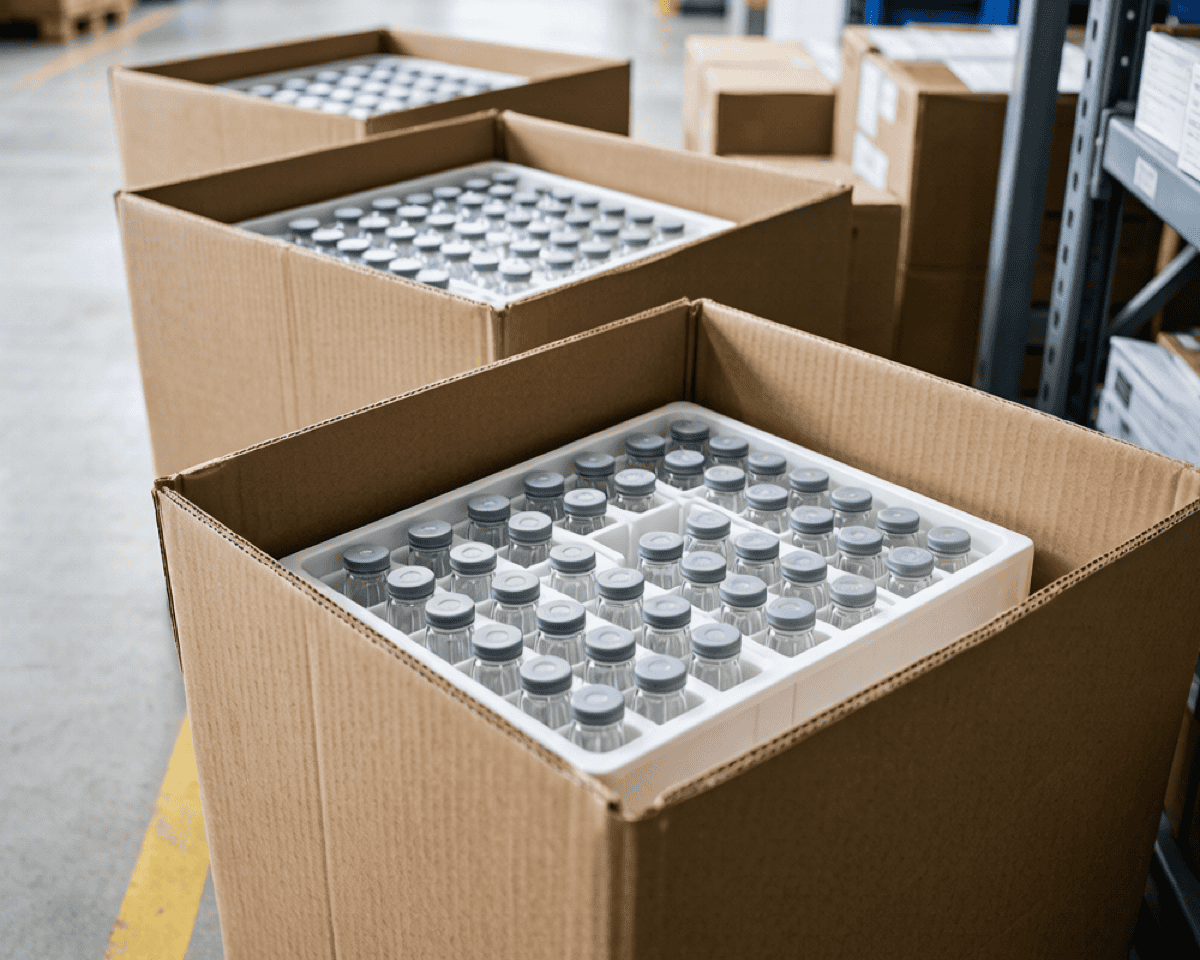
10. What quality control and inspection do you perform?
Get specific, because “we have quality control” is not an answer. Do they run lot-to-lot dimensional testing, leak testing, and cleanliness verification? Do they have an in-house QC lab with calibrated equipment — ideally one accredited to ISO/IEC 17025 for testing competence?
An ISO/IEC 17025 accreditation is the strongest single signal here, because it certifies that the lab itself is competent to produce valid test results — not just that a factory “tests” its products. It tells you the measurements you rely on are actually reliable.
A supplier with a genuine in-house QC program catches defects before they ship, which is exactly the insurance you’re paying for. If you want to know what good inspection looks like in practice, our guide on inspecting HPLC vials for quality covers the checks worth running.
Red Flags That Should End the Conversation
Some answers are instant disqualifiers, no matter how good the price looks. If you hear any of these, thank them and move on.
- “We follow ISO standards” without a certificate from a named accrediting body.
- “Standard glass” instead of a specific Type I borosilicate specification.
- No certificate of analysis available for past batches.
- Vague or missing tolerance data on the neck finish and septum thickness.
- Manual, hand-fitted septum assembly with no automated line.
- A lead time that keeps slipping, or no answer on safety stock.
None of these are rare. They’re the fingerprints of a vendor who competes on price alone — and the savings never survive first contact with your autosampler.
Conclusion
You’re not buying vials — you’re buying insurance for your data. A few cents saved per vial vanishes the moment a leaky septum causes a sample loss or a rough neck finish bends an autosampler needle. The ten questions above separate suppliers who can prove their quality from vendors who only compete on price, and the difference shows up in your chromatograms long before it shows up on an invoice.
Before you commit, verify the certifications, confirm Type I borosilicate glass and cleanroom production, and ask for batch COAs and dimensional data. Then check the standards yourself with our overview of quality standards for HPLC vials. Ask the right questions up front, and the vials that arrive will actually protect the results you depend on — instead of becoming the reason you have to re-run them.
Frequently Asked Questions
What should I look for in an HPLC vial supplier?
Look for ISO 9001 (and ideally ISO 13485) certification, Type I borosilicate glass, cleanroom manufacturing, batch certificates of analysis, and documented dimensional tolerances. A supplier who can prove all of these is far safer than one who only competes on price.
Is ISO 9001 certification enough for a vial supplier?
ISO 9001 is a solid baseline because it proves documented, audited quality management. But for regulated pharma or diagnostic work, also ask about ISO 13485, GMP compliance, and an in-house QC lab — those go beyond basic quality management.
Why does Type I borosilicate glass matter for HPLC vials?
Type I borosilicate glass has high hydrolytic and thermal resistance, so it doesn’t leach ions into your sample or crack under temperature stress. Cheaper soda-lime glass can contaminate sensitive samples, which is why Type I is the standard for analytical work.
How can I tell if a vial supplier has good quality control?
Ask for batch-level certificates of analysis, lot-to-lot dimensional data, and details of their leak and cleanliness testing. An in-house QC lab accredited to ISO/IEC 17025 is a strong signal that defects get caught before they ship.
Should I choose the cheapest vial supplier?
Usually not. Substandard vials can cause ghost peaks, leaks, sample loss, and even autosampler needle damage — costs that far exceed any per-vial savings. Evaluate total cost of ownership, not just the unit price.