
Sample prep eats more lab time than the instrument does, and almost every delay in it traces back to one consumable that was wrong, clogged, or missing. Here are the nine bottlenecks I see most often, each with the specific fix.
Answer: The nine most common sample prep bottlenecks are clogged filters, carryover from reused filters, ghost peaks from extractables, slow viscous-sample filtration, sample evaporation, repetitive manual filtration, lot-to-lot filter variability, sample loss to hold-up volume, and solvent-membrane incompatibility. Each has a targeted consumable fix, usually costing less than one retest.
Read on for the symptom, the cause, and the fix for each one. If your lab only has three of these problems, you are doing well.
A quick story to set the stakes. I once watched a prep queue swallow an entire Wednesday: one clogged filter, one ghost peak investigation, and one analyst quietly reusing a filter to catch up. Three different bottlenecks, one bad day, and a sequence that started at 14:00 instead of 10:00. None of it was the instrument’s fault, and all of it was fixable for under a hundred dollars of consumables.
1. The Filter That Clogs on Sample Three
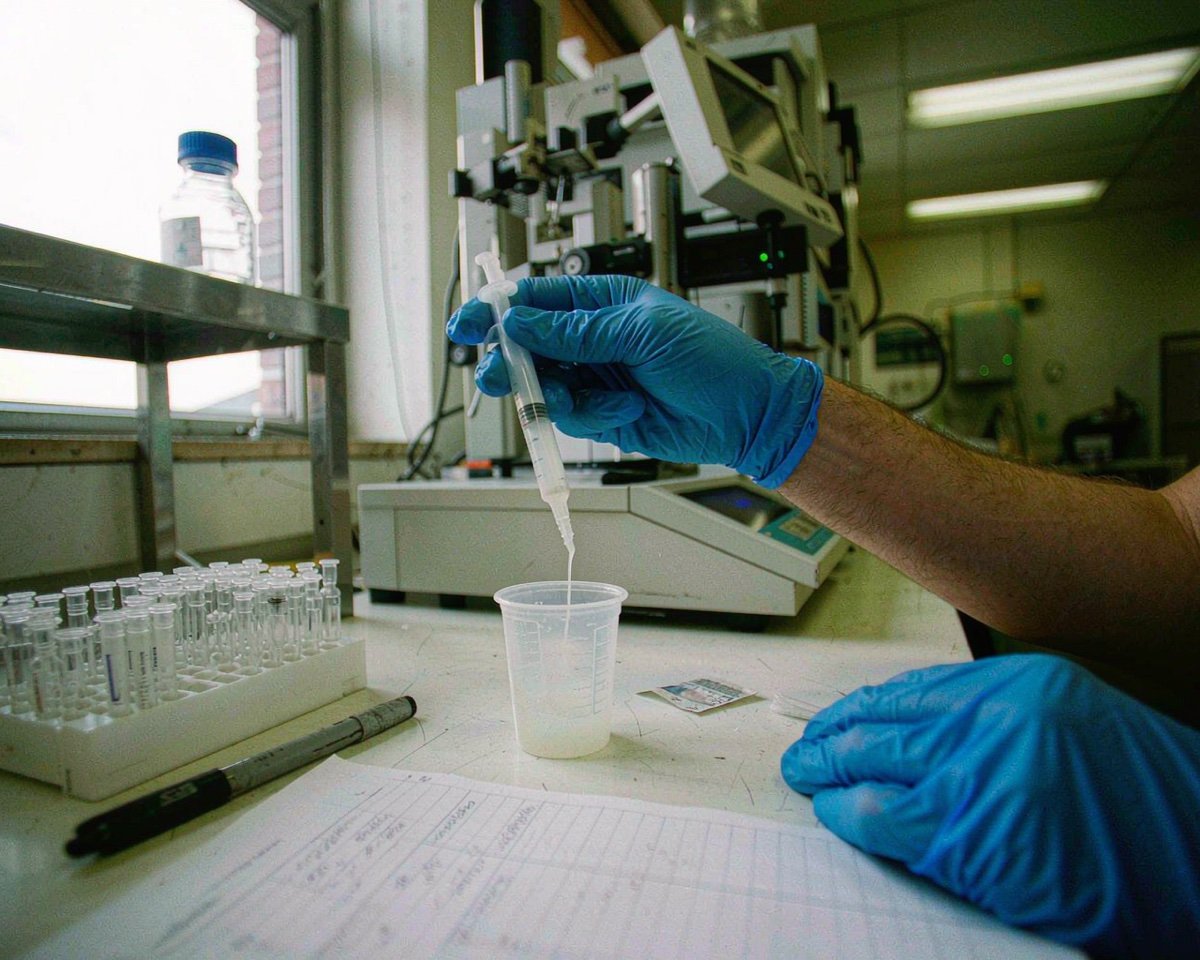
The symptom: a forty-sample sequence is half prepped when the filter starts pushing back. You lean harder, the syringe seal slips, and now you are sampling with a splatter risk.
The cause: one membrane doing two jobs. Real samples carry particulate load, and a 0.22 µm membrane is a finishing filter, not a shovel.
The fix: a glass fiber prefilter ahead of the membrane. Glass fiber is cheap, coarse, and built to take the dirt so the membrane does not. For dirty matrices, prefilter and membrane exist as a single stacked unit from most brands, which removes the two-step handling entirely. Labs that switch to stacked filters for their dirty methods usually stop reporting “filter” as a prep delay category within a month.
One buying note: prefilter ratings are coarse and loose (1 to 7 µm is typical), which is exactly why they clog instead of your membrane. Keep both in stock separately too, because a day with unusually dirty samples burns through stacked units faster than the membrane line alone predicts.
2. Carryover From the Filter Everyone Shares
The symptom: low-level samples early in the run look clean, then a “peak” appears in later samples that matches an earlier high-concentration one. The calibration is fine. The blanks are not.
The cause: one syringe filter serving standards and samples in sequence. Analyte sticks to the membrane and housing, then bleeds into whatever comes next. MicroSolv’s carryover FAQ documents exactly this: adsorbed compounds release over time, membrane saturation changes recovery, and trapped particulate dislodges into later samples.
The fix: one filter per sample, full stop. Filters are the cheapest item on the bench. If budget pressure genuinely forces sharing, it should only ever happen in non-quantitative screening, written into the local procedure, with the most dilute sample first and a solvent flush between. Never on a compliance run.
If you inherit a workflow that shares filters and cannot change it immediately, at least reorder the queue. Running the cleanest, lowest-concentration solutions first and the dirtiest last shrinks the carryover window while you campaign for the budget. It is damage control, not a solution, and it should be labeled as such in the procedure.
3. Ghost Peaks With a Manufacturing Signature
The symptom: an extra peak in your filtered blank that nobody can explain. It shows up in every filtrate, same retention time.
The cause: extractables. Filters shed manufacturing residues, surfactants, and monomers, and the first milliliters through a fresh membrane carry most of it. The MicroSolv troubleshooting guide on filter-induced extra peaks notes that the first 2 to 5 mL from a 25 mm filter holds the highest extractable load.
The fix: discard the first 1 to 2 mL of filtrate, every time, and buy low-extractable certified filters for trace work. The discard costs half a milliliter of sample and five seconds. Our deeper writeup on filter extractables and leachables covers which membranes bleed least into which solvents.
There is a second flavor of this bottleneck: the ghost peak that only appears in one batch. That is usually a single bad filter lot shedding more than usual. The diagnostic is the same filtered blank, but this time note the lot number on the box before you bin it, because the supplier will ask and the box is the only witness.
4. Viscous Samples That Take a Minute Per Milliliter
The symptom: serum, polymer digests, syrupy extracts. You push, nothing moves, and your thumb does the work your pump should.
The cause: too little filter area and too much hand force. Pressure does not scale nicely; doubling force barely doubles flow while it raises breakthrough and housing-failure risk.
The fix: a bigger diameter filter. Going from 13 mm to 25 mm roughly quadruples the effective area, and flow follows. For genuinely viscous matrices, dilute first if the method allows, use a low hold-up 25 mm device, and accept that viscous sample handling is a technique problem as much as a product problem. Warming the sample a few degrees, if the analyte tolerates it, beats every filter upgrade on the list.
A word on hand force, because this is where filters die young. A 25 mm housing is rated for moderate palm pressure, not leaning body weight. When the plunger needs your shoulder to move, the membrane is done, and pushing harder only risks breakthrough or a housing seam letting go. Swap the filter and dilute the sample instead; the two minutes you spend swapping is shorter than the reprep you court by forcing it.
5. Evaporation Between Prep and Injection
The symptom: late-in-sequence samples read a few percent concentrated. The autosampler tray is warm, the caps are loose, and your low-level QC drifted upward all afternoon.
The mechanism is boring and relentless. Every septum is a barrier, not a vault, and solvent finds its way through imperfect seals by diffusion and wicking. Add a warm tray and eight hours of waiting, and a 2 mL vial can quietly concentrate by several percent, concentrated most at the end of the run where your standards are not.
The cause: time and seal quality. Every hour between capping and injection is evaporation time, and a worn or wrong-size septum makes it worse.
The fix: better caps and tighter timing. Use fresh PTFE/silicone septa, cap immediately after filtration (not “at the end of the batch”), and fill vials to reduce headspace. Our sample evaporation guide covers the tray-side settings too. If a sequence must sit overnight, the seal matters more than the schedule.
6. Filtration as a Full-Time Job
The symptom: one person spends three hours a day attached to a syringe, and the prep queue is the reason the instrument sleeps.
The cause: manual filtration does not scale. Past roughly thirty samples a day, syringe-and-filter prep becomes a person, not a task.
The fix: a filtration manifold. Vacuum manifolds run six to twelve samples at once through membrane units, which converts hours into one bench cycle. The consumable changes shape (membrane units instead of syringe filters) but the chemistry rules stay identical: match membrane to solvent, discard the first drops, one unit per sample.
The honest caveat is vacuum control. Manifolds make it easy to pull too hard, and high vacuum on a delicate membrane means breakthrough, where unfiltered sample sneaks past a damaged membrane and your column meets the particulate you paid to remove. Moderate vacuum, watch the filtrate, and the manifold pays for itself without the surprises.
7. The Filter Lot That Changed the Method
The symptom: a new box of the same filters, same brand, same pore size, and suddenly recovery is off by a few percent. Nothing else changed.
The cause: lot variation. Membranes are manufactured products, and surface chemistry drifts a little between production runs. Most of the time nobody notices. Trace methods notice.
The fix: validate each new filter lot against the old one before it enters a validated workflow. GenFollower’s filter validation workflow lays out a practical comparison: same sample, old lot versus new, recovery and blank compared under identical conditions. Twenty minutes per lot, once, versus a mystery bias forever.
The cheaper cousin of this fix is simply buying fewer lots per year. Ordering a year of one filter line in two or three large deliveries gives you lot stability as a side effect of better pricing. Small labs that order one box at a time live on a knife edge of lot changes and pay for it in unexplained variance.
8. Losing Your Precious Sample to Hold-Up Volume
The symptom: a 300 µL extract becomes 240 µL of filtrate, and the missing 60 µL took your most concentrated fraction with it.
The cause: hold-up volume. Every filter holds liquid in the membrane, support, and housing after the push. A standard 25 mm device can hold more than 100 µL, which is a rounding error for a 10 mL sample and a disaster for a scarce one.
The fix: a smaller, low hold-up device. Mini filters (4 mm and smaller) exist precisely for low-volume work, and some housings are engineered to reclaim nearly all the dead volume. Match the filter diameter to the sample volume, not to what is in the drawer. Our hold-up volume explainer has the numbers per device size.
There is also a technique fix that costs nothing. After the push, draw a little air back into the syringe and push again; the air slug sweeps part of the held liquid out of the housing. It does not recover everything, and for compliance work a fresh low hold-up device is still the defensible answer. But for everyday prep where the last hundred microliters are not precious, the air chase is a free ten percent.
9. The Right Membrane in the Wrong Solvent
The symptom: the filter swells, flow stops, or the blank lights up with new peaks after a solvent change. The membrane was perfect last week.
The cause: chemistry. Nylon is convenient but leaches and swells in aggressive organics. PTFE shrugs off solvents but needs pre-wetting for water. PVDF covers both worlds at a small premium. Every membrane has a solvent it was not built for.
The fix: a compatibility decision made once per method and written down. Keep a printed compatibility chart at the bench, and make the membrane choice part of method documentation the way column and wavelength are. The HPLC sample prep filter guide includes the short version: PTFE for organics, PVDF or PES for aqueous and bio work, nylon for routine aqueous-organic mixes with no protein.
A Five-Minute Weekly Prep Audit
Bottlenecks announce themselves, but only if someone writes them down. One habit keeps this list alive in a real lab: end the week with five minutes and three questions.
What slowed prep down this week? What did we re-run, and why? What did we run out of? The answers map directly onto the nine items above. A re-run for an unexplained peak is item 3. A mid-week scavenger hunt for filters is item 1 wearing a costume. The audit costs five minutes and a sticky note, and it turns this article from a reading exercise into your next purchasing order.
How to Triage All Nine
You will not fix everything this quarter, and you do not need to. Rank by cost per incident: a clogged filter wastes minutes, a carryover event wastes a sequence, a lot-variation bias wastes a study. Attack in that order. Most labs find that items 2, 3, and 7 are where the real money hides, because they corrupt data instead of just wasting time.
And keep score. A tally mark next to each bottleneck for a month turns opinions into data, and the data usually embarrasses the assumption. My own tally from the Wednesday story above put clogged filters first, carryover second, and everything else in a distant tie, which is exactly the opposite of what the lab had been spending its budget on.
One more triage rule from experience: when two bottlenecks share a root cause, fix the root. Items 3 and 9 both trace to membrane chemistry decisions, and one written compatibility-plus-discard SOP clears them both.
Conclusion
Sample prep bottlenecks look like people problems, but nine times out of ten they are consumable problems wearing a disguise. The clogged filter wants a prefilter ahead of it. The mysterious ghost peak wants its first two milliliters discarded. The drifting late-sequence samples want fresh septa and a tighter capping routine, and the three-hour prep queue wants a manifold instead of a hero. Every fix on this list costs less than one repeated sequence, and most cost less than one retest. Pick your worst bottleneck from the nine, buy the specific consumable that answers it, and write the one-line habit change next to the shelf where it lives. Then move to the next one. A lab that clears one bottleneck a month runs calmer by spring than one that redesigned everything on paper and changed nothing at the bench.
Frequently Asked Questions
What is the most common sample prep bottleneck in HPLC labs?
Clogged filters, usually on dirty or particulate-heavy samples. The fix is a glass fiber prefilter ahead of the membrane filter, or a stacked filter unit. It turns a mid-sequence interruption into a non-event.
Can I use one syringe filter for multiple samples to save money?
Not for quantitative work. Analyte adsorbs to the membrane and later bleeds into subsequent samples as carryover, which corrupts low-level results. Filters are single-use items; the cost of one filter is trivial next to one repeated sequence.
How do I stop ghost peaks coming from syringe filters?
Discard the first 1 to 2 mL of filtrate, because that fraction carries most of the manufacturing extractables. For trace and LC-MS work, also choose certified low-extractable filters and run a filtered blank when you qualify a new brand or lot.
When is a filtration manifold worth buying?
Past roughly thirty manual filtrations per day. A vacuum manifold processes six to twelve samples at once and pays for itself in reclaimed labor within weeks at that volume. Below that threshold, syringe filters and good bench habits are usually enough.
Which membrane should I use for viscous samples?
Use the largest practical filter diameter (25 mm for most), a PTFE membrane for organic matrices or PVDF for aqueous ones, and warm or dilute the sample if the analyte allows. Filter area, not force, is what moves viscous liquid through a membrane.