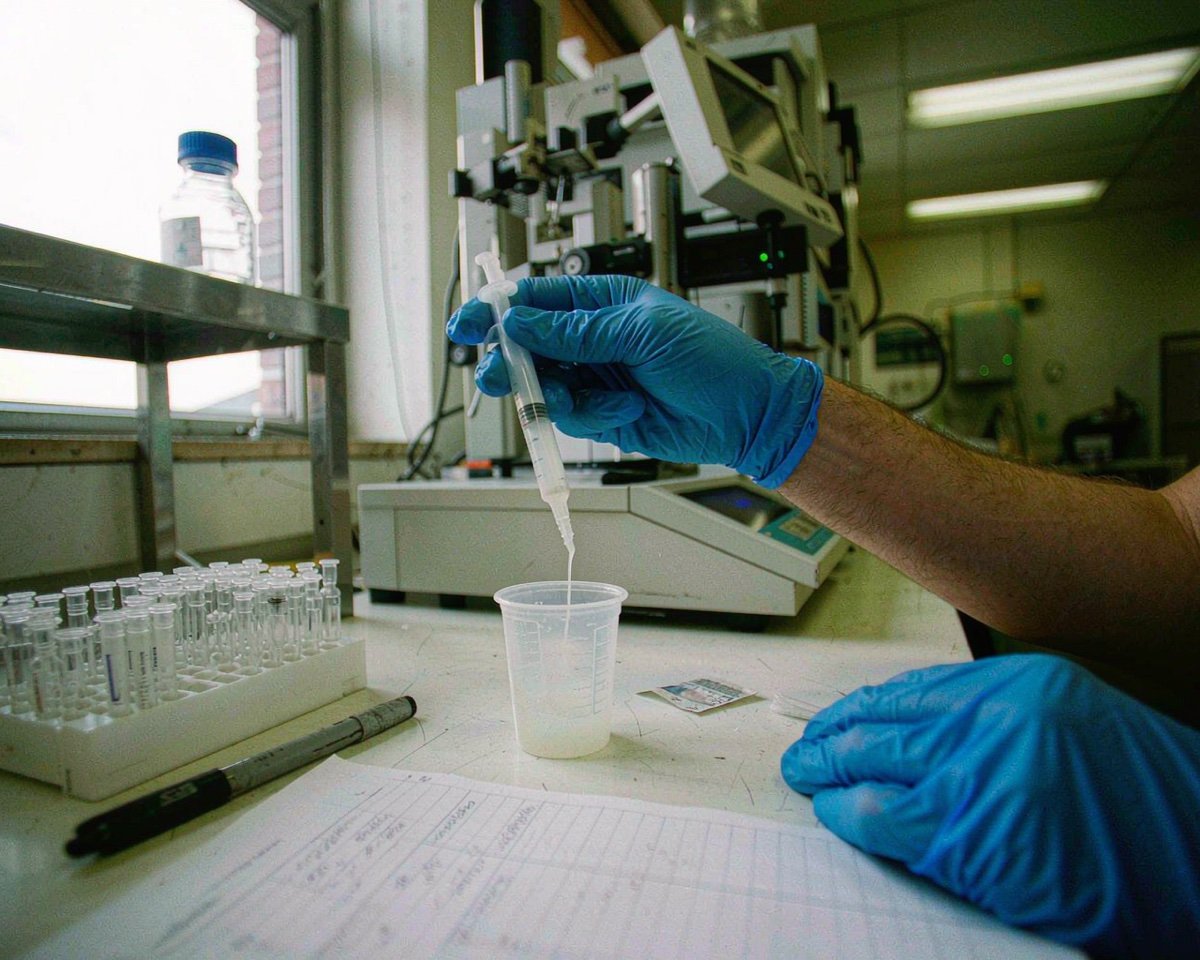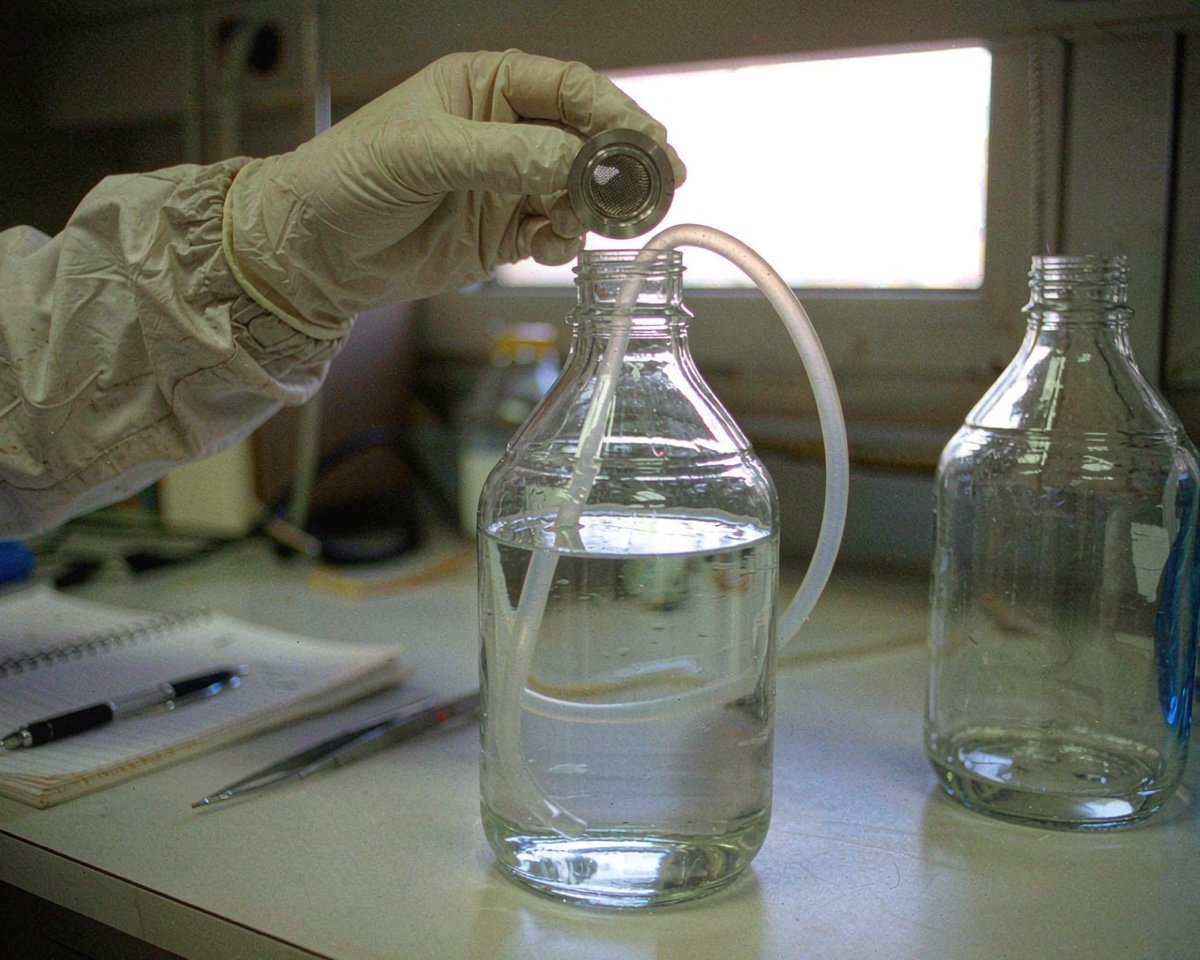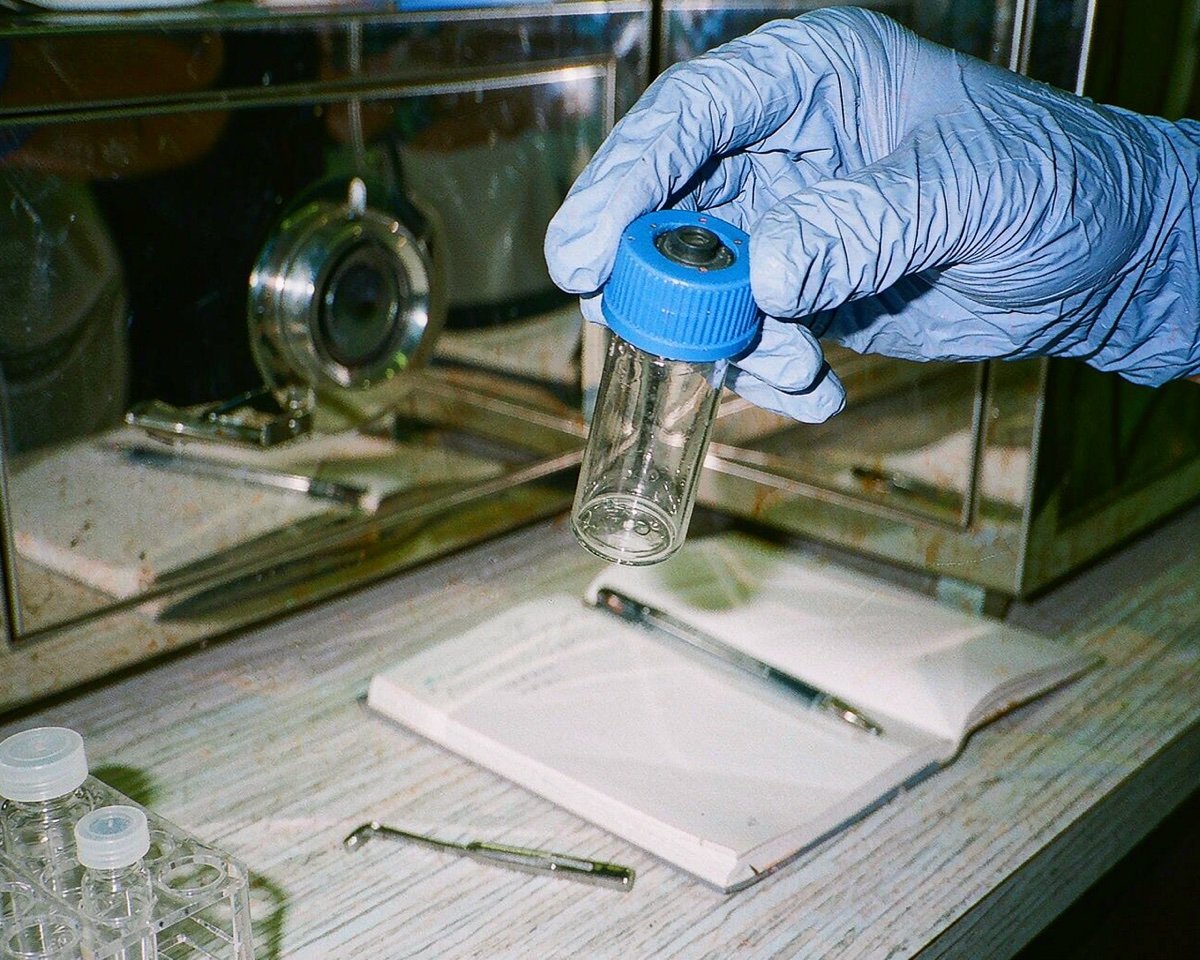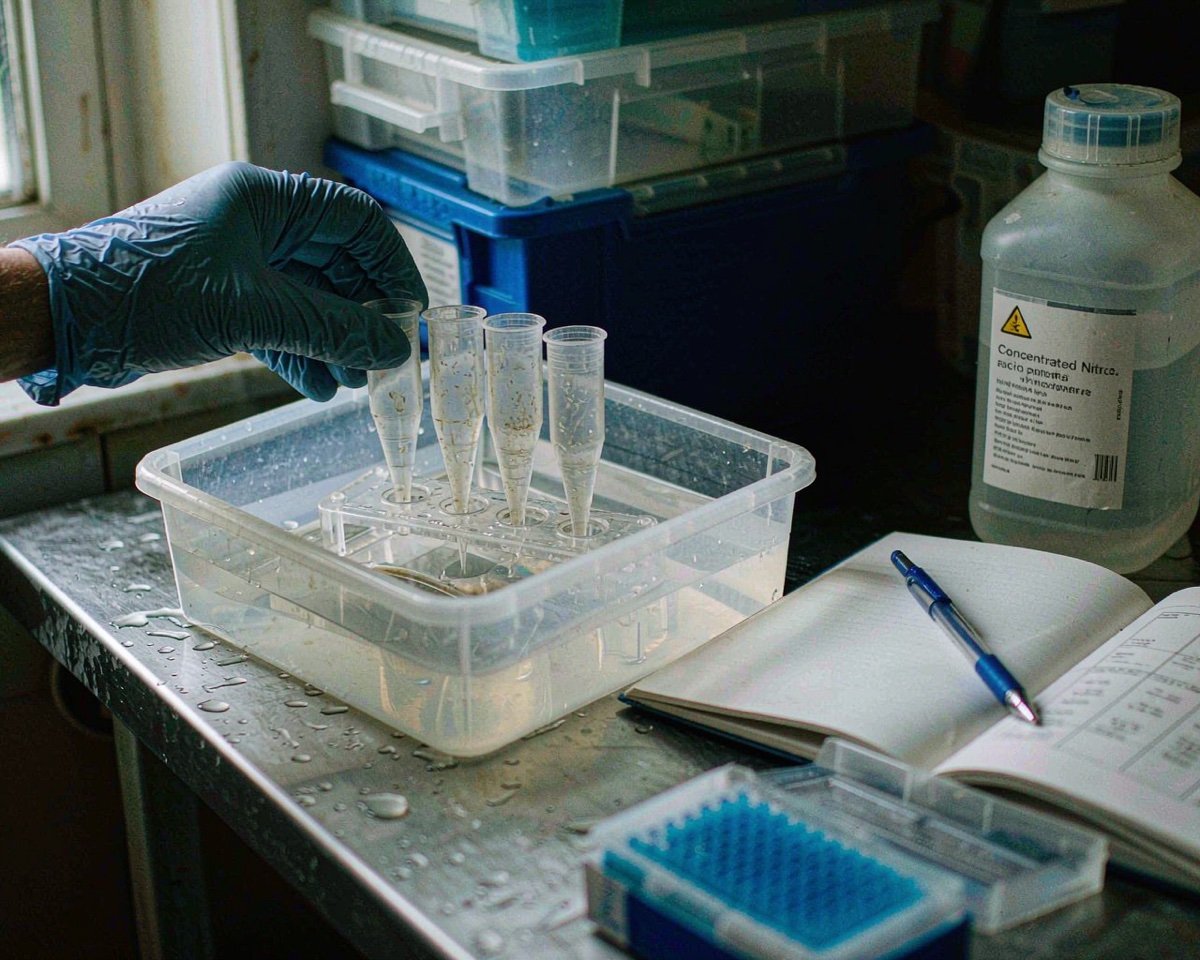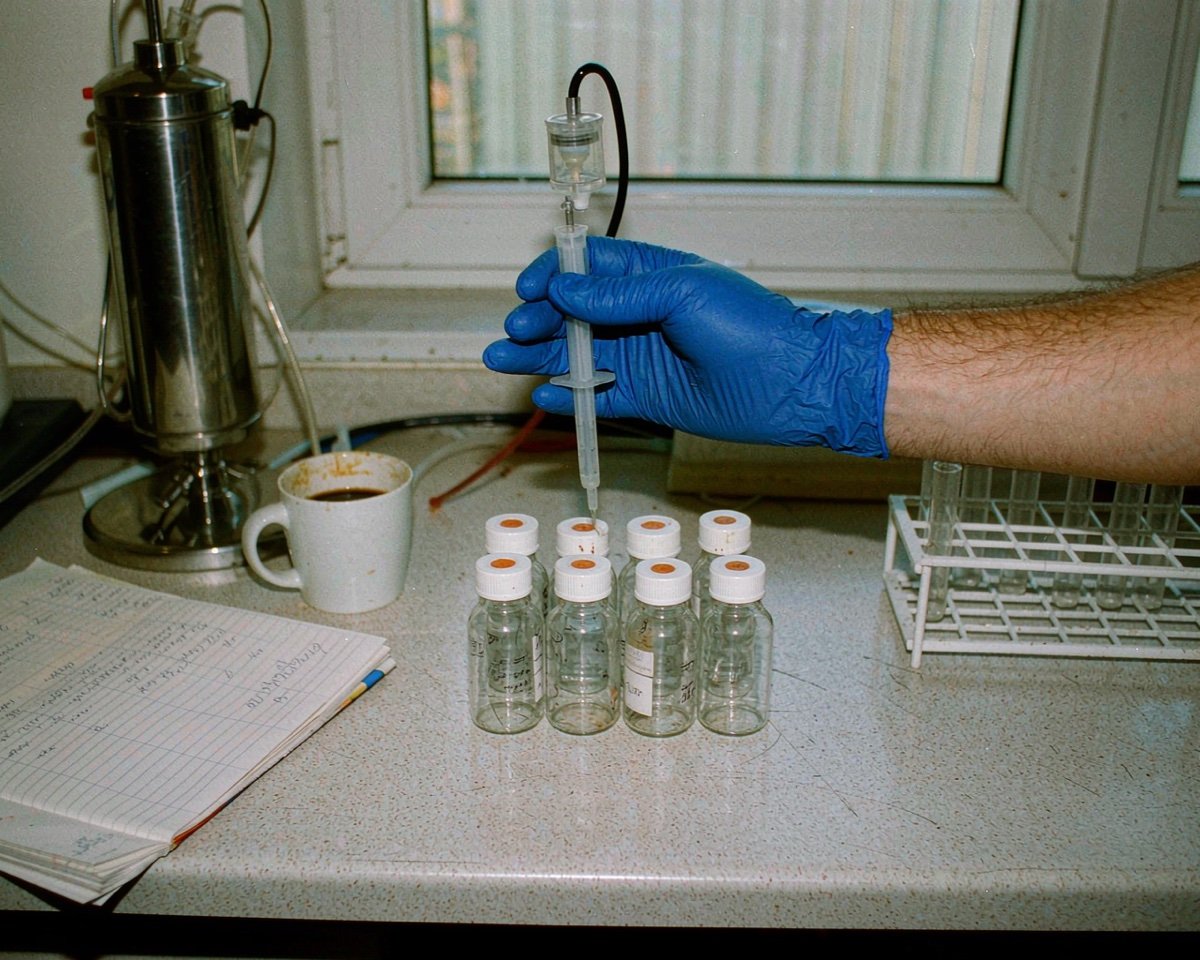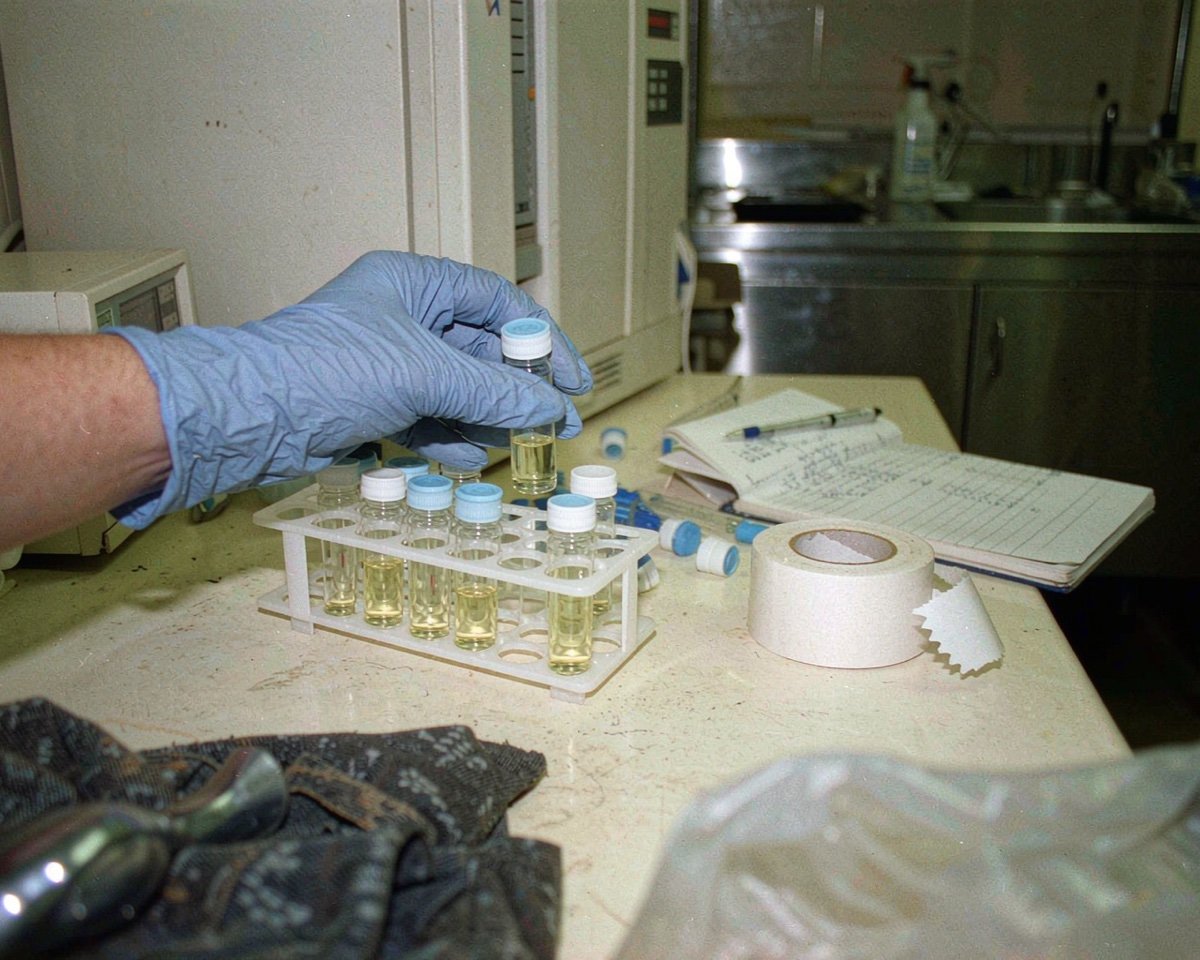
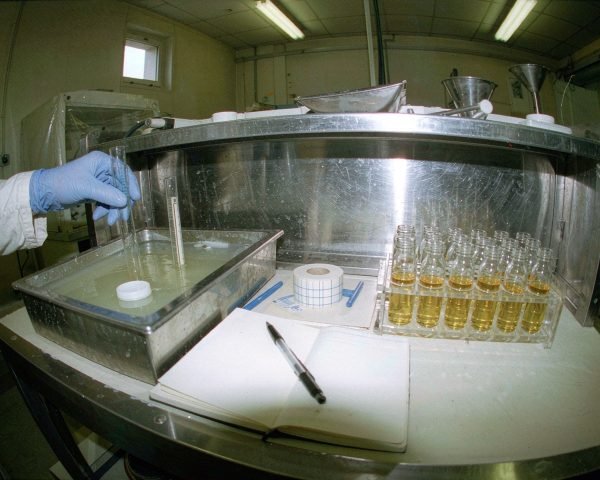

I spent a week inside a refinery QC lab back in 2021 and the thing I remember most is the sound. Not the alarms, not the compressors. The quiet click of a viscometer tube being swapped out for the fourth time that morning. Refinery labs burn through consumables at a pace that would shock a pharma bench, and almost nobody writes about what they actually need.
This guide fixes that. It maps the consumables to the test methods, so you can stock against reality instead of guessing.
What you’ll get: a method-by-consumable map for distillation, flash point, sulfur, viscosity, water, and GC work, plus the storage, material, and documentation choices that keep an audit quiet.
The Short Answer
A petrochemical or refinery lab needs four consumable families that most other labs barely touch: fuel-tested sample containers and crimp vials for hydrocarbon work, XRF sample cups and films for sulfur analysis, glass viscometer tubes and Cannon-standard calibration oils for kinematic viscosity, and KF titration vessels plus anhydrous solvents for trace water. Add filtration, GC inlet supplies, and lot-traceable documentation, and you have the complete list. Everything else is standard lab stock.
Read on for the method-by-method breakdown, the material traps that aromatics solvents set, and a worked stocking list you can adapt.
Why Refinery Labs Are a Different Animal
A pharma lab measures things dissolved in clean solvents. A refinery lab measures fuels that smell up the room, crude samples full of wax and grit, and gas samples that arrive in pressurized cylinders. The analytes attack plastics. The matrices foul filters. The methods are physical, not purely chemical.
That changes the consumable profile in three ways.
Sample containers carry the load. A crude receipt sample or a naphtha blend line sample has to survive transport, sometimes weeks of storage, and then go straight into a distillation or sulfur test. Glass wins here, and amber glass wins where the sample sits near a window, which most do. If you are weighing clear against amber for fuel samples, the trade-offs are the same as for any light-sensitive liquid, which our clear vs amber vial guide walks through in detail.
Physical tests consume hardware, not chemistry. A distillation run per ASTM D86, the century-old standard test for boiling range, uses a flask, a thermometer or sensor assembly, and a condenser bath, and the flask gets retired on a schedule because carbon buildup changes the boiling curve. Viscosity runs consume Cannon-Fenske or Ubbelohde tubes and calibration oils. These are consumables in every sense, even though nobody calls a viscometer tube a “vial.”
Regulatory paperwork rides on the lot. Fuel is a regulated commodity. When a cargo gets disputed, the lab’s records become evidence, and the lot numbers on the consumables are part of the chain. We will come back to documentation near the end.
The Core Test Menu and What Each Method Consumes
Here is the method map. I keep this table in my head from that refinery week, and it has not aged badly.
| Test | Method | Consumables It Burns Through | Notes |
|---|---|---|---|
| Atmospheric distillation | ASTM D86 | Distillation flasks, receiver cylinders, condenser bath fluid | One of the oldest tests in the industry, dating back to the Engler distillation |
| Flash point | ASTM D93 / D92 | Sample cups, stirring assemblies, cleaning solvents | Closed-cup for diesels, open-cup for heavy products |
| Kinematic viscosity | ASTM D445 | Calibrated viscometer tubes, bath fluid, Viscosity Reference Standards | Tubes are single-lab calibrated; calibration oils are traceable |
| Sulfur (XRF) | ASTM D4294 / D2622 | XRF sample cups, thin films (Prolene, Mylar, Kapton) | Film choice changes sulfur results at low ppm |
| Trace water | ASTM D6304 | KF titration vessels, anhydrous methanol, reagent | Vessel seals and dryness are everything |
| Density / API gravity | ASTM D4052 | U-shaped oscillator cells, syringes, lint-free wipes | Small volumes, but cleanliness decides the result |
| Hydrocarbon typing | GC-FID / GC-MS | Autosampler vials, crimp caps, liners, septa | The one corner of the lab that looks like pharma |
Two of these deserve their own sections because the consumable choice actually moves the number on the report.
Sulfur Analysis: Where the Film Is the Method
Regulators keep tightening sulfur limits on diesel and marine fuel, so XRF sulfur analysis runs all day in most refinery labs. The instrument is a fixed asset. The consumable is the sample cup: a small polyethylene or polystyrene cup sealed with a thin polymer film, filled with a few milliliters of fuel, and presented to the X-ray beam.
Film selection is not a rounding error. Films come in different materials and gauges, and each material absorbs X-rays differently. At low sulfur ppm, swapping from one film to another can shift the reported number enough to matter for a specification limit. That is why method-specific cup-and-film combinations exist, including products engineered specifically for the petrochemical sulfur market.
Three practical rules from the bench:
Fill volume matters. Underfilling a cup leaves a sloped meniscus that changes the film-to-detector geometry. Follow the method’s fill line exactly.
Handle films with gloves and lint-free tissue. A fingerprint on the film is a sulfur-containing contamination you just installed yourself.
Lot consistency matters. If you change film material or gauge mid-project, re-verify your calibration checks before you trust the numbers.
Water in Oil: Karl Fischer Consumables Done Right
Trace water is the quiet saboteur in fuels and lubricants, and ASTM D6304 is the standard method for measuring it in petroleum products. The consumables around a KF titrator decide whether you measure water or generate it.
The titration vessel needs a dry, tight system: a sealed cell, dry molecular sieve in the drying tubes, and anhydrous methanol or the method’s specified solvent. Every atmospheric leak brings in moisture. I once watched a KF drift creep upward over a morning because someone left the drying tube off between runs, and the lab chased a phantom water trend for two days before anyone checked the sieve.
For oil samples specifically, the method usually runs in a coupled solvent that keeps hydrocarbons dissolved. That means your solvent purchases are consumables too, with expiry dates that matter. Our guide to what Karl Fischer titration actually needs covers the vessel, reagents, and sieve replacement rhythm in detail.
Vials and Closures for Fuel and Oil GC Work
The GC corner of a refinery lab looks a lot like a pharma lab, with one big difference: the samples are aggressive. Aromatics like toluene and xylene swell or craze many plastics, and heavy samples leave films that make re-piercing a septum miserable.
Vial choice follows the sample. Clear borosilicate works for most fuel dilutions. Amber glass earns its keep when samples wait in the tray or sit near sunlight, which is common in busy labs where a sequence runs past lunch. Deactivated glass is worth considering for trace-level work on polar compounds in dirty matrices.
Closures: crimp tops still dominate where volatile loss is the enemy, because the aluminum cap applies even, permanent compression. Screw caps win on workflow speed, and modern 9-425 systems seal well when you torque them properly. The failure mode I see most in fuel labs is septa that got re-pierced by a dull needle in a cap someone over-tightened, which leads straight into the next section’s territory. For instrument matching, our GC autosampler vial compatibility guide maps vial formats to the common GC platforms.
Septa deserve one paragraph of refinery-specific advice: hydrocarbon solvents are hard on silicone, and hot trays accelerate bleed. Choose PTFE-lined septa rated for your tray temperature and change them on a schedule tied to the method, not to memory. Restek’s GC inlet maintenance reference makes the same argument for inlet-side septa, and the logic transfers to the sample side too.
Sample Introduction: Cylinders, Cups, and Syringes
Some samples never see a vial at all.
Gas samples arrive in sampling cylinders, and getting a representative aliquot means the cylinder valves, transfer lines, and gas-tight syringes all need to be clean and leak-free. Refinery gas analysis by GC is a whole discipline, and Shimadzu’s hydrocarbon processing resources lay out just how much of the HPI workflow depends on it.
Viscometer tubes are the sleeper consumable. They look like simple glassware, but ASTM D445 accuracy depends on the tube’s calibration constant, so labs track tubes individually, retire them when the constant drifts, and buy calibration oils that are themselves traceable. A lab that stocks generic tubes and treats calibration standards as reagents will fail a method audit faster than one that runs out of vials. Method-level application libraries, like the one Shimadzu Scientific Instruments maintains for energy and petrochemical methods, are the fastest way to check which ASTM methods your instrument list implies. Method-level application libraries, like the one Shimadzu Scientific Instruments maintains for energy and petrochemical methods, are the fastest way to check which ASTM methods your instrument list implies. Method-level application libraries, like the one Shimadzu Scientific Instruments maintains for energy and petrochemical methods, are the fastest way to check which ASTM methods your instrument list implies.
Syringes and syringe filters round out the list. Fuel samples are often filtered before injection, but hydrocarbon-compatible filter materials matter here, since standard nylon membranes do not love every solvent matrix. Glass fiber prefilters extend membrane life on waxy or particulate-heavy samples.
Filtration and Particulate Control in a Dirty Matrix
Refinery samples are rarely clean. Crude contains formation solids, residual fuel carries catalyst fines, and used oils carry wear metals. Filtration strategy in this lab is less about protecting a column and more about making two consecutive samples comparable.
The solvent inlet filter on any HPLC or ion chromatography system in the lab needs a replacement rhythm tied to usage, since a partially clogged inlet starves the pump and wrecks flow stability. For samples themselves, syringe filtration with solvent-compatible membranes is the default, and the pore size choice follows the same logic as any HPLC prep: 0.45 µm for general particulate removal, 0.22 µm when the method demands it.
One warning from experience: do not over-filter. Some specification tests require the sample as received, particulates included. Filtering a particulates-in-oil sample before a particle count test destroys the data. Write the filter decision into each method’s sample prep sheet so nobody improvises.
Materials That Survive Hydrocarbons (and Ones That Do Not)
Aromatics are the stress test. Toluene, xylene, and benzene attack many commodity plastics. Polystyrene cups craze and cloud. Some polyethylenes soften. Standard polypropylene centrifuge tubes, which shrug off aqueous buffers all day, can fail against strong aromatic fractions.
Practical material guidance for this lab:
Glass, especially borosilicate, is the default sample contact material. It handles aromatics, it cleans well, and it does not extract into the sample at any level you care about.
PTFE and PEEK handle hydrocarbons and aggressive solvents where plastic is needed, in seals, ferrules, and filter hardware. Stainless steel wins for anything pressurized.
Know your exceptions. Some hydrocarbon-compatible plastics exist for specific duties, like the polyethylene XRF cups, which work because the fuel contact time is minutes, not weeks. Match the material to the contact time, not to a general “chemical resistance chart” glance.
The same logic applies to cap liners and septa, which is why we wrote a whole piece on cap liner solvent compatibility. A liner that swells in toluene will glue itself to the vial mouth and shed onto the rim.
Documentation: The Part That Decides Disputes
Fuel cargo disputes get arbitrated. When that happens, the lab’s consumable records become part of the evidence chain, alongside the instrument calibrations and analyst signatures. Most instrument vendors publish the method context for this; Thermo Fisher’s oil and gas testing hub, for example, organizes the regulatory and workflow background a QA manager needs when assembling that evidence. Most instrument vendors publish the method context for this; Thermo Fisher’s oil and gas testing hub, for example, organizes the regulatory and workflow background a QA manager needs when assembling that evidence. Most instrument vendors publish the method context for this; Thermo Fisher’s oil and gas testing hub, for example, organizes the regulatory and workflow background a QA manager needs when assembling that evidence.
What survives an audit:
Certificates of analysis for the consumables that touch the reported result, especially calibration oils, reagents, and films.
Lot numbers recorded per sample run rather than only per purchase order. A single spreadsheet column solves this.
Retained samples, stored in vials that will not evaporate or degrade before the dispute window closes. Headspace and volatiles work has its own storage demands, covered in our headspace vial guide.
Supplier qualification files. If the vendor changes a product’s material or manufacturing site mid-contract, a lab that never re-qualified its supplier finds out from a drifting method.
None of this is glamorous. All of it is cheaper than relaunching a disputed analysis from scratch.
How Many Consumables Does a Refinery Lab Actually Use?
Vial counts in this lab surprise people, so here is the arithmetic that justifies the stocking list at the end.
A single GC volatile-method sequence on a 24-position autosampler consumes 24 vials, 24 caps, and 24 septa per run. A refinery lab running that method across three shifts does four to six sequences a day, which is already 100 to 150 vial assemblies daily before anyone runs a duplicate or a re-injection. Add the fuel oxygenates method, the benzene-in-gasoline analysis, and the occasional troubleshooting rerun, and a mid-size site clears 3,000 to 5,000 vial assemblies per month without trying.
The physical-test side burns differently. A D86 distillation battery of six instruments retires a flask roughly every 150 to 300 runs depending on sample fouling, so flask consumption is slow but absolutely scheduled. Viscosity is the opposite: each ASTM D445 run needs a cleaned, dried tube, and while the tubes are reused for months, the calibration oils and bath fluid deplete steadily.
Two purchasing habits follow directly from this math. Order vials by the case with lot continuity in mind, because a mid-sequence lot change is a method-verification event you do not want. And keep a par level for each method-critical consumable based on weekly consumption, not on shelf space, because the failure mode of running out mid-sequence is an idle instrument worth more per day than the entire quarterly consumable budget.
Cleaning and Reuse: What Can Cycle and What Cannot
Refinery labs wash glassware harder than any other lab I have visited, and most of that is justified. But reuse rules differ sharply by item, and guessing wrong costs data.
Glass vials for non-volatile screening can be washed, solvent-rinsed, and oven-dried for reuse in qualitative work. The moment the method touches volatiles, trace sulfur, or trace oxygenates, reuse ends, because residual films and adsorbed compounds survive normal washing at exactly the concentrations the method cares about. Crimp vials are the hard line: crimping deforms the neck finish, so a de-crimped vial never seals the same way twice.
Viscometer tubes are reused constantly but cleaned to a written procedure, typically solvent, then water, then a drying step, followed by a visual check for etching or residue. Any tube that fails the visual goes out regardless of its calibration history.
Solvent bottles and reservoirs sit in the middle. Washable, yes, but an anhydrous or oxygen-sensitive duty bottle needs the same treatment as the reagent inside it, and our guide to cleaning and decontaminating reagent bottles covers the residue issues that plain rinsing leaves behind. The honest test for any reuse decision: run your cleaning routine, then run a blank in the washed item. If the blank is clean, reuse away. If it is not, you just learned which item goes on the disposable list.
Volatiles: Where Headspace Consumables Enter the Picture
Fuel labs live in volatile territory. Vapor pressure, oxygenates in gasoline, benzene at regulatory limits, and refinery gas all demand sample handling that keeps the volatile fraction exactly where it was when the sample left the pipe.
That is headspace country. Headspace vials must hold pressure, resist temperature, and seal against a needle that punctures repeatedly in a heated tray. The 20 mL crimp format dominates here, and crimp quality is not optional: an under-crimped cap on a vial sitting at 80 °C in a headspace oven will vent your sample and skew every result down the sequence. Our complete guide to headspace vials covers the format choices in depth.
Vapor pressure methods add their own consumable wrinkle: the sample must often be drawn and chilled to a defined temperature before the cell is filled, so labs keep thermally equilibrated syringes and chilled transfer vessels in stock alongside the usual glassware. A vapor pressure reading taken with a warm syringe is a reading of a different sample.
The same care flows through storage. Volatile samples in the retention cabinet lose their light ends through a bad seal within days, which is why seal integrity belongs on the receiving checklist for every batch of crimp caps, rather than only on the instrument.
Qualifying Suppliers for Petrochemical Consumables
Supplier choice in this lab carries more weight than in a general chemistry lab, because method stakes are higher and switch costs are brutal. A viscometer tube with a slightly different bore profile, or an XRF film with a different polymer gauge, can shift results far enough to force a full method re-verification. So qualification happens before the first purchase order, not after the first problem.
What a qualified petrochemical consumables supplier looks like: documented material specifications for every item line, lot traceability back to raw material batches, certificates that arrive with the shipment rather than on request, and a change-notification commitment in writing. If the supplier changes a septa polymer or a film supplier mid-contract, you hear about it before the box arrives, not from a drifting control chart afterward.
Sample-testing a new supplier is standard practice here. Order a small lot, run your most method-sensitive test alongside your current consumable, and compare against acceptance criteria you wrote down in advance. For XRF films and GC septa in particular, I would not skip this step even from a vendor with a strong reputation, because those two items have the widest silent-variation range in the catalog.
One more habit worth stealing from pharma QA: keep an approved supplier list with qualification dates, and re-qualify on a schedule. It sounds bureaucratic until the day a fuel cargo is disputed and someone asks, in writing, where every consumable in the chain came from.
Common Pitfalls Refinery Labs Make With Consumables
I have watched four of these cause real damage.
One: treating viscometer calibration oils as reagents. They are standards. They expire, they degrade with exposure, and their certificates matter. Store them sealed, log their opening dates, and retire them on schedule.
Two: buying XRF films on price per film. The cheap film that adds 2 ppm of apparent sulfur to a 10 ppm spec test costs far more in retests than the premium film ever did.
Three: reusing crimp vials. The neck finish deforms when crimped and de-crimped. A second crimp sits on a damaged seat, and volatile samples leak exactly when the sequence runs overnight.
Four: letting solvent bottles of anhydrous KF reagent sit open. The reagent absorbs moisture from room air within hours. An open bottle of “anhydrous” methanol is a moisture source, not a solvent.
A Worked Stocking List
Here is the baseline order list I would hand a new refinery QC lab, sized for a mid-size site. Scale to your method mix.
| Item | Qty (per quarter) | Why |
|---|---|---|
| 20 mL crimp headspace vials + 20 mm crimp caps, PTFE/silicone septa | 2,000 | GC volatiles and fuel oxygenates |
| 2 mL amber screw vials + 9-425 caps | 4,000 | General GC/GC-MS work |
| XRF sample cups + sulfur-rated films | 1,500 | Sulfur by D4294/D2622 |
| Viscometer tubes (calibrated) | 30 | D445 with per-tube constants |
| Viscosity reference standards (2-3 bath points) | 6 bottles | Calibration checks |
| KF titration vessels, molecular sieve, anhydrous solvent | 1 vessel, 20 packs, 24 L | D6304 trace water |
| Distillation flasks (D86-rated) | 40 | Scheduled retirement |
| Glass fiber prefilters + 0.45 µm PTFE syringe filters | 2,000 | Sample cleanup |
| Gas-tight syringes | 12 | Refinery gas aliquots |
| Amber storage bottles, 250-1000 mL | 100 | Sample retention and solvent storage |
The vial counts look high until you run the math on a 24-position autosampler cycling three shifts a day.
Conclusion
Refinery labs fail with consumables in predictable ways: the wrong film in an XRF cup, a viscometer standard treated like a solvent, a crimp vial asked to seal twice, an anhydrous reagent left open next to a sample that needs to be dry. Every one of those failures traces back to the same root cause, which is stocking and handling consumables as if this were an ordinary chemistry lab. It is not. The methods are physical, the matrices are hostile, and the disputes get arbitrated. Map your consumables to your method list, demand lot traceability on everything that touches a reported number, and store your hydrocarbon samples in glass that will not fight back. Start with the method table above, audit your current stock against it, and you will find the gaps in one afternoon. When you are ready to tune the GC corner specifically, our guide to GC autosampler vials is the natural next read.
Frequently Asked Questions
What consumables does ASTM D86 distillation require?
A borosilicate distillation flask matched to the sample volume, a graduated receiver cylinder, and the condenser bath fluid. Flasks are retired on a schedule because carbon residue shifts the boiling curve, so labs keep spare flasks in rotation rather than waiting for failure.
Which XRF film should I use for sulfur in fuel?
Use the film material and gauge your calibration was built with, typically a Prolene or similar low-absorption film in the 3-6 µm range. Changing film material shifts low-ppm sulfur results, so any change requires recalibration verification before you trust the numbers.
How often should viscometer tubes be replaced?
Replace them when the tube’s calibration constant drifts on your routine standard check, or on the retirement interval your quality system defines. A cracked or etched tube goes out immediately regardless of schedule.
Do I need amber vials for fuel samples?
Not always, but amber earns its keep when samples wait in autosampler trays or store near windows. Light exposure can age some fuel components and shift trace-level results. For quick-turnaround runs, clear vials are fine and easier to visually inspect.
Can I reuse crimp-top vials after de-crimping?
No. The crimping process deforms the vial’s neck finish, and a second crimp cannot seat the same septa compression on the damaged glass. Screw-cap vials are the reusable-looking option, and even those should be inspected for chips at the seal surface before reuse.