
Buying vials for a GC autosampler sounds simple until the gripper starts dropping vials or the needle bends on injection three. Most of those failures trace back to one thing: the vial didn’t match what the autosampler was designed to hold. This guide walks through what actually fits, and why.
Quick answer: Most GC autosamplers, including the Agilent 7693A, use standard 12 × 32 mm glass vials with 11 mm crimp caps, snap caps, or 8-425/9 mm screw caps. Headspace instruments are the exception: they need 10 or 20 mL vials with 20 mm crimp or magnetic threaded caps. Match the neck finish and height to your specific autosampler model.
The good news is that the GC vial world is more standardized than the HPLC one. Once you know your instrument’s tray and gripper, the rest is detail.
The 12 × 32 mm Vial Is the Default
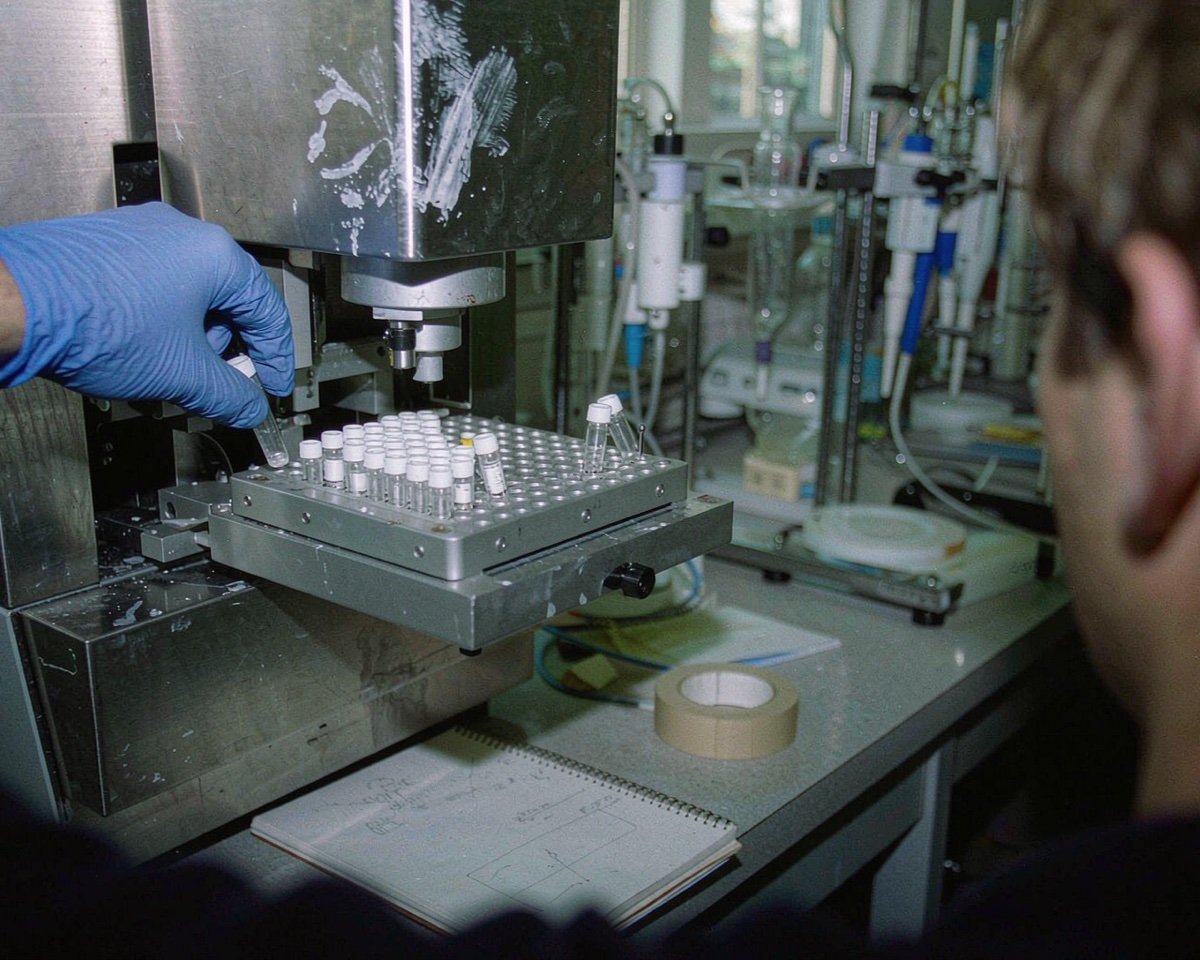
Walk into almost any GC lab and the tray holds 12 × 32 mm vials. Two milliliters nominal, about 1.5 mL working volume after the cap and insert take their share. Clear or amber borosilicate glass, usually Type 1.
The dimensions matter more than they look. Agilent’s 7890 series troubleshooting manual lists the critical vial dimensions for the 7693A sampler: body diameter 11.7 mm ± 0.2 mm, height 32 ± 0.5 mm, and a maximum capped height of about 34.5 mm. Vials outside those numbers cause “vial mishandled” errors, misaligned barcodes, and gripper faults.
Low-volume work bends the rules a bit. If your sample volume is under 200 µL, a standard vial leaves the needle sipping air unless you use an insert or a low-volume vial with a tapered bottom. The insert sits inside the same 12 × 32 mm footprint, so compatibility doesn’t change; the geometry just needs to let the needle reach the liquid. Check that your autosampler’s needle travel bottoms out above the insert’s shoulder, or you’ll be fishing plastic shards out of the inlet.
I learned this the expensive way. A few years back a colleague ordered a batch of vials from a new vendor because the price was hard to argue with. Two weeks later the autosampler kept throwing tray errors around position 37. The vials were half a millimeter too tall with the cap crimped, just enough to jam the gripper. We ate the cost of both the vials and the downtime.
The lesson stuck: buy 12 × 32 mm vials that publish their tolerances, not just their dimensions.
Closures: Crimp, Snap, and Screw
Three closure families fit the standard GC vial, and each trades something.
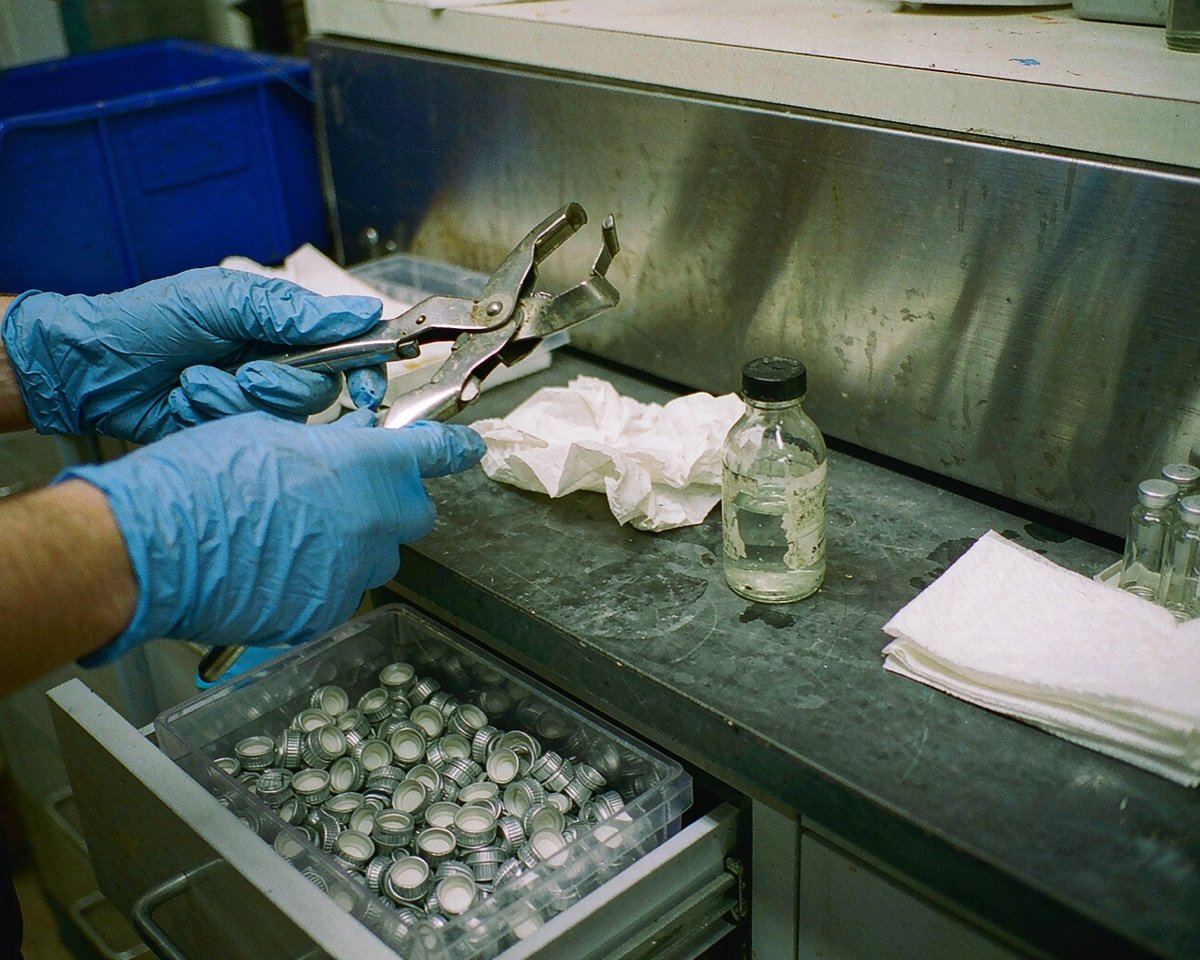
11 mm crimp caps are the classic choice. An aluminum crimp with a PTFE/silicone septa gives the best seal integrity and the lowest evaporation rate, which is why long sequences and volatile analytes still default to crimp. The cost is convenience: you need a crimping tool, and a badly crimped cap leaks or folds.
Snap caps press on with a plastic flange. No tooling, faster throughput, adequate seal for routine work at room temperature. They’re the middle option: less secure than crimp, more than a loose screw cap, and fine for non-volatile samples injected the same day.
Screw caps with 8-425 or 9 mm threads have taken over a lot of GC benches. Hand-tight, reusable, no crimper to calibrate. If your autosampler’s gripper is designed for the slightly different cap geometry, screw-top vials work as a drop-in replacement on most modern samplers.
We break down the full trade-offs in our crimp top vs screw top vs snap top comparison, including where each one fails. If you run volatiles overnight, my honest default is crimp. Everything else, screw caps save more time than they risk.
Headspace Is a Different Animal
Headspace GC uses bigger vials: 10 mL and 20 mL, sealed with 20 mm crimped aluminum caps or, on newer systems, magnetic threaded caps. These never interchange with 12 × 32 mm liquid-injection vials.
Agilent’s headspace samplers, the 7697A and the 8697, take 20 mL vials as standard, with 10 mL options on some configurations. The vial sits in a heated oven while volatiles partition into the headspace, so the seal has to survive temperature plus pressure without leaking.
If you’re new to the technique, our guide on how HPLC and headspace vials differ covers the format clash in detail. The short version: different height, different neck, different cap, and the two should never share a storage drawer.
Amber, Clear, and Write-On Spots
Clear glass lets you see fill level, particulates, and phase separation at a glance. Amber glass blocks most light below about 450 nm and protects photolabile compounds.
For GC work specifically, amber matters more than people expect. PAH analysis, some pesticide methods, and anything with UV-sensitive analytes belong in amber vials. If your samples are stable, clear glass is cheaper and easier to inspect.
Write-on spots sound trivial until you label three hundred vials with tape. Most quality vials include a frosted patch that takes solvent-resistant pen. If you print labels instead, keep them thin; thick labels catch on tray dividers and grippers. Agilent’s manual, the same one linked above, specifies maximum label thickness and position for exactly this reason.
One more glass note: deactivated or silanized vials exist for analytes that adsorb to active glass surfaces, like amines and some pesticides. The silane treatment caps the surface silanols, so your 10 pg on-column injection actually makes it to the detector. For routine hydrocarbon or solvent work, plain Type 1 borosilicate is fine and cheaper. Decide based on your lowest calibration level, not on habit.
Quick Compatibility Reference
A rough map for the common instruments:
- Agilent 7693A / 7683 (liquid injection): 12 × 32 mm vials, 11 mm crimp, snap, or 9 mm screw caps. Compatible third-party vials are widely available and much cheaper.
- Agilent 7697A / 8697 (headspace): 20 mL (or 10 mL) headspace vials, 20 mm crimp or magnetic caps.
- Shimadzu AOC-20i series: 12 × 32 mm screw or crimp vials; check the tray version for headspace work.
- Thermo TriPlus / TriPlus RSH: 12 × 32 mm screw, snap, or crimp; headspace stations take 20 mL.
- Older 6890 / 5890 generation: 12 × 32 mm crimp is safest; some grippers don’t handle screw cap geometry well.
Chrom Tech publishes a detailed Agilent GC autosampler vial compatibility matrix by model and closure type, and Agilent maintains its own autosampler vials selection guide if you want the official word per tray.
Two habits prevent most compatibility pain. First, order one box of any new vial and run a tray’s worth through a sequence before committing to a case. Second, when a tray error appears, check the vial height and cap before you blame the instrument.
Packaging is part of compatibility too, which nobody puts on the datasheet. Vials that ship loose in a bulk bag arrive with scuffed walls and the occasional cracked shoulder; vials in divider trays are easier to load and easier to count. If your lab loads hundreds of vials a week, the tray-pack format saves more labor than the price difference between packaging styles. Ask how the vials ship before you compare unit prices, because you’ll handle that packaging every single day.
Conclusion
GC autosampler vial compatibility comes down to three decisions: the vial format your sampler physically accepts, the closure that matches your volatility and throughput needs, and glass that suits your analytes. The 12 × 32 mm vial covers routine liquid injection on nearly every modern autosampler, while headspace systems demand their own 10 and 20 mL formats with 20 mm seals. Dimensional tolerance is the quiet variable that separates a tray that runs overnight unattended from one that phones home at 2 a.m. Buy from suppliers who publish tolerances and lot documentation, test one box before a bulk order, and keep crimp, snap, and screw options on hand for different methods. If you’re also running GC-MS work, our GC-MS vials guide covers the low-bleed and insert considerations that matter at trace levels. And for sample volume planning on headspace methods, see how much sample headspace analysis actually needs.
Frequently Asked Questions
Are GC vials and HPLC vials the same?
Mostly yes for liquid injection: both use 12 × 32 mm vials with compatible closures. Differences show up in caps (GC leans on 11 mm crimp) and in volume, since GC methods often inject from smaller residual volumes. Headspace GC vials, however, are a completely separate 10/20 mL format.
Can I use screw cap vials in an Agilent 7693A autosampler?
Yes. The 7693A handles 12 × 32 mm vials with crimp, snap, or 9 mm screw caps. Just confirm the capped height stays within the sampler’s maximum, roughly 34.5 mm, and that labels don’t interfere with the gripper.
What size vial does a headspace autosampler need?
Agilent headspace samplers use 10 or 20 mL headspace vials with 20 mm closures. The exact choice depends on your method and oven configuration. Never substitute a 2 mL vial; the needle geometry and heating won’t line up.
Do amber GC vials affect chromatography?
The glass itself is chemically similar to clear borosilicate, so no, not for stable analytes. Amber vials protect light-sensitive compounds from photodegradation during storage and sequences, which for PAHs and some pesticides can quietly change your results.
Why does my autosampler keep dropping vials?
Check three things: vial height (off-spec vials jam the gripper), cap crimp quality (folded aluminum catches on tray dividers), and label placement (thick or skewed labels collide with grippers). Agilent’s troubleshooting guide recommends using vials that meet its published critical dimensions.