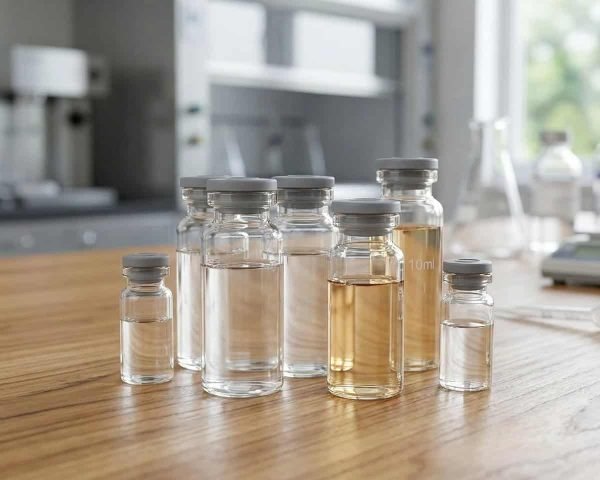

Mass spectrometry changes the vial conversation. In a regular GC run, a slightly contaminated vial might cost you a noisy baseline. In GC-MS, the same vial can produce a false peak, a phantom compound, or enough background bleed to bury your analyte. Here’s what I’ve learned about choosing vials that keep a mass spectrometer happy.
For GC-MS work, use crimp-top vials with low-bleed PTFE/silicone septa, Type 1 borosilicate glass (deactivated for polar or trace analytes), and certified-clean vials when you’re measuring at low concentrations. The vial and septum are part of the analytical system — treat them that way.
In this guide, I’ll explain why each of those choices matters and how to match vials to your specific GC-MS workflow.
Why GC-MS is unforgiving about vials
A mass spectrometer detects almost everything — including the things you don’t want. Siloxanes from septa, phthalates from plastic caps, adsorbed organics from a badly cleaned vial: all of it shows up in the chromatogram and the mass spectrum. That’s why consumables suppliers treat vials as analytical components rather than containers.
Agilent’s sample-containment catalog makes the point directly: septa undergo thermal and chemical conditioning during manufacture specifically to reduce siloxane bleed, which happens when the septum material is stressed by heating, solvent interaction, or needle piercing. If you use cheap, unconditioned septa on a sensitive GC-MS method, you’re literally injecting septum contamination into your source.
The practical upshot: for GC-MS, the vial system deserves the same scrutiny as your column. A $0.30 septum that cores or a vial with active adsorption sites can cost hours of instrument time and a full rework of your samples.
Crimp vs. screw caps: what the vendors actually say
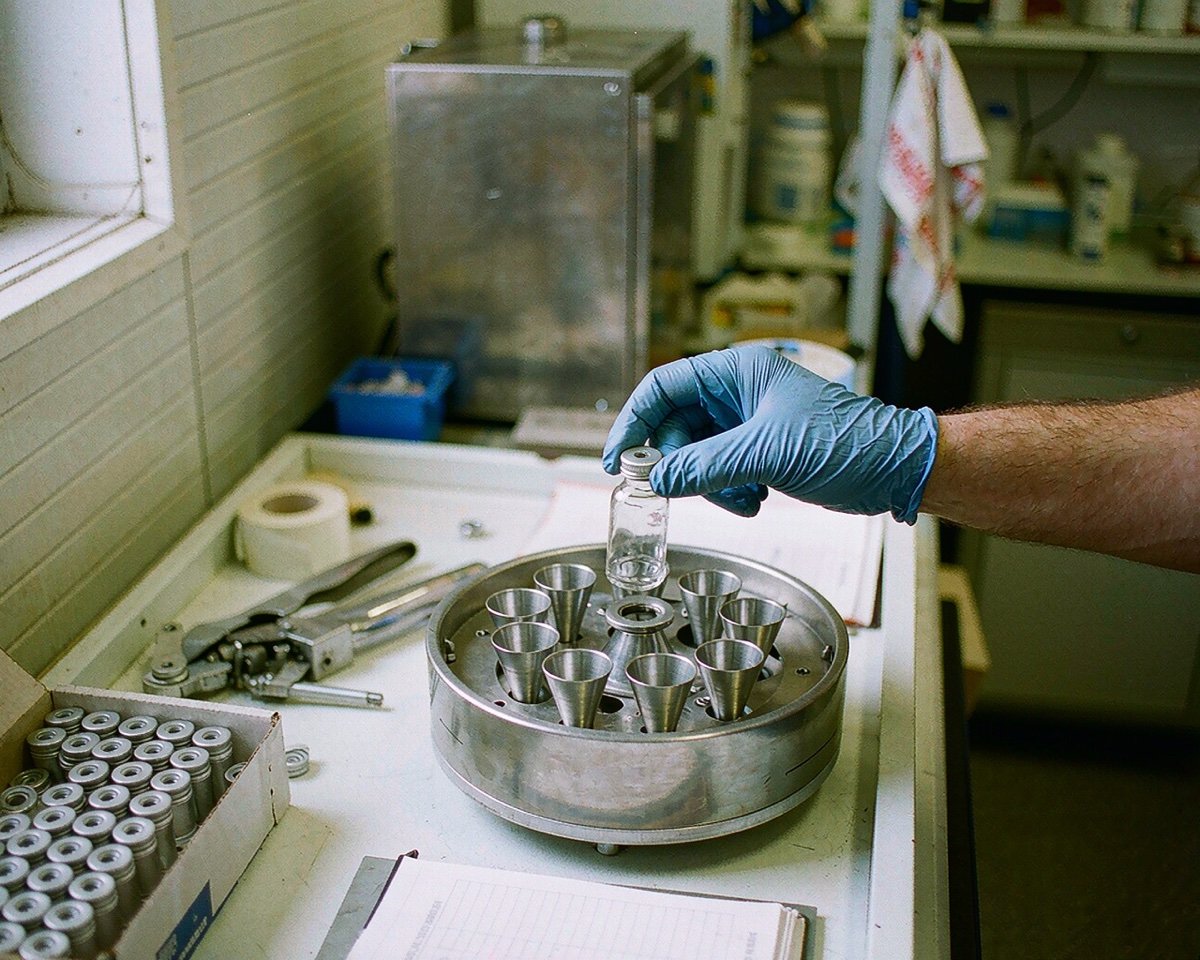
This is one of the few topics where vendors are surprisingly unanimous. Agilent’s catalog states it plainly: crimp cap vials tend to be best for GC and GC/MS applications, while screw cap vials are generally used for LC and LC/MS applications. The reason is sealing. A crimped aluminum seal compresses the septum evenly against the vial mouth, which gives the most airtight closure — important when your injection solvent is volatile and evaporates at room temperature.
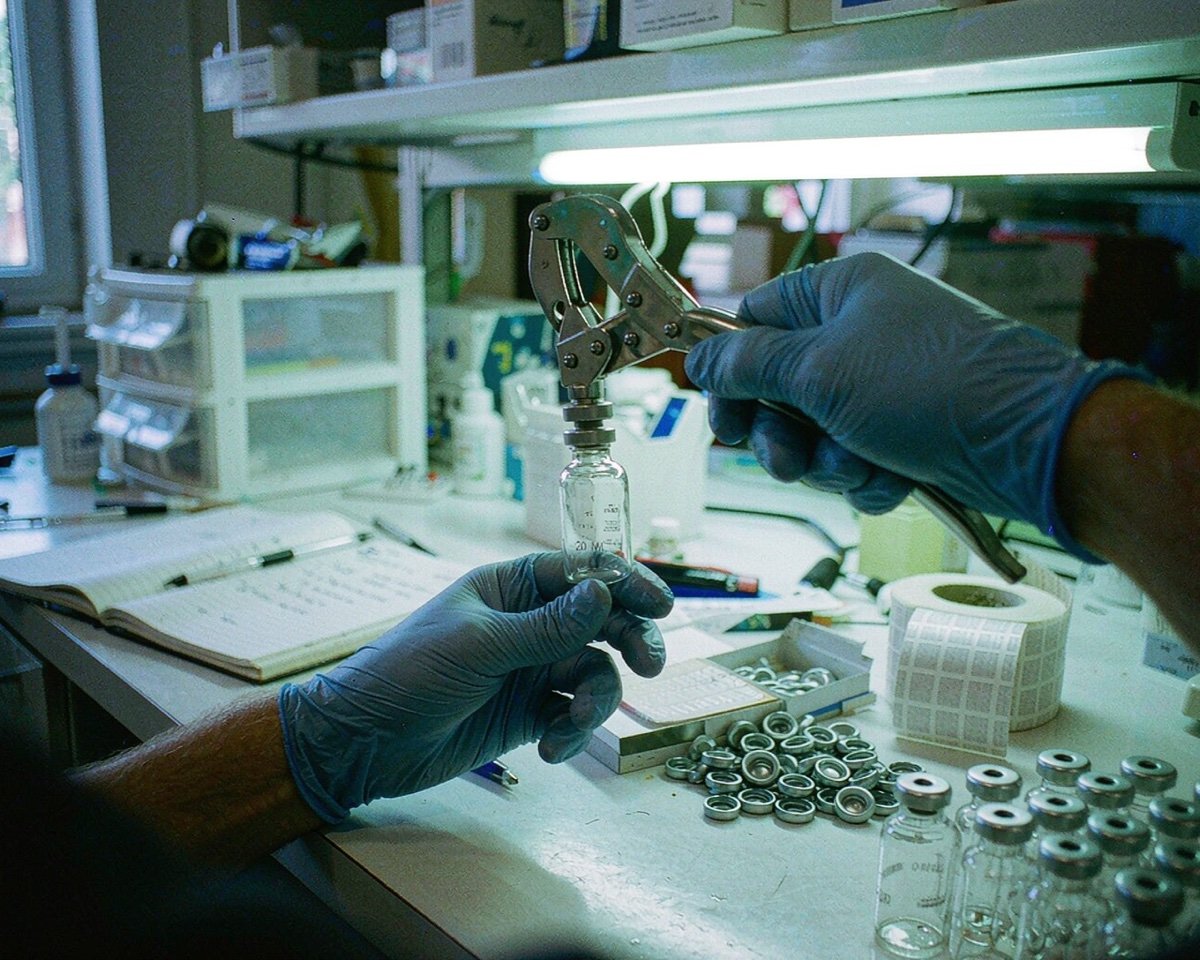
Restek’s vial guidance agrees: a crimp cap applied with a crimping tool delivers the most airtight seal, making it the best choice for volatile compounds, high-temperature applications, and headspace analysis where internal pressure can build.
That said, screw caps are catching up for GC-MS. Modern short-thread screw vials with bonded septa seal well enough for many methods, and they’re easier to work with. My rule: crimp for volatile analytes and anything stored before injection; screw for convenience when your compounds tolerate it. If you’re weighing formats, my complete guide to headspace vials covers the crimp-versus-screw question for headspace work in depth.
Glass quality: standard vs. deactivated
Vial glass is not just glass. For GC-MS you’re choosing between standard Type 1 borosilicate glass and deactivated (silanized) glass:
– Standard borosilicate: fine for most organic analytes at normal concentrations. – Deactivated/silanized glass: the surface is chemically treated to block active sites. Trajan’s consumables guide notes that deactivated glass is ideal for polar, acidic, or basic compounds that are susceptible to adsorption on active glass surfaces — and that it improves analyte recovery especially at low concentrations.
For trace-level GC-MS, the adsorption story matters even more. Environmental labs measuring contaminants at part-per-trillion levels can get false negatives when a few percent of the analyte sticks to the vial wall. If your analytes are polar, basic, or present at trace levels, silanized vials are worth the premium. Sigma-Aldrich’s analytical vial range lists silanized vials specifically for improving polar compound recovery.
Plastic vials are an option too, but they’re a niche for GC-MS. Polypropylene can work for certain aqueous samples, though most GC-MS work runs in glass for good reason: glass is inert and doesn’t add the plasticizer background that a mass spectrometer will happily detect.
Septa: the contamination source hiding in plain sight
The septum is the part of the vial system that touches your sample, the needle, and the inlet — and it’s the most common source of GC-MS contamination. A few rules I keep in front of me:
– PTFE/silicone is the GC-MS default. The silicone reseals after needle penetration; the PTFE layer keeps solvent from touching the rubber. – Low-bleed septa matter for MS. When siloxane interference is a concern, vendors recommend certified low-bleed septa that are conditioned to minimize bleed. The Agilent catalog frames it as “the industry’s lowest bleed profile for better analytical sensitivity.” – Butyl rubber for headspace. If you’re doing headspace GC-MS, butyl septa give the gas-tight seal you need for volatile analytes, and they tolerate higher temperatures. – Pre-slit septa prevent coring. A pre-slit septum gives the needle a clean path, reducing coring and needle damage. If you’ve had bent needles or septum fragments in your inlet, this is the first fix.
For the full picture on septum materials — PTFE vs. silicone vs. PTFE/silicone — I wrote a dedicated guide on choosing the right septa that covers bleed, hardness, and coring.
Cleanliness: certified vs. standard vials
Here’s where the “certified clean” designation earns its keep. Standard vials are manufactured clean but aren’t batch-tested for the compounds a mass spectrometer cares about. Certified vials are:
– Tested for low bleed and extractables at MS-detectable levels. – Batch-documented with certificates you can keep in your quality files. – Packaged to stay clean — sealed kits that don’t sit open on a shelf.
Thermo Fisher’s chromatography consumables guide makes the same point in another way: for environmental and trace applications you can buy pre-cleaned, certified vials and caps in sealed packages, including EPA, MS-certified, and PFAS kits. If your lab runs regulated methods, certified vials are effectively required — your data has to survive an audit.
When amber vials matter
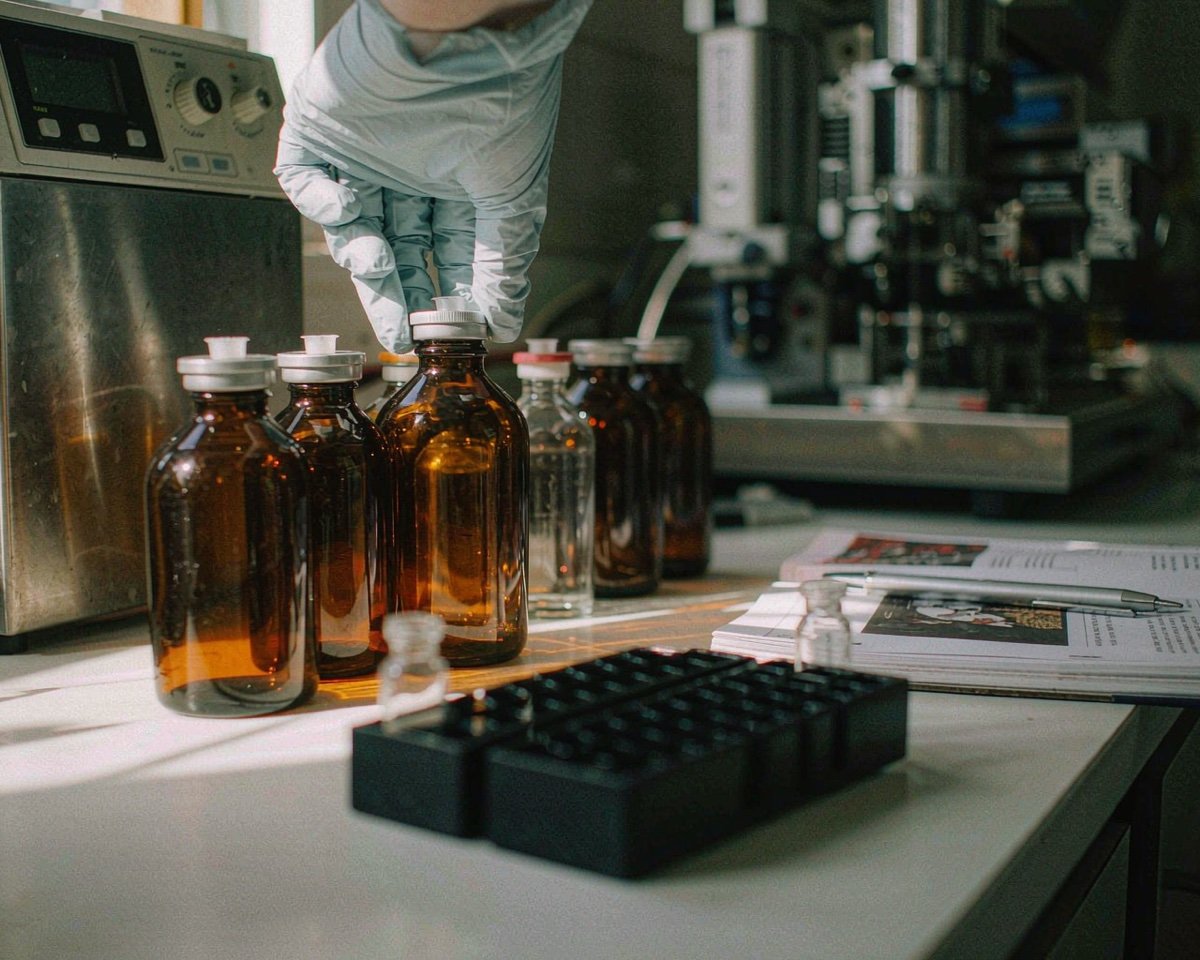
If your analytes degrade in light — vitamins, certain drugs, dyes, some pesticides — amber glass is the answer. Amber vials block the wavelengths that drive photodegradation. The trade-off is simple: you can’t see the sample level as easily, and amber glass costs slightly more. For light-sensitive GC-MS work, that’s a cheap insurance policy.
Choosing for your workflow: a quick decision path
1. Volatile or pressurized method → crimp-top vial, PTFE/silicone (or butyl for headspace) septum. 2. Trace or polar analytes → deactivated/silanized glass, certified clean. 3. Regulated lab → certified vials with batch documentation. 4. Light-sensitive compounds → amber glass. 5. High-throughput routine → pre-assembled kits to save handling time.
And if you’re moving samples between liquid and gas workflows, remember that HPLC vials and headspace vials are not the same thing — the sealing and thermal requirements differ.
Conclusion
GC-MS vials earn their reputation as a quiet source of either clean data or mysterious contamination. Crimp-top closures give you the airtight seal volatile analytes need, low-bleed PTFE/silicone septa keep siloxanes out of your source, and Type 1 borosilicate glass — deactivated and certified when your method demands it — protects your analytes from adsorption. None of these choices are expensive, but each one can save you a rerun, a troubleshooting session, or an audit finding. Treat the vial as part of the analytical system, verify your consumables against your method’s sensitivity, and your mass spectrometer will thank you. If you’re debugging a GC problem right now, start with my GC troubleshooting guide.
Frequently Asked Questions
What type of vials are used for GC-MS?
Most GC-MS work uses crimp-top vials with PTFE/silicone septa. For headspace GC-MS, you need dedicated headspace vials (6–20 mL) with gas-tight butyl or high-temperature septa. Trace and polar analytes benefit from deactivated glass.
Can I use HPLC vials for GC-MS?
Sometimes, but it’s risky. HPLC screw-cap vials may not seal tightly enough for volatile analytes, and the septa may not be low-bleed. For best results, use GC/GC-MS-specific vials — crimp caps are the standard recommendation.
Why do I get ghost peaks in GC-MS?
Ghost peaks in GC-MS usually come from contamination: septum bleed (siloxanes), residual solvents in the inlet, contaminated vials, or carryover. Switching to certified low-bleed vials and septa, and baking out the inlet, resolves most cases.
What is a low-bleed septum and why does it matter?
A low-bleed septum is thermally and chemically conditioned during manufacturing to minimize siloxane bleed when heated or pierced. In GC-MS, septum bleed shows up as background ions and can bury trace analytes, so low-bleed septa are strongly recommended.
Do I need certified vials for GC-MS?
If you run trace analysis or regulated methods, yes. Certified vials are batch-tested for bleed and extractables and come with documentation you can defend in an audit. For routine, high-concentration work, standard vials are usually fine.