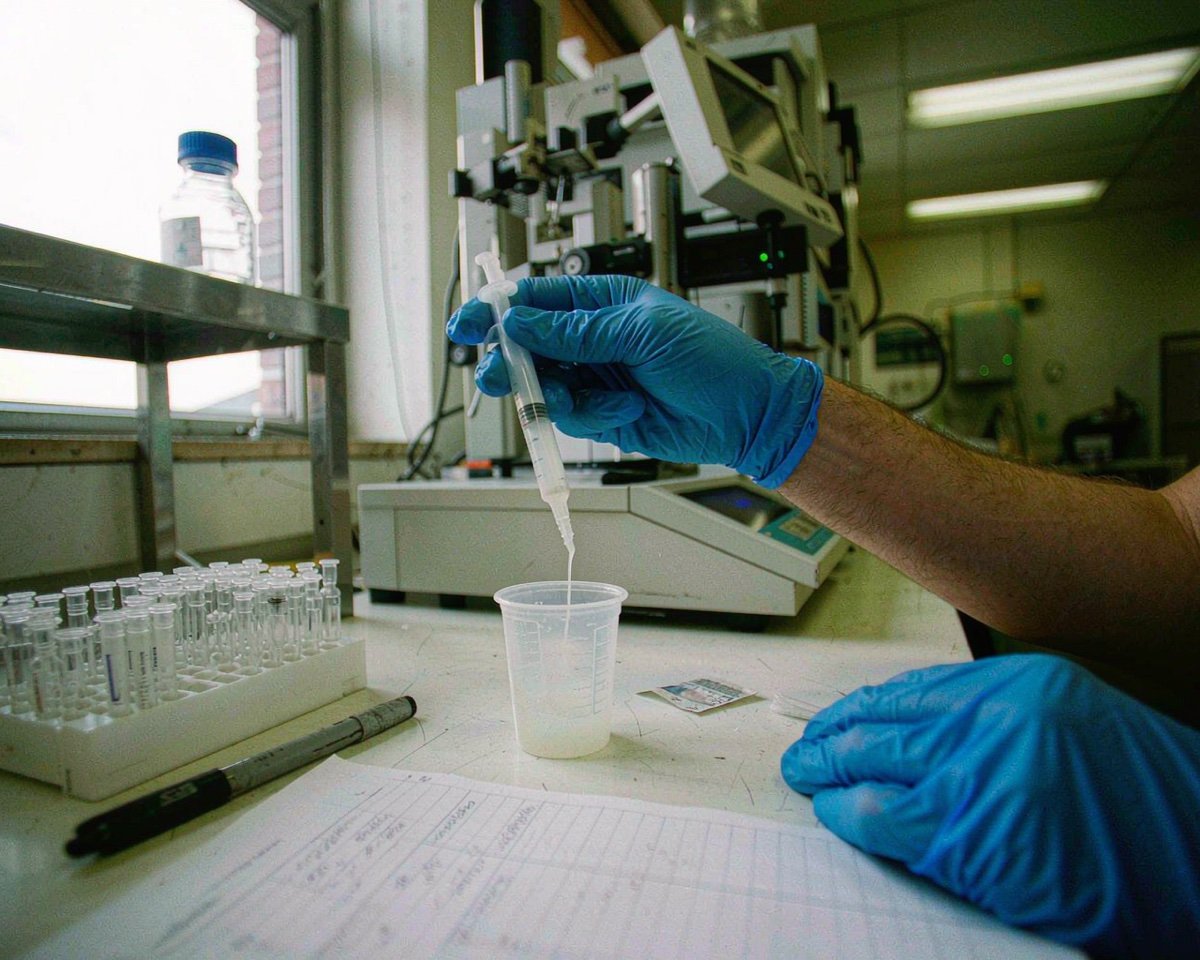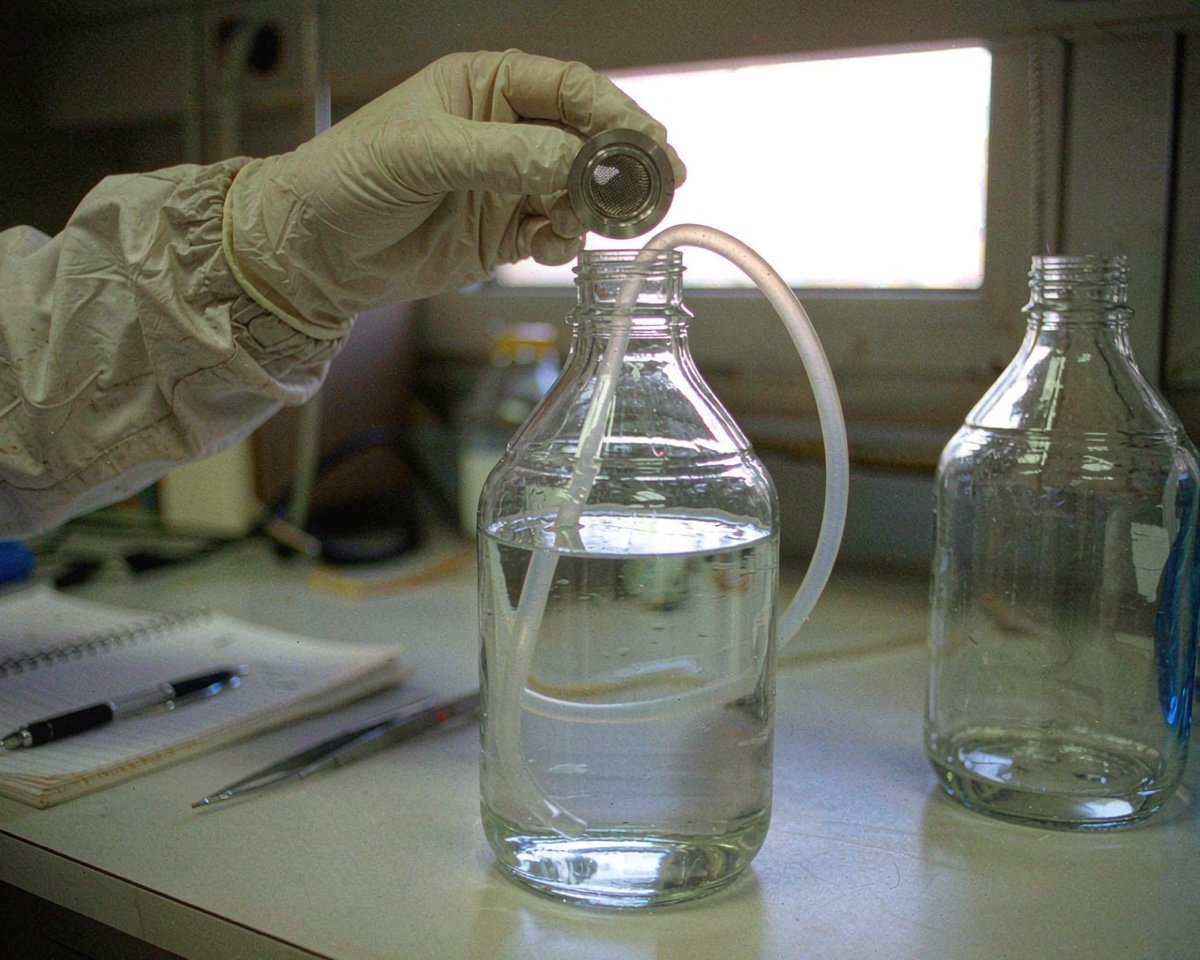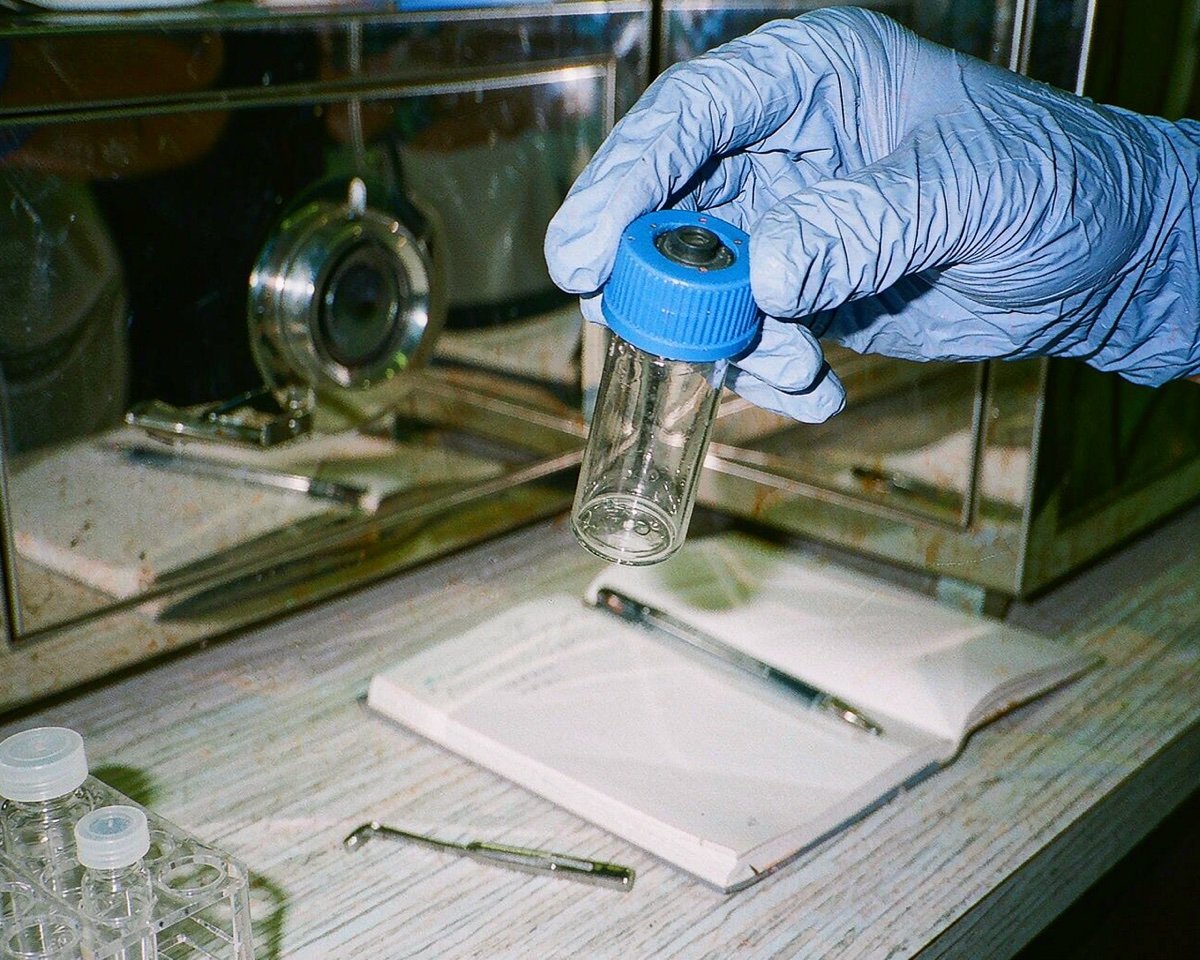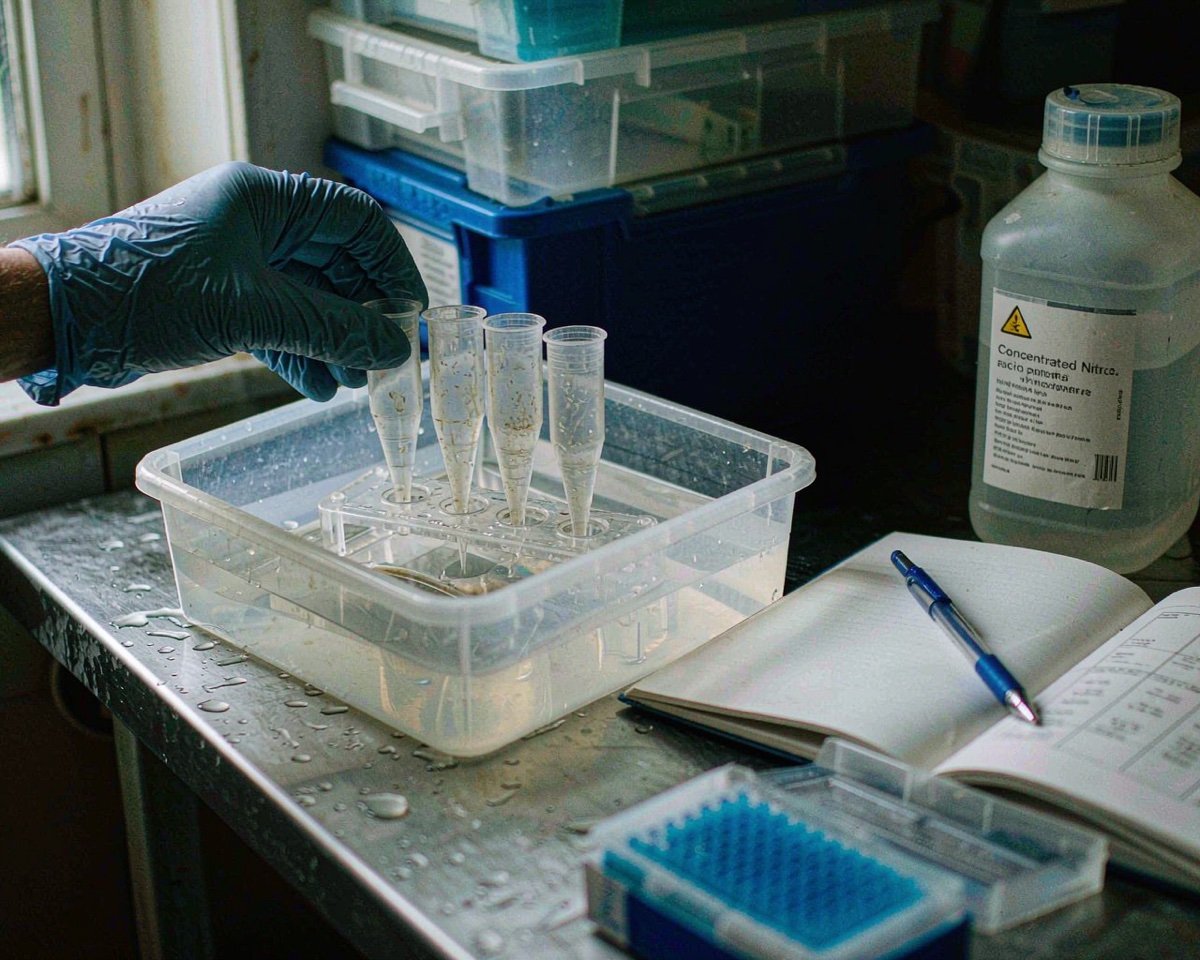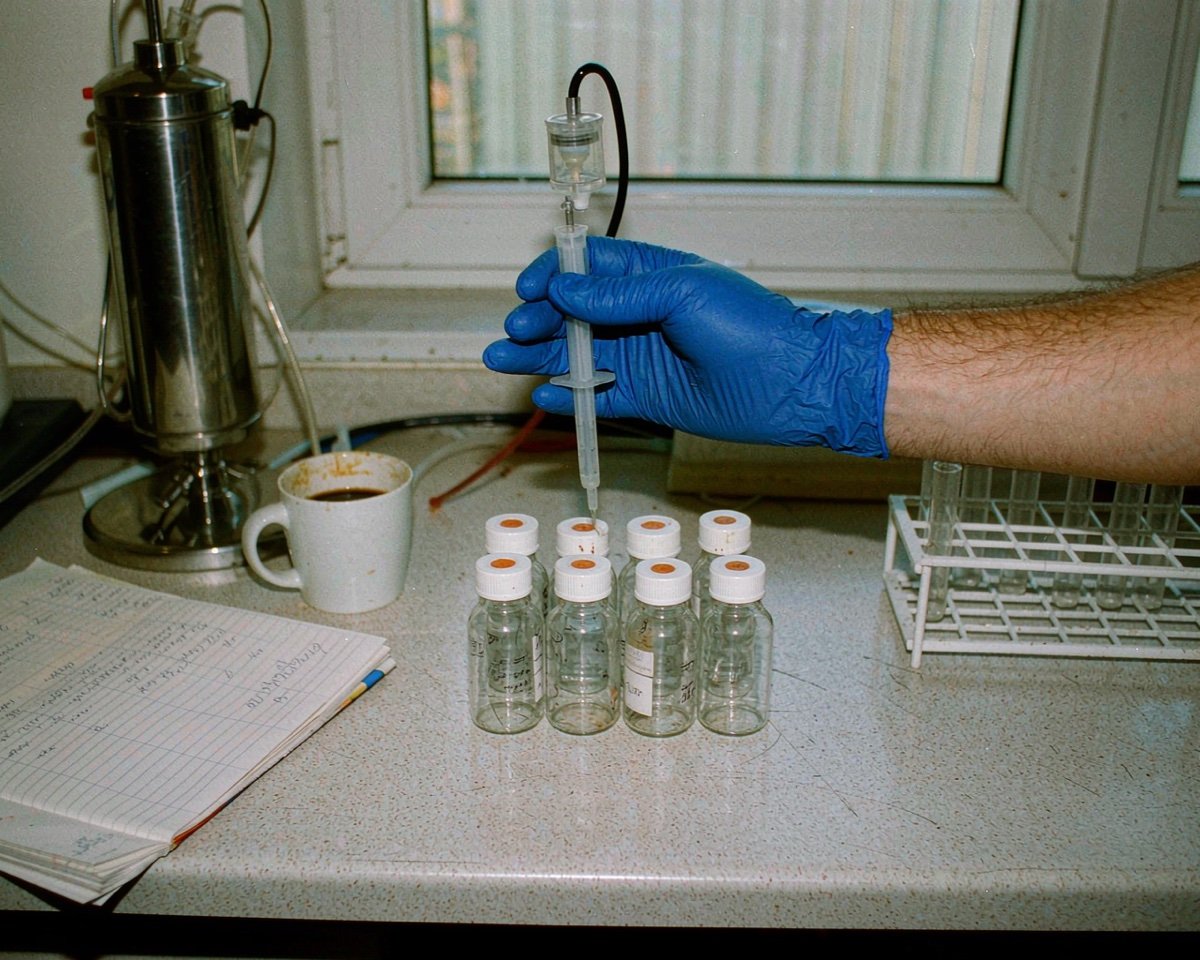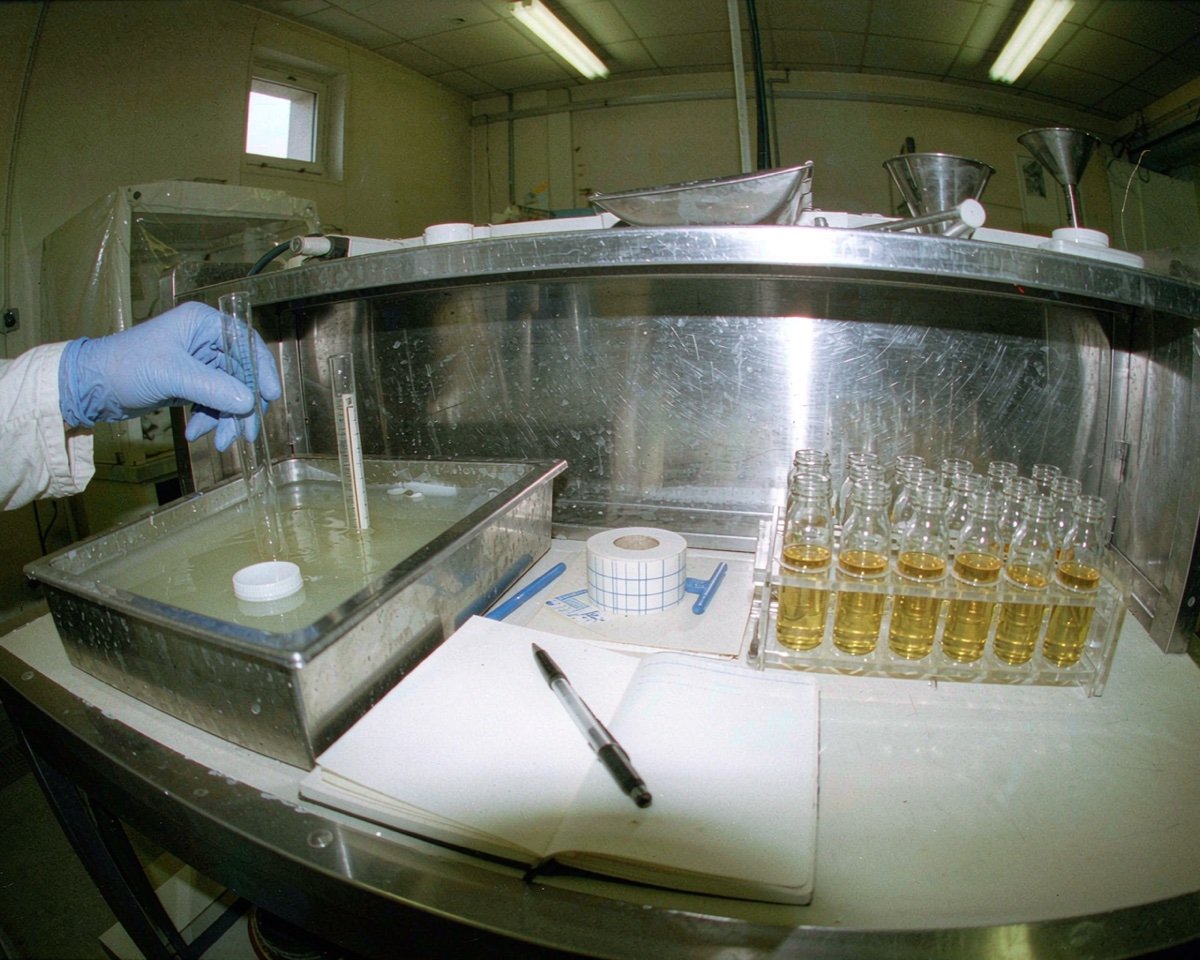
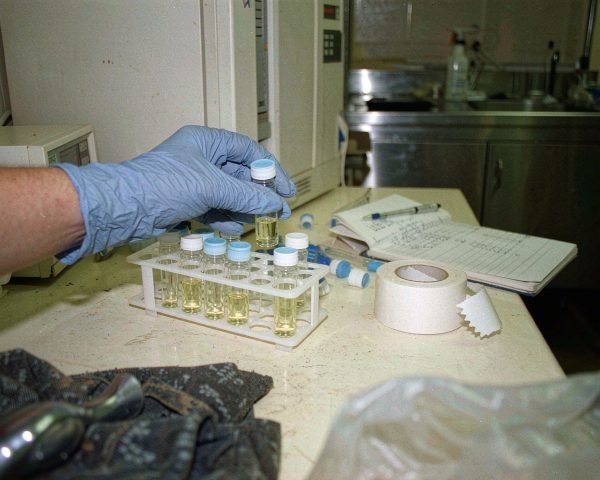

A fuel ethanol lab looks simple from the outside: one clear liquid, a handful of numbers on a certificate. Then you open the ASTM spec sheet and count the tests. Ethanol content, methanol, water, acidity, pHe, chloride, copper, sulfur, sulfate, gum, appearance. Eleven line items, each with its own method, its own containers, and its own way of punishing the wrong consumable.
I have supplied consumables into fuel and bioethanol QC labs for years, and the pattern is consistent. The instruments get the budget. The vials, tubes, and bottles get whatever is left over, and then someone spends a week chasing a methanol result that a bad septum caused.
Answer: A fuel ethanol lab needs four consumable groups to run ASTM D4806 testing: GC-ready autosampler vials with low-bleed septa for D5501 ethanol and methanol content, sealed glassware and oven-ready vials for Karl Fischer water, acid-compatible plasticware for trace inorganics, and PTFE-faced caps and liners that survive constant ethanol contact. Every one of them touches the reported number.
Read on for the test-by-test breakdown, the container choices that actually matter in a high-ethanol environment, and the bench habits that keep a full shift of samples traceable.
What the Specification Actually Asks For
Everything starts with ASTM D4806, the specification for denatured fuel ethanol blended into gasoline. It is not one test. It is a package of limits, and each limit points to its own method.
| Property | Limit | Method |
|---|---|---|
| Ethanol content | 92.1% vol min | D5501 (GC) |
| Methanol | 0.5% vol max | D5501 (GC) |
| Solvent-washed gum | 5 mg/100 mL max | D381 |
| Water | 1.0% vol max | E203, E1064, D7923 |
| Inorganic chloride | 6.7 mg/kg max | D7319 / D7328 |
| Copper | 0.1 mg/kg max | D1688 |
| Acidity (as acetic acid) | 70 mg/kg max | D7795 |
| pHe | 6.5 to 9.0 | D6423 |
| Sulfur | 30 mg/kg max | D2622 / D3120 / D5453 |
| Existent sulfate | 4 mg/kg max | D7318 / D7319 / D7328 |
| Appearance | Clear and bright | Visual |
The full D4806 specification is worth reading once, end to end, even if you only run three of the methods. Labs that blend E85 work against D5798 instead, and mid-level blends bring their own variants, but the consumables story barely changes.
One practical note before we go method by method. Denatured fuel ethanol contains roughly 2 to 5% natural gasoline as the denaturant. That small hydrocarbon fraction is why ethanol lab consumables face a mixed solvent, not pure alcohol, and it changes some of the material choices below.
The GC Workhorse: Ethanol and Methanol by D5501
Ethanol content is measured by gas chromatography on a long column, usually 100 or 150 meters, with an FID. Shimadzu’s application note for D5501 shows the typical conditions. The ASTM D5501 method page defines the full scope: ethanol from 20 to 100% by mass, methanol from 0.01 to 0.6%, with no water correction included: split injection at 1:200, 0.5 µL injection volume, temperature program up to 250 °C.
Long runs at high split ratios put real demands on the front of the instrument. The inlet liner, the septum, and the vial seal are all consumables here, and each one fails in a way that mimics a method problem.
Autosampler vials. A 9mm screw-thread vial is the default for fuel GC work. The threads give a repeatable seal across hundreds of samples, which matters when a D5501 sequence runs overnight. Wide-mouth vials are easier to fill with viscous blend samples, but they are not needed for neat denatured ethanol.
The septum is the next decision, and PTFE/silicone laminated septa are the right choice. Ethanol and the hydrocarbon denaturant are mild compared to, say, methylene chloride, but a pure silicone septum will absorb solvent and swell. The PTFE face keeps the solvent off the silicone. At 300 °C injection port temperatures, a low-bleed septum matters too, because anything the septum sheds shows up early in the chromatogram where your methanol peak lives.
Inlet liners and seals come third. A fuel lab running D5501 all day goes through inlet liners like a food lab goes through syringe filters. Check the liner every two to three hundred injections during method setup, then set your own interval. Non-stick or deactivated liners last longer with the hydrocarbon fraction present.
One more item lives at the GC bench: standards storage. The calibration mix is ethanol with methanol and n-heptane added. Store it in glass, in a small vial with minimal headspace. Methanol at 0.5% of a big headspace volume will partition into the headspace and shift your working standard over a long day. If you only change one habit this month, decant the working standard into a 2 mL vial instead of keeping it in the supplier bottle on the bench.
Water by Karl Fischer: The Test With the Most Contamination Paths
Water is limited to 1.0% in D4806, and the reference methods are volumetric or coulometric Karl Fischer titration (E203, E1064) or D7923. Ethanol is hygroscopic, which means every open container, every humid afternoon, and every damp syringe is actively changing your answer.
The consumables that matter here:
Sealed glass vials for oven sampling. Many labs run ethanol on a KF oven accessory, injecting dry air or nitrogen through a septum into a sealed vial and carrying the released vapor into the cell. For that workflow, the vial septum is the whole game. A septum that leaks after the first puncture lets ambient moisture in and dry carrier out. Use crimp-top vials for oven KF work if your accessory takes them; the aluminum seal holds better than a screw cap across multiple punctures.
Syringes deserve their own warning. A syringe rinsed with wet ethanol carries a film of water that reads as sample. Keep a set of syringes that only ever sees anhydrous methanol or oven work. Label them. This costs one permanent marker and saves a requalification.
Reagent handling rounds out the list. The KF reagent is consumed by moisture from air as much as from samples. Keep the cell septa fresh, keep the drying tubes charged, and date the sieve when you swap it. I once visited a lab where the drying tube had been on the cell for eight months and nobody remembered what color it was supposed to be. Their drift correction was doing silent work all quarter.
Our guide to Karl Fischer titration consumables covers the cell-side items in more detail if this is your daily method.
Acidity, pHe, and the Inorganics: Where Plastic Beats Glass
The bottom half of the D4806 table is trace work: chloride and sulfate at a few mg/kg, copper at 0.1 mg/kg, acidity at 70 mg/kg, pHe across a 2.5-unit window.
For copper and other metals, stop and think about containers. Glass leaches metal ions into acidic and even neutral aqueous solutions over time. Acid-digested or acidified samples destined for a copper result should sit in acid-cleaned polypropylene, not glass. Fifteen and fifty mL PP centrifuge tubes are the standard vehicle for this in metals labs, and acid-cleaned PP autosampler tubes work for direct draws.
For chloride and sulfate by ion chromatography, the same logic applies in reverse but weaker. Aqueous ethanol samples are fine in PP vials, and PP has the advantage of being unbreakable around the IC autosampler. Keep one dedicated rack for IC samples so nothing gets filled twice by mistake.
Acidity and pHe are bench titrations and usually run in glass beakers, which is fine. pHe is notoriously sensitive to technique: the measurement happens in a nearly anhydrous medium, and the D6423 method exists precisely because an aqueous pH reading on ethanol gives a number that means nothing. Fresh electrode storage solution, a calibrated electrode, and clean beakers matter more than any consumable purchase here.
Containers for Bulk Solvent and Sample Storage in an Ethanol Lab
Ethanol is a sneaky solvent. It will not attack polypropylene, but it happily extracts plasticizers from the wrong cap liners, adhesives from glued housings, and rubber compounds that were never rated for alcohol contact.
Reagent and sample bottles. Type 1 borosilicate glass bottles are the default for storing denatured ethanol, calibration stocks, and blend samples. For anything that ships or gets handled roughly, coated or wrapped bottles earn their price. Our guide to borosilicate reagent bottles explains why the glass composition matters for long-term storage.
Caps and liners are where ethanol labs get burned by cheap closures. A liner with a rubber or PVC face will swell in constant ethanol contact, and a swollen liner leaches extractables straight into your stored sample. PTFE-faced silicone liners are the safe default. Check the cap liner compatibility question before you order a bulk lot, especially for the blend samples that sit for weeks before reanalysis.
Some plastic options do work, to be fair. HDPE and PP jerricans for non-critical intermediate solvent are fine and unbreakable. Do not use them for methanol standards, copper samples, or anything you will retest. The few cents per bottle are not worth a second sample pull from the tank farm.
The Daily Bench Flow and Where Consumables Fit
A typical fuel ethanol QC day runs something like this, and each step has a consumable attached:
| Step | Test | Key consumables |
|---|---|---|
| Pull sample from tank / blend | All | Sealed glass bottle, PTFE-lined cap |
| GC ethanol + methanol | D5501 | 9mm vials, PTFE/silicone septa, liner |
| Water | E203 / oven KF | Crimp vials, fresh septa, dry syringes |
| pHe + acidity | D6423 / D7795 | Clean glassware, fresh electrode |
| Chloride, sulfate | D7319 / D7328 | PP vials, IC eluent-grade water |
| Copper | D1688 | Acid-cleaned PP tubes |
| Appearance | Visual | Nothing but good lighting, honestly |
That last row is not a joke. “Clear and bright” failures, usually haze or particulate, are one of the most common out-of-spec findings in fuel ethanol, and they show up before any instrument does. A light box and a clean sample bottle catch them.
Getting Samples From the Tank to the Bench Intact
Between the tank farm and the GC sits a logistics problem, and consumables decide whether the sample that arrives is the sample that left.
Field and terminal samples travel in sealed glass bottles, ideally amber if they will sit in sunlight at a terminal office. The cap liner rule from the storage section applies double here, because transport shakes ethanol against the liner for days. A liner that swells in the truck can add water, extractables, or both to a sample that was perfect at the manifold.
Chain of custody paperwork travels with the bottles, and the consumable angle is simple: bottles and caps that survive the trip without leaks keep the paperwork honest. A leaking cap in a shipping carton is not just a lost sample, it is a questioned batch, because nobody can prove what the remaining samples experienced. Laboratories that ship samples regularly eventually standardize on tested bottle-and-cap combinations and stop improvising, which is the right instinct. Our guide on shipping lab samples safely covers the packaging logic in detail.
At the receiving bench, give transported samples a rest. Bottles that rode in a cold truck into a warm lab need to equilibrate before anyone draws a sample for water testing, or condensation inside the neck becomes part of your Karl Fischer result. Thirty minutes on the bench costs nothing and removes a whole class of mystery moisture.
Filtration: Less Than You Think, But When You Need It, You Need the Right One
Pure denatured ethanol from a production plant rarely needs filtration before GC. The methods were written around direct injection, and adding a filter adds an extractables source for no benefit.
Filtration earns its place in three situations: samples with visible haze or particulate, blended fuels coming back from field storage, and any lab that couples the GC to upstream work like biodiesel glycerol checks where residues are real. When you do filter an ethanol or hydrocarbon matrix, choose a PTFE membrane. Nylon swells and leaches in strong solvent mixes, and regenerated cellulose fails on the hydrocarbon side. A glass fiber prefilter handles the visible crud first so the membrane filter does not clog on sample three of forty.
The filter decision rules are the same as any organic-lab HPLC work, which our syringe filter guide for HPLC sample prep covers in depth.
Vial and Septa Consumption: What a Real Lab Burns Through
Labs planning consumable budgets always underestimate septa. Here is a realistic monthly picture for a single GC running D5501 around the clock:
One septum lasts somewhere between 100 and 200 punctures depending on needle gauge and operator habit. A sequence of 60 vials, each punctured once by the autosampler and once during manual prep checks, wears a septum in a week. Multiply by inlet maintenance and failed-sequence retries, and a busy fuel lab orders septa four times as often as vials.
Vials themselves are effectively single use in a regulated fuel lab. Reanalysis and confirmatory runs happen, but a vial that traveled to the autosampler and sat overnight with ethanol in it is not the vial you want for the compliance number. The good news is that compatible 9mm vials are cheap when you buy them in bulk from a source that does not add a brand premium, and shelf life of stored vials is effectively unlimited if they stay sealed and clean.
Certificates, Traceability, and What to Ask a Supplier
Fuel testing is compliance work. When a batch of ethanol fails spec and the cargo gets held, every number in your report can end up in a dispute. That changes what you should demand from consumables suppliers:
- Lot traceability on vials and septa. A CoA per lot, kept with your lab records.
- Clean, consistent glass. Wall thickness and neck finish consistency keep seals predictable. Ask for the glass type in writing.
- Certified septa for compliance GC. Low-bleed, and documented.
- Steady supply. A held cargo is a bad week to discover your septum supplier has a three-week lead time.
Our CoA versus CoC explainer covers the documents you should expect with each shipment. For labs qualifying a new supplier, the questions are the same as for any analytical lab, and the answers are cheap to get before the first order instead of after the first bad lot.
Common Mistakes I See in Ethanol Labs
Reusing septa-punctured vials for confirmatory runs. The vial held fine, so the lab tops it up and reruns. The septum has already taken a puncture, ethanol has been slowly wicking through the hole, and the water result on the confirmatory run reads high. New vial, fresh septum, done.
Storing working standards in the original bottle is the second one. Covered in the GC section, worth repeating: decant, small vial, minimal headspace.
A single PP tube type for everything is third. The tube that is fine for IC samples may shed background for copper at 0.1 mg/kg. Acid-clean, and keep separate inventories. The tube itself is fine; the assumption that all tubes are interchangeable is what costs the retest.
And ignoring the denaturant rounds out the list. Consumables rated for pure ethanol get chosen, then the sample contains gasoline. PTFE faces and borosilicate glass cover both, which is why they are the two defaults this guide keeps returning to.
The Neighbors: Biodiesel and Renewable Diesel Bench Needs
Most fuel labs that run ethanol also touch biodiesel, so it is worth mapping where the consumable lists overlap and where they diverge. Biodiesel (FAME) quality under ASTM D6751, or EN 14214 in Europe, leans on GC for glycerol and ester content, plus titrations for acid number and free glycerol. Renewable diesel and sustainable aviation fuel push labs toward distillation and compositional GC again.
The overlap is convenient. The same 9mm vials, the same PTFE/silicone septa, and the same long-column inlet discipline serve D5501 and the glycerol methods alike. Syringe filters show up more often on the biodiesel side, because ester samples after glycerol removal carry more residue than neat ethanol does. PTFE membranes again, for the same solvent-resistance reason.
The divergence is in the aqueous chemistry. Biodiesel acid number and soap tests pull the bench back toward water chemistry: fresh solvents, clean glassware, and titration consumables. Keep those stocks separate from the dry-side items that live near the Karl Fischer bench, or the moisture discipline you built for KF will erode one borrowed bottle at a time.
If your lab reports into both the ethanol and biodiesel worlds, treat the consumables inventory as one program with two shelves, not two programs that occasionally borrow from each other. The borrowing is how a dry syringe ends up rinsing a wet sample.
Building a Par Stock That Survives a Bad Month
Fuel labs run on tank schedules, not on gentle demand curves. A barge arrives, a blend campaign starts, and your sample count triples for ten days. A consumables par stock that assumes flat demand fails exactly when the cargo is watching.
A practical par structure for a single-GC ethanol lab looks like this:
| Item | Par level | Reorder trigger |
|---|---|---|
| 9mm autosampler vials + caps | 2,000 | Below 500 |
| PTFE/silicone septa (spare) | 1,000 | Below 250 |
| GC inlet liners | 20 | Below 8 |
| KF crimp vials + seals | 500 | Below 150 |
| PP centrifuge tubes, 15/50 mL | 500 | Below 150 |
| PTFE syringe filters | 200 | Below 50 |
| Glass fiber prefilters | 100 | Below 25 |
| Borosilicate storage bottles | 30 | Below 10 |
Two habits make the table work. First, count monthly against actual consumption, not against the calendar; a month with a blend campaign can triple the vial line. Second, keep one full reorder cycle of buffer on the items with long lead times, which for imported consumables usually means vials and bottles. Septa and liners are small and cheap to overstock; vials are bulky and painful to rush.
I watched a fuel lab in a blend campaign run out of crimp seals on a Thursday. The KF oven sat idle while a courier chased seals across two provinces, and the tank certificate waited. A 40-dollar carton of seals held up a six-figure shipment decision. That is the whole argument for par stocks in one sentence.
Cleaning and Reuse: What Can Come Back, and What Should Not
Not everything in an ethanol lab is single use, and the places where reuse is safe are worth spelling out.
Safe to reuse, with discipline: borosilicate storage bottles (rinse, wash with lab detergent, rinse with deionized water, dry inverted, cap clean), glass beakers for pHe and acidity work, and syringe barrels that only ever saw ethanol. PP tubes for non-trace work like IC samples can be reused if they are visually clean and you accept a small background risk, but most labs decide the tube is cheaper than the retest.
Never reuse: autosampler vials and septa that have been punctured, KF oven vials after the seal has taken a needle, and any syringe that touched KF reagent. The failure mode is always the same: the item looks fine, and the number it produces is quietly wrong.
The gray zone is syringe filters for pre-screening. Some labs push several screening samples through one filter when nobody is quantitating. If you do this, know that you accepted carryover, write it into the local procedure, and never let a screening filtrate reach a compliance report.
Training New Bench Staff on Consumable Discipline
Consumable failures are rarely knowledge failures. Everyone knows septa wear out. The failures are habit failures under time pressure, and new staff inherit whatever the bench rewards.
Three rules I have seen actually stick:
One, the working standard gets decanted into a 2 mL vial at the start of every shift. It takes ninety seconds, and it is the highest-leverage habit in the GC section.
Two, nothing goes back into a bottle after it leaves. The 15 mL of ethanol poured out for a pHe measurement is spent. Pour-backs are how one wet sample seasonally contaminates a whole storage bottle, and the contamination always shows up in somebody else’s run.
Three, the punctured vial goes in the recycling bin, not back in the rack. Print the rule, tape it inside the cabinet door, and let it save you the argument.
New hires learn these in a week if the senior bench people do them too. They never learn them if the shortcut under deadline looks allowed.
Conclusion
A fuel ethanol lab is a compliance lab wearing a solvent lab’s clothes. The eleven D4806 line items each pull on a different consumable: long-sequence GC work pulls on vials and septa, Karl Fischer pulls on sealed crimp vials and dry syringes, trace inorganics pull on acid-cleaned plastics, and everything on the bench pulls on closures that survive constant ethanol contact. None of these items is expensive individually. What costs money is discovering a bad septum or a swelling liner three days into a cargo hold, when every number you reported is suddenly a question. Pick consumables the way you pick methods: deliberately, documented, and from suppliers who can show you a certificate when an auditor or a customer asks. Start with your septa inventory and your cap liners, because those two fail silently and most often, then work outward through the list above.
Frequently Asked Questions
What vials are used for ethanol content testing by ASTM D5501?
Standard 9mm screw-thread autosampler vials with PTFE/silicone septa are the default. The method needs a 0.5 µL split injection, so any clean, consistent 2 mL vial works. What matters is the septum: it must resist ethanol and the hydrocarbon denaturant without swelling or bleeding into the early chromatogram.
Why is water in fuel ethanol measured by Karl Fischer instead of GC?
Water has no FID response, so D5501 cannot see it. ASTM D4806 points to Karl Fischer titration (E203, E1064) or D7923 for water. KF is selective, fast, and sensitive enough to verify the 1.0% vol limit with confidence.
Can I store denatured ethanol samples in plastic bottles?
For short-term, non-critical storage, HDPE and PP are acceptable. For compliance samples, working standards, or anything held for retesting, use Type 1 borosilicate glass with a PTFE-faced liner cap. Ethanol extracts plasticizers and adhesive residues from the wrong plastics, and those extractables can shift water, acidity, and trace results.
How often should GC septa be changed in a fuel lab?
Plan on 100 to 200 punctures per septum. A busy D5501 lab running 60-sample sequences daily should change the inlet septum weekly, and immediately after any failed or aborted sequence. Bleeding septa put artifacts right where the methanol peak elutes.
Do I need to filter ethanol samples before GC injection?
Usually no. D5501 was written for direct injection of clear liquids. Filter only when the sample is hazy or contains particulate, and use a PTFE membrane (with a glass fiber prefilter for dirty samples), because nylon and cellulose membranes are not reliable in ethanol-hydrocarbon mixes.