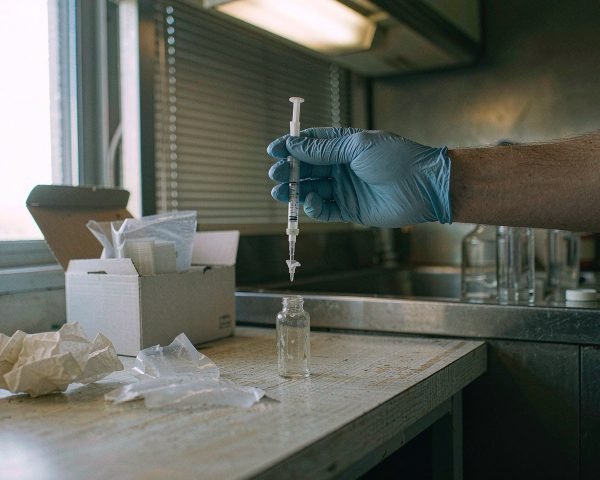

You filtered 200 µL of a precious protein digest, and the collection vial held 150 µL. Where did the other 50 go? Not evaporation, not bad pipetting. The filter kept it.
Hold-up volume is the sample trapped inside a syringe filter after you finish pushing. Every filter has one. Typical values run from about 5 µL on a 3 mm filter up to 120 µL on a 25 mm housing, and on small samples that difference decides whether your quantitation is real or fictional.
Read on for the numbers, the math, and five fixes you can apply today.
What Hold-Up Volume Actually Is
Two things trap your sample. The first is dead space in the housing: the cavity between the luer outlet and the membrane, plus the volume inside the membrane structure itself. The second is simple wetting. A dry membrane soaks up liquid before anything passes through, and that wetting volume stays in the filter.
Push harder and you will not recover it. The trapped volume sits below the membrane or inside its pores, and no amount of thumb pressure moves it. This is why the loss feels random until you understand where it lives.
Manufacturers publish the numbers because they know buyers of small-volume samples care. The CHROMAFIL syringe filter specifications list hold-up volumes of roughly 5 µL for 3 mm filters, 12 µL for 15 mm, and 120 µL for 25 mm. That last number is the one that bites.
Why Filter Diameter Drives the Loss
The relationship is straightforward: bigger housing, bigger dead space. Filter makers publish volume guidelines that make the trade-off obvious.
| Diameter | Sample volume | Typical hold-up |
|---|---|---|
| 3–4 mm | up to 1 mL | ~0.5–10 µL |
| 15 mm | 1–10 mL | ~12 µL |
| 25 mm | 10–100 mL | ~50–120 µL |
A 25 mm filter is the right tool for filtering 50 mL of mobile phase. It is the wrong tool for a 300 µL autosampler vial. Yet I see it constantly, because the 25 mm box is what sits nearest the bench.
Run the math on a bad day. Filter 300 µL through a 25 mm filter with 120 µL hold-up and you strand 40% of your sample. At trace levels, that loss shifts your apparent concentration, hurts your detection limits, and makes replicate preparations disagree with each other. There is a second-order problem too: inconsistent hold-up between filters adds prep-to-prep variability that no amount of instrument precision can fix.
Five Ways to Minimize Hold-Up Loss
1. Match the diameter to the volume
This is 90% of the answer. Sub-milliliter samples belong on 4 mm filters. Volumes from 1 to 10 mL belong on 13 or 15 mm. Save 25 mm for the jobs that actually need it. Our syringe filter size guide walks through the full decision.
2. Pre-wet the membrane
Push a small volume of clean sample solvent through the filter before the real sample. The membrane is already saturated, so the wetting loss happens on solvent instead of sample. This is standard practice for precious samples and it costs one extra filter volume of solvent, which is to say almost nothing.
3. Push slowly and steadily
A slow, controlled plunger speed keeps flow even across the membrane and avoids pressure spikes that force sample into places it will not come back from. Fast pushing also stresses the membrane, which brings its own problems with syringe filter breakthrough and shed particles.
4. Choose low hold-up designs
Some housings are engineered to minimize dead volume. The Whatman Anotop filter line, for example, specifies under 20 µL hold-up for its small-diameter versions, built for exactly the precious-sample cases where every microliter counts. If your samples are routinely small, it is worth asking suppliers for published hold-up figures before you buy.
5. Follow with a chase volume, if the method allows
Pushing a few hundred µL of clean solvent after the sample flushes much of the trapped liquid into your collection vial. Only do this when the resulting dilution is acceptable or when you can account for it in the method. For targeted trace analysis, a validated chase can recover most of the loss. For untargeted work where dilution changes the answer, skip it.
When Hold-Up Volume Does Not Matter
Perspective check. If you are filtering 2 mL of a sample you have in abundance, 12 µL of hold-up on a 15 mm filter is a 0.6% loss. Nobody’s method misses it. The obsession only pays off when volume is scarce, when concentration is low, or when you are comparing filtration against an unfiltered reference standard.
I learned this the expensive way. A colleague once filtered a 250 µL derivatized extract through a 25 mm filter because it was the only sterile one in the drawer. We recovered about 140 µL. The re-derivatization took two days, and the drawer has been stocked with 13 mm filters ever since.
Filtering also protects your column, which is its own economic argument. Agilent’s filtration e-seminar notes show unfiltered particulate loads cutting column lifetime dramatically, so the goal is to filter smart, not to filter less. For protein and peptide work specifically, our protein sample filtration guide covers the membrane choices that pair with low hold-up housings.
Conclusion
Hold-up volume is the quiet tax every syringe filter takes on your sample, ranging from about 5 µL on a 3 mm housing to 120 µL on a 25 mm one. The loss matters most on small, scarce, or trace-level samples, where a 25 mm filter can strand a third of the prep and wreck reproducibility. The fixes are cheap: match diameter to volume, pre-wet with clean solvent, push slowly, and pick low hold-up designs when the sample justifies it. Add a chase volume only when your method can absorb the dilution. If you change one habit this week, stop grabbing whatever filter is closest and check the diameter first. And if you want the complete picture on choosing filters beyond hold-up, our syringe filter buyer’s guide covers membranes, housings, and certifications end to end.
Frequently Asked Questions
What is syringe filter hold-up volume?
It is the volume of sample that stays trapped in the filter housing and membrane after filtration. You push the plunger all the way down and that liquid never reaches your collection vial. Typical values range from about 5 µL on 3 mm filters to 120 µL on 25 mm ones.
How much sample does a 25 mm filter lose?
Depending on design, a 25 mm filter can hold back 50 to 120 µL. On a 1 mL sample that is up to 12%, and on a 300 µL sample it can be 40%. That is why small samples belong on 4 or 13 mm filters.
Does pushing harder recover the trapped sample?
No. The trapped volume sits in the dead space below the membrane and inside its pore structure, so extra pressure does not move it. Pre-wetting the membrane with clean solvent before loading the sample is far more effective.
What is the best filter for sub-milliliter samples?
A 4 mm filter, ideally one with a published low hold-up specification. Combine it with pre-wetting and a slow, steady push. For precious protein digests or limited extracts, the difference between 4 mm and 25 mm can be the difference between a usable result and a re-prep.
Can I flush the filter with solvent to recover sample?
Yes, and it works well, but the recovered sample is now diluted by the flush volume. Use the technique when your method tolerates the dilution or when you validate it as part of the prep. For methods where concentration must stay exact, matching the filter diameter is the safer fix.