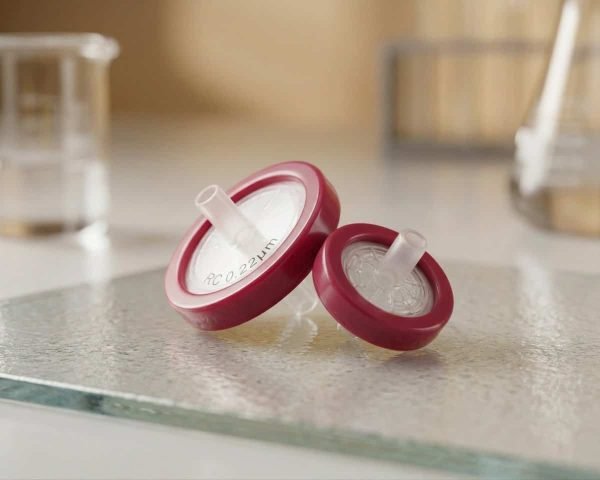

Few things ruin a morning of sample prep faster than a syringe filter that bursts, leaks, or lets particles slip through into your HPLC system. The frustrating part? Nearly every case is preventable. In this guide, I’ll walk you through why syringe filter breakthrough happens and exactly how to stop it before it costs you a column.
Syringe filter breakthrough happens when pressure exceeds the filter’s rating, when the membrane is chemically incompatible with your solvent, or when you’ve picked the wrong pore size or diameter for the sample. Prevent it by matching the membrane to your solvent, choosing the right pore size and filter diameter for your sample volume, pre-wetting the membrane, and applying steady, gentle pressure — never forcing a clogged filter.
That’s the short answer. The rest of this article digs into each cause so you can spot problems before they happen.
What “Breakthrough” Really Means
In syringe filtration, “breakthrough” covers a few related failures. Sometimes the membrane ruptures under pressure and unfiltered liquid pours through — that’s particulate breakthrough, and it sends everything you were trying to remove straight into your instrument. Sometimes the filter housing cracks or the membrane detaches from the housing, which gives you the same result through a different path. And sometimes the failure is quieter: the membrane degrades because your solvent attacked it, and you end up with extractables or dissolved membrane material in your filtrate.
Whatever the mechanism, the consequence is the same — contaminated samples, blocked columns, and results you can’t trust. The good news is that all of these failure modes have known causes, and each one has a straightforward fix.
Why Filters Fail: The Five Root Causes
I’ve organized the causes from most common to least, because if you fix the first two, you’ve eliminated most of your failures.
Pressure Overload
This is the number one killer. When you push hard on the plunger, pressure inside the filter rises until something gives. Phenomenex’s syringe filter guide is blunt about it: apply gentle pressure, and avoid excessive force because it may damage the filter or compromise the filtration process. Their instructions go further — if you feel resistance, stop and replace the filter rather than forcing it.
Why do people apply too much pressure? Usually because the filter is clogging. Small-diameter syringes are the sneaky culprit here: they generate surprisingly high pressure with a modest thumb force. The practical rule is simple: the plunger should move with steady, even effort, not brute strength. If it’s hard to push, you’re one bad decision away from a burst membrane.
Chemical Incompatibility
The second most common cause is using a membrane that your solvent attacks. Sigma-Aldrich’s technical guidance puts it plainly: to avoid membrane failure during filtration, the membrane material must be chemically compatible with the solution being filtered.
A few classic examples: nylon reacts with strong acids, PVDF can swell in strong alkaline solutions, and PES may not handle certain organic solvents. If you’re still choosing between membranes, my nylon vs PTFE vs PVDF vs PES comparison lays out the strengths of each. PTFE is the most chemically resistant option — which is why it’s the default for aggressive solvents — but native PTFE is hydrophobic, so it won’t pass aqueous samples without pre-wetting. Always check the manufacturer’s compatibility chart before filtering anything unusual. That one habit prevents most “membrane dissolved in my sample” disasters.
Wrong Pore Size
Pore size is a trade-off. A 0.22 µm membrane removes almost everything, but it also clogs faster — and a clogged filter is a pressure bomb waiting to go off. If you need a refresher on when to use which, my piece on 0.22 vs 0.45 micron filters covers the decision. Restek’s sample prep guidance recommends choosing porosity based on the application, and for LC, on the particle size of your column packing. If your sample is particulate-heavy or viscous, don’t reach for the finest pore you have. Pre-filter with a larger pore or a glass fiber pre-filter, then polish with the fine membrane.
Wrong Diameter for Your Sample Volume
Filter diameter is about capacity, not just fit. A 4 mm filter is designed for under 1 mL of sample; a 13 mm filter handles 1-10 mL; a 25 mm filter covers 10-100 mL. Sigma-Aldrich’s syringe filter selection guide publishes exactly these volume-by-diameter recommendations for HPLC, UHPLC, and ion chromatography. When you force 50 mL of dirty sample through a 13 mm filter, the membrane surface area simply isn’t there — it clogs, pressure spikes, and you get breakthrough. Match the diameter to the volume and you sidestep the whole problem.
Hydrophobic Filter on an Aqueous Sample
This one is easy to miss. A hydrophobic filter like standard PTFE will resist water, so pushing an aqueous sample through it creates high back pressure — sometimes so high the filter blows off the syringe or bursts. Restek’s FAQ warns that higher back pressures result from using PTFE filters with aqueous streams, which may prevent the stream from passing at all. If you’re filtering aqueous samples, use a hydrophilic membrane, or pre-wet a hydrophobic one with a water-miscible solvent first.
How to Prevent Breakthrough
Prevention is a checklist, not a mystery. Here’s the routine I’d suggest every lab adopt:
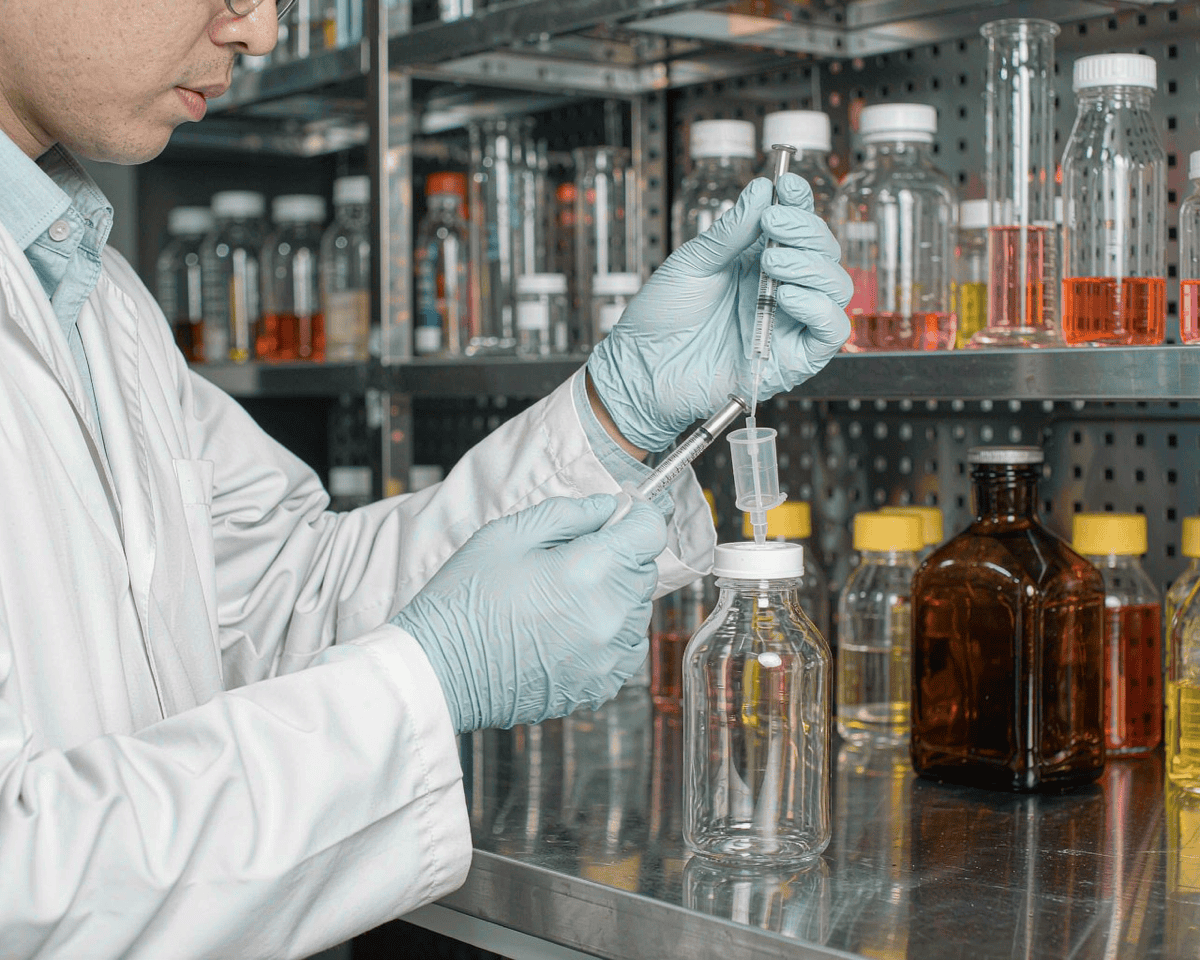
– Check compatibility first. Compare your solvent and sample pH against the membrane compatibility chart before you start. Five minutes of checking beats an hour of troubleshooting. – Match the diameter to the volume. 4 mm for <1 mL, 13 mm for 1-10 mL, 25 mm for 10-100 mL. – Pre-filter dirty samples. Highly viscous or particulate-heavy samples deserve a 0.8 µm or glass fiber pre-filter step before the fine membrane. – Pre-wet the membrane. Push a drop or two through before filtering to wet the membrane and displace trapped air. Phenomenex’s how-to guide notes that pre-wetting removes air bubbles and enhances filtration efficiency. – Use a luer lock connection. A luer lock inlet holds tighter than a slip tip and won’t blow off under pressure. – Apply steady, gentle pressure. If the plunger fights back, stop. Do not force a clogged filter. – Never reuse a syringe filter. They’re single-use for a reason — used pores clog, and reuse invites cross-contamination and breakthrough.
What to Do When a Filter Fails Mid-Run
Even with the best habits, filters fail. When it happens, resist the urge to push through and finish the sample. Stop immediately, discard the filter, and start again with a fresh one — preferably after asking why it failed. Was the plunger hard to push? That’s clogging or the wrong pore size. Did the housing crack? That’s chemical incompatibility or overpressure. Did liquid squirt past the threads? That’s a connection or diameter problem.
If the filter bursts, whatever you filtered through it is compromised — do not inject it. Rerun the sample. It’s annoying in the moment, but it’s far cheaper than explaining a ruined column to your lab manager.
Conclusion
Syringe filter breakthrough is almost always an equipment-matching problem, not bad luck. Match the membrane to your solvent, choose the pore size and diameter for your actual sample volume, pre-wet before you push, and apply steady pressure instead of brute force. That checklist eliminates the vast majority of burst filters, leaks, and particulate breakthrough — and it protects your HPLC system and your data at the same time. If you’re building out a filtration workflow, my guide to choosing the right syringe filter and the complete syringe filter buyer’s guide are both worth a read before you order your next box.
Frequently Asked Questions
What causes a syringe filter to burst?
A syringe filter bursts when the pressure you apply exceeds what the membrane or housing can withstand. This usually happens when a filter clogs, when you use too small a diameter for your sample volume, or when you push too hard on the plunger.
How much pressure can a syringe filter take?
Most syringe filters are rated to roughly 75-150 psi, but the practical rule is to filter with the lightest steady pressure that moves the sample through. If you feel strong resistance, stop and replace the filter instead of forcing it.
Can a hydrophobic filter be used for aqueous samples?
Not directly — a hydrophobic filter like standard PTFE will resist water and build up high back pressure. Use a hydrophilic membrane for aqueous samples, or pre-wet a hydrophobic filter with a water-miscible solvent like methanol before use.
How do I know which syringe filter size to use?
Match the filter diameter to your sample volume: 4 mm for under 1 mL, 13 mm for 1-10 mL, 25 mm for 10-100 mL, and 30 mm for larger volumes. Using a filter that’s too small for your sample causes clogging and pressure buildup.
Should I pre-wet my syringe filter?
Yes. Pushing a drop or two of sample or solvent through before filtering wets the membrane and removes trapped air, which improves flow and prevents air-locking. It also lets you check the filter and connection are working before you commit your sample.