
# Sediment and Stormwater Lab Consumables: The Complete Guide
Stormwater samples have a short fuse. Between the first flush off a loading dock and the moment a filter meets the vacuum flask, plenty can go wrong. This guide walks through the sediment and stormwater testing lab consumables that keep results defensible, from collection bottles to glass fiber filters.
The core kit is well defined: polypropylene and glass sample bottles, 40 mL VOA vials, binder-free glass fiber filters for TSS, 0.45 micron membranes for dissolved metals, acid preservatives, ice, and containers that match the holding times in 40 CFR 136. Get these right and your data holds up.
Below, we break down every consumable category a sediment and stormwater lab touches, with the method details and deadlines that matter when a permit inspector reads your bench sheets.
Who Tests Sediment and Stormwater, and Why
Start with the permit. Most of the stormwater testing done in North America exists because of the Clean Water Act and the NPDES permit system built on top of it. Under EPA’s industrial stormwater rules, facilities in eleven broad categories, from paper mills to scrapyards to landfills, must monitor runoff that touches their operations. If a plant ships under EPA’s Multi-Sector General Permit, the MSGP tells them exactly which parameters to watch, how often to sample, and what to do when a benchmark is exceeded.
The workhorse parameters are simple. Benchmark monitoring under the MSGP leans heavily on pH, total suspended solids, and chemical oxygen demand, with metals like copper and zinc added for many sectors. Construction sites chasing a Construction General Permit report turbidity instead. Sediment chemists go deeper, running metals, PAHs, and grain size on bed sediment samples for dredging projects and remediation sites. The USGS overview of sediment and suspended sediment explains why suspended particles matter so much: they carry nutrients and contaminants, shade out aquatic habitat, and fill in reservoirs.
Then there are the labs themselves. Municipal wastewater plants run stormwater and pretreatment samples alongside their routine effluent work. Environmental consultancies collect quarterly benchmark samples for hundreds of industrial clients. State agencies run ambient stream monitoring. A river monitoring crew might filter samples on a truck tailgate, while a commercial lab processes the same analytes under a fume hood.
Construction adds another layer. Sites that disturb a certain acreage fall under a Construction General Permit, and inspectors there focus on turbidity, pH, and generalized solids measures rather than the full benchmark suite. Municipal separate storm sewer systems (MS4s) bring their own monitoring obligations, often tied to total maximum daily loads for impaired waters. Each program tweaks the parameter list, but the underlying consumable requirements barely change. A bottle that satisfies an MSGP benchmark sample will nearly always satisfy a construction site inspection sample, and the same glass fiber filter runs TSS for every one of them.
The monitoring types also stack up. The MSGP alone calls for indicator monitoring, benchmark monitoring, effluent limitations guideline monitoring where they apply, and impaired waters monitoring, each with its own schedule. A facility near an impaired stream might collect quarterly samples for a decade. Multiply that across the sectors EPA regulates and you get a sense of the volume: millions of samples a year, most of them flowing through the same handful of container types and filter grades.
The methods behind these tests are old, stable, and strict about materials. Total suspended solids follows EPA Method 160.2, which you can read in the original method document, or Standard Method 2540 D, its close cousin. Turbidity follows EPA Method 180.1, which specifies a nephelometer, formazin standards, and careful cuvette handling. Every one of these methods names its consumables explicitly. Method 160.2, for example, requires a glass fiber filter without organic binder, and it says so for a reason: organic binders can lose mass during drying and quietly corrupt a gravimetric result.
Why do consumables deserve their own guide? Because in this field the paperwork and the plasticware are inseparable. A DMR line for TSS is only as credible as the bottle the sample arrived in. When a state auditor pulls your chain of custody forms, they will trace the container type, the preservative, the temperature on receipt, and the filter lot if anything looked off. The consumables are part of the audit trail, not an afterthought behind it.
If you already run other water analyses, much of this will feel familiar. We have covered the broader picture in our water quality testing lab consumables guide, and this article builds on that foundation with the specifics that stormwater and sediment work add.
Sample Collection Consumables: Bottles, Vials, and Compositing Gear
The first consumable decision is the bottle, and it changes with every parameter. TSS wants a polyethylene or polypropylene bottle, typically 500 mL to 1 L, with no preservative beyond ice. Total metals wants a plastic bottle acidified with nitric acid to pH below 2. Oil and grease insists on a glass bottle with a Teflon-lined cap, because hydrocarbons will happily stick to plastic and skew a low-level result. One sample event at an industrial outfall can easily involve four different container types for a single grab.
Volatiles are their own animal. For BTEX and other VOCs in stormwater, labs collect 40 mL VOA vials with zero headspace, often pre-dosed with hydrochloric acid. We have a full write-up on what an EPA VOA vial is and when you need one, but the stormwater-specific point is this: vials must be filled gently so the sample does not aerate, sealed without bubbles, and never composited. A volatile grabbed and composited is a volatile lost.
Compositing adds its own gear. Many permits ask for a flow-weighted composite during a storm event, which means an automated sampler with 2.5 L polyethylene or glass bottles in the carousel, Teflon-lined caps, and suction tubing chosen to match the analytes. Teflon tubing suits organics and low-level metals. Polyethylene tubing costs less and works fine for conventional parameters like TSS and COD. Tubing is a consumable in every practical sense: it fouls, it cracks in cold weather, and it leaches if the wrong polymer meets the wrong analyte.
Timing rules make the equipment choices sharper. The MSGP requires that sampling begin within the first 30 minutes of a measurable discharge, because that first flush carries the heaviest pollutant load. Composite sampling may not be used where holding times or preservation requirements cannot be met, which pushes some facilities toward grab samples for pH and volatiles and toward composites only for TSS and nutrients. Picture the scene: an automated sampler on a wooden pallet at the outfall, a 1 L polypropylene bottle inside a cooler with ice packs holding everything near 4 °C, and a technician checking the tubing line at two in the morning because the rain gauge finally triggered.
Bottle geometry deserves a second look too. Pint and quart polyethylene bottles cover TSS and COD for most programs. Oil and grease method 1664 wants a full liter of glass, and it wants that liter collected as a grab, because compositing volatilizes the hydrocarbons you are trying to measure. Sediment grabs go into wide-mouth jars, since narrow necks leave half your sample on the outside of the jar. Certified pre-cleaned, pre-preserved containers cost more than bare bottles, but they remove a washing and validation step that many small labs cannot defend on paper. When an auditor asks who verified the bottle cleanliness, “the manufacturer’s certificate” is a much better answer than “the intern.”
Do not overlook the small items. Nitrile gloves, disposable tubing collars, custody seals, bottle labels printed in advance, and temperature blanks all fall into the collection consumables bucket. A temperature blank costs less than a dollar and can be the only proof your samples stayed cool in transit. I once watched a TSS result get thrown out because the cooler arrived at 14 °C with no ice left and no temperature blank inside; the lab rejected the samples on receipt, the permittee missed the reporting quarter, and a re-sample had to wait two weeks for a qualifying storm event. Nobody enjoyed that conversation.
QA blanks round out the kit, and programs that ignore them eventually regret it. A trip blank rides in the cooler to catch volatile contamination from the transport environment. A field blank opens at the sampling point to prove the bottles and technique are clean. An equipment blank flushes the autosampler tubing and bottle between uses to catch residue left by the previous event. Each blank consumes one more set of containers and a line on your chain of custody, and each one converts a vague “we think our process is clean” into documented evidence. Decontamination between events adds its own consumables: detergent brushes, phosphate-free soap, reagent water rinse bottles, and the alcohol wipes that clean tubing before a new deployment.
Filtration Consumables for TSS, Dissolved Metals, and Turbidity
Filtration is where sediment labs burn through consumables fastest. For TSS, the method names the filter: a glass microfiber disc, binder-free, with retention in the neighborhood of 1.5 microns. The classic choices are Whatman 934-AH, Gelman A/E, and Millipore AP40, usually in 47 mm diameter, and a box of 100 will not last long in a busy lab. Each filter is dried at 103 to 105 °C, cooled in a desiccator, and weighed to a constant tare before it ever touches sample. After filtration, the disc needs to capture at least 1.0 mg of residue for a defensible result, and most methods cap the upper end near 200 mg because a thick solids crust traps water and dries unevenly.
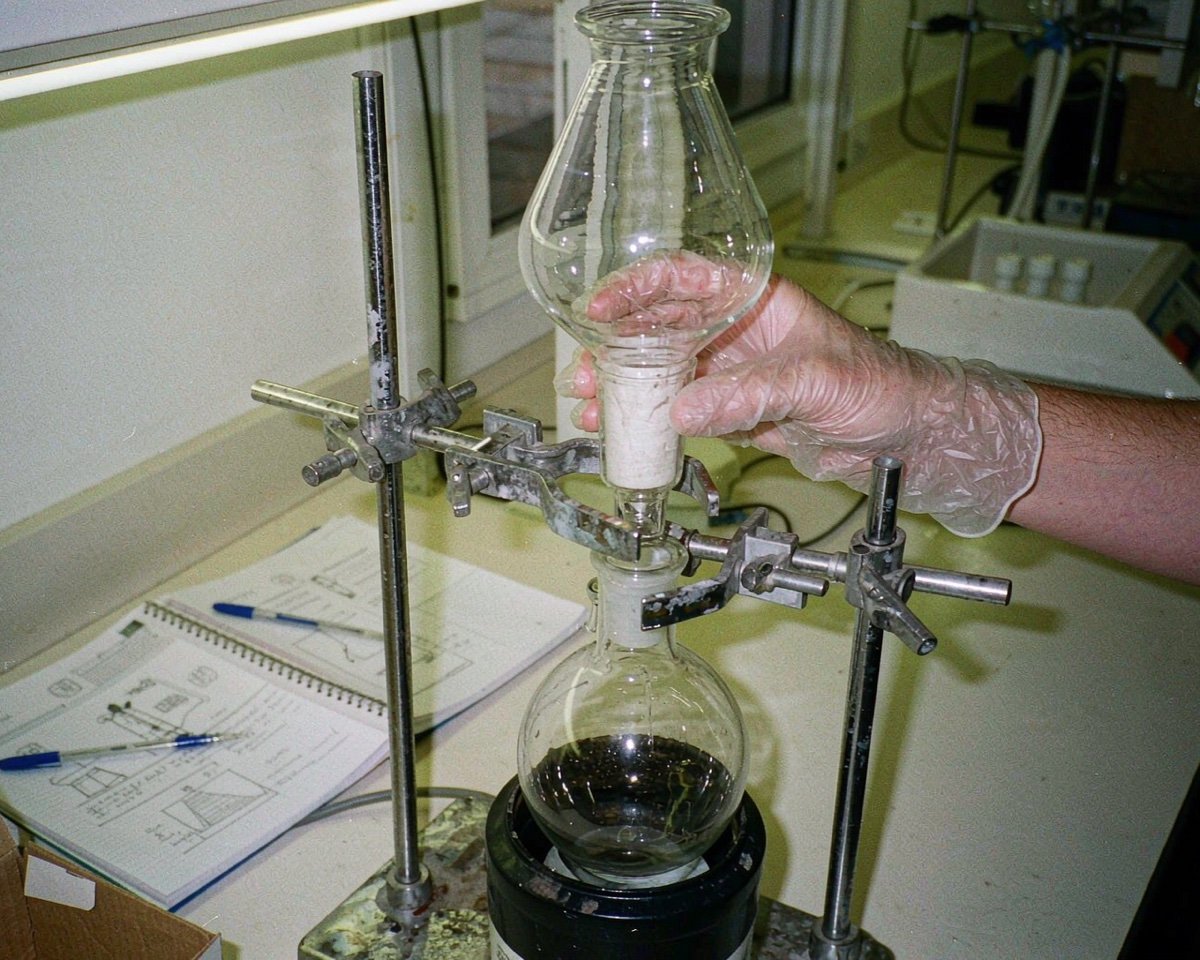
Vacuum gear matters just as much. A TSS bench needs filter holders or Büchner funnels, vacuum flasks, silicone tubing, and a vacuum source. Every one of those parts sees sample, so cleaning and replacement schedules belong in your QA plan. Scratched funnel walls hold solids, and fatigued tubing bleeds vacuum pressure, which stretches filtration time and invites settle-out errors inside the funnel.
Dissolved metals and dissolved phosphorus fractions introduce the 0.45 micron membrane filter. These are typically mixed cellulose ester or polycarbonate discs, and the preservation clock starts ticking at filtration: 40 CFR 136 gives dissolved metals a filtration window measured in minutes from collection, and field teams who cannot filter immediately will acid-preserve the whole bottle and let the lab split it later. For orthophosphate, filtration within 15 minutes is the regulatory ideal, though many programs accept filtration within 24 hours with the data qualified. Either way, the membranes, their holders, and the syringes or vacuum assemblies that push sample through them are consumables to stock in bulk.
One practical tip from the bench: consider prewashed filters. Method 160.2 requires rinsing the filter with reagent water before use to remove loose fibers, and prewashed, pre-dried discs from the manufacturer remove that step entirely. Verify a blank from each new lot before you trust them, because a dirty lot of filters will show up as a positive TSS bias on your method blanks and cost you a batch.
Choosing between filter grades gets easier once you understand the tradeoff. Finer filters like GF/F at 0.7 micron capture more particulate mass, but they load up faster and slow to a crawl on turbid stormwater, which is exactly the matrix that storm events deliver. The roughly 1.5 micron retention of a 934-AH style disc balances capture against flow rate, and decades of interlaboratory data sit behind that compromise. Resist the urge to substitute a membrane filter for the glass fiber disc: membranes clog on high-solids samples, and the method’s performance expectations were validated on glass fiber, not on 0.45 micron plastic.
Stormwater labs often share this bench with related work, which multiplies the filtration inventory. Chlorophyll-a analysis uses the same 47 mm glass fiber discs and vacuum gear, suspended sediment concentration studies in larger filters, and grain size work consumes sieves and dispersant rather than filters but borrows the same funnels and drying equipment. If one vacuum manifold serves all these analyses, its tubing and filter holders cycle through more samples per day than any single method’s throughput suggests. Plan consumable quantities around the bench’s total load, not the busiest single method.
Handling discipline closes the loop. Filters for gravimetric work must travel from desiccator to filter holder to oven to balance with forceps only, and every analyst should train until that habit sticks. A fingerprint weighs about a milligram, which is your entire minimum residue target, so bare hands on a tare filter are how labs generate results that look plausible and reproduce terribly. Stock plenty of clean forceps, spare filter holders, and lint-free wipes, and treat a dropped filter as a lost filter, never a re-used one.
Turbidity, interestingly, consumes nothing filterable. Method 180.1 reads a whole water sample in a clean glass cuvette, no filtration allowed, and the consumables there are cuvettes, lint-free wipes, and calibration standards. Keep the cuvettes scratch-free and dedicated; a fingerprint or a scuff changes the scatter geometry and your NTU drifts. For volatile suspended solids, you will add pre-ignited filters and porcelain or quartz crucibles to the list, since the VSS step burns the same filter at 550 °C.
Preservation, Holding Times, and the Cold Chain
The holding time table is the part of 40 CFR Part 136 that stormwater samplers live by. The headline numbers: TSS allows seven days when cooled to 6 °C or below, BOD gives you only 48 hours, pH must be read within 15 minutes, oil and grease lasts 28 days in acidified glass, and total metals hold for six months once nitric acid drops them below pH 2. Volatiles in VOA vials run 14 days when properly preserved. Miss the window and the result is invalid, full stop, and no amount of instrument time will buy it back.
Cold chain consumables make those windows achievable. Every cooler should carry ice packs or wet ice, a temperature blank, and enough absorbent padding that glass bottles do not crack in transit. Labs should log the cooler temperature on receipt and reject anything out of range. Field crews collecting composites need to think about preservation at the point of collection, because 40 CFR 136 expects samples to be preserved within 15 minutes of the final aliquot. For a sampler carousel that means pre-dosed bottles or immediate splitting at the lab, and both approaches consume acids, pH strips, and reagent water.
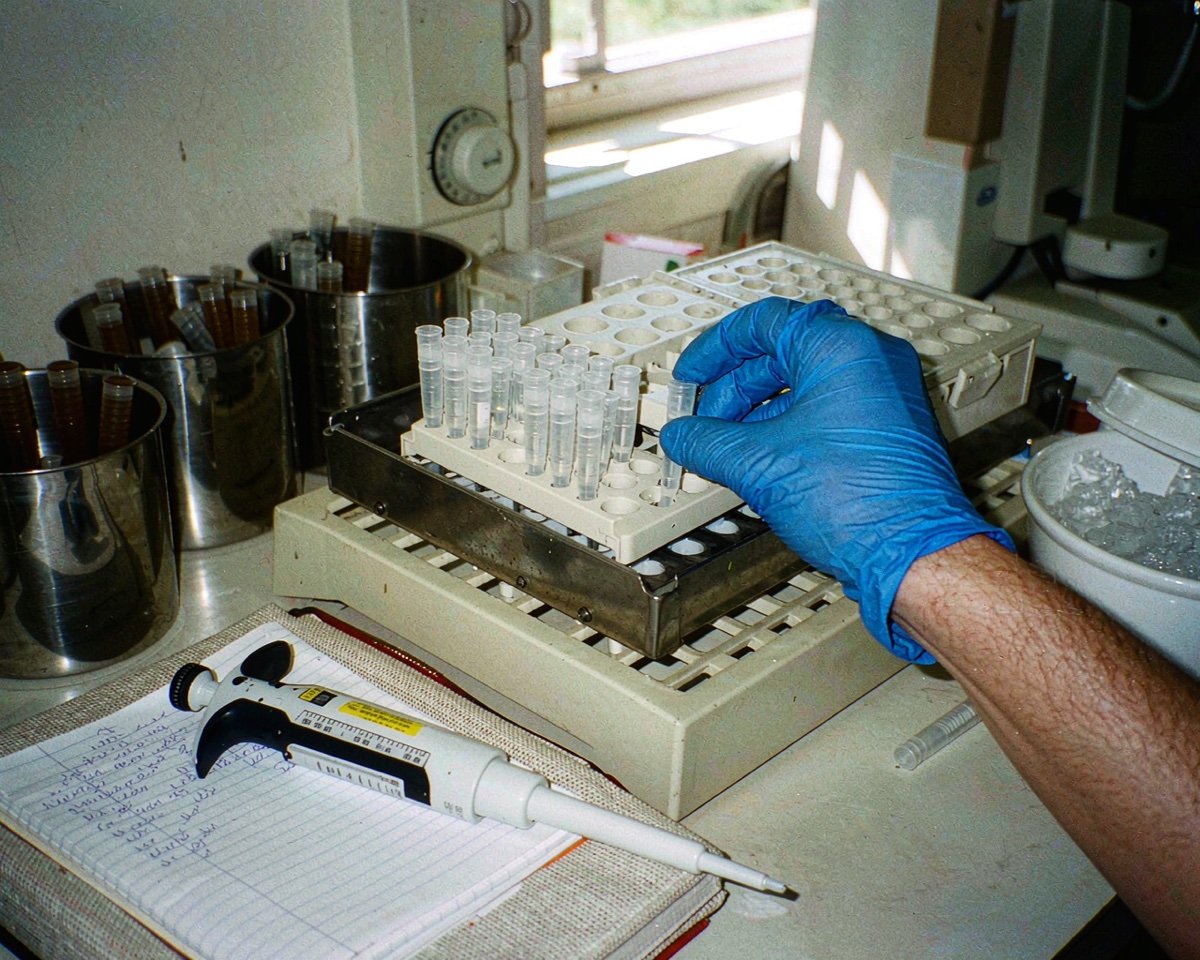
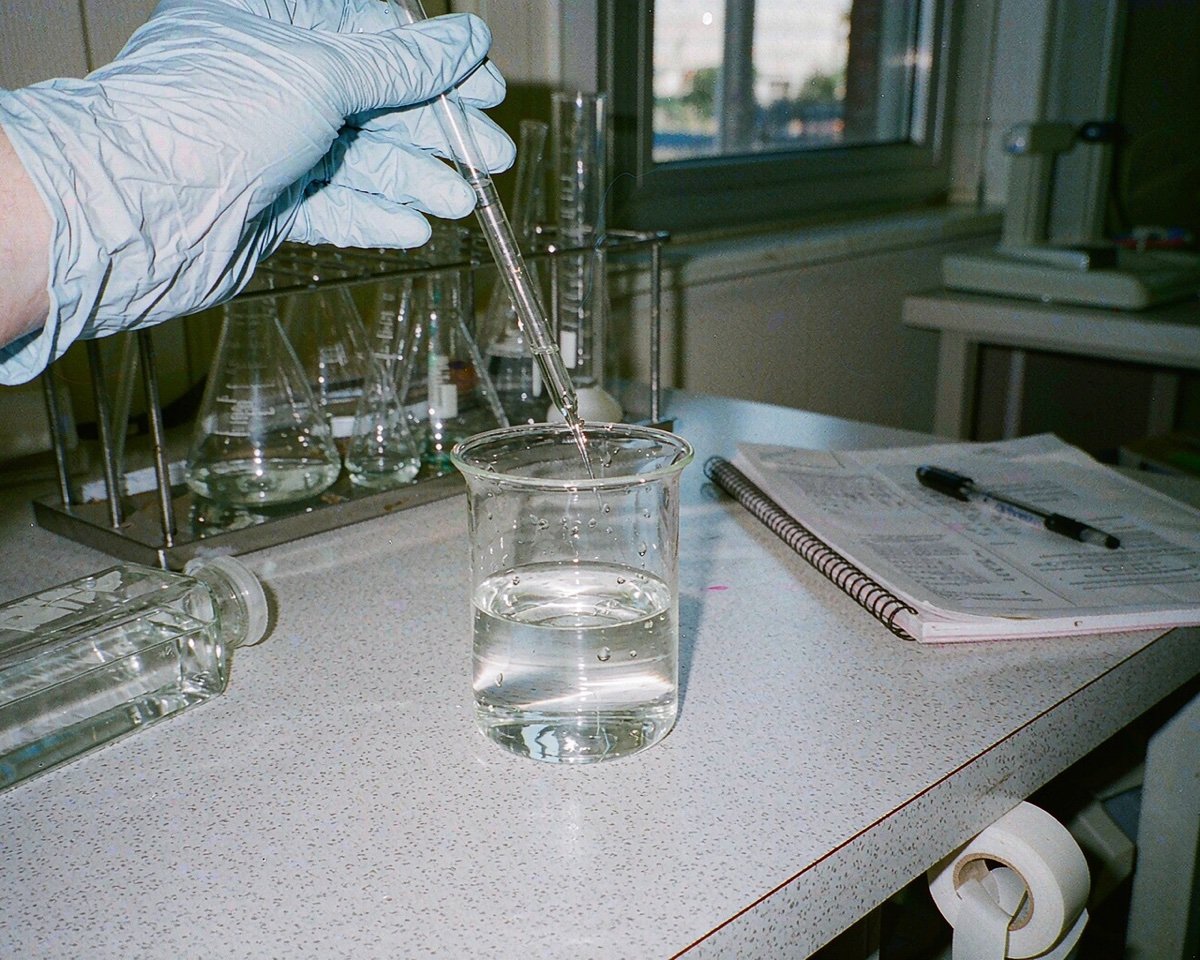
Splitting composites creates its own consumable choreography. When a four-liter composite lands on the bench, it becomes six or eight aliquots headed for different analyses, each requiring its own container, preservative, and paperwork. The churn looks like this: acid dispensers refilled weekly, a steady supply of clean graduated cylinders for splitting, pH strips to confirm the acid took, and spare bottles standing by for the aliquot that inevitably spills. Labs that plan the split in advance finish it in minutes. Labs that improvise spend the afternoon chasing supplies while the clock runs.
Sediment samples follow parallel but distinct rules. Grab samples of bed sediment typically go into wide-mouth glass jars with Teflon-lined lids, chilled to 4 °C, and the holding times for sediment chemistry vary by analyte and program. Metals in solids are generally forgiving, while organic analytes and grain size work best when the sample is fresh. Some programs freeze sediment aliquots for specific analyses, which means labeled freezer bags and a freezer log join the consumable list. Whatever your program, the jar label and the chain of custody form are the two documents that make the consumable “count,” so keep spare labels and seals in the sampling kit.
The quiet lesson of this section is that preservation consumables expire too. Acid blanks and preserved vials come with shelf lives, pH buffers drift, and deionized water pickles itself into a bacterial soup if a carboy sits too long. Build an expiry check into your consumable inventory, and cover your reagent inventory with the same check. A preserved VOA vial past its dating is a disposal problem, not a sampling tool.
Bench and Benchware Consumables
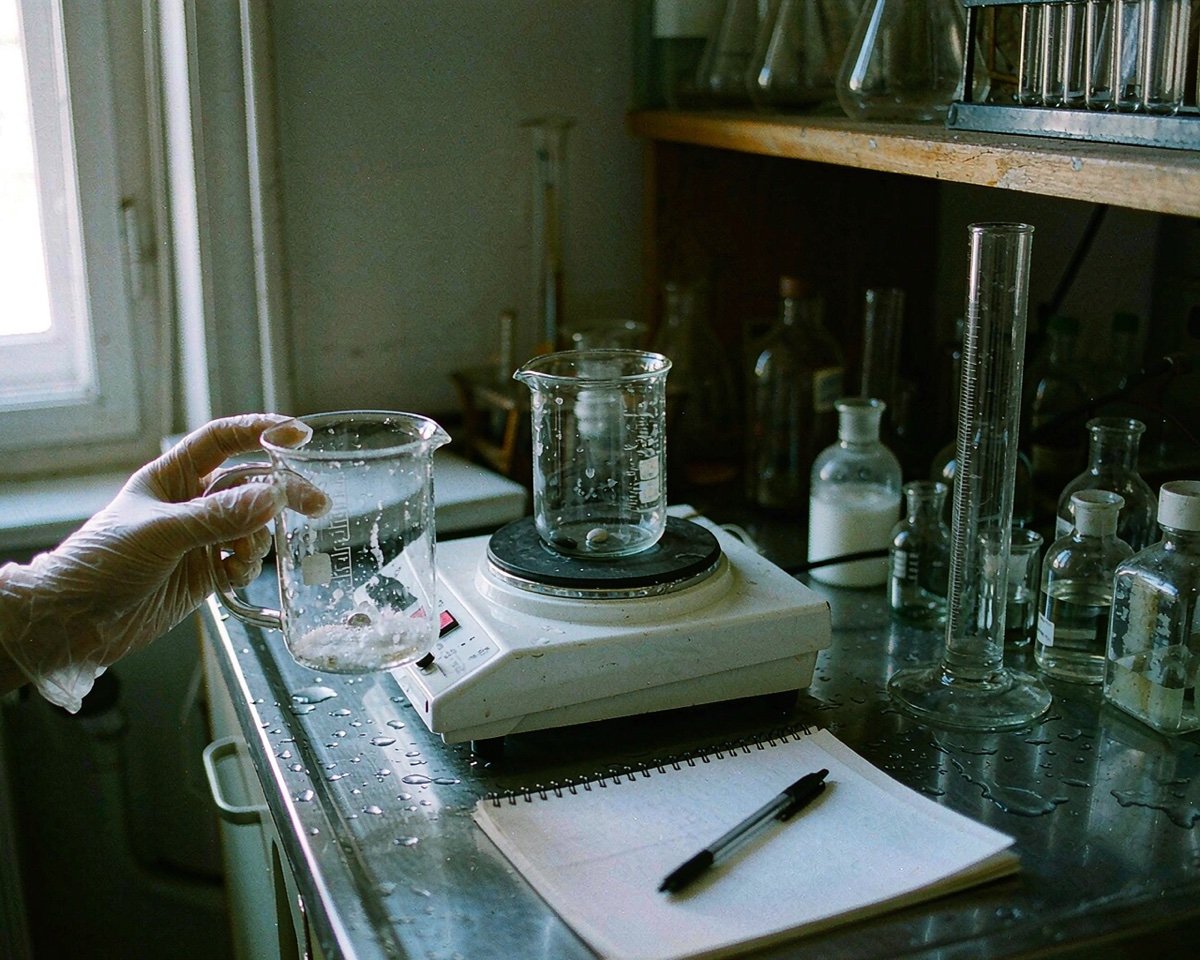
Behind the filtration bench sits a second layer of consumables that never touches sample directly but still shapes your data. Gravimetric work at the milligram level is unforgiving. Forceps for handling filters, powder-free gloves, anti-static weighing boats, and a working desiccator with fresh desiccant are all consumable or semi-consumable items. Saturated desiccant is a classic source of weight drift: filters reabsorb moisture between the oven and the balance, and your “constant weight” never quite stabilizes.
The oven and balance workflow consumes drying pans or weigh boats by the hundred, plus aluminum weighing dishes if your method supports them. Crucibles for VSS and solids testing need regular ignition and inspection, and chipped crucibles retire to the shelf. On the reagent side, keep Type II reagent water on hand for filter rinses and dilutions, and stock pH buffers, acid preservatives in drip bottles, and reagent-grade rinsing solvents appropriate to your SOPs.
Inventory habits belong in this section because small consumables vanish quietly. Gloves migrate to the field vehicles. Custody seals run out mid-season. Desiccant saturates without anyone noticing until weight checks start drifting. A simple kanban approach works well: keep one sealed backup box of every critical item on the shelf, and reorder the moment the backup box gets opened. The backup box is your signal, not your supply. Labs that wait until the primary box is empty before reordering run their QA program on hope, and hope is not a defensible data qualifier.
Turbidity and field work add calibration consumables: formazin or polymer standards, sealed secondary standards with their own expiries, and clean cuvettes as noted earlier. Field kits should carry spare batteries for probes, electrode storage solution for pH meters, and decontamination supplies like Alconox brushes for reusable gear. None of this is glamorous, and all of it shows up in your data quality when it runs out at the wrong moment. A bench checklist taped inside the cabinet door, reviewed weekly, beats a heroic Saturday morning resupply run every time.
How to Buy Sediment and Stormwater Lab Consumables
So what should actually drive your next purchase order? Compliance first. Match every item to the method and permit language: binder-free glass fiber for TSS, 0.45 micron membranes for dissolved fractions, certified containers with the right preservative for VOA vials, and glass for anything with hydrocarbons in it. A cheap filter that does not meet the method spec is not a bargain; it is a qualification finding waiting to happen.
Lot consistency comes second. Gravimetric methods amplify small differences between filter lots, so buy from vendors who publish certificate data and stick with a validated lot number while a project runs. Third, think in cost per sample rather than cost per unit. Prewashed 47 mm filters cost more per disc, but they delete a wash, dry, and weigh cycle per filter, and in a lab processing hundreds of TSS samples a month, the labor savings can dwarf the price difference.
Timing is the fourth consideration, and stormwater labs feel it seasonally. Wet-season sampling quarters generate bottle, filter, and cooler demand in waves, and a stockout during the first big storm week is how expired holding times happen. Build a storm season buffer into your inventory, and track shelf lives so the buffer does not quietly expire in the cabinet before the rain arrives. Finally, keep documentation close: certificates of analysis, container certifications, and lot records belong in the same filing system as your chain of custody forms, because auditors ask for both.
Vendor questions deserve a script. Ask whether filter lots are certified against method performance, whether prewashed filters ship with blank data, and whether preserved vials list a fill volume tolerance and expiry on the label. Ask how the vendor handles a failed lot: replacement only, or replacement plus documented notification so you can flag affected batches? A supplier who answers those questions without hedging has usually been through a lab audit or two, and that experience shows up again when a shipment runs late before a sampling event. Reliability in the supply chain is part of your holding-time math, whether the permit says so or not.
Conclusion
Sediment and stormwater testing succeeds or fails on consumables more than most lab disciplines. The methods are gravimetric, timing-bound, and audit-friendly, which means the bottle, the filter, the preservative, and the cooler each carry regulatory weight. Stock the right containers for every parameter, keep binder-free glass fiber filters and 0.45 micron membranes flowing, respect the holding times in 40 CFR 136, and treat your bench consumables as part of the QA system rather than office supplies.
A consumables program is not just a shopping list, it’s a compliance document you can hand to an auditor. If you are building out a broader lab, our wastewater and effluent testing consumables guide covers the parameters that stormwater programs share with discharge monitoring, and our BOD testing consumables breakdown digs into the 48-hour clock that stormwater teams routinely collide with. Build the list once, review it each permit term, and your next storm event will be routine instead of memorable.
Frequently Asked Questions
What filter do I need for TSS testing under EPA Method 160.2?
Use a binder-free glass microfiber filter with retention around 1.5 microns, such as Whatman 934-AH, Gelman A/E, or Millipore AP40, typically 47 mm in diameter. The binder-free requirement exists because organic binders lose mass during drying and corrupt the gravimetric result.
How long do I have to analyze a stormwater sample for TSS?
Under 40 CFR 136, TSS samples hold for seven days when kept cooled at 6 °C or below. In practice, most labs filter within 24 to 48 hours of receipt, and many permits expect faster turnaround for field parameter checks like pH, which must be read within 15 minutes.
Can I composite stormwater samples for volatile organics?
No. Volatile compounds partition out of the sample during mixing, so VOCs and similar analytes must be collected as grab samples in 40 mL VOA vials with zero headspace. Compositing is generally acceptable for parameters like TSS and COD where the permit allows it and holding times can be met.
Why does dissolved metals testing require a 0.45 micron filter?
The regulatory definition of “dissolved” is operationally tied to passing through a 0.45 micron membrane, which separates the truly dissolved fraction from fine suspended particles that carry metals. Filtering also prevents continued leaching of metals from particles into the sample after collection, which would overstate the dissolved result.
What should be in every stormwater sampling cooler?
Each cooler should hold the appropriate pre-labeled bottles, ice or ice packs to maintain 6 °C or below, a temperature blank, custody seals, and absorbent padding to protect glass containers. The temperature blank gives the receiving lab documented proof of transit temperature, which protects your data if receipt conditions are ever questioned.