
# RoHS Testing Lab Consumables: The Complete Guide
A failed RoHS report costs more than a retest. It can hold up a shipment and trigger a supplier audit. This guide walks through RoHS testing lab consumables, from the digestion vessel on the bench to the XRF film in the sample cup.
RoHS testing lab consumables are the vessels, filters, vials, cups, and films used to prepare samples for EU Directive 2011/65/EU compliance. Labs digest in PTFE or quartz, screen with XRF cups and film, then confirm by ICP-MS using trace-metal-clean consumables that keep background low.
Below I break the whole workflow apart, step by step, with the consumables each step demands and the mistakes I see most often. If you buy for a testing lab, this should save you a few painful reorders.
What RoHS 3 Actually Restricts
RoHS gets used loosely in conversation, so let me pin it down first. The law in force is Directive 2011/65/EU, commonly called RoHS 2, as amended by Directive (EU) 2015/863. Most people call that amendment RoHS 3. It applied from 22 July 2019 and added four phthalates to the restricted list. The European Commission’s RoHS page keeps the current text, the exemption lists, and the guidance documents in one place, and it is the page I check first whenever the rules shift.
The directive restricts ten substances in homogeneous materials. Homogeneous means a single layer or component that cannot be mechanically separated into simpler parts. The solder on a pad is one material. The plastic housing over it is another. Each gets its own limit, judged by weight of that specific material, not the whole product.
Here is the table I keep taped near my desk.
| Substance | Limit (by weight of homogeneous material) | Where it usually hides | Typical confirmation method |
|---|---|---|---|
| Lead (Pb) | 0.1% (1000 ppm) | Solder, brass, PVC stabilizers, glass and ceramic parts | ICP-MS, ICP-OES |
| Cadmium (Cd) | 0.01% (100 ppm) | Pigments, old PVC, platings, NiCd cells | ICP-MS |
| Mercury (Hg) | 0.1% | Lamps, switches, some batteries | ICP-MS, AAS |
| Hexavalent chromium (Cr VI) | 0.1% | Anti-corrosion coatings on fasteners and sheet metal | UV-Vis after alkaline extraction |
| PBB | 0.1% | Legacy flame retardants | GC-MS |
| PBDE | 0.1% | Flame retardants in housings and foams | GC-MS |
| DEHP | 0.1% | Flexible PVC, cable jackets | GC-MS |
| BBP | 0.1% | Gaskets, adhesives | GC-MS |
| DBP | 0.1% | Adhesives, coatings | GC-MS |
| DIBP | 0.1% | Paper components, adhesives | GC-MS |
Look at the cadmium line. Its limit is 100 ppm, ten times tighter than everything else in the table. That single number shapes more consumable decisions than any other clause in the directive, because at 100 ppm in the original material your digests run at trace levels and any background you introduce becomes part of your answer. If you want to read the phthalate additions in the original legal text, Directive (EU) 2015/863 is the amendment to RoHS 2.
The testing methods themselves live in the IEC 62321 series. That standard set splits the work by analyte: XRF screening for the elements, acid digestion plus ICP for confirmation, alkaline extraction for Cr VI, and solvent extraction with GC-MS for phthalates and brominated flame retardants. Your consumable list follows directly from that split.
Who Actually Needs RoHS Testing
RoHS applies to anyone placing electrical or electronic equipment on the EU market. That includes manufacturers, importers, and distributors, and the rules reach spare parts and cables too. In practice, the labs I see doing this work fall into a few groups.
Electronic and PCB manufacturers run the highest volumes. Every board revision brings new components, and each new component brings a new supplier, which means a fresh pile of material declarations to verify. Cables, wires, and solder suppliers sit one step upstream and test their own products so their customers’ declarations hold water. Plating shops care because hexavalent chromium used to be the standard anti-corrosion coating, and trivalent replacements still need checking on a per-lot basis. Polymer and compound suppliers test their resins and masterbatches for the heavy metals and phthalates before those resins become housings or cable jackets.
Then there are the contract and government testing labs. These labs test everything: a broken toy on Monday, a router housing on Tuesday, an automotive connector on Wednesday. Their consumable consumption is enormous, and their procurement decisions tend to be the most sophisticated because contamination costs them billable hours.
One thing surprises people new to the field. RoHS is a self-declaration scheme built on CE marking. Nobody at the EU customs office runs your samples. The defense of your declaration is your testing and documentation, which is exactly why auditor-proof consumable records matter so much later in this guide.
If your lab serves semiconductor or consumer electronics customers, I have a deeper breakdown of this industry in the semiconductor and electronics testing lab consumables guide. It covers the same contamination logic at stricter cleanliness levels.
The RoHS Testing Workflow, Step by Step
Every RoHS campaign follows the same broad rhythm: screen everything cheaply, then confirm the borderline cases properly. The consumables change at each step, so I will walk through them in order.
Step 1: Screening with XRF
X-ray fluorescence (XRF) is the screening tool of choice because it needs almost no sample prep. You put a cut piece of housing or a cable jacket in a sample cup, cover it with film, and measure. Most labs screen every homogeneous part of a product this way and only escalate the parts that come back near or above the limits.
The consumables here are sample cups and XRF film, and both are more technical than they look. Film comes in several materials and thicknesses. Polypropylene around 6 µm is the everyday choice for general screening. Polyester (Mylar) at 6.3 µm is tougher and resists tearing. Polyimide (Kapton) at 7.6 µm handles hot or chemically aggressive samples, which matters if you are screening solvent-wiped parts. Every micron of film absorbs low-energy X-rays, so for light elements you want the thinnest film your sample can tolerate without leaking.
I cover this in much more detail, including how film choice shifts detection limits, in the XRF sample preparation consumables guide.
Step 2: Acid Digestion for the Metals
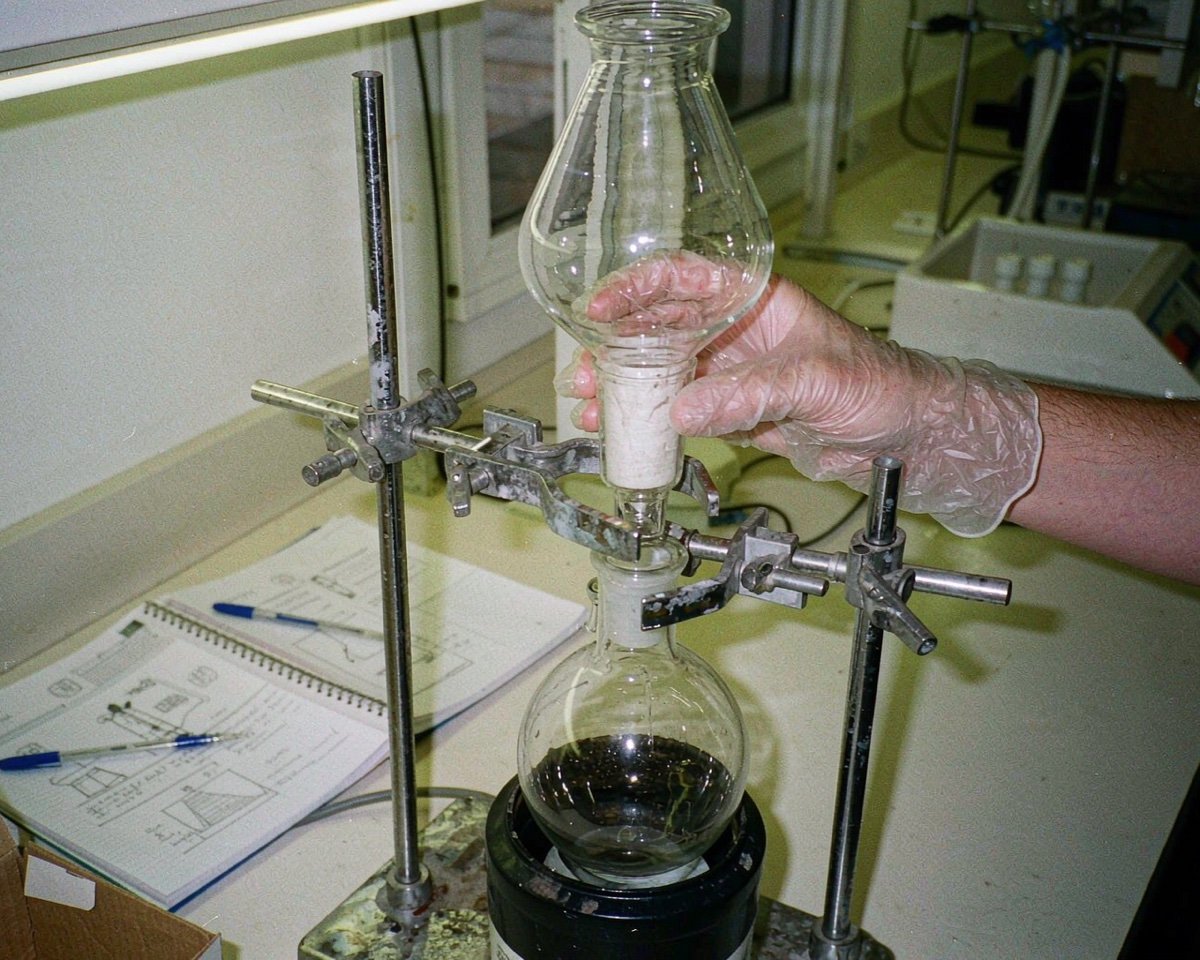
When screening shows a result near the limit, or when the report needs confirmatory numbers, the sample goes to digestion. For most plastics and metals that means microwave digestion in a mixture of nitric acid with hydrogen peroxide, sometimes with hydrofluoric or sulfuric acid depending on the matrix. The sealed vessel holds the acid vapors in and the analytes in, which is precisely why recovered recoveries are good and blank values stay low.
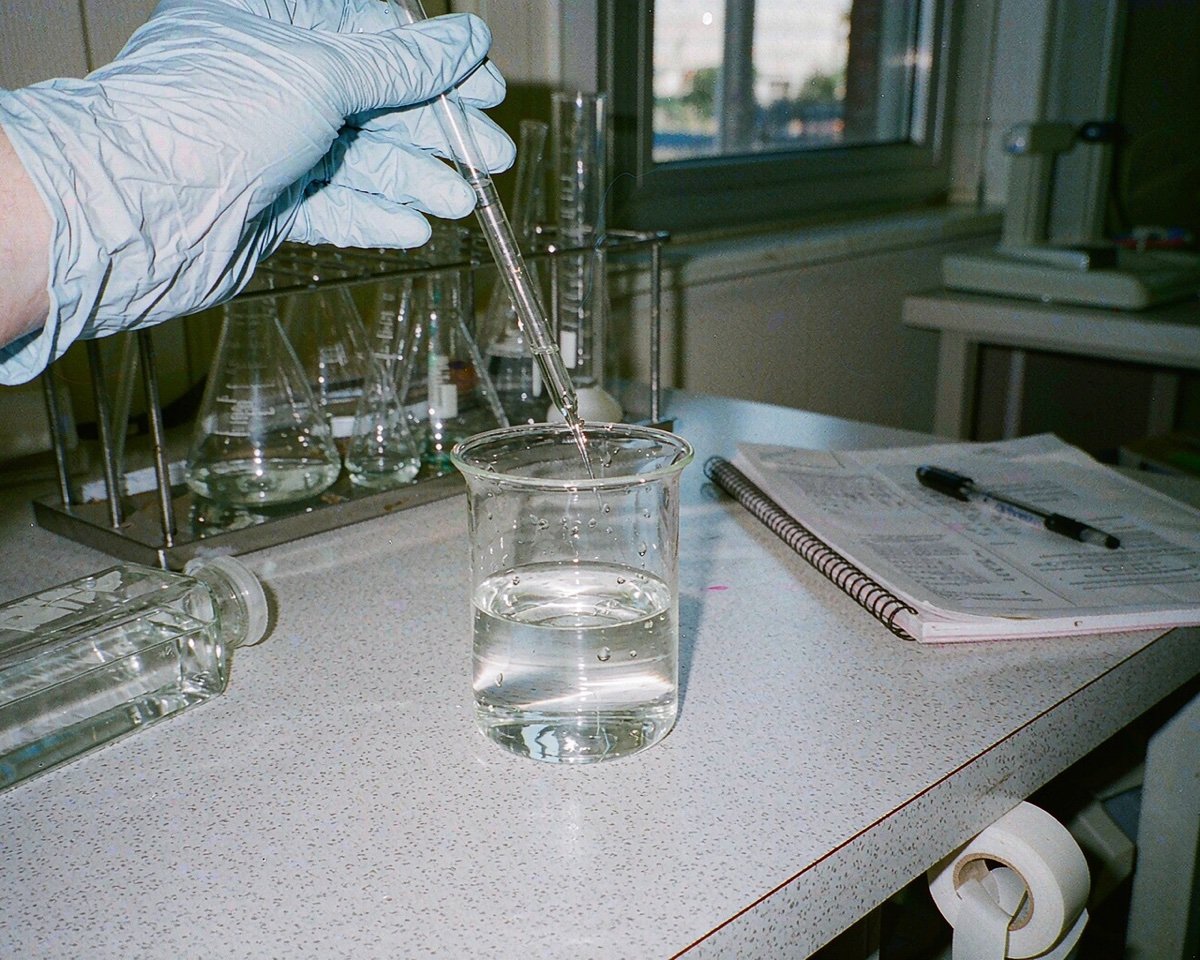
The consumables that matter: the vessels themselves (PTFE or PFA liners inside microwave housings, quartz for special cases), the acid dispensers, the transfer pipettes, and the volumetric ware for the final dilution. Everything that touches the digest either adds nothing or adds a measurable contamination. There is no neutral third option. I have seen a PTFE-coated stirring bar contribute more nickel than the sample itself, simply because its coating was scratched through.
Step 3: Solvent Extraction for Phthalates and Brominated Retardants
The organic targets need different handling. IEC 62321-6 describes solvent extraction of phthalates, PBB, and PBDE from polymers, typically with toluene, dichloromethane, or a hexane-acetone mix, followed by GC-MS. Some labs still run Soxhlet extractions overnight. More labs now use ultrasonic or accelerated solvent extraction to get it done in hours.
Consumables for this step: glass extraction tubes and vials (solvents attack most plastics, so glass wins here), PTFE-lined caps, cellulose or glass fiber extraction thimbles for Soxhlet, and the syringe filters that clear particulates before the GC column sees the extract. Filters need solvent compatibility checks; a nylon membrane will dissolve or shed in dichloromethane, and you will find out the expensive way.
Step 4: Confirmation by ICP-MS, ICP-OES, and GC-MS
Confirmation is where the analytical instruments earn their keep, and where sample introduction consumables quietly decide your day. For the metals, inductively coupled plasma mass spectrometry (ICP-MS) and optical emission spectrometry (ICP-OES) both take the digest as a liquid aerosol. That means autosampler vials, nebulizers, spray chambers, and peristaltic pump tubing all stand between your sample and the detector.
Agilent, Thermo, and Shimadzu all publish RoHS-focused application guidance; Agilent’s RoHS and EH&S compliance solutions page is a decent starting point for method planning, and their app notes spell out vessel types and dilution schemes. For the organic side, GC-MS columns, liners, and vials carry the load; Restek’s Rtx-440 phthalate column page shows what a column optimized for regulated phthalates looks like in practice.
One practical note. Mercury is volatile and memory-hangs in sample introduction systems. If your RoHS panel includes Hg (it does), add a small amount of gold or use a stabilization protocol in the standards and samples, and keep dedicated vials for mercury work. Reusing a mercury-contaminated vial for cadmium work will haunt you for a week.
Consumables by Step: The Detailed List
Let me now go through the physical shopping list, grouped by where each item lives in the workflow. This is the section to screenshot if you are building an order.
Digestion Vessels and Crucibles
Microwave digestion vessels come in a few flavors. Standard PTFE vessels handle most polymer and metal digests with nitric acid mixtures, typically at pressures up to 40 bar and temperatures up to 300 °C. PFA liners are the premium option; they are cleaner out of the box and survive HF. Quartz vessels exist for labs that need the lowest possible background on silicon-sensitive matrices. Match the vessel to your microwave system’s sensor requirements, because vessels are not universally interchangeable.
For dry ashing, crucibles take over. Porcelain crucibles are cheap and work for non-volatile analytes, but they can adsorb metals. Nickel and zirconium crucibles handle alkali fusion. Quartz crucibles are the cleanest choice for ashing when you care about trace metal carryover. Volatile elements (mercury, arsenic, selenium) should never see an open ashing dish at all; they leave with the smoke and your report becomes fiction.
Crucibles and vessels get reused, so cleaning becomes a consumable-adjacent procedure. A standard routine is an overnight soak in 10% nitric acid, thorough rinsing with high-purity water, and drying in a clean oven. Track vessel lineage; the third digestion vessel in a tray has usually seen more aggressive chemistry than the first one, and it will not behave the same.
Acid-Resistant Smallwares
The small items cause the quiet failures. PTFE or PFA weighing boats and spatulas for the sample. PTFE-coated forceps for moving hot vessels. PFA funnels and dispensers for acid transfer. Polypropylene volumetric tubes for final dilutions, as long as your final acid concentration stays under a few percent and your solvent is water.
A mistake I see regularly: labs buy cheap polypropylene tubes for trace metals work and never test the blank. Most brands are fine for routine screening digests. For the confirmatory runs that decide a shipment, test the tube in your acid matrix first. One blank per lot is cheap insurance against a 900 ppm lead result that exists only in the tube.
ICP-MS and ICP-OES Sample Introduction
Sample introduction is the highest-wear part of any plasma instrument, and RoHS runs push digests with high dissolved solids through it daily. Nebulizers clog. Spray chambers build residue. Pump tubing stretches and changes flow rate, which drifts your calibration silently. Standard practice is to inspect and rotate tubing weekly and replace nebulizer parts on a schedule, not on failure.
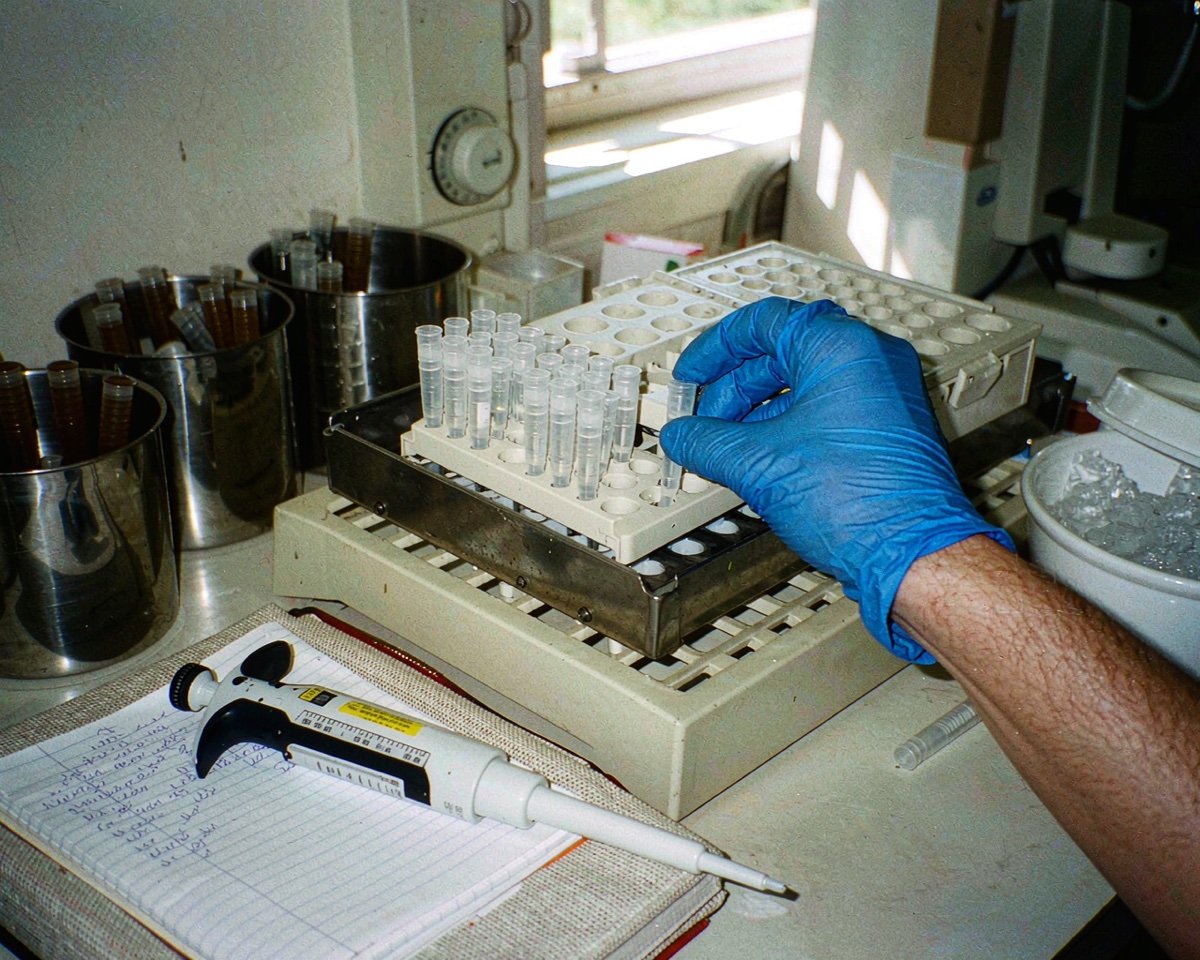
Autosampler vials are the consumable you buy in the largest quantity. For RoHS digests, polypropylene or PFA vials beat glass, because borosilicate glass carries measurable lead and boron background. I use glass only when the solvent requires it (the organic extracts for GC-MS), and then I choose vials certified for low metal background. Details on vial choice, septa, and volume matching live in the ICP-MS sample preparation consumables guide, which pairs well with this article.
Standards dilution matters here too. Calibration standards and internal standards go through the same vials and tubing as samples. A vial that leaches lead into your 2% nitric acid blank will also leach it into your 10 ppb calibration point, and your curve quietly bends.
XRF Sample Cups and Film
Screening consumables deserve their own budget line. Sample cups come in diameters matched to your instrument’s collimator (32 mm is common for benchtop units), with thin disposable film held by a snap ring. The film is the critical choice, and the trade-off is always sensitivity versus durability: thinner films transmit more X-ray but tear easier and leak powders.
Keep a rotation: polypropylene 6 µm for routine powders and liquids, polyester 6.3 µm for hard parts that scratch film, polyimide 7.6 µm for hot or aggressive samples. Change film between every sample, every time. Reusing film on a cup is how a 500 ppm lead housing contaminates your next measurement and triggers a phantom fail. Instrument makers publish guidance on consumable options; Shimadzu’s EDX-7200 XRF page is a good example of how the screening workflow and its accessories fit together.
Filtration
Every digest gets filtered or settled before analysis, and I recommend filtering. A 0.45 µm PTFE or polypropylene syringe filter removes residual particulates that would clog the nebulizer and give you spiky, irreproducible reads. For digests with high dissolved solids, some labs step down to 0.22 µm. Match the membrane to your acid: PTFE handles everything aqueous and organic, while nylon and mixed cellulose ester have real chemical limits.
The filter is also a contamination source. Pre-rinse with a few mL of your dilution acid and discard the rinse, or verify low-background filters from the supplier’s documentation. Filters that claim trace-metal-clean certification are worth the premium for confirmatory runs, in my experience.
Reference Standards and Blanks
Certified reference materials (CRMs) anchor the whole exercise. RoHS CRMs exist for plastics (polyethylene and polypropylene pellets with certified Pb, Cd, Hg, Cr values) and for some alloys. Handle them like samples, not like treasure: store per the certificate, dissolve or digest them with the same vessels and acids as real samples, and run them at the start, middle, and end of the sequence.
Blanks deserve the same respect. A full preparation blank travels through digestion, filtration, and vial transfer with every batch. If your blank moves, everything behind it moves. Labs that economize on blanks save pennies and lose audit days.
Cleanliness and Contamination Control
Trace metals work punishes casual handling. Your samples near the cadmium limit produce digests in the low ppb range, and almost every surface in a normal lab sheds more than that. Glass leaches lead and boron. Aluminum foil carries cadmium traces in some cheap grades. Powder-free nitrile gloves beat powdered latex, and even gloves shed zinc in measurable amounts if you touch the inside of a vial cap.
This is where the PFA-versus-glass question gets decided. Borosilicate glass is fine for organic extraction work and for anything where lead background is irrelevant. For the metals digests, fluoropolymer wins: PFA bottles, PTFE vessels, polypropylene tubes, all washed in acid. Thermo Fisher’s PFA and FEP fluoropolymer bottles page documents the certification levels available, including double-bagged low-particulate grades for cleanroom use. That certification paperwork matters more than the plastic itself when an auditor asks where your blank values came from.
A story about stakes, because this stuff is real. I once watched a contract lab lose two full days of lead results. Their blanks came back at 60 µg/L, several times the normal background, and nobody could find the cause for an afternoon. It turned out to be a new shipment of glass digestion vials that had skipped the acid wash step; a technician under deadline pressure had used them straight from the box. The lead leached out of the glass into overnight digests, and every sample in that batch needed repeating. The vials cost a few euros each. The rerun cost a report deadline and a very awkward client call.
If your lab has a dedicated trace metals room, protect it. No cardboard boxes inside (they shed fibers), no shared pipettes, and dedicated reagent bottles refilled with high-purity acids only. Labs that share space between digestion and ordinary wet chemistry fight background constantly. The metals and materials testing consumables guide goes deeper on building a clean workflow from scratch.
Choosing Consumables Spec-Wise
With the list built, the question becomes how to judge what you buy. Three properties separate consumables that protect your data from consumables that endanger it.
Material purity comes first. For anything touching a metals digest, look for stated limits on the elements you care about: lead, cadmium, mercury, chromium. Serious suppliers publish these values, often on a per-lot basis. If a datasheet says nothing about metal background, assume the worst and run your own blank before trusting it.
Lot consistency comes second. A vial lot that behaves differently from the last one invalidates your blank assumptions and, in strict cases, forces a method revalidation. Ask suppliers about their lot-to-lot variation controls and whether they notify customers when production changes. Polymer consumables are molded products, and resin or mold changes shift background.
The Certificate of Analysis (CoA) is the third pillar and the one auditors care about most. A CoA ties your consumable lot to measured performance values, and without it your contamination defense is a verbal shrug. When you evaluate a new supplier, request a sample CoA before you request a sample product. The paperwork tells you how they think.
One honest opinion, since buyers ask me constantly. I would rather pay 30% more for a consumable with a documented low-metal certification than save the difference and run a validation study on a cheaper part. The math only works in the cheap option’s favor until the first failed audit, and audits are never scheduled for convenient weeks.
Supplier Checklist
Use this table when qualifying a new consumables vendor for your RoHS workflow. It is the list I wish someone had handed me years ago.
| Criterion | What to ask for | Red flag |
|---|---|---|
| Metal background data | Per-lot Pb, Cd, Hg, Cr values or a certified low-metal grade | “Our products are clean” with no numbers |
| Certificate of Analysis | Sample CoA with lot number, test methods, signatures | CoA available “on request” only, weeks later |
| Material compatibility | Chemical resistance charts for acids and solvents you use | No chart, or one that contradicts known behavior |
| Lot change notifications | Written change-notification policy | Silent resin or mold changes |
| Capacity and lead times | Guaranteed stock levels for your recurring SKUs | Single production line, no buffer |
| Packaging | Double-bagging or cleanroom options for trace work | Open-shelf repackaging |
| Pricing transparency | Volume tiers in writing | Quotes that expire in 48 hours |
Weight the background data column heaviest. Everything else is negotiable; contamination is not.
Cost and Downtime Considerations
The obvious cost in consumables is the invoice. The real cost hides in what a failed consumable does to your schedule. A contaminated blank invalidates a full preparation batch, and a batch is usually a day of technician time plus instrument time plus acid and samples that may not exist anymore (some RoHS samples arrive as single cut pieces). A clogged nebulizer from unfiltered digests costs the wash cycle at minimum and a service visit at worst. A stock-out of the one vial size your autosampler accepts idles a machine that costs more per idle day than a year of vials.
So the buying logic flips from unit price to risk price. Where a consumable failure propagates (vessels, filters, vials, XRF film), buy quality and certification. Where failure is contained and visible (pump tubing, film changes), buy on price and change often. It is not a compromise between quality and budget; it is a matching exercise, matching the consumable’s failure mode to the cost of that failure.
Keep a simple consumption log for a month before negotiating your next contract. Count vials, filters, cups, and tubing pieces actually used, then multiply by your batch schedule. Buyers who negotiate from real consumption data get better tiers than buyers who negotiate from last year’s invoice.
Conclusion
RoHS compliance looks like a regulatory problem from the outside, but inside the lab it is a consumables problem. The directive sets limits; your digestion vessels, filters, vials, XRF film, and pump tubing decide whether your results can defend those limits in front of an auditor. Match the material to the chemistry, demand lot-level documentation, and treat blanks and CRMs as the center of the batch rather than an afterthought. If a shipment ever hangs on one confirmatory number, you will be glad the vial it came in had a certificate in the box.
If you are building out a full workflow, start with the ICP-MS sample preparation consumables guide for the metals side, then read the XRF sample preparation consumables guide to tighten your screening step. Screening plus confirmation, done cleanly, is the whole game.
Frequently Asked Questions
What consumables do I need to start RoHS testing in-house?
Start with XRF sample cups and film for screening, microwave digestion vessels with PTFE or PFA liners for the metals, acid-rated volumetric tubes and pipettes, 0.45 µm PTFE syringe filters, and polypropylene autosampler vials. Add certified reference materials for plastics and a plan for preparation blanks before you run a single report sample.
Why can’t I use glass vials for RoHS ICP-MS analysis?
Borosilicate glass leaches measurable lead and boron into acidic solutions, and near the 0.1% lead limit that background is enough to distort results. Polypropylene or PFA vials keep metal background far lower. Glass remains the right choice for the organic solvent extracts used in GC-MS phthalate work.
How often should I change XRF film on sample cups?
Between every sample, without exception. A film that touched a high-lead sample carries particles that contaminate the next measurement, which can produce a false fail on a clean part. Film is cheap; a disputed report is not.
What is the difference between RoHS screening and confirmation?
Screening is a fast semi-quantitative check, usually by XRF, meant to find parts near the limits. Confirmation is a quantitative analysis, typically acid digestion followed by ICP-MS or ICP-OES for metals and solvent extraction followed by GC-MS for phthalates, that produces defensible numbers. Screening finds suspects; confirmation convicts them.
Do phthalate extractions for RoHS need glass or plastic containers?
Glass, in most cases. The extraction solvents in IEC 62321-6, such as toluene and dichloromethane, attack or swell common plastics and can add plasticizers to your sample, which is exactly what you are measuring. Use glass vials and tubes with PTFE-lined caps, and verify any plastic component against your solvent before trusting it.