
# What Consumables Does Sample Homogenization Need?
I have spent enough time around sample prep to know one thing: the homogenizer gets all the attention, but the consumables decide whether your results hold up. Pick the wrong bead size, or reuse a bag with a pinhole in it, and you might spend a week troubleshooting an instrument that was never the problem.
So let’s go through exactly what to keep in stock.
The Short Answer
Sample homogenization needs five consumables: pre-filled bead tubes (ceramic, glass, or steel), sealed grinding jars, sterile homogenizer bags, disposable generator tips, and cryogenic gear like precooled mortars. Match bead material and size to your sample, and choose DNase- and RNase-free media.
Here’s the full breakdown, including how to match bead material to your matrix and where most labs quietly overspend.
Sample Homogenization Consumables: The Detailed List
Most homogenization workflows draw from the same five drawers:
| Consumable | What it does | Common options |
|---|---|---|
| Bead tubes and loose beads | Impact grinding inside sealed tubes | Ceramic (0.1 to 6.8 mm), glass, stainless steel, garnet |
| Grinding jars with O-rings | Dry, wet, or cryogenic milling of larger samples | 25 or 50 mL stainless steel jars |
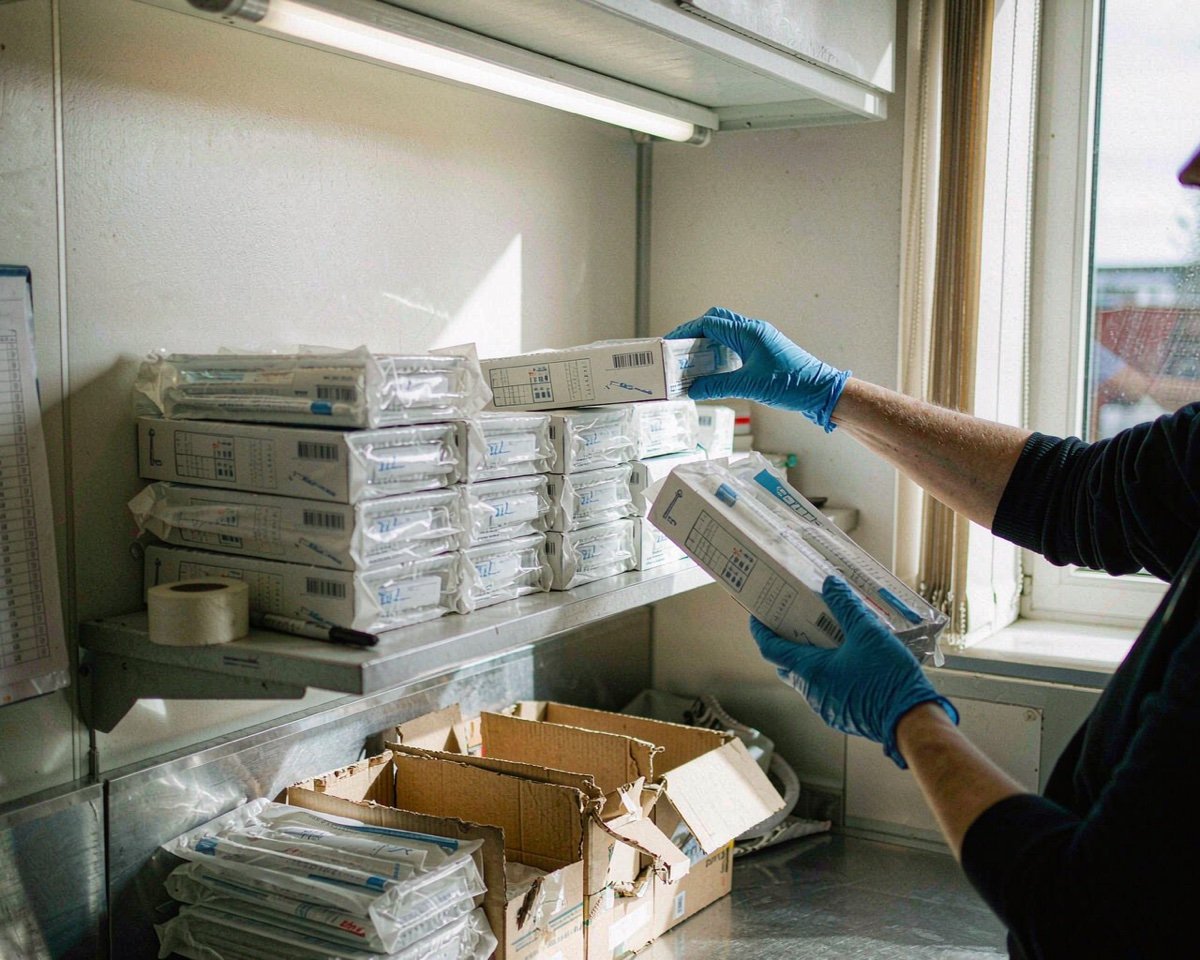
| Homogenizer bags | Paddle blending without machine contact | Gamma-irradiated LDPE, filter-screen versions |
| Disposable generator tips | Rotor-stator processing, one sample per tip | Handheld and benchtop formats |
| Cryogenic consumables | Shattering tough or heat-labile samples | Freezer mill vials, precooled mortars, liquid nitrogen |
Your instrument type decides which drawers you actually use. A bead mill consumes tubes and beads. A paddle blender burns through bags. A rotor-stator lives or dies by the condition of its generator probe. Simple, but worth saying out loud, because procurement orders rarely mirror what the bench actually runs through in a month.
Bead-Based vs. Blade-Based Homogenization Consumables
Bead mills rely on sealed tubes pre-filled with bead media. You add sample and buffer, lock the cap, and the machine does the rest. Because the tube never opens during processing, cleanup is minimal and the risk of aerosolized sample drops sharply. Vendors like Bertin Technologies publish selection tables that pair bead type, size, and tube volume to specific applications, which makes ordering easier than it sounds (choosing your lysing kit).
Blade-based systems split into two camps. High-speed blenders use glass or metal jars with fixed blades, and regulatory methods spell out the requirements in detail. The FDA’s Bacteriological Analytical Manual, for example, specifies a 1,000 mL sterile blender jar that survives autoclaving at 121°C for 60 minutes (FDA BAM Chapter 1). Rotor-stator handhelds and benchtop units use generator probes, and many labs now buy disposable tips so each sample gets a fresh, sterile shearing surface.
One is not better than the other. Bead mills win on throughput and containment. Blade systems win on sample volume and price per run.
Grinding Jars and Beads: Choosing Material and Size
Bead materials
Bead chemistry matters more than most people expect. Glass beads are soft and cheap, which suits microorganisms and RNA work where you plan to dispose of them. Ceramic beads are chemically inert and will not bind nucleic acids, so they dominate tissue work. Stainless steel is the hardest and densest option, delivering heavy impact with little shear. Garnet sits at the aggressive end for soil and sediment.
Size is the other half of the equation. A 0.1 mm bead targets bacteria and fungal cells, a 1.4 mm ceramic bead handles soft tissue like liver or brain, and 2.8 mm ceramic beads are the standard choice for tough matrices such as muscle, skin, and heart tissue. For dry grinding of grains and seeds, you move up to 6.8 mm ceramic or large steel balls.
Grinding jars
For anything above roughly 50 mL, or for dry and cryogenic milling, tube-based homogenization stops making sense. Sealed stainless steel jars with O-ring gaskets take over. Manufacturers build them for very tough material including bone, seeds, paper, and plastics, and the screw-on O-ring seal keeps dust and aerosols contained during the run (Bead Ruptor milling jars). Check that the O-rings are sold as spares. They wear out long before the jar does, and a failed seal mid-run is exactly as messy as it sounds.
Disposable Homogenizer Tips and Stomacher Bags
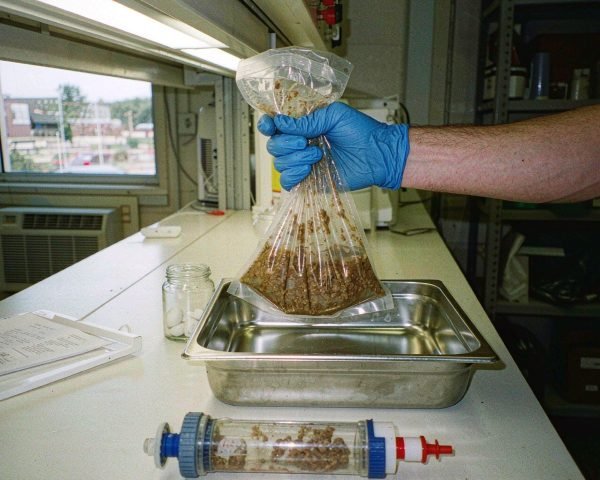
Food and clinical microbiology labs run mostly on paddle blenders, and their entire consumable budget is bags. Stomacher-style bags are gamma-irradiated, food-grade LDPE, typically around 65 μm thick with reinforced side and bottom seams, so the paddles can knead hard for two minutes without tearing (Seward’s BAM-compliant blenders). Filter versions add a lateral non-woven mesh, often under 50 μm porosity, that lets you pipette the homogenate directly from the bag for plating or PCR.
A small 5 mL homogenizer bag covers swabs and biopsy-scale samples, while large-volume protocols like FDA BAM composites need bags rated for hundreds of milliliters. The FDA method specifically calls out sterile stomacher bags for Listeria work and warns that a bag punctured by its own closure wire invalidates the sample (FDA BAM Chapter 1).
For rotor-stator work, disposable generator tips have quietly become the default in busy labs. You shear, you eject, you grab the next tip. No scraping tissue off a reusable probe, no autoclave queue at 4 pm.
Cryogenic Grinding Consumables
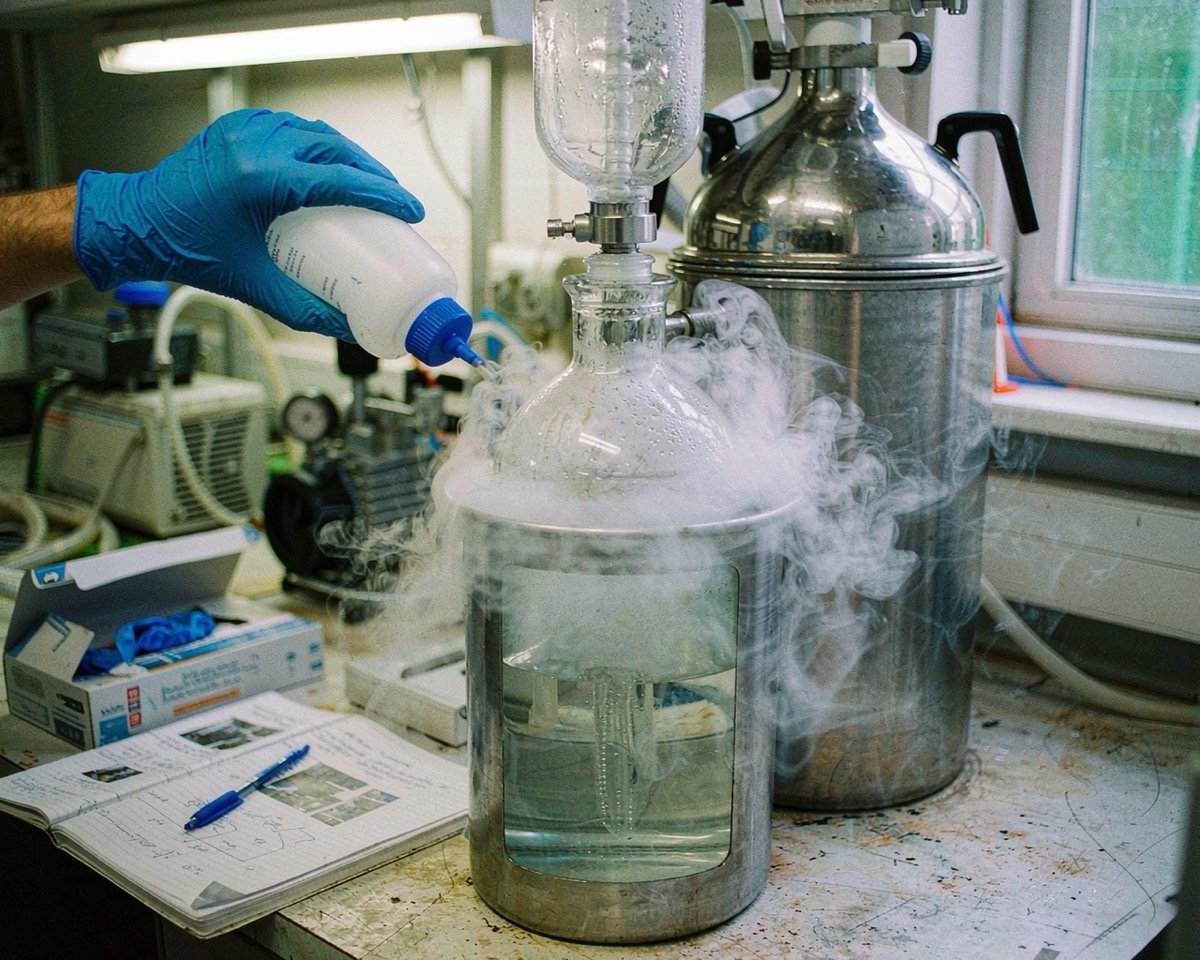
Some samples refuse to cooperate at room temperature. Cartilage, skin, tumor biopsies, and anything rich in RNA or volatile compounds need to be brittle before you hit them, and that means liquid nitrogen. At cryogenic temperatures, tissue shatters like glass instead of smearing across your beads.
The consumables here are specialized: freezer mill vials with steel impactors, precooled stainless steel canisters with grinding balls, or the classic LN2-chilled mortar and pestle. Published protocols for cartilage RNA extraction rely on freezer mills that plunge sealed vials into liquid nitrogen and drive a steel impactor with magnetic coils (PMC review on cartilage RNA extraction).
I learned this lesson the expensive way. Early in my career, I watched a colleague bead-mill frozen tumor tissue at ambient temperature to save 20 minutes of pre-cooling. The RIN values came back unusable, and the biopsy was irreplaceable. Since then, I treat chilled vials, cold platforms, and a decent cryo-rated mortar as non-negotiable line items. If you still do this manually, it may be worth reading up on what a mortar and pestle is used for in sample prep before you invest in a freezer mill.
Avoiding Cross-Contamination Between Samples
Homogenization is the messiest step in sample prep, which makes it the easiest place to contaminate a batch. The fix is mostly consumable discipline rather than hardware.
• Process every sample in its own sealed tube or bag, and never reopen one mid-run.
• Buy media certified DNase, RNase, and nuclease free, with gamma irradiation where possible.
• Inspect bags and tubes before loading. A pinhole or a puncture from a closure wire can invalidate the whole sample.
• For reusable jars and beads, clean between batches and track how many runs each O-ring has seen.
Contamination rarely announces itself. It shows up as a positive control that never went negative, or a triplicate that disagrees for no visible reason. If that pattern sounds familiar, our list of nine ways samples get contaminated before injection covers homogenization among the usual suspects.
When to Upgrade Your Consumables
Three signals suggest your consumable setup is costing you. Recovery rates drift between batches, cleanup now takes longer than homogenization, or sample throughput has grown past what manual cleaning can support.
Upgrading does not always mean a new instrument. Moving from loose beads and self-filled tubes to pre-filled, certified kits might add modest cost per sample and remove an entire cleaning step. Swapping reusable generator probes for disposable tips could do the same. For cryogenic work, a dedicated freezer mill or sealed cryo jars may earn their price the first time a precious biopsy survives processing intact. Test the change on your worst matrix first, not your easiest one.
Conclusion
Sample homogenization does not need exotic supplies, but it does need the right ones. Bead tubes matched to your matrix, sealed jars with spare O-rings, gamma-irradiated bags, disposable tips, and proper cryogenic consumables cover nearly every workflow from bacterial lysis to tumor RNA. The pattern I would leave you with is this: every consumable you choose either contains the sample or exposes it, so buy sealed, sterile, and certified, and replace wear parts before they fail. Your homogenizer will thank you by not being blamed for things it never did.
Once your sample is fully homogenized, the next risk point is filtration before analysis. Our guide to 0.22 vs 0.45 micron syringe filter pore sizes walks through that decision in the same practical spirit.
Frequently Asked Questions
What size beads do I need for homogenizing bacteria?
Use 0.1 mm beads, typically glass or ceramic, because the bead diameter should match the size of the target cell. Tougher Gram-positive organisms might need 0.5 mm glass beads or a mixed bead format.
Can I reuse homogenization beads and grinding jars?
Jars can be reused for years if the seals are intact and you clean them between batches. Loose beads are generally cleaned and reused for dry grinding, but pre-filled certified tubes are designed for single use, and reusing them risks carryover.
What is a homogenizer bag used for?
It holds the sample during paddle-blender homogenization so the sample never touches the machine. Filter-screen versions let you pipette the cleared homogenate straight from the bag, which cuts handling steps in food and clinical testing.
Do homogenization consumables really need to be sterile?
For microbiology and molecular work, yes, because any background load in the consumable contaminates the result. Gamma-irradiated bags and DNase/RNase-free bead kits are the standard, and regulatory methods such as FDA BAM assume sterile consumables.
Are disposable homogenizer tips worth the extra cost?
They usually pay for themselves once cleaning time and failed decontamination are counted. If you process infectious or high-value samples, a fresh sterile tip per run removes a whole category of cross-contamination risk.