
# What Consumables Does Pharmaceutical Water Testing Need?
Water is the one raw material every pharma lab tests most often, and the test is only as good as the container you collect it in. A spotless water system can still fail USP <645> or <643> because someone grabbed the wrong bottle.
Sterile sample bottles (with sodium thiosulfate where residual sanitizer exists), low-background TOC vials, conductivity calibration supplies, 0.22 µm membrane filters for microbial limits, and depyrogenated glassware for endotoxin testing cover most pharmaceutical water testing programs.
Below I break down what each test demands from your containers, which details auditors actually check, and the storage habits that keep a grab sample honest.
What Each Water Test Demands
Pharmaceutical water testing splits into four jobs, and each one punishes a different consumable mistake.
Conductivity runs under USP <645>. Stage 1 asks for a non-temperature-compensated reading compared against a table, with 1.3 µS/cm as the limit at 25 °C. The meter must resolve 0.1 µS/cm and the cell constant has to be verifiable within ±2%, which means you need certified standards on the shelf, not a borrowed bottle of buffer.
TOC runs under USP <643>, with a 500 ppb carbon limit for purified water and water for injection (WFI). Microbial monitoring and endotoxin sit outside the monographs: the action levels discussed in USP <1231> are 100 CFU/mL for purified water and 10 CFU/100 mL for WFI, and WFI carries a 0.25 EU/mL endotoxin limit. USP’s own water FAQ is the best free reference here, including its warning about container choice.
Sterile Sample Bottles for Micro Testing
Microbial samples live or die on the bottle. It has to stay sterile until the moment you fill it, and it must be free of any residue that kills bacteria before the lab can count them.
That last point is where sodium thiosulfate comes in. Any water that has seen chlorine, ozone, or peroxide sanitization carries residual oxidizer, and it keeps working in transit. WHO’s drinking-water sampling guidance has required thiosulfate in bacteriological sample bottles for decades, and Standard Methods 9060A gives the working numbers: 0.1 mL of a 10% solution in a 120 mL bottle neutralizes up to 15 mg/L of residual chlorine.
If you only change one thing this week, stop dosing bottles yourself. My default is a certified, pre-dosed sterile bottle, and Thermo Fisher’s water sampling containers show the pattern: gamma-irradiated, lot-traceable, available dosed or undosed with a tamper-evident cap. The certificate inside the box is worth more than the bottle.
For a typical micro sample, fill to the 100 mL mark and leave an air space of at least 2.5 cm so the lab can shake it properly before plating. Overfilled bottles get rejected, and a rejected sample means a second trip to the water loop.
TOC Vials and Background Carbon
Here’s the number that surprises people: a dirty TOC vial can add up to 100 ppb of background carbon to a sample from a system that runs at 80 ppb. Your result doubles and you never touched the water.
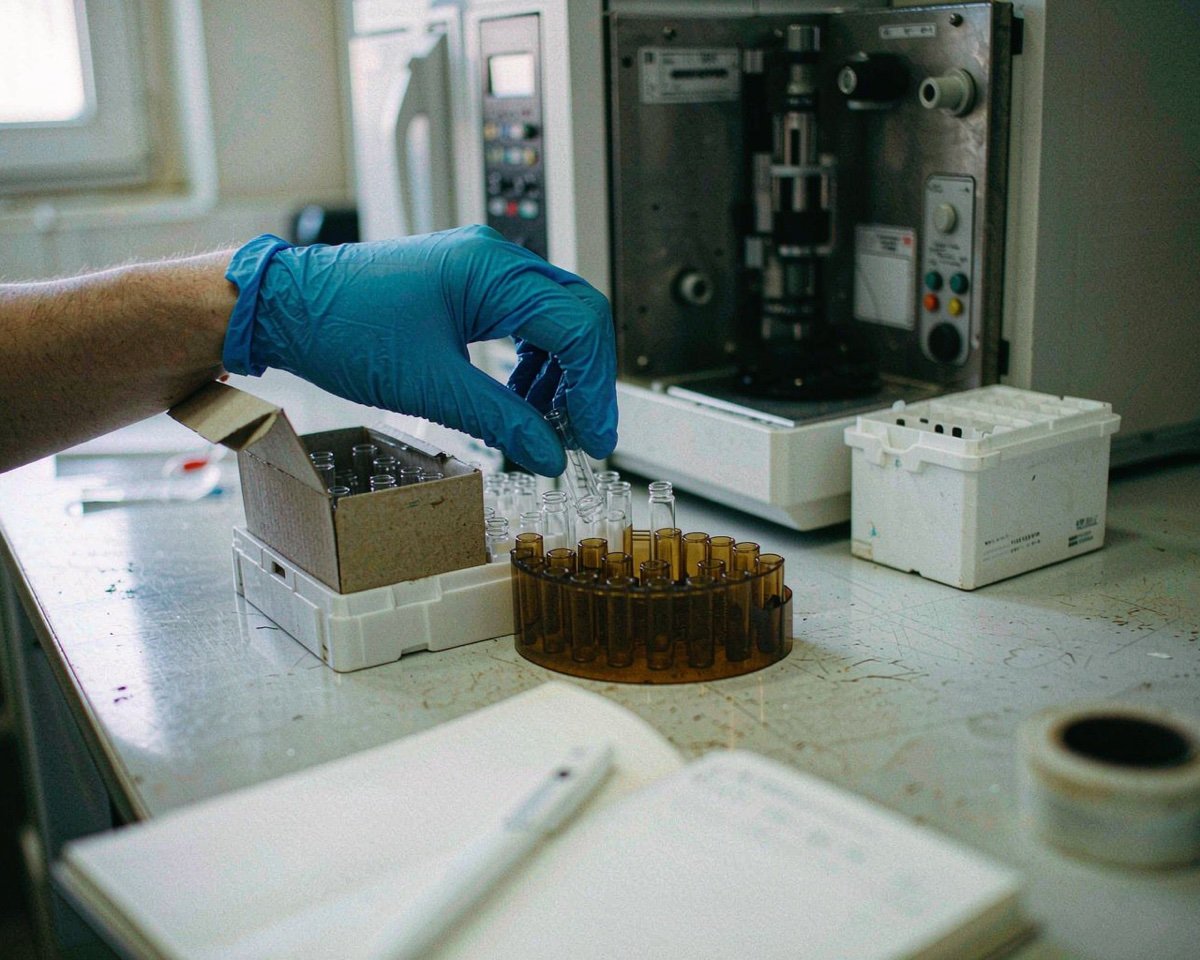
So the vial matters more than the analyzer. Use 40 mL borosilicate vials certified to a known, low background (below 10 ppb is the honest choice), and never rinse them. Rinsing with anything except the water you’re testing just moves contamination in.
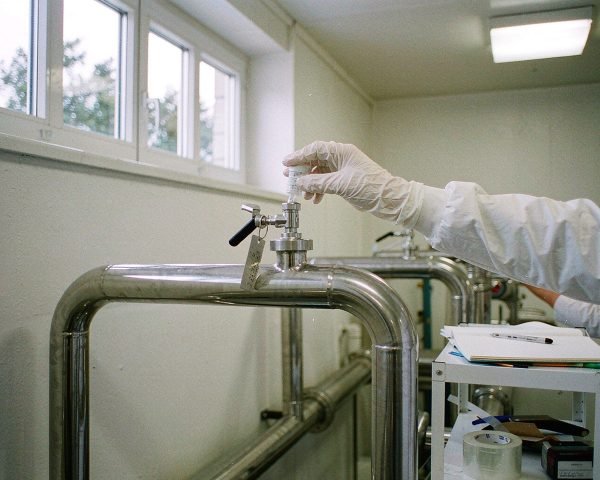
Technique is simple but easy to rush. Flush the sample valve, hold the vial 1 to 2 cm below the outlet at a slight angle, fill to the shoulder so the autosampler needle can vent, and cap it without setting the septum down on the bench. For more on why cleanliness dominates this test, see our TOC vials guide.
Conductivity and TOC Calibration Consumables
Auditors rarely argue with a reading. They argue with the evidence behind the reading, which means calibration records.
For conductivity you need a certified standard to verify the cell constant within ±2%, and the meter itself gets checked against NIST-traceable resistors accurate to ±0.1%. The Mettler Toledo conductivity guide hosted by Fisher Scientific lays out the full instrument spec, including the detail most labs miss: temperature compensation must be OFF for Stage 1.
TOC needs system suitability standards, sucrose and 1,4-benzoquinone at 500 µg/L carbon, prepared fresh or bought with an expiry you respect. Keep a small stock of both, in the fridge, logged. A lapsed standard is the cheapest possible way to invalidate a month of water data.
Endotoxin Testing Consumables
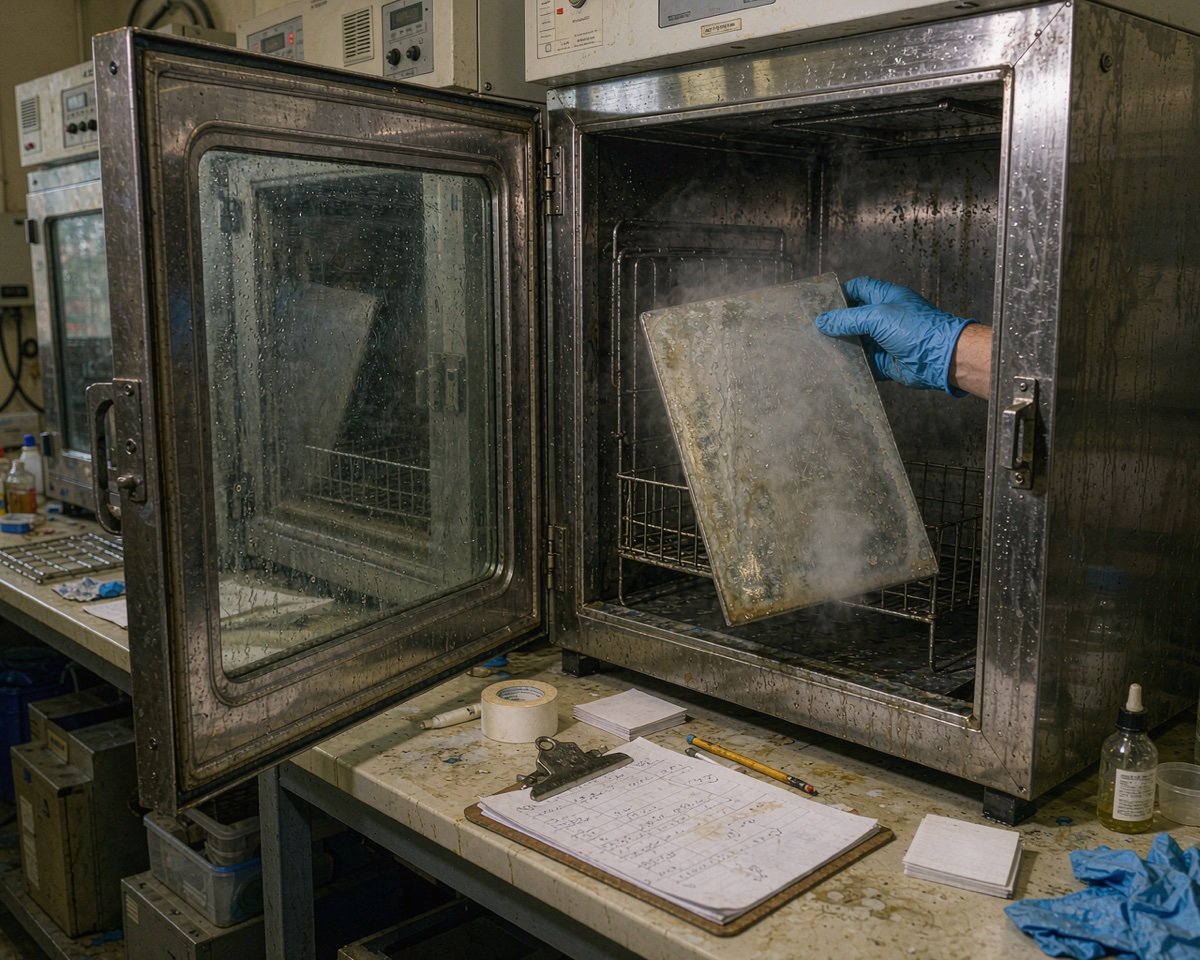
Endotoxin testing has a colder personality than micro testing. Standard autoclaving kills the bacteria but leaves their endotoxin behind, and steam sterilization can actually raise endotoxin levels on glassware. Every container in the chain has to be depyrogenated or certified endotoxin-free.
The classic cycle is dry heat at 250 °C for at least 30 minutes, which pharmacopeias recognize as sufficient to destroy endotoxin; the LAL methods themselves are covered well in this PubMed Central review of LAL technology. In practice you buy LAL reagent with matched endotoxin-free reaction tubes and pipette tips, and you depyrogenate any glassware you control. We walk through the bench version in how to depyrogenate glass vials, and what endotoxin actually is explains which consumables deserve the low-endotoxin claim.
WFI sampling for endotoxin needs the same discipline: pyrogen-free sample containers, powder-free gloves, and nothing that touched a cardboard box lid. One fingerprint won’t grow, but it can still contribute detectable endotoxin.
Sampling Technique and Storage Tips
I once watched a QC lab burn a full week of release testing because WFI conductivity samples sat in glass bottles over a long weekend. Glass leaches sodium silicate in storage, pH drifts up, and the conductivity reading follows. USP’s FAQ says it plainly: for longer storage, clean plastic beats glass for <645> samples, and container cleanliness is the one thing you cannot skip for <643>.
A few habits that keep samples honest:
Flush the port before you fill. Dead legs and sanitizer residue live in sample valves, not in the loop.
Wear powder-free nitrile gloves and never touch the inside of a cap or bottle neck. Set caps down and you’ve made a culture plate of the bench.
Test as soon as practical. Water purity only degrades in storage, and every hour between sampling and analysis is an hour the result drifts from reality.
Micro samples go to the lab the same day, ideally refrigerated. TOC samples can ride 24 to 48 hours at around 5 °C if your procedure qualifies it. If you also handle environmental or utility water outside the GMP loop, most of the same rules carry over: sterile containers, no rinsing, and a chain of custody someone actually believes.
Conclusion
Pharmaceutical water testing doesn’t need a long shopping list. It needs the right few consumables, specified correctly: sterile, pre-dosed sample bottles for micro work, certified low-background TOC vials, traceable conductivity standards, system suitability reagents, and endotoxin-free or depyrogenated containers for LAL testing. The pattern behind all of them is the same. The container is part of the measurement, and every claim on the box (sterile, pyrogen-free, <10 ppb background) only counts if the lot certificate backs it up. Get the consumables right and your water data stops being a source of investigation reports and starts being what it should be: boring, defensible, and fast to release. For the broader picture, our USP <61> microbial limits testing guide picks up where the water loop hands off to product testing.
Frequently Asked Questions
Can I use regular glass bottles for conductivity samples?
For a few hours, usually yes. For overnight or weekend storage, no: glass leaches sodium silicate, which raises pH and conductivity and can push a passing sample into a <645> failure. Clean plastic containers are the better default for anything that waits.
Why do micro sample bottles contain sodium thiosulfate?
Residual chlorine, ozone, or peroxide in the water keeps killing bacteria during transport, so the lab counts fewer organisms than were actually present. Sodium thiosulfate neutralizes that residual oxidizer on contact, which is why WHO and Standard Methods have required it in bacteriological bottles for decades.
How clean do TOC vials really need to be?
The vial background should be well below the TOC you expect to measure, ideally certified under 10 ppb. A vial adding 50 to 100 ppb can double the result for water that runs near 80 ppb, so never rinse the vial and never let the septum touch anything before capping.
Do I need depyrogenated containers for WFI endotoxin samples?
Yes. Autoclaving sterilizes the container but does nothing to endotoxin, so a steam-sterilized bottle can contaminate your sample with pyrogen and produce a false positive. Use certified endotoxin-free containers or glassware depyrogenated at 250 °C for 30 minutes or more.