
I once watched a colleague lose three weeks of cell culture work because her “clean” water wasn’t. The cells looked fine on day one, then the cytokine readings went sideways, and the culprit turned out to be something no autoclave can touch: bacterial endotoxin. If you buy vials, filters, or bottles for pharma, cell culture, or injectable-related work, this molecule matters to you.
The Short Answer
Endotoxin is a heat-stable lipopolysaccharide (LPS) from the outer membrane of Gram-negative bacteria. Autoclaving kills the bacteria but leaves the toxin behind. Consumables that contact injectables, cell cultures, or biological assays need verified low-endotoxin (depyrogenated) claims, usually stated in EU/mL or EU/device on a per-lot certificate.
Read On
That’s the skeleton. Below I’ll walk through what endotoxin actually is, how labs measure it, which consumables genuinely need the claim, and how to buy them without paying for claims you don’t use.
What Endotoxin Actually Is
Gram-negative bacteria (think E. coli, Pseudomonas, Salmonella) carry LPS in their outer membrane. When those bacteria die and break apart, the LPS fragments release into whatever water or surface they were living on. Those fragments are endotoxins.
Two properties make them a special headache. First, they’re pyrogenic: tiny amounts entering the bloodstream cause fever, and enough can trigger septic shock. The typical safety limit for most injectable drugs is 5 EU per kg of body weight per hour, and intrathecal products sit at a far stricter 0.2 EU/kg. The FDA’s guidance on pyrogen and endotoxins testing is the reference most QA teams work from.
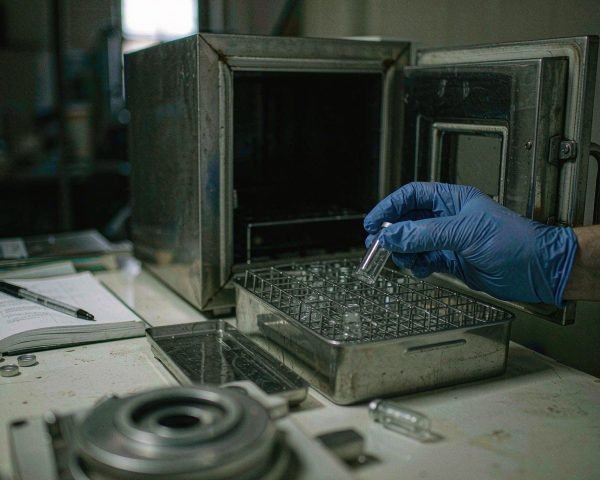
Second, they’re stubborn. Sterilization cycles that obliterate living bacteria leave endotoxin structurally intact. A vial can come out of the autoclave completely sterile and still loaded with pyrogen. Destroying endotoxin requires sustained dry heat, typically 250 °C or hotter for extended periods, which is why depyrogenation and sterilization are separate processes. We cover the related confusion in our autoclave guide for vials and septa.
Water is the usual suspect. Purified water, WFI systems, and even bottled “sterile” water can carry endotoxin if the system has biofilm anywhere upstream. In pharma manufacturing, the compendial bacterial endotoxins test (USP Chapter <85>) is applied to water systems and finished products as a routine QC screen.
How Labs Measure It
The standard method is the Limulus Amebocyte Lysate (LAL) test, defined in USP <85> and harmonized across the US, European, and Japanese pharmacopeias. LAL is an extract from horseshoe crab blood cells that clots in the presence of endotoxin. Results are reported in Endotoxin Units (EU).
There are three formats. Gel-clot gives you a pass/fail answer at a fixed sensitivity. Turbidimetric and chromogenic versions measure the reaction rate and give you a number. All three follow the same underlying cascade; they just read it differently. The endotoxin detection methods overview from Rapid Microbiology is a good plain-language summary if you want the detail.
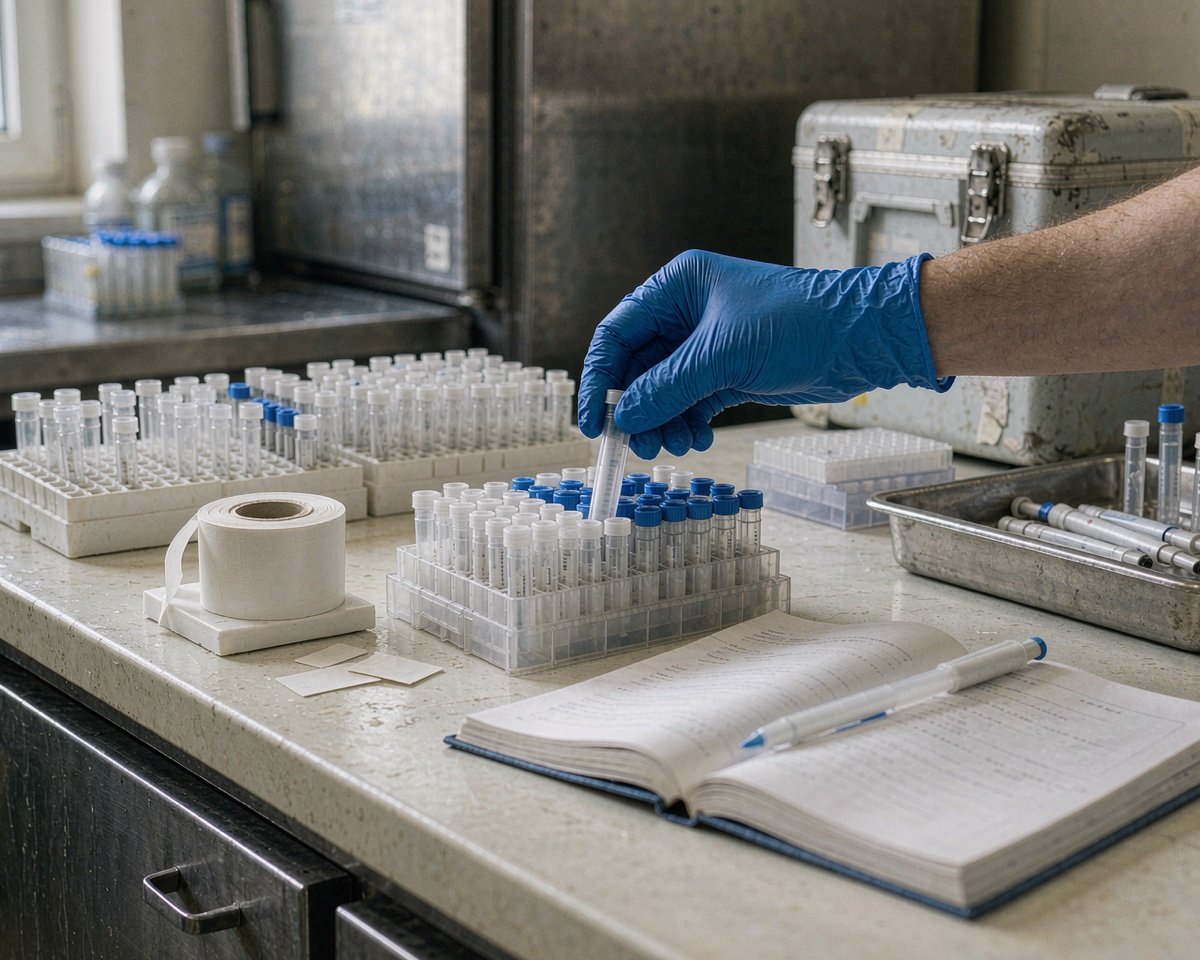
One practical note: the assay is so sensitive that your own labware can create false positives. That’s the whole point of depyrogenated tubes, dilution vials, and pipette tips in an endotoxin lab. I learned this the humbling way, when a plate of “positive” blanks turned out to be positive because of the microtubes, not the samples.
Which Consumables Need Low-Endotoxin Claims
Not everything in your lab needs it. Here’s the honest breakdown.
Consumables that genuinely need the claim: anything contacting parenteral (injectable) drug products, water for injection systems, cell culture media and buffers, and reagents for biological assays. Concretely: serum vials and tubular vials destined for injectables, depyrogenated glass dilution vials, sterile filtration devices used on biologicals, cell culture media bottles, and sampling containers for WFI monitoring. For cell culture specifically, even low levels of endotoxin trigger immune responses in the culture and distort your readouts. Our guide to media bottles for cell culture covers the other specs that matter alongside endotoxin.
Consumables where the claim is nice but often unnecessary: standard HPLC vials for routine small-molecule QC, syringe filters for organic solvent samples, and reagent bottles for buffer prep in non-biological work. Endotoxin is a biological molecule; it doesn’t care about your acetone mobile phase. If your method is a straightforward assay of a small molecule in plasma by protein precipitation, a plain certified vial is fine.
The line to draw is simple: if Gram-negative contamination (or its leftover cell walls) could change your result or hurt a patient, buy the claim. Otherwise don’t. We explain what “certified” actually covers in our certified HPLC vials article, and the same logic applies here: the claim only means something when it comes with data.
What a Real Low-Endotoxin Claim Looks Like
A credible claim has three parts, and I’d push back on any supplier who offers only one.
A number, not an adjective. “Low endotoxin” means nothing by itself. Look for something like “< 0.25 EU/mL" or "< 0.06 EU/device", stated on the product spec. For sterile, single-use filters and similar devices, the industry convention is typically < 0.25 EU/mL of extract. Requirements for biologics also appear in the regulations: 21 CFR Part 610 covers the test standards for biological products, including the endotoxin test requirement.
A per-lot certificate. Every production lot differs, so the claim must appear on a Certificate of Analysis tied to the lot number printed on your box, not a generic brochure statement.
A stated method. Gel-clot, turbidimetric, or chromogenic; the certificate should say which USP <85> format was used. If the CoA just says “endotoxin tested,” ask.
Buying Without Overpaying
The depyrogenation step adds real cost (dry-heat tunnels, validation, per-lot testing), so low-endotoxin consumables genuinely cost more than standard ones. My advice: inventory your methods first. Most labs discover that only one or two workflows need the claim, usually the cell culture or fill-finish side. Standard vials handle everything else, and that split can cut the premium to a fraction of your consumables budget. Order the depyrogenated SKUs for the workflows that need them, and skip the upcharge everywhere else.
Conclusion
Endotoxin is the leftover cell-wall debris of Gram-negative bacteria, and it survives every sterilization cycle you can throw at it. That single fact drives the whole purchasing decision: sterile is not clean, and clean is not pyrogen-free. If your work touches injectables, cell culture, or endotoxin-sensitive assays, buy consumables with a numeric low-endotoxin spec, a per-lot CoA, and a stated test method, and treat vague “low endotoxin” labels as marketing. For everything else, standard certified consumables do the job at a fair price. The two minutes you spend deciding which of your workflows actually need the claim will pay for itself the first time a supplier quotes you the premium line for your entire order. If you’re sorting sterile from non-sterile products too, our sterile vs non-sterile filters guide is the natural next read.
Frequently Asked Questions
Is endotoxin the same as a pyrogen?
Not exactly. Endotoxin is one type of pyrogen (a fever-causing substance), specifically the LPS from Gram-negative bacteria. Other pyrogens exist, but endotoxin is by far the most common one in lab water and consumables, and the standard LAL test detects only endotoxin.
Does autoclaving remove endotoxin?
No. Autoclaving kills living bacteria but leaves endotoxin intact, because the LPS molecule tolerates moist heat far beyond sterilizing conditions. Removing endotoxin requires depyrogenation, usually dry heat at roughly 250 °C or higher for a validated time.
What does EU/mL mean?
EU stands for Endotoxin Unit, the standard measure of biological endotoxin activity. A claim like “< 0.25 EU/mL" means the product released less than 0.25 units per mL of extract during testing. Lower is better, and the limit you need depends on your application.
Do I need low-endotoxin vials for regular HPLC?
Usually no. Endotoxin matters for injectables, cell culture, and biological assays. A routine small-molecule HPLC method is unaffected by it, so standard certified vials are the sensible choice. Spend the premium only where the biology demands it.
How do suppliers depyrogenate vials?
The common industrial method is dry-heat tunnel treatment, passing clean vials through a validated high-temperature zone (around 250 to 300 °C) for a controlled time. The cycle is validated to achieve a 3-log endotoxin reduction, and each lot is tested to confirm the claim on the certificate.