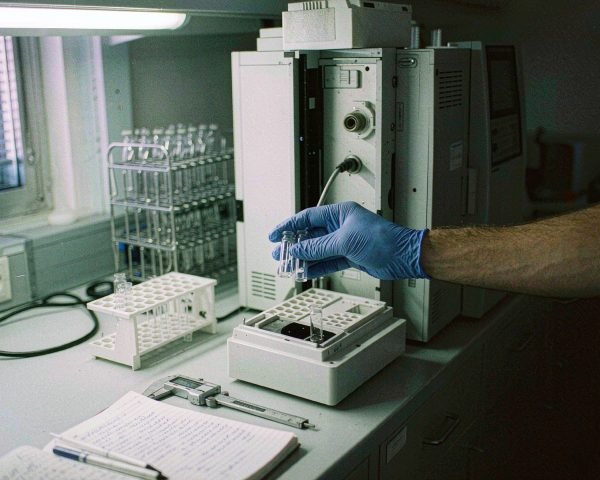

A few years ago I quoted a lab a mid-grade 9-425 vial at a price about 30% above the bargain option they had found online. They bought the bargain. Four months later they called, not about vials, but about a two-day investigation into drifting peak areas in a 150-injection sequence. The eventual culprit: inconsistent septa thickness across the cheap caps, enough to change pierce behavior and let a little evaporation creep in. The vials “saved” them maybe $90. The investigation cost two analyst-days plus a rerun.
In short: cheap vials cost money in three places: analytical quality (adsorption, leachables, sodium adducts in LC-MS), operational reliability (dimensional tolerance, breakage, cap fit), and rework (rerun sequences, repeated investigations, revalidation). For routine, forgiving methods, budget vials are sometimes fine. For trace work, LC-MS, and validated methods, the savings evaporate the first time something goes quietly wrong.
Here is where the money actually goes, with the evidence.
Read on for the specific failure modes, what the research says, and how to decide when cheap is genuinely acceptable.
Failure Mode 1: Adsorption Eats Your Analyte
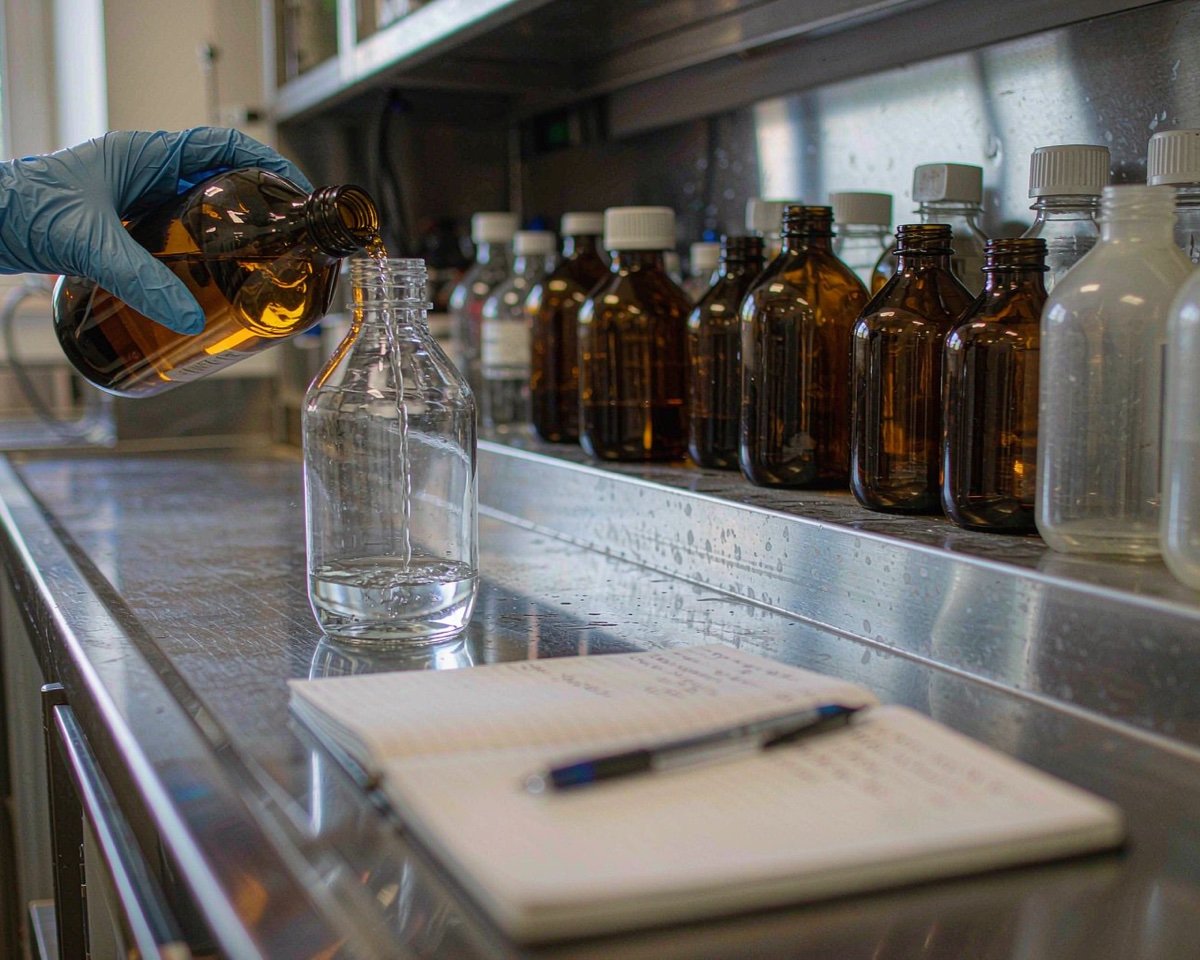
The glass surface is not inert in practice. Metal oxides concentrate at the inner surface of borosilicate vials during manufacturing, and surface silanols can bind analytes, especially basic and metal-sensitive compounds. The effect is invisible at high concentrations and brutal at trace levels: losses of linearity, poor recoveries, worse precision.
Shimadzu’s technical team demonstrated this directly, dosing the same basic compound solution into different commercial vials and measuring recovery at 24 and 72 hours. Recovery differed substantially between vial types, and some vials showed time-dependent losses, the kind that silently skew a stability study. When adsorption is discovered late, a method may need revalidation. That is weeks of work triggered by a container choice nobody recorded.
Their page on vial selection and analyte interactions is worth bookmarking if you run trace or basic-compound work.
Failure Mode 2: Leachables and Sodium Adducts in LC-MS
Glass can give things to your sample, not just take from them. Sodium and boron deposited on the inner surface during forming leach into solution, raising pH and creating sodium adducts in electrospray MS.
The numbers here are startling. In Shimadzu’s testing, some commercial vials produced sodium adducts exceeding 50% of total adduct signal for a test analyte after 48 hours. If your method quantifies the protonated [M+H]+ form, half your signal is now hiding in a sodium adduct you are not integrating. On a low-grade vial, the instrument didn’t get worse; the container quietly downgraded it.
Leachables get worse with the stakes. An Amgen-led study of extractables and leachables in vial systems for biologics walked through the full qualification program needed to trust a vial as a primary container, covering glass, stoppers, and the leachables that end up in the drug product. Their conclusion, effectively: container quality is verified end-to-end or it is not verified at all. The paper is a good reminder that container closure quality is a lifecycle problem, not a price check.
Failure Mode 3: Dimensional Tolerance and Operational Reliability
The unglamorous failure mode is mechanical, and it is the one I see most often.
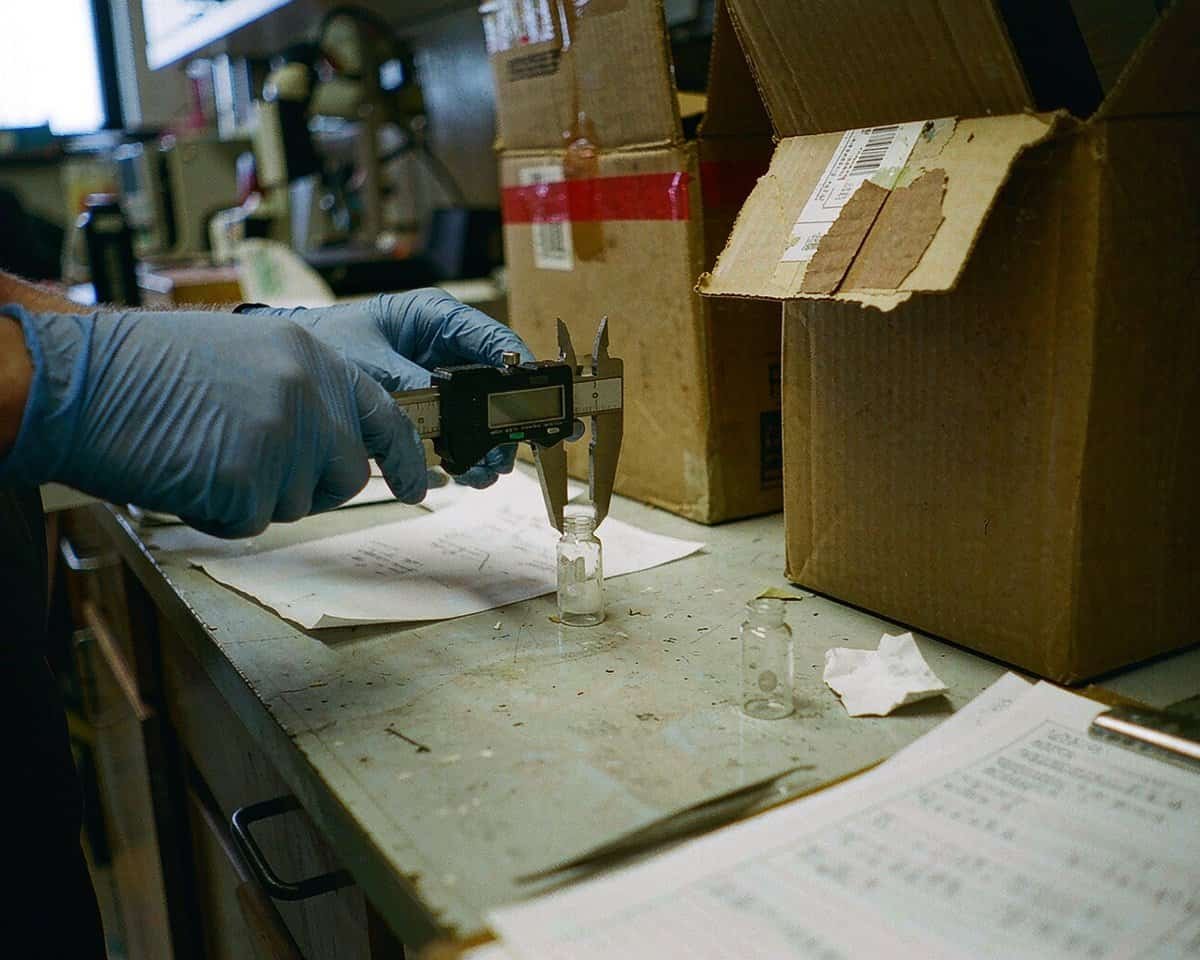
- Height and neck tolerance. Autosampler needles are positioned to fractions of a millimeter. A vial that is slightly too tall or has a shoulder in the wrong place gets hit mid-stroke; the classic symptom is a bent needle at vial 87 of an overnight sequence.
- Thread engagement. Undersized or sloppy 9-425 threads mean caps torque inconsistently, which means evaporation and, in headspace work, leaks.
- Bottom geometry. Cheap vials with shallow or off-center cones leave your last 50-100 µL unreachable, which matters enormously when the sample took three days to prepare.
- Breakage in the lab. Thin, uneven glass cracks in racks and handlers.
Vial manufacturers are open about the fact that this is what the premium tiers buy. Thermo’s SureSTART line, for instance, is explicitly tiered into three performance levels, with the higher levels adding tighter specification certification, cleaner packaging, and lower extractables for MS work. That tiering exists because the difference is real and measurable, and honest vendors sell it as a tier choice rather than pretending all vials are identical. Their vial performance level guide shows how they frame the tradeoff.
Failure Mode 4: Rework, the Cost Nobody Budgets
Let’s do the arithmetic I wish someone had shown that lab before their bargain purchase.
- Analyst time chasing a drift: 2 days, easily $800-1,600 of loaded cost
- A rerun of an overnight sequence: instrument time plus reagents plus the depreciated sample
- A delayed report to a client or sponsor: relationship cost, sometimes contract penalties
- Worst case, revalidation of a method that was fine until the vial changed: weeks
Vials are typically well under 1% of the cost of the analysis they contain. The failure modes above convert a small upfront saving into a multiple of it, usually at the worst possible moment: a deadline, a sponsor audit, a submission. Our article on the real cost of autosampler downtime runs the same math for instrument stoppages, and the structure of the loss is identical.
There is also a regulatory tail. Glass quality has a documented history of causing recalls in pharmaceutical products; glass delamination alone has been a leading cause of drug recalls over the past decades, which is why pharmacopeial standards for container glass exist. If you operate anywhere near GMP work, the USP <660> requirements for glass containers are the floor, not a nice-to-have. A vial with no documented glass compliance is a citation waiting for an inspector, and our guide on red flags when buying consumables online lists the warning signs before you check out.
So When Is Cheap Actually Fine?
Not every analysis needs Level 3 glass. Honest tiering:
- Budget vials are fine: teaching labs, quick screen methods, non-critical R&D where you will rerun anyway, UV detection of well-behaved compounds at mid concentrations.
- Pay for quality: LC-MS quantitation (adducts and ion suppression are real), trace-level work, adsorption-prone analytes, validated and regulated methods, long unattended sequences, anything where the sample took longer to prepare than the vial costs in cents.
The middle path most experienced labs take: qualify one reputable budget SKU for routine work and one premium SKU for sensitive work, then write both into the method sheets so the choice stops being whoever is at the bench that day.
One more habit worth stealing: record the vial part number in the batch record alongside the column lot. I have watched two separate drift investigations end within an hour once someone could see that the “same” vial had changed supplier between batches. If the container is not in the record, it is not part of the investigation.
Conclusion
The cheap-versus-good vial question is really a question about where failure costs live. A bargain vial that holds a forgiving UV method at mid concentration is a perfectly rational buy. The same bargain vial in an LC-MS quantitation method is a liability, because adsorption, sodium adducts, and dimensional slop all fail quietly, and their costs arrive as reruns, investigations, and revalidation rather than as a line item. The research is unambiguous that vials differ measurably in surface chemistry and performance, and vendors’ tiered lines exist precisely because that difference matters at different risk levels. Match the vial tier to the cost of being wrong, put the part number in the batch record, and you will never again pay $1,000 to save $90. If you are weighing brands against price right now, our comparisons of OEM versus branded vials and what HPLC vials actually cost will help you price the decision properly.
Frequently Asked Questions
Are expensive HPLC vials really better than cheap ones?
For sensitive work, yes, measurably. Premium vials differ in glass surface treatment (lower leachable sodium), dimensional tolerance, septa consistency, and cleanliness documentation. For forgiving routine methods, the differences rarely show up in results, which is why tiered product lines make sense: match the tier to the method’s risk.
What problems do low-quality vials cause in LC-MS?
The big three are sodium adducts (which split signal away from the quantified ion and cut sensitivity), leachables (which appear as background peaks or suppress ionization), and adsorption of basic or metal-sensitive analytes to surface sites, causing low recovery and drifting response over time in the vial.
How can I tell if my vials are causing data problems?
Run your standard or QC sample in a vial from a known-good premium supplier alongside your usual vials, and compare response, adduct ratios (for MS), and recovery at 0, 24, and 48 hours. If the two vials diverge, your container chemistry is part of your method, and it is time to change or document the choice.
Do cheap vials affect autosampler performance?
They can. Height tolerance, neck finish quality, and bottom geometry all affect needle positioning and draw consistency. Typical symptoms are bent needles mid-sequence, inconsistent small-volume draws, and caps that torque unevenly, which leads to evaporation and concentration drift over long runs.