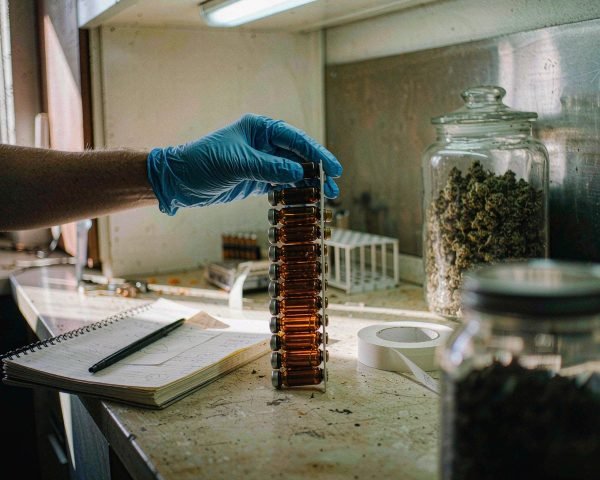

A cannabis lab lives or dies on the same bench supplies as any analytical lab: vials, caps, septa, filters, and bottles. The difference is that cannabis matrices punish the wrong choice faster, and the paperwork burden is heavier. This guide maps every major workflow to the consumables it actually needs.
The Short Answer
Cannabis testing labs run six core workflows: potency, pesticides and mycotoxins, residual solvents, heavy metals, terpenes, and microbials. Each maps to specific consumables: 2 mL screw-neck vials with PTFE/silicone septa for potency by HPLC, 20 mL crimp headspace vials for residual solvents, 0.22 µm filtration for LC-MS sample prep, and certified, lot-documented consumables throughout, because state auditors ask.
Read On
Below, each workflow gets its own consumables breakdown, followed by the glass choices, paperwork, and stocking strategy that hold the lab together.
Why Cannabis Labs Are a Special Consumables Case
Any HPLC lab buys vials. Cannabis labs buy vials, then defend them in an audit, against a matrix that chews through filters, under state regulations that change by jurisdiction.
Three forces shape the whole purchasing list. First, sample throughput is industrial: a commercial cannabis lab can run hundreds of flower and extract samples a day, so consumable burn rates dwarf a typical pharma QC bench. Instrument makers build entire starter packages around that volume; Agilent’s cannabis and hemp consumables kits, for example, are sized for roughly 400 samples per kit, which tells you what serious throughput looks like.
Second, the matrix variety is extreme: dried flower, concentrates, distillates, edibles, tinctures, and topicals all move through the same lab, and each matrix punishes a different weak link in sample prep. Third, everything is regulated and audited. ISO 17025 accreditation is mandatory for licensed labs in most jurisdictions, and auditors trace results back through consumables lots. A missing certificate is not a paperwork nuisance; it can invalidate a batch of results. The regulatory patchwork extends to the federal level too, where the FDA’s cannabis and cannabis-derived products hub tracks how CBD products are treated under US law.
That combination (volume, matrix, audit) is why this guide exists. Generic vial advice covers half the job.
Potency Testing: The Consumables Core
Potency is the revenue workflow. Every flower batch, extract, and edible gets quantitated for THC, CBD, and the minor cannabinoids, almost always by HPLC with UV or diode-array detection, following validated methods in the AOAC ecosystem (the AOAC Cannabis Analytical Science Program maintains the consensus methods, including cannabinoid quantitation in dried flower, oils, and edibles). Shimadzu’s cannabis and hemp testing solutions show the same HPLC-first picture, with potency methods running 11 to 16 cannabinoids in a single chromatogram.
Vials for potency
The workhorse is the standard 2 mL clear glass autosampler vial, 12 × 32 mm, with a 9-425 screw thread and PTFE/silicone septa. Clear glass, because potency detection is UV and you want to see what you’re injecting. The septa choice matters more than people expect: PTFE-faced silicone gives you the solvent resistance for the methanol-rich extraction solvents and reseals across the multiple injections a busy sequence demands.
Where the money leaks: septa that core after a handful of injections in high-throughput trays, and caps that don’t seal consistently. In a lab injecting 300 samples a day, a cap problem isn’t an inconvenience, it’s a re-injection queue. Our headspace vial guide explains septa behavior in depth, and the same physics applies to your LC vials.
Filtration for potency extracts
After extraction, samples get filtered before injection, and cannabis extracts are hard on filters. Plant waxes and pigments clog fine membranes fast. The practical pattern is centrifuge or coarse cleanup first, then a 0.22 µm PTFE membrane for the final polish (PTFE handles the organic extraction solvent). A 0.45 µm step can serve for dirtier flower extracts, but for anything heading to LC-MS, 0.22 µm is the standard.
The whole decision tree (membrane chemistry, diameter, hold-up volume) is covered in our syringe filter buyer’s guide. The cannabis-specific note: buy filters in bulk and expect the flower extracts to eat them. I watched a lab try to stretch one 13 mm PTFE filter across eight gummy extracts and spend the afternoon redoing all eight when the pressure spiked mid-batch.
Edibles and tinctures deserve a line of their own, because the matrix flips the problem. A gummy or brownie extract is sugar-and-fat heavy, and the filtration challenge isn’t just particulates, it’s dissolved matrix that plugs membranes at the molecular level. Those samples usually need the extraction and cleanup steps to do more work before the filter ever sees them, which means the filter consumable is cheap but the cleanup consumables (dSPE sorbents, centrifuge tubes, extra dilutions) are where the real volume goes. Labs that plan consumable orders by flower-equivalent sample counts get this wrong every quarter, because an edible sample can triple the tube and sorbent burn while using fewer vials.
Standards and dilution consumables
Potency calibration spans a wide concentration range, so you’ll live in dilution vials and mixing vials. Amber versions earn their keep for working standards that sit on the bench under lights; the light-protection logic is the same as any photo-labile analyte, which we break down in our clear vs amber vials comparison.
Before the vial: extraction consumables
The potency workflow starts before any vial is filled, and this is where labs underestimate their true burn. Flower arrives as heterogeneous plant material, so homogenization comes first: grinder jars and milling vessels that survive resin buildup, because sticky kief migrating between samples is a cross-contamination vector. Sample storage between intake and extraction uses containers with PTFE-lined or foil-lined lids, since cannabinoids are sticky and plasticizers are not what you want near a potency result.
Extraction itself consumes centrifuge tubes by the sleeve. The standard pattern is solvent extraction (often methanol or ethanol-based), a sonication or shaking step, centrifugation, then dilution. That means 15 and 50 mL polypropylene centrifuge tubes in bulk, and they are the single most underestimated line item in a new potency lab’s first order. If your method adds SPE cleanup for challenging matrices, the cartridges are another consumable tier with their own lot documentation needs.
My benchmark from labs I’ve supplied: a potency lab running 200 samples a day gets through roughly two sleeves of 15 mL tubes, two boxes of filters, and three boxes of vials before lunch. Order accordingly, because running out of a five-cent tube at 10 a.m. stalls a workflow that bills by the sample.
Residual Solvents: Headspace GC Consumables
Extracts and concentrates carry leftovers from the extraction process (butane, propane, ethanol, hexane, and friends), and every jurisdiction caps them. The method is static headspace GC, which means a different consumables world from the HPLC bench.
You need 20 mL headspace vials (18 mm diameter, flat or rounded bottom per your sampler), crimp caps with PTFE/silicone septa, and a reliable crimping tool. The seal has to be gas-tight, because the whole method depends on a defined equilibrium between the liquid phase and the headspace above it. A lazy crimp quietly changes your partition and your numbers.
Two purchasing notes from practice. First, buy headspace vials with certificates when your accreditation requires traceable cleanliness; solvents at ppm levels will find contamination. Second, decide flat versus round bottom from your autosampler hardware, not from price; this is one of the compatibility details covered in the headspace vial complete guide along with 10 mL versus 20 mL trade-offs.
10 mL or 20 mL for residual solvents?
The 20 mL vial is the industry default because most headspace samplers are engineered around it, and the larger headspace-to-sample ratio gives the volatiles room to equilibrate. The 10 mL format earns its place in two situations: labs running low sample volumes where a 20 mL vial would dilute the headspace unnecessarily, and high-throughput racks that simply hold more 10 mL positions.
Whichever you pick, buy the caps and septa from the same spec sheet. A 20 mL vial needs an 18 mm magnetic or aluminum crimp cap with a septa thickness that survives the crimp without partial coring. Mixing cap vendors and vial vendors is how you get inconsistent crimp heights, and inconsistent crimps show up as irreproducible residual solvent numbers that nobody can trace.
Pesticides and Mycotoxins: The Low-Level LC-MS/MS Work
Pesticide and mycotoxin testing is the sensitivity workflow: regulatory lists run to hundreds of compounds at trace levels in the world’s stickiest plant matrix. This is LC-MS/MS (with GC-MS/MS covering certain pesticides), and the consumables bar is higher.
Sample prep typically follows QuEChERS-style extraction or SPE cleanup, then filtration, then injection. Each step has consumable stakes:
Extraction and cleanup: pre-weighed QuEChERS salt packets and dSPE tubes remove the waxes and chlorophyll that would otherwise destroy both your chromatography and your ion source. Buying these pre-weighed is not laziness; it’s reproducibility across technicians.
Filtration: 0.22 µm low-adsorption membranes, because at trace levels, analyte binding to the filter is a real recovery loss. This is where membrane choice (PVDF, PES, regenerated cellulose) gets validated rather than assumed; run a recovery check by filtering a known standard and comparing it against an unfiltered control, and the sticky membranes unmask themselves.
Vials: at trace levels, glass quality and cleanliness matter, and this is the workflow that justifies paying for documented, certified lots. Amber vials are standard here too, since many pesticides are photolabile.
Heavy Metals: ICP-MS and Its Consumable Demands
Arsenic, cadmium, lead, mercury: the “big four” every state list includes, digested from plant material and quantitated by ICP-MS or ICP-OES. The consumables story is different again, because this workflow is acid-dominated.
Digestion vessels and microwave liners for the hot acid digest. Sample tubes (usually polypropylene, because glass leaches boron and other elements you’re trying to measure). Acid-washed or certified metal-free pipette tips and autosampler vials. And ultrapure water in clean bottles, because your blank is everything in trace metals.
The glass-versus-plastic decision flips here. In chromatography, glass is the default and plastic is the exception; in ICP-MS sample handling, polypropylene is the default precisely because glass adds elements. The boron leaching from a borosilicate vial is invisible to an HPLC detector and screamingly obvious to an ICP-MS.
Consumables purchasing for the metals bench has its own vocabulary worth learning before the first quote: “metal-free” means the product was manufactured and packaged to avoid elemental contamination, “certified” means it comes with lot data, and “acid-washed” means someone has already done the cleaning step your method might otherwise specify. The cost ladder runs in that order, and the honest advice is to match the tier to your reporting limits. Labs quantitating lead at single-digit ppb in flower digests buy the certified tier without blinking. A lab screening extracts at higher thresholds can often work one tier down. What no metals lab should do is mix tiers within one digestion batch, because then your blanks and your samples live on different cleanliness planes and the QC stops meaning anything.
Terpenes, Microbials, and Moisture: The Smaller Workflows
Terpene profiling runs by GC-MS (often GC-FID), and it’s vial-hungry in a familiar way: 2 mL vials, but with crimp or screw closures chosen for volatile retention, and puncturable septa that survive repeat injections without bleeding silicone into a sensitive flame or MS source. Terpene work also tends to run dilute standards in solvent, so the septa’s solvent-facing layer matters; a PTFE face toward the liquid keeps the silicone from leaching into a profile that’s supposed to smell like the plant, not the cap.
Microbial testing (Salmonella, Aspergillus, total yeast and mold) moves the lab into sterile consumables: sterile sampling bags and tubes, sterile diluents, and contact plates. Here the claim that matters is sterility with a per-lot certificate, and storage discipline, because an expired sterile pouch is exactly the kind of finding that turns accreditation surveillance into an event.
Moisture analysis (water activity and Karl Fischer) consumes its own vials and bottles; not glamorous, but it feeds the packaging and shelf-life decisions your clients make. Water activity samples in particular need airtight disposable cups on a fast turnaround, so the consumable is disposable by design and the burn rate surprises new labs.
Glass, Plastic, and Light Protection: the Cross-Workflow Choices
Type 1 borosilicate glass is the universal default for the chromatography benches, and it’s worth knowing why: low leachables, high chemical resistance, consistent dimensions. The container standards behind that expectation are codified in USP General Chapter <660> on containers, glass, which is also the reference your audits will lean on.
Amber glass earns its place across potency standards, pesticide extracts, and terpene samples, all of which contain photolabile chemistry. The economics are trivial (amber costs barely more), so the pragmatic rule is amber for anything that sits on a bench or in a tray under lights, clear for anything where you want eyes on the contents. The full decision logic is in our clear vs amber guide.
Plastic vials (polypropylene) earn their keep in two cannabis niches: metals work (as above) and high-oil extracts that glass cleanups struggle with. Outside those, glass remains the analytical default.
Certificates, Cleanliness, and the Audit Trail
If there’s one chapter that separates cannabis labs from ordinary HPLC labs, it’s this one. Licensed cannabis labs operate under ISO 17025 accreditation, and regulators in most legal jurisdictions require it. Auditors trace reported results back through the chain: instrument, method, standards, and consumables lots.
What that means for consumables purchasing:
Per-lot certificates of analysis for the consumables that touch the analytical result. Vial cleanliness, septa composition, filter lot traceability. A box with no lot number and no CoA is a finding waiting to be written.
Consistent part numbers. Labs get dinged when they can’t show which consumable lot was used for which batch. That means your own inventory discipline matters as much as the supplier’s documentation.
Cleanliness grades where they’re offered. Pre-cleaned and certified grades of vials (the environmental testing world calls these Class 2 and Class 3 styles) exist in the consumables market precisely because trace work needs documented blanks. Cannabis labs reporting pesticides at low ppb are effectively doing trace work, and the same logic applies.
Vendor qualification. Your accreditation expects you to qualify suppliers, not just buy from them. Samples before bulk orders, spec sheets on file, and a paper trail of acceptance testing. Build the qualification sequence before you need it: samples, a small trial lot under your own methods, then the bulk order once the data is clean.
Storage, Stability, and Autosampler Realities
Cannabis samples degrade. Cannabinoids oxidize (THC to CBN is the classic), terpenes evaporate, pesticides photolyze. Consumables are your first line of defense, starting with the vial itself: a consistent septa seal is what keeps a 48-sample sequence from drifting as the tray waits. The mechanics of that loss, and the controls that stop it, are in our sample evaporation guide.
Low-volume matrices deserve a special mention here. Edible extracts and dilute tinctures often leave you with a few hundred microliters of sample, and in a standard 2 mL vial that sits below the needle’s reach, which is how labs lose injections to geometry. Spring inserts or tapered inserts solve it, and they belong on the standing order for any lab that runs concentrates. The tray reality is blunt: an insert costs a few cents, and a sequence rerun costs an afternoon.
On the storage shelf, the same rules apply as anywhere, with cannabis-specific emphasis: amber or boxed storage for standards, consistent temperature for consumables with elastomer components, and strict lot rotation so nothing expires quietly mid-quarter.
Where Cheap Consumables Actually Cost You
It’s tempting to treat consumables as the budget line to squeeze, because prices really do vary wildly between suppliers for what looks like the same glass. The honest version is more interesting: the cheap vial usually works, until the day it doesn’t, and cannabis labs live closer to that day than most.
Three failure modes account for most of the gap. Dimensional drift is the first: an off-spec vial height or neck finish causes missed needle pickups and crushed caps, and in a 500-position autosampler queue that’s an error cascade with your batch number on it. Septa chemistry is the second: budget septa sometimes use silicone compounds with higher extractables, which surface as ghost peaks at low UV wavelengths or as background noise in MS work, and those ghosts are indistinguishable from real contamination until you’ve burned a day proving otherwise. Consistency is the third: a supplier whose glass varies lot to lot forces you to re-verify what a good supplier proves with data.
None of this means buy the most expensive option. It means the unit price difference between a random vial and a documented one is measured in cents, while a failed potency batch is measured in dollars and, occasionally, in the client who takes their samples somewhere the results hold up. Squeeze the categories where quality is provably uniform, and pay for documentation where the result depends on it.
Stocking a Startup Cannabis Lab Without Waste
New cannabis labs overspend on consumables in a predictable pattern: they buy the premium version of everything, then discover that half their workflows never needed it. The fix is to tier the purchase list.
Tier 1 (buy premium, certified, documented): anything feeding potency and pesticide results, since those are the revenue and audit workflows. Certified vials, low-adsorption filters, documented septa.
Tier 2 (buy standard quality in bulk): consumables for prep steps that don’t touch the injected sample directly: extraction tubes, waste containers, wash vials, general glassware.
Tier 3 (buy cheap and replaceable): anything a tech with sharp objects touches daily, where breakage is a scheduling fact of life.
That tiering, plus bulk pricing on the SKUs you burn daily, is how startup labs stay inside a punishing first-year budget. The principle is simple enough to pin above the desk: premium where the result is, standard where the prep is, cheap where the breakage is. Every dollar moved from Tier 3 to Tier 1 buys audit armor where it counts.
A Worked Order List for a Mid-Size Cannabis Lab
Numbers make this concrete. Suppose your lab runs 300 samples a day across potency, residual solvents, and pesticides, 20 working days a month. Here’s what the monthly consumables order actually looks like, built from real burn rates rather than catalog minimums.
| Consumable | Monthly quantity | Why it’s on the list |
|---|---|---|
| 2 mL clear 9-425 vials, PTFE/silicone caps | 7,500 (75 boxes) | Potency and pesticide injections, roughly 25 injections per sample cycle |
| 0.22 µm PTFE syringe filters, 13 mm | 6,500 | One filter per potency extract, one per pesticide sample |
| 15 mL PP centrifuge tubes | 7,000 | Extraction, two per sample average |
| 20 mL headspace vials + crimp caps | 1,600 | Residual solvents, one vial per extract sample plus standards |
| Amber 2 mL vials | 600 | Working standards and photolabile extracts |
| Solvent (LC-MS grade methanol/acetonitrile) | 40-60 L | Extraction and mobile phase |
Three observations fall out of that table. Vials and filters dominate the order volume, which is exactly why they deserve negotiated bulk pricing rather than catalog prices. The headspace line looks small by comparison, but its per-unit quality bar is the highest on the list because of the seal. And centrifuge tubes, the item nobody plans for, outrank headspace vials by volume.
Scale the numbers to your throughput and you have a budget skeleton: multiply each line by your unit price, add 15 percent for retests and breakage, and you’re within striking distance of a real monthly consumables budget.
Common Consumables Mistakes in Cannabis Labs
One filter across a whole batch. The most common potency-bench sin. Filters cost cents; redoing twenty extracts costs an afternoon and a reagent budget line.
Clear vials for light-sensitive standards. Working standards lose potency on the bench under lights, then the calibration quietly tilts. Amber costs pennies more.
Mystery headspace vials. Bargain headspace vials with off-spec neck finishes seize in autosampler racks or leak under the crimp. At ppm-level solvent reporting, a leak isn’t a nuisance, it’s a false result.
No lot tracking. The audit finding that costs nothing to prevent: record which consumable lots went into which batches, and the auditor’s question answers itself.
Septa reuse on repeat injections. A potency tray injected three times per vial needs septa that reseal; the cheapest caps fail exactly there, and the carryover shows up as inflated blanks.
Treating all matrices the same. The vial and filter combo that handles flower extracts handles a distillate differently, and an edible matrix differently again. Labs that standardize one prep consumable set across every matrix either waste filtration capacity on clean samples or torture filters with dirty ones. A one-page matrix-to-consumable map on the wall beats a hundred bench arguments.
Conclusion
Cannabis testing labs run six workflows, and each one makes its own demands on the same family of consumables: certified 2 mL screw-neck vials and resealing septa for potency, gas-tight 20 mL crimp headspace vials for residual solvents, low-adsorption 0.22 µm filtration for trace pesticides, polypropylene and metal-free consumables for metals, and sterile documented packs for microbial work. Around those, the habits that keep a licensed lab audit-ready are unglamorous but decisive: per-lot certificates, consistent part numbers, amber glass where light threatens your standards, and seals that hold through a 48-sample tray. Tier your purchasing (premium where the result is, standard where the prep is, cheap where breakage lives) and the lab stays inside budget without touching data quality. If you only tune one prep step this month, make it filtration; our syringe filter buyer’s guide is the next read for that, and the headspace vial guide covers the residual solvent bench in depth. Start with your two revenue workflows, potency and pesticides, and make sure every consumable under them has paperwork that would satisfy your auditor, because sooner or later that auditor is coming.
Frequently Asked Questions
What vials do cannabis labs use for potency testing?
Standard 2 mL clear borosilicate autosampler vials, 12 × 32 mm with 9-425 screw threads and PTFE/silicone septa, are the workhorse for HPLC potency methods. Amber versions are preferred for working standards and photolabile extracts. Choose certified or documented lots if your accreditation requires consumable traceability.
Why do cannabis labs need headspace vials?
Residual solvent testing on extracts and concentrates uses static headspace GC, which requires 20 mL (or 10 mL) headspace vials sealed with crimp caps. The gas-tight seal is analytically critical because the method depends on a defined equilibrium between sample and headspace.
Do cannabis labs need special syringe filters?
The membranes aren’t special, but the demands are. Cannabis extracts are waxy and pigment-heavy, so prefiltration or centrifugation plus a 0.22 µm organic-compatible membrane (usually PTFE) is the practical pattern. For trace pesticide work, choose low-adsorption membranes and validate recovery, because sticky analytes can bind to the wrong membrane.
What consumables certifications matter for cannabis labs?
ISO 17025 accreditation is the lab-level requirement in most licensed jurisdictions. For the consumables themselves, look for per-lot certificates of analysis, traceable lot numbers, and suppliers operating under a documented quality system such as ISO 9001. The certificates matter more than the logo on the box.
How many samples can one syringe filter handle?
For clean potency extracts, one 13 mm filter per sample is the safe rule, even when it looks like it could do more. For dirty flower extracts, expect to prefilter or centrifuge first. Stretching one filter across multiple samples risks breakthrough, carryover, and redoing the entire batch.