
# What Are Serological Pipettes and Which Types Do Labs Need?
Every cell culture hood has a rack of them, and every procurement list underestimates them. Serological pipettes look like the simplest product in your storeroom, yet the wrong size or sterility grade quietly costs labs failed cultures and wasted hours. This guide explains what they are, how they compare with the pipettes sitting next to them, and what a working lab really needs to stock.
Quick answer: Serological pipettes are disposable graduated tubes, usually polystyrene, that measure and transfer liquids in 1 to 100 mL volumes with a pipette controller. Labs keep sterile, wrapped ones for cell culture and non-sterile bulk packs for routine dispensing.
Below, we walk through how they compare with aspirating pipettes and micropipettes, what each color band means, and where it pays to spend a little more.
What a Serological Pipette Actually Is
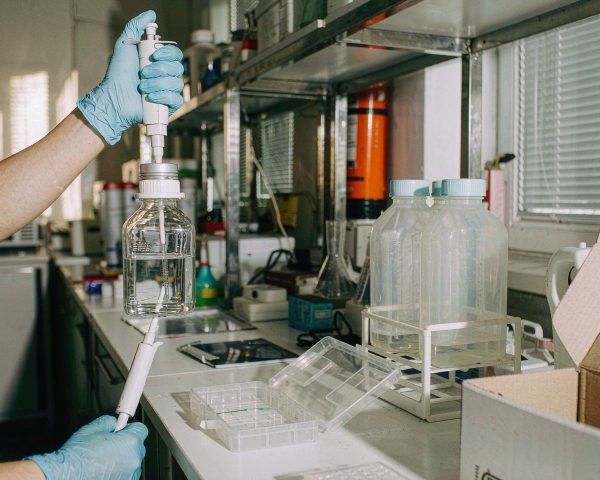
A serological pipette is a graduated tube, made of glass or plastic, used to measure and dispense liquids in the milliliter range. Most disposable versions are virgin polystyrene, and they are built as measuring and dispensing tools for milliliter volumes in cell culture and general chemistry alike. The key design feature is that graduations run all the way down to the tip, unlike a Mohr pipette whose scale stops short of it. Most serological pipettes are calibrated “to deliver” (TD), which means the small residue left on the inner wall after draining is already accounted for. Many also carry a double ring near the mouth, the signal that a blow-out is required: you push the last drop out with air from the controller.
Reading one is simple once you know the conventions. Hold the tube vertical, read the bottom of the meniscus at eye level, and use the bi-directional scale so you can add or subtract volume without switching tools. The negative graduations above zero are handy too: if you need 12 mL, a 10 mL pipette drawn past zero to the +2 mark beats wrestling a 25 mL tube. These tubes fill the gap between a micropipette and a graduated cylinder, taking over once a volume climbs past 1 mL, which is why every cell culture protocol leans on them.
The name is a leftover. “Serological” comes from serum and blood work, where these tubes were first standardized, but today the same tool moves everything from media to cell suspensions.
Serological vs Aspirating Pipettes vs Micropipettes
These three get mixed up constantly, and the confusion shows up on purchase orders. An aspirating pipette has no graduations at all. It exists to pull liquid out of a vessel and dump it in waste, nothing more. Corning’s pipette primer describes them as the safer replacement for glass Pasteur pipettes when feeding cells or washing assay plates, and Falcon makes them only in 2 mL and 5 mL capacities for exactly that purpose. If nobody reads the volume, it’s an aspirating pipette.
A micropipette is the opposite end of the scale. It is a piston-operated instrument working in microliters, with the liquid held in a disposable polypropylene tip. Piston-operated volumetric apparatus of this kind is governed by ISO 8655-1:2022, the international standard covering pipettes, burettes, dilutors, and dispensers. A serological pipette has no piston; the controller just moves air, and the liquid touches the tube wall directly.
The practical split is the 1 mL line. Below it, grab a micropipette with the right pipette tips. Above it, a serological pipette is faster, cheaper per transfer, and easier to read.
When the Chemistry Bench Needs Something Different
Polystyrene hates most organic solvents. If your day involves acetone, DMSO stocks, or hydrocarbon work, reusable glass serological pipettes (borosilicate, cleaned and re-calibrated) or glass Mohr pipettes are the safer pick, and Sigma-Aldrich points out that glass pipettes tolerate harsher solvents than their plastic cousins. For an analytical lab, a set of Class A glass pipettes plus a proper cleaning SOP beats a case of plastic tubes that swell and cloud on contact.
Which Sizes and Color Codes Do Labs Need
Standard capacities run 1, 2, 5, 10, 25, and 50 mL, with a 100 mL version available from Corning Falcon for bulk work. Each capacity carries a colored band near the mouth so you can grab the right tube without squinting at small print:
| Volume | Band color | Typical use |
|---|---|---|
| 1 mL | Yellow | Small additions, dilutions |
| 2 mL | Green | Supplements, stock solutions |
| 5 mL | Blue | Passaging, general culture work |
| 10 mL | Orange | Media and buffer transfers |
| 25 mL | Red | Media preparation |
| 50 mL | Purple | Bulk fills, large volumes |
| 100 mL | Black | Bioreactor and batch work |
The scheme is widely shared but not universal, so trust the number printed on the tube before the color of the ring. Thermo’s Nunc 50 mL pipette, for example, is coded purple and sold with the whole matching family from 1 mL up (product page).
My default answer for a startup lab: buy 5, 10, and 25 mL first and add the rest later. Those three cover passaging and media prep for nearly any T-flask workflow, and a 2 mL can be borrowed from a 5 mL in a pinch. One sizing tip that separates good technique from sloppy: pick the smallest pipette that fits the job. INTEGRA’s best-practice guide explains why: the dead air column above the liquid grows with tube size, and that air expands and contracts with temperature, so a 25 mL pipette dispensing 8 mL carries more error than a 10 mL one doing the same job.
Sterile, Non-Sterile, and the Claims in Between
Sterile pipettes are irradiated, usually gamma or e-beam, to a sterility assurance level of 10⁻⁶, and they arrive individually wrapped in paper-plastic peel packs. Thermo’s Nunc range adds RNase/DNase-free and non-pyrogenic claims on top, with a five-year shelf life from the manufacturing date (specs). This is the version that goes inside a biosafety cabinet.
Non-sterile bulk packs cost a fraction of wrapped ones and are fine for buffer prep, teaching labs, and any workflow where the solution gets filtered or autoclaved afterward. If the difference between these claims feels murky, our sterile vs non-sterile vs low bioburden explainer lays out what each one actually guarantees. If molecular work is in scope, check whether you genuinely need RNase- and DNase-free stock before paying the premium across the board.
Here is the mistake I still see, and it hurts. A few years ago I watched a lab lose nearly three weeks of a primary cell line because someone grabbed a bulk-pack pipette out of the drawer during passaging. Nothing dramatic happened. The cultures just started acting strange a few days later, and by the time the contamination was confirmed, the whole expansion had to restart. The wrapped pipettes were in the cabinet drawer the entire time. Sterility packaging is annoying to open one tube at a time, and that inconvenience is the whole point.
If you prep large batches, the pipette is only half the story; what you store the media in matters just as much, so it’s worth reading up on media bottles for cell culture.
Calibration Classes: What the Tolerances Actually Mean
For glass volumetric pipettes, ASTM E969 defines two classes: Class A, the precision grade with tight tolerances for analytical work, and Class B, general purpose. Class A is what you want when the pipette itself is part of the measurement, as in titrations and QC release testing.
Plastic serological pipettes state accuracy differently. Manufacturers quote it at full volume, and the numbers are looser at small capacities: Nunc guarantees ±2% for the 1 mL and 2 mL tubes and ±1% for 5, 10, 25, and 50 mL. INTEGRA cites a typical calibration of ±2% in water at 20 °C. Those figures are honest; a serological pipette is a dispensing tool, not an analytical instrument, and perfect technique will not tighten them.
One nuance buyers trip over: ISO 8655 covers piston-operated apparatus, so your micropipettes and bottle-top dispensers fall under it, but open-tube serological pipettes do not. Their claims rest on the manufacturer’s calibration certificate instead. If your QA department asks for ISO 8655 compliance on a case of serological pipettes, the correct answer is that the standard doesn’t apply to them.
Buying and Storage Tips That Save Money
Match the plug to the job. A cotton or fiber plug in the mouth stops aerosols and over-aspiration from reaching your controller; some ranges upgrade to a hydrophobic filter plug that shuts off flow entirely if the tube overfills. If your controllers are shared between people who pipette fast, the filter plug is worth the extra cents.
Check controller fit before ordering a new brand. Nose cones vary slightly, and a loose fit leaks during long aspiration, which you notice only as creeping volume error.
Store wrapped pipettes sealed, flat or upright, away from UV and away from the autoclave door that keeps cooking everything nearby. Opened peel packs do not stay sterile; once a pack is open, its contents belong in non-sterile service. We put together a fuller routine for storing opened packs of sterile consumables. And resist the urge to autoclave polystyrene tubes “for reuse”: they warp well before any meaningful sterilization happens.
Conclusion
Serological pipettes are the unglamorous backbone of milliliter-scale liquid handling: graduated, calibrated-to-deliver tubes that move 1 to 100 mL with speed you cannot get from a micropipette or a cylinder. Choosing them well comes down to four decisions. Pick sizes that match your daily volumes and trust the printed number over the color band. Match sterility claims to the workflow, wrapped and irradiated for the hood, bulk for the buffer bench. Choose glass when solvents would attack polystyrene. And read the tolerance figures for what they are, dispensing accuracy rather than analytical precision. If your lab is setting up from scratch, a case of 5, 10, and 25 mL sterile pipettes plus a bulk pack for general work is a starting point that will not embarrass you. Pair them with the right storage bottles and you have a liquid-handling setup that holds up under audit and under deadline pressure alike.
Frequently Asked Questions
Can you autoclave plastic serological pipettes?
No. Disposable serological pipettes are made of polystyrene, which softens and warps at autoclave temperatures, so manufacturers mark them single-use and non-autoclavable. If you need steam-sterilizable pipettes, buy borosilicate glass versions rated for autoclaving.
What does TC and TD mean on a serological pipette?
TD means “to deliver”: the pipette is calibrated so the liquid it drains out equals the printed volume, with the wetting residue already accounted for. TC means “to contain”: the printed volume is what fits inside, and you must rinse or blow out the tube to recover it. Serological pipettes are almost always TD.
Why do serological pipettes have a cotton plug?
The plug stops liquid and aerosols from being over-aspirated into the pipette controller, protecting both the instrument and the sample. Filter plugs go further and block flow entirely when the pipette overfills.
What size serological pipette is best for cell culture?
Most culture work lives on 5, 10, and 25 mL sterile pipettes: 5 mL for passaging and feeding, 10 mL for routine transfers, 25 mL for media prep. Use the smallest size that fits the volume, because larger tubes carry more dead air and therefore more error.
Are glass serological pipettes better than plastic ones?
Glass wins for organic solvents and reusable workflows, and Class A glass is the choice for analytical accuracy. Plastic sterile pipettes win everywhere else: they are single-use, individually wrapped, safer than glass in a hood, and available with RNase/DNase-free claims. Most labs stock both.