
Every consumables buyer eventually faces this choice. You can order vials and caps as matched kits, or you can order each separately and assemble them yourself. Kit pricing looks neater on a quote, and separate items look cheaper line by line. Which one actually serves your lab better?
The honest answer: kits win for routine, high-volume methods where consistency matters most, while buying separately wins when you run varied work, want to optimize seal performance per method, or need to protect your budget on low-volume lines. Here’s how I think it through with customers.
What You’re Really Choosing Between
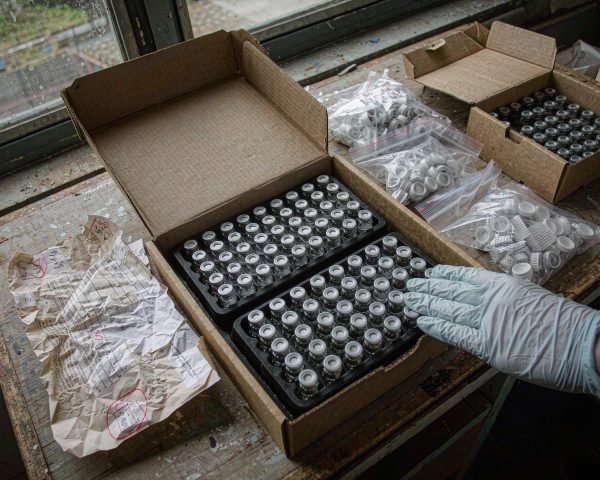
A vial-and-cap kit pairs vials with factory-matched caps and septa, usually in the same box, lot-tracked together. Buying separately means vials from one line item, caps from another, and your bench staff combining them at prep time.
Neither approach changes the physics of sealing. What changes is who controls the pairing, where variability can enter, and what happens when something goes wrong.
The Case for Kits
• No mismatch risk. The single most common sealing failure I hear about is an innocent one: a cap from one supplier’s batch paired with a vial from another. Thread profiles and crimp dimensions vary slightly between manufacturers, and marginal pairings seal “well enough” until they don’t. A kit removes that variable entirely, which matters most in headspace and other pressure-sensitive work where the headspace cap choice directly affects volatile retention.
• One lot number to track. When you open a kit box, the vials and caps share documentation. For labs under GMP-style record expectations, that halves your lot tracking, and 21 CFR 211.84 thinking applies: fewer incoming items to verify and sample.
• Simpler ordering and fewer stock-outs. One SKU to reorder instead of two that can drift out of sync. It sounds minor until you meet the classic situation: a full case of vials and zero caps, on a Friday.
• Consistent septa. Septa formulations vary between cap vendors. A kit pins your method to one septa chemistry, which keeps baselines stable and makes my septa replacement schedule more predictable.
The Case for Buying Separately
• Method-specific optimization. Some of your methods want pre-slit septa, some want PTFE-only, some want red PTFE/silicone for higher temperature. Buying separately lets each method use its ideal cap without maintaining whole kits for each.
• Lower cost at volume. Separately priced vials and caps often come out 10 to 20 percent cheaper than kits at comparable quality, because you’re not paying for pairing and packaging. If your volumes are high and your pairing discipline is good, that difference compounds.
• Less waste. Kits can force you to buy caps in quantities matched to vials. If your caps fail faster than vials (septum puncture, crimp damage), you throw away perfectly good vials or buy caps anyway, erasing the convenience.
• Mixing formats. Labs running multiple autosamplers (an Agilent HPLC and a GC-MS headspace, say) often need three or four cap types against one or two vial types. Kits multiply SKUs in that scenario.
A Decision Framework
Ask three questions:
1. Is this a locked-down routine method? If a single method runs 80 percent of your injections, a kit standardizes it and simplifies everything. Instrument makers structure their own consumables this way; Agilent’s vial and cap selection guide is essentially a kit-oriented catalog, and it prices out cleanly against separate lines.
2. How pressure-sensitive is the sealing? Headspace, volatile analytes, and long hold times push hard toward matched kits. General liquid HPLC is forgiving, which tilts toward separate buying. The crimp vs screw vs snap comparison maps sealing strictness by cap style.
3. Who assembles, and how disciplined are they? Kits reduce training needs. If your prep bench is staffed by rotating students or contractors, matched kits prevent silent pairing errors.
A Quick Cost Math Example
Say your lab injects 15,000 samples a year. At a kit premium of $0.02 per vial, kits cost $300 more annually on paper. Now add one mismatch-driven rerun incident a year: a failed sequence, a rerun batch of 200 samples, and two analyst-hours of troubleshooting, which lands somewhere north of $400 in real cost even before counting the delay. The premium only needs to prevent one moderate incident to pay for itself, which is why I price kits against the cost of variance, not just the unit price.
The reverse holds for low-volume specialty work. A method running 500 samples a year with a cap that must be pre-slit has no business dragging a whole kit SKU with it; buy that cap separately and let the routine kit cover the bulk.
What I Do in My Own Buying
For the two or three workhorse methods, kits, without hesitation. The consistency is worth a few percent in price. For specialty and low-volume methods, separate vials and caps, chosen deliberately per method. And for any new supplier, whether kit or separate, I verify the first lot against my incumbent before committing, the same way I’d qualify any consumable; the certified vials explainer covers what the certificates should say.
One warning from experience: don’t switch cap suppliers mid-study. A stability study I supported once changed cap lots between time points and spent a month explaining a small but real shift in volatile results. My lot failure handling guide covers how to handle such changes deliberately.
Conclusion
Kits and separate buying both have a home in a well-run lab. Kits deliver matched pairing, shared lots, simpler ordering, and consistent septa, which makes them the right default for high-volume routine methods and any pressure-sensitive application like headspace. Buying separately costs less per unit, supports method-specific cap and septa choices, and avoids the waste of matched quantities you don’t need. Decide per workflow using three questions: how routine the method is, how strict the sealing requirement, and how disciplined your bench pairing will be. Whichever route you take, keep lots consistent within studies and qualify new suppliers with a trial lot first. And when it’s time to reorder, compare offers on more than just price, because documentation quality is part of what you’re buying.
Frequently Asked Questions
Are vial-and-cap kits always more expensive?
Not always. At high volumes, separate items often price lower, but kit pricing narrows the gap and sometimes wins on total cost once you count mismatch losses and stock-out downtime. Quote both ways before deciding.
Can I mix a kit’s vials with a different cap brand?
Physically it often works, but you lose the pairing guarantee, and thread or crimp tolerance differences can cause partial seals. If you must mix, leak-check the combination before trusting it with real samples.
Do kits come with certified documentation?
Good ones do: lot-tracked certificates covering both vials and caps. Read what the certificate actually states before relying on it, since “certified” without detail proves little.