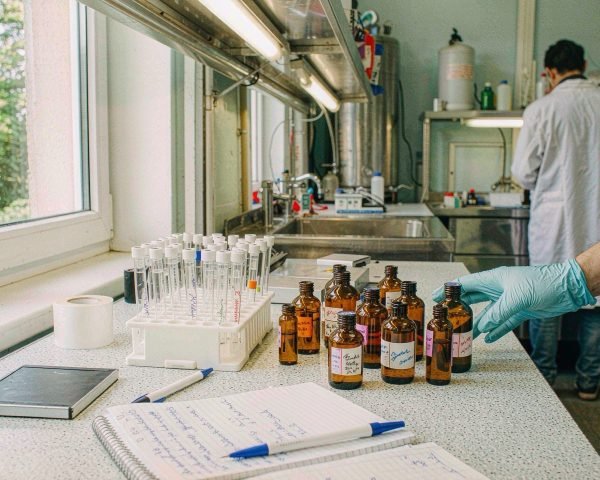

# Flavors and Fragrances Lab Consumables: The Complete Guide
If you work in a flavor, fragrance, or essential oil lab, your results depend on consumables most people never think about. The right flavors and fragrances lab consumables protect volatile compounds from light, heat, adsorption, and evaporation, so the aroma that reaches your bench is what your GC-MS sees.
Flavors and fragrances labs deal in volatile compounds, so every consumable that touches a sample matters. Headspace vials, SPME fibers, low-adsorption glass, amber bottles, and certified standards keep aroma compounds from evaporating, adsorbing, or degrading before the instrument ever runs.
Read on for a full walkthrough of the lab workflow, the consumables each step demands, the quality paperwork auditors expect, and the regulations (IFRA, FDA, EU) that shape what you buy.
Why Aroma Labs Run on Two Kinds of Evidence
A flavor or fragrance lab answers one question over and over: what does this smell like, and why? That question gets answered twice, once by people and once by machines. Both answers have to agree, and both depend on the consumables sitting quietly in the background.
The sensory panel comes first
A trained sensory panel can detect differences no instrument can. Human noses pick up notes at parts-per-billion levels, and panelists describe them in language a chromatogram never will: green, waxy, soapy, overripe. Panels evaluate samples in neutral glassware, usually covered and coded, at controlled temperature.
The consumable detail that matters here is the sample container. A panelist sniffs the headspace above the sample, so anything that leaches into that headspace becomes part of the review. Plastic lids, rubber gaskets, and printed labels on the rim have all ruined panel sessions in labs I’ve worked with. Glass and PTFE are the safe choices for anything that touches the air a panelist breathes in.
Then the instrument confirms it
GC-MS is the “gold standard” for volatile flavor and fragrance analysis; one 2020 literature review found that over 80% of published work in this field used GC-MS (see the chromatographic analysis of volatile flavor and fragrance compounds). The instrument identifies and quantifies each compound: citral in a lemon oil, linalool in lavender.
But a GC-MS is only as honest as the sample you put in it. Volatiles escape through bad septa, adsorb onto the wrong glass surface, and oxidize under fluorescent light. The instrument reports what survives the journey. That’s why consumable choice is an analytical decision, not a purchasing afterthought.
Where consumables decide the outcome
Consider limonene, the most common compound in citrus oils. Expose it to oxygen and light and it oxidizes into carvone and carveol, which smell like caraway and mint. Your instrument will happily report those oxidized products as real. The sample didn’t lie; the storage bottle did.
So the workflow below assumes one principle: protect the volatile fraction from the moment the sample is opened until the injection is made. Everything else follows from that.
Inside the Flavor and Fragrance Lab Workflow
Every lab arranges things slightly differently, but the backbone is the same: receive, prep, analyze, interpret, re-sensory. Here’s how the consumables fit into each stage.
Sample receipt and registration
Samples arrive as tiny vials, 30 mL bottles, or unmarked jars from a supplier on another continent. The first job is registration: assign a lot number, note the container, photograph anything unusual. I always log the container type itself, because a sample that arrived in a polyethylene bottle is a different sample chemically than one in glass. Polyethylene is slightly permeable to small aroma molecules, so citrus terpenes can literally migrate through the wall over months.
For short-term holding, transfer to inert glass. For anything precious or long-term, go straight to amber. More on that below.
Sample prep: dilution, extraction, and the standard solutions
Aroma samples are rarely injected neat. Essential oils get diluted 1:100 in ethanol, hexane, or iso-octane. Solid foods and cosmetics get extracted, then filtered. And every quantitative method needs standards.
Standards deserve their own paragraph, because they’re the most expensive consumables in the lab and the easiest to ruin. A certified reference material like a citral standard might cost more per milliliter than the perfume it’s used to check. It lives in a sealed amber vial at 2 to 8 °C, and it gets diluted fresh. Keep a dilution log. When a batch of results looks biased low across three weeks, the first thing I check is not the calibration. It’s the date on the standards working solution.
Headspace analysis: the workhorse for volatiles
Static headspace GC is the default introduction technique for aroma work. You seal the sample in a vial, let the volatiles partition into the gas phase above it, and inject that gas. Agilent’s own headspace sampling fundamentals page explains the core equation: detector response depends on the partition coefficient and the phase ratio, which means vial size, fill volume, and temperature are all method parameters, not conveniences.
A typical setup looks like this: 1 g of sample in a 20 mL headspace vial, equilibrated at 80 °C for 20 minutes, then a 1 mL loop injection. Fill the vial too much and the phase ratio collapses. Leave it uncapped a minute too long on a hot day and your most volatile top notes are already gone. Headspace work rewards people who cap fast and label everything.
If you want the underlying technique explained from scratch, our guide to how headspace analysis works covers the physics in plain language.
SPME: solvent-free extraction
Solid phase microextraction (SPME) uses a coated fiber that adsorbs volatiles from the headspace, then desorbs them in the GC inlet. No solvent peak, one step, and excellent sensitivity for trace odorants. For fragrance allergen screening and off-odor investigations, HS-SPME is hard to beat.
The fiber is a consumable with a lifetime. Fibers break, coatings swell in the wrong solvents, and performance drifts after a few hundred extractions. Track fiber use the way you track column injections. And note that SPME extraction competes with everything else in the vial for the fiber surface, so salt addition and extraction time need to be locked down before results are comparable day to day.
Liquid injection of solvent extracts
When the method needs full compositional detail (fatty acid profiles, heavier sesquiterpenes, solvent extracts of a cream or a beverage), you prepare a liquid extract and inject it through a standard 2 mL autosampler vial. This is where syringe filters earn their keep: a 0.22 µm PTFE filter before the vial prevents particles from clogging the 0.1 mm needle and the inlet liner.
PTFE is my default membrane for essential oil and fragrance extracts because it stands up to hexane, ethanol, and most everything else these labs use. Nylon can leach or bind compounds from aggressive organic solvents. Thermo Fisher’s syringe filter selection guide has a full compatibility table worth keeping printed near the filtration station.
One practical tip: pre-rinse or discard the first few drops through any new filter membrane. Extractables from manufacturing can show up as early-eluting junk peaks that look exactly like sample contamination.
The sensory retest loop
Analysis rarely ends with the instrument. The lab compares the GC-MS profile against the panel description, reformulates, and re-tests. Consumables make this loop expensive or cheap depending on choices made months earlier. If every retest requires fresh certified standards, your budget notices. If standards are stored so they survive a month of use, the loop runs quietly. Storage discipline is the cheapest productivity tool a fragrance lab can buy.
Sample Prep Consumables: The Small Decisions That Decide Everything
Sample prep is where volatile compounds are most at risk, because it’s the only stage where the analyst handles them in open or semi-open containers. Let’s go through the consumables one by one.
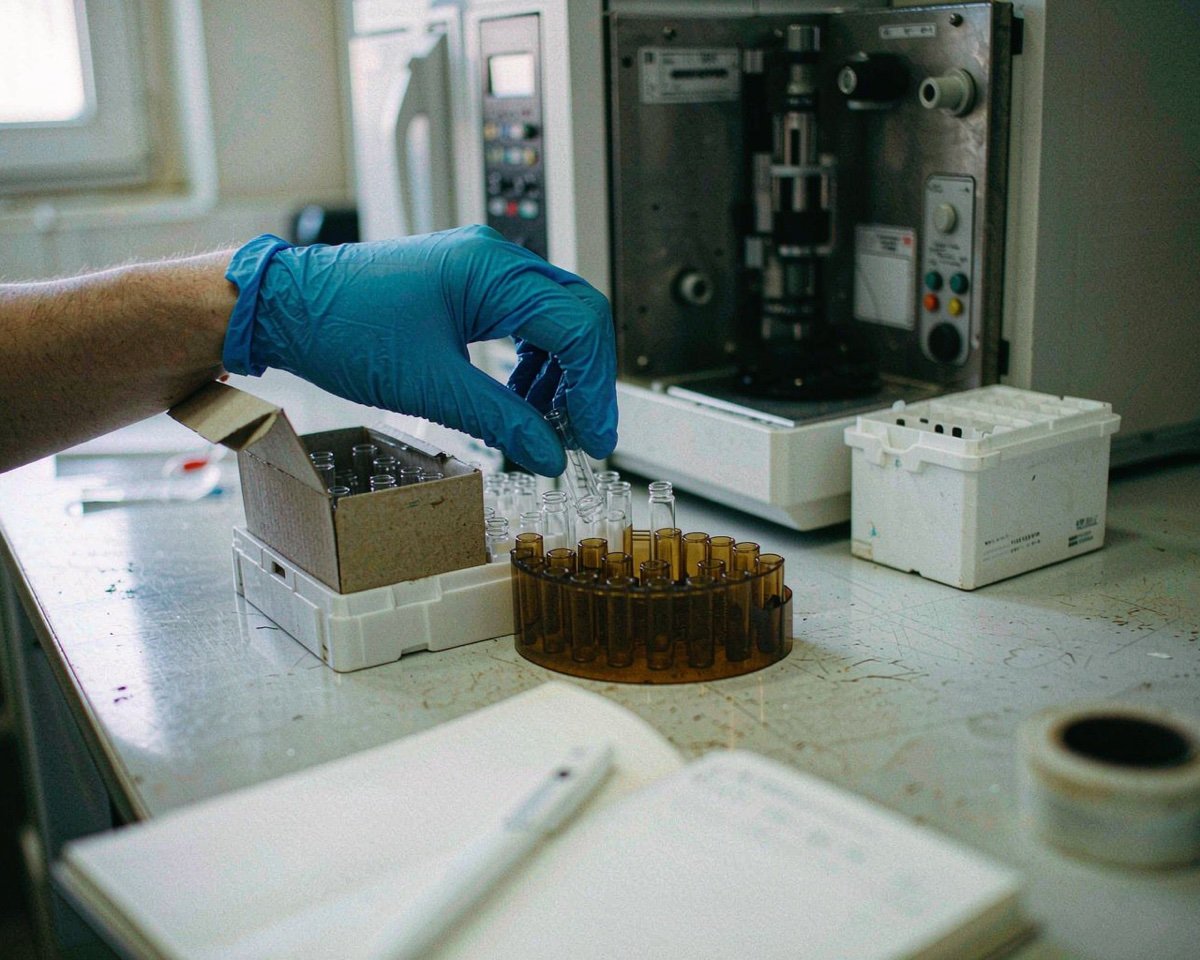
Headspace vials: 10, 20, and 22 mL
Headspace vials come in rounded or flat bottoms, crimp or screw thread, in 10, 20, and 22 mL sizes. Compatibility with your sampler matters more than anything on the datasheet. Agilent samplers, for example, accept 10, 20, and 22 mL vials, while some other systems are pickier about height and diameter.
Three things actually affect data quality, and none of them appear on the price tag.
Start with wall thickness and uniformity. Thin or uneven glass heats unevenly, which changes the partition equilibrium between vials in the same batch. A well-made vial gives you the same phase ratio at position 7 as at position 91.
The septa matters even more. It’s the seal that keeps your most volatile compounds inside the vial at 80 °C and above, and PTFE/silicone septa reseal after needle puncture. Cheap septa that core or leak will silently bias every result. If you only change one thing this week, upgrade the septa. It’s a few cents per vial and it protects everything downstream.
Blank cleanliness rounds out the list. A dirty vial contributes ghost peaks that look like sample volatiles. Batch-certified vials with documented low background are worth the premium for aroma work at trace levels, where an unknown peak at 0.01% can trigger a week of investigation.
For SPME specifically, vial volume changes extraction kinetics. A 20 mL vial with 10 mL of sample behaves differently from a 10 mL vial with 5 mL, so keep vial geometry constant when you transfer a method between labs or instruments.
2 mL autosampler vials for extracts
Liquid injections go into standard 2 mL vials with 9 mm screw threads or snap/silicone closures. For aroma work, two choices matter:
Amber versus clear. If your extract contains terpenes, aldehydes, or anything photolabile, amber wins. I once watched a batch of bergamot oil standard lose its top note after three weeks in a clear bottle on the bench. The instrument still saw a fingerprint, but the bergaptene and limonene ratios had shifted enough that the calibration was quietly wrong. That mistake cost a week of re-analysis and one very apologetic email to a client.
Inserts for small volumes. Diluted standards often come to only 100 to 200 µL. A spring insert or a limited-volume vial lets the needle reach the liquid without wasting sample. Wasting a 300 µL dilution of a certified standard is a real cost, and it happens daily in labs that bought the wrong vial format.
If your lab also runs certified-method work and you’re wondering what the paperwork means, our article on what certified HPLC vials actually promise breaks down the certificate language.
Syringe filters for solvent extracts
Filtration sounds trivial until it changes your chromatography. The rules I follow:
• PTFE for organic solvent extracts (hexane, dichloromethane, ethanol).
• Regenerated cellulose or PVDF when the extract is aqueous or mixed.
• 0.45 µm for bulk clarification, 0.22 µm before any LC or GC inlet.
• Discard the first 0.5 mL through the membrane, always.
Bigger filters (25 or 30 mm) handle larger extract volumes without clogging; 13 mm filters waste less of a precious extract. Match the size to the volume and you’ll stop losing half your sample in the filter housing.
Caps, crimping, and the seal check
A good vial with a bad cap is still a leaking vial. Crimp-top headspace vials hold pressure best, but only if the crimp is right: the cap should spin freely on the neck without rattling up and down. Over-crimped caps deform septa; under-crimped caps vent volatiles during the 20-minute bake. Screw-neck vials avoid the crimping tool entirely, which is why most flavor labs drifted to 18 mm screw systems over the last decade.
Whatever closure you use, do a monthly seal check. Cap three vials with solvent, weigh them, hold at 80 °C for an hour, and weigh again. Losses above 1% mean your caps, crimpers, or vials need attention before your data does. The test takes twenty minutes and costs almost nothing, and it catches problems that would otherwise surface as unexplained retention time shifts.
Pipette tips, solvent bottles, and the unglamorous items
Dilutions happen by pipette, and aroma solvents (ethanol, iso-octane) dissolve things you don’t want dissolved. Use solvent-resistant tips, and store the dilution solvent in glass, not plastic. A bulk solvent dispensed from a polyethylene carboy carries plasticizers that show up in the 200 to 300 °C column bakeout as mystery peaks. Labs chase those peaks for weeks. Glass solvent bottles with GL45 closures end the mystery before it starts.
Storage Consumables: Keeping Aromas the Way They Arrived
Storage is where flavor and fragrance labs differ most from pharma labs. In pharma, the analyte is a drug that tolerates bench life. In aroma work, the analyte is a cocktail of reactive molecules designed, by evolution or by perfumer, to evaporate and react.
Amber glass and the light problem
Photodegradation is not a theoretical concern for aroma compounds. Limonene, citral, and most furanocoumarins degrade measurably under UV and even strong visible light. Amber glass blocks wavelengths below about 450 nm, which is precisely the range that does the damage.
The trade-off is convenience: you can’t see the fill level or spot contamination as easily in amber. My default for anything aromatic is amber anyway, and labels on the side instead of relying on sight. If you’re weighing the choice for your own bench, our amber vs. clear reagent bottles guide walks through when clear glass is still the right call.
Reagent bottles for standards and oils
Bench bottles holding neat oils, standard solutions, and internal standards should be Type 1 borosilicate glass with a PTFE-lined closure. Soda-lime glass leaches alkali into acidic solutions, and several aroma compounds (citral among them) degrade faster at elevated pH. A borosilicate bottle is chemically quieter, and it survives the autoclave and the freezer.
Cap liners deserve attention. Rubber liners interact with terpenes; over months, limonene in contact with a rubber seal swells it and extracts its additives. PTFE-faced liners cost a bit more and never show this problem.
Also mind the fill level. A half-empty 100 mL bottle has four times the oxygen headspace of a nearly full one. For standards you use slowly, decant into a smaller bottle rather than keeping a big one half full. Some labs flush the headspace with nitrogen before recapping; that’s a fine habit for the most expensive standards and overkill for bulk reagents.
Temperature, and the case of the disappearing top note
Most neat oils and standards are happy at 2 to 8 °C. A few (benzaldehyde is a classic) can crystallize or polymerize when chilled repeatedly, so check the supplier’s storage recommendation rather than refrigerating everything on principle. The bigger risk is cycling: taking a bottle in and out of the fridge daily condenses moisture inside and accelerates degradation. Keep a working aliquot at room temperature and the mother bottle in the cold room, untouched.
For a broader system for organizing all of this, our lab consumables storage guide covers shelf life by consumable type.
Quality, Purity, and Traceability
Aroma labs increasingly serve regulated customers: food manufacturers, cosmetics brands, pharma flavor houses. That shifts quality expectations from “the data looks right” to “the data can be traced to a lot number and a certificate.”
Certificates of analysis and what they cover
For consumables, a CoA typically documents dimensions, background levels, and lot-specific testing. For vials, that means background volatiles and volume verification. For filters, extractables testing. The point isn’t the paper; it’s that when an investigation happens, you can show which lot of vials every sample touched.
The reference standards side is stricter. Certified reference materials come with traceability to a national metrology institute, uncertainty values, and expiry dates. Sigma-Aldrich maintains a dedicated flavor and fragrance reference standards portfolio built around the EU’s authorized flavoring list and IFRA methods, which tells you how central documentation has become to this market.
Low-adsorption glass for trace aroma compounds
At trace levels, the container competes with the analyte. Polar aroma compounds (vanillin, eugenol, some pyrazines) adsorb to active glass surfaces, especially where silanol groups have not been deactivated. The symptom is familiar: recovery drops over the standard curve, and the low points disappear first.
Options, in increasing order of rigor: use high-quality Type 1 glass with good hydrolytic resistance; silanize vials for the most problematic analytes; or validate that the effect is below your reporting threshold and document that decision. What you can’t do is ignore it, because a vanillin recovery of 60% at 10 ppb will eventually cause a formulation decision you’ll regret.
Lot control and the audit trail
Simple habits carry most of the traceability load: record the lot number of vials, caps, filters, and standards in each method’s worksheet; keep CoAs filed by lot; and date every working solution. When a client asks why Monday’s allergen screen missed benzyl benzoate that Wednesday caught, the answer lives in that paperwork. In my experience, labs rarely get audited on their instruments. They get audited on whether their consumables can be traced, because contamination investigations start there.
The Regulatory Picture: IFRA, IOFI, FDA, and the EU
You don’t need to be a regulatory specialist to buy consumables, but knowing the framework explains why certain tests and standards exist.
IFRA standards
The International Fragrance Association maintains the IFRA Standards library, a searchable database of ingredient restrictions based on safety reviews. IFRA members produce most of the world’s fragrance compounds, and compliance is contractual: a brand sourcing a fragrance compound will require an IFRA certificate of conformity. For the lab, this drives allergen screening (26 EU-declared allergens and growing) and quantitation of restricted materials like citral and coumarin. Those assays are SPME and GC-MS methods, which means they run on exactly the consumables this article covers.
IOFI and food flavorings
The International Organization of the Flavor Industry (IOFI) maintains good manufacturing practice guidance and a global reference list of flavoring substances for food applications. Labs characterizing food flavors work against those lists, plus national positive lists.
FDA and food contact
If your lab supplies data for products sold in the US, packaging and processing materials fall under FDA’s food contact rules. The agency’s packaging and food contact substances program maintains the inventories and notification process. It’s mostly relevant to packaging engineers, but labs doing migration testing or extractables work will reference it when choosing container materials for test articles.
The EU framework
EU Regulation (EC) No 1334/2008 governs flavoring substances in food, and the EU Cosmetics Regulation 1223/2009 requires allergen labeling for fragrance ingredients in cosmetics. For analytical labs, both translate into method requirements: sensitive, validated quantitation of specific named compounds at low levels. Which brings the conversation back, once more, to vials, filters, and glass that don’t add or subtract analyte.
The through-line is simple. Regulations name compounds. Instruments measure compounds. Consumables determine whether the measurement is honest.
Buying Guidance: What to Spec and What to Skip
Procurement managers in this space usually inherit a spec sheet from the bench and a budget from above. Here’s how I’d allocate attention if both are tight.
Match the consumable to the instrument first
Vial dimensions, neck threads (9-425, 13-425, 18-400, 24-400), and headspace vial heights are instrument decisions before they’re price decisions. A vial that sits 0.5 mm too tall in a tray causes mis-picks and crashed needles, and no discount makes up for a week of reruns. Confirm thread codes and volumes against your autosampler model, then compare prices among suppliers who meet the spec.
Spend where data quality is made or lost
Rank your spending by proximity to the analyte:
1. Septa and caps (containment of volatiles).
2. Vial cleanliness (background control).
3. Storage glass (stability over weeks and months).
4. Everything else.
Filters, tips, and gloves are commodity items; buy them on price and delivery reliability within reasonable quality. I’d rather see a lab spend on certified low-background headspace vials and proper PTFE-lined amber bottles than on any branded accessory that never touches the sample.
Buy for the workflow, not the catalog
Ordering by annual volume saves real money in this category. A lab running 20,000 headspace vials a year should negotiate case pricing, batch certificates, and consistent lot supply. A lab running 2,000 should prioritize availability and quality over the last 10% of unit price. And whatever your volume, keep one unopened case of every critical consumable as insurance against the delivery that arrives late.
Don’t forget lead times and lot continuity
Consumables don’t make headlines when they arrive late; they just quietly stop the sequence. Headspace vials and certified standards are the two items where a stockout costs the most, because both sit on the critical path of every method. Ask suppliers about stock depth in your region, and whether they can hold a lot for repeat orders. Switching vial lots mid-study forces a background re-verification, which is a day of GC time nobody budgeted.
For labs in South America and Southeast Asia especially, customs delays make local stock the deciding factor. A supplier with a nearby warehouse beats a cheaper quote from three oceans away more often than procurement spreadsheets admit.
Ask suppliers real questions
Can they provide lot-specific CoAs? Do they document background levels for headspace vials? Will they supply samples for your method before you commit to a case quantity? A supplier who answers those questions promptly is telling you how they’ll behave when a problem actually occurs.
Conclusion
Aroma work punishes careless handling more than almost any other analytical field, because the analytes are built to escape. The consumables that matter most are the ones that form an inert, sealed path protected from light, from sample receipt to injection: quality headspace vials with reliable septa, the right 2 mL vials and syringe filters for extracts, and amber borosilicate bottles that keep standards and oils chemically unchanged for months. Add lot-level traceability and the IFRA and food-regulation context, and your data becomes something you can defend to any client or auditor. If you take one step this month, tighten your septa and cap quality; it’s the cheapest upgrade with the largest effect on volatile recovery. Then keep going with our guide to what certified HPLC vials promise and our amber vs. clear bottle comparison to set your own storage standards.
Frequently Asked Questions
What size headspace vial should I use for flavor and fragrance analysis?
Most labs use 20 mL vials for static headspace work because they offer a good phase ratio for 0.5 to 2 g of sample. The key is keeping vial size and fill volume constant, since both directly affect sensitivity and reproducibility in your method.
Do I need amber vials for essential oil samples?
If your samples contain terpenes, aldehydes, or other photolabile compounds (most essential oils do), amber is the safer choice for anything stored longer than a day. For same-day injections under normal lab lighting, clear vials are acceptable in many workflows.
Which syringe filter membrane works best for fragrance extracts?
PTFE is the default for organic solvent extracts like hexane or ethanol dilutions of essential oils, because it resists nearly all solvents. Use regenerated cellulose or PVDF for aqueous or mixed extracts, and discard the first drops through any new membrane to avoid filter extractables.
How should I store flavor and fragrance reference standards?
Keep the mother bottle in a PTFE-lined amber glass bottle at 2 to 8 °C (or as the supplier specifies) and prepare dilute working solutions fresh. Avoid repeated temperature cycling, and decant slowly-consumed standards into smaller bottles to reduce the oxygen headspace.
Are certified vials worth the extra cost for aroma labs?
If you run trace-level work or serve regulated clients, yes, because batch certification controls vial background and dimensions lot by lot. For routine high-concentration screening, uncertified vials from a reputable supplier often perform adequately; validate either way before committing.