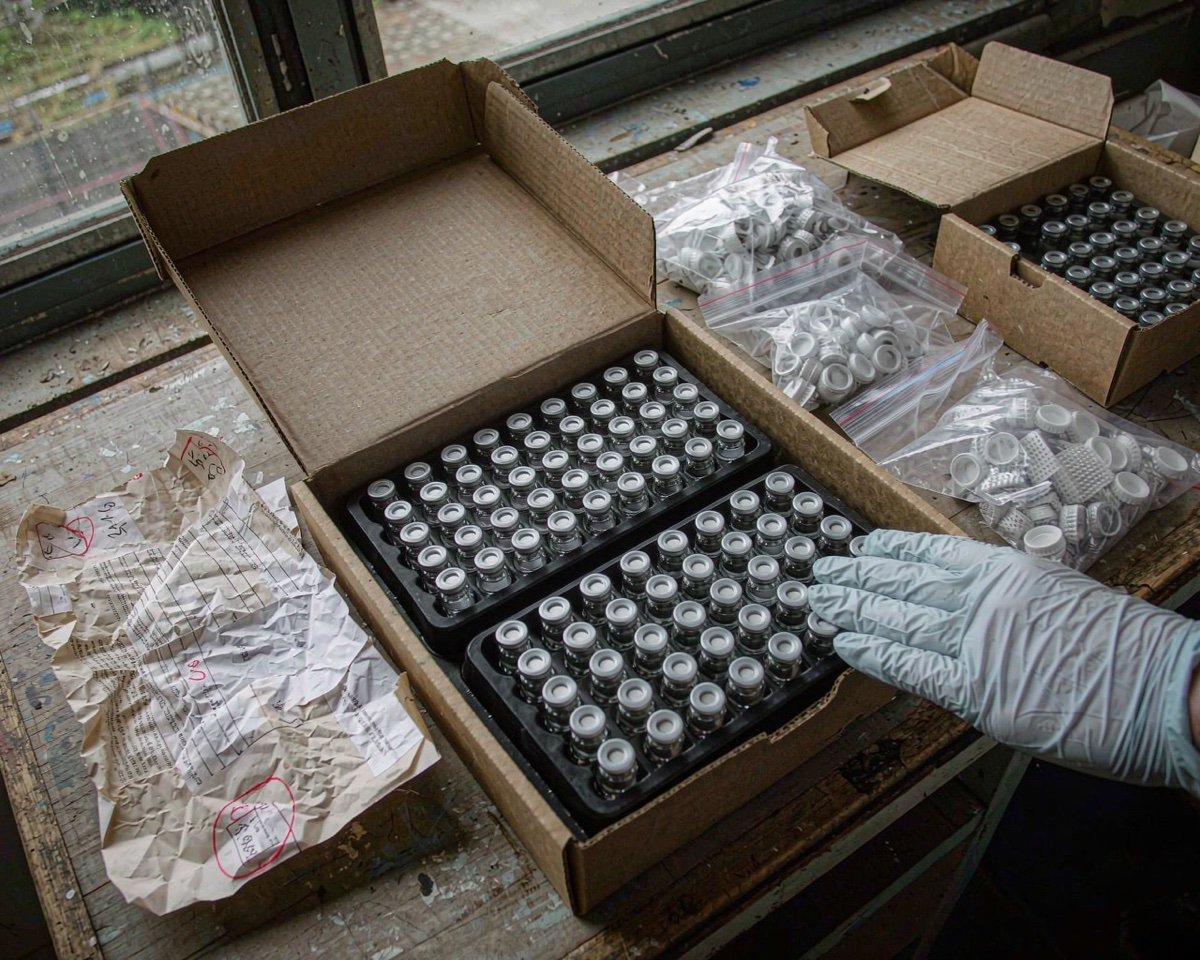

Last spring a lab sent me a photo of a batch of caps where the silicone layer had swollen into a gummy ring. Every vial in the tray was leaking. The culprit: they’d switched their sample solvent to pure DMSO and their PTFE/silicone septa were not up to the job. One printed compatibility chart, taped to the bench, would have prevented the whole mess.
A septa compatibility chart is a table that shows which septum materials (PTFE, silicone, PTFE/silicone, pre-slit, red rubber, and so on) hold up against which solvents, temperatures, and sampling conditions. You use it to check one thing before you cap a vial: will this septum survive contact with my sample?
It sounds trivial. It isn’t, because a failed septum fails silently. Below I’ll show you how to read the chart, what the materials actually are, and the three mistakes the chart exists to prevent.
The Main Septum Materials, in Plain Language
Most chromatography septa are laminates. A thin PTFE film faces the sample because PTFE resists almost every solvent. Behind it sits silicone, which provides the resealing elasticity that lets a needle pass through and the septum close up again.
Pure silicone septa seal and re-seal beautifully, but solvents like methylene chloride, THF, and DMSO attack them. Pure PTFE resists everything but barely reseals, so it’s reserved for single-injection work or gas-tight applications. The PTFE/silicone laminate is the everyday compromise, and it’s what most 9mm and 8-425 caps ship with.
Temperature is the other axis. Silicone starts to harden and bleed at elevated oven or headspace temperatures, which is why headspace caps use higher-temperature formulations. Agilent’s own vial and septa selection guide breaks down cap and septa choices by application, and it maps closely to the charts most suppliers print.
How to Read the Chart in 30 Seconds
Every chart is roughly the same grid. Down one side, solvents and chemical families. Across the top, septum materials. Each cell carries a rating, usually E for excellent, G for good, F or X for poor.
Here’s my routine when a new solvent or sample matrix shows up:
1. Find the most aggressive component of the sample, not the main one. A sample that’s 95% water with 5% DMSO gets judged by its DMSO content.
2. Check the highest temperature the septum will see. For headspace, that’s the oven setpoint, not room temperature.
3. Check how many injections you need. If the cell says “good” rather than “excellent,” plan on more frequent replacement. My septa replacement schedule guide covers the timing.
If any cell fails, move to a different laminate or a different film thickness. A thicker septum doesn’t fix incompatibility; it just delays the leak. The chemistry either agrees with the polymer or it doesn’t.
The Three Mistakes the Chart Prevents
• Swelling and leaking. Solvent-incompatible septa absorb solvent and swell. The leak that follows wastes sample, lets volatile analytes escape, and in headspace work it destroys your pressure balance. If you run headspace, pair the chart with my headspace septum selection guide, because headspace pushes septa harder than liquid injection ever will.
• Coring and particles. A hardened or partially degraded septum cores instead of resealing. Little plugs of polymer drop into your sample, then ride into your system. The septum coring explainer shows what that debris does downstream.
• Ghost peaks and baseline noise. Swollen septa bleed siloxanes into the inlet. At trace levels these show up as ghost peaks that send you chasing a contamination that was sitting on top of your vial the whole time. Septum thickness and formulation matter here too, which is why I wrote a whole piece on why septa thickness matters.
A Mini-Chart You Can Post at the Bench
Most days you don’t need the full table. You need the three or four solvents your lab actually uses. Here’s the cheat version I sketch for customers:
| Sample environment | PTFE/silicone laminate | Pure silicone | PTFE only |
|---|---|---|---|
| Water, buffers, dilute acids | Excellent | Good | Excellent |
| Methanol, acetonitrile | Excellent | Fair | Excellent |
| DMSO, DMF, THF | Good | Poor | Excellent |
| Methylene chloride, aromatics | Good | Poor | Excellent |
| Headspace at 200°C+ | High-temp formulation only | Poor | Single-use |
Laminate quality still varies by vendor, so treat this as a starting point and confirm against the supplier’s own chart. The point of posting it is to stop the reflexive “grab whatever cap is closest” habit, which is how a DMSO method ends up on soft silicone.
Where to Find a Reliable Chart
Reputable manufacturers publish compatibility data for their own formulations, and inlet-part guides like the Agilent split/splitless parts quick reference list septa by temperature rating and application. Supplier charts are similar in substance because the underlying polymer chemistry doesn’t change between vendors.
Two caveats from experience. First, ratings assume brief contact at stated temperatures; a septum sitting in contact with solvent for days in storage is a different case entirely. Second, laminates vary: a “PTFE/silicone” from one vendor may be 1 mil of film, another 2 mil, and the difference shows at high temperature. If you run headspace caps, the headspace cap retention study shows how septa and cap choices compound over hours of storage.
If you want one hard rule: PTFE film toward the sample, always. It’s the chemical barrier. Silicone alone should never touch solvent.
Conclusion
A septa compatibility chart is a thirty-second lookup that prevents the most annoying failures in the lab: leaking caps, swollen silicone, cored septa, and ghost peaks that appear out of nowhere. The logic is simple. PTFE films resist solvents, silicone provides resealability, and the combination has limits defined by the most aggressive component in your sample and the highest temperature it will see. Check the chart whenever a new solvent, matrix, or method lands on your bench, and match the septum to the worst condition it will face, not the average one. Keep a printed chart at the sample-prep bench and pick a supplier whose laminate specs are transparent, because septa are only half of the sealing system your data depends on.
Frequently Asked Questions
Which side of the septum faces the sample?
The PTFE film side faces the sample. PTFE is the solvent barrier; silicone faces the cap and provides elasticity. Most caps arrive pre-assembled correctly, but double-check if you assemble your own.
Can I use PTFE/silicone septa with DMSO or DMF?
PTFE resists both, which is why the laminate is generally rated acceptable for brief contact. Pure silicone is not. Check the specific chart, because ratings vary with contact time and temperature.
Do pre-slit septa change compatibility?
The slit doesn’t change chemistry, but it removes the PTFE barrier at the slit line until the needle passes through. For storage and volatile samples, unslit is safer, since the intact PTFE film is the only thing standing between the sample and the needle path.