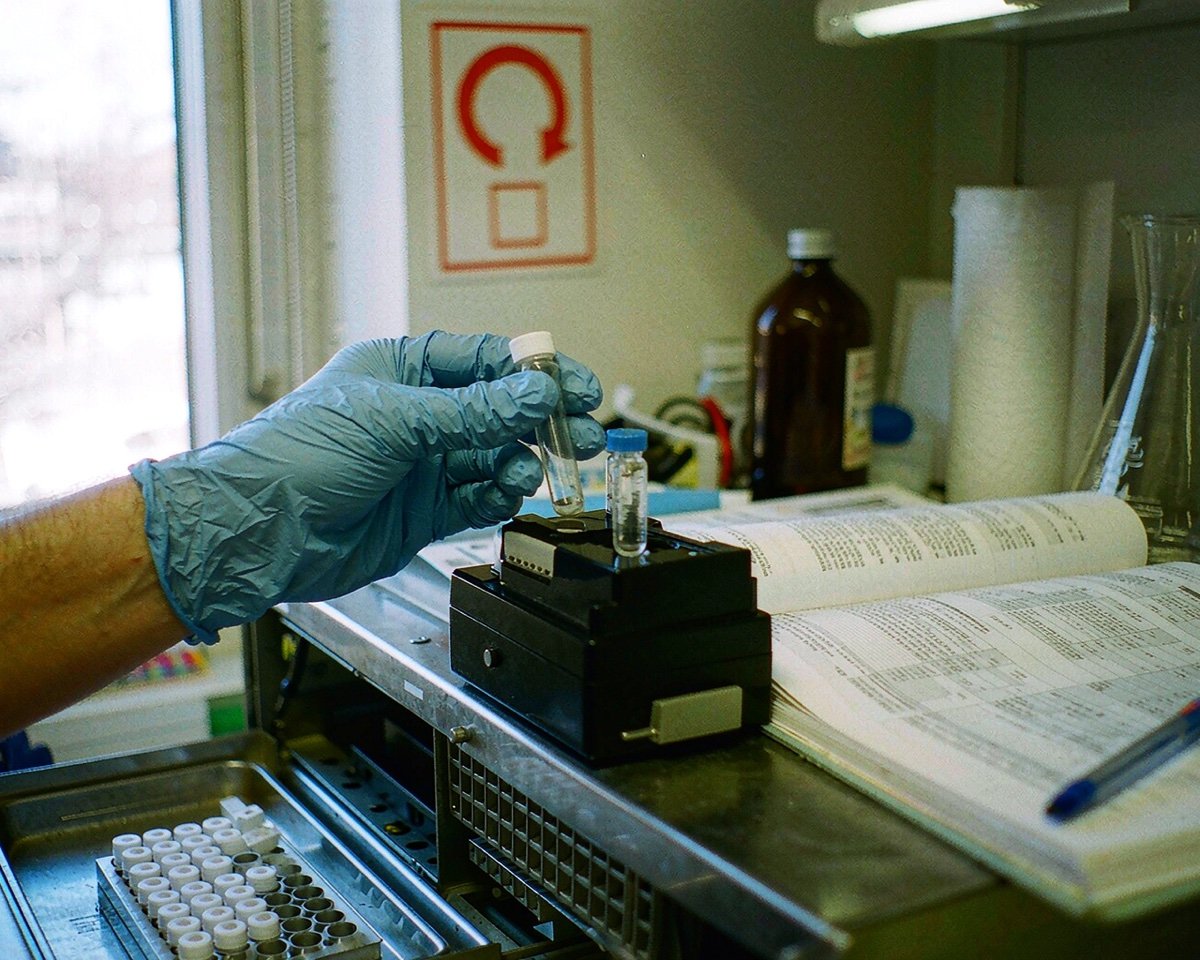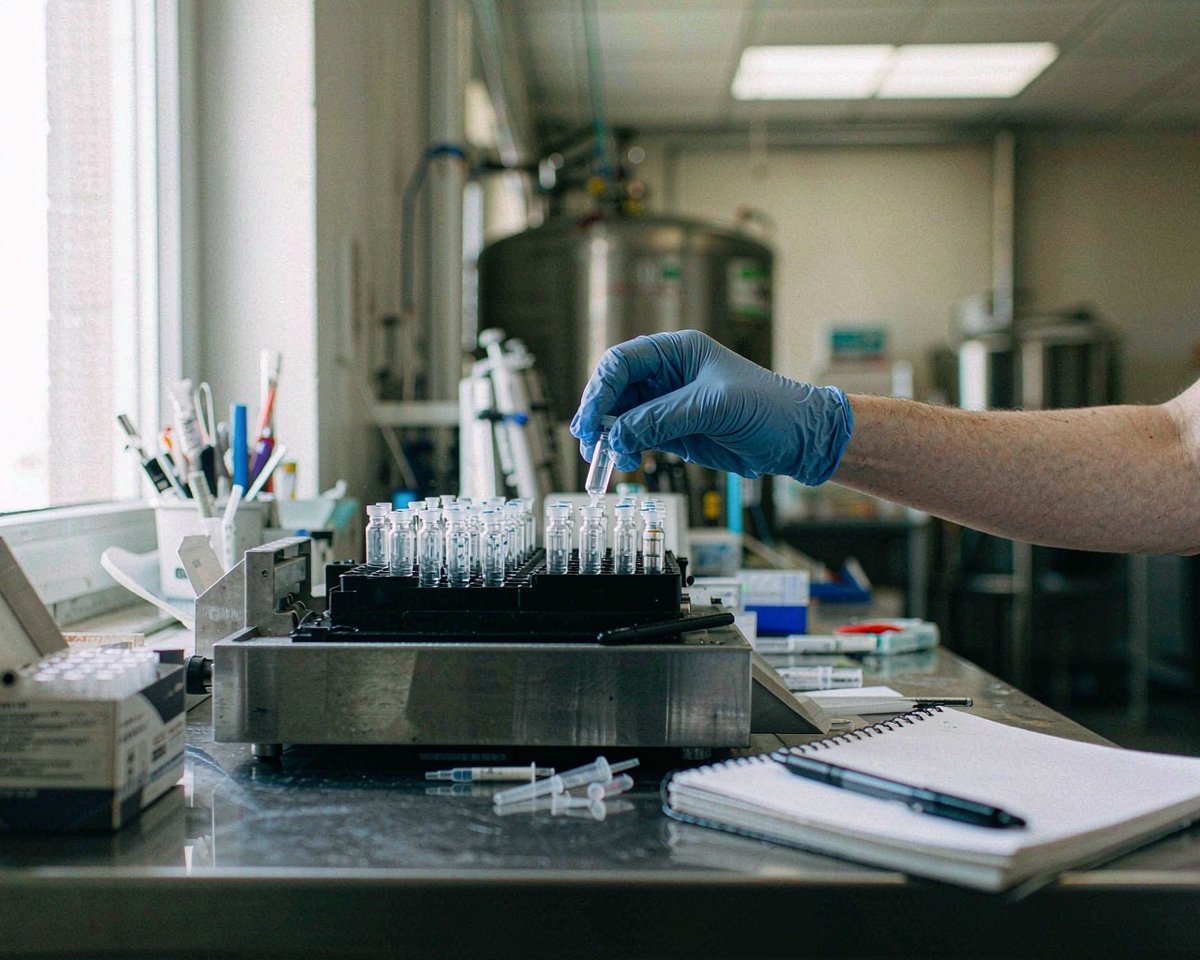
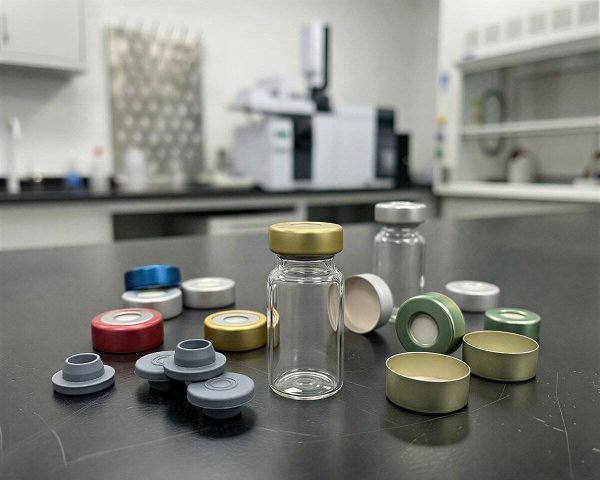

Headspace vials look like ordinary GC vials with one annoying twist: the septum is doing a lot more work. It has to seal against pressure, survive incubation at high heat, and let a needle through hundreds of times without leaking. If you reach for whatever cap is on the shelf, you’ll see ghost peaks, leaking vials, or worse, a vial that pops in the oven. Picking the right septum isn’t a finishing touch; it determines whether the run works at all.
The Short Answer
For most static headspace methods run below 180 °C, a PTFE-faced silicone septum is the safe default. Drop below 120 °C and a PTFE-faced butyl (or Pharma-Fix style) septum works fine and is cheaper. Push above 200 °C and you move into silicone/aluminum-foil septa or proprietary high-temperature designs. Always match the septum to your incubation temperature and the solvent chemistry, not to the vial.
Why Headspace Septa Are Different
A liquid injection septum reseals once or twice and that’s enough. A headspace septum gets poked in a vial that’s been heated to 80–120 °C, pressurized above ambient, and held for 10–60 minutes. That cycle repeats for every vial in the carousel. Agilent’s own headspace septa selection page is blunt about it: for temperatures under 180 °C they recommend PTFE-faced silicone, and they explicitly warn against pushing volatile samples through a septum at elevated storage temperatures because the septum material itself can migrate into the sample and show up as extra peaks.
So when you choose a headspace septum, you’re really choosing three things: how well it seals at temperature, how cleanly it punctures and reseals, and how little it bleeds into the gas phase.
The Three Septa Materials That Matter
You don’t need to memorize every elastomer on the market. For headspace work, you almost always end up in one of three camps.
PTFE-faced silicone is the workhorse. The PTFE layer protects the sample from the silicone, and the silicone gives you the resealability you need for repeated injections. Per the MicroSolv headspace septa temperature guide, fully laminated silicone/PTFE handles -60 °C to 200 °C, which covers the vast majority of USP <467> and EPA method conditions. If you’re running headspace day in and day out, this is what you want on your shelf.
If budget drives the decision, the lower-temperature option is PTFE-faced butyl (and the Pharma-Fix pattern). Butyl is cheaper and gives you a better seal against fixed gases, which is exactly why the Fisher Scientific septa selection guide lists gray PTFE/molded butyl “Pharma-Fix” septa as a standard recommendation for routine headspace work below about 125 °C. Use these when your method is at 80 °C oven temperature and you don’t need the temperature headroom.
High-temperature silicone / aluminum foil is what you reach for when your incubation runs north of 200 °C: heavy residual solvents, polymer samples, anything that pushes the oven hard. ILT’s septa temperature and durometer guide shows PTFE/silicone holding to roughly 210 °C and pure PTFE to 250 °C, but silicone/aluminum-foil laminates stretch the ceiling further. Expect to pay more and reseal less often.
If you’re unsure where to start, see my explainer on PTFE vs silicone vs PTFE/silicone septa walks through the trade-offs in plain language.
Match the Septum to Your Incubation Temperature
This is the single biggest decision you’ll make. A useful starting table (rounded from the references above):
- Below 100 °C: PTFE/butyl or butyl-only. Cheap, seals well, fine for ethanol and water-heavy samples.
- 100–180 °C: PTFE/silicone, fully laminated. The default for USP <467> and most residual-solvent methods.
- 180–220 °C: PTFE/silicone or silicone/aluminum-foil. Watch resealability; at this heat, every puncture matters.
- Above 220 °C: Proprietary high-temp septa (Agilent 8010-0428/0429, for example). Plan on replacing more often.
The Agilent page is explicit that if you’re running above 180 °C, the company recommends its own high-performance septa rather than a generic PTFE/silicone. That’s not gatekeeping. Off-the-shelf silicone starts to off-gas volatile breakdown products when you push the temperature, and you’ll see them as ghost peaks in your blank runs.
Don’t Forget Pressure
Pressure is the under-appreciated second variable. Headspace vials are pressurized during sampling, and if the septum can’t hold back the carrier gas, your quantification drifts. Agilent notes that above about 45 psi, you should switch to a pressure-release cap, which vents harmlessly if pressure spikes. For routine methods at ambient-plus-a-bit, a good PTFE/silicone crimp seal is plenty. For methods with high incubation temperatures or large sample volumes, the pressure-release cap is cheap insurance.
If you’re unsure how a closure interacts with a high-pressure method, start with the manufacturer’s pressure-rating notes and validate the seal at your incubation temperature. That’s a faster path than guessing by closure style.
When the Septum Fails (and Why)
Most headspace problems trace back to one of three things. First, a septum that’s too soft for the temperature; it cores and the bits land in your inlet. Second, a septum that’s been reused past its reseal count. For a static headspace method, even five punctures on a soft silicone septum can compromise the seal. Third, a septum stored in a lab drawer next to solvents; silicone absorbs organics, and you pay for it with extra peaks.
A simple rule of thumb I use: if your blank chromatogram starts showing peaks around the solvent front or in the mid-range, replace the septum before you blame anything else. My guide to replacing septa on schedule gives a practical rotation you can adopt without overthinking it.
A Quick Decision Checklist
1. What’s your incubation temperature? Use the table above. 2. Is the sample water-heavy or organic-heavy? Water favors silicone; aggressive organics favor a thicker PTFE face or pure PTFE. 3. How many punctures per vial? One or two → almost anything works. Five or more → fully laminated silicone/PTFE only. 4. Are you above 45 psi? Use a pressure-release cap. 5. Are you chasing ghost peaks in blanks? Swap the septum before anything else.
Conclusion
Choosing the right septum for headspace is mostly about respecting three constraints: temperature, pressure, and reseal count. PTFE-faced silicone covers roughly 80% of methods and is the safest starting point. Butyl steps in for low-temperature methods where cost matters. High-temperature silicone/aluminum-foil and proprietary high-temp septa handle the methods that push past 200 °C. If you’re building a new method, start with PTFE/silicone, validate the seal, and only deviate when the data tells you to. If you want a refresher on how headspace analysis works in the first place, my headspace analysis explainer covers the whole workflow from vial to chromatogram, and my headspace vial selection guide walks through which vial size and cap geometry pair with each septum family.
Frequently Asked Questions
What temperature range does a PTFE/silicone septum handle?
A fully laminated silicone/PTFE septum covers roughly -60 °C to 200 °C, which is enough for almost every USP <467> and EPA static headspace method. Above 200 °C you want a high-temperature silicone/aluminum-foil laminate or a proprietary high-temp septum designed for the job.
Can I reuse a headspace septum for multiple injections?
Yes, but only up to its rated reseal count. PTFE-faced silicone septa typically tolerate 5–10 punctures at room temperature, fewer at elevated incubation temperatures. If you’re seeing ghost peaks or low reproducibility, the septum is usually the first thing to check.
Do I need a pressure-release cap for static headspace?
Above about 45 psi internal pressure, yes; a pressure-release cap will vent harmlessly if the vial is over-pressurized. For routine residual-solvent methods at 80 °C with low fill volumes, a standard crimp seal is normally fine.
Is a butyl septum OK for residual-solvent analysis?
For Class 2 and Class 3 residual solvents at incubation temperatures around 80 °C, a PTFE-faced butyl septum is widely used and accepted. Class 1 methods, which push for the lowest detection limits, usually do better with PTFE/silicone because of its cleaner background at higher temperatures.
How do I store unused septa?
Keep them in their original foil or jar, sealed, in a cool dry place away from solvents. Silicone is notorious for absorbing organics, and a septum that lived next to a half-open acetone bottle will bleed acetone into every vial for weeks.