
# What Consumables Does Urinalysis Need?
Urinalysis looks like the simplest test on the hospital menu, and that is exactly why its consumables get overlooked. One bench can turn around two hundred specimens in a shift, and every single one travels through five or six plastic products before anyone sees a result. This article walks that lineup in the order samples actually move, so nothing turns up missing on Monday morning.
The short answer: a urinalysis bench needs collection cups with transfer devices, sterile containers for culture, boric acid preservative tubes for transport, reagent strips and a reader, pipette tips and transfer pipettes, conical centrifuge tubes for sediment, slides and coverslips, and liquid QC controls.
Keep reading for the stage-by-stage detail, the storage rules that protect strip quality, and what I would order first if I were stocking a new bench from zero.
The Urinalysis Workflow, Stage by Stage
Everything starts at collection. A patient voids into a urine collection cup, ideally midstream, and from there the specimen either walks to the bench or rides a courier route. Cups in the 100 to 120 mL range give patients room to collect and staff room to label, and facilities are expected to use an approved urine collection kit and approved transport container rather than whatever is loose in a drawer.
The cups worth paying extra for have a transfer device molded into the lid. You push a preservative tube onto the port, the needle pierces the stopper, and the tube fills without anyone pouring urine across an open bench. That sounds like a small convenience until you count the splash incidents it prevents. I know which version I would rather explain to the safety officer.
Timing is where consumable choice really bites. Urine held at room temperature for more than 4 hours develops overgrowth of both contaminating and clinically significant organisms, while boric acid preservation or refrigeration keeps a specimen usable for up to 24 hours, per a CDC systematic review of urine culture preanalytics. If your courier only runs twice a day, a plain cup is a gamble, and the preservative tube is the cheap insurance.
I once watched a lab reject every urine culture from one busy surgical ward for a week straight because the samples sat in open cups past the 4-hour mark. Every rejection meant a recollection, and some of those patients had catheters. The fix cost pennies.
Specimen Containers: Clean, Sterile, or Preservative
Match the container to the test, not the other way around. Chemical strip panels tolerate a clean, non-sterile cup just fine, since the chemistry does not care about a few skin flora. Any specimen headed for microbiology needs a sterile container, and delayed transport calls for a boric acid preservative tube, which CDC guidance names as the standard option when processing will not happen promptly. Borate preservatives suit culture workups; for routine chemistry, refrigeration is usually enough.
Transfer Pipettes and Pipette Tips
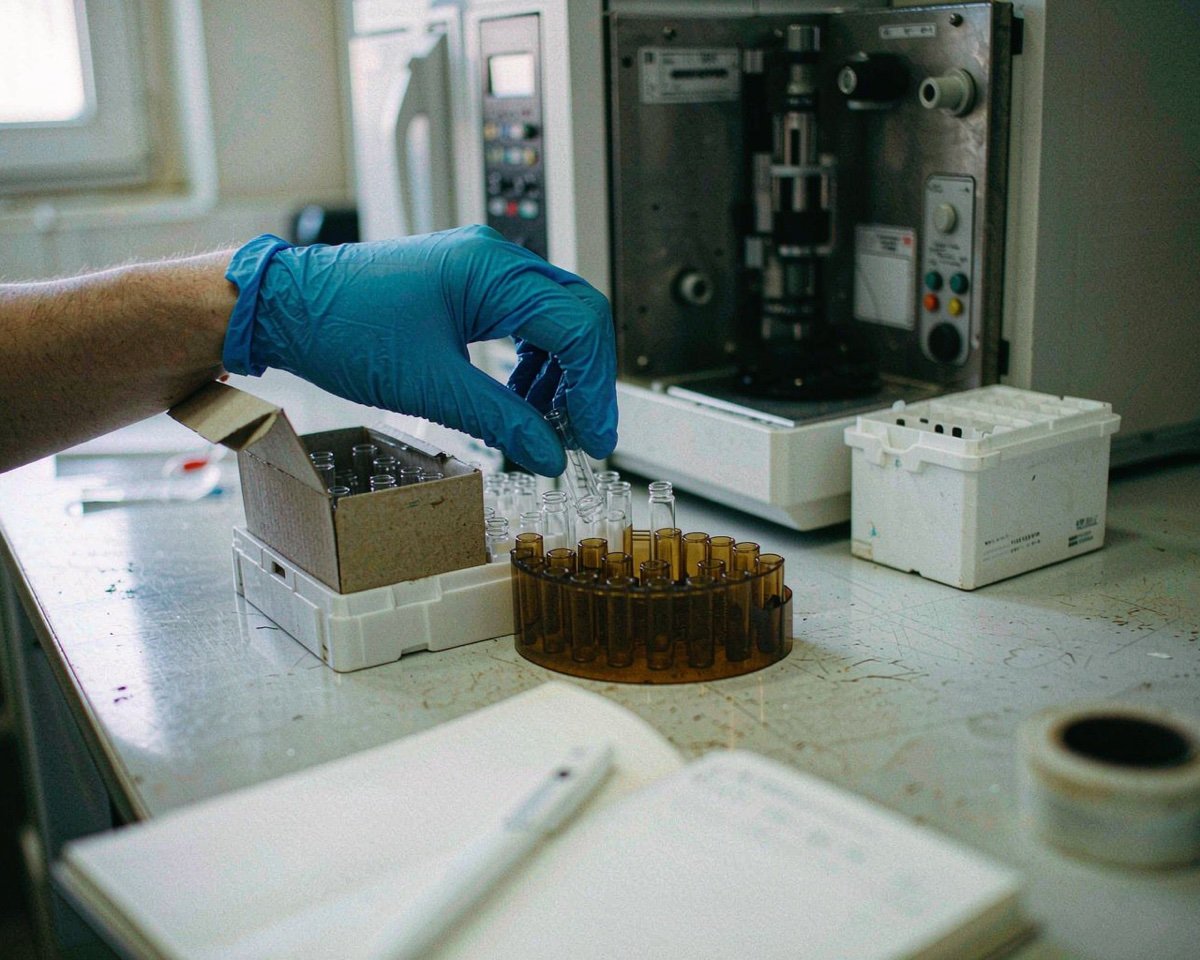
Between the cup and the analyzer, urine moves by plastic. Transfer pipettes aliquot into analyzer cups and sediment tubes, and fine pipette tips handle control material and diluted specimens. Poor-fitting tips are the quiet troublemaker here: they leak, drip, and skew small volumes in ways nobody notices until QC drifts. If your bench has standardized on one tip brand, recheck the fit every few months because pipette shafts wear down.
Reagent Strips and the Reading Step
A modern urine strip packs up to ten reagent pads onto one plastic paddle, covering glucose, protein, ketones, pH, blood, nitrite, leukocyte esterase, bilirubin, urobilinogen, and specific gravity. The nine-parameter Chemstrip format from Thermo Fisher shows a typical configuration. Readers time the reaction and translate pad colors into results, which removes most of the stopwatch guesswork from a busy bench.
Handling is where strip consumables live or die. Never touch the pads, dip all of them fully, drag the strip edge against the container rim to shed excess urine, and blot the edge on a paper towel before the reader scans it. Each of those steps comes from the manufacturer’s instructions, and skipping the blot is the most common cause of runover between adjacent pads.
Storage is the other half. Strips hate humidity, so the bottle cap goes back on within seconds of pulling a strip and the desiccant canister stays inside. Sealed bottles carry their printed expiry; opened bottles usually shorten it, so write the open date on the cap the day you break the seal. I have seen strips fail QC for no better reason than a bottle that lived open on a warm bench for a month.
Sediment Consumables: Where Discipline Shows
Microscopy has the most standardized consumable list in urinalysis, and it reads almost like a recipe. The method recommended under CLSI guidance, as performed in published studies, calls for 10 to 12 mL of well-mixed urine in a graduated conical centrifuge tube, spun at 400 × g for 5 minutes, decanted to 0.5 mL of sediment, gently resuspended, then loaded as a 15 to 20 µL drop under a coverslip, as described in this study following the CLSI sediment protocol. Every item in that sentence is a consumable you buy: tube, tip, slide, coverslip.
Tube choice matters more than people expect. Graduated conical tubes in polypropylene survive the spin and let you decant to a repeatable volume, and if you are unsure which material or volume rating to specify, our centrifuge tube materials guide covers the tradeoffs. Chambered counting slides (the KOVA-style plastic kind) cost more per test but standardize the loaded volume. On a high-volume clinical bench, my call is to buy the chambered ones and stop arguing about who loads too much sample.
Speed matters too. Casts and cells degrade, so the specimen should reach the microscope within about 2 hours of collection, with refrigeration as the fallback and examination within 8 hours even when chilled, according to clinical guidance on urinary crystal analysis. A bench that batches microscopy for the afternoon is measuring its own delay.
QC and Calibration Materials
The QC box is the least glamorous purchase and the one auditors ask about first. A good urinalysis control is a bi-level liquid built on a human urine matrix, assayed for both dipstick chemistry and microscopic analytes such as red cells, white cells, casts, and crystals. Bio-Rad’s Liquichek Urinalysis Control page shows the format: 12 mL vials, two levels, 30-day open-vial stability at 2 to 25 °C. Run both levels whenever your SOP says so, and always after a new strip lot or reader maintenance.
Strip lots deserve a specific mention. Reagent strips are lot-calibrated on most readers, so a new lot number without a recalibration is a classic source of shifted specific gravity and blood results. Keep one sealed bottle of the previous lot until the new lot has passed QC. That habit alone will spare you explaining a mysterious two-week step change to a supervisor.
What I Would Order First
If I were stocking a new urinalysis bench from zero, my default is a preassembled collection kit: cup with an integrated transfer device plus a boric acid preservative tube, one part number, one delivery. That single choice removes the pouring step, the labeling mixups, and most of the transport delay in one move. After that the list is ordinary: conical tubes, tips, strips, controls, slides.
Storage rules are short but strict. Strips stay capped at room temperature, never refrigerated, because condensation ruins pads faster than heat does. Liquid QC lives at 2 to 8 °C with the open-vial date written on the label. Sterile containers stay sealed until use, away from the sink and its splashes. For the analyzer-side cups that receive aliquots, our sample cups guide explains which formats fit which analyzers, and our clinical diagnostics consumables guide puts this bench in the context of the wider department.
Conclusion
Urinalysis earns its workhorse reputation precisely because nothing about it is exotic, and the same holds for its consumables. Collection cups with transfer devices, boric acid preservative tubes, transfer pipettes and tips, reagent strips handled and stored with care, graduated conical tubes for sediment, slides and coverslips, and bi-level liquid controls make up the entire working set. Match each container to the test it serves, respect the 4-hour clock, keep the strip bottle capped, and run both QC levels on schedule, and the bench will produce results that stand up to an audit without drama. None of these items is expensive individually; the savings come from buying them as a planned set instead of reacting to empty drawers. If you are mapping out supplies across a whole clinical department, our clinical diagnostics consumables guide is the natural next read, and the centrifuge tube materials guide will help you lock in the sediment side.
Frequently Asked Questions
How long can a urine sample sit at room temperature before testing?
About 4 hours at most. Beyond that, bacterial overgrowth can distort both chemistry and culture results, so either refrigerate the specimen or collect into a boric acid preservative tube when processing will be delayed.
Do urine samples need sterile containers for urinalysis?
Only when the specimen is going to culture. Chemical strip testing works fine from a clean, non-sterile cup. Anything sent to microbiology needs a sterile container collected with proper clean-catch technique.
What preservative is used in urine transport tubes?
Boric acid is the standard preservative for urine culture transport. It keeps bacterial counts stable for up to 24 hours at room temperature, which covers most courier schedules without refrigeration.
What consumables are needed for urine sediment examination?
A graduated conical centrifuge tube, a transfer pipette or tip, glass slides, and coverslips at minimum. Chambered counting slides replace the slide-and-coverslip step on higher-volume benches and standardize the loaded volume.
How often should urinalysis QC be run?
Follow your SOP, but expect at least one run of both control levels per shift or per day, plus a run after every new strip lot, reader maintenance, or suspicious result. Missing a QC window can lock a reader out and stall the whole bench.