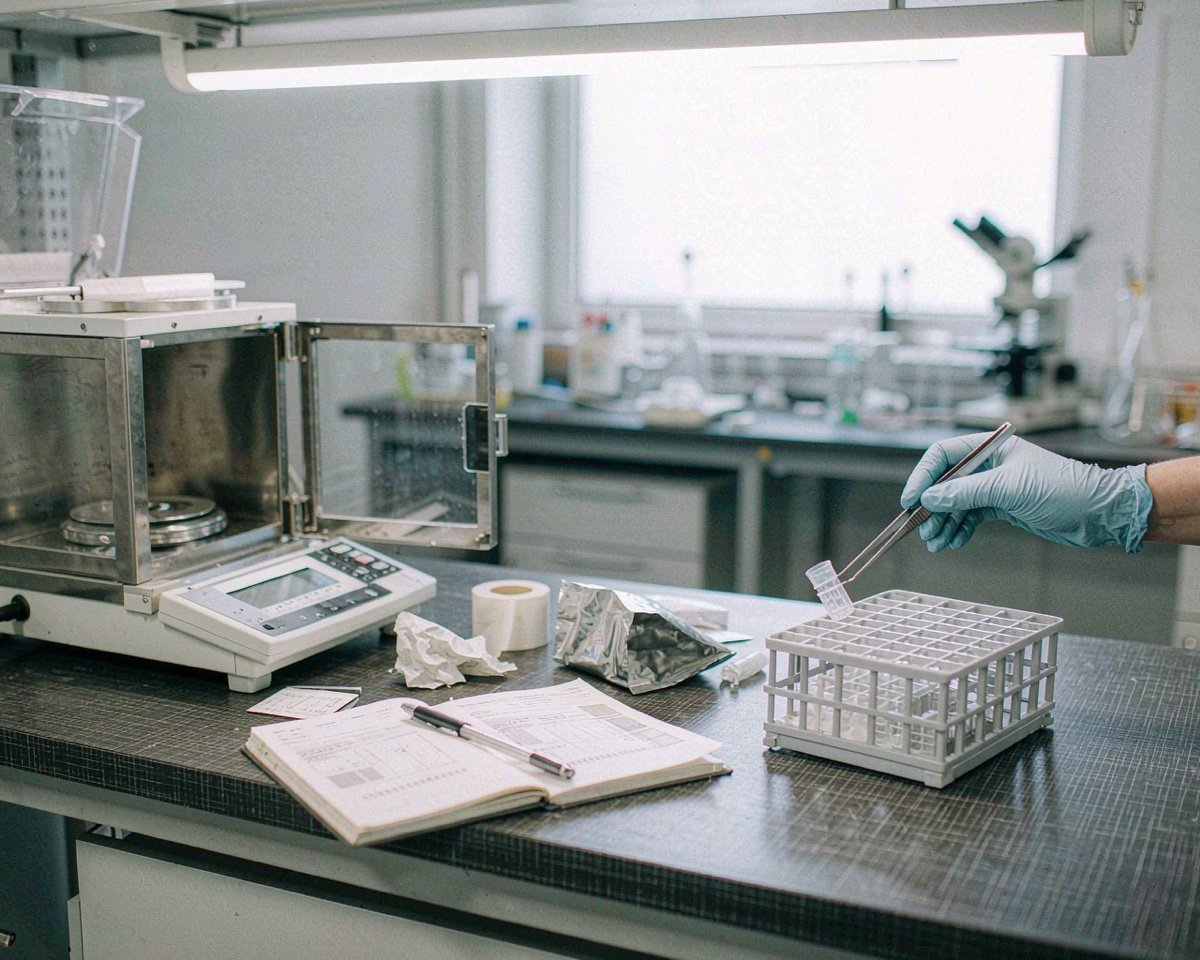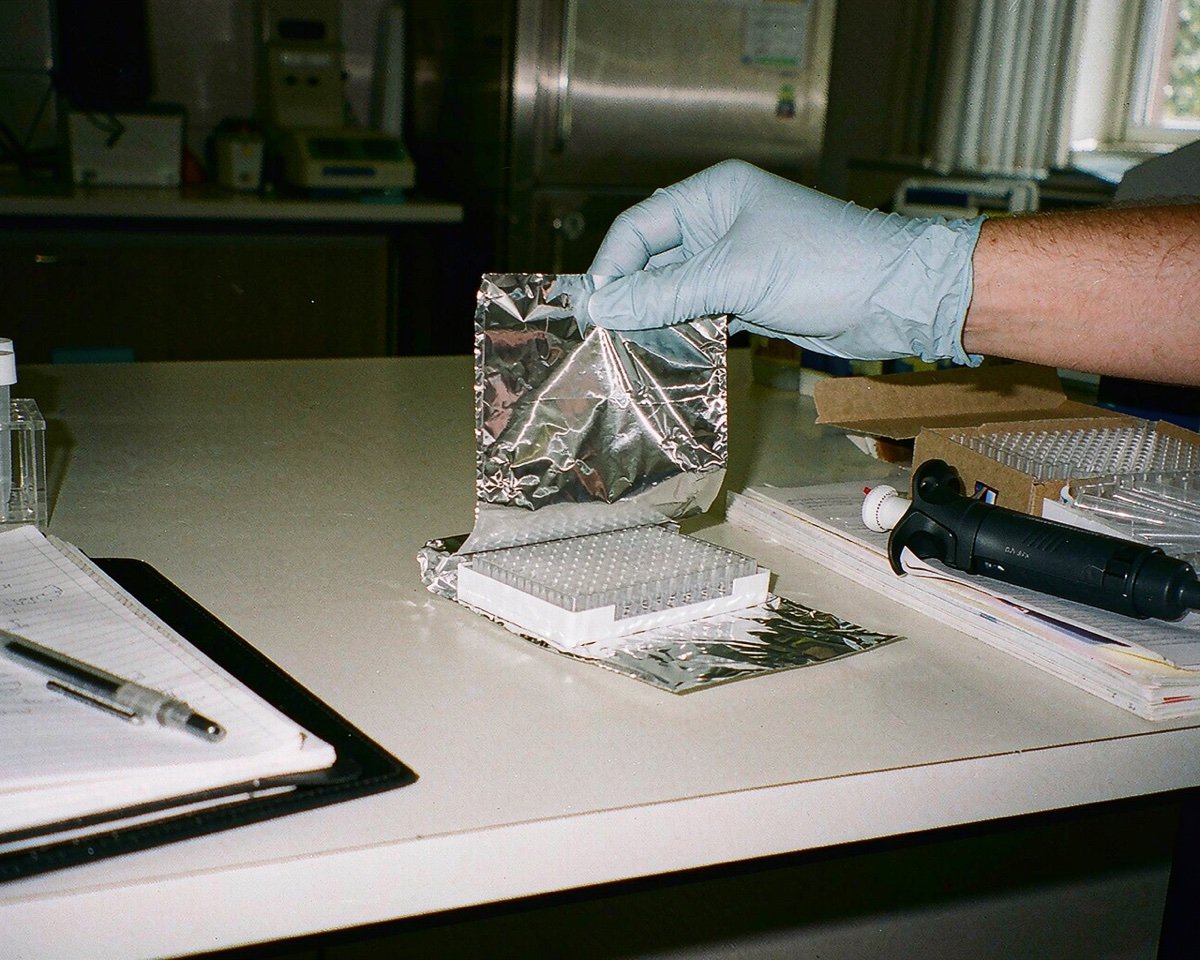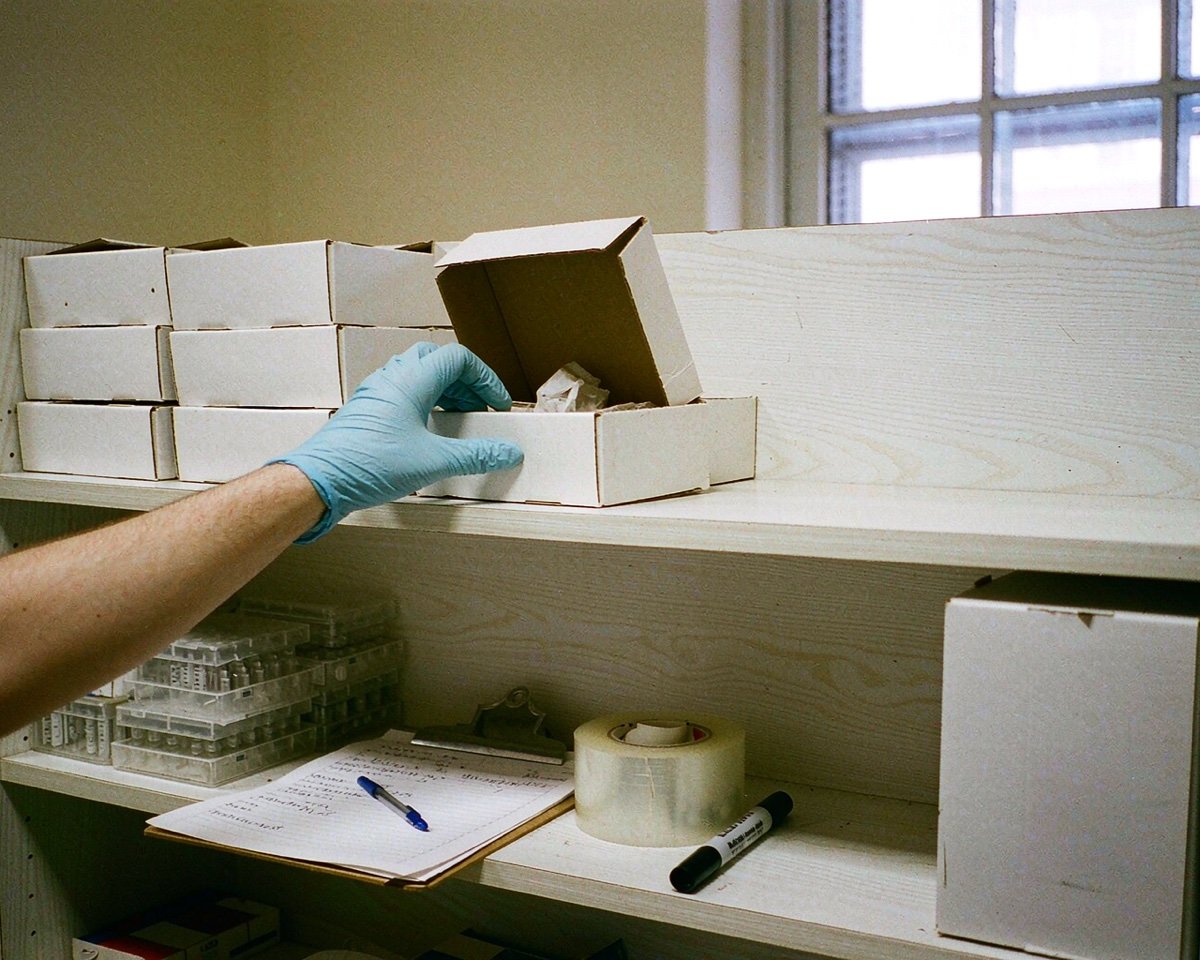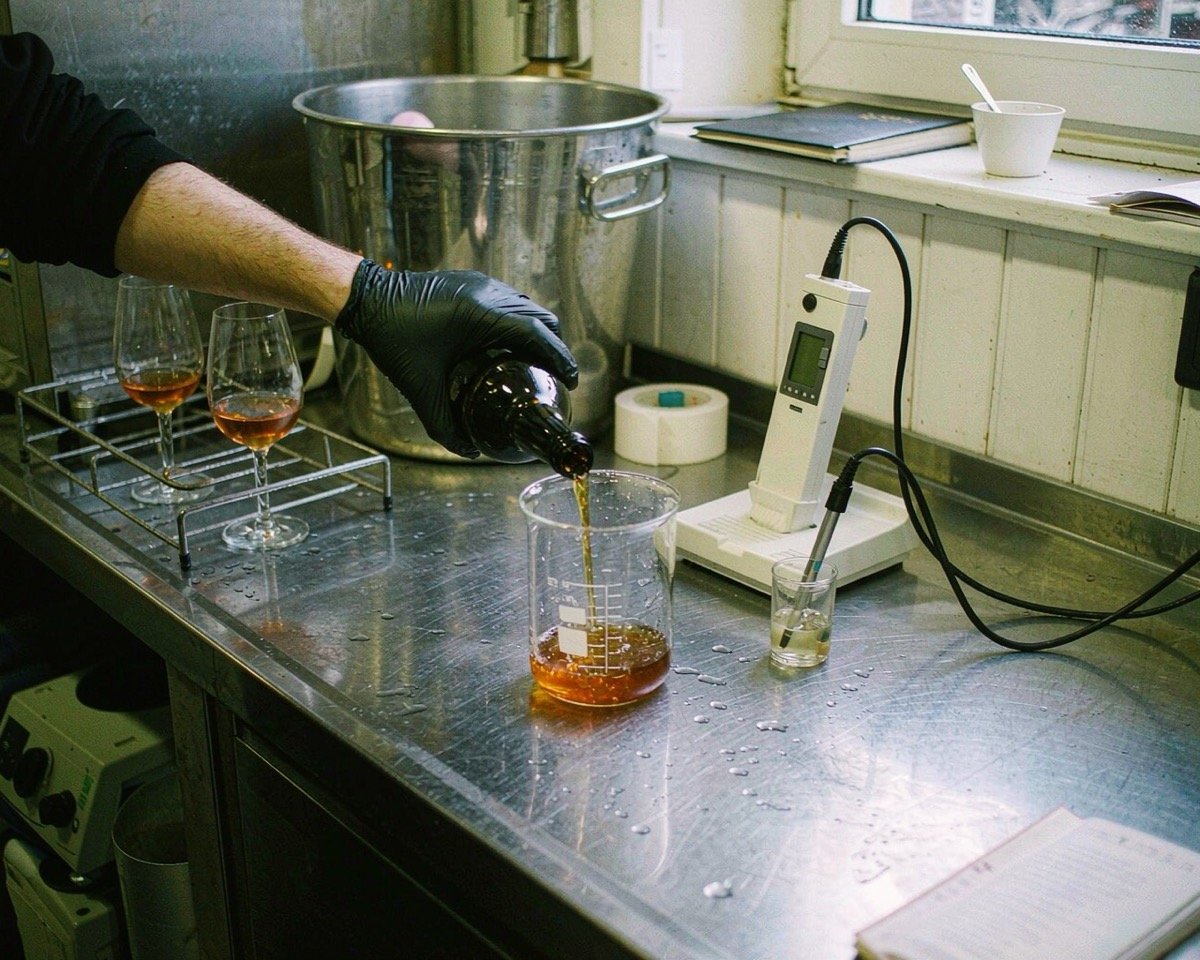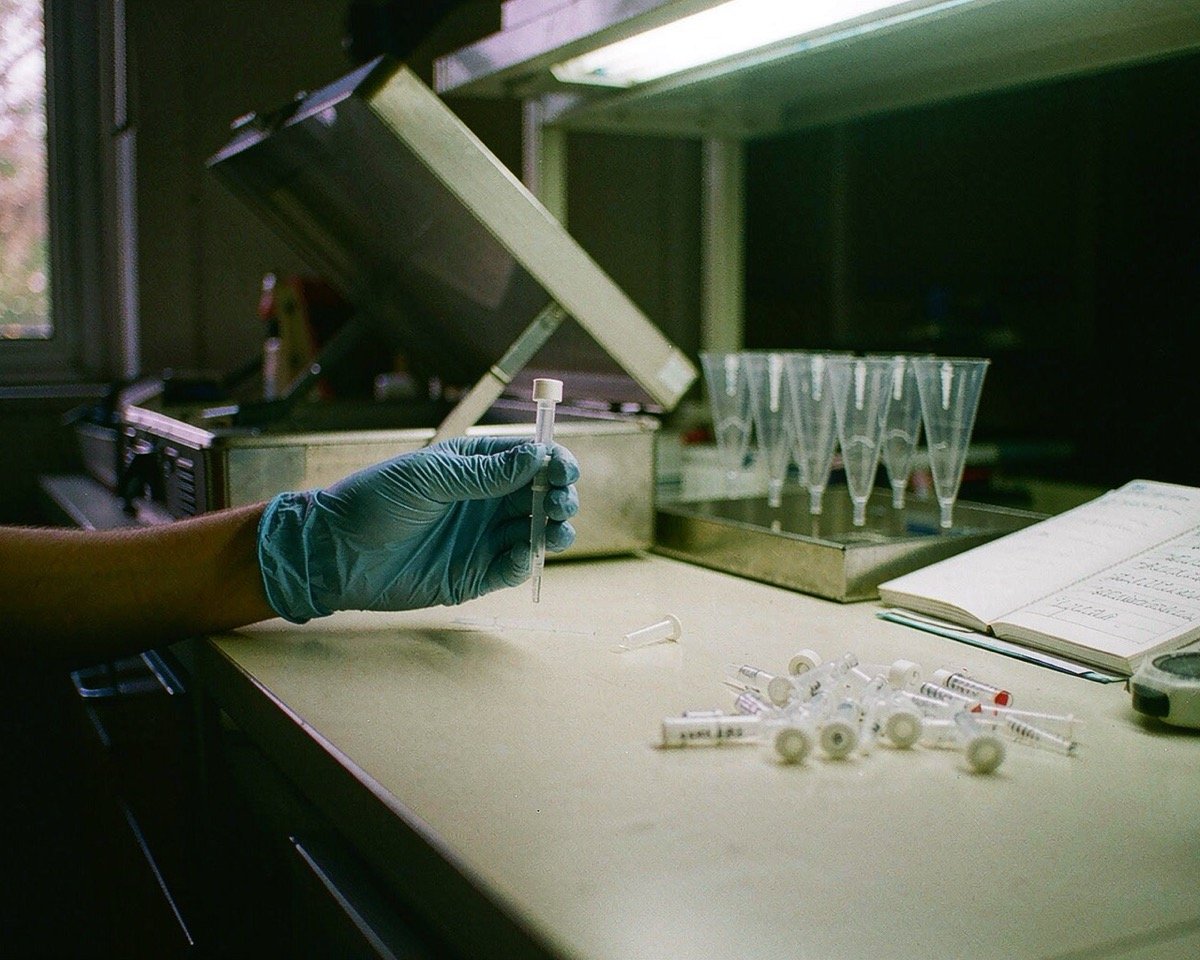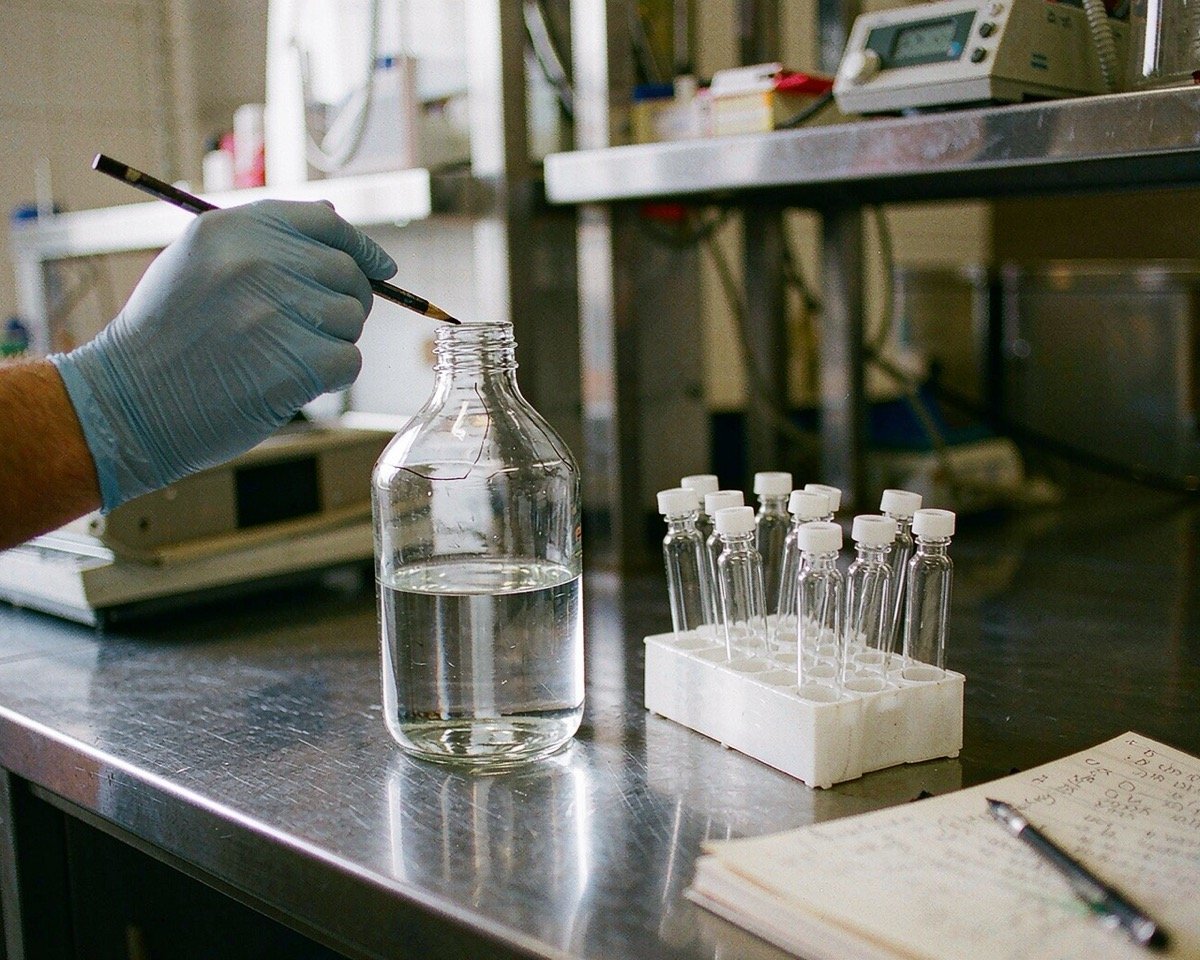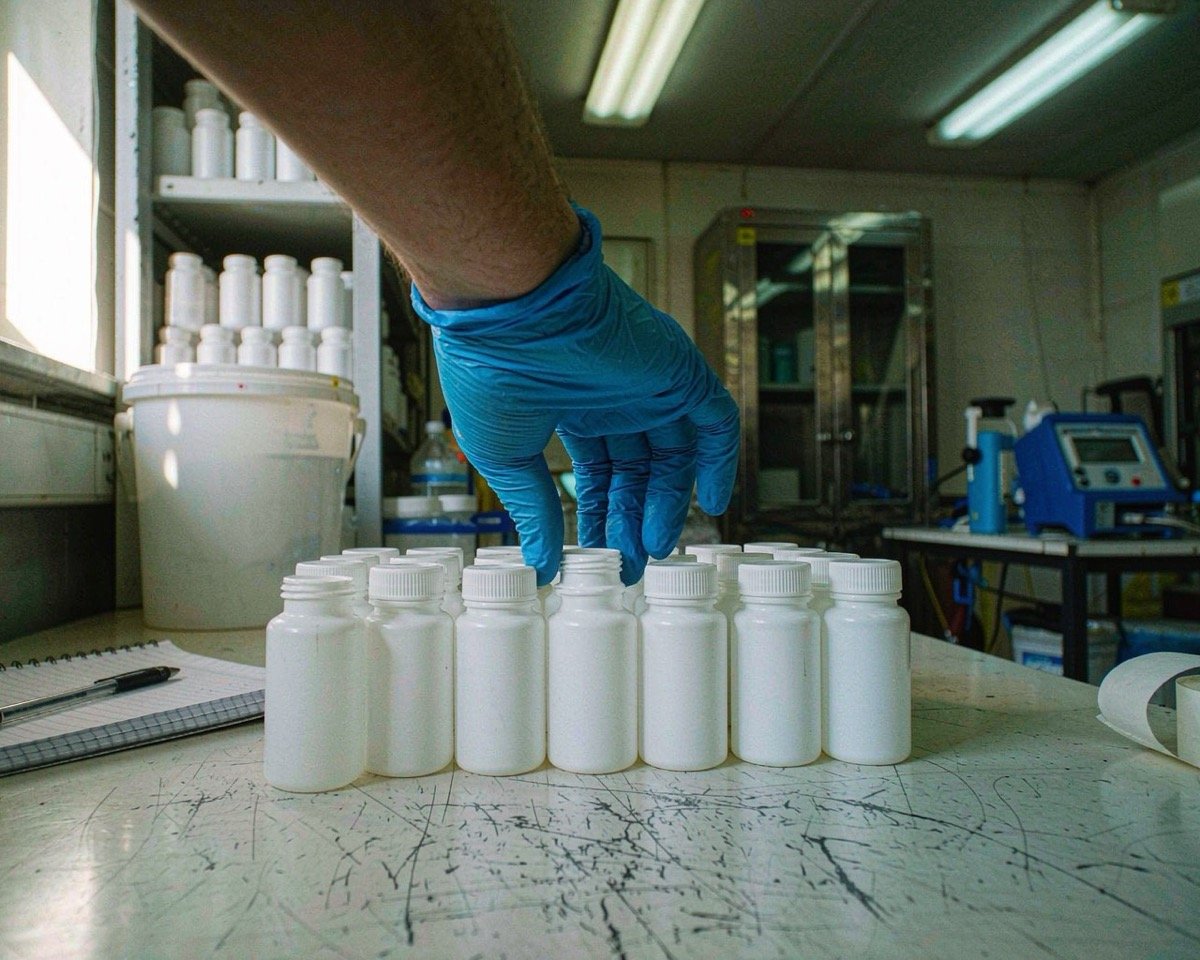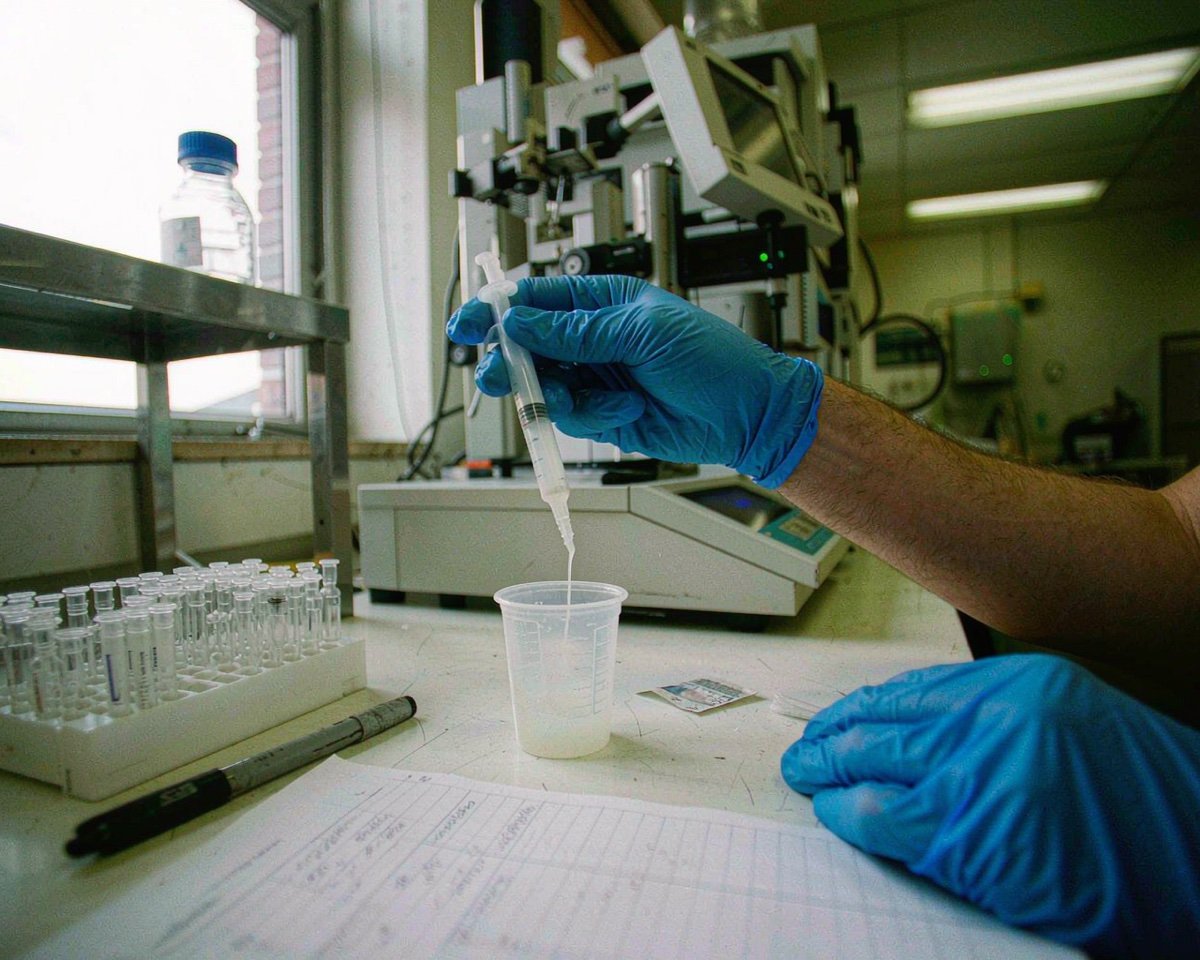
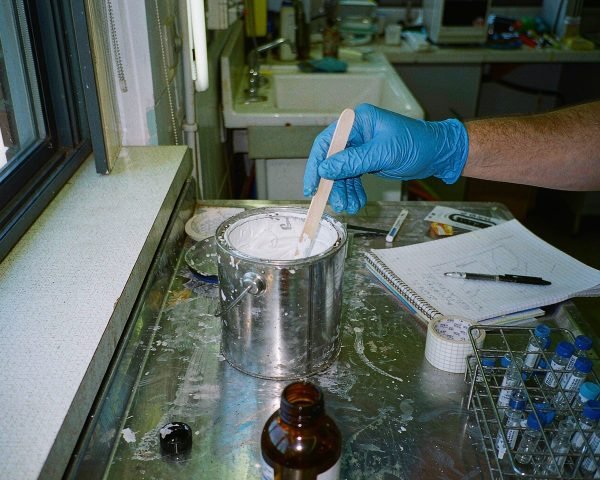

A coatings QC bench looks nothing like a pharma bench. Samples arrive as sticky dispersions, half of them smell like a hardware store, and the methods were written by regulators who care about grams per liter of VOC, not about your filtration yield. I spent two years supplying a decorative-paint QC lab, and the fastest way to earn their trust was knowing which vial survives xylene and which cap liner swells shut. That is what this guide covers.
Paint and coatings testing labs need sample containers that seal vapor-tight, GC and HPLC vials matched to VOC and resin methods, filtration that handles pigment-laden and viscous extracts, solvent-compatible bottles, and emissions consumables like DNPH cartridges. Each standard method carries its own consumable requirements, and this guide walks through them method by method.
Why Coatings Labs Are Their Own Consumable World
Three things set this vertical apart. The samples are chemically aggressive: solvent-borne paints carry aromatics, ketones, and esters that attack unfit plastics and cap liners. The samples are physically hostile: pigment, filler, and resin solids shred filtration budgets that would look generous elsewhere. And the testing is regulatory at its core, because VOC content decides whether a product can be sold in a given market at all.
The regulatory frame matters more here than in most industries. In the United States, EPA Method 24 in 40 CFR Part 60, Appendix A-7 defines how volatile matter, water, density, and solids of surface coatings get determined. In Europe, the Decopaint Directive 2004/42/EC sets VOC limit values for decorative paints and vehicle refinishing products. Both frameworks turn routine bench work into compliance evidence, which raises the bar on documentation and lot traceability for every consumable in the room.
The Consumable Map: From Can to Result
Before diving into methods, here is the practical map. A coating sample moves through four consumable stages: collection, storage, instrumental analysis, and standard/solvent storage. Each stage has a failure mode, and most labs have hit all four.
Collection fails when the container leaks vapor and the VOC profile shifts before analysis. Storage fails when light, air, or an incompatible liner changes the sample. Instrumental analysis fails when the wrong vial adds ghosts or the filter strips analytes. Standard storage fails when a solvent evaporates through a loose cap and your calibration drifts for a month before anyone notices. I watched that last one happen with a xylene standard in a bottle whose cap had been cross-threaded for three weeks. The calibration check failed on a Monday, and tracing it took two days.
Sampling and Storage Containers: Where Compliance Starts
Method 24 and its state-level cousins are specific about collection: samples should be taken in containers that fill completely and seal tightly, because headspace in the can is where volatile loss happens. In practice that means lined metal paint cans for field samples and amber glass bottles with PTFE-lined caps for lab-scale storage and retention samples.
Retention samples deserve their own habit. Most coatings labs keep a sealed retention sample per batch, and those samples sit on shelves for a year or more. The consumable decision is real: amber glass protects light-sensitive resins and colorants, and a PTFE or aluminum-lined cap keeps the solvent inventory honest over months. A QC manager once showed me a retention shelf where the lids of cheaper plastic-lined cans had domed up from solvent vapor pressure. Every one of those samples was compromised, and the batch records had to note it.
For day-to-day aliquoting, wide-mouth glass bottles beat narrow-neck ones, because pouring viscous latex through a narrow neck guarantees a dirty shoulder and a wasted wipe. Our guide to glass versus plastic reagent bottles covers why glass wins for solvent storage despite the breakage risk.
Vials for Instrumental Analysis: GC Does the Heavy Lifting
Most instrumental work in a coatings lab runs through gas chromatography: solvent identity checks, residual monomer screening, and the VOC quantification methods below. That makes autosampler vials the hardest-worked consumable in the lab.
For solvent-borne samples, 2 mL screw-neck vials in borosilicate glass are the default, and the cap liner is the decision that matters. PTFE-faced silicone septa handle aromatic and ketone solvents without swelling; cheaper red PTFE-only septa core more easily and can leak after repeated punctures. If your autosampler queue runs overnight with 80 injections of MEK-based extract, the septa will tell on you by morning.
Headspace work needs proper headspace vials with crimp or screw seals validated for vapor-tightness. VOC quantification by headspace GC, the approach behind ISO 11890-2:2020, lists sample vials among the required apparatus, and equilibration temperatures up to 120°C for some matrices mean cheap vials with variable neck dimensions will leak and wreck repeatability. Our headspace vials complete guide covers neck finishes, septa choices, and the 10/20 mL sizing question.
One more vial note: waterborne samples analyzed by HPLC for coalescents and biocides behave gentler, but they still benefit from polypropylene or low-adsorption vials when surfactant-rich matrices are involved. The syringe filters for HPLC sample prep guide pairs well here for the filtration step before those vials.
Vial size is worth one paragraph of honesty. The industry default is the 12 x 32 mm 2 mL vial, and it fits nearly everything, which is exactly why over-ordering happens. A lab running headspace VOC work needs 20 mL vials it cannot substitute, but a lab doing dilute-and-shoot solvent identity checks can run 9 mm screw vials for years without ever needing a second format. Decide the format list from your method list, not from a supplier’s catalog breadth, and your stockroom will stay smaller than your neighbor’s.
Filtration: The Consumable Black Hole of a Coatings Bench
If there is one place coatings labs burn through consumables, it is filtration. Pigment-laden extracts, resin solutions, and latex samples clog membranes at a rate pharma labs never see.
The first principle is dilution before filtration. ISO 11890-2’s sample preparation involves weighing sample with internal standard into a vial, diluting with extraction solvent, and, where particles refuse to settle, cleaning the phase by centrifugation or filtration. Dilution factor ranges of roughly 4 to 50 are typical. Filtering an undiluted alkyd solution through a 0.45 µm PTFE membrane is a donation to the filter company; dilute first, then filter, and one filter does the job of five.
The second principle is prefILTER staging. A glass fiber prefilter ahead of a 0.45 µm membrane catches the coarse pigment and extender particles, and the membrane behind it stays clean for the whole rack. Our guide on handling viscous samples in HPLC sample prep walks through the dilution and heating tricks that keep flow rates humane.
Membrane chemistry is the third decision. PTFE is the universal donor for solvent-borne work. Nylon handles most coatings extracts but can bind acidic species. Regenerated cellulose belongs on waterborne samples only. Getting this wrong does not just clog; it changes the answer, because dissolved resins adsorb or precipitate on the wrong membrane.
VOC Testing: The Consumable-Heavy Corner
Formal VOC determination deserves its own section, because it concentrates nearly every consumable category.
Reference Method 24 is a gravimetric and physical battery: volatile content by oven drying a weighed sample in a dish, water content by Karl Fischer or gas chromatography for waterborne systems, and density. The consumables are humble and exacting: disposable aluminum dishes, weigh boats, oven-capable containers, and KF reagents and vessels for the water side. Nothing here is exotic, and everything is lot-sensitive, because a dish that carries residue into the oven shifts the volatile number directly.
The chromatographic alternative runs through ISO 11890-2. Sample preparation needs sample vials, internal standard solutions, and extraction solvent. Calibration needs multi-point standard sets, which need their own storage vials and bottles. Every standard solution you make is a future audit trail item, so lot numbers on the vial boxes go into the file the same day the standards are made.
Water content by Karl Fischer adds its own chain: KF titration vessels, molecular sieve drying tubes for the cell, and standards for check-titrations. Coatings matrices are among the harder KF samples because resins can react with the KF reagent, which makes validation standards and clean vessels non-negotiable.
A note on dishes, because it is the consumable nobody thinks about until a method comparison goes sideways. Method 24’s volatile content step depends on a weighed sample losing exactly its volatiles in the oven and nothing else. A dish with residue, a dent that traps film, or a surface that reacts with the resin all bias the number. Disposable aluminum dishes remove most of that risk for pocket change per test, which is why they are one of the few consumables I would never substitute with a washed and reused alternative.
Adhesives Labs: Curing Chemistry Meets Clean Analysis
Adhesive testing shares the coatings toolbox but adds curing chemistry. Mechanical tests like lap shear and peel dominate the schedule, and they are instrument-driven, not consumable-driven. The consumable demand shows up in the chemistry that surrounds the mechanical work: residual monomer analysis by HPLC, extractables testing on cured films, and solvent identity checks on carrier systems.
Cured adhesive extraction is where vial choice gets tested. Extracts in aggressive media (warm acetonitrile, THF, or hexane/isopropanol blends) attack poor liners and plastic vials. Borosilicate vials with PTFE-lined caps are the safe harbor. Two-pack systems bring isocyanate work with it, and isocyanate analysis runs on derivatized extracts where any moisture ingress through a bad seal quietly changes the chemistry before injection.
Waterborne Versus Solvent-Borne: Different Consumable Stresses
The two great coating families stress consumables differently, and stocking one profile for both is a common mistake.
Solvent-borne work consumes solvent-compatible everything: PTFE membranes, PTFE-lined caps, glass containers, and heavier waste-handling consumables. The samples preserve themselves (the solvent is the preservative), so storage is forgiving. Analysis is not, because every plastic in the path is a potential extractables source.
Waterborne work flips it. Latex samples grow mold if stored carelessly, so sample containers matter more than solvent resistance. Filtration is harder in some ways, since latex particles deform and smear into membrane pores instead of sitting on the surface. Biocide and coalescent analysis by HPLC needs clean, low-blank vials, because these analytes sit at low levels where a dirty vial blank is visible.
Emissions Testing: The Specialized Consumables
A growing slice of coatings work measures what paint emits after application, not just what it contains. ASTM D6803 covers sampling VOCs and carbonyls emitted from applied paint using small environmental chambers, collecting VOCs onto sorbent tubes and carbonyls onto DNPH-coated silica gel.
That method family brings its own consumable economy: DNPH cartridges that need refrigerated storage and lot verification (background carbonyl on a bad cartridge is a classic silent failure), sorbent tubes with lot-specific blank requirements, and thermal desorption tubes that survive a limited number of condition-analyze cycles. Labs doing indoor-air or green-building certification work treat these as their most expensive recurring consumables, and they are right to: a single chamber run can represent a week of scheduling.
Quality Control Bench Realities
Day to day, a coatings QC bench lives on incoming inspection, batch release, and stability checks, and each has consumable habits worth setting.
Incoming raw resin and solvent checks need quick vial-based GC screens, so keep a standing stock of the two or three vial types that cover 90% of the bench. Batch release needs retention sampling infrastructure: labeled cans, a log, and shelf discipline. Stability work (real-time and accelerated) needs containers that survive ovens at 40-50°C without liner migration, which rules out several common cap liner chemistries; PTFE-faced liners are the safe default, and the compatibility table from your cap supplier should live next to the stability oven.
One bench habit pays for itself immediately: weigh dishes and vials get tared in batches, and a charged plastic vial on a dry winter day will walk your gravimetric numbers around. Keep the anti-static ionizer near the balance, not in a drawer.
Solvent Purity and Standards Preparation
Standards work in a coatings lab scales up past what most analytical labs deal with, because the analytes run from methanol through C20 hydrocarbons and the matrices demand matrix-matched calibration. That turns solvent handling into a consumable category of its own.
Calibration standards live in vials or bottles matched to the solvent: PTFE-lined caps for aromatics, amber glass for anything photo-reactive, and minimal headspace for the volatile end of the range, where a half-empty vial loses analyte to the headspace every time it warms. Multi-component standards (the VOC marker mixes that ISO 11890 methods require) are expensive enough that evaporative loss is a real budget line, not a joke.
Solvent quality control belongs here too. GC-resolvable solvents for sample dilution need lot verification against a blank, because a solvent lot with a stray impurity becomes a permanent peak in every chromatogram until someone thinks to check the solvent. A 2 mL vial of each new solvent lot, run before the lot is accepted, is the cheapest ghost-peak insurance available.
Waste handling rounds out the solvent picture. Halogenated versus non-halogenated waste segregation needs labeled, vapor-tight waste containers, and in a lab that runs chlorinated solvent methods occasionally, the labeled waste cans sit empty long enough that people forget the labeling rule. Keep the labels pre-printed.
Not every measurement in a coatings lab is chromatographic, and the non-instrument tests consume consumables at their own pace. Viscosity cups need cleaning solvents and lint-free wipes that leave no fiber behind, because a single fiber in the cup orifice shifts the efflux time. Drawdown rods and applicators need sacrificial substrate: charts, glass plates, and polyester film, all consumed by the sheet. Abrasion and scrub tests go through substrates even faster.
The consumable discipline here is different from GC work. Nobody audits a drawdown chart the way an auditor reads a vial lot number. But batch-to-batch comparisons depend on the substrate being the same, so the cheap advice is to buy substrates in one lot per test campaign and note the lot in the workbook. When a scrub resistance number moves 15% between quarters, the substrate is one of the first things to check, after the coating itself.
Cross-hatch adhesion tests add cutting tools and tape to the list. The tape is genuinely method-critical: adhesion test tapes have specified adhesion values, and substituting office tape is one of those quiet substitutions that changes pass/fail outcomes. Keep the method-grade tape stocked and locked away from the office supplies, because in every lab I have seen, the office supplies win if they are within reach.
Choosing Suppliers for a Coatings Lab
Supplier conversations go differently in this vertical because the questions are sharper. Ask a prospective consumables supplier how their septa hold up to toluene at 60°C, and you will learn quickly whether they know their own products. The answers that matter for coatings work:
Consistency across lots beats absolute specs, because method repeatability depends on the consumable not moving underneath the method. Certificates of analysis and lot traceability turn routine results into defensible records when a customer or auditor asks. And chemical compatibility documentation should be specific: “PTFE liner, compatible with aromatic hydrocarbons” is useful; “general purpose” is not.
Incoming Inspection: Trust the Consumable, Verify the Lot
Coatings labs are usually rigorous about incoming raw materials and surprisingly casual about incoming consumables. The fix costs half an hour per delivery. Check the box condition, confirm the lot number against the certificate, and run a use-test on a sample of the lot: one vial set through the GC, one filter through the dirtiest routine sample, one bottle filled with your most aggressive solvent and left for a week.
A use-test catches the failures that paperwork cannot. A septa lot that cores differently, a membrane lot with a slower wetting profile, a vial lot with rougher glass at the neck: all invisible on a packing slip, all visible in twenty minutes of bench time. And once a lot passes, write it down. When an odd blank shows up three months later, “consumable lot L validated on this date” is the note that shortens the investigation from days to hours.
Training Bench Staff on Consumable Discipline
The best consumable specification fails if the bench treats it as a suggestion. Three habits make the difference, and none of them requires a meeting.
Label everything that gets opened. A half-used box of septa with no open date gets used last, which inverts the freshness logic. A solvent bottle decanted into an unlabelled wash bottle is a contamination story waiting to be written up.
Keep compatibility information where the decisions happen. A one-page solvent-to-liner and solvent-to-membrane chart taped inside the consumables cabinet answers the question at the moment someone is holding both items. Ninety percent of compatibility mistakes I have seen happened when the person had to leave the bench to look something up and decided not to.
And protect the cheap habits. Retention samples go on the shelf labeled and logged, every time, even on the Friday afternoon rush. The days that discipline feels unnecessary are precisely the days it is being tested.
A Worked Order List
Here is the baseline consumable basket I would set up for a small coatings QC lab, as a starting frame rather than a prescription.
| Consumable | Spec to Look For | Why It Matters |
|---|---|---|
| 2 mL screw vials | Type 1 borosilicate, 9 mm thread | Daily GC/HPLC workhorse |
| PTFE/silicone septa caps | PTFE-faced, 9 mm | Solvent resistance, resealability |
| Headspace vials | 20 mL, flat or round bottom, validated seals | VOC methods, high-temp equilibration |
| PTFE syringe filters | 0.45 µm, 25 mm | Solvent-borne extracts |
| Glass fiber prefilters | Grade-compatible with membranes | Pigment capture, membrane life |
| Amber glass bottles | 100-500 mL, PTFE-lined caps | Retention samples, light-sensitive stocks |
| Borosilicate media bottles | GL45 or equivalent, autoclavable | Solvent and buffer storage |
| Aluminum weigh dishes | Disposable, oven-rated | Method 24 volatile content |
| DNPH cartridges | Verified low background | Emissions/carbonyl work |
The exact mix shifts with your method list, but the pattern holds: glass and PTFE carry the solvent work, staged filtration carries the solids problem, and documentation carries the regulatory side.
Storage and Shelf Life in a Coatings Lab
Coatings labs store consumables next to some of the worst storage neighbors in the lab business: solvent vapor, oven heat, and whatever the fume hood exhaust is pulling past the shelving. Consumables that would last five years in an office cabinet age faster here, and the failure is silent.
Septa and membranes suffer most from solvent vapor, which plasticizes liners and membranes slowly over months. Keep them in sealed bags or original packaging, in a cabinet that closes, away from the solvent shelving. Adhesive seals and DNPH cartridges want refrigeration, and the bench rule that works is simple: anything the supplier ships cold stays cold until the morning it is used.
Glass vials and bottles age gracefully, but their packaging does not. Corrugated boxes absorb moisture and dust, and a vial pulled from a dusty box carries that dust to the autosampler tray. Labs that decant a week’s vial supply into a covered, labeled container at the bench solve the dust problem for the cost of one plastic tub.
Rotate stock with the same discipline you would apply to reagents. First in, first out, date written on the box when opened. A 15-minute quarterly check of the consumables cabinet, looking for opened packaging, swollen liners, and discolored membranes, has caught more incipient failures in my experience than any certificate review ever has.
Common Mistakes Worth Avoiding
A patterns-from-experience list, with the causes attached.
Plastic containers for solvent storage is the most expensive one. A lab I supplied stored xylene rinse standard in a large PP bottle; three months later the shoulders were cloudy and the blanks had picked up a mystery peak that took a week to trace to the bottle. Solvents and plastics interact slowly, which is exactly why the interaction gets missed.
Filtering undiluted samples is the budget killer. Every filter sacrificed to an unfiltered alkyd solution was avoidable with dilution or a prefilter stage.
The third recurring one: treating all septa as equal. A septa that reseals 5 times matters when your autosampler reorders to the same vial, and a liner that swells in esters matters the first time a cap refuses to close. Compatibility sheets exist for a reason; keep the two that cover your solvents taped inside the consumables cabinet.
Where This Vertical Is Heading
Two trends are reshaping the consumable basket. Waterborne and high-solids formulations keep growing under VOC pressure, which shifts volume toward water-compatible filtration and low-blank HPLC work. And emissions and sustainability certification keep expanding, which grows the sorbent-tube and DNPH side of the bench. Neither trend reduces consumable demand; both reshape it.
Conclusion
Paint, coatings, and adhesives labs are punishing on consumables in ways generic buying guides never anticipate: solvents that attack liners, pigments that eat filters, regulators who turn every vial lot into potential evidence. The labs that run smoothly treat consumables as part of the method, matching septa to solvents, staging prefilters before membranes, sealing retention samples properly, and keeping lot records without being asked. Stock against your method list rather than a catalog, qualify suppliers with compatibility questions rather than price alone, and the bench stays boring in the best way. When you are ready to build out the analytical side, our guide to syringe filters for HPLC sample prep and the headspace vials complete guide are the two references I would put next to the balance.
Frequently Asked Questions
What vials do I need for VOC testing of paints by GC?
For headspace-based VOC methods, use dedicated 20 mL headspace vials with validated crimp or screw seals, since equilibration can reach 80-120°C and leaky seals destroy repeatability. For liquid injection of diluted extracts, 2 mL borosilicate screw vials with PTFE/silicone septa are the standard choice.
Which syringe filter membrane works with solvent-borne coatings samples?
PTFE membranes are the default because they resist aromatics, ketones, and esters and shed almost nothing. Stage a glass fiber prefilter ahead of the membrane for pigment-laden samples, and dilute the sample first to protect membrane life.
Why did my cap liners swell when storing coating samples?
Unlined or rubber-based liners absorb and swell in ketone and ester solvents. Use PTFE-faced liners for any solvent-borne work, and check the manufacturer’s chemical compatibility table for your specific solvent list before committing a stability study to them.
Do I need amber containers for paint samples?
Yes, whenever the sample contains colorants, certain resins, or photo-reactive additives, and always for long-term retention samples. UV exposure shifts color measurements and can polymerize or degrade sensitive components over months on the shelf.
How often should a coatings lab replace its filtration stock?
Filters have shelf lives of several years if stored cool, dry, and sealed, but usage usually consumes them faster. Set reorder points from measured weekly usage, and inspect stored filters quarterly for packaging damage or discoloration.