
# What Consumables Does Ambient Air and VOC Monitoring Need?
Air sampling projects have a habit of failing quietly. A tube that rode in a hot van all afternoon, or a canister with a slow valve leak. None of these announce themselves until your lab sends back flagged data, and by then the sampling event is gone for good.
The short answer: Ambient air and VOC monitoring typically needs five consumable groups: evacuated canisters, multibed sorbent tubes, DNPH cartridges for aldehydes, calibration gases, and certified blanks. Flow controllers, valves, and caps keep each sample valid.
Below, I’ll break down every group, match it to the EPA method that expects it, and flag the small items (ferrules and filters) that quietly sink more projects than the big-ticket gear does.
What Ambient Air and VOC Monitoring Consumables Look Like in Practice
Your consumables list follows your method, not the other way around. EPA Method TO-15 collects whole air in evacuated canisters and finishes the job on GC/MS (read the method here). EPA Method TO-17 takes the sorbent tube route instead, pulling air through thermally desorbable tubes (TO-17 PDF). For carbonyls such as formaldehyde, TO-11A runs air through DNPH-coated cartridges and quantifies the trapped derivatives by HPLC (TO-11A PDF).
Pick the method first, then build the kit around it. A TO-15 program and a TO-17 program overlap far less than most people assume, and improvising between them usually ends in re-sampling.
If you’re stocking a broader lab alongside the air program, our complete guide to environmental testing lab consumables covers the crossover items most air teams also burn through.
Sorbent Tubes: Tenax TA, Carbograph, and Thermal Desorption
Sorbent tubes are the workhorses of Method TO-17. A single bed of Tenax TA handles organic compounds from roughly C6 to C26. Add a bed of graphitized carbon black (Carbograph or Carbopack B) and you start catching lighter volatiles. A carbon molecular sieve bed behind that pushes coverage down to C2 and C3 compounds, which is how multibed air toxics tubes cover nearly the whole volatility range in one run.
The tubes themselves come in stainless steel or glass, each etched with a serial number and shipped pre-conditioned. During analysis, most labs desorb at high temperature. Tenax TA tubes are typically held at 250 °C during desorption, hot enough to release the analytes without cooking the sorbent.
One rule worth memorizing: never redeploy a tube without running a tube blank first. The blank is your only proof that the previous sample left nothing behind.
Humid sites need extra care. Water vapor competes with your analytes on the stronger sorbents, so field crews may need to cut air volumes back when relative humidity climbs. Hydrophobic sorbent choices help, but the method should set the limit, not the technician’s mood on site.
Canisters: SUMMA-Passivated Steel and the Hardware Around Them
For whole-air sampling under TO-15, the 6 L SUMMA canister is still the default for 24-hour ambient monitoring. Its interior is electropolished and passivated so reactive compounds don’t stick to the walls. For sulfur species and other aggressive analytes, Siltek-treated canisters (often sold as SilcoCan) offer an even more inert surface, and Restek’s SilcoCan canister lineup lays out the size and valve options side by side.
The hardware around the can matters as much as the can. A critical orifice or mass flow controller meters the intake across the full sampling window. A vacuum gauge confirms the canister started near -30 inHg and ended where your method expects. Leaky valves and damaged ferrules are the classic silent killers here.
I know a consultant who lost an entire quarter of fence-line monitoring data because three canisters failed the intake vacuum check at the receiving lab. The samples had shipped without a pre-ship leak check, and nobody caught it until data review. Two minutes with a gauge before every shipment would have saved the whole batch.
Canister cleanliness is a consumable issue too, even if nobody bottles it. Used vessels need humid zero-air flushing and a certified blank before reuse, and that cleaning cycle (in-house or outsourced) belongs on your budget right next to tubes and cartridges.
DNPH and TEDA Cartridges for Aldehydes
Formaldehyde and other carbonyls need their own chemistry. Under TO-11A, air passes through a cartridge of DNPH-coated silica gel at a controlled rate (the method suggests 1,000 to 2,000 mL/min), and the trapped aldehydes derivatize on the spot for later HPLC analysis.
Two details matter more than price. Ozone will chew up both the DNPH reagent and the captured derivatives, so an ozone denuder or potassium iodide scrubber belongs in the train for ambient work. And each cartridge lot needs a certification blank below 0.15 µg of formaldehyde per cartridge, so ask your supplier for the batch certificate instead of assuming the media is clean.
Cold storage starts the moment the box arrives. Cartridges sit refrigerated at about 4 °C and kept sealed and dark, both before and after sampling, and they travel to the field in screw-cap glass tubes.
For workplace air, the chemistry changes. NIOSH Method 2541 uses tubes coated with 2-(hydroxymethyl)piperidine on XAD-2, sampled at no more than 0.10 L/min to avoid breakthrough (NIOSH 2541 PDF). You may also run into TEDA-coated media in some badge-style formaldehyde samplers, which stabilize reactive aldehydes on a coated surface in much the same spirit.
VOA Vials for Air-to-Water Trapping
Some programs convert air samples into aqueous ones. Impinger traps, air-stripping experiments, and headspace work all end with VOCs dissolved in water, and from that point the consumables switch families. You’re now buying 40 mL vials with PTFE-lined septa, filling them with no headspace at all, and preserving with acid only where the method calls for it. We keep a separate walkthrough of EPA VOA vials and when you need them if that’s your path.
Calibration Gases and Blanks
No sampling program survives on hardware alone. Canister methods need certified gas standards at ppbv levels, plus humid zero air for dilutions and cleaning. Tube methods lean on liquid standards spiked onto sorbent, with surrogates such as bromofluorobenzene tracking system health. Whatever your method, blanks do the quiet work: canister blanks, tube blanks, field blanks, and trip blanks each catch a different contamination path, and EPA’s updated TO-15A guidance leans harder on this QC layer than the 1999 original did.
My honest take: most programs overbuy hardware and underbuy blanks. A field blank costs a few dollars. A contested dataset can cost the client.
Storage, Hold Times, and Chain of Custody
Every consumable has a clock on it once it’s used. Canister samples hold their integrity for roughly 30 days under good conditions, a figure Restek cites in its air sampling FAQ, while many sorbent tube analyses want turnaround inside a week or two, and DNPH cartridges should head to HPLC promptly after refrigerated storage. Reactive compounds degrade first, so treat every published hold time as a ceiling, not a target.
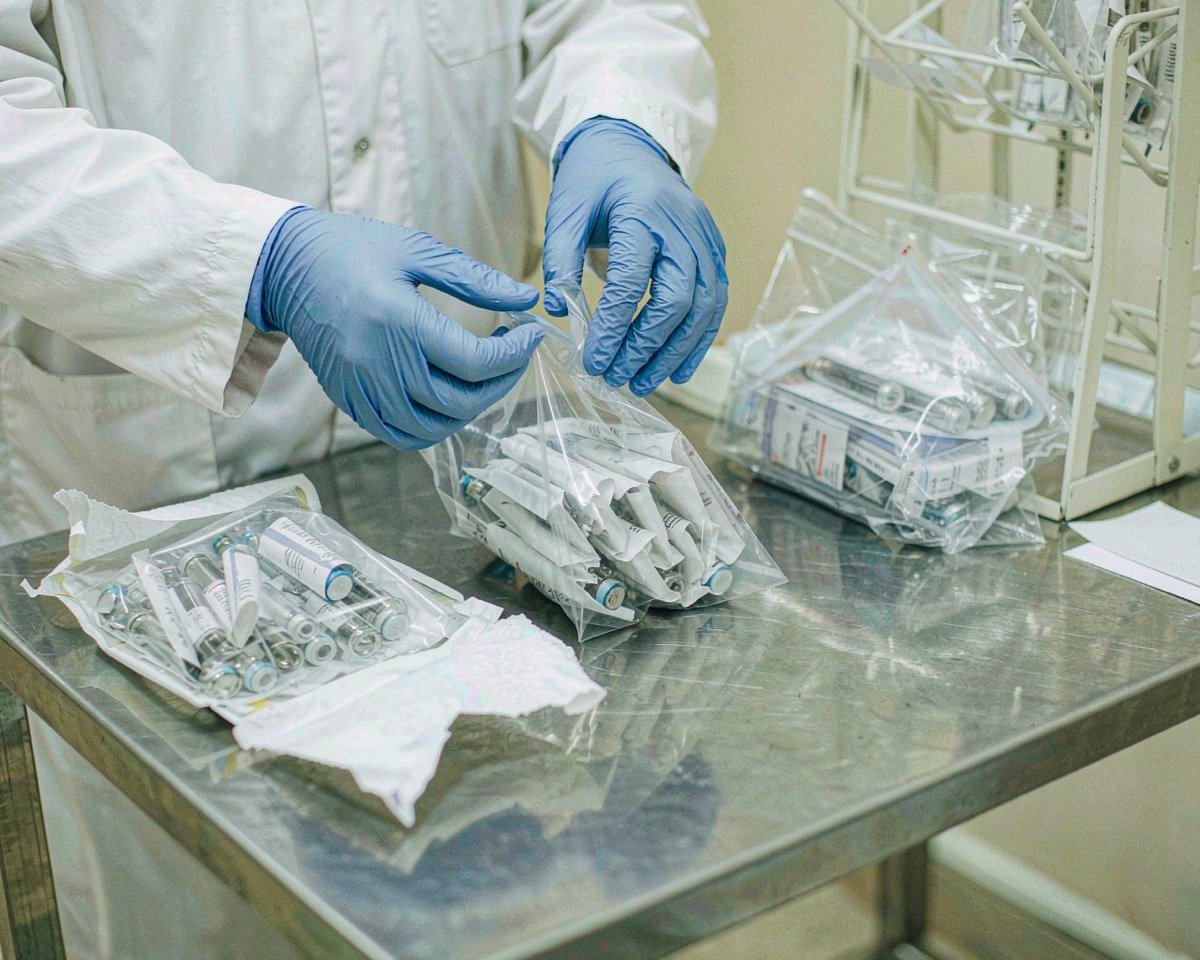
Chain of custody ties the consumables together. Serial numbers from tubes and vessels, flow controller settings, start and stop times, pre- and post-sampling vacuum readings: all of it goes on the COC form. When samples travel, the packing matters as much as the paperwork, so our practical guide to shipping lab samples safely covers the transport side in detail.
Conclusion
Ambient air and VOC monitoring doesn’t demand exotic equipment, but it does demand the right consumables matched to the right method. Canisters for TO-15, multibed sorbent tubes for TO-17, DNPH cartridges for TO-11A, calibration gases for daily QC, and enough blanks to prove the dataset is real. None of these items is expensive on its own. Together, they decide whether your numbers survive review. If you’re mapping out a full program, start with the complete consumables guide above, then check these eight rules for samples that must arrive valid before your first field run. Buying consumables is easy. Buying the ones that keep a sample valid from the field to the instrument is the part worth a second look.
Frequently Asked Questions
How long can a VOC sample sit in a canister before analysis?
Most compounds remain stable in a passivated canister for about 30 days when stored cap-tight and away from heat. Reactive species (reduced sulfur compounds are the usual suspects) may degrade sooner, so tighter turnaround is safer for those.
What sorbent tube should I use for ambient VOC monitoring?
A multibed tube per EPA TO-17, usually Tenax TA with a graphitized carbon black bed behind it (carbon molecular sieve gets added when you need the lightest compounds). That combination covers light volatiles through heavier compounds in a single analysis.
Do DNPH cartridges need an ozone scrubber?
Yes for ambient air. Ozone reacts with both the DNPH reagent and the trapped derivatives, which can bias formaldehyde results low. A potassium iodide denuder or equivalent scrubber ahead of the cartridge prevents it.
What size canister do I need for 24-hour ambient sampling?
A 6 L canister paired with a flow controller or critical orifice is the standard setup. The controller meters the intake at a few mL/min so the canister ends the day at a defined pressure or partial vacuum.
How should I store unused DNPH cartridges?
Refrigerated at about 4 °C and kept sealed and dark. Ask for the batch certification blank with the shipment so you can document cartridge cleanliness before sampling starts.