
# How to Train New Staff on Consumables Handling
Every lab has a story about a new hire and a box of the wrong vials. Yours probably does too. The good news is that consumables handling is one of the easiest skills to teach, if you treat it as hands-on practice instead of a stack of SOPs nobody reads.
Train new staff on consumables handling with a one-page cheat sheet, supervised first-week drills, and a simple lot-logging habit. Show, don’t lecture. New hires follow what they see done at the bench, not what’s buried in a PDF.
We learned that the hard way. Read on, because a few cheap habits now can save you a ruined sequence later.
Why Consumables Training Deserves More Attention Than It Gets
Consumables look simple. Vials, filters, septa, gloves: what’s to train? Quite a lot, actually.
A few years ago, a new analyst on my team loaded an autosampler tray for an overnight run of 80 samples. She grabbed 13-425 threaded vials from an open box because it was the nearest one. Our instrument used 9-425 caps. The needle seated wrong, several injections failed, and we lost the whole night. Nobody was careless. Nobody had shown her the difference.
That’s the pattern with consumables mistakes. They’re small, silent, and expensive in aggregate, and they rarely get caught until data or time is gone. Regulators see this too. ISO/IEC 17025, the main standard for testing labs, requires that personnel be trained, competent, and authorized for the work they perform, and that you can prove it with records (ISO/IEC 17025:2017). CDC’s biosafety competency guidelines take the same view: competencies should be defined, tiered by experience level, and observed in practice, not assumed from a job title (CDC, Guidelines for Biosafety Laboratory Competency).
So the goal is simple. Define what “correct handling” looks like, make someone watch the new hire do it, and write it down. Here’s how to do that without turning onboarding into a two-week seminar.
Start With a One-Page Consumables Cheat Sheet
Before your new hire touches anything, give them a single reference sheet. We keep a laminated one-pager taped inside the solvent cabinet, and it has saved us more times than I can count.
What belongs on it:
• Vial thread sizes, especially the ones your lab actually uses. If your autosamplers take 9-425 caps, write that down next to a photo of the vial. The 9-425 vs 13-425 mix-up is arguably the most common consumable error in HPLC labs.
• Filter codes and what they mean: pore size (0.22 µm vs 0.45 µm), membrane material (PTFE, PVDF, nylon, PES), and which solvents each one tolerates. Filtration choices affect recoveries and can leach extractables into your chromatogram, so a wrong filter isn’t just an inconvenience (CHROMacademy, Optimizing Sample Preparation: Filtration).
• Lot numbers and expiry rules: where to find them on the box, where to record them, and what to do when a lot changes.
• Glove and PPE notes: which glove material is safe around the solvents on your bench.
Keep it to one page. If it runs to two, it becomes a document people skim instead of a tool they use. If you want a deeper starting point, our guide on what a sample filtration SOP should contain pairs well with the cheat sheet.
Run Hands-On Drills in the First Week
Drill 1: Loading autosampler trays
Have the new hire load a dummy tray under supervision, before they ever touch a real sequence. Walk through vial type, cap torque, and tray position mapping. Then make them load one alone while you watch. Yes, it takes twenty minutes of your day. It’s far cheaper than an overnight run full of failed injections.
Drill 2: Filtering a sample the right way
Show the full motion: draw, pre-rinse the filter with a small aliquot to reduce leachables, filter slowly, and label the receiving vial immediately. Then watch them do it twice. Most rookie filtration errors come from rushing pressure and reusing filters, and both habits are easy to correct on day one and hard to correct later.
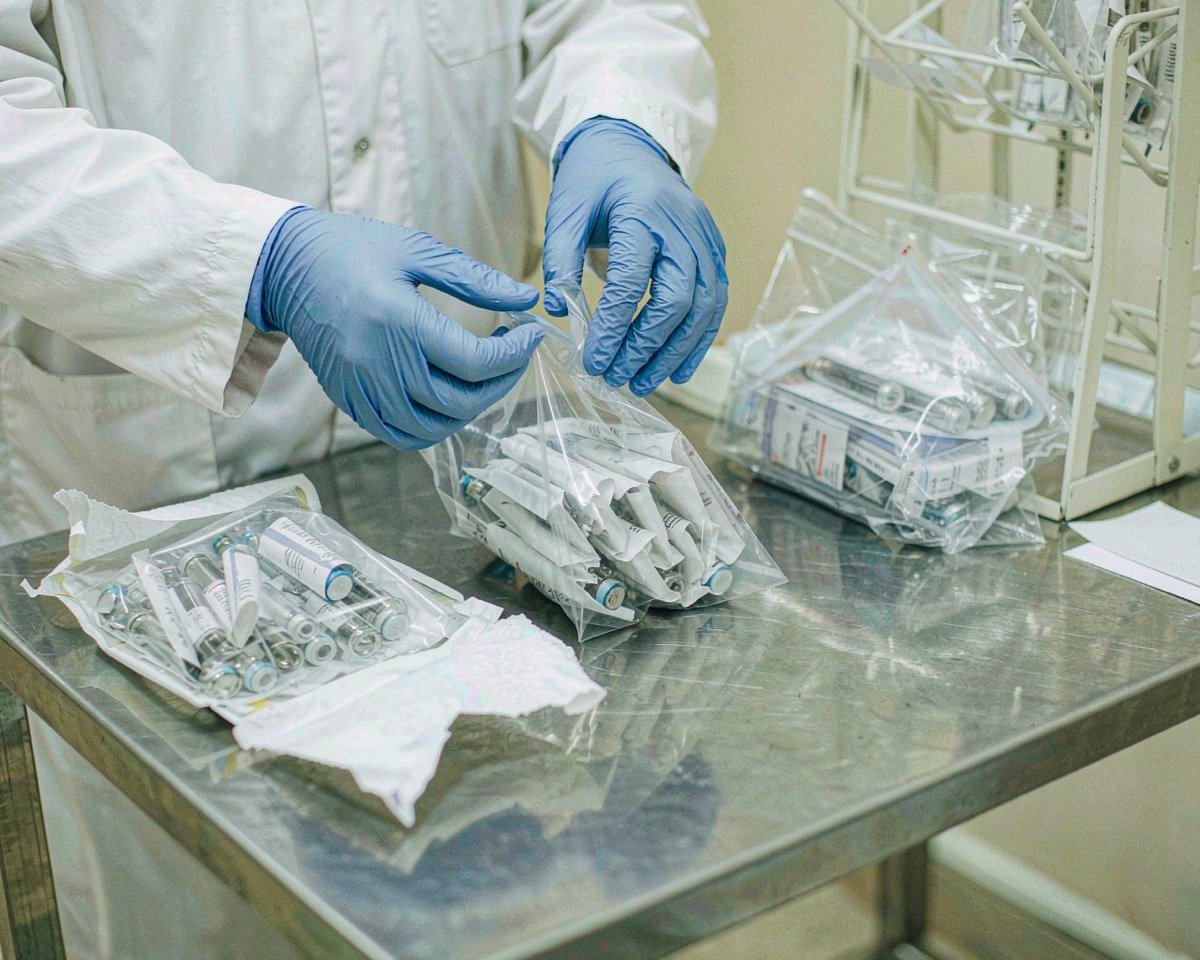
Drill 3: Opening sterile packs without contamination
Demonstrate peeling technique, where to hold, and what counts as a contaminated pack. Point them to your storage rules for opened packs as well, since resealing and shelf placement are the kind of detail nobody mentions and everyone gets wrong.
Each drill should end the same way: the new hire does it once, unaided, while you observe. That observation is your training record, and it matters for audits.
Name the Common Rookie Mistakes Out Loud
Don’t assume common sense will fill the gaps. Say the quiet parts at the bench.
The big three we see repeatedly: wrong septa for the vial or solvent system, filters reused “just this once” to save time, and gloves worn too long or worn into areas they don’t belong. None of these look like disasters in the moment. Each one can quietly shift your data.
Gloves deserve a specific mention. Transfer contamination from gloves is a real analytical problem, and most people pick glove type by comfort rather than by the chemistry they’re handling. If your team touches samples bare-handed or with the wrong material, read our breakdown of glove choice and sample contamination. Consider making it required reading before the first bench session.
Build Documentation Habits From Day One
Training isn’t done when the technique looks right. It’s done when the paperwork follows automatically.
Teach three habits from the first day:
1. Record the lot number for every consumable batch that touches a sample, in whatever system your lab uses.
2. File the CoA when a new lot arrives, or at least verify it matches the product and grade on the box.
3. Note lot changes in your run log, because a subtle shift in results sometimes traces back to a new filter membrane lot, not the instrument.
This isn’t bureaucratic busywork. FDA’s data integrity guidance exists largely because lab records were incomplete or unverifiable, and it expects firms to design processes where reliable recording is the default (FDA, Data Integrity and Compliance With Drug CGMP). A new hire who logs lots from day one gives you a traceable paper trail for free. For the wider picture, see our article on consumables habits that protect data integrity.
Schedule Refreshers and Assign Ownership
Training decays. Six months in, even careful people start grabbing whatever vial box is closest.
Set a light but fixed cadence: a short refresher every six months, plus a repeat drill whenever a consumable type or instrument changes. CDC’s competency framework suggests matching the depth of training to experience level, so entry-level staff get supervised practice while senior staff get refreshers and responsibility for training others (CDC, Guidelines for Biosafety Laboratory Competency).
Ownership matters just as much as cadence. Name one person per lab section who owns the cheat sheet, checks stock rotation, and signs off on new-hire drills. When consumables training belongs to everyone, it quietly becomes nobody’s job.
Let Your Supplier Do Some of the Training
You don’t have to build every training asset yourself. A good supplier supports your onboarding in three ways:
• Samples: new staff can practice on supplier-provided vials and filters without burning your validated stock.
• Spec sheets: compatibility charts and pore code explanations make excellent cheat sheet content, and they’re usually a download away.
• CoAs and lot documentation: a supplier that ships complete documentation makes your lot-logging habit far easier to sustain.
• Bulk pricing on practice stock: some suppliers will quote on the “seconds” or education packs, which are perfect for drills.
Ask your supplier how they document lots and what compatibility data they can provide before your next big order. In our experience, labs that build the cheat sheet from actual supplier spec sheets make noticeably fewer selection errors than labs working from memory.
Conclusion
Training new staff on consumables handling comes down to three moves: give them a one-page cheat sheet they can actually find, watch them perform each core task at least once, and make lot documentation an automatic habit from the first day. None of this requires software, consultants, or a week-long course. It requires twenty minutes of your attention per hire and a laminated page taped where the work happens.
The payoff compounds. Fewer failed sequences, cleaner chromatograms, and an audit trail you don’t have to reconstruct under pressure. Start with the cheat sheet this week, then layer in the drills. For the mistakes to watch for as your new hire gains speed, our rundown of consumables problems that aren’t the supplier’s fault is a useful second read.
Frequently Asked Questions
How long should consumables training take for a new lab employee?
Plan for roughly one week of supervised practice, not classroom time. A one-hour orientation, three hands-on drills, and observed sign-off per task usually covers it. Most labs can fit this around normal workload without slowing the bench down.
What’s the best way to teach new staff about lot numbers and CoAs?
Tie them to a physical action, not a rule. Show where the lot number sits on the box, have the new hire log it during a real delivery, and file one CoA together. Doing it once with you is worth ten reminders.
Which consumable mistakes do new hires make most often?
Wrong vial thread sizes (the 9-425 vs 13-425 confusion), wrong filter membrane for the solvent, reused syringe filters, and gloves worn past the point of usefulness. All four are preventable with a cheat sheet and one supervised drill each.
Do we need formal training records for consumables handling?
If your lab works under ISO/IEC 17025, GLP, or GMP expectations, yes. The standard requires documented training and demonstrated competence for testing personnel. A simple dated sign-off sheet per drill is usually enough to satisfy that requirement.
How often should consumables handling be retrained?
Every six months as a light refresher works for most labs, plus immediately after any change in consumable supplier, product type, or instrument. Experienced staff mostly need reminders; new staff need observed repetition.