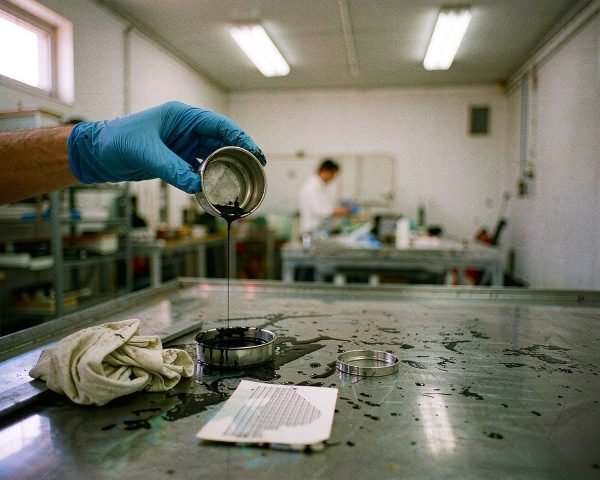

# What Consumables Does Ink and Printing Quality Control Need?
A pigment dispersion once wrecked a $600 HPLC column of ours in under ten minutes. No prefilter, a standard 0.45 µm membrane, and a flexo ink loaded with particles near 5 µm. That was an expensive lesson in how much consumables matter in ink and printing quality control.
The Short Answer
Ink and printing quality control mainly needs six consumables: wide-mouth or amber sample vials, glass fiber prefilters with syringe filters, viscosity cups or rheology supplies, PTFE-lined solvent-safe caps, VOC sampling vials, and migration-test cells for packaging work.
Below I break each group down, test by test, with the failure modes that waste the most lab time. A few of these choices look trivial, until an aggressive solvent proves otherwise.
What Ink and Printing QC Labs Use, Test by Test
What ink and printing labs actually test
Most ink QC labs run a blend of physical and chemical tests. Viscosity controls flow and press behavior. Color and transparency get checked against standards like ISO 2846-1:2017, which defines the colorimetric requirements for process ink sets in offset printing (ISO 2846-1:2017). Drying, set-off, and light fastness follow their own methods; ISO 12040, for example, covers xenon-arc light fastness of prints and inks under ISO/TC 130 (ISO catalogue for printing inks). Chemical labs add VOC content, solvent residues, and, for food packaging, migration of ink components.
Every one of these tests pulls on the same small pool of consumables: vials, filters, cups, caps, and sorbents. Get those wrong and the instrument rarely fails. Your data does.
Sample vials: wide-mouth and amber glass earn their keep
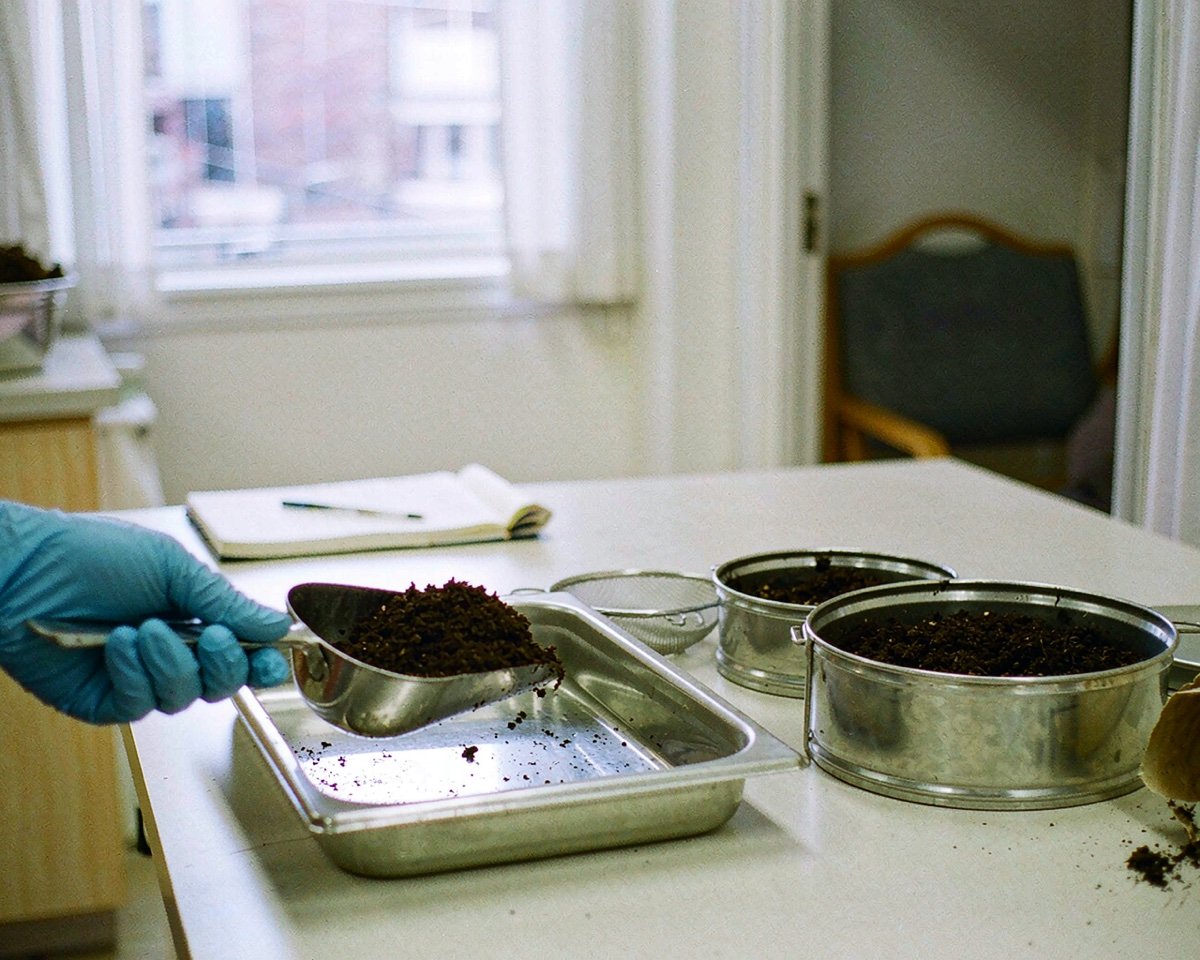
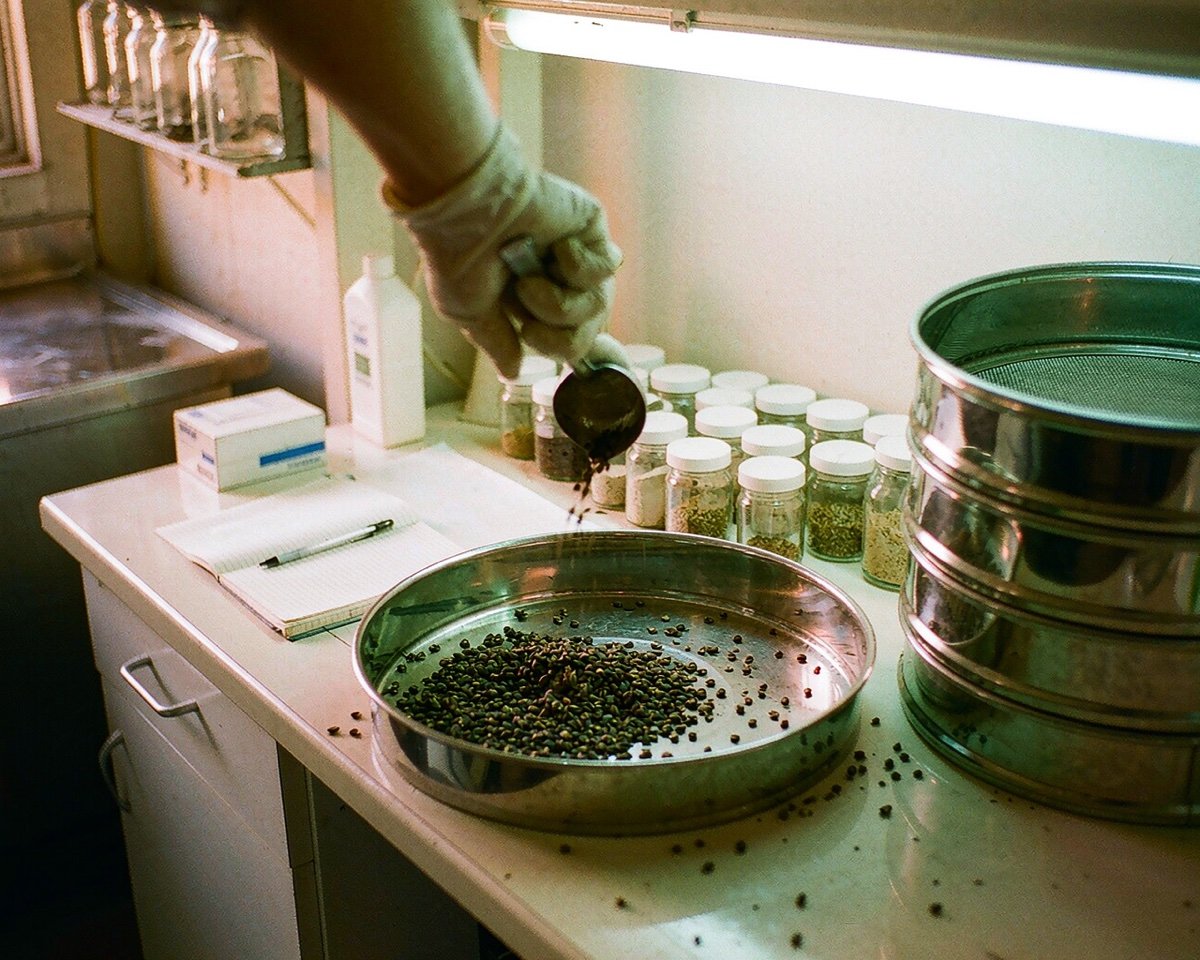
Paste inks are thick. Filling a narrow-neck 2 mL vial with a lithographic paste ink is a mess you only make once. Wide-mouth vials, anything with an opening of 10 mm or more, let you load heavy inks with a spatula or wide-bore tip and actually clean the vial afterward.
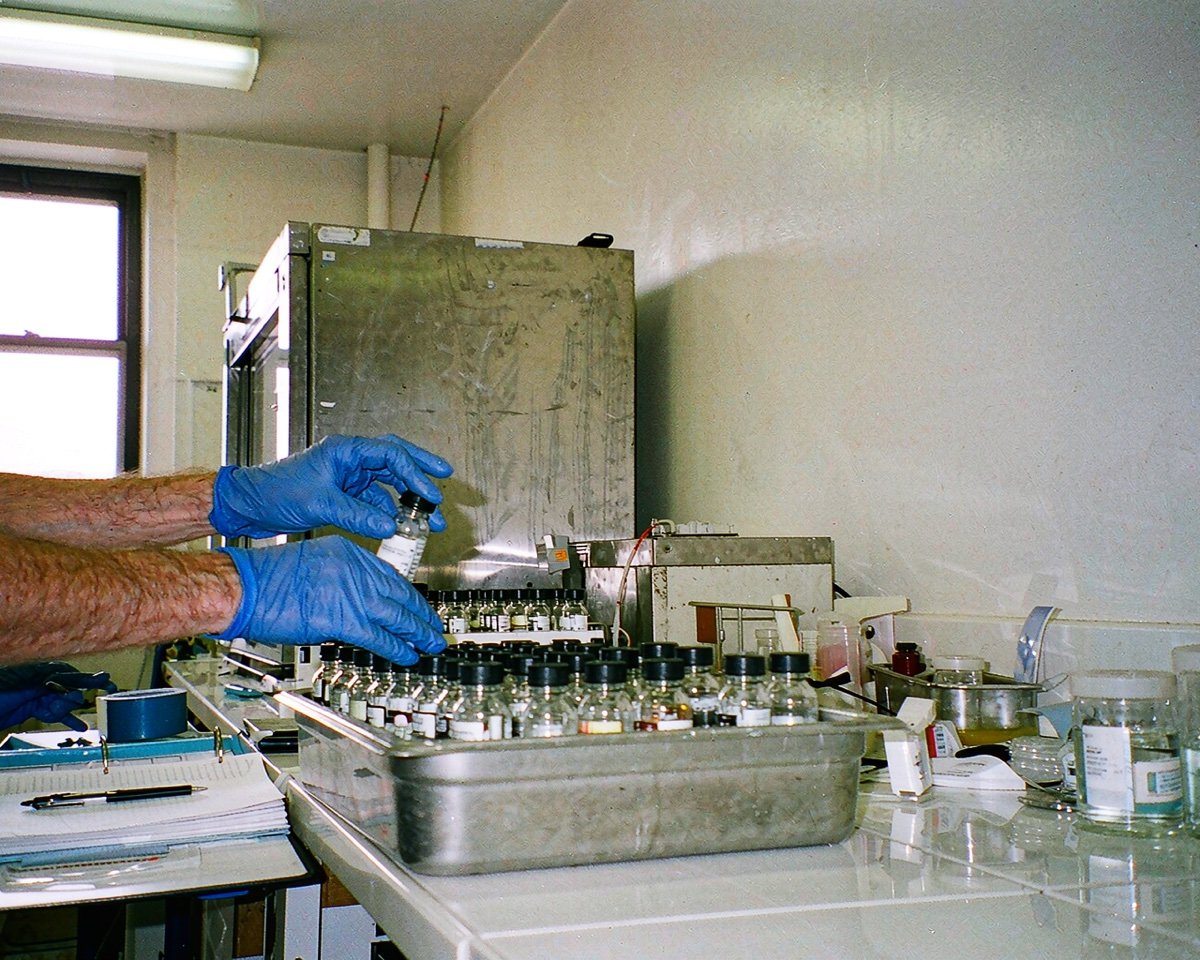
Amber glass matters more than most buyers expect. Several organic pigments can shift shade under UV exposure, and a sample that sits on a bench under lab lighting for a day may no longer represent the batch. In my experience, amber glass is the cheapest insurance an ink lab can buy.
One warning on plastic: solvent-based inks often carry esters and ketones, and those can soften or swell common plastics. Glass stays inert. For VOC work, 20 mL headspace crimp vials with PTFE/silicone septa are the standard vessel. If you handle viscous samples in general, our guide on handling viscous samples in HPLC sample prep covers loading tricks that transfer straight to ink work.
Labeling gets overlooked too. Most solvents used in ink labs lift ordinary marker ink off a vial in minutes, and an unlabeled sample is worthless. Solvent-resistant labels or a cryo-grade marker are pennies that protect hours of work.
Syringe filters and glass fiber prefilters
So why does a 0.45 µm membrane die so fast on pigmented ink? Because pigment particles are designed to stay suspended, and many sit in the 1 to 5 µm range a membrane catches on its surface. A standard membrane can blind after a couple of milliliters of dispersion.
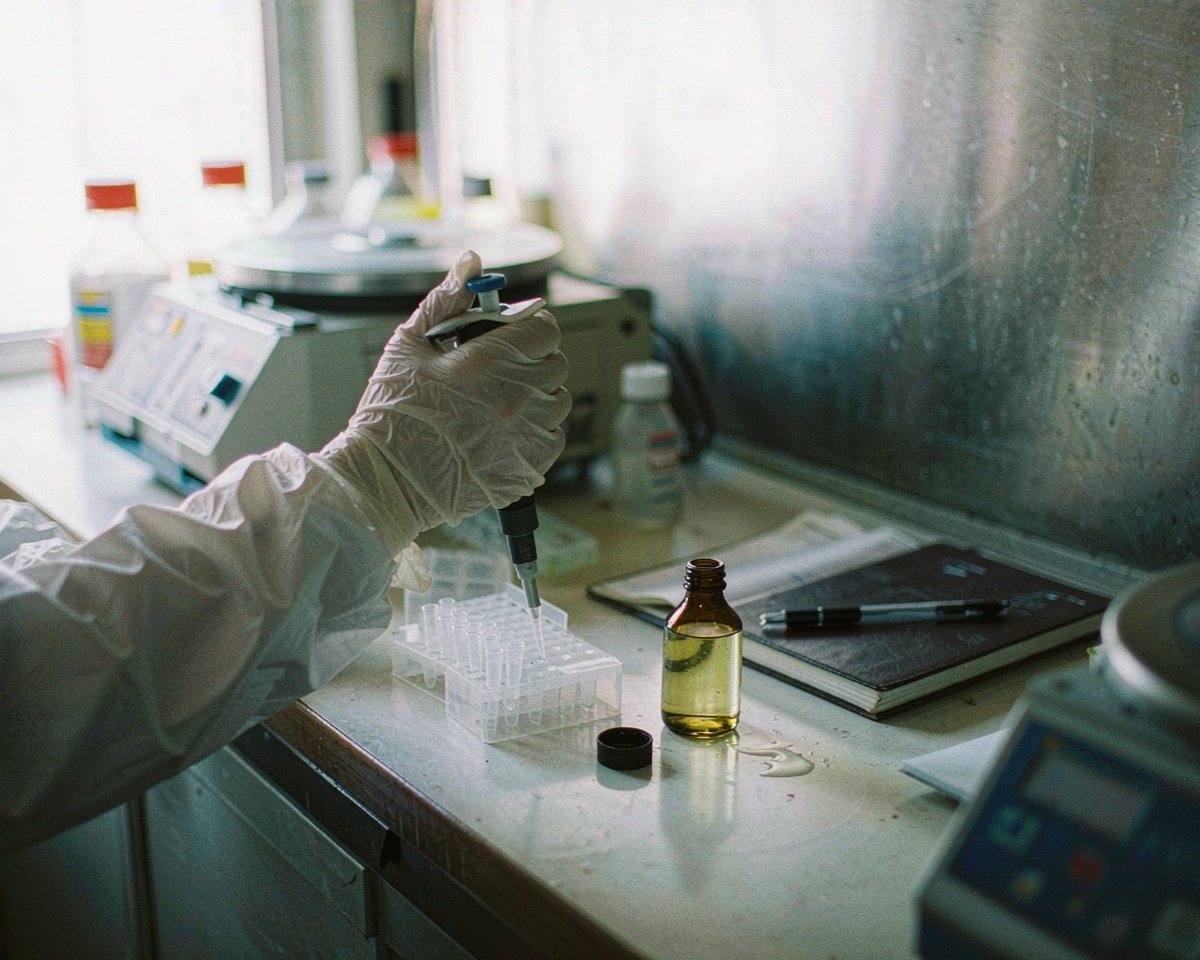
The fix costs cents: put a glass fiber prefilter in front. A GF-type depth filter, roughly 0.7 to 1.6 µm, takes the particle load, and the final membrane does the polishing. We wrote a full guide on when to use a glass fiber prefilter before your syringe filter if you want the pore-size logic.
Membrane chemistry matters too. PTFE membranes tolerate the aggressive solvents in gravure and flexo formulations better than nylon or cellulose acetate in many cases. When a filter clogs repeatedly, the cheapest response is a coarser prefilter, not a bigger syringe.
One habit worth building: discard the first fraction of filtrate. The membrane itself can shed extractables into the first few drops, and for trace-level VOC or migration work that blank contamination may show up exactly where you least want it.
Viscosity cups and rheology consumables
Press-side viscosity checks still run on dip cups. A Zahn #3 cup pulled at 25 °C gives you an efflux time in seconds, which is enough for daily control. ASTM D4212 is the reference method for dip-type viscosity cups and explicitly covers inks (ASTM D4212).
The catch: dip cups assume Newtonian or near-Newtonian fluids. Many ink systems shear-thin, so the same method points you to a rotational viscometer for anything thixotropic. Your consumables list here is short: certified cups, calibration oils, a reliable thermometer, and lint-free wipes for the orifice. A bent cup lip or a scratched orifice quietly shifts every number you record.
Caps, septa, and solvent compatibility
Solvent-based inks bring ethyl acetate, MEK, and sometimes toluene to the party. Those solvents attack the wrong septa fast. Red rubber swells and leaches; bare silicone absorbs aromatics and ketones. Restek’s septum guide lists toluene, acetone, chlorinated solvents, and hydrocarbon solvents as incompatible with plain rubber, and treats PTFE as the barrier layer (Restek vial septum selection guide).
PTFE/silicone/PTFE laminates handle most ink chemistries and reseal well for repeat injections. The same logic applies to the liner inside every storage cap you order, not only the septa you mount on an autosampler. Check compatibility before the sample touches the cap, not after.
Migration testing for packaging and lamination
Printed food packaging adds a different problem: the ink is not meant to touch the food, but its components can still migrate. Set-off is the classic route. Ink transfers from the printed side to the unprinted back of the sheet while the reel is wound or the stack is stored, and later ends up on the food-contact surface.
In the EU, Regulation (EU) No 10/2011 sets the migration limits that printed and laminated plastic structures must meet, including an overall migration limit of 10 mg per dm² of contact surface (EU plastics regulation summary). For paper and board in the US, FDA’s 21 CFR Part 176 governs components of paper and paperboard that contact food (21 CFR Part 176).
Dry-food testing typically runs with Tenax as the adsorbent simulant under the EU rules, followed by GC-MS or LC-MS analysis. Your consumables list: migration cells, Tenax, food simulants, headspace or autosampler vials, and PTFE-faced caps. Our food contact migration testing guide walks the full setup.
Conclusion
Ink and printing quality control does not demand exotic equipment. It demands consumables that match the chemistry: wide-mouth and amber glass vials, glass fiber prefilters ahead of fine membranes, certified viscosity cups, PTFE-faced septa, and a proper migration setup for packaging work. None of these are expensive. All of them fail expensively when chosen wrong.
Start with the two or three tests your lab runs most, and match consumables to those methods first. If your work overlaps coated or painted substrates, our paints and coatings lab consumables guide extends most of this logic to neighboring chemistries. And if you keep one rule from this article, make it this one: check solvent compatibility before the sample touches the cap.
Frequently Asked Questions
What pore size filter should I use for printing ink samples?
Start with 0.45 µm for dissolved-component analysis, but add a glass fiber prefilter first for pigmented inks. Step down to 0.22 µm only after prefiltering, since fine membranes blind quickly on dispersions.
Do I need amber vials for ink samples?
If the ink or its pigments are light-sensitive, yes. UV exposure can shift color values before you ever measure them, which quietly skews your results.
Which septa are safe with solvent-based inks?
PTFE-faced silicone is the safest default. Plain rubber and bare silicone absorb solvents like toluene and acetone, then leach them back into your sample.
How do I test migration from printed food packaging?
Use food simulants or Tenax under the conditions set in EU Regulation 10/2011, then analyze by GC-MS or LC-MS. Watch for set-off transfer, since ink can reach the food-contact side during reel winding or stacking.
What viscosity cup should I use for ink?
A Zahn or DIN dip cup works for quick checks on near-Newtonian inks, per ASTM D4212. For shear-thinning or thixotropic inks, a rotational viscometer gives far more reliable numbers.