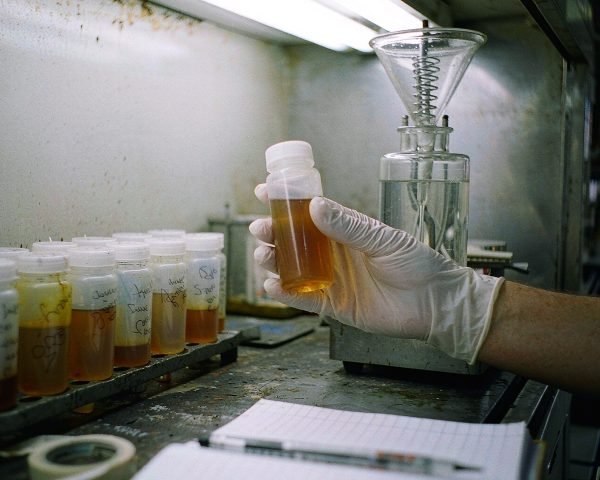

If you run a used-oil or condition-monitoring lab, the instruments get all the glory while the consumables quietly decide whether your data means anything. This is the kit I would put on the bench before the first sample of the week arrives.
The Short Answer
Oil analysis labs run on clean 100 mL HDPE or glass sample bottles, certified particle-count bottles for ISO 4406 testing, ferrography slides, FTIR cells, Karl Fischer reagents for water-in-oil, membrane patches for insolubles, and spectrochips for RDE spectrometers.
Why the Sample Bottle Is the #1 Lab-Side Error Source
Ask a lab manager what ruins oil analysis results most often and the answer is rarely the spectrometer. It’s the bottle.
I learned this the hard way. A few years ago I watched a plant tear down a healthy air compressor because the lab reported an ISO 4406 code of 19/16/13, which reads as “your oil is full of junk.” The culprit turned out to be a batch of bargain sample bottles that had never been cleanliness-tested. An ISO 4406 code of 19/16/13 hiding inside a “clean” bottle is exactly the kind of noise nobody budgets for. The machine was fine. The rebuild bill was not.
A used-oil sample is maybe 100 mL of oil that has to represent thousands of dollars of rotating equipment. If the bottle sheds its own particles into that oil, every downstream test inherits the lie. Particle counts inflate, wear-metal trends spike, and somebody makes a bad call with good intentions.
So the first consumable I’d spend real money on is the bottle itself.
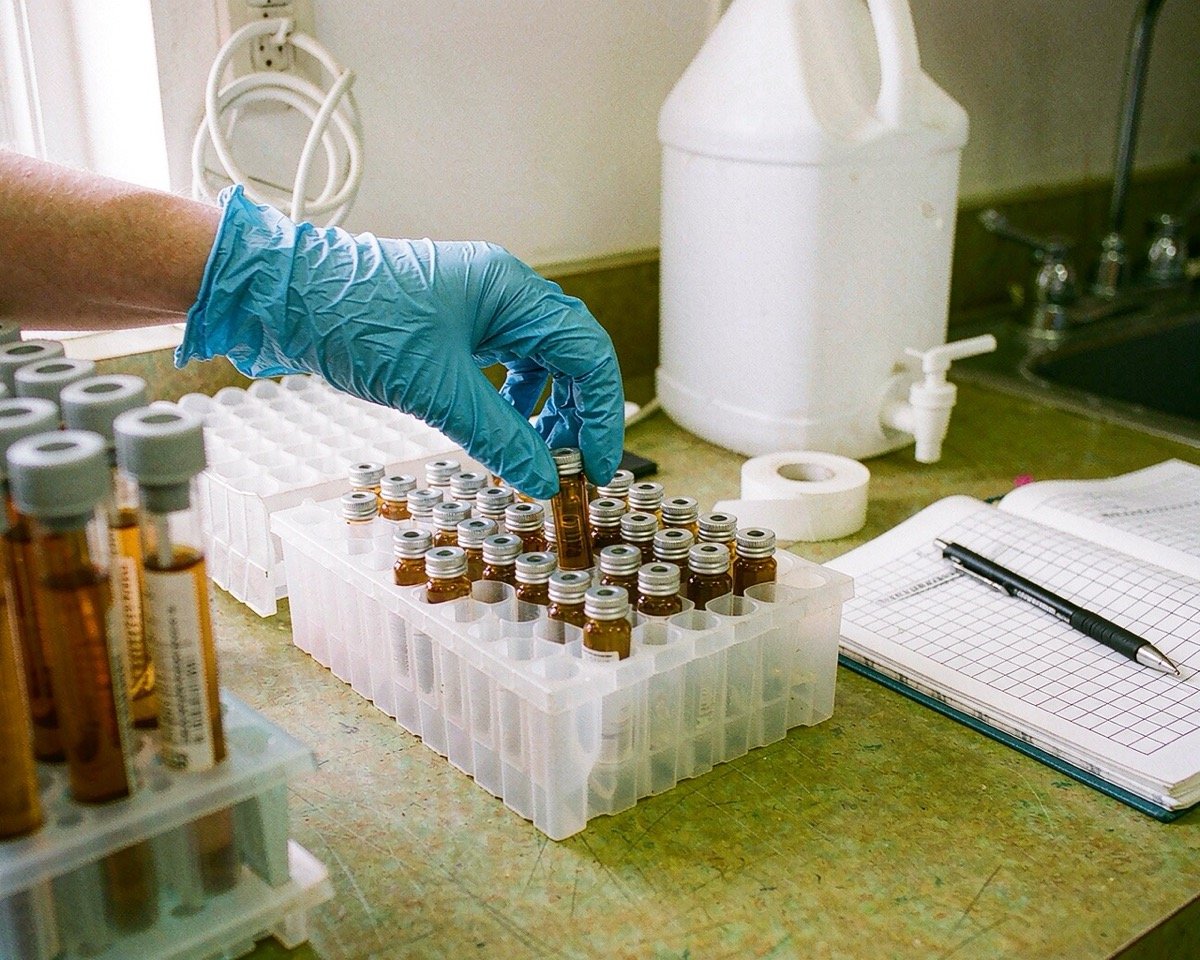
Sample Bottles: The 100 mL Workhorse
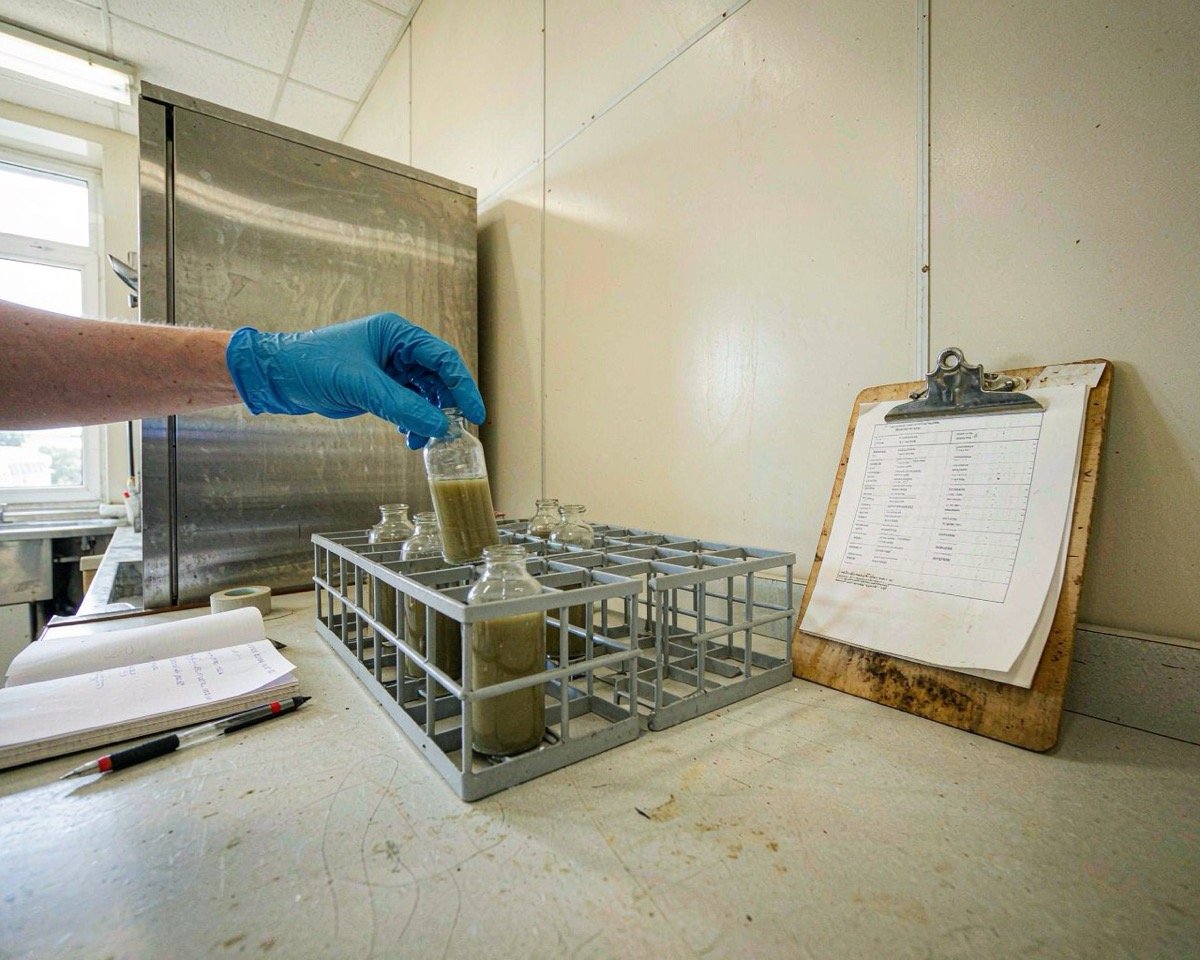
Most standard test slates want a 100 mL bottle, occasionally 120 mL, and you have two practical material choices.
HDPE (high-density polyethylene) is the default. It’s cheap, light, doesn’t shatter in a plant environment, and survives courier handling. Glass costs more and breaks, but it cleans to a higher standard and some labs wash and reuse it successfully.
Two standards are worth knowing by name here. ASTM D4057 covers manual sampling of petroleum and petroleum products, including container selection and preparation. ASTM D6224 is the broader practice for in-service monitoring of lubricating oil, and it lays out sampling schedules and handling steps for plant equipment, from gearboxes to hydraulic systems.
One bench note: leave headspace in the bottle. Fill it to the brim and nobody can agitate it properly before testing, and particles settle out fast. Most oil labs keep a paint shaker around for exactly this reason.
Particle Counting: Where “Clean” Becomes a Specification
An ordinary bottle is fine for viscosity or FTIR. Particle counting is different, because there the bottle is part of the measurement.
That’s why labs buy bottles certified to specific particle-count classes: clean, superclean, and ultraclean. The usual rule of thumb is that the bottle should be at least two ISO codes cleaner than your target cleanliness for the fluid. If your hydraulic system target is 16/14/11, a bottle that contributes particles anywhere near that level will blur the trend you’re paying to track. ISO 4406:2021 defines the three-digit contamination code used on most reports, and the older NAS 1638 classes still appear in aerospace and military work.
The economics are simple. Certified bottles cost more per unit. Rerunning samples, chasing phantom alarms, and explaining a false trend to a maintenance manager cost far more. My default: certified bottles for anything feeding a particle counter, ordinary bottles for the rest of the slate. If you want the deeper argument about bottle certification, this look at sample bottle cleanliness is worth your coffee break.
Ferrography Slides and Filter Patches
When a particle count comes back high, the next move is usually microscopy, and that means two consumables.
Analytical ferrography uses specially prepared glass slides. Oil flows down the slide over a magnet, ferrous particles line up along the field, and an analyst reads the wear modes under a microscope. The slides are single-use and surprisingly fussy; a fingerprint or a speck of dust on the surface will happily masquerade as wear. For a solid primer on what analysts actually see, Anatomy of Wear Debris from Machinery Lubrication is the best short read I know.
Filter patches (membranes, usually 0.45 or 0.8 µm) serve patch microscopy and gravimetric insolubles testing. You pull a measured volume of oil through the membrane, then weigh or photograph what stays behind. Patch color and density feed straight into the report.
FTIR Cells, Viscosity Baths, and Karl Fischer Reagents
Three more categories round out the routine slate.
FTIR spectrometers read oil degradation (oxidation, nitration, soot, water) through a transmission cell with fixed-path windows. Those windows get etched by water and aggressive additives, and they need periodic replacement. Keep spares on the shelf.
Viscosity baths hold a strict 40 °C, and the consumables here are bath fluids, calibration oils, and cleaning solvents. A bath fluid that has gone dark or foamy will quietly wreck temperature control, and with it every viscosity number you report.
Water-in-oil is Karl Fischer territory. KF reagents (anolyte and catholyte solutions, plus oven formulations) are consumed on every single test, and oil samples usually need specialty versions because hydrocarbons don’t dissolve nicely in methanol. Thermo Scientific Karl Fischer reagents give you a feel for how the formulations split by sample type. We also wrote a full guide to Karl Fischer titration consumables if this is your daily work.
Spectrochips for RDE Wear-Metal Analysis
Plenty of used-oil labs run elemental analysis on rotating disc electrode (RDE) spectrometers, and the consumable there is a small graphite disc, often called a spectrochip or spectrode. The disc rotates in the oil film, a spark excites it, and the emission spectrum reports wear metals and contaminants. The disc and its counter electrode are consumed with every burn.
Off-spec discs crack under the spark or produce noisy readings, and everybody blames the instrument first. Fresh, consistent electrodes are the cheapest reliability upgrade in this corner of the lab. The same logic applies across adjacent fields, which is why our metals and materials testing consumables guide pairs well with this article.
Compatibility: Oil Waste Is Not Aqueous Waste
One note that saves real plumbing headaches: the consumables in an oil lab touch two very different waste streams.
Used Karl Fischer reagents carry iodine, sulfur dioxide, and methanol, so they’re hazardous chemical waste with their own container and disposal route. Used oil and solvent rinses go somewhere else entirely. Mixing the streams creates disposal headaches and, on occasion, genuine safety problems. Label both containers and keep them apart.
Bottle compatibility follows the same thinking. PET and some plastics don’t get along with certain synthetic esters, so when in doubt, use glass for anything aggressive and confirm with your supplier.
Shipping Samples Without Ruining Them
Sample bottles rattle, caps back off, and labels smear in transit. A sturdy box with dividers, taped caps, and a label written in something solvent-proof fixes all three.
Timing matters too. Trends are only useful when the lab sees samples at a steady interval, so pick a courier you trust and stick with it. Our practical guide to shipping lab samples safely covers the packing details if you ship samples every week.
Conclusion
Stocking an oil analysis lab is less glamorous than spec’ing an instrument, but it has a bigger effect on the report your customer reads. Get the bottle right and everything downstream behaves. Get it wrong and you’ll spend the week explaining spikes that never existed in the machine. My short list: certified 100 mL bottles for anything feeding a particle counter, ordinary HDPE for the rest of the slate, ferrography slides and filter patches for exception testing, spare FTIR windows, Karl Fischer reagents matched to oil samples, and fresh spectrochips for the RDE. None of it is expensive compared with a single false teardown. If you work in refining or heavy industry, our petrochemical refinery lab guide covers similar ground from a different angle and makes a good next read.
Frequently Asked Questions
What size bottle do I need for oil analysis?
Most labs want 100 mL, sometimes 120 mL, because that covers the standard test slate with enough volume for agitation and repeats. Some tests, like transformer oil suites or extra ferrography, may ask for 200 mL or more. Always confirm with your lab before ordering bottles in bulk.
Do sample bottles really need to be certified clean?
For particle counting, yes, because the bottle’s own particles become part of the count. Certified bottles are graded as clean, superclean, or ultraclean based on particles greater than 10 microns per milliliter of bottle volume. For viscosity or FTIR, ordinary bottles are usually fine.
What are oil sample bottles made of?
HDPE is the most common choice because it’s cheap and durable, while glass is preferred when maximum cleanliness or chemical compatibility matters. PET shows up too, but check its compatibility with synthetic oils before committing. Glass can be washed and reused if your lab validates the cleaning process.
Which Karl Fischer reagent should I use for oil samples?
Standard methanol-based reagents struggle with hydrocarbons, so most labs use specialty formulations designed for petroleum samples, from crude to finished fuels. Coulometric versions exist for low water levels and volumetric versions for higher ones. Match the reagent to your sample type and titration method, not the other way around.
Can I reuse oil sample bottles?
Glass bottles can be reused if they’re washed and validated to the cleanliness level your tests require, which some labs do successfully. HDPE bottles are generally single-use because they’re difficult to clean reliably. When in doubt, the cost of a new certified bottle is trivial next to a rerun.