
# What Consumables Does Liquid-Liquid Extraction Need?
Liquid-liquid extraction (LLE) asks very little of your budget: a funnel, a solvent, and patience. What it does ask for is the right consumables at each step, because organic solvents quietly destroy the wrong ones. Get the materials right and the rest of the method usually falls into place.
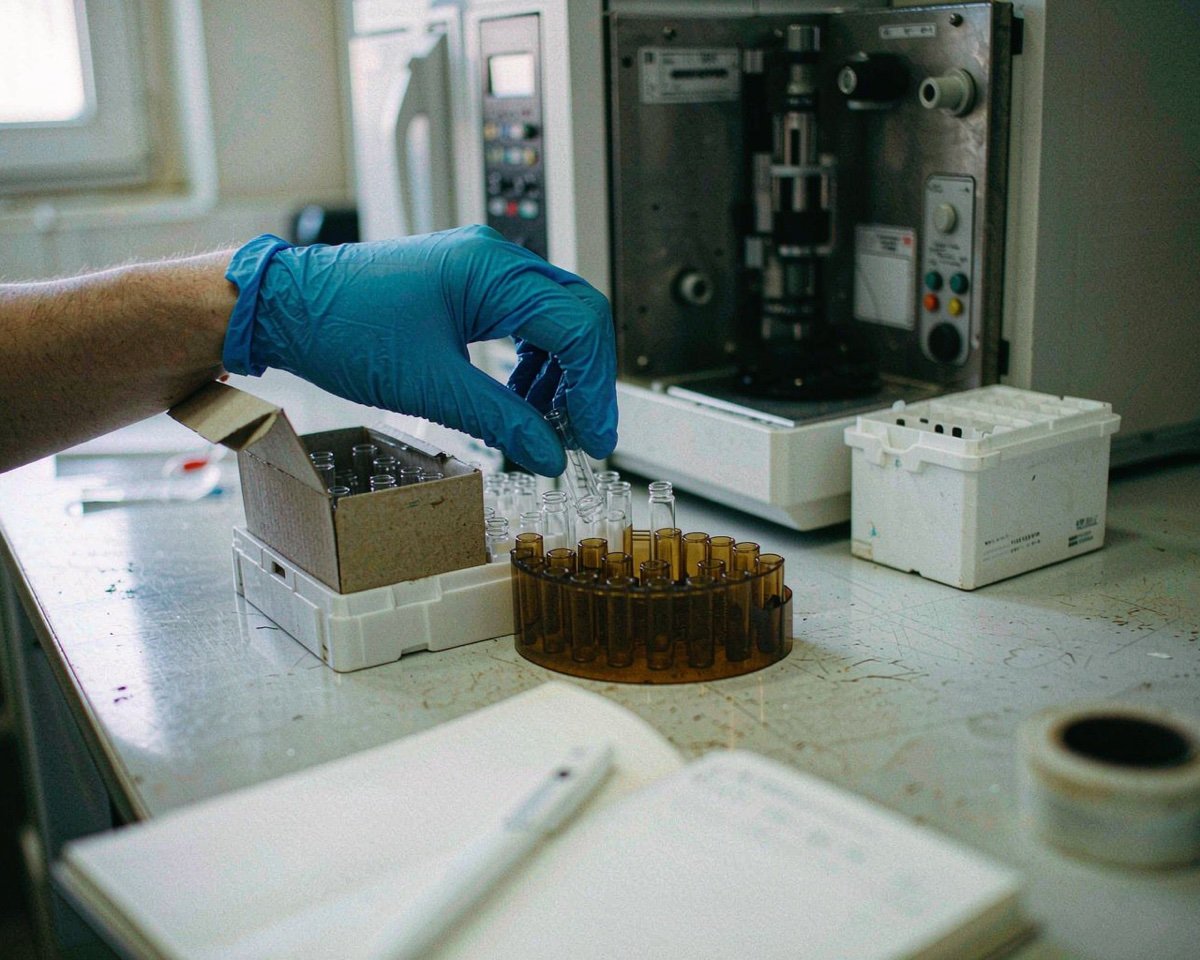
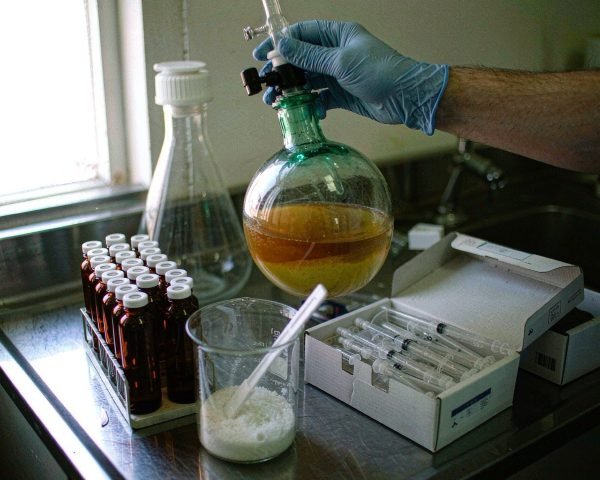
A basic LLE workflow needs a glass separatory funnel with a PTFE stopcock, glass collection tubes, anhydrous sodium sulfate, PTFE syringe filters, glass Pasteur pipettes, and 2 mL autosampler vials with PTFE-lined caps. Amber glass is the safer vial choice for organic extracts.
Below I walk through the whole workflow, flag the plastic parts that will bite you, and finish with the stock list I would order for a small lab.
The Workflow, Mapped to Consumables
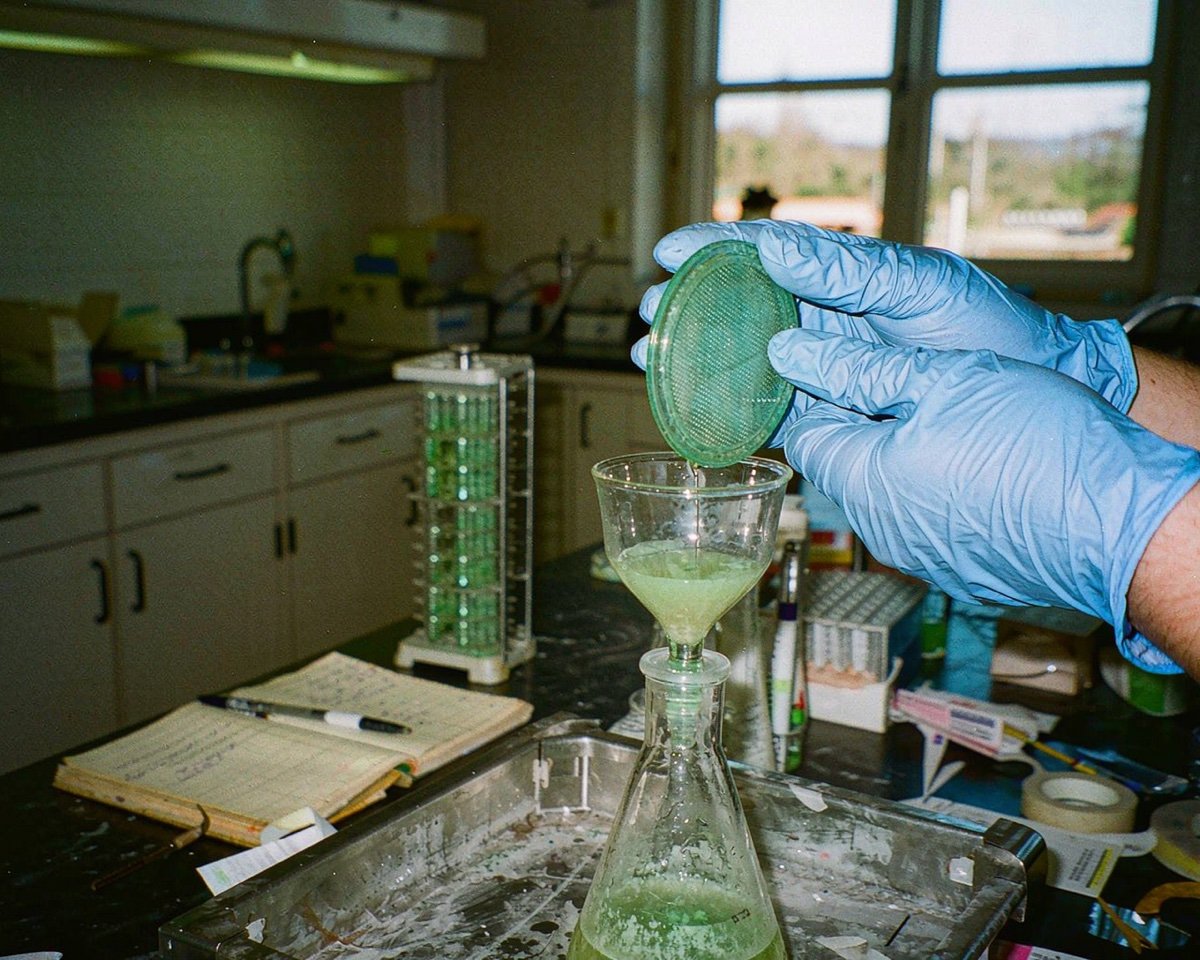
Classic LLE for chromatography runs like this. You add extraction solvent to your aqueous sample in a separatory funnel, shake and vent, then let the phases split. You drain the organic layer, dry it over anhydrous sodium sulfate, evaporate it down, reconstitute in injection solvent, filter, and load the vial.
Seven steps, six or seven consumables. That short list is why material choices matter: each item carries a lot of the load, and one swollen cap liner can cost you the batch.
The Separatory Funnel: Glass, and Mind the Stopcock
A borosilicate glass separatory funnel is the standard vessel, and it handles essentially every extraction solvent you will meet. The 250 mL size is the workhorse, with 125 mL for small batches and 1 L for EPA-style water extracts. A 250 mL funnel with a PTFE stopcock was the single most-used item on my old extraction bench.
Stopcock choice is where people get tripped. PTFE stopcocks are my default. They turn smoothly, they resist nearly every solvent, and they never seize up. Ground-glass stopcocks work fine too, but they need grease (a contamination risk) and can freeze shut if residue dries in the joint.
All-plastic funnels and stopcocks are the ones I would avoid. Chlorinated and aromatic solvents are the worst offenders: dichloromethane, chloroform, toluene, and THF all swell or craze common plastics such as polypropylene and HDPE. Acetone is gentler and hexane fairly mild, but why gamble when glass costs little more per year of service?
Collection Vessels: Glass Tubes Beat Plastic for Organics
Where does the drained organic layer go? Glass centrifuge tubes or glass collection tubes with PTFE-lined screw caps are the safe answer. Polypropylene tubes are fine for aqueous phases and tolerate hexane reasonably well, but dichloromethane and chloroform soften PP. I have seen 15 mL PP tubes come out of a rack looking like they had been through a dishwasher on the hot cycle.
Plastic adds a second risk: leachables. Organic solvent sitting in polypropylene can pull oligomers and additives into your extract, and those show up later as uninvited peaks. Glass tubes also survive the centrifuging step you may need for emulsions, which plastic handles less gracefully.
Drying the Extract: Anhydrous Sodium Sulfate
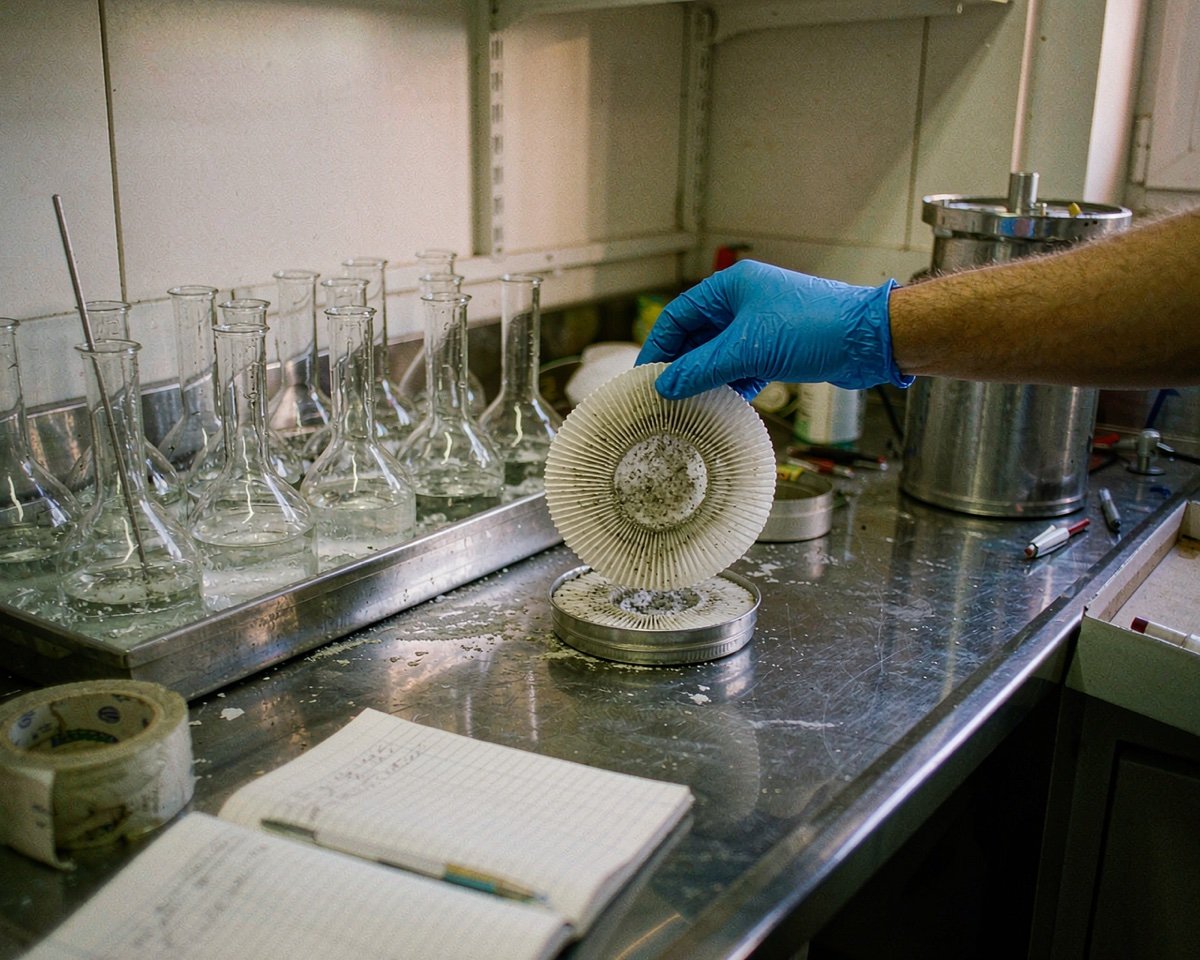
After phase separation, the organic layer still holds dissolved water. The classic fix is granular anhydrous sodium sulfate, either a layer in the funnel bottom or a small plug in a glass funnel above the collection tube. Add salt until fresh crystals no longer clump; a spatula-tip per 10 mL of extract gets you close.
Granular beats the fine powder for this job. Powder filters slowly and clogs; the coarse grade lets you decant or pour the dried extract straight through a plug. Keep it sealed, because sodium sulfate is hygroscopic and a jar left open in a humid lab turns into a brick. I once lost half a kilo that way.
A modern cousin of this step exists. QuEChERS, now the backbone of pesticide residue work, is basically LLE partitioning driven by salts (anhydrous MgSO4 plus NaCl) inside a centrifuge tube instead of a funnel. The original 2003 QuEChERS paper describes the partitioning chemistry nicely.
After drying, filter the extract off the salt. A glass funnel with a glass-wool or cotton plug is fine for cleanup, but anything heading to an HPLC or GC system should also pass through a membrane filter before injection.
Filtration: Why PTFE Is the Default Membrane
The dried extract usually gets reconstituted in an organic solvent, so the syringe filter has to survive organics. PTFE membranes are the default here. They shrug off essentially every organic solvent and tolerate strong acids and bases too, and they run low in extractables. The catch is that hydrophobic PTFE blocks water, so if you filter an aqueous reconstitute you must pre-wet the membrane with alcohol first.
Nylon deserves an honest mention. It is a capable general membrane and it tolerates acetonitrile and methanol, but it has limited compatibility with halogenated solvents like dichloromethane and chloroform, and it binds proteins. Regenerated cellulose is hydrophilic and pleasant for aqueous samples, yet it is the wrong membrane for a DCM extract. Rather than guess, keep a compatibility chart on the wall. Thermo Fisher publishes a membrane-by-solvent compatibility chart with ratings for PTFE, nylon, RC, PVDF, and PES against dozens of solvents. A printed copy lives taped inside one of my cabinet doors.
Pore size: 0.45 µm for most HPLC prep, 0.22 µm for UHPLC or extra column protection. If you are unsure which membrane family fits your solvent list, I compared all four in nylon vs PTFE vs PVDF vs PES filters.
Caps and Liners: The Quiet Source of Ghost Peaks
Vial caps matter more in LLE than in aqueous work. Standard polypropylene caps with cheap foam or PE liners swell in organic solvent, and a swollen liner can leach plasticizer straight into your extract. Those plasticizer peaks tend to appear exactly where your analyte elutes, at the worst possible moment.
PTFE-lined caps avoid the problem. PTFE faces the sample and shrugs off organics, which is why PTFE/silicone septa are the standard top for 2 mL autosampler vials across the industry. If you want the full material rundown, including which liners fail fastest in toluene, see cap liner materials and solvent compatibility.
If you only change one thing this week, change the liners on any vials holding organic extracts.
Amber or Clear Glass for the Final Extract?
Organic extracts often carry co-extracted pigments and light-sensitive analytes, so the storage vial works harder than in aqueous LC. Amber glass blocks the UV and short blue wavelengths that drive photodegradation, which makes it the safer container for trace analytes or anything quantified by UV detection. Clear glass is fine for stable analytes and lets you see the volume and any floating particles at a glance.
My default for LLE extracts: amber 2 mL screw-neck vials, 9-425 thread, with PTFE/silicone septa. Clear only when the method needs a visual check or the analyte is proven stable. The full reasoning, including how amber interacts with UV detectors, sits in clear vs amber glass vials.
If evaporation leaves you 200 µL instead of a full milliliter, use a conical insert rather than hoping the needle reaches the bottom of a standard vial.
Pipettes and Phase Transfer
Moving the organic phase is a small step with an outsized failure mode. Glass Pasteur pipettes do it without drama: they are cheap and disposable, and no extraction solvent on the shelf touches them. Keep a box of them plus a few bulbs at the extraction bench.
Polystyrene serological pipettes are the clear hazard, since aromatics like toluene craze and cloud them within minutes. Polypropylene tips tolerate more, but even they turn soft in chlorinated solvents. For reconstitution to a marked volume, a glass volumetric pipette keeps the final concentration honest.
When LLE Beats SPE, and the Emulsion Problem
SPE gives you selectivity and lower solvent use, but it demands method development: cartridge chemistry, load, wash, and elution conditions. LLE needs a solvent and a pH decision. For a one-off matrix, a forensic screen, or a lab that extracts rarely, LLE wins on simplicity and startup cost. For high-throughput routine work with a fixed analyte, SPE usually wins. We set the two side by side in what SPE is and which consumables it needs.
Emulsions are LLE’s famous downside. Fatty, protein-rich samples and anything containing surfactants can hold the interface hostage. I once waited 40 minutes for a milk extract to separate; the cream layer just sat there, insolent, between a pale aqueous phase and the dichloromethane layer I actually needed. Saturated brine and a 10-minute spin at 3,000 rpm finally broke it.
Consumable choice helps more here than people expect. Glass surfaces carry no surfactant residue the way scratched plastics can, and centrifuging in glass tubes breaks emulsions cleanly. For stubborn interfaces, a hydrophobic phase separation filter passes the organic phase and holds water back, which turns a 40-minute wait into about two minutes. Restek’s team catalogued practical emulsion-prevention tactics if you want the chemistry.
What I Would Stock for a Small LLE Lab
Buyer guidance:
• Two borosilicate separatory funnels (250 mL and 500 mL) with PTFE stopcocks
• Glass centrifuge or collection tubes with PTFE-lined caps, plus a rack
• One or two kilograms of granular anhydrous sodium sulfate, sealed
• PTFE syringe filters, 13 mm and 25 mm, in 0.22 µm and 0.45 µm
• Glass Pasteur pipettes and bulbs
• Amber 2 mL autosampler vials, 9-425, with PTFE/silicone caps, plus inserts
That is under a thousand dollars at most quotes, and it covers essentially every manual LLE method I have run. Order with the solvent list of your methods in hand, because compatibility is the only criterion that should override price.
Conclusion
LLE survives in modern labs because it is cheap, transparent, and hard to get badly wrong, provided your consumables do not undermine it. The rules compress neatly. Glass wherever solvent touches anything: the funnel, the tubes, the pipettes, the vial. PTFE wherever a seal or membrane meets the extract, from stopcock to filter. Sodium sulfate for the water you cannot decant away, and amber glass when light or trace levels threaten the analyte. Buy those five categories once and you are equipped for nearly every extraction method on the bench. Nothing here is exotic or expensive. The real skill is noticing that plastic parts fail silently in organic solvent, and that the failure surfaces as a ghost peak, not an error message. Start with the filter and vial guides linked above, then audit what you already have.
Frequently Asked Questions
Can I use a plastic separatory funnel?
Occasionally, for hexane-type extracts and aqueous work, polypropylene is tolerable. But dichloromethane and chloroform swell or craze plastic within minutes, and aromatic solvents are nearly as bad. Glass with a PTFE stopcock is the only choice I recommend for general LLE.
Why is my extract cloudy even after filtering?
The extract is probably still wet, or the membrane is swelling in your solvent. Dry it over fresh anhydrous sodium sulfate and confirm the membrane is rated for your solvent; PTFE is the safe default.
Do I need amber vials for every extract?
No. Amber is for light-sensitive analytes and trace-level UV work, where photodegradation quietly biases results. Clear glass is fine when the analyte is stable, and it makes volume checks easier.
Can I reuse a syringe filter for several extracts?
I would not, for finished extracts. Hold-up volume traps analyte-rich liquid in the membrane, and carryover between samples distorts low-level results. One filter per sample.
How much sodium sulfate should I add?
Add granular salt until fresh crystals stop clumping on contact; for a 10 mL organic phase that is roughly a spatula-tip to a gram. More is harmless if you filter it out completely.