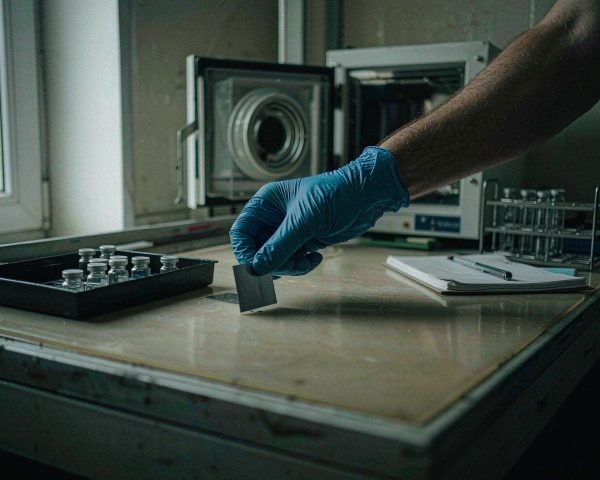

# Photovoltaic and Solar Cell Lab Consumables: Complete Guide
A solar cell lab burns through consumables faster than almost any other materials lab I’ve worked in. Acids, wipers, vials, coupons, gloves: the photovoltaic testing lab consumables list is long, and missing one item can stall an entire qualification run.
Photovoltaic testing lab consumables are the materials a PV lab uses up during testing: acid-resistant bottles, sample vials and filters for ICP-MS, cell handling tools, chamber coupons and labels for damp heat and UV, plus wipers, gloves, and dust-controlled packaging.
READ ON: Below I’ll walk through each major test type, name what it actually consumes, and share the stocking habits that have kept my own benches running.
What PV and Solar Cell Testing Actually Involves
Before you can stock a lab, you need to understand what the tests do to materials. That sounds obvious, but the answer surprises people who come from pharma or food labs. A PV lab is part chemistry bench, part reliability chamber, part optics lab, and each part eats different supplies.
The core work splits into a few families. Electrical performance testing measures how much power a cell or module produces. Imaging methods like electroluminescence look for hidden defects. Wet chemistry etches, textures, and cleans silicon wafers, then analyzes those baths. Environmental chambers age modules with heat, humidity, and UV light. Analytical chemistry sits underneath all of it, tracking metals and residues at trace levels.
If you’ve spent time in any energy testing lab, some of this will feel familiar.
One thing I tell every new procurement hire: a PV lab’s consumable list is driven by its throughput, not its instrument count. A 200 MW pilot line with one I-V tester uses more acid bottles per month than a university lab with five instruments and no line. Ask what runs daily, not what sits on the equipment list.
I-V Testing: Measuring Efficiency Without Breaking Cells
Current-voltage (I-V) testing is the headline measurement. It gives you efficiency, fill factor, open-circuit voltage, and short-circuit current. NREL’s famous efficiency chart, which tracks the best confirmed cell efficiencies since 1976, only accepts values measured under standard conditions (Best Research-Cell Efficiency Chart). Those reference conditions matter here: 25 °C cell temperature and a standard spectrum, which is why serious labs verify their simulators and standards regularly (reference conditions and measurement basis).
The instrument does the measuring, but the consumables decide whether the measurement is clean.
What I-V benches actually consume
• Cell handling supplies. Bare cells, especially thin wafers, crack if you grab them wrong. Vacuum pens with replaceable tips, soft-tip tweezers, and ESD-safe gloves get used up constantly. I once watched a technician break a 25 × 25 mm cell edge by 1 mm just from re-clamping it at the tabbing ribbon to check a contact. Cheap tweezers, costly lesson.
• Contact and probe wear. Four-point probe tips and chuck pins oxidize and wear. They’re semi-consumable: budget for replacement on a schedule, not after failure.
• Cleaning wipes and IPA. Chuck surfaces and reference cell windows get wiped before every measurement. Fingerprints on a reference cell window shift calibration, so labs wipe obsessively. Use low-lint wipers; a shed fiber under a cell edge skews contact pressure.
• Adhesives and mounting tape. Temperature-sensitive tape and removable adhesives hold cells during measurement. They expire, and old tape leaves silicone residue on chucks.
Reference cells and calibration supplies
Every I-V number is only as good as the reference cell behind it. Primary references get recalibrated by accredited labs, but the working references on your simulator drift with use, and their windows get wiped hundreds of times a month. That wiping is a consumable event: only optical-grade, solvent-safe tissue belongs on a reference cell window, and it should come from a dedicated dispenser, not a shared bench canister where someone dropped a nitrile-gloved finger last Tuesday. Keep a spare working reference cell in its box, logged with its calibration date. When the primary one goes out for recalibration, the spare keeps the line measuring.
A practical stocking note
Keep one sealed backup box of probe tips and one of vacuum pen filters per bench. In my experience, these are the two items that die mid-campaign, and a qualification sequence with 200 cells can’t wait for shipping.
Electroluminescence and IR Imaging
EL imaging passes current through a cell in the dark and photographs the infrared glow. Cracks, broken fingers, and shunted regions show up as dark areas. A recent review in PMC describes EL imaging as a cornerstone diagnostic for PV quality control and long-term monitoring (EL imaging review in PMC), and it’s now standard in module factories as well as labs.
Consumables here are modest but real. The cells still get handled, so gloves and tweezers matter. Dark enclosures use light-tight baffles and curtains that degrade. If your lab photographs cells wet or after etching, you’ll also need rinse-dry supplies, because a water spot on the surface reads as a false defect in the image.
One habit worth copying
Our imaging tech keeps a dedicated rack of “photo-ready” cells, handled only with powdered nitrile gloves, away from the etching bench. Sounds fussy. It cut our re-shoot rate by more than half, because cross-contamination from acid fumes was etching faint marks onto cells waiting for imaging. Separate consumable stock per bench zone; don’t share glove boxes between wet chemistry and imaging.
Wet Chemistry: Etching, Texturing, and Cleaning
This is the hungriest section of any PV lab. Crystalline silicon production etches wafers to remove saw damage, textures the surface to trap light, and cleans it before coating. The chemistry is aggressive: hydrofluoric acid (HF), nitric acid, potassium hydroxide, and mixtures of all three.
Bottles and dispensing: where material choice matters
HF attacks glass. That single fact rules out your standard borosilicate reagent bottle for any bath containing fluoride. Labs handling HF need PTFE or PFA bottles for storage and dispensing, and they need them in several sizes, because decanting from a big container into a small one introduces a handling risk every time. Our reagent and media bottles guide covers thread sizes and venting options for the general cases; for fluoride work, check the material spec sheet before price-checking anything.
For the non-fluoride baths (KOH texturing, plain solvent cleans), polypropylene and glass both work. Amber glass earns its keep for light-sensitive etchants and spent-bath hold containers.
Bath analysis: the hidden analytical workload
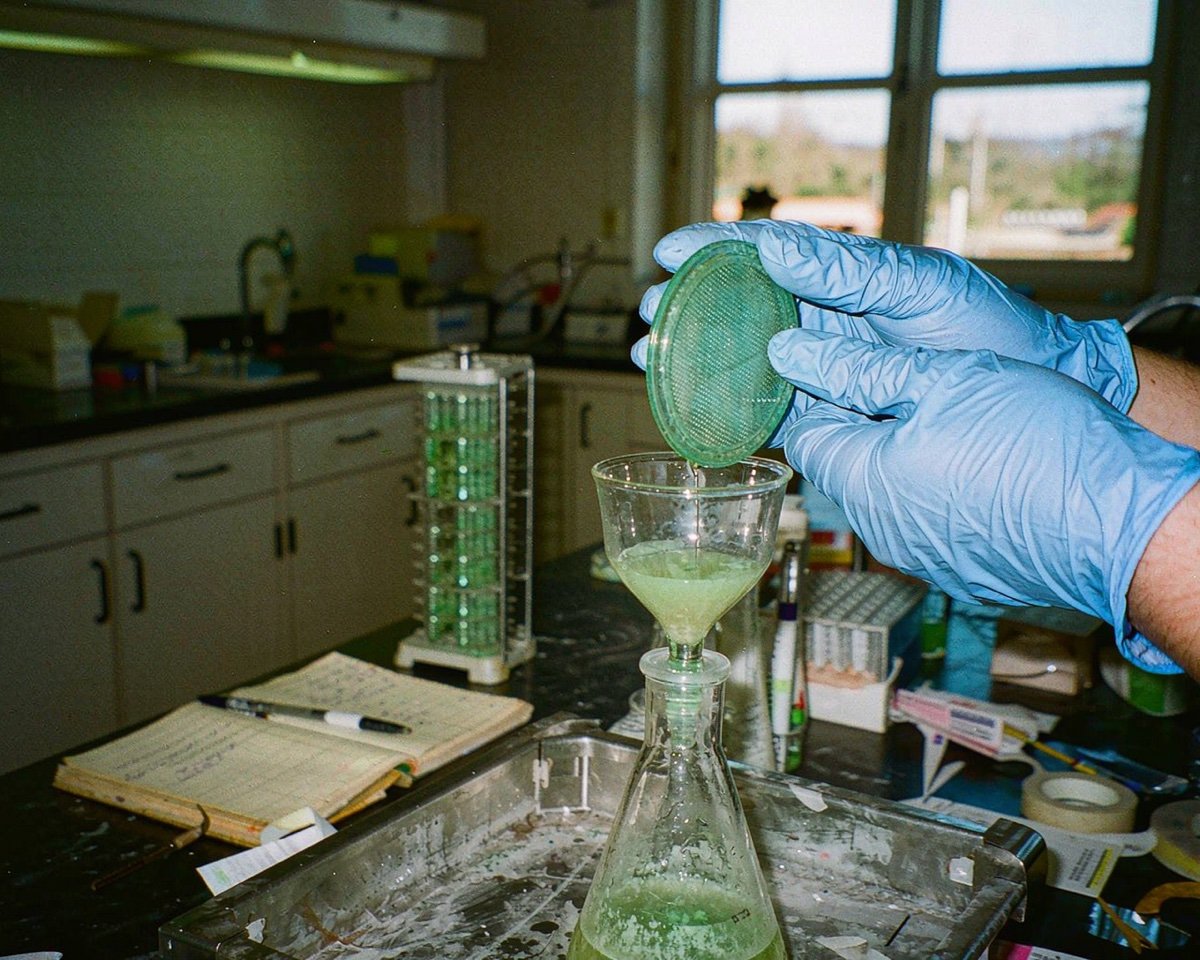
Production labs don’t just run baths, they monitor them. Acid concentration, metal contamination, and dissolved silicon all drift as the bath ages. That means regular samples pulled from the line and run through titration, UV-Vis, or ICP-MS. Those samples need:
• Sample bottles that survive the matrix (a hot KOH sample in a regular PET bottle will bleed the bottle into your result; I’ve seen it happen)
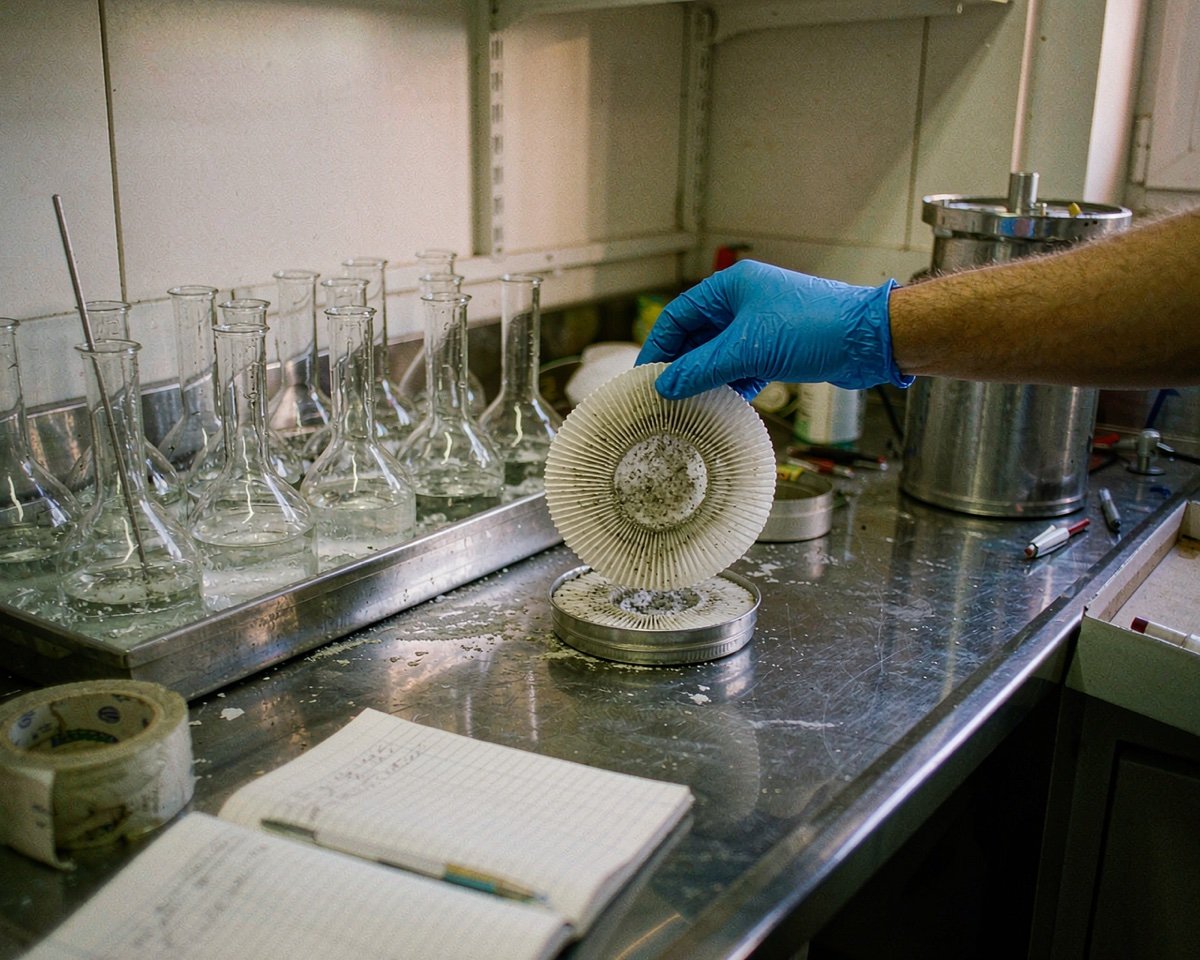
• 0.2 or 0.45 µm syringe filters to stop suspended silicon particles from reaching the instrument
• Acid-washed polypropylene tubes for dilution
Filter choice is not cosmetic. An incompatible membrane dissolves into an HF-containing sample and hands you a phantom metal signature. Know your membrane chemistry before you standardize on one.
Rinse water and the check samples nobody plans for
DI water quality gets verified on its own schedule, usually with conductivity meters and occasionally with TOC or ion chromatography checks. Those checks need their own clean containers, and labs that borrow a random media bottle for a water check-sample get exactly the data quality they deserve. Keep a set of dedicated, sealed sample bottles marked for water QC only. They rarely get used, and that’s the point: they stay clean until they’re needed.
Wipers, rinsing, and the water bill
Cleanroom-grade wipers, pre-wetted IPA wipers, and lint-free swabs get consumed by the case. Drying steps after rinse use nitrogen guns and more wipers. None of this is glamorous, and all of it stops the line when it runs out. My rule: the wet bench gets its own consumable cabinet, counted weekly, never borrowed from the analytical side.
Anti-Reflective Coating and PECVD Work
Most commercial silicon cells pass through plasma-enhanced chemical vapor deposition (PECVD) to lay down a silicon nitride anti-reflective layer. The coating itself is deposited by machines, but labs developing or troubleshooting coatings consume plenty of materials around the machine.
Substrate carriers and boats coat up over time and need chemical cleaning, which loops back to the wet bench and its acid-resistant containers. Witness wafers run alongside production to check thickness and uniformity; they’re consumables in every sense. Sample trays, wafer cages, and handling forks wear and chip. Gas-line filters and O-rings on chamber doors are maintenance consumables that fail on schedule whether or not you’ve ordered replacements.
The failure mode here is boring and expensive: an O-ring lets go during a night run, the chamber loses vacuum, and the coating batch is scrap. O-rings are cheap, downtime is not. Put them on a replace-by-cycle schedule like any other wear part, and keep two full sets per chamber on the shelf.
Coating QC consumes too
Every coating run ends in measurement: film thickness by ellipsometry or reflectometry, refractive index, and often adhesion checks. Ellipsometer standards and calibration wafers degrade and need periodic replacement. Solvents for cleaning optics ( IPA again, plus specialized lens tissue) add up. If the QC instruments sit idle because nobody ordered lens tissue, the whole line waits.
Adhesion, Peel, and Mechanical Testing
Modules live or die by their interconnections. Tabbing ribbon must solder to the cell and survive 200 thermal cycles; encapsulant must grip the glass. IEC 61215, the main qualification standard for terrestrial PV modules, bundles exactly these stresses into its test sequences (IEC 61215-1:2021 at the IEC Webstore).
What peel testing consumes
Peel tests measure the force needed to lift the ribbon from the cell. Each test destroys a coupon: a cell section with ribbon soldered on. Labs running adhesion campaigns burn through dozens of coupons a week, plus solder wire, flux, and the cleaning supplies that keep solder tips and fixtures usable.
Flux deserves special mention. It’s a chemical consumable with a shelf life, it contaminates fixtures, and its residues interfere with later electrical tests if not cleaned. Isopropyl alcohol, bath-safe cleaning agents, and acid-resistant containers for spent flux all belong on the list.
Coupon prep and traceability
Coupons need labeling that survives handling, heat, and sometimes solvents. Standard paper labels fail; solvent-resistant cryo-style labels hold up. Pre-printed, batch-tracked labels sound like a luxury until an audit asks you to prove which ribbon lot went onto which coupon. Ask me how I know. (An auditor, 2019, and a very long afternoon.)
Damp Heat, Thermal Cycling, and UV Exposure
Environmental chambers age materials on accelerated schedules: 1000 hours at 85 °C and 85% relative humidity for damp heat, hundreds of thermal cycles from -40 to +85 °C, UV doses that compress years of sunlight into weeks. ASTM E1171 standardizes these cyclic temperature and humidity procedures for PV modules (ASTM E1171-15(2025)).
These tests run for weeks with minimal operator time, which fools people into thinking they consume little. They consume plenty.
Consumables inside the chamber work
• Coupons and mini-modules. Encapsulant (EVA) sheets, backsheets, and edge-seal materials get cut into test coupons. Cutting supplies, release film, and glass blanks all get used up.
• Chamber-safe fasteners and fixtures. Stainless hardware corrodes over repeated 85/85 runs; nylon and PTFE fixtures last longer but still get replaced on a cycle.
• Labels and markers. Ordinary labels fall off or fade inside a humidity chamber. Heat-and-moisture-rated labels are worth the premium; a coupon with no ID is a wasted coupon.
• Humidity reservoir water. Chambers drink deionized water. Using tap water loads the chamber with mineral scale and, in my experience, quietly corrupts your humidity control. Keep a dedicated DI carboy by each chamber.
• Post-test analysis supplies. After exposure, coupons get sectioned, cross-sectioned, and analyzed, which means mounting resin, abrasive papers, and more wet-chemistry consumables.
Ultraviolet exposure work
UV chambers get their own consumable profile. Lamp intensity fades, so labs track radiometer readings, but the materials around the test matter too. Coupons for UV aging are usually smaller and mounted flat, which means more mounting frames, more secured fasteners, and more labeled positions per square meter of shelf. Some backsheet materials yellow and embrittle under UV, shedding flakes into the chamber, so post-run cleanup wipes and vacuuming supplies are part of the cycle. And UV degrades everything plastic nearby: even the cable ties and sample bags stored inside the chamber room get chalky and crack. Store plastics outside the UV room. It costs nothing and saves a box of ruined bags.
If a chamber fails at hour 900 of a 1000-hour run because the water feed ran dry, you lose three weeks. Check the DI level the way you’d check a mobile phone battery: daily, without thinking about it.
Sheet Resistance and Contact Resistance
Electrical characterization at the material level uses four-point probes for sheet resistance and specialized methods for contact resistance between metallization and silicon. The measurement is quick; the consumable story is in the probe tips.
Probe tips are typically tungsten-carbide or similar, rated for a number of descents before tip radius drift changes contact geometry. Production labs log tip usage and replace on schedule. Calibration standards (silicon wafers of known sheet resistance) also wear, since every contact oxidizes their surface slightly.
Between-probe cleaning uses IPA and fine wipers. One caution from experience: never sand a probe tip as a routine fix. Occasional tip dressing is legitimate maintenance, but grinding tips down changes the contact radius and your numbers drift while everything still “looks fine.”
ICP-MS Sample Preparation: Trace Metals in Silicon and Baths
Silicon wafer quality depends on trace metals at levels ordinary chemistry can’t see. Sodium, iron, copper, and zinc at parts-per-billion levels change carrier lifetime and cell performance. Inductively coupled plasma mass spectrometry (ICP-MS) is the workhorse here, and its sample preparation is where good labs separate themselves from noisy ones.
The digestion problem
Getting silicon or a colloidal residue into solution for ICP-MS usually means aggressive digestion, often with HF in the mix. The Agilent ICP-MS literature is explicit about matrix handling and the care needed for stable, accurate trace-level results (Agilent ICP-MS whitepaper). For the analyst, the consumable consequences are strict:
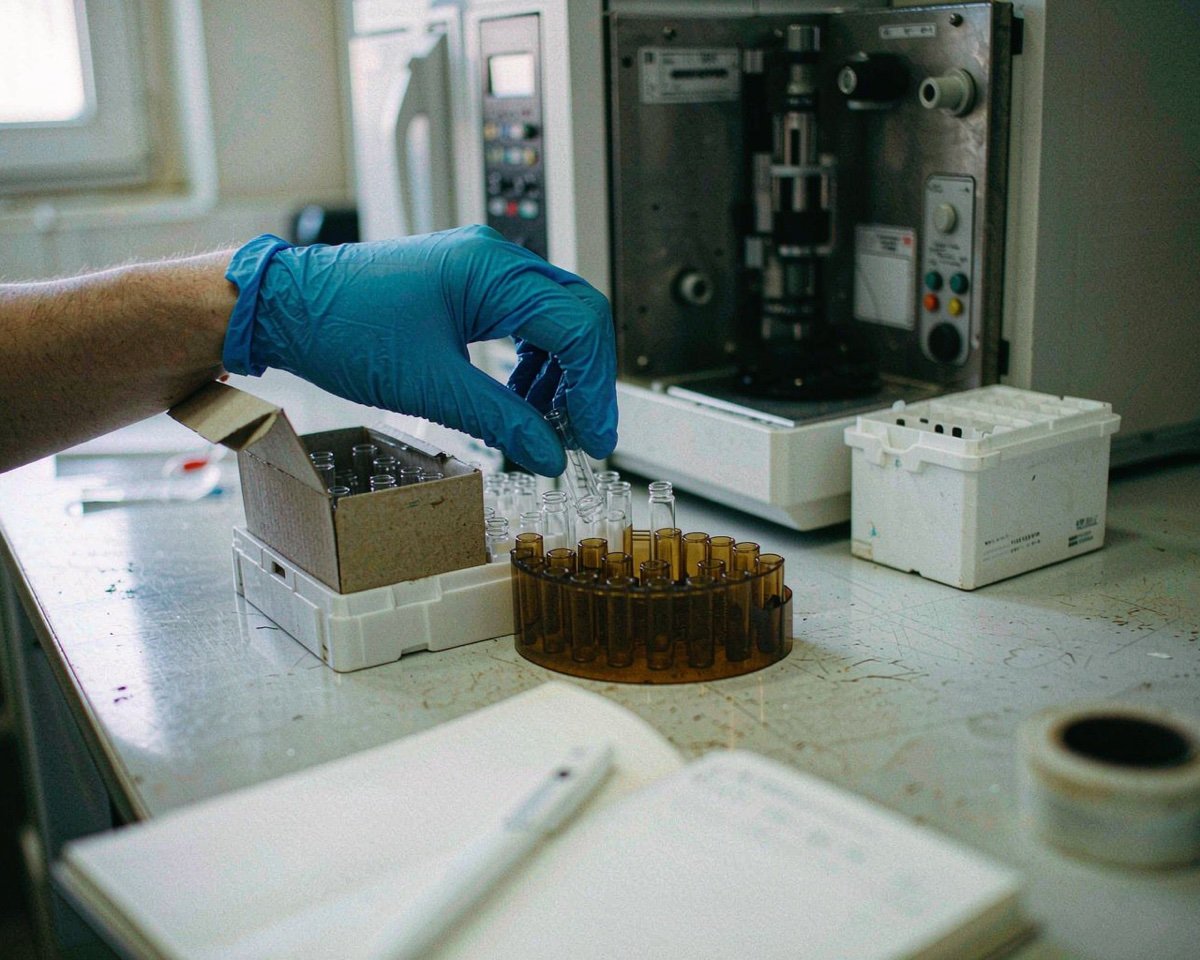
• PFA vessels only for HF digestion. Glass adds silicon to a silicon sample; polypropylene softens at digestion temperatures. We run our HF work exclusively in PFA, and our PFA vs glass vials comparison explains the trade-offs in detail.
• Acid-washed consumables. Every tube, filter, and pipette tip that touches the digest gets acid-washed or bought at trace-metal grade. An unwashed polypropylene tube can contribute more zinc than your sample contains.
• Filtration with the right membrane. PTFE membranes tolerate acid; mixed cellulose does not. For bath samples loaded with colloidal silica, a prefilter staged ahead of the final filter prevents the mid-run clog that ruins a sequence.
• Clean handling. Powder-free gloves, laminar-flow hood consumables, and cleanroom wipers keep the blank low.
We’ve written a full walkthrough in what consumables ICP-MS sample preparation needs, so here I’ll add one PV-specific warning: silicon digests are sticky business, and residue recovery from vessel walls is a real error source. Budget for enough vessels that nobody reuses one mid-sequence to save washing time. I’ve watched a whole afternoon of bath-metal data get thrown out because a reused vessel carried over iron from the previous sample.
Blanks count as consumables too
Method blanks, filter blanks, and preparation blanks multiply your tube and filter consumption by three or four. That’s not waste, that’s the price of defensible numbers at ppb levels. Put it in the budget explicitly.
Film Thickness and Optical Metrology
Ellipsometry, reflectometry, and stylus profilometry check coating thickness and texture. The instruments are delicate; the consumables are mundane but unforgiving.
Optical-grade lens tissue, spectralon or diffuse-reference standards, and calibration wafers all degrade with use. Solvent dispensing bottles (small, washable, narrow-tip) keep IPA and other cleaners off the bench in uncontrolled glugs. Sample mounting putty and vacuum chuck rings wear out. None of it is expensive individually; all of it is annoying to be missing.
One specific detail worth stealing: our metrology tech marks each calibration wafer’s usable area with a fine permanent marker dot at the corner, so everyone touches the same region and the rest of the standard stays pristine. The wafer lasts maybe 40% longer. Small consumable-adjacent habits like that are free.
Incoming QC of EVA Encapsulant, Flux, and Raw Materials
Module makers and QA labs don’t just test finished cells; they qualify incoming materials. Encapsulant films (usually EVA, ethylene-vinyl acetate), solder flux, tabbing ribbon, backsheets, and junction-box compounds all arrive with certificates and all get verified.
Sampling and storage supplies
Cutting EVA coupons for gel content and peel testing consumes release film, blades, and sample bags. Flux gets sampled into small glass vials for viscosity and solids checks; here ordinary glass is fine, since there’s no fluoride in the flux. Weighing bottles earn their keep in this corner of the lab: weighing a flux sample or an encapsulant pellet cleanly needs a container that’s tared, sealed, and inert, which is exactly what a good weighing bottle is for.
Sample cups and autosampler consumables feed the rheometers, UV-Vis units, and GC systems that check flux solvents and encapsulant additives. Storage matters too: encapsulant rolls age on the shelf, and labs that keep them in unsealed bags get crosslinking surprises before any test runs.
Retention samples
Most QA programs keep retention samples of every incoming lot. That means labeled, sealed containers for materials you’ll never test unless a field failure shows up. It’s dead consumable budget until the day it saves a recall investigation.
Dust and Particle Control: The Consumable Category Nobody Budgets
Particles are the quiet killer in PV labs. A dust speck under a wafer during I-V contact causes a local shunt or a bad reading. A fiber in an EL image looks like a crack. Particles in a PECVD chamber cause pinholes in the nitride.
So the control materials are consumables: sticky mats at doors, cleanroom wipers in graded lint classes per bench zone, glove stations stocked per zone, IPA dispensers, and pre-wetted wipes for chamber seals. Packaging of the consumables themselves matters more than most buyers realize. Boxes that shed cardboard dust into a wafer-handling area undo your sticky mats. This is why we ship selected consumables in dust-controlled cleanroom packaging, and why it’s worth asking any supplier how their boxes are packed, not just what’s inside them.
One opinion worth taking
If I could change one habit in most PV labs I visit, it would be zoning the wipers. Labs buy one wiper grade and use it everywhere, from the etch bench to the ellipsometer. The etch bench destroys cheap wipers anyway, so buy cheap wipers there and spend the difference on optical-grade wipers at the metrology bench. Same total spend, cleaner measurements.
Building the Stocking Plan
Pulling this together: a PV lab’s consumable budget has four buckets. Harsh-chemistry consumables (PFA/PTFE bottles, acid-safe filters, wipers) that must never be improvised. Analytical consumables (trace-metal tubes, ICP-MS vials, filter blanks) where cleanliness grades matter. Handling consumables (gloves, tweezers, vacuum tips, labels) consumed by throughput. And chamber consumables (coupons, DI water, rated labels, fixtures) consumed by calendar time whether or not anyone is watching.
Count the first three by usage events; count the fourth by the clock. Review the list quarterly, because test campaigns change and last quarter’s coupon count means nothing in a damp-heat month. And when you review suppliers, weigh lot consistency and packaging as heavily as price. A 5% saving on a filter lot that varies between lots costs more than it saves, in repeats alone.
Conclusion
Photovoltaic testing touches every kind of consumable a lab can stock: acid-proof bottles and PFA vessels for the wet benches, filtered vials and trace-metal tubes for the ICP-MS corner, gloves and probe tips at the I-V station, and chamber-rated labels and coupons inside the environmental rooms. The labs that run smoothly aren’t the ones with the biggest budgets; they’re the ones whose consumable list matches their actual test calendar, bucket by bucket, reviewed often. If you’re setting up or re-stocking a PV lab this quarter, start with the wet-chemistry storage: our reagent and media bottles guide covers the material and thread decisions that most of the other purchases depend on. And before you sign off on any packaging order, read how cleanroom-packed consumables differ from ordinary boxed stock, because dust control starts at the supplier’s bench, not yours.
Frequently Asked Questions
What consumables are used in solar cell testing?
The core list includes low-lint wipers and IPA for surface prep, ESD gloves and vacuum pens for handling bare cells, probe tips and calibration wafers for electrical measurement, sample vials and syringe filters for bath and ICP-MS analysis, and chamber coupons, rated labels, and deionized water for damp heat and UV testing.
How are solar cells tested for efficiency?
Efficiency is measured by an I-V sweep under a solar simulator at standard conditions: 25 °C cell temperature and a standardized light spectrum. The measured maximum power output is divided by the cell area and the incident irradiance (1000 W/m²) to give conversion efficiency, and reference cells calibrated against certified standards keep the number traceable.
What is damp heat testing for solar panels?
Damp heat exposes modules to 85 °C and 85% relative humidity, typically for 1000 hours, to simulate years of humid field exposure. It stresses encapsulation, edge seals, and insulation, and it’s part of the IEC 61215 qualification sequence for terrestrial PV modules.
Why do PV labs need PFA or PTFE bottles instead of glass for some chemicals?
Hydrofluoric acid, used for etching silicon and digesting samples, attacks glass and would dissolve the container into the sample. PFA and PTFE are chemically inert to fluoride chemistry, so baths, dispensed acids, and HF digests are stored and handled in them.
How often should a PV lab reorder consumables?
Reorder by usage rate, not calendar: track consumption per bench weekly for high-turn items like wipers, filters, and vials, and set reorder points around half a full case. Long-calendar items like chamber water, fixtures, and standards should sit on a fixed schedule so they’re refreshed before a campaign starts, not after one fails.