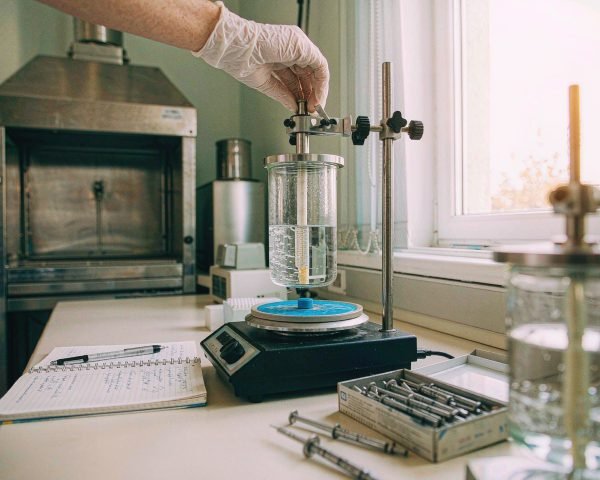

If you run in-vitro release testing (IVRT) for creams, gels, or ointments, you already know the instrument gets all the attention. The consumables decide whether your data holds up. Miss one detail, like a membrane lot that behaves differently from the last one, and a three-week study can end up in the bin.
The Short Answer
IVRT needs six core consumable groups: a release membrane (synthetic or animal-derived), donor and receptor chambers, magnetic stir bars, receptor fluid, sampling syringes and tips, and filtration supplies such as 0.45 µm syringe filters with low-adsorption collection vials.
Everything else is support gear. But those six groups are where studies quietly fail. Here’s how each one works, and what to check before you order.
What IVRT Is and Where It Fits
IVRT measures how fast a drug releases from a semisolid formulation through a membrane into a receptor fluid. Regulators treat it as the performance test for topical products. The method lives in USP General Chapter 1724, and the FDA SUPAC-SS guidance defines when you need it, usually to support scale-up or post-approval changes to a cream or ointment.
The test compares release rates between a test product and a reference. That comparison only means something if every cell runs under identical conditions. Same membrane type, same lot where possible, same stir speed, same temperature. A typical setup is a 12-station Franz cell bath held at 32.0 ± 0.5 °C to mimic skin surface temperature.
That’s why consumables matter more here than in, say, a simple HPLC assay. IVRT is a comparative method. Any variable that drifts between cells or between runs can fake a difference between your products.
The Franz Cell Setup and Its Consumables
Most labs run IVRT on vertical Franz diffusion cells. Some use USP Apparatus IV flow-through cells, especially for formulations where sink conditions are hard to maintain. The consumable list overlaps heavily between the two.
Membranes. You have two families. Synthetic membranes include cellulose acetate, polyethersulfone, nylon, and polydimethylsiloxane, plus layered products designed to mimic skin. Animal-derived options include excised porcine skin or bovine udder skin. For routine IVRT (as opposed to permeation studies), synthetic membranes win because they’re consistent and available. A good overview of membrane choice for release testing appears in this PMC review on IVRT methods.
Donor and receptor chambers. These are the glass halves of the cell itself. They’re durable, but the ground-glass joint surfaces are fragile. One chip and the cell leaks receptor fluid onto your stirrer plate. Keep spare cells on the shelf, and inspect joints under light before every run.
Magnetic stirrers and stir bars. Each cell needs a small PTFE-coated stir bar spinning consistently, usually somewhere between 400 and 600 rpm depending on your method. Position matters. A bar that sits off-center or a plate with uneven rotation creates vortexing that changes the effective membrane surface area. USP addressed some common setup questions, including heating options and cell volumes, in this Dissolution Technology Q&A.
Sampling syringes and tips. You’ll pull aliquots at fixed time points, often 0.5, 1, 2, 4, and 6 hours. Gastight syringes beat disposable ones for volume accuracy. If you use automated samplers, the tubing and needle tips become consumables too, and they wear faster than people expect.
Choosing and Prepping the Membrane
Membrane selection starts with your drug. The membrane must not bind the analyte, and it must not become the rate-limiting step. Run a recovery study: spike your drug into receptor fluid, mount the membrane, and confirm the drug passes freely. If recovery is low, try a different membrane chemistry.
Preparation trips up more studies than selection does. Most synthetic membranes need soaking in receptor medium before use, often 30 minutes to overnight, to hydrate the pores and remove leachables like wetting agents. The catch is that soaking time and soak solution have to be identical across every membrane in the study. I learned this the hard way when a colleague and I prepped membranes on different days, hers soaked 30 minutes and mine overnight. The run-to-run drift showed up as an apparent formulation difference that didn’t exist. We repeated the whole study. That mistake cost about two weeks and one very awkward conversation with the project lead.
Integrity matters too. Hold the membrane up to light and look for pinholes before mounting. Some labs bubble-point test membranes for critical work. And handle membranes with gloves and flat-tipped forceps only, since fingerprints on the diffusion surface change wetting behavior.
Sampling and Filtration Consumables
After you pull an aliquot, you filter it, usually through a 0.45 µm syringe filter before HPLC analysis. If your method detects low levels or the sample feeds an LC-MS, go to 0.22 µm. Match the membrane chemistry to your receptor fluid: PTFE handles hydroalcoholic media, PVDF and PES are safer choices for aqueous buffers where protein or surfactant binding is a concern. Filter extractables can show up as ghost peaks, so it’s worth reading up on syringe filter extractables and leachables before you validate the method.
The collection vial is the other quiet variable. Receptor fluids often contain surfactants or alcohols, and analytes at low µg/mL levels can adsorb to standard glass or polypropylene surfaces over time. Low-adsorption vials protect your data if samples sit overnight before injection. For work at very low concentrations, it helps to know whether polypropylene vials leach and how that interacts with your receptor medium. If your autosampler queue runs long, check sample stability in the vial before you trust the late time points.
One more practical note: you’ll replace the volume you withdraw with fresh, pre-warmed receptor fluid after each time point. Keep a spare bottle of receptor medium in the water bath so replacement fluid matches the bath temperature. Cold medium added to a 32 °C cell shifts your profile.
Cleaning and Reuse vs Single-Use
Glass cells, stir bars, and clamps get cleaned and reused. That’s normal and accepted, as long as your cleaning procedure is validated and documented. A typical sequence is a laboratory detergent wash, thorough rinsing, then a deionized water rinse, followed by drying. Some labs add an acid soak for sticky formulations. Whatever you choose, put it in the SOP and stick to it, because detergent residue is another variable that can change release behavior.
Membranes are single-use, always. Reusing one gives you a wall of drug residue and altered permeability, and there’s no good way to verify a used membrane is clean.
Syringe filters are single-use too. Reusing a filter risks carryover between time points, which is exactly the kind of error an auditor will flag. The cost of a fresh filter is trivial next to repeating a six-hour, 12-cell run.
The judgment calls live in the gray zone. Some labs autoclave glass donor chambers; others buy pre-cleaned spares. Some treat gastight syringes as durable equipment and service them; others toss them after a study. Either approach works if it’s written down and followed consistently.
Buying for IVRT: Documentation and Lot Consistency
IVRT is a comparative, regulated test, so your consumables need paper trails. For each lot of membranes, ask for a certificate of analysis and, where available, permeability or performance data. Lot-to-lot consistency is the single most valuable property a membrane supplier can offer you, because requalifying a new membrane lot means rerunning recovery studies and possibly revalidating the method.
The same logic applies to filters and vials. Change a filter lot mid-study and you’ve introduced a new extractable profile. Good practice is to qualify one lot for the entire study, or to validate a new lot against the old one before switching. Plan orders around your study calendar rather than buying ad hoc, and store membranes as the manufacturer specifies, since humidity and temperature can change membrane wetting behavior before you ever mount it.
Conclusion
IVRT rewards labs that treat consumables as part of the method. Your membrane choice and prep, your filters, your vials, and your stir bars all sit inside the measurement. Change one without noticing and your release profile moves with it. Build the consumable list into your method documentation, lock lot numbers for each study, and keep spares of the fragile stuff before the run starts. If you want a wider view of what a well-stocked pharma lab keeps on hand, this complete guide to pharmaceutical lab consumables is a solid next read, and the dissolution testing consumables checklist covers the oral solid dosage side of the house.
Frequently Asked Questions
What membrane is used in Franz diffusion cells?
For IVRT, synthetic membranes such as mixed ester cellulose, PES, or Strat-M-type layered membranes are most common, because they offer lot-to-lot consistency and don’t carry the availability and biohazard issues of excised skin. Animal-derived membranes like porcine skin appear mainly in permeation studies where biological relevance matters more than reproducibility.
Is IVRT required for generic topical drugs?
FDA’s SUPAC-SS guidance and recent product-specific guidelines expect IVRT data to support equivalence for many topical generics, sometimes alongside in vitro permeation testing. The exact requirement depends on the product and the level of manufacturing change, so check the FDA’s product-specific guidance for your molecule.
What pore size filter should I use for IVRT samples?
A 0.45 µm syringe filter is the default for HPLC sample cleanup. Drop to 0.22 µm when your method needs stricter particulate removal or feeds an LC-MS. Confirm the filter membrane doesn’t adsorb your analyte before committing.
Do you need to degas receptor fluid before an IVRT run?
Degas or at least pre-filter and pre-warm it. Dissolved air can form bubbles under the membrane or at the sampling port, and a bubble under the membrane blocks contact with receptor fluid and distorts the release rate for that cell. Vacuum filtration of the receptor medium right before filling the cells handles most of the problem.
How many cells does an IVRT study need?
Method guidance generally expects at least six replicates per product, and 12 cells per station is a common setup when comparing test and reference products in the same run. More cells mean better statistical power for the similarity comparison, so many labs use a full 12-station bath.