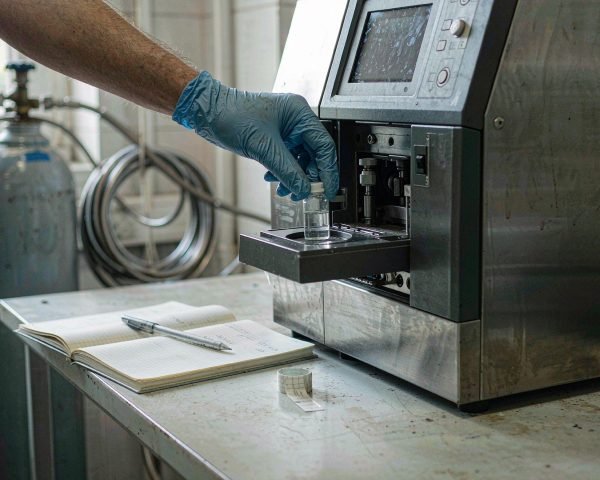

If you’ve only ever run HPLC, your first week with supercritical fluid chromatography will feel familiar and slightly strange at the same time. Most of the consumables look the same, but a few details around CO2, back-pressure, and modifier solvents will bite you if you order blindly. This guide walks through exactly what a working SFC lab goes through, from injection vials to fraction bottles.
The short answer: SFC needs CO2-compatible columns (chiral polysaccharide, silica, 2-EP, or C18), standard autosampler vials with PTFE-lined caps, 0.2 µm syringe filters, plus SFC-specific hardware: CO2 supply parts, back-pressure regulator seals, and, for prep scale, fraction collection tubes and bottles.
Here’s why it’s worth getting the list right before you order anything.
Why Labs Run SFC in the First Place
SFC uses supercritical CO2 as the main mobile phase, usually with 2 to 10% methanol as a modifier. Because CO2 is cheap, non-toxic, and evaporates off the fractions after collection, the technique has become the default for chiral separations and small-molecule purification in pharma. A typical method might run 150 bar back-pressure, 40 °C, 5% methanol with 0.1% diethylamine, and finish in a quarter of the time a normal-phase HPLC method would take.
The solvent savings alone explain most conversions. Labs report 70 to 95% reductions in solvent purchase and disposal costs compared with organic-solvent LC, and CO2 re-equilibrates faster, so throughput goes up. Waters has a solid overview of the technology and its prep-scale systems if you want the full picture: Supercritical Fluid Chromatography from Waters.
For consumables buyers, the relevant part is this: the fluid is different, but most of what touches your sample is not.
What SFC Changes vs HPLC (From a Consumables Standpoint)
Three hardware items genuinely differ. The pump needs liquid CO2 delivered and chilled, so labs deal with CO2 cylinders, dip tubes, chillers, and inlet filters that HPLC never touches. The system also runs against an automated back-pressure regulator, which has its own seals and maintenance schedule. And the whole flow path must tolerate pressure well above CO2’s critical point of 74 bar and 31 °C.
Everything downstream of the injector, though, is mostly business as usual. Vials, caps, filters, and even many HPLC columns carry over. Agilent makes this point directly in its SFC columns brochure: both HPLC and UHPLC columns generally work with SFC because the technique simply uses CO2 as a mobile phase, at typically lower back-pressures than you’d expect. You can read the details here: Agilent SFC columns guide.
So your HPLC vial stock does not become obsolete the day the SFC arrives. A few compatibility checks do matter, and the next sections cover them.
Autosampler Vials and Caps for CO2 Methods
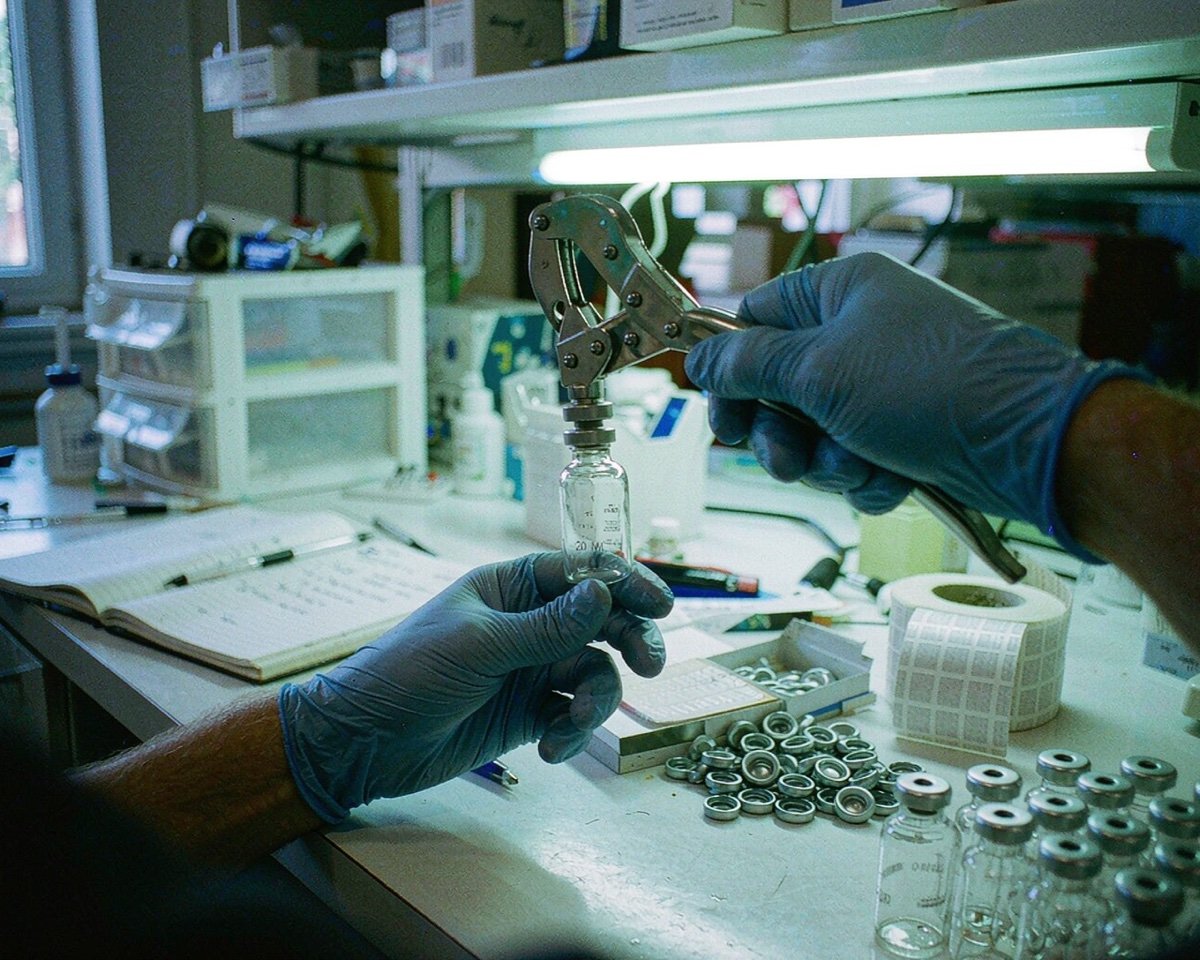
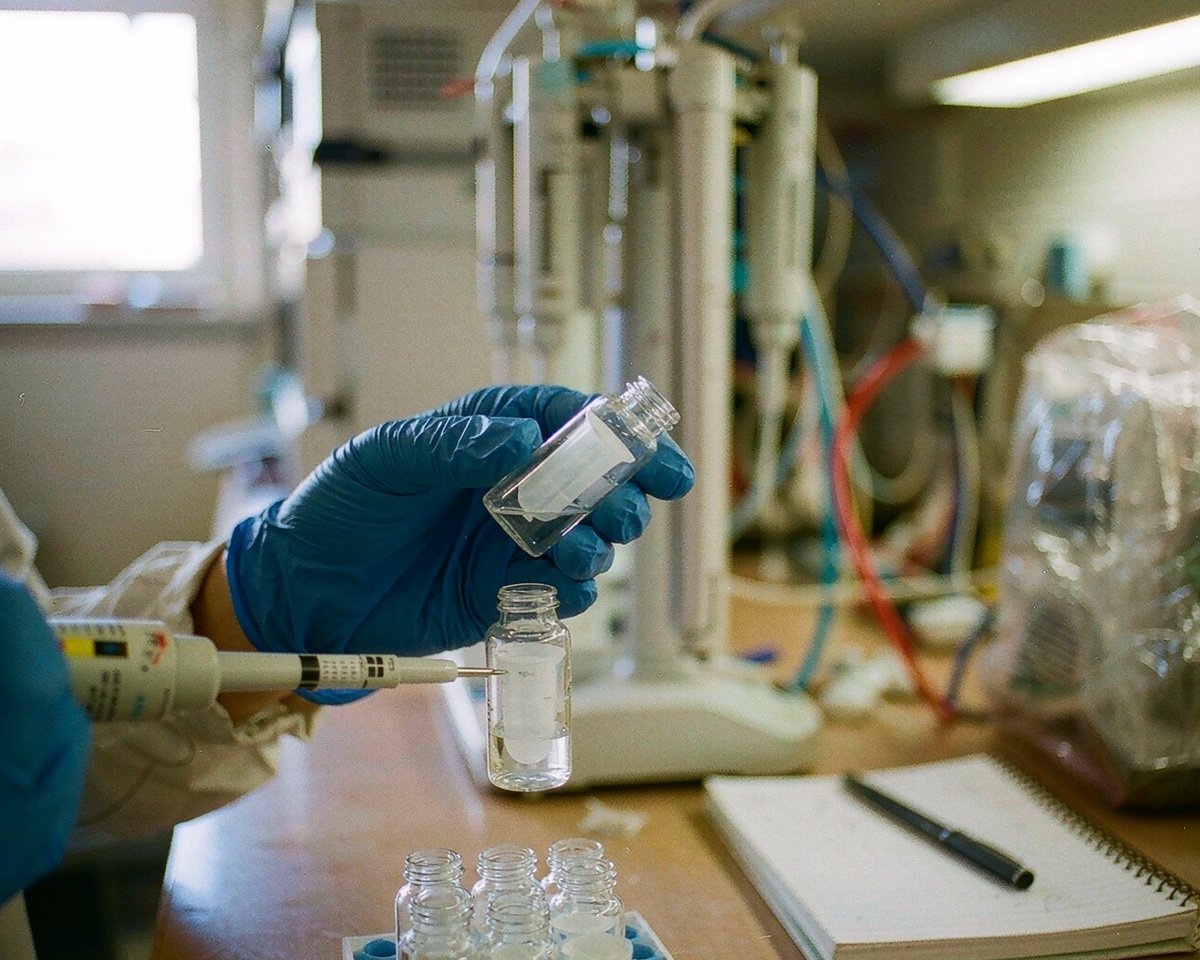
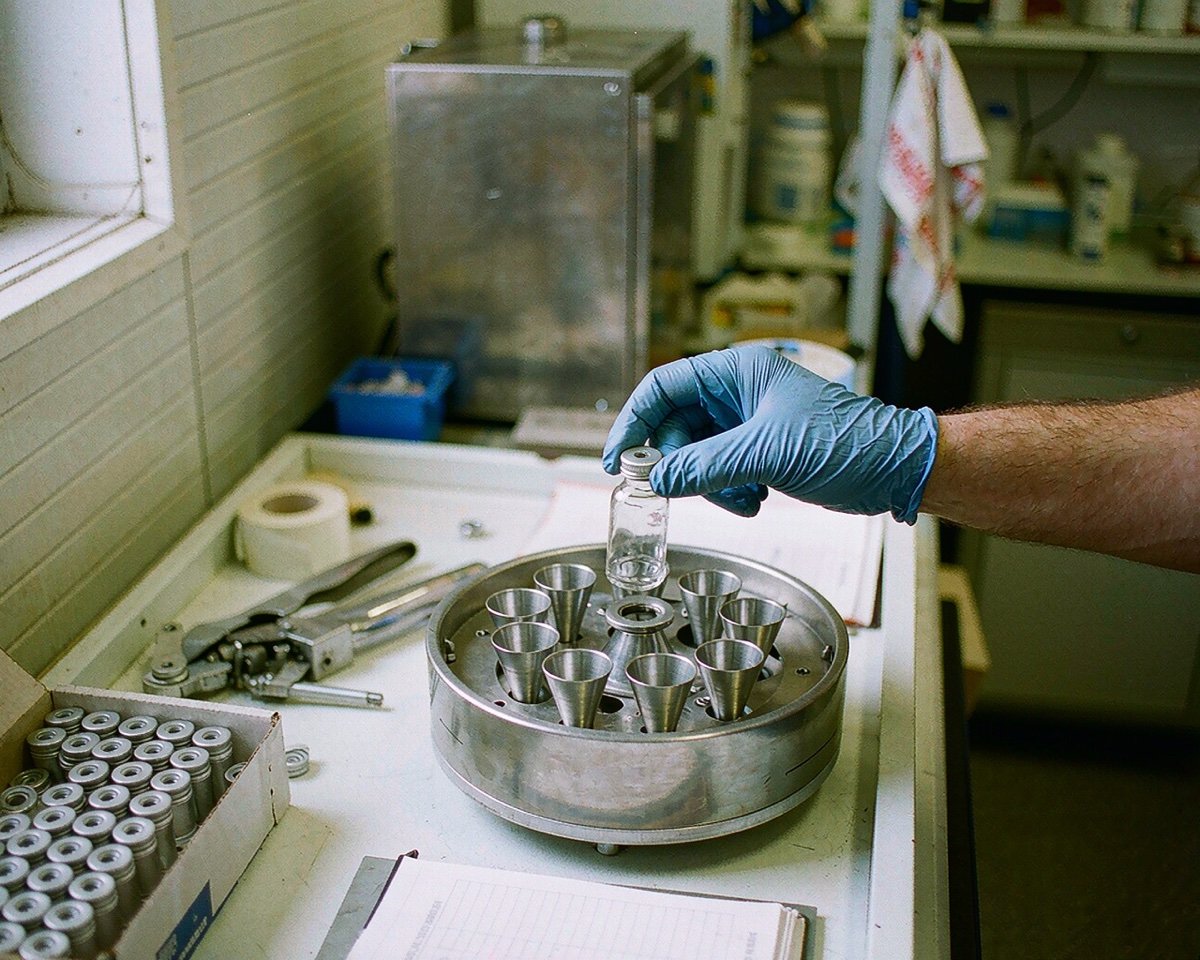
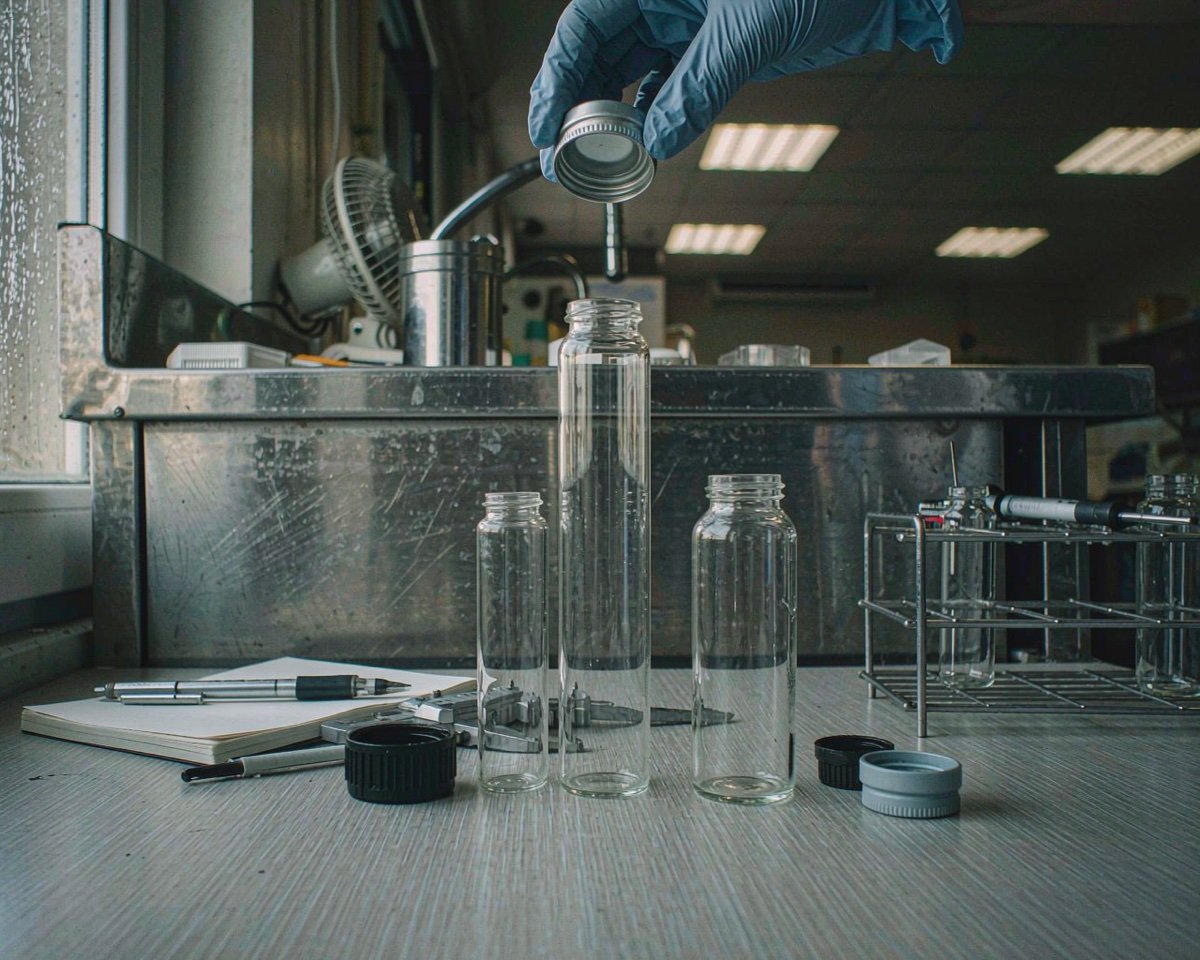
The good news: 9-425 screw vials and 11 mm crimp vials work fine on most SFC autosamplers, since the injector hardware is usually a modified LC autosampler. The thing to check is the septa. SFC methods push methanol, ethanol, or isopropanol through the flow path, sometimes with additives like DEA or ammonium acetate, and your samples themselves are usually dissolved in these solvents.
PTFE or PTFE/silicone septa handle this well. Avoid natural rubber or cheaper rubber-lined caps, because they can swell or shed particles into the vial. A customer of ours once spent two weeks chasing intermittent ghost peaks in an enantiopurity assay before we traced it to their budget septa shedding PTFE crumbs into the needle path. They swapped to assembled caps with pre-slit PTFE/silicone septa and the problem vanished overnight. That story cost them two lost weeks, which is why I always ask about septa material before anything else.
Crimp vs screw comes down to your autosampler spec and your lab’s habits, same as HPLC. One SFC-specific note: because injections are often smaller and samples may sit pressurized in the loop, a cap that seals reliably matters even more than usual, since a slow leak reads as a retention drift instead of an obvious puddle.
Sample Filtration Before Injection
SFC does not excuse you from filtering. The columns are packed just like HPLC columns, and particulates plug inlet frits the same way. Filter every sample through a 0.2 µm syringe filter before it goes in the vial.
Solvent compatibility is where SFC sample prep gets interesting. Your diluent is often methanol, ethanol, or even dichloromethane for lipid work. That rules out some membrane chemistries: standard nylon can extract or swell with certain solvents, and cellulose acetate dissolves in DCM. PTFE and regenerated cellulose membranes are the usual safe picks for organic-heavy diluents. Match the membrane to your actual diluent, not to the solvent you used last year. If you’re unsure which pore size or material to pick, this breakdown of 0.22 vs 0.45 micron filters is a good starting point.
One more habit worth copying from SFC power users: filter a blank of your diluent through the same filter lot. If that blank shows a peak, the filter membrane is the culprit, not your sample.
Columns: Where SFC Is Its Own World
Column choice is the one consumable category where SFC genuinely diverges. The workhorses are:
• Chiral polysaccharide columns (cellulose and amylose derivatives) for enantiomer separations, the single biggest SFC application.
• Bare silica and 2-ethylpyridine (2-EP) for achiral screening, since SFC behaves like normal-phase chromatography and these phases retain compounds well.
• C18 and other reversed-phase chemistries for hydrophobic analytes like lipids and steroids.
Chiral method development usually means screening a column bank, four to six phases in one oven, so labs keep a rotation of chiral columns on the shelf at all times. PubMed carries a good review of SFC’s role in pharmaceutical analysis if you want the academic angle: Supercritical fluid chromatography in pharmaceutical analysis.
Chiral consumables deserve their own article, and honestly, one already exists on this site. This guide on chiral separation consumables pairs well with what you’re reading here.
Preparative SFC Consumables
Prep SFC is where the consumable list grows. The point of prep work is collecting purified material, and the fractions come off the back-pressure regulator as a mix of compound, modifier, and evaporating CO2. You collect into:
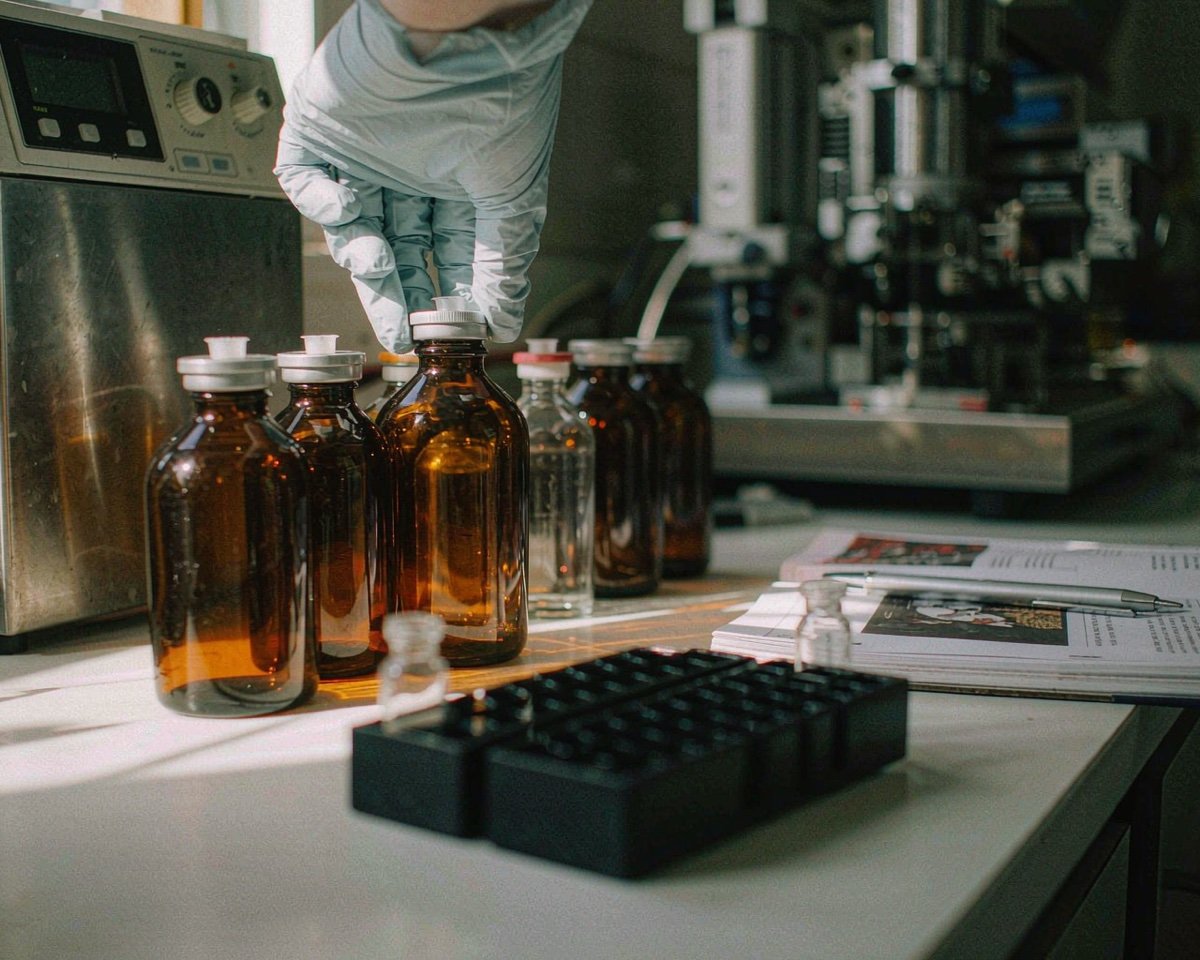
• Large vials and bottles (40 mL, 250 mL, or 500 mL screw-neck bottles) sized to your fraction volume.
• Fraction collection tubes and trays matched to your collector’s footprint.
• Solvent makeup bottles for the modifier and additive lines.
Two practical warnings. First, size your collection vessels generously, because foaming during CO2 depressurization can push a full fraction over the rim. Second, label everything before the run starts. Fractions evaporate fast once CO2 flashes off, and an unlabeled 40 mL vial of your precious intermediate is a mystery within an hour.
If you’re pricing prep consumables in bulk, it’s worth understanding where cheap vials actually cost you more, because a cracked collection bottle mid-run wastes far more than the bottle.
Practical Tips Before You Order
A few things I’d tell anyone stocking an SFC lab:
CO2 quality matters. Use 99.998% or better with an appropriate siphon or dip tube setup, and add an inline moisture filter. Water in your CO2 shows up as baseline noise and column aging.
Buy modifier-grade solvent deliberately. HPLC-grade methanol works, but keep one dedicated bottle for SFC rather than sharing with the prep LC, so additive concentrations stay honest.
OEM-compatible vials save real money. If your autosampler accepts standard 9-425 or 11 mm consumables, compatible brands cut costs by half or more without touching data quality, as long as the glass and septa specs match.
Keep spare back-pressure regulator seals. It’s the one part HPLC people never think to stock, and it’s the most common cause of surprise downtime on an SFC.
Conclusion
Stocking a supercritical fluid chromatography lab is less dramatic than it sounds. Get CO2 hardware and back-pressure regulator spares sorted, pick vials and caps that tolerate methanol-rich solvents, filter everything through solvent-compatible 0.2 µm membranes, and build a small rotation of SFC columns around your chiral work. Prep scale adds collection bottles and fraction tubes, sized a little larger than your gut says. The rest of your HPLC habits, and most of your HPLC consumable stock, transfer over intact. If you build the order around that split, SFC-specific versus carried-over, you’ll avoid both the surprise downtime and the drawer full of wrong caps. And when you’re ready to pressure-test your vial choices for mixed-method labs, our guide on mixing vial brands within one method is a sensible next step.
Frequently Asked Questions
Is SFC better than HPLC?
Not universally, but for chiral and hydrophobic small molecules it’s usually faster, cheaper per run, and far greener. HPLC still wins for highly polar or large biomolecules. Most pharma labs run both and pick per method.
What solvents are used in SFC?
Supercritical CO2 is the main mobile phase, typically modified with 2 to 10% methanol. Ethanol and isopropanol work too, and small amounts of water, acid, or amine additives help retain polar analytes.
Can I use my HPLC vials on an SFC system?
Usually yes, as long as the autosampler accepts the same neck finish and the septa tolerate methanol and CO2 exposure. PTFE or PTFE/silicone septa are the safe choice.
Why does SFC need a back-pressure regulator?
CO2 only stays supercritical above 74 bar, so the system must hold pressure through the column and only release it after separation. The back-pressure regulator maintains that pressure and controls where the fluid expands.
How much solvent does SFC actually save?
Labs commonly report 70 to 95% less organic solvent consumption and disposal versus normal-phase or reversed-phase prep LC, because CO2 replaces most of the mobile phase volume.