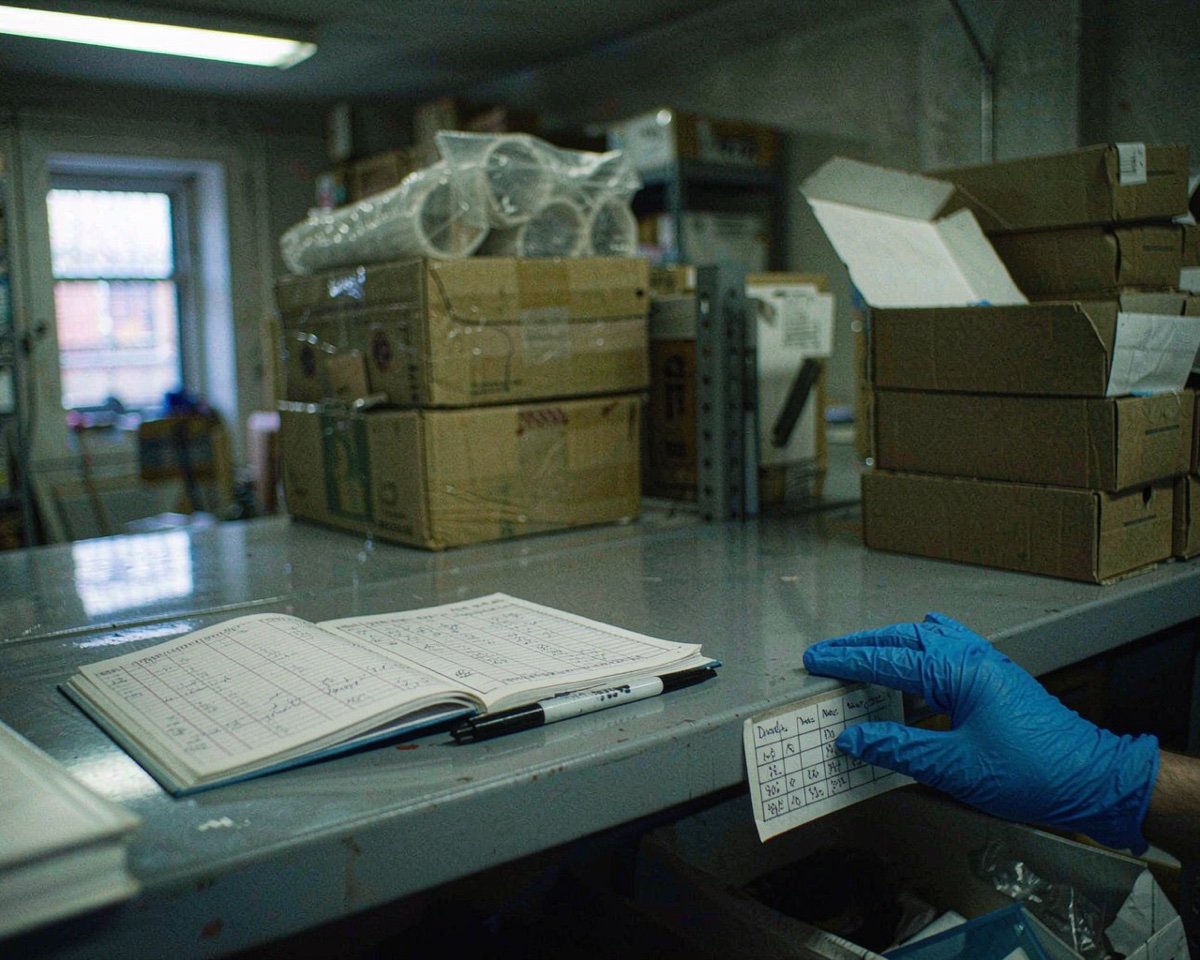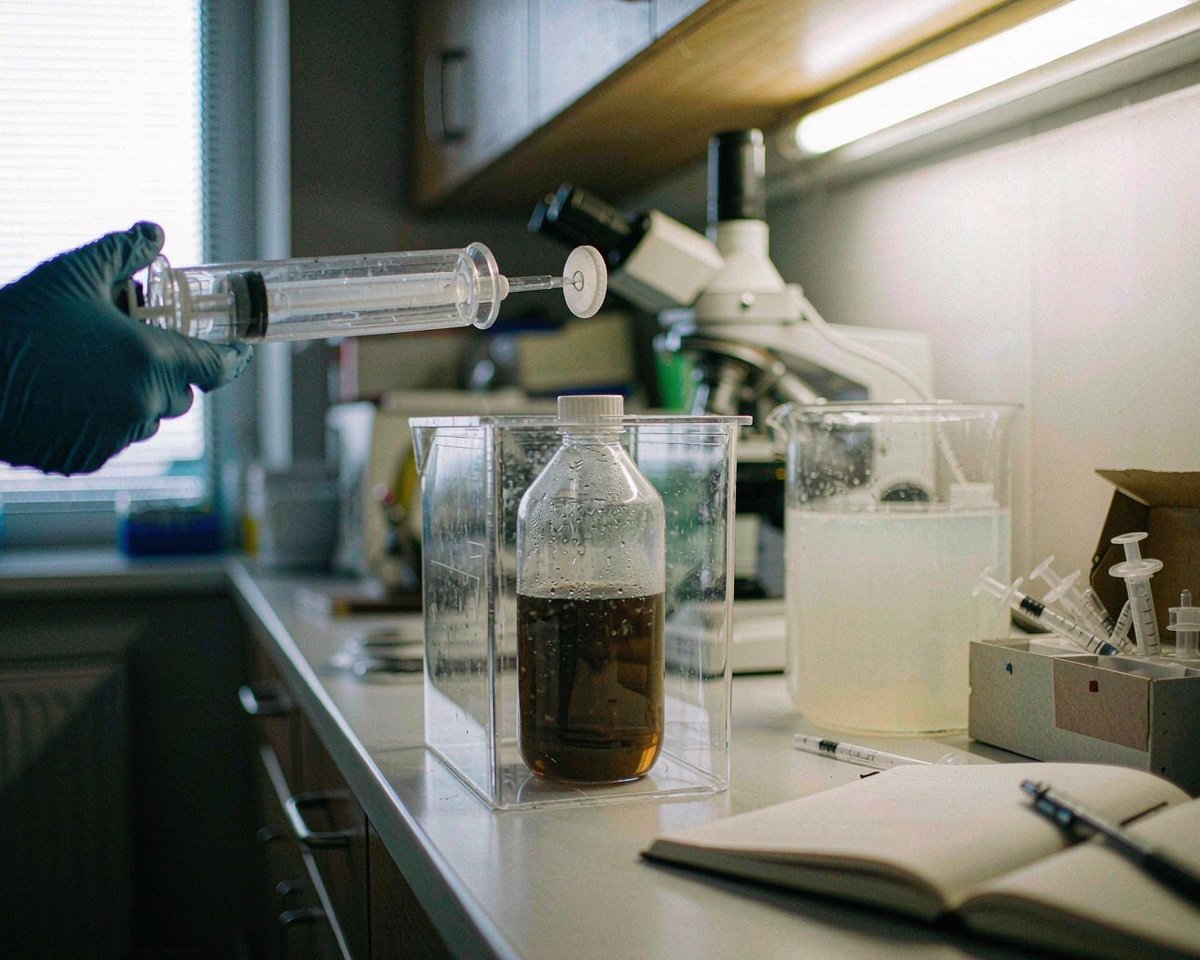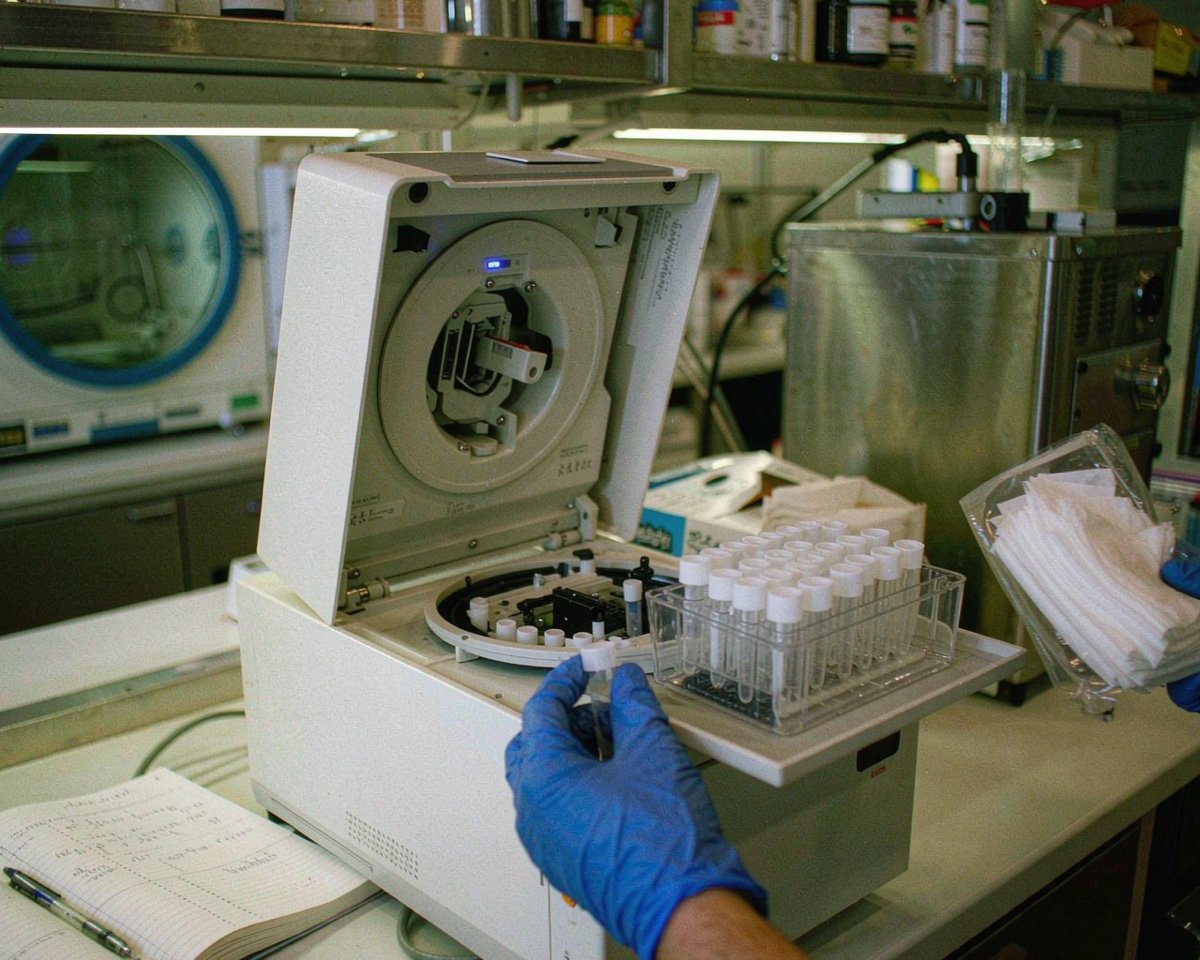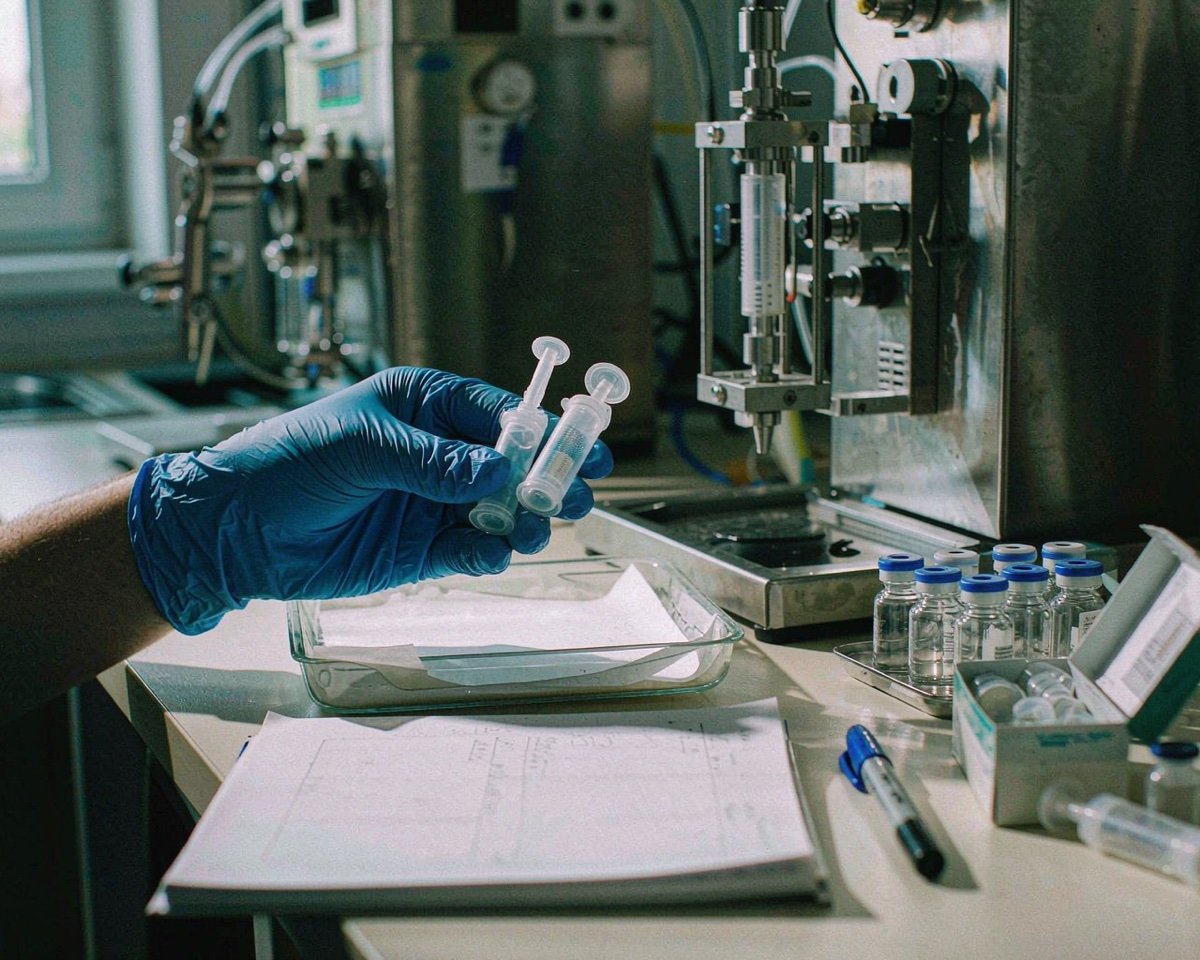
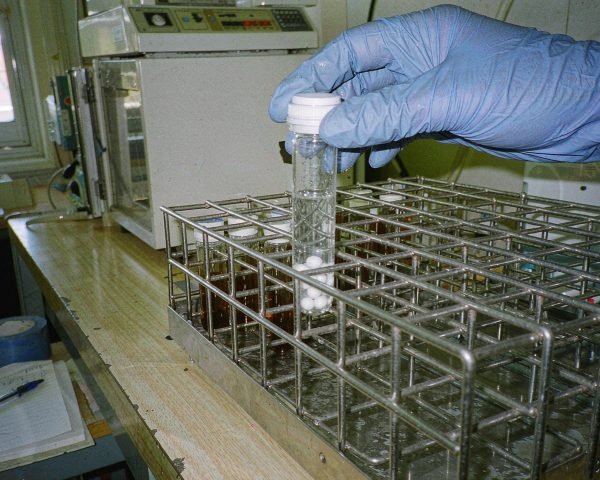

A pipette tip is a pipette tip until the tip is part of a biocompatibility file that a regulator will read. Then the lot number on the box, the certificate folded inside it, and even the material of the tube you extracted into all become evidence. Medical device testing labs run on that kind of paperwork, and the consumables on the bench are where a lot of it starts.
Answer: Medical device labs need consumables with three properties: consistent materials (Type 1 borosilicate, certified polymers), documented lots (CoA with every box), and suppliers who can prove their own quality system (ISO 9001 or ISO 13485). Everything else is technique.
Read on for the full breakdown: what the standards actually ask of your bench, which consumables matter most for biocompatibility and chemical characterization work, and where labs usually get burned.
Why Medical Device Testing Is Its Own Consumables World
If you came from pharma QC or environmental testing, the shock is not the science. The shock is how much of the final submission depends on things that look like ordinary lab supplies.
A biocompatibility study can fail because the extraction tubes leached something, or because the lot of filters changed mid-study and nobody documented it. Regulators treat consumables as part of the method. So should you.
Three things make this niche different from general lab work:
- The tests are long. A 72-hour extraction at 50°C turns every material weakness into a visible problem.
- The samples are precious. A prototype catheter lot might contain 12 units total, and you get one shot at the extraction.
- The audit trail is the product. The client is buying defensible data, and defensible data starts with traceable consumables.
The consequence shows up in small places. Procurement asks why you need the CoA for a $6 box of tubes. A new analyst reaches for a cap that “looks the same” but has a different liner. An incubator log and a tube log disagree about what was where. None of these are science problems. All of them become data problems, because in this field the consumable is part of the experiment whether the org chart admits it or not.
The Regulatory Spine: What the Standards Actually Ask
You do not need to memorize the ISO 10993 series, but you do need to know which parts touch your bench. The FDA’s guidance on ISO 10993-1 lays out how the agency expects biological evaluation to work within a risk management process, and it is the document most reviewers will hold your file against.
The standard itself, ISO 10993-1:2018, frames biological evaluation as part of risk management rather than a checkbox list of tests. That framing matters at the bench because it means your extraction conditions, your containers, and your handling are all part of the risk argument.
Then there is the quality system side. The eCFR text of 21 CFR 820 covers the FDA’s quality system regulation for devices, and since the QMSR transition it incorporates ISO 13485 by reference. In practice this means your lab’s purchasing controls, including how you qualify consumable suppliers, are in scope during an inspection.
I once watched a submission stall because the CRO could not produce the certificate for a lot of extraction tubes used eight months earlier. The science was fine. The paperwork was not, and the reviewer asked for it twice.
It also means the boundary between “lab supply” and “quality record” has moved. A box of extraction tubes bought without a PO reference, received without a check, and opened without a log is a small gap in the QMS evidence chain. On a normal day nobody notices. In an audit, it is the kind of finding that generates a CAPA and a month of emails.
Biocompatibility Testing: What ISO 10993-12 Demands from Your Bench
ISO 10993-12 is the sample preparation chapter, and it is the one that touches your consumables most directly. A good practical walkthrough of the requirements, including the standard extraction conditions, is this breakdown of ISO 10993-12 sample preparation from a contract lab.
The extraction conditions are fixed by the standard: 37°C for 72 hours, 50°C for 72 hours, 70°C for 24 hours, or 121°C for 1 hour, depending on the device’s contact profile. Your consumables have to survive those conditions without adding background.
Extraction Containers in Practice
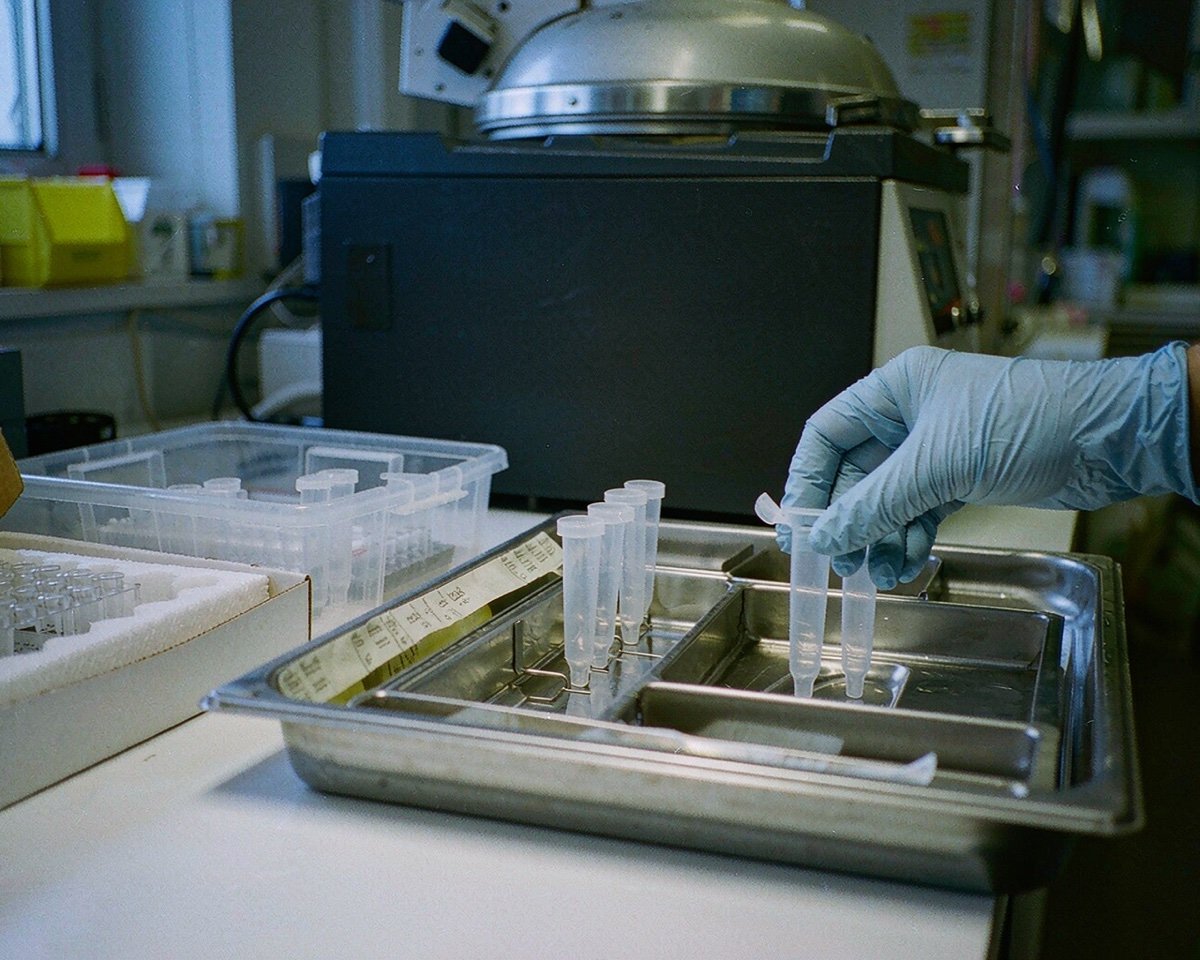
Here is how the container requirement looks on an actual bench. A 121°C extraction rules out most plastics on contact, so borosilicate tubes with PTFE-lined screw caps carry that load. The 50°C and 70°C conditions are friendlier but still exceed the comfort zone of adhesive-lined caps, which is why the PTFE face matters more than the cap brand.
Watch the geometry too. A tube that is “close enough” in volume quietly shifts your surface-area-to-volume ratio, and the ratio is what the standard specifies. Buying tubes with stated tolerances, and logging the actual batch dimensions once, is cheaper than explaining a ratio deviation later.
Extraction Containers
The standard practice is inert, closed containers with minimal dead space, and the most common choice is borosilicate glass tubes with PTFE-lined caps. This is not tradition for its own sake. Borosilicate is hydrolytically stable, and a PTFE face keeps the cap liner out of the extract.
What to check when you buy:
- Glass class. Type 1, Class A borosilicate, and ask for the CoA to say so.
- Cap liner. PTFE-faced, not bare silicone, or your 50°C extraction will taste like silicone.
- Volume tolerance. Extraction ratios in the standard are surface-area based, so a 10% error in tube volume quietly changes your ratio.
Solvents and Media
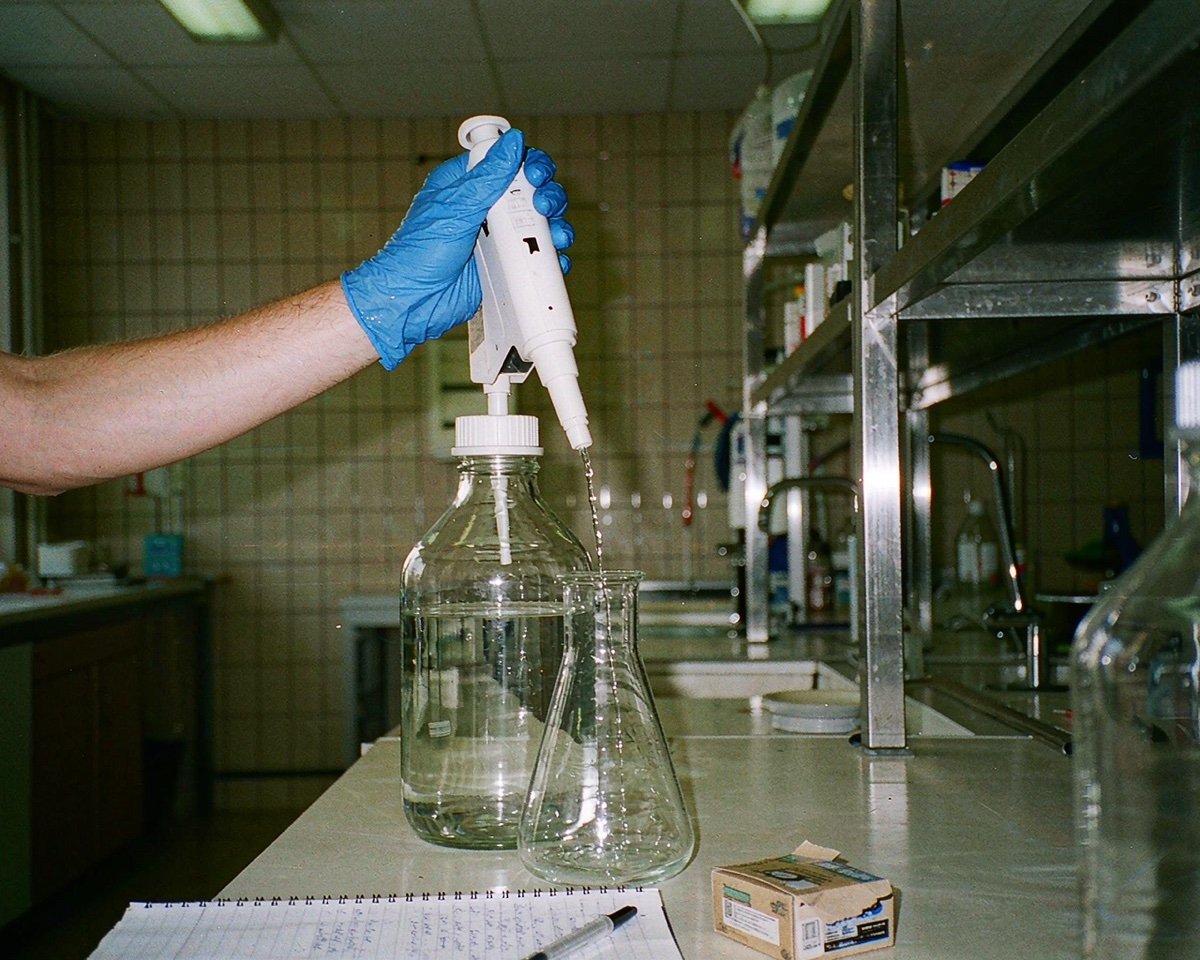
The standard asks for polar and non-polar extraction vehicles, typically saline and culture media on one side, cottonseed oil or PEG 400 on the other. Consumable-wise, this means media bottles that will not shed extractables into 72 hours of incubation. Glass media bottles with GL45-style closures are the workhorse here.
Handling Consumables
Gloves, sterile forceps, and clean cutting tools all go into the file. This practical guide to preparing biocompatibility test samples makes the point well: residues from handling, packaging, or the bench can interfere with the test outcomes, so cleanliness is part of the method.
A Day on the Extraction Bench
It helps to see where consumables actually get consumed. A typical biocompatibility extraction day runs like this.
Morning: device samples arrive logged against the study plan, cut or sectioned with clean tools if the protocol allows it, and weighed or measured for surface area. Nitrile gloves, forceps, and lint-free wipes are the consumables here, and the cutting tools are validated clean.
Midday: extraction vehicles come out of glass media bottles, aliquoted into the extraction tubes. If the vehicle is culture media, it was filtered and warmed; if it is cottonseed oil, it came from a bottle that has touched nothing else. This is where a low-extractable filter earns its certificate.
Afternoon: tubes are capped, labeled, and loaded into incubators for 24 to 72 hours. Labeling tape that survives 50°C and 72 hours is a consumable with a real specification, discovered the hard way by anyone whose labels slid off mid-study.
Day three: extracts are pulled, cooled, and aliquoted into vials for the biological test or the instrument. Conical inserts appear if volume is short. The tubes, the bottles, the filters, the labels: four consumable decisions, all now part of the record.
The pattern is worth noticing. Consumables are not background in this workflow. They are the container, the vehicle, the closure, and the label, and each one either protects the sample or quietly edits it.
Chemical Characterization and Extractables: The LC-MS Bench
Biocompatibility is only half the file. Chemical characterization, the hunt for what leaches out of the device, runs through GC-MS and LC-MS, and that is where consumables quietly make or break detection limits.
The consumables that matter most:
- Inserts and low-volume vials. Extracts are often dilute. A 250 µL conical insert can be the difference between a detected peak and a miss, so keep 150 and 250 µL conical inserts stocked alongside standard vials.
- Low-extractable syringe filters. Every filtration step is a chance to add background to an extractables study, which is awkward when the study is about background. Filter extractables deserve their own read before you commit a membrane to a characterization campaign.
- LC-MS grade solvents and clean vials. Background contamination at trace levels usually traces back to the cheapest thing in the workflow.
One habit I would push: keep a dedicated, untouched filter lot for characterization work. Opening a fresh lot for a blank and finding new peaks is a conversation you want to have before the submission, not after.
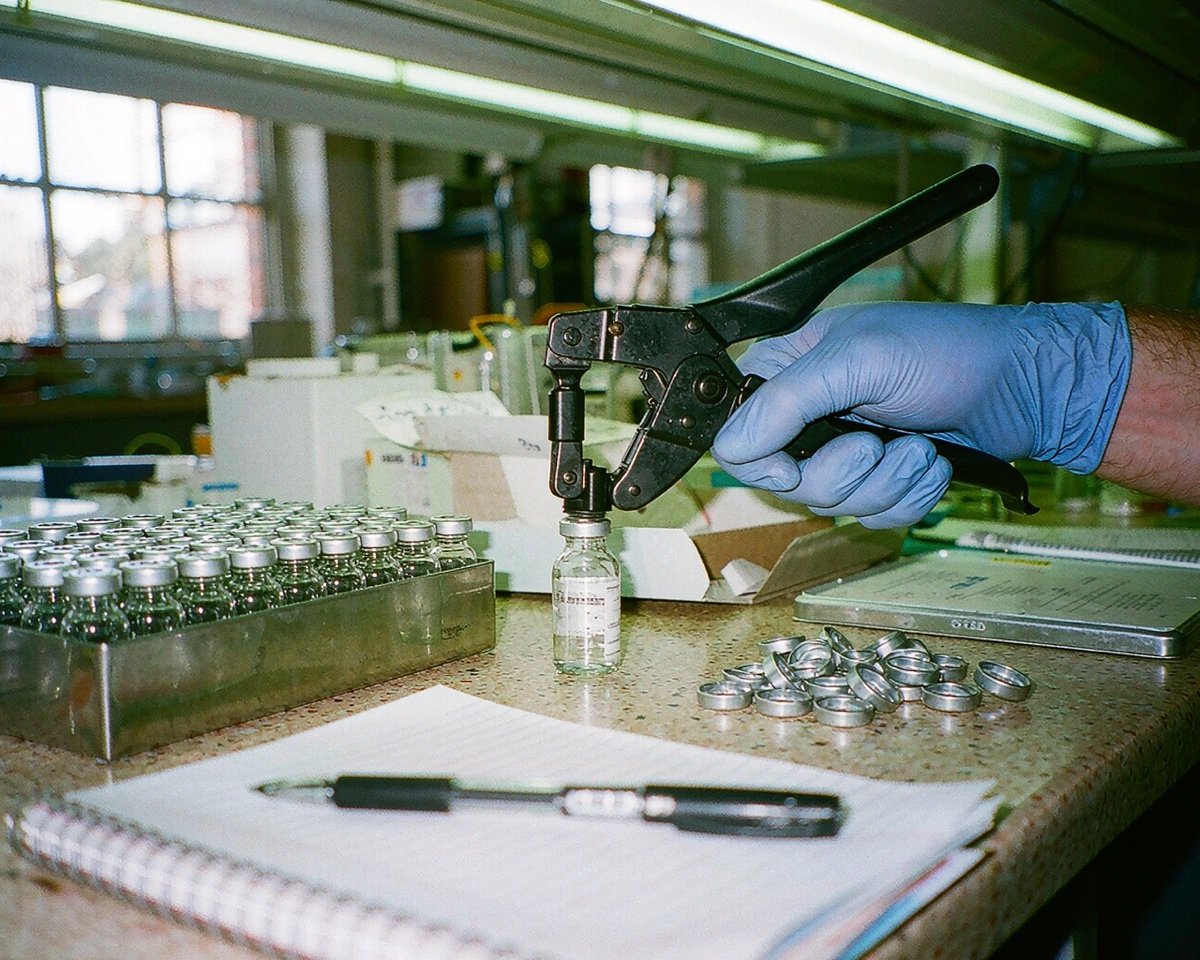
Volatile residuals run through headspace GC instead, and that bench has its own consumable demands. Headspace vials need consistent volume and a crimp seal that survives the oven; the septa are thicker, usually PTFE-faced silicone or butyl, because the vial pressurizes at 80°C and above. A weak crimp or a creased septum vents exactly the compounds the method is quantifying, which is the kind of failure that looks like a matrix effect until you run the second vial.
For an instrument-adjacent check on seal quality, a spin test on every tenth vial is a two-second habit: if the cap rotates, the whole rack gets rechecked.
Sterility, Bioburden, and the Claims That Actually Mean Something
Medical device labs run into sterile, low-bioburden, and endotoxin-controlled claims constantly, and the marketing language around them is noisy. The claims that matter are the ones backed by a validation or a certificate.
For consumables, the useful distinction is this: sterile means validated to a sterility assurance level, low-bioburden means a documented bioburden number, and “clean” means nothing in particular. Our article on endotoxin and low-endotoxin claims covers the pyrogen side, which matters if your work touches implants or fluids that contact blood.
When a device lab orders sterile consumables, the questions I would ask the supplier are simple: What is the sterilization method? What is the SAL? Where is the certificate? If the answers are vague, the claim probably is too.
A practical middle path exists for labs that don’t need full sterile claims: low-bioburden or “certified clean” grades with documented bioburden numbers. They cost less than gamma-irradiated stock and arrive with a number you can defend, which is usually what the method actually needs. Match the claim to the test, not to the scariest sentence in the marketing sheet.
Working With CROs and Test Houses
Many device companies outsource the biological half of the file, and the consumable conversation moves to the contract lab. That transfer is where requirements get lost, so put them in writing.
Three questions belong in the quote request: Which consumable lots will be used, and can you name them now? Who keeps the certificates at study close, and in what format? What is the policy if a lot changes mid-study? A test house that answers these in the proposal is telling you how they run studies. One that answers “standard practice” is telling you something else too.
When results come back, request the consumable record with the data: lots, certificates, cleaning logs. The file you assemble at close-out is the file the reviewer reads, and reconstructing it two years later is a different, worse job.
Certifications and Documentation: Reading the Paperwork
Consumable documentation for this niche comes in layers, and knowing which layer you need saves arguments later.
| Document | What it proves | When you need it |
|---|---|---|
| CoA (lot-specific) | This exact lot met spec | Every critical consumable |
| CoC (chain of custody) | Who touched it, when | Regulated or forensic-adjacent work |
| Sterility certificate | Validated sterilization | Any sterile claim |
| ISO 13485 cert | Supplier runs a device-grade QMS | Supplier qualification |
| ISO 9001 cert | Supplier runs a basic QMS | Minimum bar for any vendor |
The distinction between the two big ISO standards trips up a lot of buyers, so we wrote a full comparison of ISO 9001 vs ISO 13485 for consumables. Short version: if your work feeds a device submission, 13485 from your suppliers is worth asking for, even if they sell you “just” vials.
Cleaning, Reuse, and When Not To
Device labs inherit glassware habits from general chemistry, and some of them do not survive contact with biocompatibility work.
Extraction glassware is the flashpoint. A detergent residue invisible to the eye becomes a visible population of peaks or a cytotoxicity artifact after 72 hours at 50°C. The safe rules are short: validated cleaning with documented agents, or single-use. Anything in between is a risk you are taking on behalf of a client’s submission.
Where reuse is defensible, it is defensible because the cleaning is validated, not because the glass looks clean. Rinse-water conductivity, a blank extraction on a cleaned vessel, and a logbook entry per batch are the minimum evidence.
Other consumables don’t get a reuse debate at all. Sterile tips, filters, and anything sold as single-use stays single-use; the packaging claim is part of what the client is paying for. The economy of a device lab comes from buying right and wasting little, not from laundering consumables the manufacturer designed to die once.
Where Device Labs Usually Get Burned
These are the recurring failure modes I hear about from device testing teams:
Lot changes mid-study. You validated the extraction on filter lot A and bought lot B because lot A was out of stock. Now your blanks differ. The fix is boring: record lot numbers in the study file, and qualify a second lot before you need it.
Caps and liners are the second trap. The tube gets a CoA; the caps arrive loose in a bag with nothing. For extraction work, that is backwards. Ask for lot documentation on closures, or at least on the liner material.
Then there is cleaning. Bench-washing extraction glassware with detergent leaves residue that shows up at 121°C extraction conditions, and it shows up in a place you cannot point to later. Single-use or validated cleaning, pick one.
The last one is procurement culture. Price-first buying on critical items saves $4 on a box of extraction tubes and risks a repeated 72-hour study, which costs about a thousand times more once you count incubator time, analyst hours, and a prototype lot you may not be able to replace.
A fifth failure deserves its own paragraph because nobody predicts it: storage. Extraction tubes kept on an open shelf above a sink collect a detergent film that survives casual rinsing. A closed cabinet and a labeled “extraction glass only” shelf solve it for free.
Storage and Stocking for Device Labs
Storage is where traceability either survives or quietly dies. Two habits cover most of it.
Store certified consumables in their original packaging until use, in a cabinet that is clean, dry, and out of sunlight. The packaging is part of the claim; a sterile pouch opened and returned to a shelf is no longer sterile stock, and the shelf does not know the difference.
Rotate by lot and by date, with the earliest date at the front. Device studies run long, and the tube you reach for in month nine of a project should be from the lot you validated in month one. That only happens if the shelf enforces it.
Training Bench Staff on the Paperwork Side
New analysts learn pipetting in a week. Learning why the lot number matters takes longer, so put it in onboarding.
The shortest version I have found: in device testing, the consumable is a reagent. Nobody would run an assay with an unlabeled bottle of mobile phase, and the same standard applies to the box of tubes. Lot number, certificate, date opened: three facts, written down before the first sample touches the consumable.
Pair every new analyst with the receiving process once. Watching certificates get checked, logged, and filed teaches more than any slide about why the bench cares.
Building a Starter Consumables Kit for a Device Testing Bench
If you are setting up a new bench or re-stocking after an audit finding, this list covers the daily drivers:
- Type 1 borosilicate extraction tubes with PTFE-lined caps, in the sizes your ratios need
- Glass media bottles (100 mL to 1 L) for polar and non-polar vehicles
- Certified sterile pipette tips and serological pipettes
- Low-extractable syringe filters, both 0.22 and 0.45 µm, plus glass fiber prefilters for dirty matrices
- Conical low-volume inserts for trace LC-MS work
- Nitrile gloves, powder-free, lot-documented
- Labeling tape and solvent-resistant markers (the file is only as good as its labels)
Ballpark planning numbers help the budget conversation. The items above are low-cost relative to instrument time, which is the whole point:
| Consumable | Typical order unit | Budget note |
|---|---|---|
| Extraction tubes, PTFE-lined caps | 100-250 per pack | Buy the sizes your ratios need, plus one spare size |
| Glass media bottles, GL45 | case of 10-20 | Amber for light-sensitive vehicles |
| Low-extractable syringe filters | 100 per pack | Hold one unopened lot as the study reserve |
| Conical inserts | 100 per pack | One glass, one polymer, to cover both polarity cases |
| Nitrile gloves, lot-documented | case | Single brand per study keeps the background stable |
Two buying rules fall out of years of watching labs restock mid-study: keep one reserve lot of every critical consumable on the shelf, and never let a study outlive the last box of the lot it started with. If you serve both device and pharma clients, buy to the stricter of the two expectations and the paperwork covers both.
A pharmaceutical QC lab’s needs overlap heavily with this list, so our pharmaceutical lab consumables guide is a useful companion read if you serve both industries.
Supplier Qualification: The Questions Worth Asking
Before the first order, and once a year after, ask:
1. Can you supply a lot-specific CoA with every shipment? 2. Which ISO certification covers your production, and can I see the scope? 3. What is your change control policy? Will you tell me if the glass mold or the liner material changes? 4. Can you hold a lot for my study duration? (Twelve months is a reasonable ask.) 5. What is your lot recall process?
Question 3 separates the suppliers who understand regulated work from the ones who sell to it. A vendor who says “we’ll notify you of material changes” in writing is worth 10% more than one who shrugs.
Ordering From Overseas Suppliers
Most device labs buy consumables across borders, and a few extra questions keep the paperwork intact through customs.
Ask how the certificates travel: printed inside the box, emailed with the shipment, or both. Ask who is the importer of record and what happens if a shipment is held, because a sterile lot that sat a week in a warm warehouse has a story you will want in writing. And ask about shelf life at shipment: a lot with four months left is a different purchase than one with three years, at any price.
Lead times belong in the method plan as much as in the purchase order. If an extraction campaign starts in March, the tubes should be on your shelf in February, qualified and logged. Minimum order quantities and lead times behave differently for consumables than for reagents, and planning for that gap is cheap insurance. Budget the receiving time too: a cross-border shipment of certified stock is not a same-day turnaround, and pretending otherwise is how studies start with unlogged lots.
Documentation in Practice: What a Good File Looks Like
The audit version of all this is a file, and good ones share a shape.
A folder per study. Inside it: the protocol, the consumable list with lots, the certificates, the cleaning logs, and the extraction records, in the order the work happened. When a reviewer asks where the caps for lot X came from, the answer is one tab away, not one email chain away.
Labs that build the file as they go spend an afternoon at close-out. Labs that rebuild it later spend a week, and the rebuilt version always has gaps that the honest one would not have had.
Conclusion
Medical device testing does not ask your consumables to be exotic. It asks them to be consistent, documented, and inert enough to stay out of the data. Get the extraction containers right, keep lot certificates with the study file, treat filtration as a potential source of background, and qualify suppliers who can answer paperwork questions without a week of email. Do that, and the consumables stop being an audit risk and start being what they should be: boring. When you are ready to tighten one more gap, compare your own quality-system expectations against our ISO 9001 vs ISO 13485 breakdown, and review how your lab handles endotoxin-controlled consumables.
Frequently Asked Questions
Do vials and tubes really need to be certified for biocompatibility testing?
Not certified in the device sense, but documented. You need lot-specific CoAs proving material class and cleanliness, because the reviewer will assume anything in the extraction system could contribute to the result. Undocumented consumables are an easy finding during an audit.
What extraction solvents are required under ISO 10993-12?
The standard calls for a polar and a non-polar vehicle, commonly saline or culture media plus cottonseed oil or PEG 400. The exact conditions depend on the device’s contact duration and type, so read the sampling chapter against your device profile before ordering bottles and tubes.
Can I use regular HPLC vials for extractables and leachables work?
Usually yes, if they are Type 1 borosilicate with documented lots. For trace-level LC-MS work, add low-volume inserts and consider a dedicated, untouched filter lot so your blanks stay clean.
Is ISO 9001 enough for a consumables supplier to a device lab?
It is a reasonable floor for routine items. For consumables that end up in biocompatibility or extractables data, ISO 13485-aligned suppliers make your own purchasing controls easier to defend during an inspection.
How do I handle a mid-study lot change?
Record it, qualify the new lot with a side-by-side (blank plus recovery check), and attach the comparison to the study file. Switching silently is what turns a routine restock into a deviation report.