
# What Consumables Does Mycotoxin Testing Need?
The HPLC and LC-MS/MS get all the attention in most food and feed labs; the consumables live in a drawer. Most failed recoveries I’ve seen in mycotoxin work trace back to that drawer, not the instrument.
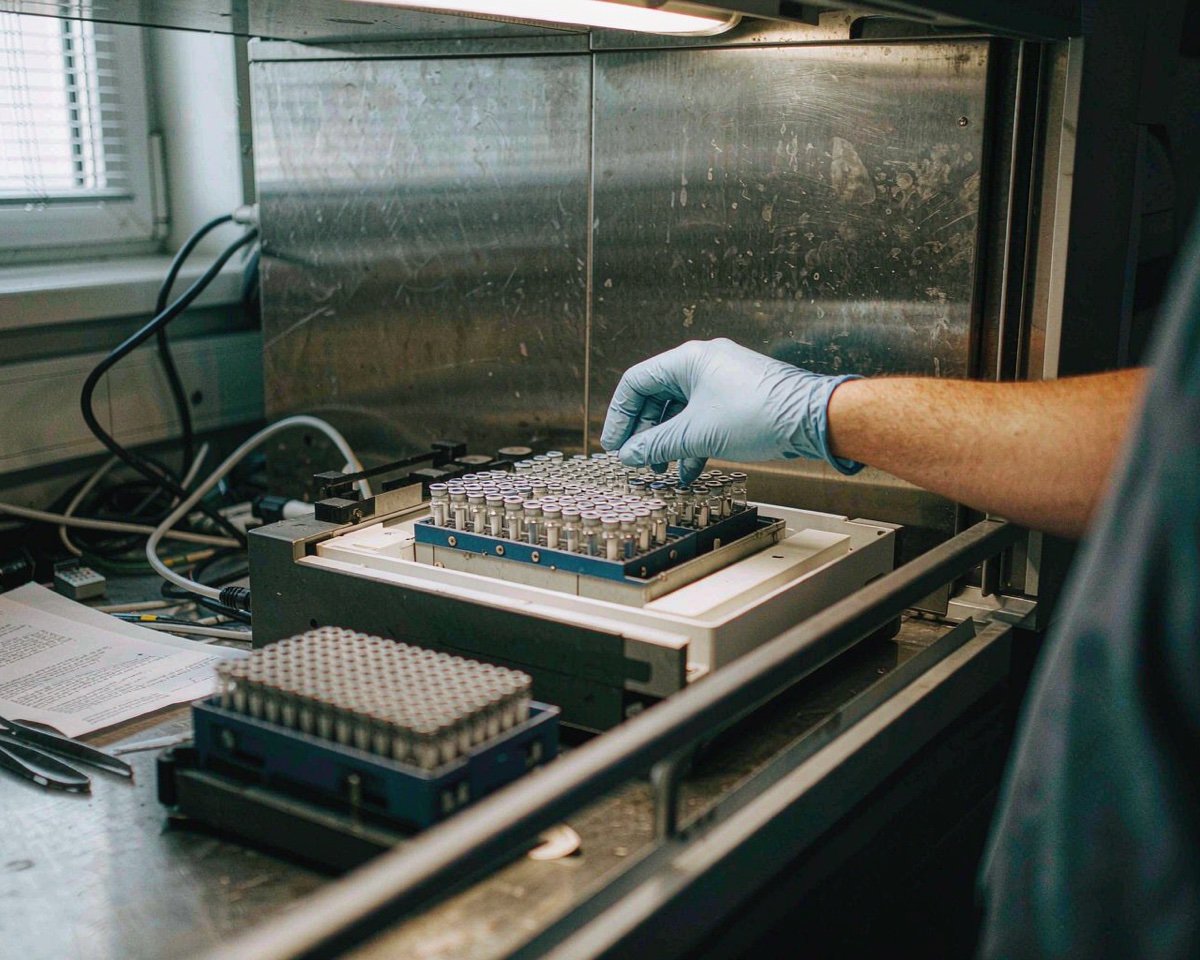
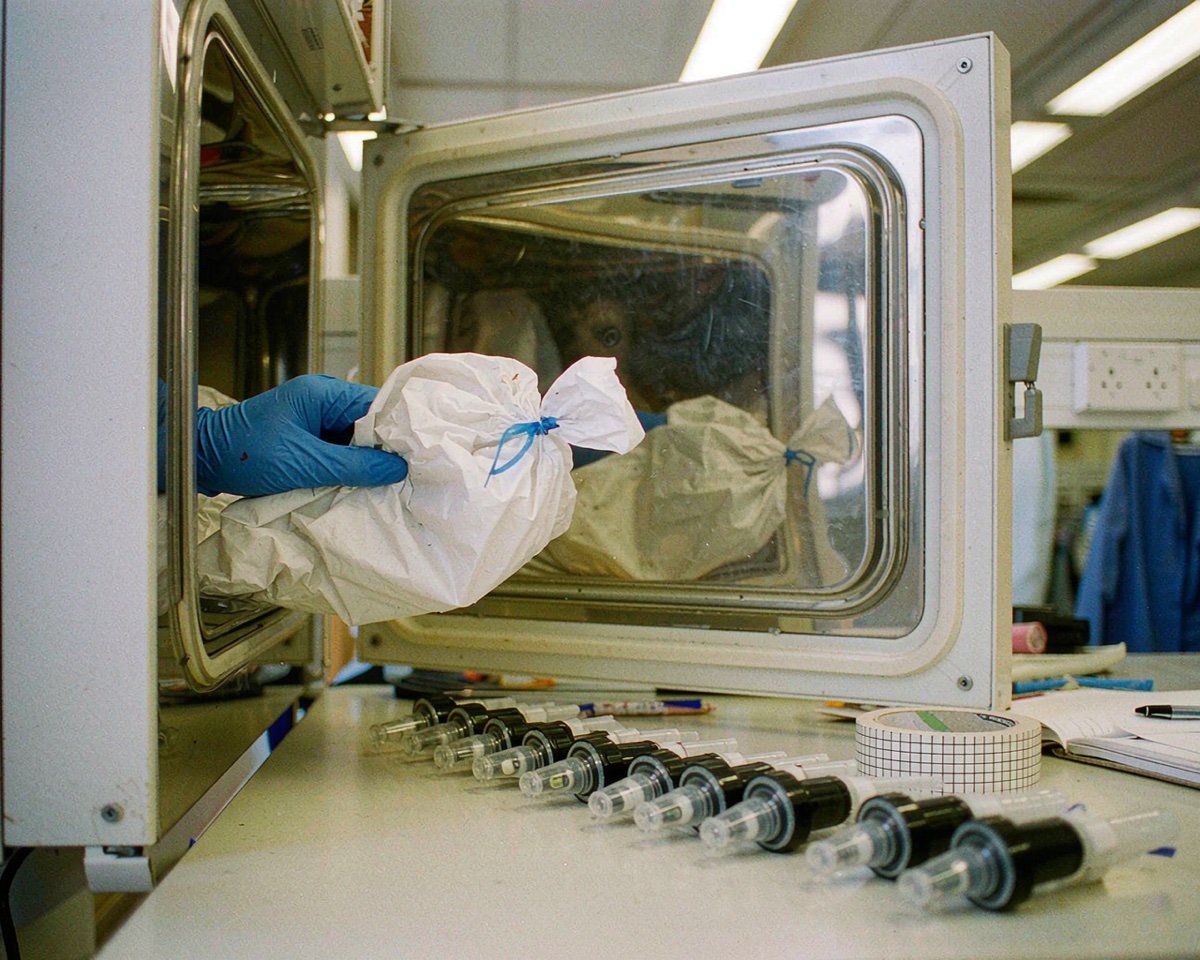
The short answer: mycotoxin testing runs on four consumable groups: sampling and grinding supplies, test-kit consumables (lateral flow strips or ELISA plates), cleanup columns, usually immunoaffinity, and filtration plus vial supplies, including amber glass for light-sensitive aflatoxin.
Read on for the full list, plus the mistakes I’ve watched labs make with each category.
Sampling and Grinding: Where Most Mycotoxin Error Happens
Aflatoxin and fumonisin contamination is never uniform in a lot. A single hot kernel in a truckload of corn can push the whole lot over the 20 ppb FDA action level for aflatoxin in human foods, so the sampling step contributes more measurement uncertainty than the analysis.
The consumables here are unglamorous: sampling probes for bags, riffle splitters for the lab sample, and a mill that can grind the full lab sample, not a spoonful of it. FDA’s sampling plans for peanuts and other commodities assume proper grinding and subdivision, because a subsample taken from coarse, unground material is a guess dressed up as a result.
Grinding consumables to keep stocked:
| Consumable | What to check |
|---|---|
| Sample bags (multilayer, heavy duty) | Barrier properties; mycotoxin work often needs moisture control |
| Grinding mill chambers | Stainless contact parts; easy disassembly between dirty samples |
| Sieves (typically 20 mesh or finer) | Match the mesh your validated method specifies |
| Slurry jars or blenders | For high-moisture commodities like corn silage |
One habit worth adopting: dedicate a grinder chamber to high-contamination samples. Fumonisin carryover into the next clean sample is real, and it shows up as a mystery positive you can’t explain.
Test Kit Consumables: Strips, Plates, and Readers
Screening comes first in most grain and feed labs, and that means rapid test kits. VICAM, a Waters business, splits its portfolio into lateral flow strip tests and immunoaffinity-based methods, which mirrors how most labs actually work: strips at receiving, instruments in the back room.
Lateral flow consumables are strip cassettes, extraction tubes, and the reader itself. A typical aflatoxin strip covers roughly 2.5 to 100 ppb, enough for most US domestic feed decisions. The hidden consumable is the measured scoop; kit methods assume a fixed sample-to-solvent ratio, and freehand scooping quietly breaks it.
ELISA work consumes 96-well plates, wash buffer, substrate, and stop solution. Plates are single-use, and their lot-to-lot variance is why your QC file should never lean on one plate’s curve for more than its stated validity window. Keep plates away from the bench where you extract; methanol fumes are not their friend.
Immunoaffinity Columns: The Cleanup Workhorse
If your lab confirms mycotoxins by HPLC or LC-MS/MS, immunoaffinity columns (IACs) are probably your main cleanup consumable. Antibodies on gel beads capture the target toxin while the matrix passes through; you then elute with methanol and inject a clean, concentrated extract.
Single-analyte columns for aflatoxin, ochratoxin A, deoxynivalenol (DON), fumonisins, or zearalenone add up fast at hundreds of samples a month. Multi-analyte columns exist for exactly this reason. Romer Labs’ cleanup column range includes its MultiStar immunoaffinity columns for LC-MS/MS, and VICAM’s Myco6in1+ covers six toxin classes in one run.
Two handling rules that protect your recovery:
1. Flow rate. Most IAC protocols want roughly 1 to 2 mL/min. Ram the extract through with positive pressure and the antibodies lose binding efficiency; I’ve seen recoveries sag 15 to 20% from an impatient operator alone.
2. Column conditioning and storage. Columns that dried out or sat above 30 °C in a delivery truck behave differently. Incoming-lot recovery checks are cheap insurance.
Wide-bore versions trade some capacity for faster flow, which matters when your backlog is corn harvest season and everything arrives the same Tuesday.
Syringe Filters Before HPLC and LC-MS
After cleanup, most methods still call for a final filtration before injection. This is where membrane choice quietly matters more than it does in, say, pharmaceutical assays. Aflatoxin M1 in milk has a 0.5 ppb FDA action level, and at concentrations that low, any adsorption or extractable interference from the filter shows up in your numbers.
My default for mycotoxin extracts: 0.22 µm regenerated cellulose or PTFE, 13 mm diameter to keep hold-up volume small. Nylon works for many HPLC applications, but it binds proteins and, in my experience, is the wrong choice for trace-level mycotoxins in aqueous matrices. I once spent two days chasing a 30% recovery loss on spiked milk samples at 0.5 ppb aflatoxin M1. The method hadn’t changed; a purchasing manager had. The new nylon filters were binding M1, and the numbers came back the week we switched to regenerated cellulose. If your lab lacks a written filtration SOP, this is the failure mode it prevents; our sample filtration SOP guide covers what it should contain.
For LC-MS/MS methods, extractables matter too: filter leachables can suppress ionization or add stray peaks. Our LC-MS grade consumables guide explains which claims on the box actually mean something, and Thermo Fisher’s syringe filter selection resources include membrane compatibility charts worth printing for the bench.
Vials: Amber Glass, Low Adsorption, and the Faded Standard
Aflatoxins are photolabile. Leave a working standard of aflatoxin B1 in clear glass on the bench under fluorescents and the light keeps nibbling at it. I inherited a shelf of calibration standards early in my career, all in clear vials, and our low-level QC kept reading low. The 1 ppb calibrator had faded like a poster in a shop window. We moved everything to amber and the QC bias vanished.
The vial consumables for mycotoxin work:
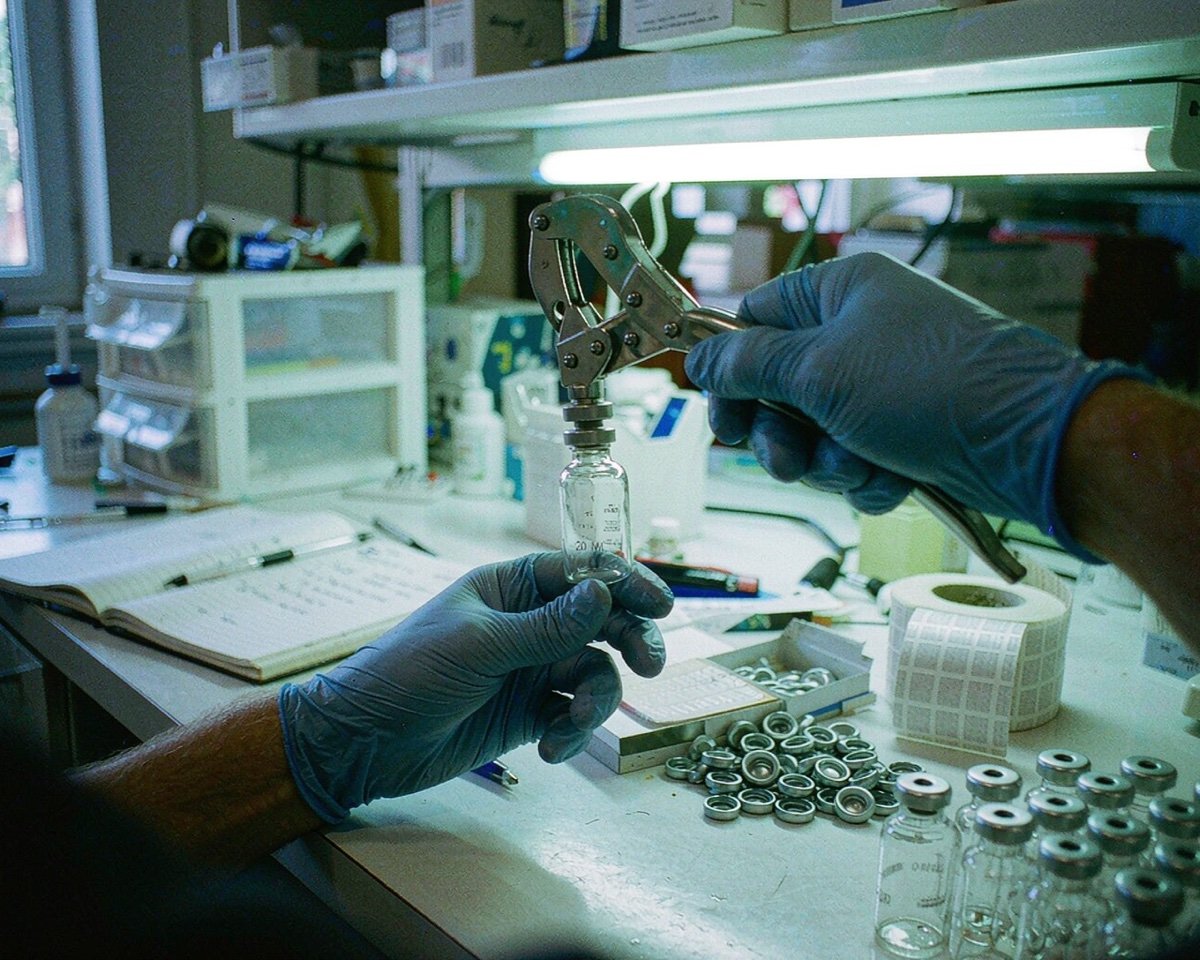
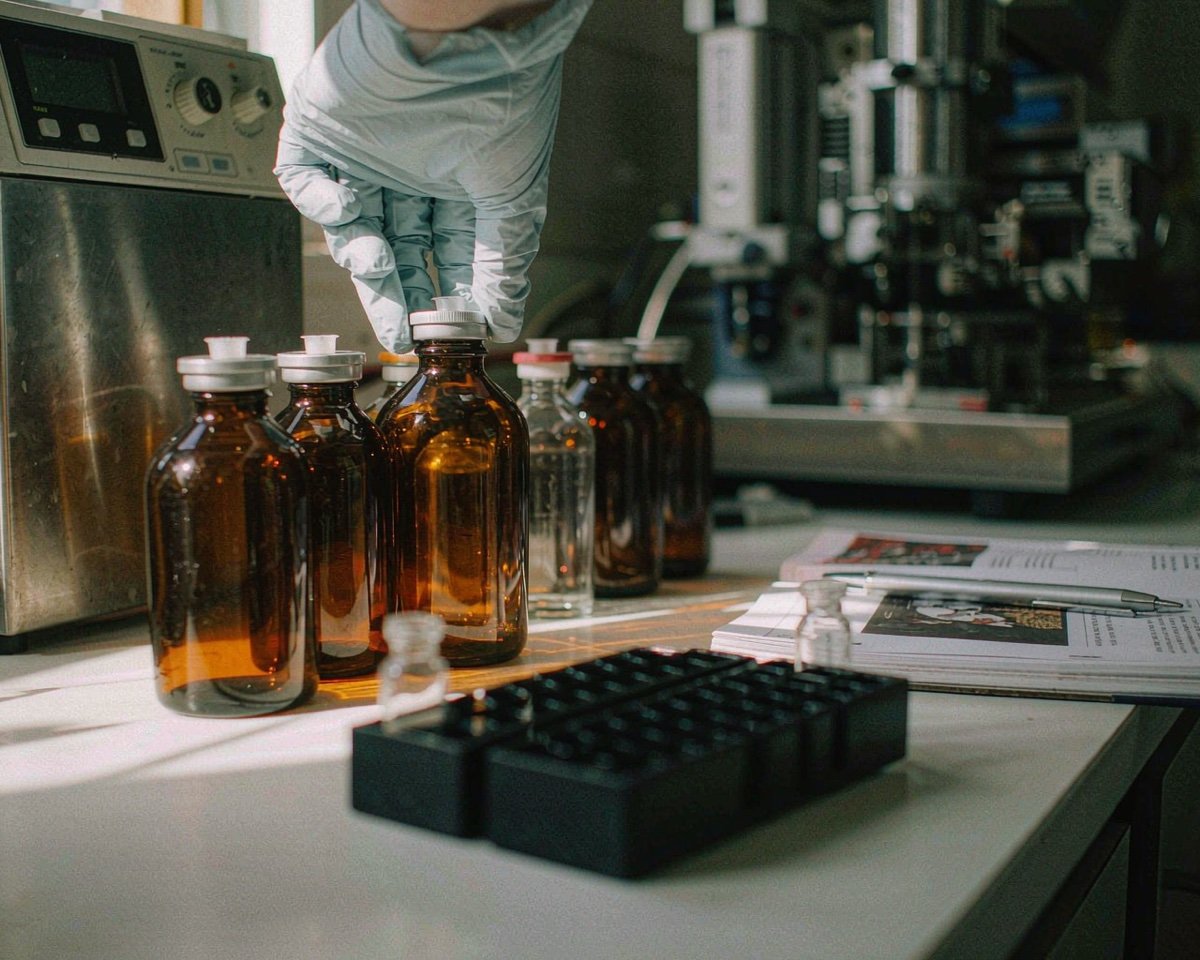
• Amber 2 mL screw-neck vials for aflatoxin standards, eluates, and any extract that will sit overnight. Our clear vs amber vial guide walks through the decision.
• Low-adsorption vials when you work at regulatory limits. Trace analytes can adsorb to ordinary glass surfaces; a low-adsorption vial protects your 0.5 ppb numbers.
• PTFE/silicone septa, since mycotoxin methods use strong solvent systems, and lined caps with adhesives can leach.
Certified reference standards need their own plan: sealed ampoules at -20 °C or per the certificate, opened stocks in amber vials, and working standards refreshed on a schedule you actually follow.
GC, FLD, and Detection-Specific Quirks
Some methods carry requirements unique to their detector. HPLC with fluorescence detection (FLD) is still common for aflatoxins, and AFB1/AFG1 fluoresce weakly without derivatization. That means consumables like TFA for pre-column derivatization, or a Kobra cell for post-column electrochemical bromination. Kobra cells age and fail gradually; track their usage count.
GC-ECD methods for trichothecenes like DON need silylation reagents and dry glassware; water kills the derivatization reaction. A few oven-dried vials reserved for standards is cheaper than rerunning the batch.
Common Mistakes With Mycotoxin Consumables
• Filtering standards and samples through different membrane lots without a check. If standards bypass the filter but samples don’t, any binding difference becomes a systematic bias.
• Clear vials for aflatoxin. It works until the standard sits near a window. Then nothing works.
• Reusing IACs to save money. They’re rated for single use; a second pass risks partial elution and carryover you cannot defend to an auditor.
• Ignoring extraction recovery in screening kits. A strip test that reads 70% recovery on your matrix has an action threshold that isn’t the one printed on the box.
• Skipping the sieve check. Grind coarser than the method specifies and subsampling variance climbs, which shows up as inconsistent duplicates.
Conclusion
Mycotoxin testing consumables divide into four buckets: what you sample with, what you screen with, what you clean up with, and what you inject with. None of them are expensive individually, but the wrong membrane filter can cost you two days of troubleshooting, and a faded standard can cost you a data set. The highest-return habits are the boring ones: amber vials for aflatoxin, one filter membrane validated against your method, and a recovery check whenever a new lot of anything arrives. Feed labs carry extra pressure here, since FDA’s Center for Veterinary Medicine monitors mycotoxins in animal food and expects defensible numbers. If you’re building out a food or feed lab, our food testing lab consumables guide covers the full bench beyond mycotoxins.
Frequently Asked Questions
What pore size syringe filter should I use for mycotoxin samples?
Most labs use 0.22 µm for LC and LC-MS/MS injections. Pair it with regenerated cellulose or PTFE rather than nylon, since nylon can bind trace aflatoxins in aqueous extracts.
Do immunoaffinity columns work for all mycotoxins?
Commercial IACs exist for the major regulated toxins: aflatoxin, ochratoxin A, DON, fumonisins, zearalenone, and T-2/HT-2. Multi-analyte columns can capture several classes at once for LC-MS/MS methods.
Why are amber vials recommended for aflatoxin?
Aflatoxins B1 and G1 degrade under light. Amber glass blocks most of the wavelengths responsible, protecting both calibration standards and sample eluates from fading between preparation and injection.
How many samples can one immunoaffinity column handle?
One, in nearly all cases. Columns are single-use, and attempts to regenerate them typically produce partial recovery and carryover that no QC system can fully catch.
Can lateral flow tests replace HPLC for mycotoxin testing?
They can handle screening and many inbound inspection decisions, but confirmation at regulatory limits, especially EU levels or the 0.5 ppb aflatoxin M1 milk limit, needs an instrument method with IAC or equivalent cleanup.