
The pitch is simple: stop throwing away vials, stop scrubbing them by hand, and let a machine do 400 at a time. The reality has more asterisks. A vial washer is genuinely transformative for some labs and a very expensive drying rack for others.
Answer: A vial washer is worth it when your lab reuses hundreds of glass vials a day and has validated cleaning requirements. Below roughly 50 vials a day, manual or batch washing costs less. And no washer fixes the part that actually breaks methods: caps and septa, which are single-use no matter what.
What a Vial Washer Actually Does
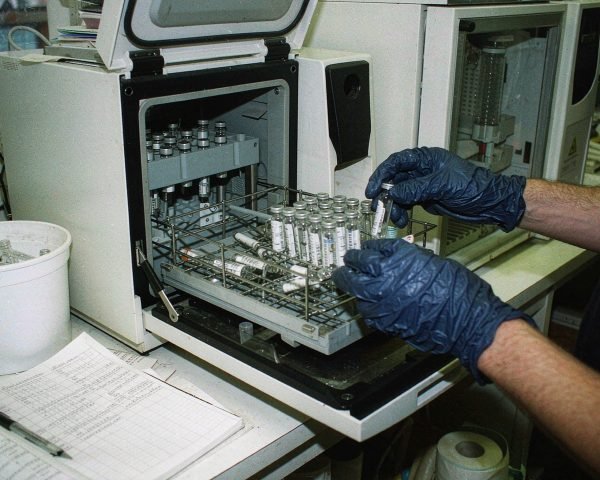
Lab vial washers are cousins of glassware washers, scaled down to autosampler vial geometry. Racks hold each vial over a spray jet; programs run alkaline wash, neutralization, purified water rinse, and hot-air drying, often with conductivity monitoring on the final rinse.
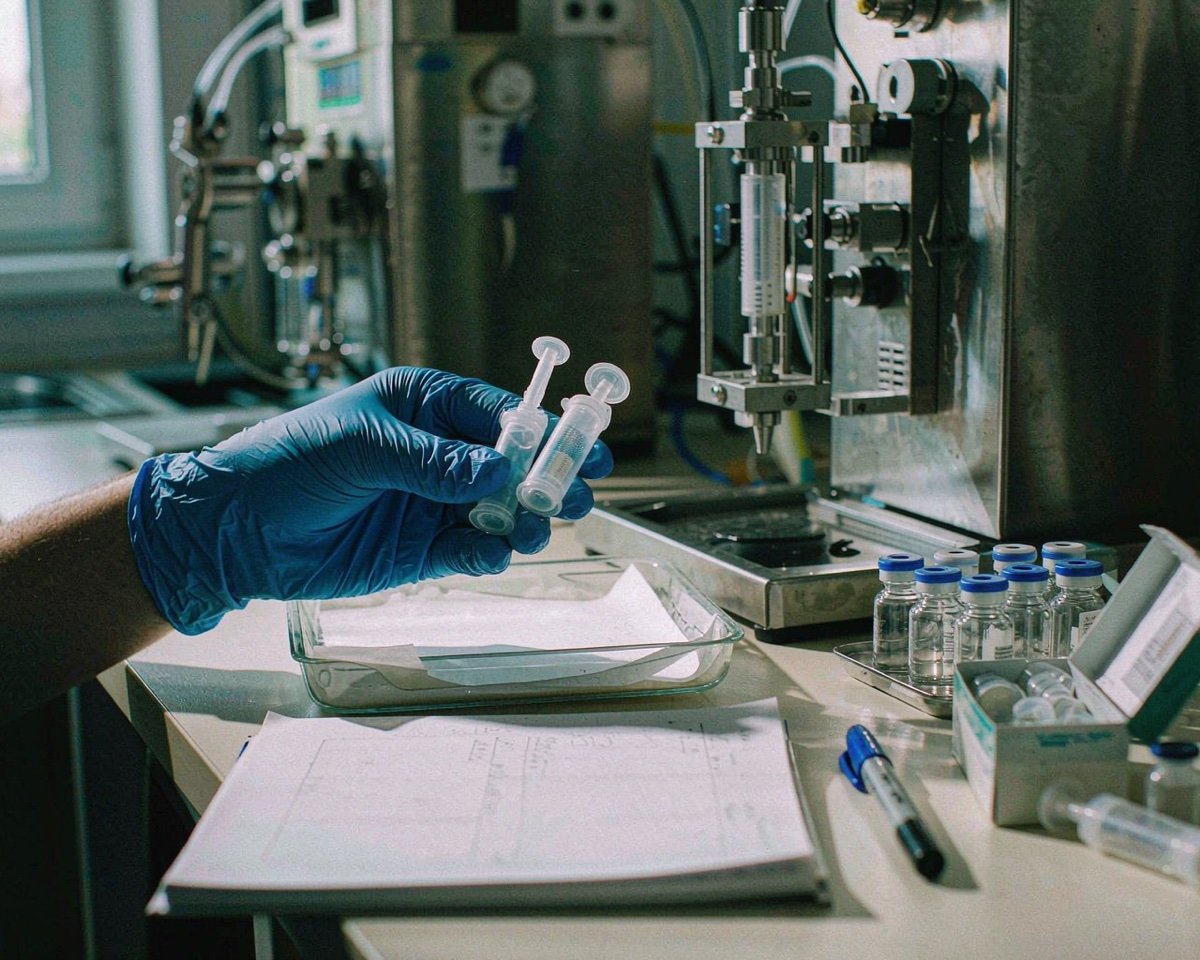
Throughput is the headline number. Benchtop lab-scale units commonly clean a few hundred vials per cycle, with cycle times around an hour including drying. Welch Lab’s overview of automatic vial washers describes a compact unit holding 476 vials with dual-layer racks and individual spray nozzles per position. Pharmaceutical filling lines use far larger rotary machines; Biopharma Group’s rotary vial washers run 2-100 mL vials at up to 70 per minute with full validation documentation.
The Math: When the Machine Pays for Itself
Be honest about three costs before comparing prices.
Labor. Manual washing means scrubbing, rinsing, and drying time. If someone spends 45 minutes a day on vials, that’s roughly 180 hours a year. A washer doesn’t eliminate the loading and unloading, but it cuts it to a fraction.
Then there is the consumables line. Reuse saves glass but burns solvent, water, electricity, and ultrasonic bath time. A thorough manual protocol, two ethanol sonication rounds plus two water rounds plus oven drying, is neither quick nor free.
The third cost is the quiet one. Every reused vial is a carryover risk. The cost of one failed sequence usually exceeds a year of vial purchases, which is the uncomfortable baseline against which any reuse program must compete.
Ballpark equipment pricing gives you the scale: SmartBuy’s vial washer buying guide puts benchtop units at $1,500-4,000, semi-automatic units at $5,000-12,000, and full in-line systems at $15,000 and up.
My rough rule: under 50 vials a day, hand-wash or buy new. Between 50 and 200, the numbers get interesting and depend on labor cost. Above 200 a day, in a lab that has already decided reuse is acceptable, a washer usually pays for itself inside two years.
What a Washer Fixes, and What It Can’t
A washer solves consistency and labor. It does not solve the parts of the vial system that actually contaminate.
What it fixes:
- Uniform wash and rinse across every vial, with logged cycle data for audits
- Trace-level cleanliness that manual scrubbing can’t reproduce
- Operator time, which is the real budget line
What it can’t fix:
- Caps and septa. Polymers absorb solvents and analytes; they cannot be washed back to spec. Every reused vial needs a new cap and septum, every time.
- Scratched or etched glass. Washing won’t restore damaged surfaces, and damaged surfaces adsorb analytes.
- The validation burden. If your method or regulator requires it, the washer itself needs IQ/OQ and rinse-water conductivity acceptance criteria.
That last bullet is why some labs land on a hybrid: single-use caps and septa, machine-washed vial bodies, and a documented cleaning validation. It’s more defensible than reuse ever gets by hand.
The Case Against Reusing Vials at All
Honest framing: for most analytical labs, the cheapest correct answer is disposable vials. Vials are cheap relative to the damage a contaminated one causes, and our article on reusing HPLC vials covers the failure modes in detail. For the washing itself, our guide to five practical vial cleaning options covers what manual cleaning actually involves. Caps and septa make reuse economics even worse, since you’re buying new ones anyway.
So the real question for a washer isn’t “wash or discard?” It’s “is my lab committed to reuse, and is manual washing the weak point?” If the answer to both is yes, a washer upgrades the weak point. If your lab is happy buying new vials, spend the money elsewhere.
One more angle: a washer earns its keep on glassware beyond vials. Most units take baskets for flasks, beakers, and media bottles, so utilization is higher than the vial math alone suggests. If your bottleneck is really the general glassware sink, the same machine serves both.
Practical Buying and Operating Tips
- Match the rack to your vial format before you buy. 2 mL autosampler vials, 4 mL vials, and headspace vials are different geometries, and rack availability varies.
- Prioritize a final rinse with purified water and a conductivity readout. Tap-water finals leave mineral films that show up as LC-MS background.
- Check drying performance. Wet vials dilute samples; a washer without effective hot-air drying just moves the bottleneck to the bench.
- Ask about cycle logging and export if you’re in a regulated environment. Time-stamped cycle records support cleaning validation.
- Plan maintenance: spray nozzles clog with label residue and glass fines, so budget for periodic cleaning and filter changes.
And a process note: wash before reuse, never between methods on the same day. A vial that held your high standard needs the full program, not a rinse, before it holds a blank.
The Validation Angle
If your lab runs under a quality system, the washer becomes part of the evidence chain, which is either a reason to buy one or a reason to think twice.
On the plus side, a washer gives you logged cycles, conductivity readings, and repeatable programs: cleaning validation evidence that manual washing can never produce. On the minus side, the washer itself needs installation qualification, program verification, and maintenance records. Labs that already run validated cleaning will find the paperwork familiar. Labs that don’t should decide whether they’re buying an appliance or starting a validation project.
Conclusion
A vial washer is worth it for labs with real reuse volume, validated cleaning requirements, or a general glassware bottleneck. It’s overkill for labs running a few dozen vials a day, where new vials and a good ultrasonic bath cover the need. Whatever you choose, remember the unwashable half of the system: caps and septa are always single-use.
Start with our guide to reusing HPLC vials if you’re weighing reuse against disposal, and our piece on cleaning and maintaining vials covers the manual protocol a washer replaces. Honest throughput math, done once, prevents both regrets. The regret worth avoiding most is the failed sequence, and that is the one no washer can prevent.
Frequently Asked Questions
Can a vial washer clean caps and septa too?
No. Caps and septa are polymeric and absorb solvents and analytes during use, so washing cannot restore them. Reuse them and you risk carryover and background contamination. Every reused vial needs fresh caps and septa.
What water quality do I need for the final rinse?
Purified or ultrapure water. A final tap-water rinse leaves mineral residue that shows up as background in LC-MS and shortens column life. Many washers monitor final-rinse conductivity so you can prove rinse quality.
Do reused vials need re-validation before use?
If your lab validates its cleaning process, every wash cycle falls under that validation, and the washer’s cycle records are part of the evidence. For unregulated work, a blank check on a washed batch is good practice.
How long does a typical wash cycle take?
Lab-scale machines run roughly 40-60 minutes including drying. Rotary pharmaceutical machines are faster per vial but are a different class of equipment entirely.