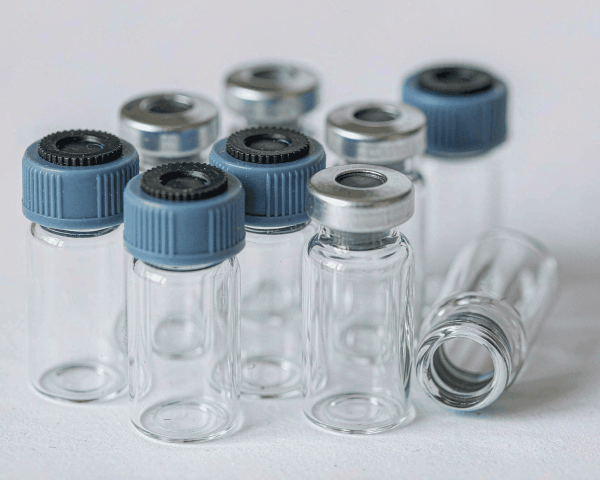

The vial gets all the attention, but the cap is doing half the work. When I talk to labs about mysterious evaporation, contamination, or failed reinjections, the conversation almost always lands on the same question: polypropylene (PP) screw cap or aluminum cap, which one belongs on this vial?
The Short Answer
Choose a polypropylene screw cap when you want a resealable, tool-free closure that’s easy to remove for reinjection and short-term autosampler runs. Choose an aluminum cap, usually a crimp or magnetic seal with an integrated septum, when you need the strongest vapor barrier, a tamper-evident seal, or a closure for GC and headspace work where screw caps can loosen. The cap’s material matters less than matching the closure to your workflow and solvent chemistry.
The Two Families of Closures
Before comparing materials, it helps to remember how caps attach, because material and style travel together:
- Screw caps are almost always plastic: polypropylene (PP) is the workhorse, with phenolic and other resins in specialty roles. They thread onto the vial neck and can be opened and closed by hand, no tool needed.
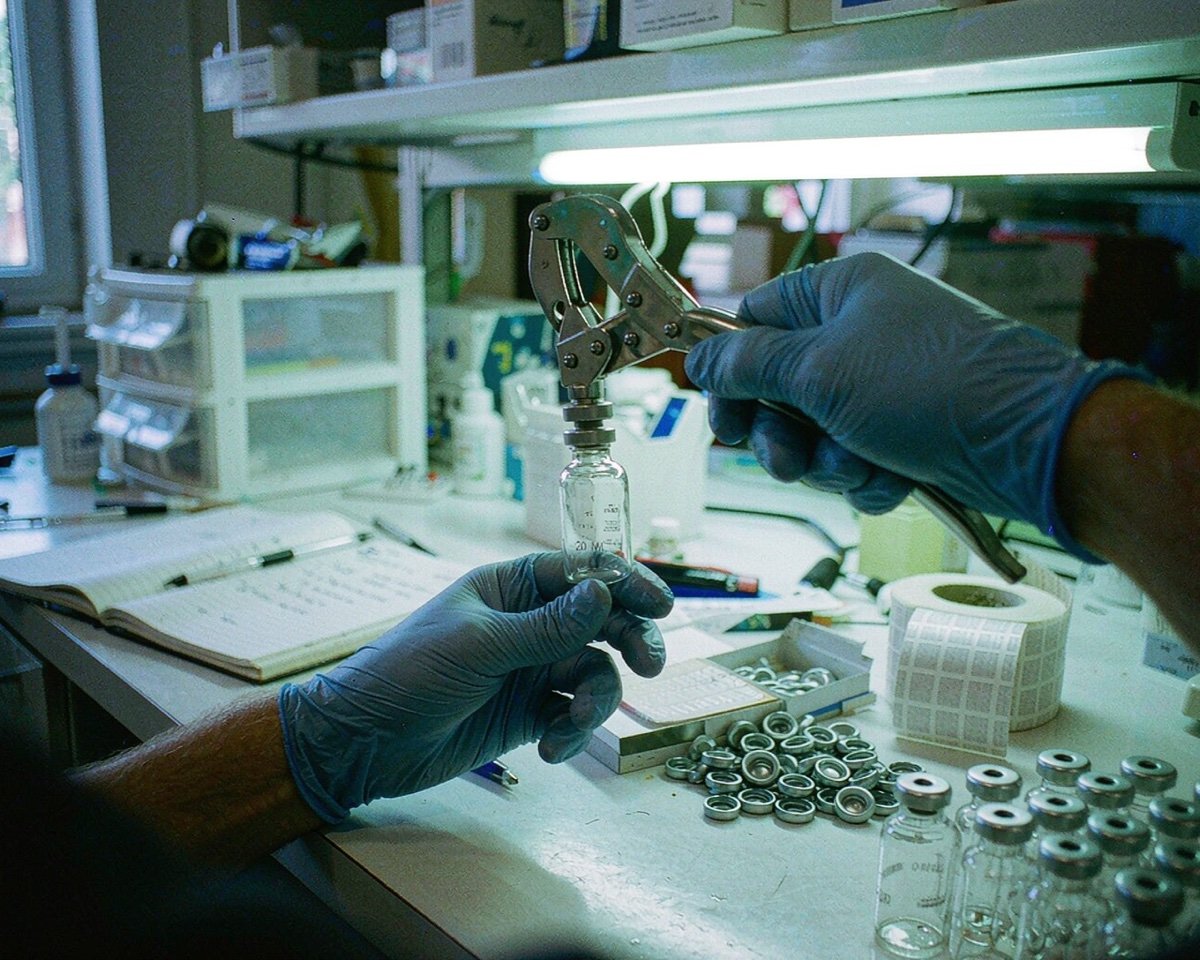
- Aluminum caps dominate the crimp and magnetic worlds. A crimped aluminum seal is deformed around the vial finish for a permanent, one-time closure; magnetic aluminum caps click onto a magnetic tray for robotic autosamplers.
Shimadzu’s technical team puts it plainly in their vial-selection guide for LC analysis: the screw type offers the best sealability of the common styles while staying easy to put on and take off, and the septa, not the cap itself, is designed to be the wetted part that touches the sample.
What Polypropylene Caps Do Well
PP caps are the default for autosampler vials for three reasons:
- They reseal. You can pull the cap, add a spike or internal standard, recap, and reinject. That’s a workflow aluminum crimp seals can’t do.
- They’re autosampler-friendly. The 9 mm and 8-425 screw formats are the cross-vendor standard: the same 12 x 32 mm screw-thread vial with a 9 mm thread is certified for Agilent, Shimadzu, Waters, PerkinElmer, and CTC autosamplers, so a PP-capped vial simply drops into most trays.
- PP suits aqueous and mid-polarity chemistry. Polypropylene resists water, dilute acids and bases, and common alcohols. Shimadzu notes that PP is a favored material where you want to avoid metal-ion leaching, a big reason polypropylene vials are standard in ion chromatography.
When you buy PP caps, you’re usually buying them preassembled with a PTFE/silicone septum, and that’s the configuration Restek describes for its 8-425 black PP caps: the pre-slit PTFE/silicone septa reduce needle bending and release vacuum on high-volume withdrawals, which matters when you pull more than about 20 percent of the vial volume per injection.
Where Aluminum Caps Win
Aluminum isn’t trying to be PP. It wins in situations where a screw cap is structurally the wrong tool:
- Long-term, vapor-tight storage. A properly crimped aluminum seal is the best barrier you can put on a vial. If solvent loss over weeks is your enemy, crimp beats screw.
- GC and headspace work. Pressurized headspace vials and classic GC workflows rely on 11 mm and 20 mm aluminum seals precisely because the seal is permanent and consistent.
- Tamper evidence and chain of custody. You can’t quietly open and reclose a crimp seal, which is why regulated labs use them when sample integrity is audited.
- Magnetic automation. Aluminum magnetic caps let robotic autosamplers pick up and place vials on magnetic trays, a fast-growing configuration in high-throughput labs.
One honest caveat from the hardware side: magnetic and BiMetal seals are more rigid than standard aluminum and need more force to seal and decap, which is why Restek recommends high-power electronic crimpers for them. Budget for the tooling when you pick the closure.
The Septum Is the Real Interface
Here’s the nuance most buyers miss: the cap material rarely touches your sample. The septum does. So your “PP vs aluminum” decision is really two decisions stacked:
1. Closure mechanics: do you need resealable (PP screw) or permanent (aluminum crimp)? 2. Septum chemistry: PTFE/silicone for general LC, PTFE-faced butyl or natural rubber for headspace, PTFE-only for aggressive solvents.
That’s why preassembled PP caps with PTFE/silicone septa dominate routine HPLC: you get the resealability of plastic with the inertness of PTFE where it counts. Choose the cap for the job, then choose the septum for the solvent.
A Practical Decision Checklist
Walk through this when you’re staring at a full catalog page:
1. Will you reinject or amend samples? Yes → PP screw cap. No → aluminum crimp is fine. 2. What’s the solvent? Aqueous, buffers, alcohols → PP is happy. Strong aromatics or halogenated solvents → check compatibility carefully, and keep the wetted surface PTFE. 3. How long will samples sit? Overnight to weeks → crimp or a well-seated screw cap with a thick septum. Months → aluminum crimp. 4. Does your autosampler use a magnetic tray? Then you need magnetic aluminum caps, full stop. 5. Is this GC or headspace? Reach for aluminum crimp seals sized to the vial (11 mm, 13 mm, or 20 mm) rather than a screw cap.
Conclusion
PP and aluminum caps aren’t rivals. They’re different tools for different sealing jobs. Polypropylene screw caps give you a resealable, tool-free, autosampler-friendly closure that suits routine HPLC and LC-MS work, especially with a PTFE/silicone septum handling the chemistry. Aluminum caps deliver the strongest vapor barrier and tamper-evident seal, which is why they own GC, headspace, long-term storage, and magnetic automation. Match the closure to your workflow, keep the septum matched to your solvent, and most cap-related problems quietly disappear. If you’re still choosing between closure styles, my breakdown of crimp top vs. screw top vs. snap top vials compares all three head-to-head, and this guide to bonded vs. assembled caps explains why the cap-septum bond matters for leak-free runs.
Frequently Asked Questions
Are PP caps autoclavable?
Polypropylene generally withstands autoclave temperatures around 121 °C, which is why PP labware is autoclave-friendly. That said, repeatedly autoclaving caps can distort threads over time, so most labs use fresh preassembled caps for analytical work rather than re-sterilizing them.
Do aluminum caps react with samples?
Aluminum caps are designed not to contact the sample; the septum sits between the cap and the vial mouth. The real compatibility question belongs to the septum: PTFE-faced septa handle aggressive solvents, while plain rubber can swell or leach.
Can I reuse a crimp seal?
No. Crimping deforms the aluminum permanently, and removing the seal destroys it. That one-time-use nature is exactly why resealable PP screw caps are the default when labs need to reopen vials.
Why do GC and headspace vials use aluminum crimp seals?
Pressurized headspace vials need a gas-tight seal that won’t back out under pressure or temperature, and GC workflows prize the consistent, tamper-evident seal a crimp provides. Screw caps can loosen during heating, which is a leak risk in those applications.
What size PP cap do I need for a 2 mL autosampler vial?
For the standard 12 x 32 mm vial, you need a 9 mm screw cap (or an 8-425 cap for the narrower 8 mm thread format). Check the vial’s neck finish first, because the cap size must match the thread code, not the vial volume.