
# Doping Control Lab Consumables: The Complete Guide
Most people picture an athlete filling a cup. Nobody pictures the box it comes from. But that box, the bottles inside it, the seals, the barcodes, the transport bag, all of it has to survive an auditor’s questions months later, sometimes in a courtroom. That is what doping control lab consumables actually are: evidence-handling equipment.
I’ve worked around chromatography labs for years, and anti-doping work is the only field I know where a consumable failure can void a sanction. If the seal on a B sample was already broken when it arrived, the finding may not stand. That raises the bar for buyers, and this guide is about clearing it.
What Are Doping Control Lab Consumables?
Doping control lab consumables are the single-use items used to collect, seal, document, transport, and analyze an athlete’s sample: collection vessels, A and B sample bottles, tamper-evident security seals, barcoded labels, screening strips, transport bags, and the vials, filters, and plates used once the sample reaches a WADA-accredited laboratory.
The defining feature is not the plastic. It is traceability. A pipette tip in a research lab just needs to be clean. The same tip in a doping control lab needs a lot number, a certificate, and a record of who touched it and when. If you buy for one of these labs, you are buying documentation as much as you are buying plastic.
Why Doping Control Consumables Are a Different Category
Anti-doping labs operate under the World Anti-Doping Code and its International Standard for Laboratories, the ISL. The ISL spells out how samples are handled from collection through analysis and reporting, and it builds on ISO/IEC 17025 accreditation. You can read the full requirements in the WADA International Standard for Laboratories, but the practical takeaway for a buyer is simple: every consumable that touches a sample sits inside an audited process.
That changes what “good enough” means. In a routine QC lab, if a vial lot gives a weird background peak, you troubleshoot the run. In a doping control lab, if a collection bottle lot shows up without certificates, the whole receiving workflow stalls, because the lab can’t prove the container was sterile and untampered. The result doesn’t get reported until the paperwork clears. Results wait on boxes.
There is also a legal dimension. An Adverse Analytical Finding can end careers and trigger arbitration. The lab’s documentation package has to show the sample was in a sealed, certified container at every step. Defense counsel will look for gaps. They rarely have to look hard when consumables were sourced casually.
Competence gets tested externally too. WADA runs an External Quality Assessment Scheme, EQAS, through which accredited labs analyze blind samples several times a year and report results back to WADA. The ISL makes participation part of keeping accreditation. For a buyer, EQAS is a useful mental model: your consumables are effectively inside a permanent proficiency test. Anything that adds background, adsorbs analyte, or sheds extractables shows up eventually, either in your own QC charts or in a blind sample that misses its target window.
The Collection Kit, Item by Item
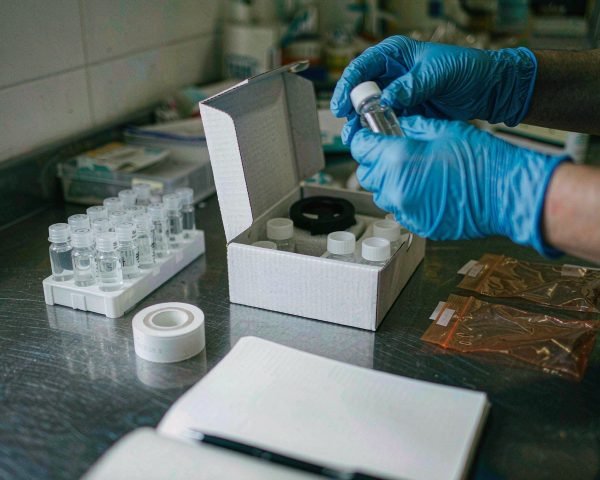
A doping control station kit looks unremarkable, which is part of its design. Every component is single-use, individually wrapped, and numbered. Here is what’s inside a typical kit and what each piece has to do.
The Collection Vessel
The athlete selects a sealed collection vessel from a choice of vessels, inspects it, and provides at least 90 mL of urine under same-gender observation. USADA walks through the full sequence on its sample collection process page, including the hand-rinse step and the vessel inspection. The consumable details that matter here are boring and critical: the vessel needs a secure screw lid, a volume scale accurate enough to judge 90 mL at a glance, and packaging that proves it was factory-sealed.
If the vessel arrives unsealed or the wrap is torn, the DCO discards it and opens another. I’ve seen a collection session delayed ten minutes over exactly this. The athlete waits, chaperoned, while someone hunts for a replacement kit. Multiply that across a testing event and you understand why labs over-order.
The A and B Bottles
After collection, the athlete divides the sample into two bottles, labeled A and B. The A bottle gets screened and, if needed, confirmed. The B bottle exists so the athlete can have the finding confirmed elsewhere if they challenge it. Both bottles must carry matching sample code numbers, and nothing on the packaging identifies the athlete.
These bottles are the heart of the kit. They need leak-proof closures that survive pressure changes on a flight, tamper-evident caps, and surfaces that accept barcode labels without peeling in a cold courier van. A bottle that leaks in transit doesn’t just lose volume. It loses the presumptive validity of everything in the box.
Seals, Bags, and Tamper Evidence
Once sealed, the bottles go into numbered tamper-evident bags, and the bag goes into a transport box. Seals are numbered so the lab can log the number on arrival and compare it to the collection form. A mismatch is a red flag that stops everything.
Here’s a detail that trips up new buyers: seal adhesive has a shelf life. Cheap seals stored in a hot storage room for two years will peel or leave residue, and then the receiving lab can’t tell whether the seal failed or someone opened it. Both possibilities are bad. Buy seals in quantities you’ll rotate within a year, and store them like the chemical product they technically are.
Screening Strips
The DCO checks specific gravity with a refractometer or strips, and pH with test strips, usually with whatever remains in the collection vessel. The strips are consumables too, with expiry dates and lot numbers. Out-of-range readings can trigger additional collection, so expired strips can cause a completely avoidable second sample. If you manage stock, put strip expiry dates on the shelf label, not just the box.
Blood and Dried Blood Spot Supplies
Urine is not the only matrix anymore. The Athlete Biological Passport runs on blood, and collection for it means vacutainer tubes, usually EDTA or serum separators, plus needles, holders, and tourniquets. Blood collection kits follow the same logic as urine kits: individually wrapped, lot-numbered, sealed. The tubes must also match the passport program’s requirements for tube type and fill volume, because hematological markers are sensitive to storage conditions in ways urine analytes are not.
Dried blood spot (DBS) collection adds its own consumable list. A DBS card, a lancet, a disinfectant wipe, and a drying rack replace the vacutainer. The cards are the critical item. Cardstock chemistry varies between manufacturers, and blood spotted on different cards can give different hematocrit-dependent results, so labs treat card lots the way chromatographers treat column lots: validated once, then never swapped silently. If your program is adding DBS, order a single card type for the whole program and lock it into the specification.
One practical note from watching blood draws at events: cold chain starts at the collection chair, not the courier. Whole blood samples wait in insulated transport boxes that sit on a bench somewhere while the paperwork gets finished. If your box’s coolant packs are still in the freezer because nobody thawed them on schedule, the sample’s temperature log tells that story to the lab. Pre-position the cold packs on the kit shelf itself, not in a separate freezer nobody checks.
Chain of Custody Paperwork
The kit travels with a Doping Control Form, or DCF, which records the sample code number, the sealed bottle numbers, the seal numbers, and the signatures of everyone involved. The athlete’s name stays off everything that goes to the lab. Results come back keyed to sample code numbers only, which is how anonymity survives contact with logistics.
Every handoff gets logged. This is the chain of custody: a documented, unbroken record of who held the sample, where, and when, from the collection chair to the freezer. The ISL requires an internal chain of custody inside the lab as well, for every aliquot. If your organization is still sorting out the difference between certificates of analysis and chain-of-custody documents, our CoA vs CoC explainer covers which document proves what.
For consumables buyers, the paperwork lesson is this: your supplier is part of the chain. A bottle lot without a certificate is a gap in the record. When we ship kits or vial lots to anti-doping customers, the certificates go in the box, not in a follow-up email. Follow-up emails get lost. Boxes get audited.
Labels deserve their own mention. Sample code stickers have to survive condensation when cold bottles hit warm air, ethanol wipes, and months in a freezer. If a label curls and falls off a B bottle in storage, you have a very expensive paperweight. Print your own labels only after testing them the hard way: freeze them, wipe them, and only then trust them.
Inside the WADA-Acccredited Laboratory
Only a WADA-accredited laboratory may report doping control results. WADA publishes the list of accredited laboratories, and it is short, roughly thirty labs worldwide. Everything that happens after the kit leaves the collection station happens inside one of them, under the ISL and ISO/IEC 17025.
Receiving and Aliquoting
On arrival, staff check seal numbers against the DCF, log the kit into the laboratory information system, and photograph anything suspicious. The sample is then aliquoted: divided into smaller portions for individual tests. Each aliquot goes into its own vial or tube, each with its own code, each logged in the internal chain of custody.
Aliquoting consumables look ordinary: 2 mL glass vials, polypropylene tubes, pipette tips. The difference is the documentation depth. Labs often keep certificates for every lot that entered a chain of custody, cross-referenced by accession number. If you supply these labs, expect lot-level traceability requests, and expect them again two years later when a case goes to hearing. Shipments may also be sampled for verification, so what’s on the certificate has to match what’s in the bottle. Our article on what “certified” means for HPLC vials covers how far those claims actually go.
Storage after aliquoting consumes consumables too. The A sample gets analyzed, but the B bottle and leftover aliquots go into controlled freezers, sometimes for years, since samples can be retested when new methods come online. That means freezer-grade boxes, racks that hold numbered bottles without touching the labels, and inventory tubes rated for repeated freeze-thaw if a sample comes out for reanalysis. A rack that cracks at -20 °C is a small incident; a cracked rack full of B samples is a chain-of-custody event. Freezer consumables earn their certificates the hard way.
Screening and Confirmation
Initial testing screens samples for prohibited substances and their markers. Anything presumptively positive moves to a confirmation procedure, typically LC-MS/MS, liquid chromatography coupled to tandem mass spectrometry, which identifies compounds by retention time and two mass transitions per analyte. Sensitivity targets come from WADA’s Minimum Required Performance Levels, the MRPLs, which set how low a lab is expected to detect each class of substance.
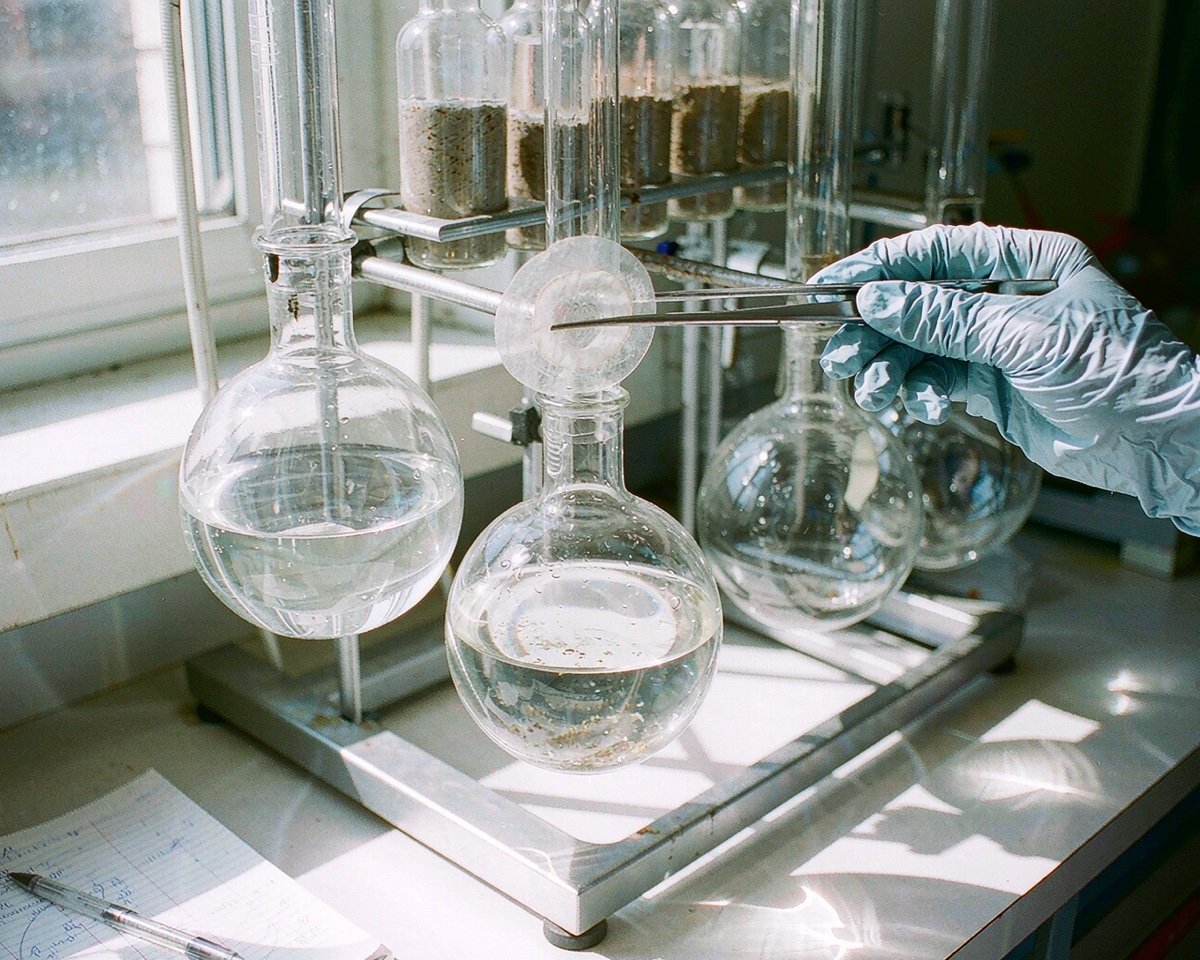
The chromatography consumables behind this are the same categories every HPLC lab uses, with tighter expectations. Low-bleed vials and clean septa, because ghost peaks near a decision limit create arguments, not clarity. Syringe filters validated for low extractables, because a filter that leaches plasticizers adds background exactly where you can least afford it. And columns with reproducible selectivity, because confirmation methods get locked down and re-validated rarely.
Separation can get genuinely hard. Synthetic cathinones, for example, include positional isomers that produce identical MS/MS transitions, so the chromatography has to do the discriminating. Restek published a walk-through of separating cathinone isomers by LC-MS/MS that shows why selectivity decides these runs, more than raw sensitivity does. If your method cannot resolve the isomers, no amount of signal helps.
Sample Prep Consumables for Confirmation
Between the aliquot and the instrument sits sample preparation, and it consumes more plastic than the analysis itself. The workflow depends on the substance class. Some methods run dilute-and-shoot, where the sample is diluted, filtered, and injected directly. Others need enzymatic hydrolysis to cleave glucuronides before extraction, or solid phase extraction (SPE) to pull analytes out of a dirty matrix.
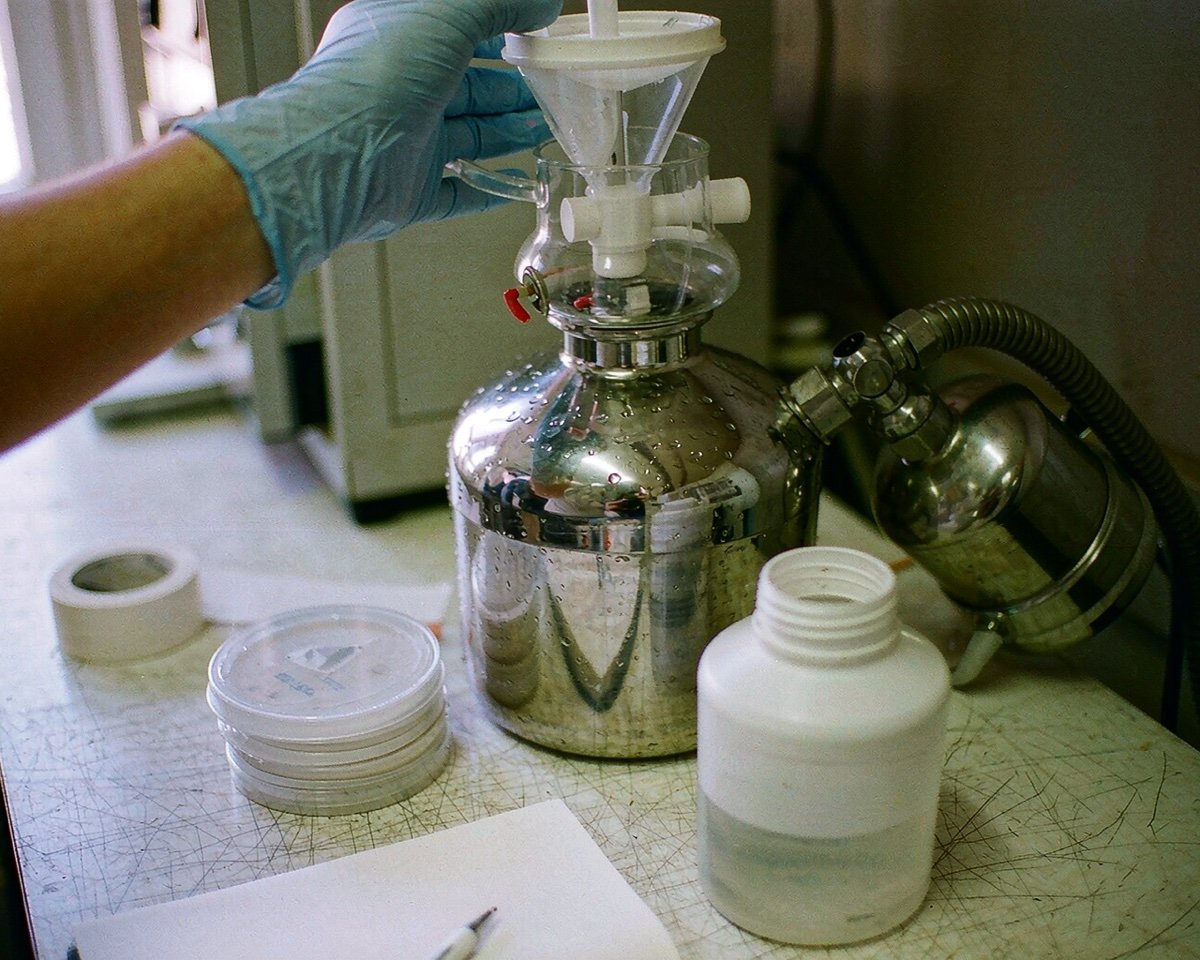
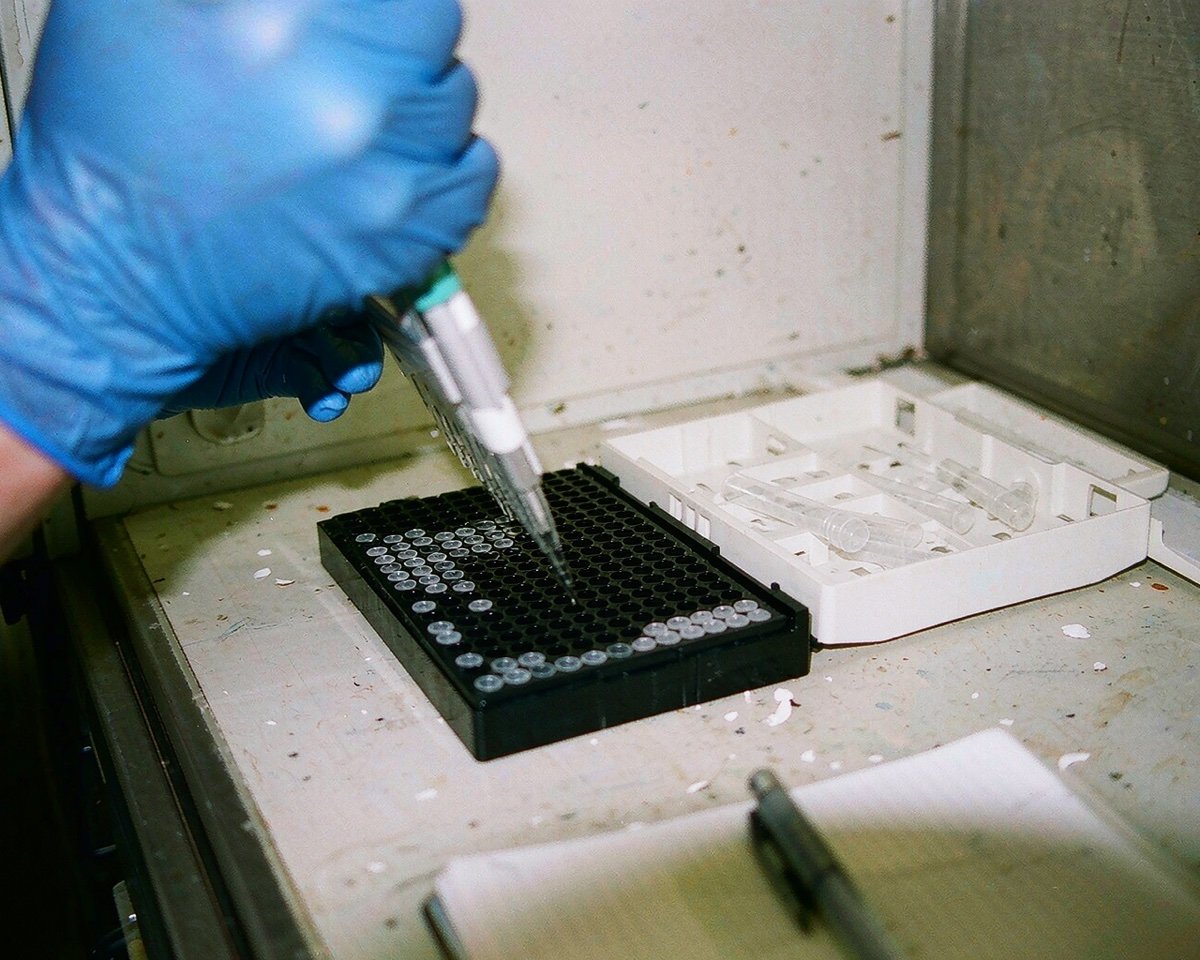
Each route has its own bill of materials. Hydrolysis means polypropylene tubes that survive a 55 °C overnight incubation without leaching, plus certified pipette tips. SPE means cartridges or 96-well plates, collection tubes, and a vacuum manifold. Protein precipitation means plate mats, centrifuge tubes rated for the g-force, and enough ethanol-free patience to keep track of 88 wells at once. Filtration means low-extractable syringe filters, typically 0.2 µm PVDF or PTFE depending on the solvent, and honestly the filter choice deserves more validation than most labs give it. A filter that sheds plasticizer puts background signal into the exact mass range where designer compounds hide.
The one piece of advice I’d give any new anti-doping lab: qualify filters and plates at your decision limits, not at convenient concentrations. Extractables that vanish at 100 ng/mL can be loud at 2 ng/mL, and decision limits live down there.
Documentation Packages
For every finding, the lab assembles a documentation package: methods, calibration, sequence logs, chain of custody, lot records. This package has to be complete without the analyst who ran the samples necessarily being in the building anymore. Staff turn over. Records stay.
Lot records deserve special attention on the consumables side. When a package goes to a hearing, an expert may ask which filter lot processed the sample, which vial lot held the extract, and whether either lot had known issues. If the lab’s answer lives in a spreadsheet someone maintained carefully, the question closes in a day. If the answer lives in a supplier’s memory, it may never close. Suppliers who make lot data easy to retrieve, with clean PDFs tied to box numbers instead of a portal that requires a login nobody remembers, quietly save their customers real defensibility problems. I’d rate that feature higher than a five percent price difference when comparing vendors.
That’s the real procurement principle in anti-doping work. Buy as if the audit is two years away and the people who received your shipment are gone. Because they will be.
Getting Samples to the Lab Intact
Between the collection station and the lab sits the least glamorous part of the process: shipping. Kits move by courier, sometimes across borders, and the consumables have to hold up through all of it.
Three failure modes dominate. Bottles leak because closures loosened under vibration. Seals look disturbed because adhesive bled in a hot truck. Documents get separated from samples because the paperwork pouch was a flimsy sleeve. None of these mean the sample is actually compromised, but each one triggers an investigation, and investigations take weeks.
A few field-tested habits reduce the risk. Numbered security bags go inside the transport box, not outside where conveyor belts scuff them. Bottles get padded so closures don’t work loose. Customs paperwork travels in a document pouch taped to the box exterior, so the box never has to be opened mid-transit. I once watched a shipment of 96 sealed samples sit in a customs warehouse for eleven days because the paperwork pouch tore off in transit. The samples were fine. Nobody could prove it quickly, and proving it quickly is the whole point.
If your lab ships anything that has to arrive valid, our eight rules for shipping samples that must arrive valid go deeper on packaging, temperature, and documentation, and most of it applies directly to doping control logistics.
What Procurement Should Specify
If you’re writing a tender or a standing order for doping control consumables, the specification matters more than the unit price. Here’s what belongs in it.
Certificates, Every Lot
Require a certificate of analysis or certificate of conformity for every lot, with lot numbers that match the packaging. For sterile items, add sterilization records and expiry dates. For collection vessels and bottles, ask for tamper-evidence testing data and closure torque specs. None of this is exotic. All of it is the difference between a consumable that enters a chain of custody and one that creates a gap.
Fitness for the Whole Journey
Specify for the worst leg of the journey, not the bench. Bottles that are fine in a courier van can leak at altitude if the closure design ignores pressure differentials. Seals rated for office temperatures can fail in a summer container. Ask suppliers how their packaging survives 40 °C in a truck and 0 °C on a tarmac, and trust the ones who answer with test data instead of assurances.
Compatibility Where It Matters
Inside the lab, consumables become chromatography consumables, and here compatibility with instrument platforms matters. Autosampler vials for a Thermo or Agilent system need to fit the trays and closures need to seal on the instrument’s terms. OEM-compatible consumables let labs keep the same validated geometry at a sane cost, which matters when a confirmation method consumes hundreds of vials a week. The one place I’d tell buyers not to economize is confirmatory analysis consumables: the marginal savings on a vial is nothing against the cost of a repeat confirmation because of background contamination.
Volume Planning With Buffers
Collection volume spikes around major events. A lab that normally processes 2,000 samples a month may see multiples of that during a multi-sport games, and kits have expiry dates. The fix is boring: rolling forecasts, safety stock on the long-lead items, and suppliers who can scale. If you’re building the budget from scratch, our breakdown of documents and records labs should keep for traceability pairs well with the consumption math most labs underestimate.
Storage and Stock Rotation
Consumables that arrive perfect can still fail before use if the storage plan is loose. Three environmental enemies do most of the damage: heat, UV, and humidity. Seal adhesive softens in heat. Sterile packaging grows brittle under UV from a sunny stockroom window. Strip chemistry drifts in humidity. None of these announce themselves; the box looks fine until the day it doesn’t.
A decent rotation system is cheap insurance. Date everything on arrival with your receiving date, alongside the factory expiry, and shelve new stock behind old stock. For kits, keep the components of one kit design together, because a kit assembled from mixed lots is harder to document cleanly if a question ever arises. Assign one person to a quarterly expiry sweep. It takes an hour, and it catches the expired screening strips before they catch you.
Storage location matters more than most buyers expect. A storeroom that hits 35 °C in summer is a slow oven for seals and sterility claims alike. If your building runs hot, either air-condition the stockroom or buy from suppliers who validate their packaging for hot-climate shipping and storage, which is worth asking about explicitly when your lab is anywhere in Asia or South America, where that question is not hypothetical.
Watch the reorder points too. Anti-doping demand is lumpy in a way routine QC demand is not. A single testing event can consume a quarter’s worth of kits in ten days, and lead times from suppliers stretch exactly when everyone else is ordering for the same event. My rule of thumb: safety stock equal to one full event’s consumption for anything with a lead time over four weeks, and a qualified backup order path for everything else. Stockouts in this field don’t just delay tests. They delay them in public.
Where Labs Get Burned
A short list of the failures I see most often, none of them technical.
Kits assembled from mixed suppliers, so bottle numbers, seal numbers, and label formats don’t reference each other cleanly. Receiving takes longer and errors look more ambiguous.
Expired screening strips, found during an audit, retroactively weakening every specific-gravity check since the expiry date. Strips cost pennies. Re-running or defending those collections does not.
Seal adhesive that failed in storage, discovered when seals peel without tearing, which makes every seal ambiguous. Rotate stock and store it cool.
Labels that didn’t survive the freezer, so a B bottle in storage lost its identity. The sample may still be usable, but proving which sample it is takes time nobody has.
Single-source dependency with no second qualified supplier, discovered when the primary supplier has a stockout the week before a testing event. Qualify a backup before you need one.
A Short Procurement Checklist
Before your next anti-doping consumables order, run through these:
• Every lot ships with a certificate, and lot numbers match the boxes.
• Collection vessels, A/B bottles, and seals come from one coordinated kit design, or at minimum use compatible numbering.
• Seals and strips are dated, rotated, and stored under 25 °C.
• Bottles are spec’d for leak resistance under pressure change and vibration, with test data.
• Lab-side vials, filters, and plates are low-extractable, platform-compatible, and lot-traceable.
• You have a qualified second source for every critical item.
• Forecast covers event-driven spikes in addition to monthly averages.
Nothing on that list requires new technology. It requires deciding that consumables are part of the evidence, because in this field they are.
Conclusion
Doping control lab consumables sit at the intersection of two disciplines that rarely share a budget line: analytical chemistry and evidence handling. The collection vessel, the A and B bottles, the numbered seals, the aliquot vials inside the lab, each one carries a sample and a claim that the sample was never exposed to doubt. Buy them like research supplies and the process limps along until an audit finds the gap. Buy them like evidence-handling equipment, with lot certificates, tamper testing, and journey-proof packaging, and the chain of custody holds from collection chair to confirmation report. If you’re tightening your program, start with the kit components your team handles every day, then work backward through shipping and storage. Our guides to CoA and CoC documentation and to shipping samples that must arrive valid are the two next reads I’d recommend for any procurement manager entering this space.
Frequently Asked Questions
What consumables are included in a doping control collection kit?
A standard kit contains a sealed collection vessel, two numbered sample bottles (A and B), tamper-evident security seals, WADA-compliant transport bags, barcoded sample code labels, and paperwork for the Doping Control Form. Many kits also include pH and specific gravity screening strips. Every item is single-use and individually wrapped.
Do doping control bottles and seals need certificates?
If they enter a chain of custody, yes, in practice they do. WADA-accredited labs work under the ISL and ISO/IEC 17025, so they need lot-level documentation proving the container was factory-sealed and untampered. A lot without certificates creates a gap that auditors and defense counsel will find.
Can regular HPLC vials be used for doping control aliquots?
Physically they often fit the same autosamplers, but the sourcing requirements are stricter. Labs typically require lot certificates, low-extractable materials, and documented compatibility with the validated method before a vial enters an anti-doping workflow. Check your method’s validation documents before swapping suppliers.
How are doping control samples kept anonymous?
The athlete’s name never appears on anything that reaches the lab. Results are keyed to random sample code numbers printed on the bottles, labels, and forms, and the code numbers are matched across all paperwork. Only the anti-doping organization holds the key linking codes to athletes.
Why do collection kits use two sample bottles?
The A bottle is analyzed, and the sealed B bottle is held in case the athlete challenges the finding and requests confirmation elsewhere. That split is the athlete’s main protection against analytical error. Both bottles must carry matching code numbers and intact seals for either result to stand.