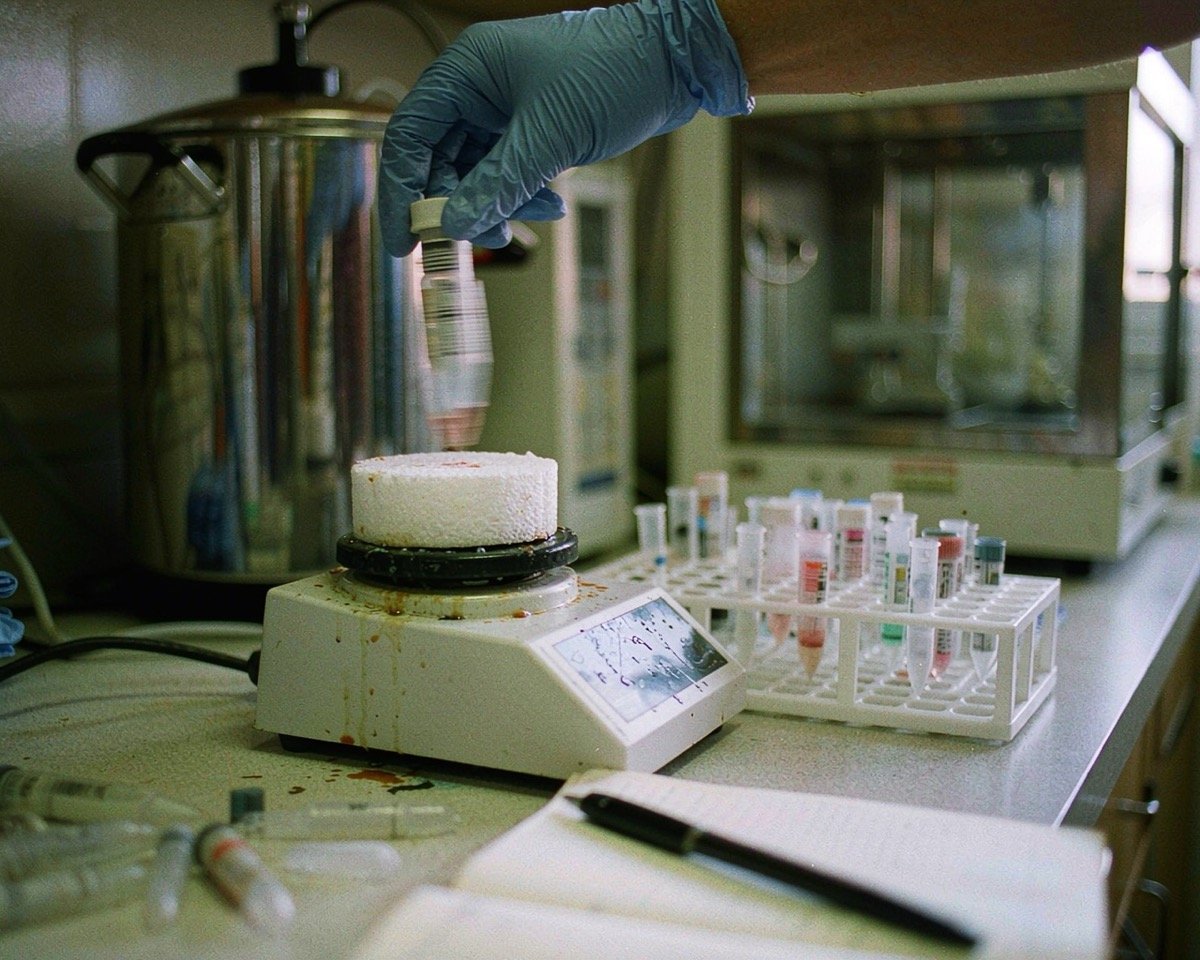
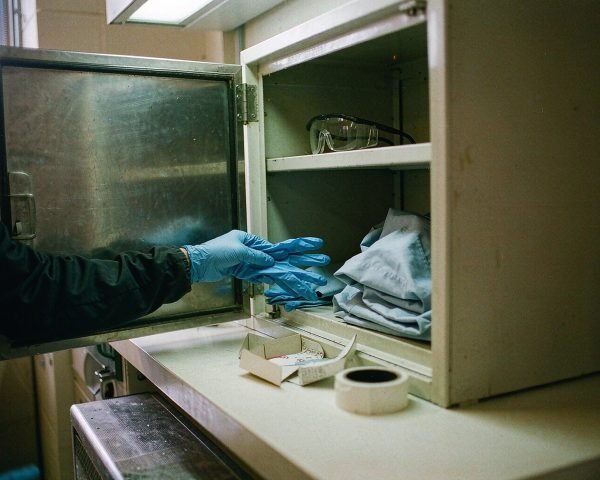

Two purchases quietly shape every day in a working lab: what your team wears and what your samples pass through. Get either one wrong and you pay for it twice, once in safety incidents and once in failed runs.
PPE lab consumables are the disposable items that protect people: gloves, safety glasses, goggles, face shields, respirators, lab coats, gowns, and coveralls. Filter media are the disposable materials that protect your data and your samples: HEPA and ULPA media for air, and membranes, depth filters, and glass fiber for liquids. Both categories live under the same rules of thumb: match the item to the assessed hazard, demand documentation, and stock against real consumption rather than guesswork.
Below I walk through the standards, the selection logic, and the stocking habits that keep both sides of that equation running. The sections on gloves and liquid filtration go deepest, because that is where most labs I have worked with lose the most time.
What Counts as PPE in a Laboratory?
Ask five people what PPE means and you will get five answers, usually somewhere between “gloves” and “whatever the safety officer makes us wear.” The regulatory answer is broader and more useful.
Under the OSHA standard at 29 CFR 1910.132, personal protective equipment covers protective devices for eyes, face, head, and extremities, plus protective clothing, respiratory devices, and barriers or shields. The same rule requires employers to perform a written hazard assessment, select equipment that fits each worker, and train people on when and how to use it. That hazard assessment is the document everything else hangs on, and it is where your purchasing list should come from.
The consumable part matters
A surprising share of lab PPE is single-use or short-lived. Nitrile gloves, disposable gowns, N95 respirators, face shields with replaceable visors, even safety glasses that get scratched and replaced annually. Unlike a centrifuge, these items leave the building every week. That makes them consumables in a procurement sense, and it means your supplier relationship and stocking discipline matter as much as your initial selection.
I once watched a stocking error leave a QC lab without medium-size nitriles for a week. People wore larges and doubled up, assays got clumsy, and two samples were lost to glove-snagged vial caps. The fix cost nothing: a min/max card on the third shelf of the PPE cabinet, checked every Friday.
PPE is the last line, so treat it that way
Engineering controls and procedure changes come first in every hierarchy of controls. A fume hood beats a respirator. A biosafety cabinet beats a gown. But when the hazard cannot be engineered away, which is most of wet chemistry and sample prep, the consumables become the difference between a near miss and a recordable injury. Browse the full set of OSHA personal protective equipment standards if you want the complete regulatory picture before we go deeper.
Head, Eye, and Face Protection: Standards That Actually Matter
Eye injuries in labs are rarely dramatic. More often they are a splash of 0.1M NaOH, a snapping steel vial cap, or a chip of glass from a cracked schlenk flask. The protection you buy against those events is defined by markings, not marketing.
Reading the markings
In the US, OSHA’s eye and face rule at 29 CFR 1910.133 requires protective eyewear to comply with ANSI/ISEA Z87.1. That standard defines the tests and the permanent markings you should check on every frame and lens:
• Z87 means basic impact protection. Z87+ means high impact, tested with a high-velocity steel ball.
• D3 marks splash and droplet protection, the marking you want on chemical splash goggles.
• D4 and D5 cover dust and fine dust.
• A manufacturer’s mark must appear alongside, proving who stands behind the claim.
In Europe, EN 166 plays the equivalent role, with engravings like “3” for liquid droplet resistance. If your supplier ships both, keep the marking cheat sheet taped inside the PPE cabinet door. Nobody remembers symbol tables under deadline pressure.
Goggles, glasses, or face shield?
Safety glasses with side shields are the floor for any lab where liquids move. They handle the flying cap and the stray droplet. Chemical splash goggles with indirect vents are the right call for pouring acids and bases, working with phenol, or anything pressurized. Face shields are secondary protection: they go over glasses or goggles when the hazard reaches beyond the eyes, such as quenching reactions or opening autoclaves.
My default: goggles live at every solvent station, glasses everywhere else, and shields hang next to the fume hoods. A face shield worn alone is a common and dangerous shortcut, because splash curves around it.
One more detail worth checking at purchase: compatibility with prescription wear. Roughly half of any research staff wears correction, and eyewear that fights their glasses gets left in the drawer. Over-the-glass designs or prescription safety lenses solve it cheaply.
Replacement is part of the spec
Eyewear does not fail loudly. A scratched lens cuts visibility in a fume hood; a lens that took an impact has lost structural integrity even when it looks fine. Most facilities retire scratched or impact-exposed eyewear on the spot and run an annual blanket replacement for the rest. Build that retirement rate into your consumables budget, roughly 20 to 30 percent of eyewear per year in a busy wet lab, so the safety line item does not surprise anyone.
Hand Protection: Glove Selection Without the Guesswork
Gloves are the highest-volume PPE consumable in almost every lab, and the one with the most ways to get it wrong. The mistake I see most is not choosing a bad glove. It is choosing one glove for everything.
Start with the chemistry, not the comfort
Disposable glove materials fail differently. Nitrile handles most aqueous solutions, many solvents for short contact, and offers good punct resistance. Latex fits best and senses best, but triggers Type I allergies and loses to a long list of organics. Neoprene stands up to acids and bases better than either. Vinyl is fine for dry, low-hazard work and terrible for anything aromatic. None of them is “chemical resistant” in general, because permeation depends on the specific chemical, its concentration, and contact time.
Manufacturers publish permeation charts for a reason. If your team works with methylene chloride, toluene, or phenol for more than a passing wipe, disposable nitrile is not the answer, and a thicker laminated or butyl glove is. Check the chart, note the breakthrough time, and set a change-out habit well inside it.
Match the glove to the second job: your samples
There is a second axis people forget. The glove is inside your experiment’s environment, and it can contaminate as easily as protect. Plasticizers, powder, and silicone from gloves show up in LC-MS baselines and in surface preparations. I covered this in detail in our article on glove choice and sample contamination, including the zinc and sulfur residues that trace analysts chase for weeks. If your lab runs trace metal, elemental, or sensitive mass spec work, treat the glove as a reagent.
| Glove material | Best for | Weak against |
|---|---|---|
| Nitrile | Aqueous solutions, most daily work, good dexterity | Prolonged contact with aromatics, chlorinated solvents |
| Latex | Fine motor work, biological handling | Organics, allergy risk, aging |
| Neoprene | Acids, bases, alcohols | Some ketones, cost |
| Vinyl | Dry, low-hazard tasks, food-adjacent work | Almost any liquid chemical, poor fit |
| Laminated/butyl | Ketones, esthetics, highly toxic organics | Dexterity, cost, single-task use |
Fit and sizing are not soft factors
A glove that bags at the fingertips turns every pipette step into a gamble. Stock at least three sizes, watch which size disappears fastest, and let people own their size choice. Powder-free and low-residue grades cost slightly more and repay it in fewer contaminated blanks.
Inspect gloves before use, too. A quick pinch-and-stretch at the fingertips catches pinholes that a visual scan misses, and it takes five seconds. Double gloving buys extra protection against splash and against your own sweat compromising barrier integrity during long sessions, though it costs dexterity. For cytotoxins and dyes, double gloving plus a planned change of the outer pair is standard practice rather than paranoia.
Respiratory Protection: When You Actually Need It
Most labs overestimate their need for respirators and underestimate the program around them. Let me separate the two.
The ratings, decoded
NIOSH approves filtering facepiece respirators in nine classes built from three efficiencies (95%, 99%, 99.97%) and three oil-resistance series (N, R, P). An N95 filters at least 95% of airborne particles and is the workhorse for particulate hazards like lyophilized powders. A P100 rated for at least 99.97% of airborne particles is the high-efficiency choice, including for oil-containing aerosols, and functions as the respirator-world equivalent of HEPA. Nuisance-level organic vapor cartridges are a different product and do not turn a particulate respirator into a chemical shield. The details, markings, and approval numbers are all explained on the NIOSH filtering facepiece respirator page, which also covers surgical N95 variants cleared for fluid resistance.
The program is the product
Here is the part that surprises new lab managers. Under OSHA’s respiratory protection standard, if your hazard assessment says a respirator is required, you need a written program: medical evaluation, fit testing, training, and maintenance. Fit testing matters because a perfect filter with a leaking seal delivers unfiltered air. A user seal check every single time you don one is also required practice, and takes fifteen seconds.
Disposable FFRs are not the only shape this takes. Elastomeric half-mask respirators with P100 cartridges suit daily powder-handling routines, because you replace cartridges on a schedule instead of burning through disposables. Powered air-purifying respirators (PAPRs) with loose-fitting hoods sidestep fit testing entirely and serve bearded staff, for whom no disposable FFR will ever seal properly. Each option shifts cost from consumable volume to capital and cartridges, so the right answer depends on how many person-hours per week actually need respiratory protection.
If nobody in your lab has done a fit test, and your hazard assessment says respirators are needed, that is a compliance gap, not a purchasing detail. Fix the program first, then buy.
When you do not need one
Working inside a certified fume hood or biosafety cabinet, handling non-volatile salts on an open bench, or weighing ordinary reagents usually needs no respirator at all. Buying N95s “just in case” while skipping the program buys liability, not safety. This is one place where doing less, correctly, is the defensible position.
Lab Coats, Gowns, and Coveralls: Choosing the Barrier
Body protection splits into three consumable tiers, and each has a distinct job.
Traditional cloth lab coats suit general chemistry and daily bench work. They tolerate repeated laundering, but they are not a barrier; liquids soak through, and sleeves drag across cultures. For BSL-1 and BSL-2 work at low splash risk, they are the economical default.
Disposable gowns and coats bring the barrier. SMS polypropylene gowns resist aqueous splashes and get discarded, which is why microbiology and cell culture almost always use them. They pair naturally with the sterile-vs-non-sterile decision, which we break down in sterile, non-sterile, and low-bioburden claims explained. If the gown’s job is protecting the experiment, sterile or at least low-bioburden matters; if its job is protecting the person, cleanliness matters less than chemical resistance.
Coveralls seal the gap at wrists, ankles, and hood line. Reserved for gross contamination risk, powder handling, or spill response, they come with their own sizing quirks. Coverall sizing runs by height-plus-chest combinations, so a team with one very tall analyst needs that specific size on the shelf, not “one size fits most.”
A note on sleeves and cuffs: knitted cuffs on disposable gowns wick liquid up the forearm during splash work. Elastic-cuffed or thumb-loop designs solve it for pennies per unit. Small detail, big difference in a spill-prone process.
Laundering and disposal have rules too
Cloth coats used in chemical areas should stay on site and be serviced by a commercial launderer, because home washing moves contamination to someone’s laundry basket. Coats worn in BSL-2 areas are treated as potentially infectious and autoclaved before disposal or laundering. Disposable gowns go into the biohazard stream after infectious work and into ordinary waste otherwise. None of this is glamorous, but the disposal route belongs in your SOP next to the gowning step, not in someone’s memory.
Filter Media for Air: HEPA and ULPA Basics
Half of “filter media” spending in labs goes into the air, usually invisibly, inside cabinets and air handlers.
What HEPA actually means
HEPA stands for high efficiency particulate air, and by the US Department of Energy definition a HEPA filter removes at least 99.97% of particles at 0.3 microns, the most penetrating particle size. The EPA explains the definition and how it differs from MERV ratings on its HEPA filter page. Particles both larger and smaller are captured more efficiently, which surprises people who picture a sieve.
Under the European EN 1822 standard and its international counterpart ISO 29463, grades run from EPA (E10 to E12), through HEPA starting at H13 with at least 99.95% efficiency at the most penetrating particle size, up to H14 at 99.995%. ULPA grades (U15 and above) push past 99.9995% and serve semiconductor-grade cleanrooms more often than ordinary labs.
Where these filters sit in your lab
Class II biosafety cabinets, laminar flow hoods, and the supply air of cleanroom suites all ride on HEPA media. The cabinet’s certification sticker tells you the class and the last test date; the filter inside is almost certainly H14-grade or the US equivalent. Replacement is a scheduled, documented event with decontamination steps, not a quick swap, so plan lead time.
If you are untangling cleanroom classifications themselves, our guide to what Class 100 actually means maps the old US classes onto the ISO 14644 system your filter and garment suppliers still quote interchangeably.
One habit pays off here: log differential pressure readings across HEPA filters monthly. A creeping pressure drop tells you the filter is loading before it becomes an airflow failure, and it converts an emergency purchase into a planned one.
It also helps to know what is inside the frame. HEPA media is a continuous sheet of borosilicate glass microfiber, pleated into deep folds and separated by aluminum or paper corrugations, sealed into a frame with gaskets. The pleats exist to maximize media area in a small face; a flat sheet of the same media would clog in days. Handling matters because the media is brittle: a cracked pack or a torn gasket lets air bypass the filter entirely, and neither damage is visible once the unit is installed.
Filter Media for Liquids: Membranes, Depth Media, and Glass Fiber
This is where consumable choices touch your data most directly. Sample prep filtration is cheap, fast, and easy to get subtly wrong.
Membrane chemistry first, pore size second
Two numbers define a membrane filter: what it is made of and how big its pores are. The chemistry decides chemical compatibility and binding behavior; the pore size decides what gets retained. Thermo Fisher maintains a thorough filtration guide that walks the full decision tree of volume, format, and membrane type. The short version for daily bench decisions:
• PTFE is the solvent workhorse, hydrophobic, nearly universal for organics; hydrophilic versions handle aqueous samples without pre-wetting.
• PVDF is low protein binding, a strong pick for proteinaceous samples and recovery-critical assays.
• Nylon suits general HPLC sample prep but binds proteins and dislikes strong acids.
• Regenerated cellulose offers very low binding for protein work in aqueous solutions.
• PES flows fast, low binding, common for media and buffer sterile filtration.
• Mixed cellulose ester (MCE) is the economical general aqueous membrane and the standard for microbial air sampling plates.
0.2 vs 0.45 microns
Sterile filtration means 0.2 micron (or 0.22) membranes; clarification and particulate removal before HPLC usually run 0.45 micron. Pushing a dirty, particulate-laden sample straight onto a 0.2 um filter clogs it in seconds. Prefilter in stages: glass fiber or depth media first, fine membrane last. The two-stage setup costs cents more per sample and saves the membrane, the time, and sometimes the column downstream.
Depth media and glass fiber
Membranes are surface filters; depth filters catch particles through their thickness and hold far more load. Glass fiber media, typically 0.7 to 2.7 microns of effective retention depending on grade, are the classic prefilter and also the standard media for suspended solids and TSS environmental methods. They are cheap, fast-flowing, and disposable, which is exactly what you want upstream of your expensive membrane.
For dissolutions, soil extracts, and any matrix with visible particulates, glass fiber first is my default. Single-stage membrane-only filtration of a dirty matrix is how filters die young and sample prep overruns lunch.
Formats and hold-up volume
The same membrane comes in formats that behave differently at your bench. A 13 mm syringe filter holds up very little sample but clogs fast; a 25 or 33 mm version accepts more volume and dirt at the cost of a few hundred microliters of hold-up. For precious samples, low hold-up designs or a post-filter air purge recover nearly everything. Bottle-top and vacuum units take over past roughly 100 mL, where hand pressure stops being fun. Match format to volume first, then pore size, then membrane, in that order. Most wrong purchases start by choosing membrane before volume.
Matching PPE and Filter Media to the Hazard
Both halves of this guide reduce to one move: name the hazard, then pick the rated item that addresses it. OSHA’s hazard assessment requirement exists because selection without assessment defaults to habit, and habit drifts as staff and projects change.
| Hazard | Typical PPE consumable | Typical filter media decision |
|---|---|---|
| Aqueous chemical splash | Splash goggles (D3), nitrile gloves, gown | Hydrophilic PTFE or RC membrane for sample prep |
| Organic solvents | Goggles, solvent-rated gloves, fume hood | Hydrophobic PTFE membrane; no respirator inside hood |
| Powders and lyophilizates | N95 or P100 with fit test, gown, gloves | HEPA cabinet for transfer; MCE or glass fiber for liquids |
| Aqueous sample clarification | Gloves, glasses | 0.45 um membrane or glass fiber prefilter |
| Sterile media prep | Sterile gown/gloves as needed | PES 0.2 um sterile filter unit |
| Trace analysis | Low-residue gloves (sample-side risk) | Low-binding PVDF or RC membrane |
Run this table against your last quarter of incident reports and failed preps. Any row with no local owner is a gap, whether or not anyone has been hurt yet.
The table also hides a second-order question: who checks that practice still matches the assessment? Projects change, new instruments arrive, and yesterday’s correct glove becomes today’s wrong one without anyone deciding anything. A fifteen-minute review at every project kickoff, walking the new protocol against the PPE and filtration rows, catches almost all of that drift. Write the review into the kickoff template so it survives staff turnover.
Buying and Stocking: Documentation, Shelf Life, Sizing, Cost
Purchasing is where safety consumables quietly succeed or fail. Four questions decide most of it.
Lot documentation
Gloves, sterile garments, and certified membranes should arrive with lot numbers and, where relevant, certificates of analysis or conformance. Regulated labs need that paper trail for audits; every lab needs it for tracing a bad lot. Keep the certificates with the lot, not in a shared drive folder nobody can find. When an auditor asks which lot of nitrile gloves was in use during a specific batch, the answer should take two minutes, not two days.
Shelf life
Sterile packaged items carry expiration dates, and gamma-sterilized products age. Respirators stored in hot, humid spaces lose elasticity in straps. Gloves oxidize on the shelf, ozone being the quiet killer, which is why boxes stored near motors and fluorescent ballasts age faster than the calendar suggests. Rotate stock oldest-first and mark receipt dates on cartons with a marker. It takes ten seconds per box and ends the “why is this sterile pack from 2023” conversation.
Sizing before volume
Ordering by total count alone is how you end up with four hundred larges and no smalls. Size distribution is lab-specific and stable over time, so record it once: how many smalls, mediums, larges, XLs your team actually consumes per month. Purchasing against that split keeps the drawer working for everyone.
Cost without false economy
Cheapest-per-box is rarely cheapest-per-month. A membrane that clogs twice per sample, a gown that tears at the shoulder, a respirator nobody wears because the strap hurts: the unit price was fine and the total cost was terrible. Buy a small evaluation quantity of any new item, let two or three people run it for two weeks, then commit. For gloves especially, what you save on a slightly better grade you often recover in fewer re-runs.
Consolidation is the other lever. Labs that order safety and filtration consumables from one supplier with agreed lead times spend less on freight, less on emergency spot buys, and less on the administrative cost of chasing ten small orders. The unit price on the quote gets all the attention; the ordering overhead never shows up on any quote at all.
A Practical Stocking Checklist
Here is the standing list I use to audit any lab’s consumable setup. Print it, walk the room, and note what is missing.
PPE side
• Safety glasses: Z87+ marked, enough pairs for visitors plus staff, cleaning station stocked
• Splash goggles: one pair per solvent station, D3 marked, indirect vents intact
• Face shields: hung at fume hoods and quench points, visors unscratched
• Gloves: at least three sizes of nitrile, plus task-specific chemical gloves with permeation chart posted
• Respirators: NIOSH-approved markings verified, sizes and fit-test records current
• Gowns/coveralls: barrier level matches tasks, cuff style matches splash risk, size distribution recorded
Filter media side
• Syringe filters: PTFE, PVDF, and MCE or PES on hand in 0.2 and 0.45 micron
• Glass fiber prefilters stocked for dirty matrices
• Sterile filter units for media prep, within expiration
• Membrane lots documented, certificates filed by lot number
• HEPA change-outs and certifications scheduled with lead time planned
System side
• Min/max levels marked on storage locations, checked weekly
• Oldest-first rotation, receipt dates marked on cartons
• One named owner per category, because shared ownership is no ownership
• Opened sterile packs handled per a written rule; our guide on storing opened packs of sterile consumables covers the details worth writing down
A lab that can pass this list in twenty minutes rarely has consumable emergencies. A lab that cannot has a to-do list it just did not have this morning, which is a better discovery than the alternative.
Conclusion
PPE and filter media sit at opposite ends of the lab, one protecting people and one protecting data, but they reward the same habits. Start from a real hazard assessment rather than habit. Match ratings to hazards: Z87+ and D3 markings for eyes, NIOSH classes and fit testing for respirators, membrane chemistry and pore size for liquids, EN 1822 or DOE definitions for HEPA. Then close the loop with stocking discipline: lot documentation, rotation, sizing data, and small evaluation buys before bulk commits.
None of it is complicated. All of it is boring in the best way, the kind of boring that means no splash injuries, no contaminated blanks, and no Friday scramble for missing mediums. If you want to go one level deeper, start with the cleanroom class explainer to sharpen how you read supplier specs, then the sterile claims guide to pressure-test what your packaging actually promises.
Frequently Asked Questions
What PPE is required in a laboratory?
It depends on the hazard assessment, but a common baseline is safety glasses with side shields, nitrile gloves, and a lab coat or gown, with splash goggles and face shields added for liquid chemical work. Respirators enter only when the assessment identifies an inhalation hazard, and then a full program with fit testing is required.
What is the difference between HEPA and ULPA filters?
HEPA filters remove at least 99.95% of particles at the most penetrating size under EN 1822 (H13 and above), while ULPA filters start at U15 with 99.9995%. ULPA belongs in semiconductor-style cleanrooms; most labs need H13 or H14.
What does P100 mean on a respirator?
P100 is a NIOSH rating for a respirator filter that captures at least 99.97% of airborne particles and strongly resists oil aerosols. It is the highest common particulate rating and needs the same fit testing as an N95.
Which membrane filter should I use for HPLC sample prep?
For organic-rich samples, hydrophobic PTFE is the standard choice; PVDF or regenerated cellulose work better when protein recovery or low binding matters. Use 0.45 micron for clarification and 0.2 micron only when you need fine or sterile-grade retention, ideally with a prefilter upstream.
Do disposable gloves expire?
Yes. Gloves age on the shelf through oxidation and ozone exposure, losing elasticity and barrier performance over years, faster in heat, light, and near electrical motors. Respect printed expiry dates on sterile or medical-grade gloves and rotate stock oldest-first for all of them.