
# What Consumables Does Turbidity Testing Need?
I get this question a lot from lab managers setting up a water testing bench. Turbidity looks simple on paper: shine light through a sample, measure the scatter, done. But the consumables behind that measurement decide whether your numbers hold up in an audit.
Turbidity testing needs clean sample collection bottles, scratch-free cuvettes or sample cells, turbidity standards such as Formazin or StablCal for calibration and verification, plus nitrile gloves, lint-free wipes, and filters for certain sample prep workflows.
That short list hides a lot of detail, because each item has failure modes that can quietly wreck a reading. If you run a bench or buy for one, the sections below walk through every consumable, why it matters, and the mistakes I see most often.
What Turbidity Is and Why Labs Measure It
Turbidity is the cloudiness of water caused by suspended particles. Clay, silt, algae, and fine organic matter all scatter light, and a turbidimeter quantifies that scatter.
The standard technique is nephelometry. A light source hits the sample and a detector sits at 90 degrees to measure scattered light. Results come back in nephelometric turbidity units (NTU) under EPA Method 180.1, which uses a white light source, or FNU under ISO 7027-1:2016, which uses an 860 nm infrared source. The units are numerically equivalent on calibration standards, though instruments may not agree perfectly on real samples, something USGS notes for anyone comparing field and lab data.
Why care? Particles that cause turbidity can shield pathogens from disinfection. Under US EPA rules, conventionally treated surface water must stay below 0.3 NTU in at least 95% of monthly samples, and no sample may exceed 1.0 NTU. At those levels, a fingerprint on a cuvette is not a cosmetic problem. It is a compliance problem.
The Core Consumables List
Here is what actually sits on the bench.
Sample collection bottles
You need clean bottles made of glass or high-quality plastic, with snug caps. Avoid bottles with scratched interiors or residue from previous tests, since leftover particles add false turbidity. Grab samples in the field should be filled fully so there is no air headspace to shake particles loose from the walls.
One detail from EPA Method 180.1 that teams forget: samples should be refrigerated or iced to 4°C and analyzed within 48 hours. Microbes keep working inside your bottle after collection, and the particle load shifts as they do.
Cuvettes and sample cells
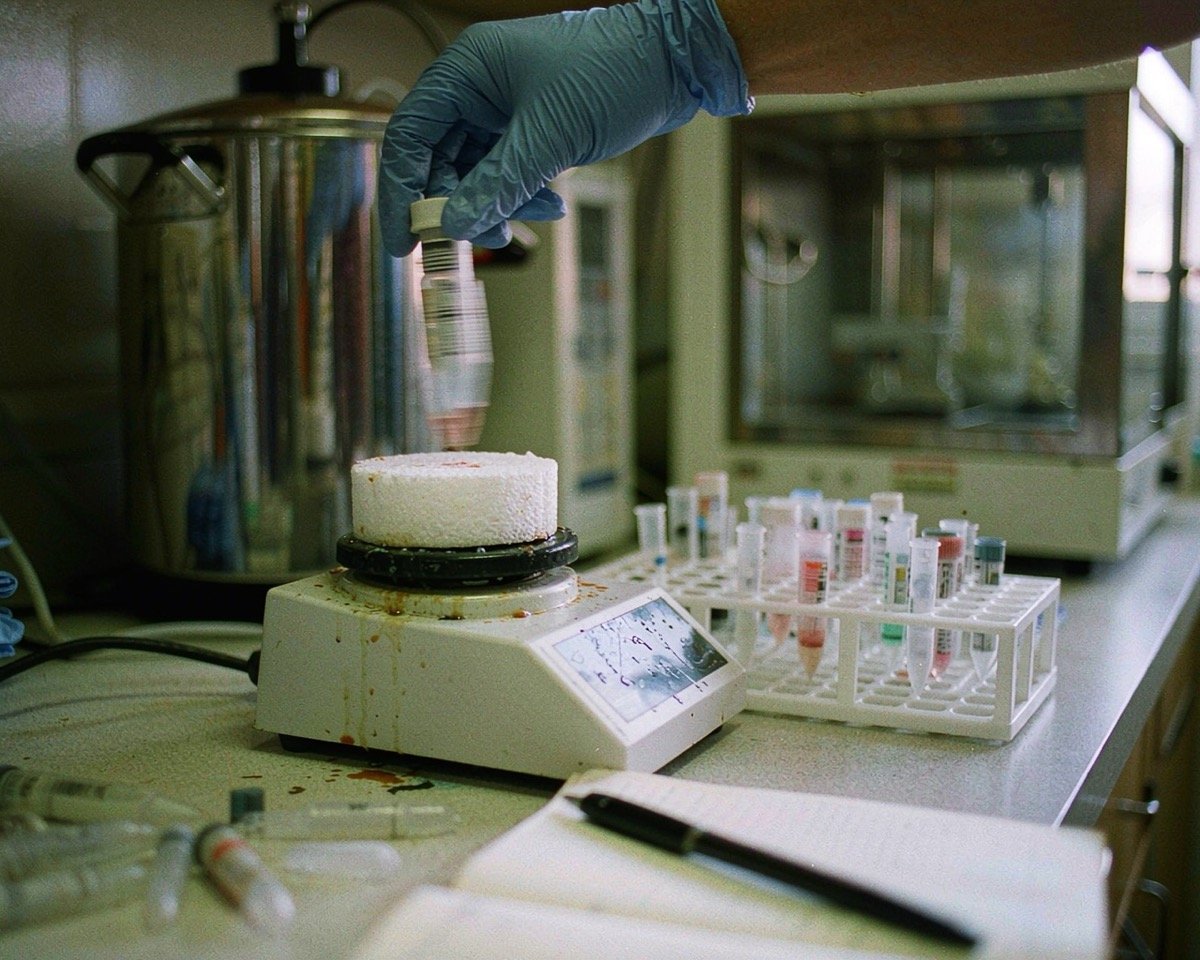
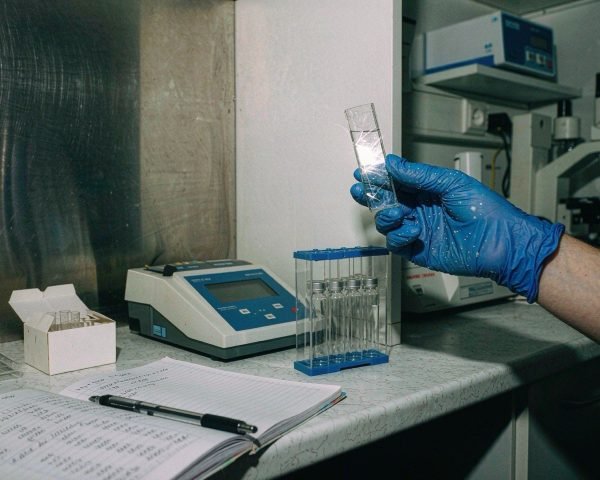
This is where most bad readings are born. Benchtop meters use matched glass or optical plastic cells; portable meters often use sealed vials. Whatever you use, the optical surfaces must be spotless and unscratched, because scratches scatter light exactly like suspended particles do.
Wipe cells with lint-free wipes, never paper towels, and hold them by the frosted or marked side. If your meter supports it, orient every cell the same way in the sample chamber. I have seen operators drop 0.02 NTU of scatter just by inserting the same cuvette rotated 180°, which is real money when your limit is 0.30.
Gloves and lint-free wipes
Nitrile gloves keep skin oils off the optical path. A single fingerprint on a cuvette can add scatter well above the noise floor at low NTU values. Lint-free wipes matter because ordinary tissues shed fibers, and fibers floating in your sample cell are indistinguishable from suspended solids to the detector.
Filters for sample prep
Not every workflow needs them, but some do. If you dilute a high-turbidity sample, filtered dilution water keeps the blank clean. Certain interferences, like floating debris that settles rapidly, call for careful subsampling rather than filtering, since removing particles changes the answer you were asked for. Know which your method requires before you stock the shelf.
Standards and Calibration Consumables
Turbidity meters are only as honest as their standards.
Formazin is the primary reference suspension. It is prepared by polymerizing hexamethylenetetramine and hydrazine sulfate, and it defines the NTU scale. The catch: diluted Formazin is unstable, the concentrate is toxic, and lab-prepared batches vary between operators.
StablCal and similar stabilized Formazin standards solve that. They contain the same light-scattering polymer in a stabilized form, sold in sealed vials and bottles at values from Hach’s StablCal line that includes <0.1, 20, 200, and 1000 NTU. EPA accepts them for calibration under Method 180.1.
You also want secondary standards or sealed verification vials for daily checks. EPA Method 180.1 expects a secondary standard as a daily calibration check, monitored against a primary. For work near 0.3 NTU, a dedicated low-range verification set around 0.1 to 1.0 NTU earns its shelf space.
Handling Mistakes That Skew Readings
I once watched a drinking water compliance dataset get tossed because the operator wiped cuvettes with lab wipes that left fibers behind. Every low-range reading drifted high, and nobody caught it until a regulatory review asked why consecutive results bounced around at <0.1 NTU. Three bottles of wasted sampling effort, one very awkward meeting.
The usual suspects:
• Fingerprints on optical surfaces add scatter and bias readings high.
• Condensation on cold samples fogs the cell; let samples warm to room temperature and wipe the cell dry before reading.
• Bubbles from aggressive mixing read as particles. Invert or gently swirl the sample, then let it settle briefly before measurement.
• Settling causes the opposite problem. Heavy particles sink while you wait, so read promptly after mixing, following your method’s timing.
None of these require new equipment to fix. They require habits, and habits require that gloves, wipes, and clean cells are actually within arm’s reach. If consumables run out mid-run, someone will improvise, and that is usually where the drift starts.
Storage and Shelf Life of Standards
Standards degrade quietly, which makes them dangerous. Sealed StablCal vials typically carry shelf lives measured in months from the ship date, and each lot ships with a certificate of analysis stating its expiration. Formazin concentrate lasts longer than its dilutions, but once diluted, stability drops fast.
Store standards upright, capped, at room temperature, away from direct sunlight. Never pour used standard back into the bottle; contamination shortens effective shelf life dramatically. Write the open date on the label and retire anything past its expiration, even if it looks fine. A verification standard that has drifted by 10% will pass your eyes and fail your audit.
For labs running multiple methods, the same discipline applies across the bench. Our guide to water quality testing lab consumables covers the broader stocking picture.
Conclusion
Turbidity testing does not demand much equipment, but it is unforgiving about the quality of what you use. Clean, unscratched sample bottles protect the sample before it ever reaches the meter. Matched cuvettes handled with gloves and lint-free wipes protect the optical path. Fresh, properly stored standards, whether Formazin or stabilized alternatives, keep the calibration honest. Skip any one of those, and the meter will still print a number. It just will not be a number you can defend.
My suggestion: build a small turbidity kit, one drawer that holds bottles, cells, wipes, gloves, and current standards together, and restock it as a unit. That single habit prevents most of the improvisation that causes bad data. If you are rounding out a full water bench, our walkthrough of what consumables drinking water testing labs need covers the neighboring tests, and our guide to colorimetric water testing pairs well with turbidity since many labs run both on the same samples.
Frequently Asked Questions
What is the difference between NTU and FNU?
Both measure turbidity by light scatter and are numerically equivalent on calibration standards. NTU comes from EPA Method 180.1 with a white light source, while FNU comes from ISO 7027 with an infrared 860 nm source. Instruments using the two designs can disagree slightly on real samples.
Can I use regular glassware instead of turbidity cuvettes?
No, unless your method explicitly allows it. Turbidity cuvettes are manufactured with matched optical properties and consistent wall thickness, which ordinary glassware does not guarantee. Using mismatched cells introduces scatter and optical path differences that show up directly in your readings.
How often should I calibrate my turbidimeter?
Follow your method and instrument manual, but a common pattern is calibration on a schedule with a secondary standard verification before each use or daily. EPA Method 180.1 expects a daily calibration check against a secondary standard. Increase frequency if verifications drift or you work at very low NTU ranges.
Why is my turbidity reading unstable?
Usually bubbles, settling particles, condensation on the cell, or a scratched cuvette. Gently remix the sample, confirm the cell is clean and dry at room temperature, and check that the meter sits on a stable surface away from vibration. If instability persists at low values, verify against a fresh standard.
Do I need to filter my sample before turbidity testing?
No, in most cases filtering defeats the purpose, since it removes the particles you are measuring. Filtration appears only in specific workflows, such as preparing clean dilution water or certain method-defined steps. When in doubt, follow the written method rather than habit.