
# 8 Rules for Running a Consumables Supplier Trial
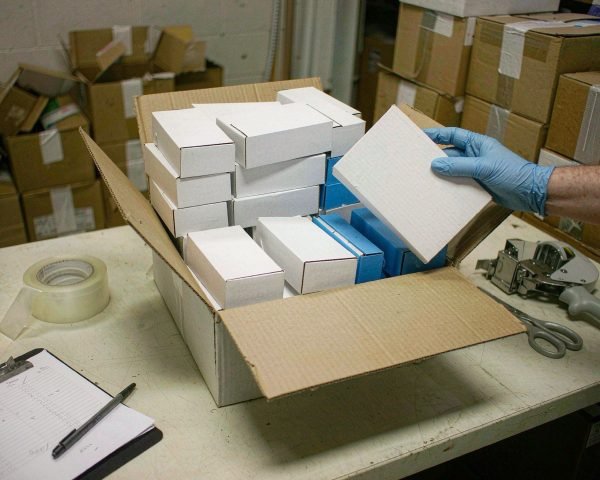
A free sample box from a new supplier feels like a no-strings gift. It rarely is. A sloppy consumables supplier trial can contaminate your data, waste three months of bench time, and slide into a purchase nobody decided to make. The fix is structure, and it costs an afternoon.
The short answer: a trial worth trusting is a controlled experiment. Written success criteria, one product family, qualified lots with reviewed certificates, old-versus-new runs on the same samples, documented results, and a fixed end date. Run it like a small validation and the verdict makes itself.
The eight rules below come from labs that did this well and a few that learned the hard way. None of them need new equipment. Most need only a page of planning and the discipline to stop when you said you would stop.
1. Define Scope and Success Criteria Before Anything Ships
Most failed trials share the same origin: nobody wrote down what success looked like. A box arrives, an analyst tries the vials on whatever run is scheduled that week, and three weeks later someone says “seems fine”. That phrase has approved more questionable vendors than any signature ever has.
Ambiguity is how a six-week evaluation quietly becomes an eight-month habit.
Before samples arrive, write a one-page trial plan. Name the product family, the methods that will test it, the instruments, the analysts, and the end date. Give one person ownership of the verdict. A committee can advise, but a trial without a single accountable owner tends to conclude with a shrug.
Then attach numbers to the word pass. “Looks fine” is not a criterion. “Retention time shift below 2% versus the incumbent lot, no new peaks above 0.05% relative area, no measurable rise in system back pressure” is a criterion. The logic mirrors formal quality systems: ISO 9001 expects organizations to define criteria for evaluating, selecting, and re-evaluating external providers, and that discipline scales down to a single box of filters the ISO 9001 quality standard.
One quiet shortcut at this stage: ask for samples before discussing pricing or volumes how to get free samples from a lab consumables supplier. A supplier who ships fast and asks sharp technical questions is telling you something useful. A supplier who wants a purchase commitment before the trial starts is telling you something else.
Scope creep deserves a guard as well. If the sales rep offers their new cleaning agents halfway through your filter trial, note the interest and finish the first evaluation. Stacking a second product onto an unfinished trial resets the clock and doubles the variables, which is the same mistake rule two warns about in bulk.
2. Trial One Product Family, Not the Whole Catalog
When a supplier impresses you, the pull is to move everything at once: vials, filters, pipette tips, caps. Resist it. A single product family gives you a contained experiment with a contained blast radius.
Pick something you buy in volume but that will not halt the lab if it underperforms. Syringe filters and autosampler vials are classic first candidates. They touch many methods, so the data generalizes, yet a failure is annoying rather than catastrophic.
Containment matters for another reason: lot-to-lot variation. One glorious box proves very little about the next one. Ask for several production lots across the trial window, not the same batch repackaged with a new label. One QC lab I know ran three separate lots of the same 0.22 µm nylon syringe filter against their incumbent brand across four HPLC methods. The second lot clogged twice on a high-salt matrix. Finding that during a trial cost them a week. Finding it six months after a full switch would have cost a stalled batch and a very tense Monday.
A broad trial also muddies attribution. If you change the filter, the vial, and the solvent source in the same fortnight and a ghost peak appears, which one caused it? You would have to repeat all three changes separately to find out. One family per trial keeps every result explainable, and it gives the supplier a fair chance to fix whatever you find before you widen the relationship.
Volume helps the data quality too. A family you buy monthly generates enough runs in six weeks to make the comparison honest; a niche product you order twice a year may need the full ninety days just to accumulate comparable injections.
3. Treat the Certificate of Analysis as Evidence, Not Decoration
A quick jargon check, since the acronym gets thrown around: a certificate of analysis, or CoA, is the supplier’s per-lot test record. It lists which tests were run on your specific lot and what the results were. It is the most important document in a consumables trial, and plenty of labs never read past the header.
Read it like an analyst. You want lot-specific numbers, not a template that says “meets specifications”. Each test should show an acceptance limit and the actual result obtained. Confirm that the lot number on the certificate matches the boxes on your bench. Some suppliers make this painless. Restek, for instance, publishes lot-specific certificates online so you can pull the exact document for the lot in front of you lot-specific certificates of analysis.
Match the paperwork rigor to the product’s role. Materials qualified against recognized pharmacopeial standards, such as USP Reference Standards, carry documented characterization you can compare line by line USP Reference Standards. For commodity plasticware the certificate is thinner, but vague limits and missing tests are still findings worth writing down.
Findings belong in the trial report, not in a hallway conversation.
File every certificate with the trial records, keyed by lot number. When lot two behaves strangely in month four, the certificate is the first document you will pull, and the difference between a two-hour investigation and a two-week one is usually whether that PDF was saved or merely seen.
4. Run Old and New Side by Side on Real Samples
A new consumable judged on its own always looks fine. Comparison is what turns opinions into evidence, and the design matters more than the volume of data.
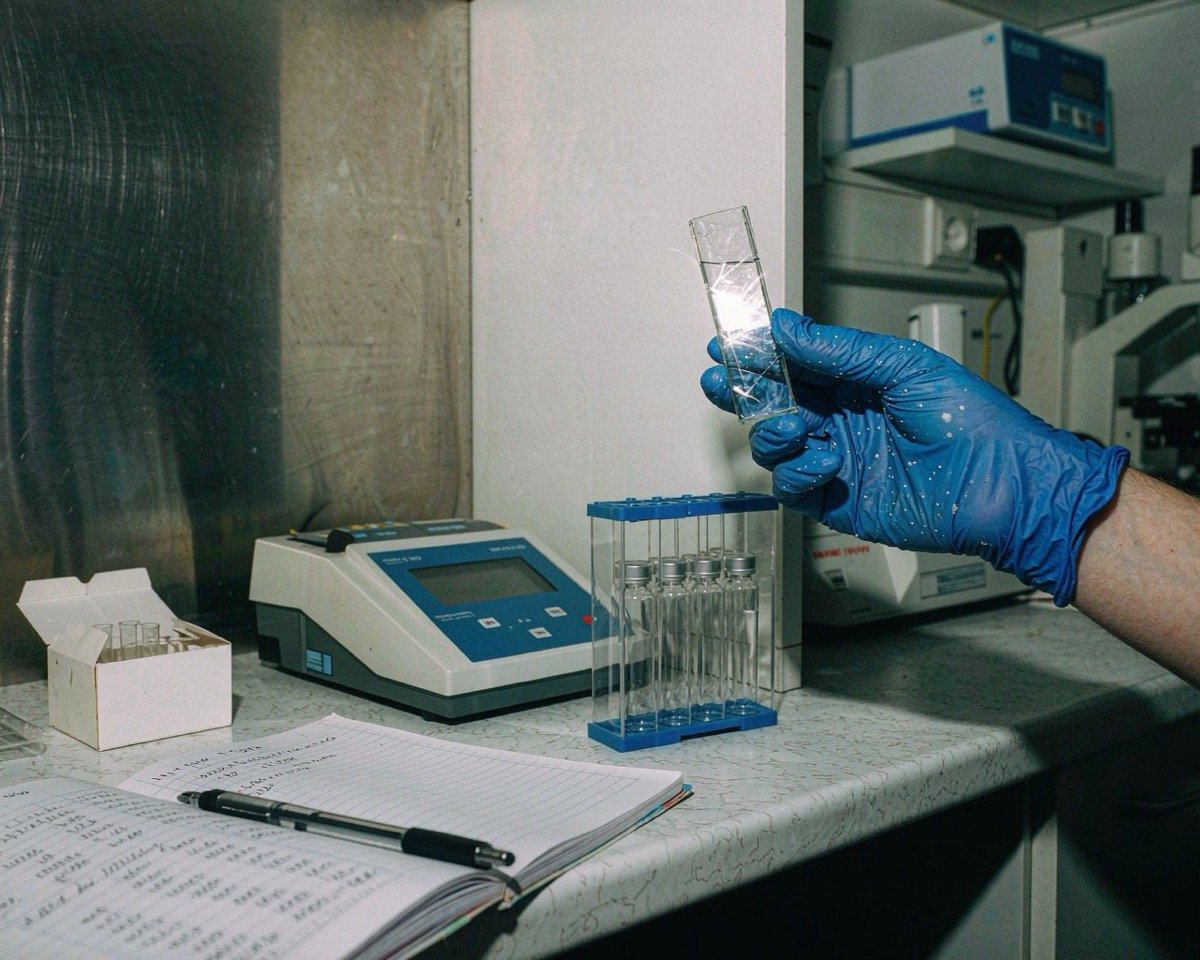
Run both products on the same day, on the same instrument, with the same samples and ideally the same analyst. Interleave the injections so instrument drift cannot masquerade as a product difference. Include method blanks for both, because extractables from plasticware show up exactly there, as peaks in an otherwise clean blank. Use real samples too, the dirty, matrix-heavy ones. Most consumable failures hide in the samples that stress the product hardest.
The cautionary science is well documented. NIST researchers found that metabolite profiles differed substantially across LC/MS platforms even within a single laboratory, while results stayed highly reproducible within one platform, with repeatability under 2% RSD a cross-platform comparability study. A filter or vial is a smaller variable than an entire instrument platform, but the lesson transfers cleanly. Control everything else, change one thing, and treat the differences you observe as real.
Enough data is more than a single injection pair. Run each comparison point in triplicate at minimum, and spread the work across several days so the trial catches the variability that shows up between runs, not only within one tidy afternoon.
If the family on trial is filters, the comparison deserves its own protocol, and our guide to validating a new filter lot against your old one walks through it step by step how to validate a new filter lot. Side-by-side data also answers a question you cannot predict today: why the March results shifted.
5. Write Down the Acceptance Criteria and Document Every Result
Verbal criteria evaporate. On day one, the trial plan should carry a small table: each pass mark, its numeric limit, and the test that measures it. The lab manager signs it. When the trial ends, nobody argues about what good enough meant, because good enough was agreed before any data existed.
Documentation during the trial should stay boring, and boring is the point. Record lot numbers, receipt dates, storage conditions, instrument IDs, analyst initials, and where the raw data lives. A shared spreadsheet works. A five-column log kept current beats a beautiful template nobody fills in.
This record does double duty. It is your decision evidence, and in regulated environments it becomes part of your supplier qualification file. Under GMP expectations, relying on a supplier’s certificate in place of your own testing requires you to establish the reliability of their results through validation at appropriate intervals FDA guidance on component testing and CoAs. A documented trial with retained raw data is exactly that kind of evidence, and auditors tend to agree.
I watched the cost of skipping all of this at a small pharma QC lab. They ran their entire trial on a cleaning-in-place method, the least sensitive assay in the building, with no written criteria because “they’re only filters”. The filters passed. Six weeks after the switch, a stability-indicating assay started throwing unknown peaks, the batch release slipped, and the investigation could not isolate the cause because no comparison data existed. One afternoon of paperwork would have saved them a very expensive quarter.
6. Put the Analysts Who Use It Daily in Charge of the Verdict
Data decides whether the product performs. Analysts decide whether it is usable. Both matter, and only one of them shows up in a chromatogram.
The people running your samples notice things no specification covers. A vial cap whose septum cores on the fourth puncture. A filter that needs three tries to load without dripping. A microvolume insert the autosampler needle catches on every eighth injection. None of these appear in your criteria table. All of them appear in the daily life of your lab.
Build a simple feedback loop. Two minutes per analyst per week: what worked, what annoyed you. Collect the answers in one place rather than in four separate memories. If three of four analysts flag the same packaging flaw, that is a real finding even when the analytical data is spotless.
There is a human reason as well. Analysts who feel heard during a trial keep reporting problems honestly throughout it. Analysts who suspect the decision was made before the trial started stop reporting, and the evaluation turns into theater. People who pipette for eight hours a day run the most sensitive detector of vendor quality ever invented: their own patience.
One warning from experience: do not hand analysts the trial and walk away. Check the feedback weekly and chase the missing entries. Ownership means accountable oversight, not absence.
7. Negotiate Terms Only After Performance Is Proven
The sequence that works: prove performance first, then talk money. Your trial report, with signed criteria and side-by-side data, is the negotiating position. Suppliers price certainty, and a lab with documented results is a certain customer.
Guard the order of operations, too.
If a supplier makes free samples conditional on a volume commitment, that is not a trial, it is a purchase with extra steps. Say so plainly and see whether they adjust. Most do, because a supplier who refuses to let you test has already answered the question the trial was designed to ask.
When terms reach the table, four numbers deserve attention. Unit price is the obvious one. Minimum order quantity matters more than most labs expect, because a low price on a huge MOQ is just cash sitting on your shelf as aging inventory. Lead time decides how much safety stock you carry, and safety stock is real money. Returns policy is the quiet one: if the third lot of those filters fails your criteria in month seven, you want the rejection path in writing rather than a phone negotiation. We break down typical MOQ and lead-time ranges by product category in a separate guide MOQs and lead times for lab consumables.
One bonus: comparing quotes gets easier after a trial, because you know exactly which product and configuration you are pricing. Apples to apples beats brochure to brochure.
8. Set a Review Checkpoint with Explicit Exit and Expand Rules
Every trial needs an end date and a judge. Set both in the trial plan: a review meeting, a named decision maker, and the possible outcomes written down in advance.
Pass means the product met the criteria and the analysts signed off. You expand, first to a second product family, then gradually, with each expansion following the same rules as the original trial.
Fail means a mark was missed. You stop, return or use up the remaining stock, and document the result. A documented failure is valuable. It tells the supplier exactly what to fix, and good vendors often come back stronger within a quarter.
Inconclusive, the outcome nobody plans for, should still trigger a defined next step: usually a longer trial on a more sensitive method, not a shrug that drifts into default purchasing.
Add re-evaluation triggers even after a successful switch. Suppliers change resin sources, molding sites, and packaging vendors without much announcement. A reasonable trigger list covers any change notification from the supplier, a failed incoming lot, and an annual review of performance data. The checkpoint protects the supplier as much as you: a defined process with a fair read of the data is easier to accept than an evaluation that never closes.
A typical timeline looks like this: two weeks of planning, sixty to ninety days of parallel running, one week to compile the report, and a single decision meeting. Fourteen weeks from first call to a signed supplier file sounds slow. It is faster than the alternative, which is discovering the truth after a contract and a pallet of inventory commit you.
Conclusion
A consumables supplier trial fails in predictable ways: no written criteria, a test run only on a forgiving method, no end date, and results that live in someone’s memory instead of a file. Every one of those is avoidable with a single page of planning and a shared spreadsheet. Write the success definitions before samples ship, test one product family across several lots, run old against new on real samples, keep the analysts in the loop, and close the trial on the date you set. Do that, and the go or no-go decision stops being a matter of taste and becomes a matter of record. The labs that switch vendors cleanly are rarely the ones with the best chemistry. They are the ones with the best paperwork habits. When you want to go deeper on vetting a vendor before the first box ships, our 12-point checklist is the natural next read how to audit a consumables supplier.
Frequently Asked Questions
How long should a consumables supplier trial run?
Sixty to ninety days covers most product families and lets you receive at least two or three production lots. Shorter trials usually mean a single lot, which tells you little about the supplier’s consistency. Longer trials tend to drift into default purchasing without an actual decision.
Can we run the trial on a non-critical method only?
You can, but do not expect the result to generalize. Non-critical methods forgive the exact failures that matter, such as extra peaks and small retention shifts. Put at least one sensitive, routine method on the trial list, ideally one whose failure would genuinely hurt.
How many lots should we test?
At least two, ideally three. A single-lot trial answers whether the supplier can make one good batch, which is the easiest thing in manufacturing. A multi-lot trial answers the question you actually care about: whether they can make every batch good.
Should we share our acceptance criteria with the supplier?
Yes. Transparency improves trials. Suppliers who know your limits can flag mismatches before shipping rather than after, and a vendor who objects to written criteria is showing you how they handle disagreement.
Who pays if the trial product fails?
Ask before the trial starts. Common arrangements include free samples for the full duration, credit against future orders, or paid samples with a refund on failure. Get the returns path in writing, because “we’ll sort it out later” rarely sorts out well.