
# What Consumables Does Legionella Testing Need?
Legionella testing looks simple from the outside: collect some water, plate it, wait. Anyone who has actually run ISO 11731 cultures knows better. The consumables list is specific, the media choices decide your recovery rate, and a bad sample bottle can invalidate everything that follows.
Legionella testing needs sterile wide-mouth sample bottles (250 mL to 1 L, pre-dosed with sodium thiosulfate for chlorinated water), biofilm swabs, 0.45 µm membrane filters with filtration funnels, BCYE culture media and selective supplements, acid buffer for sample pretreatment, inoculation loops, and for rapid methods, PCR extraction kits with compatible tubes and plates.
That list has a reason for every item, and knowing the reasons is what separates a buying decision from a guess. Here’s the full picture.
Why Legionella Demands Its Own Consumable List
Legionella is the bacterium behind Legionnaires’ disease, a potentially severe pneumonia, and the milder Pontiac fever. It grows in building water systems, cooling towers, spas, and plumbing biofilms, and people get sick from inhaling contaminated aerosols. The WHO’s legionellosis fact sheet covers the disease basics if you need the background.
Two facts drive the consumable choices. First, Legionella lives in biofilm, not just free-flowing water, so sampling has to capture both. Second, it is easily outcompeted by faster-growing water bacteria on culture plates, which is why selective media and chemical pretreatment exist. The CDC’s routine testing guidance is blunt about the stakes: sample handling, transport, and lab processing all affect results.
One more thing to know before buying: there is no “safe limit” that a result gets compared against in the way drinking water chemistry works. The EPA’s Legionella fact sheet notes the agency set a maximum contaminant level goal of zero for the organism. Your consumables either preserve what’s really in the water or they don’t.
Sample Collection Consumables
Bottles and Volumes
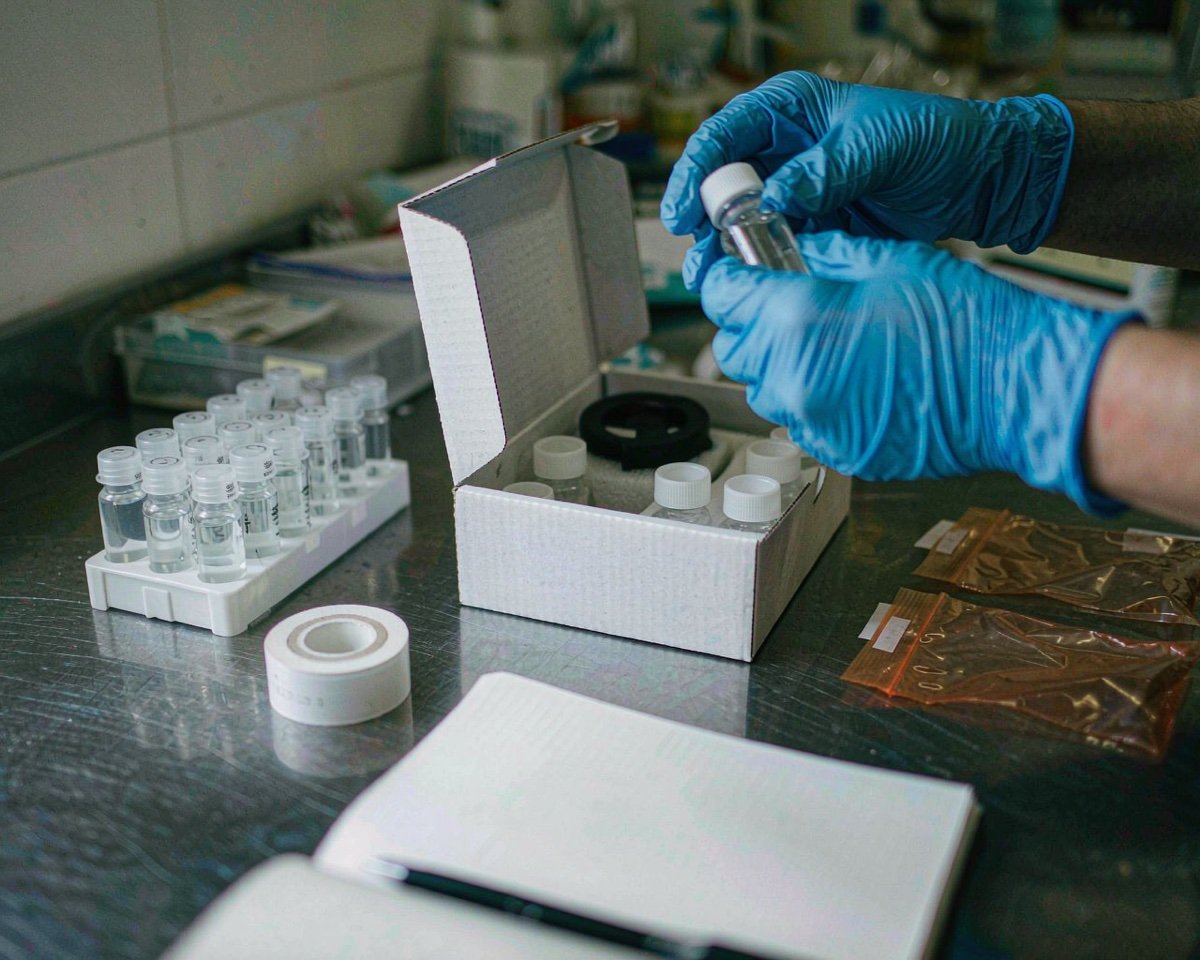
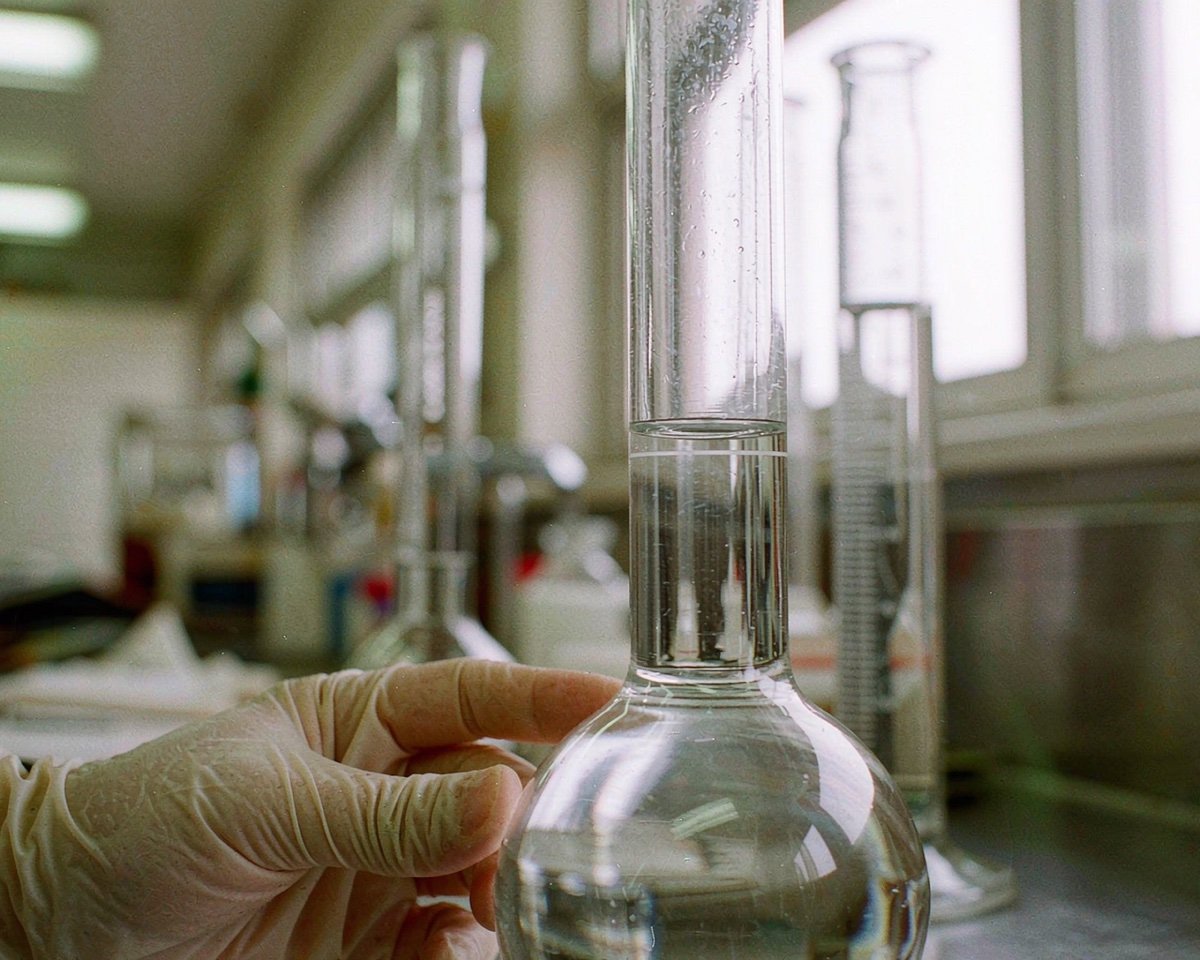
Routine monitoring typically uses 250 mL sterile bottles; outbreak investigations call for a full liter because low concentrations demand maximum volume. The CDC’s environmental sampling guidance spells out when to collect 1 to 10 liters. Wide-mouth bottles make both pour-offs and membrane filtration easier, so I default to wide-mouth even when narrow-neck costs a little less.
For potable water from a chlorinated system, bottles need sodium thiosulfate pre-dosed inside, which neutralizes residual disinfectant the moment the sample lands. Skip it and the chlorine keeps working in the bottle, killing the very organism you’re counting. This is the single most common collection mistake I hear about from water labs, and it’s invisible at the bench. The bottle either arrived dosed or it didn’t; the result won’t tell you which. I got burned by exactly this early in my career: a hotel potable-water survey came back with nondetects across the board, the report went out, and two weeks later a second survey with properly dosed bottles found Legionella in three of the same outlets. Nobody was hurt, thankfully, but I still reread every bottle specification before signing off on a sampling plan.
Bottles must be sterile, with certificates, and the closures need to survive a cooler bag without weeping. If you already run other water tests, your drinking-water program bottles are close cousins; our drinking water testing consumables guide compares formats across analytes.
Swabs for Biofilm
Swabs sample the biofilm where Legionella actually colonizes: showerheads, faucet aerators, cooling tower basins, pipe joints. The CDC recommends swabbing the waterline, jets, and any visible biofilm alongside bulk water. Sterile flocked or rayon swabs in individual wrappers, moistened per the method, go into every sampling kit. Bulk water alone undercounts what’s living in the system, which is a sampling problem no downstream consumable can fix.
Transport
Samples go into sealed bags inside insulated transport boxes, kept cool but not frozen, and reach the lab within the holding time the method allows. Insulated pouches and coolant packs are consumables too; budget them as such, because they walk away and they wear out.
Filtration and Culture Consumables
Membranes and Funnels
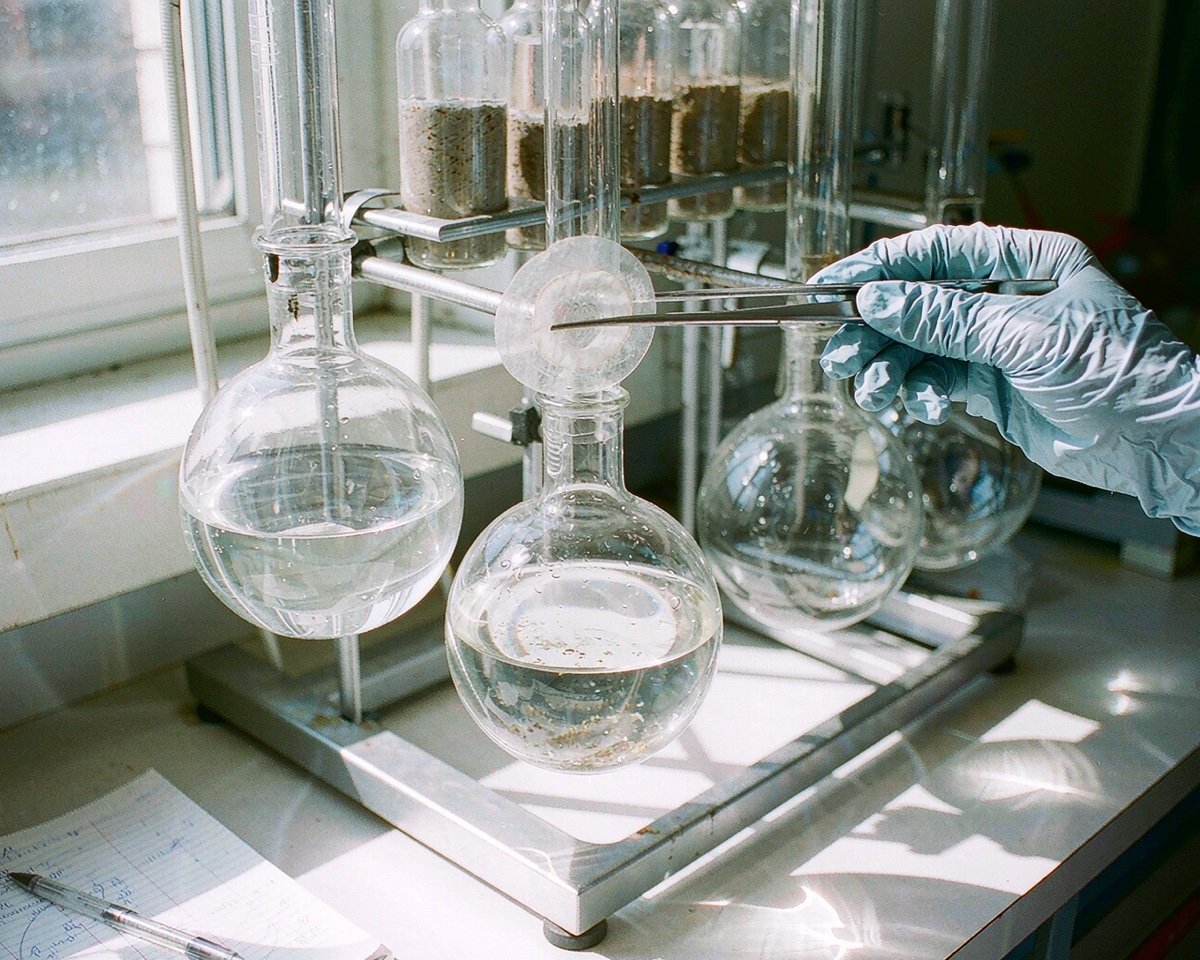
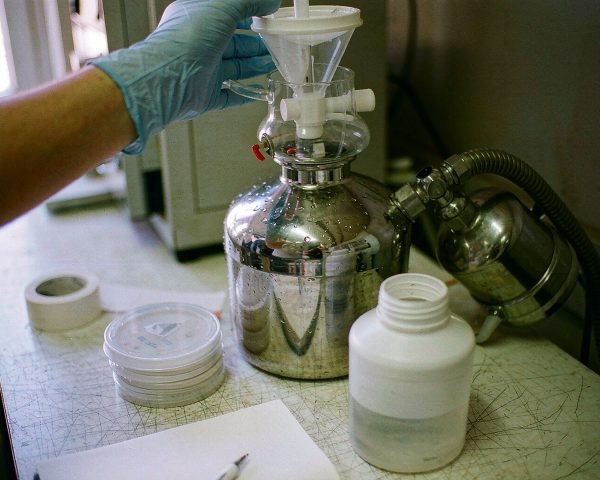
Back at the lab, measured volumes pass through 0.45 µm membrane filters, typically cellulose nitrate or mixed ester, 47 mm diameter. The membrane traps bacteria while letting water through, then gets placed face-up directly onto culture medium. Funnel-and-receiver sets, sterile and single-use in most labs, carry the sample; a reusable glass funnel setup works but adds washing and cross-contamination risk I’d rather not manage.
Filtration volumes depend on expected contamination: up to 1 L for potable water with low bacterial load, smaller volumes for dirty cooling tower water plated directly. The Thermo Fisher water microbiology methods guide lays out the ISO 11731 workflow options, including the acid treatment used to suppress competing flora on heavily contaminated samples. Acid buffer, and the heat-treatment water bath consumables that go with it, belong on the shopping list for environmental samples.
Media
Legionella is picky. It grows on buffered charcoal yeast extract agar, BCYE, supplemented with cysteine and iron; confirmation requires subculture onto BCYE without cysteine, since only organisms that fail to grow there are presumed Legionella. Selective versions, GVPC or MWY supplements, hold back competing flora from environmental samples.
Buying prepared plates versus dehydrated media is a real fork in the road. Prepared plates cost more per unit, arrive with CoAs, and remove a failure mode. Dehydrated media and supplements cost less and demand validated in-house plating with documentation to match. For a low-volume lab I’d buy prepared plates without hesitation. For a high-throughput water lab with trained microbiologists, dehydrated makes the math work. Either way, the supplements (GVPC, MWY, glycine and antibiotics) are consumables with short shelf lives, so rotate them like screening strips.
Sterile inoculation loops for subculture, microscope-grade reagents for confirmatory staining or agglutination, and labeled Petri sleeves round out the culture bench. Our water quality testing consumables guide maps the full bench if your lab runs a broader water panel.
Molecular Testing Consumables
qPCR methods report results in hours instead of the 7 to 14 days culture needs, which is why many labs run both: PCR for fast negative screening, culture for isolates and confirmation. The molecular side needs DNA extraction kits suited to clean or dirty water, nuclease-free tubes, PCR plates or 8-tube strips, optical caps, and pipette tips with aerosol filters. Pre-dosing PCR workspaces against amplified-product carryover is a discipline question, but filtered tips are the cheap hardware half of it.
Remember that PCR cannot by itself distinguish live from dead cells, which is exactly why the CDC notes culture remains preferred for evaluating growth trends. If your customer asks for “Legionella-free” confirmation, you’ll want both methods behind the answer.
What to Check Before You Buy
A short spec list for procurement:
• Sample bottles: sterile, wide-mouth, certified, with sodium thiosulfate dosing for potable sampling.
• Membranes: 0.45 µm, 47 mm, graded (meaning colored grid printing for counting), lot-certified.
• Media: BCYE plus at least one selective supplement, with CoAs, from a maker compliant with ISO 11133-style QC.
• Swabs and bags: individually wrapped, sterile, dated.
• PCR side: extraction kits matched to your water matrix, filtered tips, certified nuclease-free plastics.
One opinion from years of watching these orders go sideways: don’t consolidate media buying with bottle buying on price alone. Media failures are slow and expensive to diagnose; bottles are commodity items. Buy bottles wherever they’re cheapest with certificates, and buy media from a supplier who can show you QC growth-testing data for the actual lot.
Conclusion
Legionella testing succeeds or fails at the margins of its consumable list: a thiosulfate-dosed bottle that neutralizes chlorine on contact, a swab that reaches the biofilm, a 0.45 µm membrane that lands face-up on BCYE, and supplements fresh enough to actually suppress competing flora. Get those right and the rest of the workflow behaves; miss one and the result quietly drifts from what the water really contained. Audit your bottle dosing and supplement dates first, since those fail invisibly, then decide where prepared plates versus in-house media makes sense for your volume. For the wider bench, our water quality testing guide and drinking water consumables list are the two references I’d keep next to the order forms.
Frequently Asked Questions
What size sample bottle does Legionella testing require?
Routine monitoring usually works with 250 mL sterile bottles, while outbreak or investigative sampling calls for a full liter to push detection limits down. Wide-mouth bottles are the practical default because they make membrane filtration and pour-offs easier.
Why do Legionella sample bottles contain sodium thiosulfate?
The thiosulfate neutralizes residual chlorine the instant the sample is collected, stopping disinfectant from killing Legionella inside the bottle. Without it, counts from chlorinated systems can come back artificially low. Always confirm the dosing before sampling potable water.
What media does Legionella grow on in the lab?
Legionella requires buffered charcoal yeast extract agar (BCYE) supplemented with cysteine and iron, often with selective supplements such as GVPC or MWY to suppress competing flora. Confirmation relies on subculturing onto BCYE without cysteine, where true Legionella fails to grow.
Can PCR replace culture for Legionella testing?
PCR delivers results in hours and works well for rapid screening, but it cannot distinguish live from dead bacteria, and results come in genomic units rather than colony counts. Most labs run PCR for speed alongside culture for isolates, confirmation, and trend tracking.
How long can a water sample wait before Legionella testing?
Samples should be cooled and processed as soon as possible, ideally within a day, following the holding time specified by your method or the receiving laboratory. Delay and temperature abuse both skew counts, which is why insulated transport consumables belong in the budget.