
# 8 Consumables Checks When Your Data Starts Drifting
A calibration bracket that passes at 9 a.m. and fails at 3 p.m. is one of the most expensive afternoons in a QA lab. My first instinct, years ago, was to blame the column. Eight times out of ten the real problem was something that came in a box of 100.
The short answer
Drift usually traces back to a consumable: a cored inlet septum bleeding siloxanes, algae in the mobile phase, a new filter lot shedding extractables, or solvent escaping through a pierced vial septum. Work through the eight checks below and you can isolate most drift in one afternoon.
Each check takes minutes, not days, and every one has saved me at least one recalibration I didn’t need. Here’s the full tour: what to look at, in what order, and why each item bends your data the way it does.
1. Pull and inspect the inlet septum
Start here because it’s the cheapest thing to replace and one of the most common causes of quiet, progressive drift.
Septa are made of polydimethylsiloxane, the same polymer family as many GC stationary phases. When a septum sits in a hot inlet and a needle punches it a few hundred times, it sheds particles and degradation products. Restek’s technical article on siloxane contamination notes that inlet septa are a leading source of siloxane ghost peaks, and that septum particles deposited in the liner decompose into the same bleed products you’d blame on the column.
What drift looks like from a tired septum:
• Rising baseline bleed at higher oven temperatures, in GC.
• Low-level unexplained peaks that grow across a sequence.
• Retention or response shifts if a partial particle acts like a tiny adsorptive site.
The fix costs less than lunch. Pull the septum, hold it up to the light, and count the puncture marks. If you see more than a few, or any wedge-shaped coring, replace it. My default is a fresh septum for every important sequence, no exceptions; the part costs cents and the re-run costs a day. While you’re in there, check that the nut isn’t overtightened, which crushes the septum and shortens its life.
One habit worth copying from GC labs: use the septum purge flow if your inlet has it. Restek recommends 3 to 4 mL/min along the septum face to carry bleed products away before they reach the column.
Headspace users, your version of this check is the vial septum and the crimp seal. A poorly crimped 20 mL headspace vial leaks analyte-rich vapor before the run even starts, and the loss scales with how long the vial waited. Same symptom, different septum.
2. Check the mobile phase, not the column
If retention times are creeping in HPLC, look in the solvent bottles before you touch anything else.
Aqueous buffers are living systems in the worst sense. Algae and bacteria grow in them, especially in the bottles that sit on the instrument all week. Agilent’s LC troubleshooting guide is blunt about prevention: use amber borosilicate bottles to avoid algae growth, prepare only the volume you’ll use in one to two days, and replace aqueous mobile phases every second day. The same guide lists selective evaporation of mobile phase components and contamination buildup as standard causes of retention time drift.
Three mobile phase drift mechanisms to know:
1. Microbial growth changes the effective composition and can plug a column inlet frit slowly.
2. Open reservoirs let organic solvent evaporate, so the actual gradient differs from the programmed one.
3. A buffer left uncapped absorbs CO2 and its pH creeps, which moves ionizable analytes.
I once chased a two-day retention drift because a colleague topped up the phosphate buffer instead of preparing fresh. The new portion had sat open over a weekend, and the pH had shifted enough to move everything by a couple of hundredths. Ten minutes of fresh buffer ended the investigation.
If your bottles are clear glass and you refill them weekly, changing that one habit might fix more than any column swap will.
While you’re at the bottles, look at the inlet frits hanging inside them. A frit that has drifted from white to tan or green has been filtering something you didn’t plan for. Replace it and note the date on the bottle cap with a marker; the color tells you how long the mobile phase has been a problem.
3. Interrogate the filter you changed last month
Drift that starts the same week a new box of syringe filters arrived is rarely a coincidence.
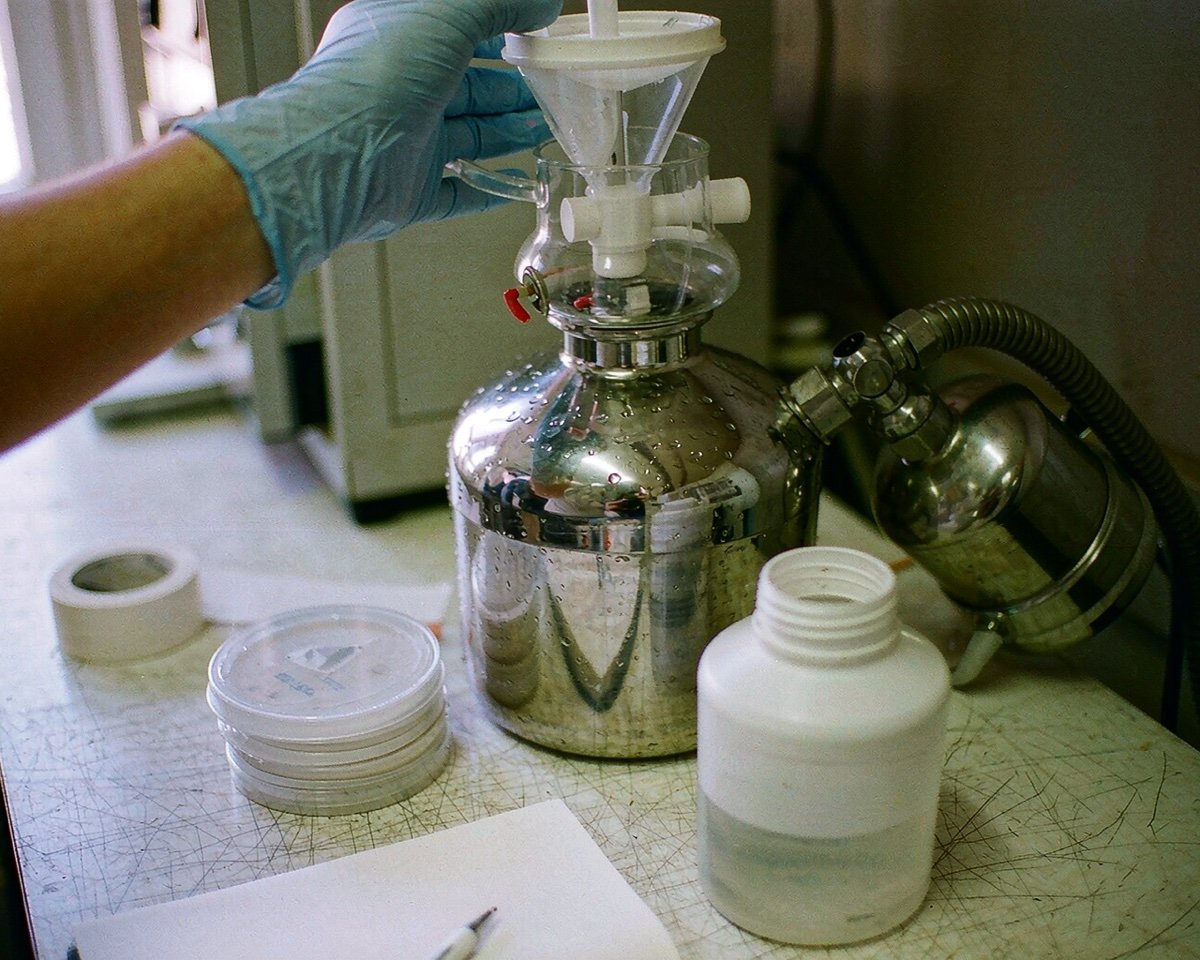
Membrane filters can leach impurities into the filtrate, and the amount depends heavily on the brand and membrane chemistry. A study in Analytical Chemistry looked at extractables from fluoropolymer membrane filters and found that different brands and materials elute very different numbers of impurities, and that some PVDF filters kept leaching even after three pre-rinse cycles. Those extractables show up as unexplained peaks, elevated background, or response drift in sensitive methods.
This is why a filter lot switch matters as much as a new supplier. In my experience the sequence goes like this: the old lot runs out, someone grabs a new box from a different shelf, and the next week the lab is arguing about whether the method or the instrument changed. Nobody remembers the filter.
What I do now, and recommend:
• Pre-rinse the first 1 to 2 mL of filtrate to waste, always, for trace work.
• Qualify every new filter lot against the old one before it touches real samples.
• Note the filter brand, membrane, pore size (0.22 µm vs 0.45 µm is a whole separate decision), and lot number in the run record.
If drift appeared right after a filter change, swap back to a vial of the old lot and inject. That A/B test settles the argument in ten minutes.
4. Measure what’s actually left in the vial
Solvent leaves a capped vial faster than most people expect, and it doesn’t leave evenly across a sequence. The vials that wait longest in the tray lose the most. When solvent evaporates, the analyte stays behind and concentrates, so late-sequence injections read high against a calibration made from fresh vials.
The closure is the weak point. A Thermo Fisher technical note on re-washed vials and closures measured significantly higher evaporative loss from vials sealed with re-used septa, because each puncture physically splits the PTFE and silicone layers and the seal never recovers. The physics compounds: a pierced septum loses a fraction of a percent of solvent per hour, which sounds trivial until the vial sits in a warm tray for nine hours.
There’s good history behind this concern. Clinical chemists documented evaporative loss from autosampler sample cups decades ago, and showed that choosing the right cup design could cut evaporative analytical error to a routine 1 to 2 percent or less. Same instrument, same method, different plasticware.
Practical checks:
• Look at the fill level. If the meniscus sits lower than the neighboring vials prepared at the same time, you have your answer. Our guide to reading a meniscus accurately helps if you’re squinting.
• Inspect the septum of the drifting vials for multiple punctures or a cored plug.
• For long sequences, fill enough volume that a few percent loss doesn’t matter, or run a cooled tray.
We cover the closure fixes in detail in our guide to preventing sample evaporation in autosampler vials.
5. Audit any re-washed vials and reused caps
Reusing vials feels virtuous until it costs a re-run. The same Thermo Fisher technical note found that laboratory dishwashing of autosampler vials causes physical damage to the glass and fails to remove contamination from previous samples. That residue is unpredictable, produces interference peaks in both LC and GC, and has a nasty habit of landing in exactly one vial out of forty.
Unpredictable is the operative word. A contaminated re-washed vial doesn’t drift your whole sequence; it poisons one sample, and you burn a day proving the analyte wasn’t really there. I’ve seen a lab lose a week of stability data to soap residue in a batch of re-washed vials. The dishwater was free. The re-run wasn’t.
Septa deserve a firmer rule than caps. A used septum carries puncture channels that leak and can carry residue from the previous sample into the next one. Caps can survive a reuse if undamaged; septa should not. If your data drifts only in vials that went through the wash cycle, retire the program for anything quantitative and don’t look back.
There’s a middle path if budget pressure is real: reserve re-washed vials for non-quantitative work like sample storage, discard waste, or method scouting where a surprise peak costs an hour instead of a submission. Segregate them clearly. The trouble starts when the boxes sit side by side and someone grabs from the wrong one.
6. Run a blank and check your wash solvent
Carryover mimics drift beautifully. Each injection leaves a trace in the needle seat, the needle, and the loop. If the wash solvent is too weak for your analytes, that trace accumulates instead of rinsing away, and you get low-level peaks that grow across the run or show up in your blanks.
The diagnostic is fast. Inject a blank of your sample solvent right after your strongest standard. Agilent’s troubleshooting poster lists peaks from previous injections as a standard ghost peak cause and recommends a column flush and a blank check. If the blank is clean, carryover isn’t your drift. If it isn’t, you have two consumable-side levers:
1. Strengthen the needle wash (add more organic for lipophilic analytes).
2. Replace the wash solvent reservoir content. It sits open on the instrument for weeks in many labs, absorbing water and losing organic to evaporation, and its composition slowly stops matching what you think it is.
That second one sounds too simple to matter. It matters. A half-empty wash bottle that someone topped up with whatever was nearest is a classic, and embarrassing, source of sequence-wide creep.
While you’re checking wash solvent, look at the flush solvent in the seal-wash reservoir too. Agilent recommends changing seal-wash solvent weekly and inspecting the filters in that line. Skip it and buffer crystals build up on the piston seals, which shows up later as pressure noise nobody can trace.
7. Swap the guard column before suspecting the analytical one
The guard column is a consumable that many labs treat like furniture. It sits in front of the analytical column catching particulates and strongly retained junk, and it saturates. As it loads, retention factors can shift a little, pressure creeps up, and peak shapes degrade so gradually that people adapt their integration settings instead of fixing the cause.
Agilent’s troubleshooting guide puts a blocked column inlet and the need for sample cleanup or a guard column among the standard causes of high backpressure, and contaminated inlet frits among the causes of blockage. If pressure has risen more than about 10% since the sequence started, the guard or an in-line frit is the first thing to change.
My rule after too many unnecessary column replacements: when retention drifts and pressure rises together, replace the guard column and the in-line solvent filter before any other troubleshooting. A guard column costs a fraction of the analytical column and takes two minutes to swap. I’d rather write off a $60 guard than a $900 column that might not have been the problem anyway.
The same logic applies to the solvent inlet frits at the bottle ends. A partially clogged frit starves the pump intermittently, and the resulting flow wobble shows up as retention noise. Frits cost a couple of dollars. Keep spares in the drawer.
8. Check lot numbers and expiry dates across the run
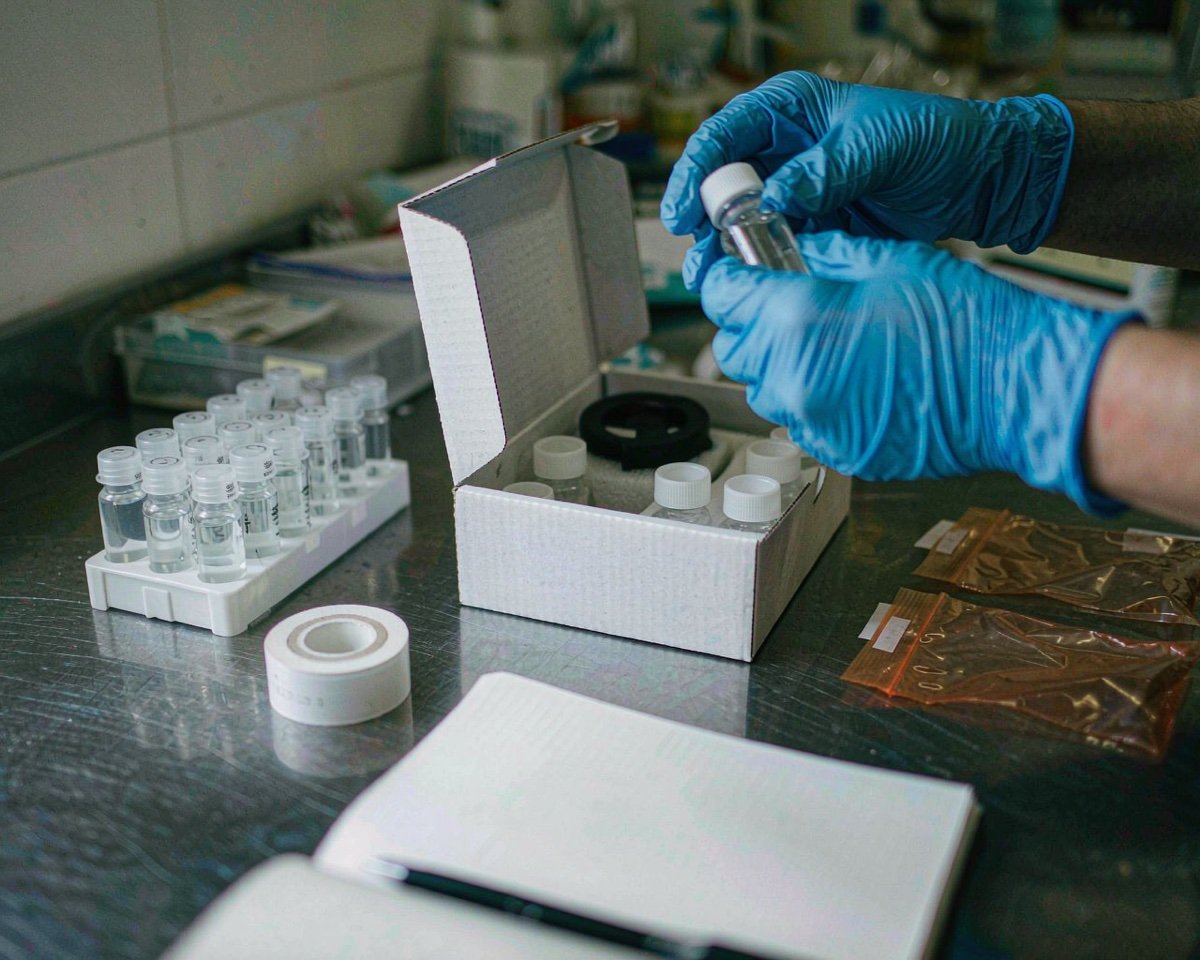
The last check is the least glamorous and the one labs skip most often. Walk the bench and gather the lot numbers and expiry dates for every consumable in the method: septa, vials, filters, mobile phase, guard cartridges. Two things you’re looking for:
• A lot change mid-sequence or mid-study. Mixed lots are a classic source of drift that correlates with nothing on the instrument, because the change happened in the stockroom, not the lab.
• Anything past its expiry. Silicone septa oxidize and harden in storage, which makes coring worse. Filters past their date can shed more extractables. We keep a full guide to consumable shelf life and storage covering what the dates actually govern.
A study-level example: a lab I know had six months of bioanalytical data drifting upward in odd steps. The pattern finally made sense when someone overlaid the drift against procurement records. The vial supplier had shipped two different lots during the study, and the second lot had a different silanization. Not the instrument. Not the method. The cardboard box.
If your lab tracks consumable lots per run, this check takes five minutes. If it doesn’t, this drift investigation is a good reason to start.
A word on what “expired” means for a septum, because the dates confuse people. An expired septum won’t leak on day one after its date; silicone doesn’t fail like milk. It gets progressively harder and less resilient as it oxidizes, which means needles core it more easily and each puncture seals less completely. The date is when the manufacturer stops guaranteeing that behavior, not a cliff. In my experience, septa stored for three years in a hot storeroom behave noticeably worse than septa stored for one.
How I’d sequence these checks
If you only have one afternoon, work in cost order: septum, blank, vial volumes, mobile phase freshness, filter lot, guard column, then the paperwork on lots and dates. Each step either finds the problem or eliminates a suspect, and most labs find their culprit before step five.
Two ground rules keep the search honest. Change one thing at a time, and write down what you changed even when it didn’t help. A drift investigation that swaps three consumables in one afternoon can stumble into a fix and learn nothing, which means the problem returns in six months. The lab notebook entry that says “replaced guard column, drift gone” is worth more than the fix itself.
Conclusion
Drift is almost never mysterious once you know where to look. Inlet septa shed siloxanes, mobile phases grow algae and lose solvent, filter lots leak extractables, vial septa bleed sample into the tray air, and guard columns saturate quietly. None of these announce themselves. All of them cost less to fix than a single recalibrated sequence.
The habit that separates calm labs from stressed ones isn’t better instruments. It’s a fixed routine of consumables checks that runs before and during a sequence, so the drift gets caught in the first three injections instead of the fortieth. Pick one check from this list you don’t currently do, and make it standard this week.
If you want to go deeper on the diagnostic side, start with our guide to when system suitability fails and whether your consumables are to blame.
Frequently Asked Questions
What’s the difference between drift and carryover?
Drift is a gradual change in response or retention across injections; carryover shows up as unexpected peaks in blank injections right after high-concentration samples. Run a blank after your strongest standard: if the blank is clean, you’re looking at drift, and the consumables checks above apply.
How often should I replace an HPLC inlet septum?
For routine work, replace it every 50 to 100 injections or at the first sign of leak or bleed, whichever comes first. For a critical sequence, start fresh: a new septum costs cents and removes a whole class of variables.
Can a new lot of syringe filters really change my results?
Yes. Studies of fluoropolymer membrane filters show large differences in extractables between brands and membrane materials, and some keep leaching even after repeated pre-rinsing. Qualify each new lot against the old one before it touches your samples.
Why do later injections read higher than my standards?
The classic cause is evaporation: solvent escapes through a compromised septum faster than the analyte, concentrating what remains, and the vials that waited longest read highest. Check fill levels and septum condition on the affected vials first.
Is it safe to reuse vial caps and septa?
Caps can be reused if undamaged, but septa should not. Every puncture splits the PTFE/silicone laminate, and a used septum both leaks and can transfer residue into the next sample. For any quantitative work, use fresh septa.