
# What Consumables Does NGS and Library Prep Work Need?
Ask five sequencing labs what consumables NGS work needs and you’ll get five shopping lists. The honest answer is that the list is short, but the tolerances are tight. Library prep punishes sloppy plastic more than almost any other workflow I’ve run, because the inputs are tiny and the cleanups are unforgiving.
NGS and library prep work needs nuclease-free, low-bind consumables at every step: filtered pipette tips, low-retention tubes, 96-well PCR plates, magnetic racks, SPRI-compatible cleanup tubes, and fluorometry tubes for quantification. Purity claims and lot consistency matter more than brand.
The differences between a smooth prep and a failed one usually hide in details nobody puts on the box. Here’s the full breakdown, stage by stage.
The Core List, Stage by Stage
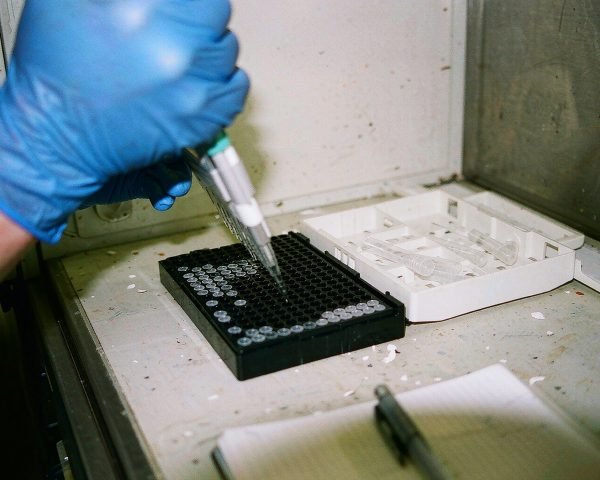
Walk through a standard library prep and the consumable bill makes sense. Nucleic acid extraction needs lysis tubes, spin columns or magnetic bead plates, and collection tubes. Fragmentation and end repair happen in tubes or plates rated for thermal cycling. Adaptor ligation, cleanup, and size selection all lean on SPRI beads (the paramagnetic bead chemistry used in most kits) with matched tubes or plates and a magnetic rack. PCR amplification needs thin-wall tubes or plates with clear optical caps. Quantification needs fluorometry tubes or a 96-well assay plate. Storage needs certified nuclease-free cryovials.
Kit vendors assume you have all of this. Illumina’s own library prep kit documentation lists required consumables in every protocol, and NEB does the same for NEBNext workflows. Read that section even when you’re experienced, because required tube type occasionally changes between kit versions.
Filtered Tips, Everywhere
If I could enforce one rule in an NGS lab, it would be filtered tips for every liquid transfer, no exceptions. Aerosols from a pipetted PCR product can outlive the experiment by weeks. A clean-looking tip is not a clean tip.
Low-retention tips earn their premium in library prep. You’re moving 2 to 10 µL volumes of viscous adaptor-ligation mix, and every droplet that clings to the tip wall is library you don’t get back. When a yield comes out at half the expected value with no other explanation, tip retention is one of the first things I check.
For RNA library work, add RNase-free handling to the tip question. Regular tips from an open bag are fine for DNA plasmid work and genuinely not fine for low-input RNA. Our guide on who actually needs DNase- and RNase-free consumables covers where the line sits.
Tubes and Plates That Match the Chemistry
Not every microcentrifuge tube behaves the same at 4 °C on a magnet stand, and this is where cheap plastic gets expensive. Bead pellets form against the tube wall; a warped or opaque wall makes pellets hard to see, and disturbed pellets mean lost library. Match tube geometry to your magnetic rack, not the other way around. If your rack holds 1.5 mL standard-wall tubes, don’t improvise with thin-wall PCR tubes on it.
Thermal cycling steps need proper thin-wall PCR plastics for heat transfer. For plate-based preps, the plate choice drives everything downstream: our rundown of 96-well plates and where autosamplers use them explains plate formats if you’re bridging prep and analytics. For anything spin-based, check volume ratings against your g-force; the quick math is in our centrifuge tube materials and ratings guide.
Bead Cleanups and the Ethanol Problem
Most library preps live or die at the SPRI bead cleanup. The beads are kit-supplied, but the consumables around them aren’t, and one of them causes more failed preps than any other: the 80% ethanol wash.
Fresh 80% ethanol, made within a day or two of use. Old ethanol absorbs water from the air, the wash stops stripping salts properly, and dried-over beads carry contaminants into the PCR. The failure shows up days later as poor amplification, by which point connecting it to a bottle of ethanol opened last Tuesday requires more discipline than most of us have. Make it fresh, label it with the date, and bin the rest. I learned this the expensive way: I once lost a 48-sample prep the night before a hard sequencing slot, burned a weekend rerunning it, and the post-mortem pointed at a wash bottle that had been “80%” in name only for a month. One dated bottle would have saved all of it.
For PCR/qPCR steps that sit inside or beside the library workflow, the plastic considerations carry over almost directly from our PCR and qPCR consumables guide: optical caps that seal flat, plates with consistent wall thickness, and barrier tips at the multiplexing step.
Index Hopping: The Contamination You Can’t Pipette Away
Here’s a contamination source that has nothing to do with your technique. On patterned-flow-cell instruments, a fraction of reads get assigned the wrong sample index, a phenomenon called index hopping or index swapping. The Broad Institute characterized it across years of runs and found swap rates from 0.2% to 6% on affected platforms, with the details published in their index swapping study.
What can a bench scientist do? Use unique dual indexes so mis-assigned reads can be filtered, avoid under-cleaning libraries before pooling, and don’t pool samples with wildly unequal inputs. Consumables still matter here: residual adaptor primer left in a poorly cleaned library is one proposed mechanism, so cleanups done with fresh ethanol and well-matched bead ratios are your contribution to solving a chemistry-level problem.
Which Claims Actually Matter
Supplier catalogues throw a lot of certifications at NGS buyers. The ones with real consequences:
• Nuclease-free / DNase- and RNase-free: non-negotiable for RNA work and low-input DNA. Verify it’s tested per lot, not just “processed” in a clean area.
• Low-bind: meaningful for inputs under roughly 10 ng, where surface adsorption eats a real fraction of your library.
• Sterile: mostly irrelevant for library prep (you’re not culturing anything), but harmless to have.
• Genomic / PCR-grade claims: useful shorthand for human-DNA-free plastics if your assay hunts rare variants.
One opinion, stated plainly: I buy filtered low-retention tips from whoever has lot-testing documentation and a decent price, and I spend the saved budget on name-brand beads and polymerase. The plastic is a commodity. The biology is not. Thermo Fisher’s NGS workflow overview is a decent orientation if you’re pricing out a full setup.
Quantification and Storage
Library quantification by fluorometry needs its own small pile: assay tubes or a black 96-well plate, optical caps or film, and low-retention tips for the standards. Calibration standard curves die quietly when scratched tubes or foamed standards throw off low-concentration points, so handle this step with the same care as the ligation.
For storage between steps, frozen libraries go into certified nuclease-free tubes or plates with good seals, and I label the freeze date on everything. Libraries are too expensive to identify by guesswork three months later.
Conclusion
NGS and library prep consumables come down to a short list with high standards: filtered low-retention tips, low-bind tubes and plates matched to your magnets and cyclers, fresh ethanol for bead cleanups, and plastics with verified nuclease-free claims for sensitive inputs. None of it is exotic, and none of it is optional. The labs that rarely see failed preps are usually the ones that treat consumable selection and rotation as part of the protocol rather than an afterthought. Start by auditing your tips and your ethanol dating this week, then review your tube-to-rack matches before the next low-input batch. If you’re extending the workflow into quantification or RNA work, our DNase/RNase-free guide and the PCR/qPCR consumables list are the natural next reads.
Frequently Asked Questions
Do I really need low-bind tubes for library prep?
Below roughly 10 ng of input, yes, because a meaningful fraction of your sample can adsorb to ordinary tube walls. At higher inputs the difference shrinks. If your budget forces a choice, spend on low-bind plastics for ligation and cleanup steps first.
Are sterile consumables necessary for NGS work?
Sterility matters far less than nuclease-free status here, since library prep is not a culture workflow. What you need is certified DNase/RNase-free plastic with lot testing. Sterile is a nice-to-have, not the claim that protects your data.
How often should I make fresh 80% ethanol for bead cleanups?
Make it the day you use it, or at most a day ahead, and date the bottle. Ethanol absorbs ambient water once opened, and the effective concentration drifts within weeks. Most labs that standardize this habit stop seeing mysterious low-yield preps.
What pipette tips work best for library prep?
Filtered, low-retention tips, used for every transfer with no exceptions. The filter stops aerosol cross-contamination between samples, and the low-retention resin keeps viscous ligation mixes from clinging to the tip wall at small volumes.
Why did my library yield come out low even with good input DNA?
The usual suspects are expired 80% ethanol, a bead ratio mismatched to your fragment size, tip retention at small volumes, or invisible loss at a disturbed magnetic bead pellet. Work backward through the cleanups first, since that is where most library mass quietly disappears.